Supercomputers breaking barriers | CNN Business

CNN values your feedback

1. How relevant is this ad to you?
2. Did you encounter any technical issues?
Thank You!
Your effort and contribution in providing this feedback is much appreciated.
Close
Ad Feedback
Business
Markets
Tech
Media
Calculators
Videos
Markets Tech Media Calculators Videos
Watch Listen Live TV
My Account
  • Settings
  • Newsletters
  • Topics you follow
  • Sign out
Your CNN account Sign in to your CNN account

My Account
  • Settings
  • Newsletters
  • Topics you follow
  • Sign out
Your CNN account Sign in to your CNN account

Live TV Listen Watch
Edition
US
International
Arabic
Español
Edition
  • US
  • International
  • Arabic
  • Español

Markets
Tech
Media
Calculators
Videos

Follow CNN
Download the CNN App

  • World
    • Africa
    • Americas
    • Asia
    • Australia
    • China
    • Europe
    • India
    • Middle East
    • United Kingdom
  • US Politics
    • Elections 2026
    • Trump
    • Facts First
    • CNN Polls
    • Redistricting Tracker
    • Epstein Files
  • Business
    • Tech
    • Media
    • Calculators
    • Videos
  • Markets
    • Pre-markets
    • After-Hours
    • Fear & Greed
    • Investing
  • Health
    • Life, But Better
    • Fitness
    • Food
    • Sleep
    • Mindfulness
    • Relationships
  • Entertainment
    • Movies
    • Television
    • Celebrity
  • Tech
    • Innovate
  • Style
    • Arts
    • Design
    • Fashion
    • Architecture
    • Luxury
    • Beauty
    • Video
  • Travel
    • Destinations
    • Food & Drink
    • Stay
    • News
    • Videos
  • Sports
    • Football
    • Tennis
    • Golf
    • Motorsport
    • US Sports
    • Olympics
  • Science
    • Space
    • Life
    • Unearthed
  • Climate
    • Solutions
    • Weather
  • Weather
    • Video
    • Climate
  • Ukraine-Russia War
  • Israel-Hamas War
  • Features
    • As Equals
    • Call to Earth
    • Freedom Project
    • Impact Your World
    • Inside Africa
    • CNN Heroes
  • Watch
    • Live TV
    • Featured
    • CNN Fast
    • Shows A-Z
    • CNN 10
    • CNN TV Schedule
  • Listen
    • All There Is with Anderson Cooper
    • Chasing Life with Dr. Sanjay Gupta
    • The Assignment with Audie Cornish
    • Terms of Service with Clare Duffy
    • CNN 5 Things
    • All CNN Podcasts
  • Games
    • Daily Crossword
    • Jumble Crossword
    • Photo Shuffle
    • Sudoblock
    • Sudoku
    • 5 Things Quiz
  • About CNN
    • Photos
    • Investigations
    • CNN Profiles
    • CNN Leadership
    • CNN Newsletters
    • Work for CNN

Download the CNN App

Supercomputers breaking barriers

Published 8:44 AM EDT, Tue June 13, 2017
Link Copied!
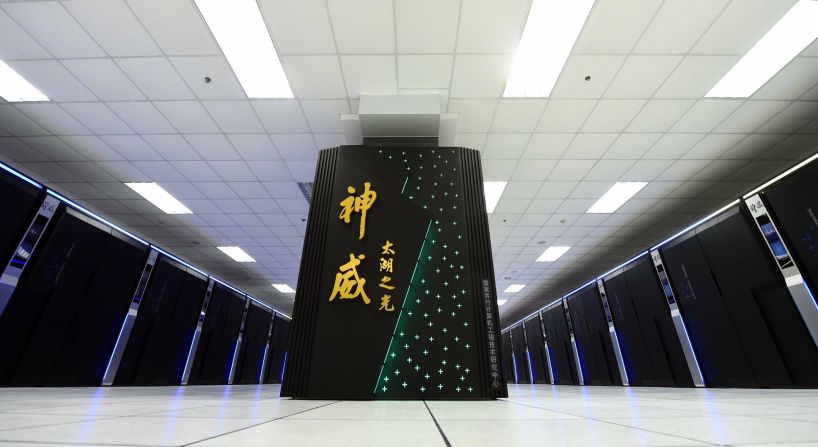
Chinese supercomputer Sunway-TaihuLight is currently the fastest supercomputer in the world, operating at 93 petaflops. That means it's able to perform 93 quadrillion (million billion) calculations per second.<br /><br />China uses the supercomputer for weather forecasting, pharmaceutical research, and industrial design.
Sunway-TaihuLight —
Chinese supercomputer Sunway-TaihuLight is currently the fastest supercomputer in the world, operating at 93 petaflops. That means it's able to perform 93 quadrillion (million billion) calculations per second.

China uses the supercomputer for weather forecasting, pharmaceutical research, and industrial design.
Wang feng/Imaginechina/AP
Fujitsu's K Computer, housed at the RIKEN institute in Japan, clocks in at 10 petaflops. It was the fastest in the world from June to November 2011.<br /><br />The supercomputer draws almost 10 megawatts of power — about the same as 10,000 suburban homes.<br />
K Computer —
Fujitsu's K Computer, housed at the RIKEN institute in Japan, clocks in at 10 petaflops. It was the fastest in the world from June to November 2011.

The supercomputer draws almost 10 megawatts of power — about the same as 10,000 suburban homes.
Courtesy of Fujitsu
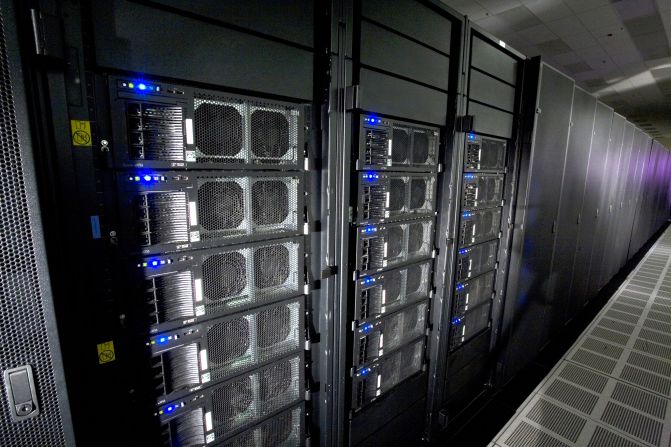
The $130-million IBM Roadrunner was the first computer to break the petaflop barrier in 2008.  <br /><br />Operating at around 1 petaflop (performing 1 million billion calculations per second), the IBM Roadrunner was the fastest supercomputer in the world from June 2008 to June 2009.<br />
IBM Roadrunner —
The $130-million IBM Roadrunner was the first computer to break the petaflop barrier in 2008.

Operating at around 1 petaflop (performing 1 million billion calculations per second), the IBM Roadrunner was the fastest supercomputer in the world from June 2008 to June 2009.
Los Alamos National Labratory
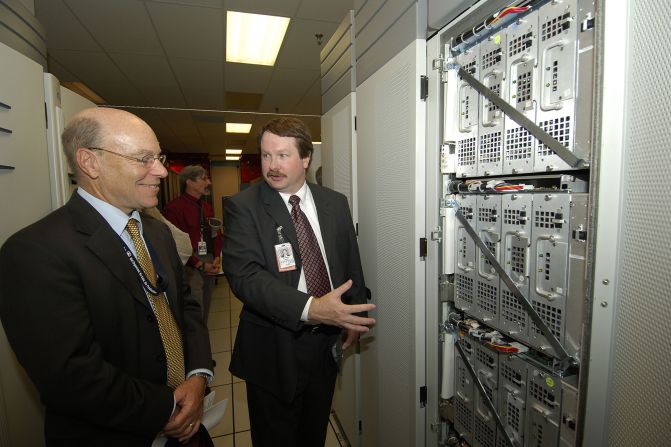
This US-built supercomputer was the first to break the 1 teraflop barrier (performing 1 trillion calculations per second). It was the fastest supercomputer in the world from 1997 to 2000, and also the first supercomputer installation to use more than 1 megawatt of power.<br /><br />Pictured here, VP Rick Stulen and Intel designer Stephen Wheat look at the innards of an ASCI Red rack. <br />
ASCI Red —
This US-built supercomputer was the first to break the 1 teraflop barrier (performing 1 trillion calculations per second). It was the fastest supercomputer in the world from 1997 to 2000, and also the first supercomputer installation to use more than 1 megawatt of power.

Pictured here, VP Rick Stulen and Intel designer Stephen Wheat look at the innards of an ASCI Red rack.
Sandia National Laboratories
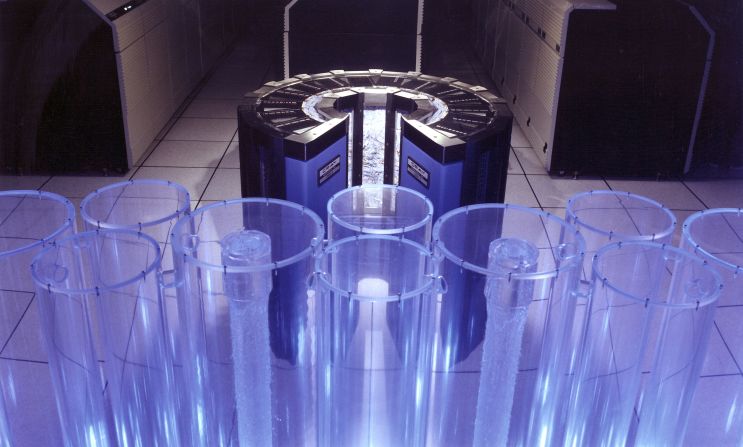
The Cray-2 was the world's fastest computer between 1985 and 1989, capable of 1.9 gigaflops. This was the first supercomputer to break the gigaflop barrier (1 billion calculations per second).<br />
Cray 2 —
The Cray-2 was the world's fastest computer between 1985 and 1989, capable of 1.9 gigaflops. This was the first supercomputer to break the gigaflop barrier (1 billion calculations per second).
Science & Society Picture Library/Getty Images
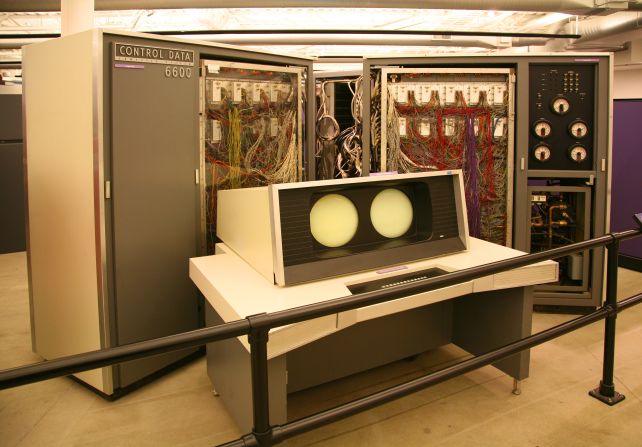
The world's very first supercomputer, the Control Data Corporation (CDC) 6600, only had a single CPU. <br /><br />Released in 1964, the CDC 6600 achieved a peak performance of 3 million floating point operations per second (3 megaflops).
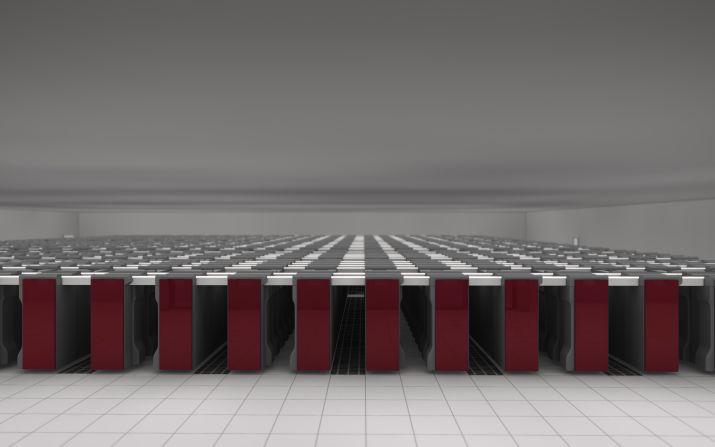
CDC6600 —
The world's very first supercomputer, the Control Data Corporation (CDC) 6600, only had a single CPU.

Released in 1964, the CDC 6600 achieved a peak performance of 3 million floating point operations per second (3 megaflops).
Jitze Couperus/Creative Commons

My Account
  • Settings
  • Newsletters
  • Topics you follow
  • Sign out
Your CNN account Sign in to your CNN account

Live TV Listen Watch
  • World
    • Africa
    • Americas
    • Asia
    • Australia
    • China
    • Europe
    • India
    • Middle East
    • United Kingdom
  • US Politics
    • Trump
    • Facts First
    • CNN Polls
    • Elections 2026
    • Redistricting Tracker
    • Epstein Files
  • Business
    • Tech
    • Media
    • Calculators
    • Videos
  • Markets
    • Pre-markets
    • After-Hours
    • Fear & Greed
    • Investing
  • Health
    • Life, But Better
    • Fitness
    • Food
    • Sleep
    • Mindfulness
    • Relationships
  • Entertainment
    • Movies
    • Television
    • Celebrity
  • Tech
    • Innovate
  • Style
    • Arts
    • Design
    • Fashion
    • Architecture
    • Luxury
    • Beauty
    • Video
  • Travel
    • Destinations
    • Food & Drink
    • Stay
    • News
    • Videos
  • Sports
    • Football
    • Tennis
    • Golf
    • Motorsport
    • US Sports
    • Olympics
  • Science
    • Space
    • Life
    • Unearthed
  • Climate
    • Solutions
    • Weather
  • Weather
    • Video
    • Climate
  • Ukraine-Russia War
  • Israel-Hamas War
  • Features
    • As Equals
    • Call to Earth
    • Freedom Project
    • Impact Your World
    • Inside Africa
    • CNN Heroes
  • Watch
    • Live TV
    • Featured
    • CNN Headlines
    • Shows A-Z
    • CNN 10
    • CNN TV Schedule
  • Listen
    • All There Is with Anderson Cooper
    • Chasing Life with Dr. Sanjay Gupta
    • The Assignment with Audie Cornish
    • Terms of Service with Clare Duffy
    • CNN 5 Things
    • All CNN Podcasts
  • Games
    • Daily Crossword
    • Jumble Crossword
    • Photo Shuffle
    • Sudoblock
    • Sudoku
    • 5 Things Quiz
  • About CNN
    • Photos
    • Investigations
    • CNN Profiles
    • CNN Leadership
    • CNN Newsletters
    • Work for CNN

Business
Watch Listen Live TV
My Account
  • Settings
  • Newsletters
  • Topics you follow
  • Sign out
Your CNN account Sign in to your CNN account
Follow CNN

Download the CNN app

Most stock quote data provided by BATS. US market indices are shown in real time, except for the S&P 500 which is refreshed every two minutes. All times are ET. Factset: FactSet Research Systems Inc. All rights reserved. Chicago Mercantile: Certain market data is the property of Chicago Mercantile Exchange Inc. and its licensors. All rights reserved. Dow Jones: The Dow Jones branded indices are proprietary to and are calculated, distributed and marketed by DJI Opco, a subsidiary of S&P Dow Jones Indices LLC and have been licensed for use to S&P Opco, LLC and CNN. Standard & Poor’s and S&P are registered trademarks of Standard & Poor’s Financial Services LLC and Dow Jones is a registered trademark of Dow Jones Trademark Holdings LLC. All content of the Dow Jones branded indices Copyright S&P Dow Jones Indices LLC and/or its affiliates. Fair value provided by IndexArb.com. Market holidays and trading hours provided by Copp Clark Limited.

Terms of Use Privacy Policy Ad Choices Accessibility & CC About Newsletters Transcripts Sitemap

© 2026 Cable News Network. A Warner Bros. Discovery Company. All Rights Reserved.
CNN Sans ™ & © 2016 Cable News Network.

Download the CNN app

Scan the QR code to download the CNN app on Google Play.

Scan the QR code to download the CNN app from Google Play.

Download the CNN app

Scan the QR code to download the CNN app from the Apple Store.

Scan the QR code to download the CNN app from the Apple Store.