Nobel Prize winners in medicine or physiology | CNN

CNN values your feedback

1. How relevant is this ad to you?
2. Did you encounter any technical issues?
Thank You!
Your effort and contribution in providing this feedback is much appreciated.
Close
Ad Feedback
Health
Life, But Better
Fitness
Food
Sleep
Mindfulness
Relationships
Life, But Better Fitness Food Sleep Mindfulness Relationships
Watch Listen Live TV
My Account
  • Settings
  • Newsletters
  • Topics you follow
  • Sign out
Your CNN account Sign in to your CNN account

My Account
  • Settings
  • Newsletters
  • Topics you follow
  • Sign out
Your CNN account Sign in to your CNN account

Live TV Listen Watch
Edition
US
International
Arabic
Español
Edition
  • US
  • International
  • Arabic
  • Español

Life, But Better
Fitness
Food
Sleep
Mindfulness
Relationships

Follow CNN
Download the CNN App

  • World
    • Africa
    • Americas
    • Asia
    • Australia
    • China
    • Europe
    • India
    • Middle East
    • United Kingdom
  • US Politics
    • Elections 2026
    • Trump
    • Facts First
    • CNN Polls
    • Redistricting Tracker
    • Epstein Files
  • Business
    • Tech
    • Media
    • Calculators
    • Videos
  • Markets
    • Pre-markets
    • After-Hours
    • Fear & Greed
    • Investing
  • Health
    • Life, But Better
    • Fitness
    • Food
    • Sleep
    • Mindfulness
    • Relationships
  • Entertainment
    • Movies
    • Television
    • Celebrity
  • Tech
    • Innovate
  • Style
    • Arts
    • Design
    • Fashion
    • Architecture
    • Luxury
    • Beauty
    • Video
  • Travel
    • Destinations
    • Food & Drink
    • Stay
    • News
    • Videos
  • Sports
    • Football
    • Tennis
    • Golf
    • Motorsport
    • US Sports
    • Olympics
  • Science
    • Space
    • Life
    • Unearthed
  • Climate
    • Solutions
    • Weather
  • Weather
    • Video
    • Climate
  • Ukraine-Russia War
  • Israel-Hamas War
  • Features
    • As Equals
    • Call to Earth
    • Freedom Project
    • Impact Your World
    • Inside Africa
    • CNN Heroes
  • Watch
    • Live TV
    • Featured
    • CNN Fast
    • Shows A-Z
    • CNN 10
    • CNN TV Schedule
  • Listen
    • All There Is with Anderson Cooper
    • Chasing Life with Dr. Sanjay Gupta
    • The Assignment with Audie Cornish
    • Terms of Service with Clare Duffy
    • CNN 5 Things
    • All CNN Podcasts
  • Games
    • Daily Crossword
    • Jumble Crossword
    • Photo Shuffle
    • Sudoblock
    • Sudoku
    • 5 Things Quiz
  • About CNN
    • Subscribe
    • Photos
    • Investigations
    • CNN Profiles
    • CNN Leadership
    • CNN Newsletters
    • Advertise With Us
    • Work for CNN

Download the CNN App
Health

Nobel Prize winners in medicine or physiology

Updated 5:32 PM EDT, Mon October 3, 2016
Link Copied!
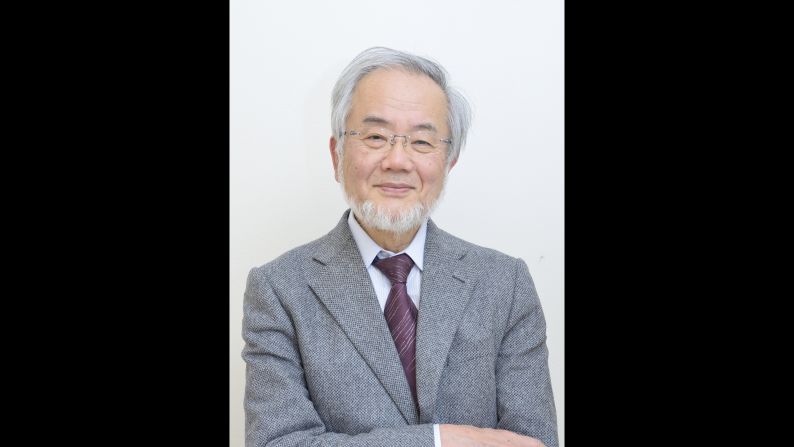
Biologist Yoshinori Ohusumi was awarded the Nobel Prize for his discoveries in autophagy, the process where a cell recycles part of its own contents.<br /><br />Click through the gallery to learn about other notable <a href="index.php?page=&url=https%3A%2F%2Fwww.nobelprize.org%2Fnobel_prizes%2Fmedicine%2Flaureates%2F" target="_blank" target="_blank">Nobel Prize winners</a> in medicine and physiology.
2016: Yoshinori Ohsumi —
Biologist Yoshinori Ohusumi was awarded the Nobel Prize for his discoveries in autophagy, the process where a cell recycles part of its own contents.

Click through the gallery to learn about other notable Nobel Prize winners in medicine and physiology.
Courtesy Tokyo Institute of Technology
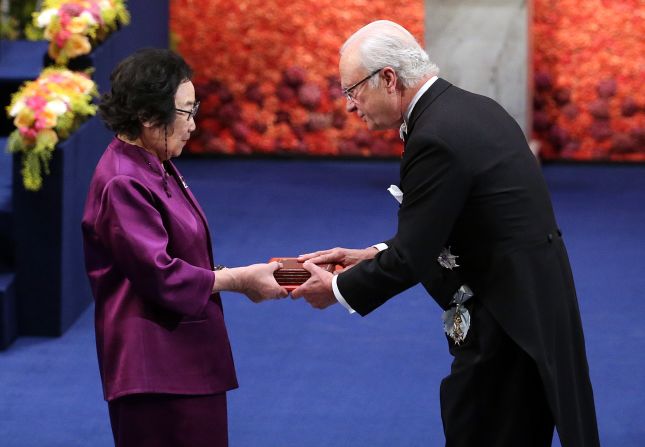
In the 1970s, <a href="index.php?page=&url=http%3A%2F%2Fwww.cnn.com%2F2015%2F10%2F06%2Fasia%2Fchina-malaria-nobel-prize-tu-youyou%2F">Tu YouYou</a> discovered that artemisinin, a compound extracted from sweet wormwood, was effective in treating malaria. Tu Youyou and her research team tested more than 2,000 traditional Chinese recipes on mice before finding artemisinin, wihch saved millions of lives in malaria-stricken countries.<br /><br />The divided 2015 prize also went to Ireland's William C. Campbell and Japan's Satoshi Omura for "their discoveries concerning a novel therapy against infections caused by roundworm parasites." <br />
2015: Tu Youyou —
In the 1970s, Tu YouYou discovered that artemisinin, a compound extracted from sweet wormwood, was effective in treating malaria. Tu Youyou and her research team tested more than 2,000 traditional Chinese recipes on mice before finding artemisinin, wihch saved millions of lives in malaria-stricken countries.

The divided 2015 prize also went to Ireland's William C. Campbell and Japan's Satoshi Omura for "their discoveries concerning a novel therapy against infections caused by roundworm parasites."
SOREN ANDERSSON//AFP/Getty Image
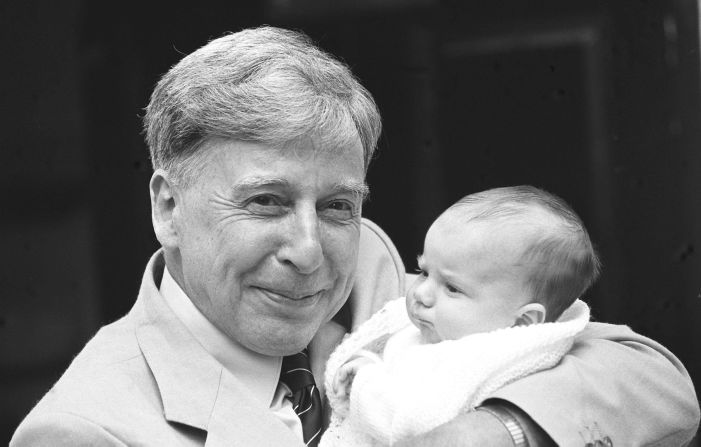
Credited for achieving the controversial "test tube baby," Robert G. Edwards changed the discourse about birth -- babies could be conceived outside the body. <a href="index.php?page=&url=http%3A%2F%2Fwww.cnn.com%2F2010%2FHEALTH%2F10%2F04%2Fsweden.nobel.medicine%2F">In vitro fertilization</a> allowed for millions of infertile couples and even menopausal women to have children.
2010: Robert G. Edwards —
Credited for achieving the controversial "test tube baby," Robert G. Edwards changed the discourse about birth -- babies could be conceived outside the body. In vitro fertilization allowed for millions of infertile couples and even menopausal women to have children.
Rebecca Naden/EMPPL PA Wire/Associated Press
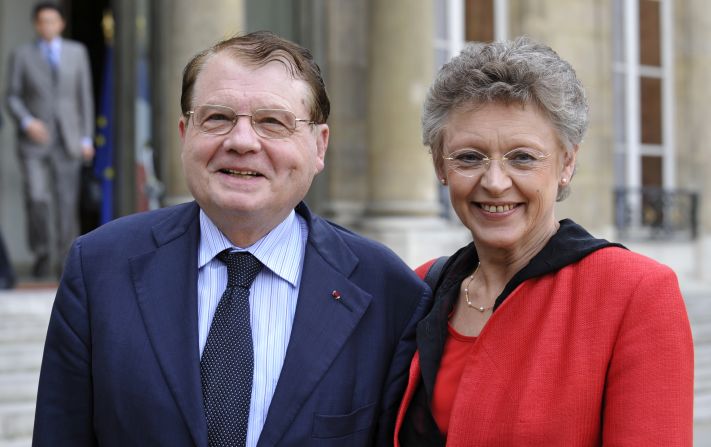
In the 1980s, a research team led by Luc Montagnier and his mentee, Francoise Barre-Sinoussi, isolated a retrovirus they believed was causing AIDS. The virus looked similar to other human T-lymphotropic viruses, but had different core proteins: the novel virus was named human immunodeficiency virus, or HIV. <br /><br />The 2008 prize also went to Harald zur Hausen of Germany, who discovered that human papilloma viruses caused cervical cancer in women.
2008: Francoise Barre-Sinoussi and Luc Montagnier —
In the 1980s, a research team led by Luc Montagnier and his mentee, Francoise Barre-Sinoussi, isolated a retrovirus they believed was causing AIDS. The virus looked similar to other human T-lymphotropic viruses, but had different core proteins: the novel virus was named human immunodeficiency virus, or HIV.

The 2008 prize also went to Harald zur Hausen of Germany, who discovered that human papilloma viruses caused cervical cancer in women.
GERARD CERLES/AFP/Getty Images
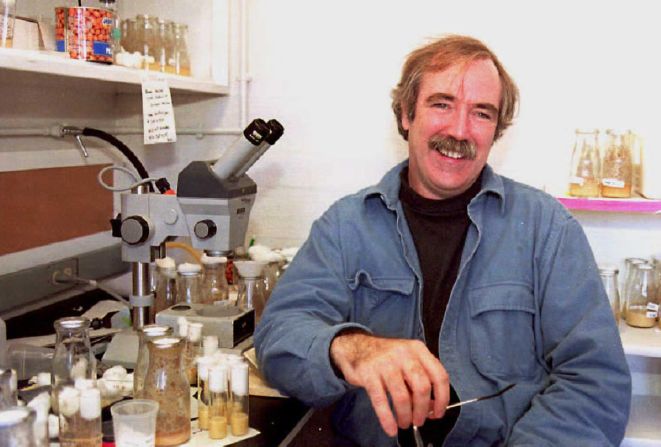
Using fruit flies, researchers Edward B. Lewis, Christiane Nusslein-Volhard and Eric F. Wieschaus progressed the understanding of developmental genetics and controlling animal development. They found that mutated fruit flies would pass their genes onto offspring, making it possible to breed select sets of flies to have certain traits.
1995: Edward B. Lewis, Christiane Nusslein-Volhard and Eric F. Wieschaus —
Using fruit flies, researchers Edward B. Lewis, Christiane Nusslein-Volhard and Eric F. Wieschaus progressed the understanding of developmental genetics and controlling animal development. They found that mutated fruit flies would pass their genes onto offspring, making it possible to breed select sets of flies to have certain traits.
TOM MIHALEK/AFP/Getty Images
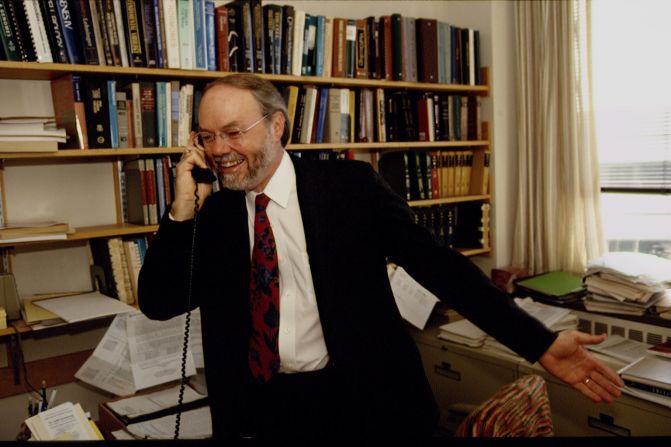
When studying adenovirus, one of the viruses that cause the common cold, Richard J. Roberts and Phillip A. Sharp discovered that a single gene could code for multiple proteins, resulting in variants of the virus. This discovery, called "alternative splicing," has been important in cancer research, as some cancers are thought to be caused by mutated genes.
1993: Richard J. Roberts and Phillip A. Sharp —
When studying adenovirus, one of the viruses that cause the common cold, Richard J. Roberts and Phillip A. Sharp discovered that a single gene could code for multiple proteins, resulting in variants of the virus. This discovery, called "alternative splicing," has been important in cancer research, as some cancers are thought to be caused by mutated genes.
Brooks Kraft/Sygma/Getty Images
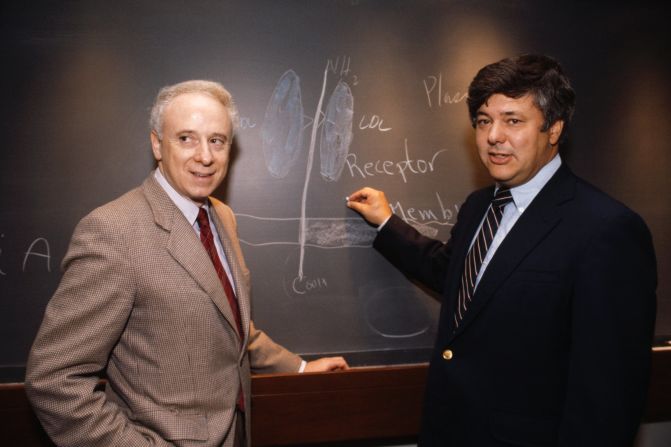
Michael S. Brown and Joseph L. Goldstein are credited for discovering low-density lipoprotein (LDL) receptors, which are responsible for regulating the amount of cholesterol in the blood.
1985: Micheal S. Brown and Joseph L. Goldstein —
Michael S. Brown and Joseph L. Goldstein are credited for discovering low-density lipoprotein (LDL) receptors, which are responsible for regulating the amount of cholesterol in the blood.
Ira Wyman/Sygma/Getty Images
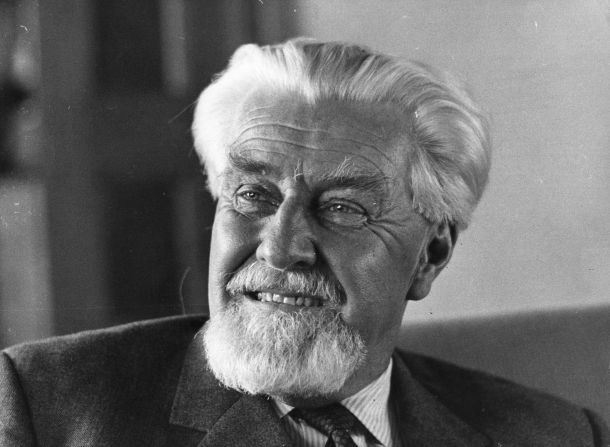
Geese were the stars of Konrad Lorenz, Karl Frisch and Nikolaas Tinbergen's groundbreaking work in ethology, the study of animal behavior. They found that young geese "imprinted," or formed an attachment with the first moving thing they perceived.
1973: Konrad Lorenz, Karl Frisch and Nikolaas Tinbergen —
Geese were the stars of Konrad Lorenz, Karl Frisch and Nikolaas Tinbergen's groundbreaking work in ethology, the study of animal behavior. They found that young geese "imprinted," or formed an attachment with the first moving thing they perceived.
Keystone/Hulton Archive/Getty Images
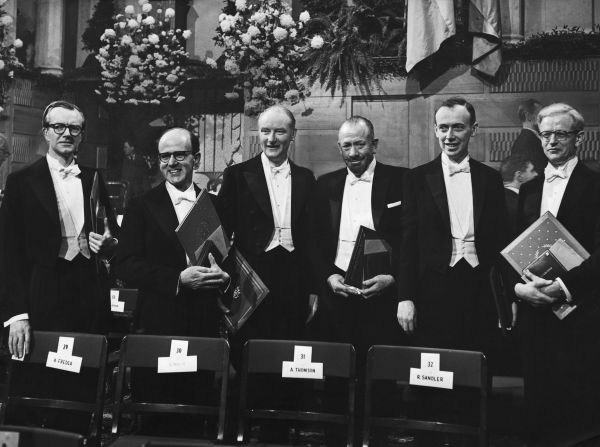
The double helix structure of DNA wasn't always known -- not until the 1950s did Francis Crick and James Watson figure out the shape. They discovered that DNA, not protein, was genetic material, and using data collected by Maurice Wilkins and Rosalind Franklin (who was largely unrecognized), they deduced the double helix design.
1962: Francis Crick, James Dewey Watson and Maurice Wilkins —
The double helix structure of DNA wasn't always known -- not until the 1950s did Francis Crick and James Watson figure out the shape. They discovered that DNA, not protein, was genetic material, and using data collected by Maurice Wilkins and Rosalind Franklin (who was largely unrecognized), they deduced the double helix design.
Bettmann Archive/Getty Images
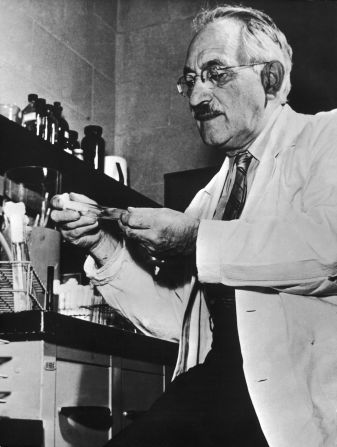
Selman Abraham Waksman is credited for developing streptomycin, the first antibiotic to treat tuberculosis. Waksman's sole credit is contentious, however, because Albert Schatz, one of Waksman's graduate students at Rutgers University, was considered <a href="index.php?page=&url=https%3A%2F%2Fwww.acs.org%2Fcontent%2Facs%2Fen%2Feducation%2Fwhatischemistry%2Flandmarks%2Fselmanwaksman.html" target="_blank" target="_blank">a co-discoverer of the drug</a>.
1952: Selman Abraham Waksman —
Selman Abraham Waksman is credited for developing streptomycin, the first antibiotic to treat tuberculosis. Waksman's sole credit is contentious, however, because Albert Schatz, one of Waksman's graduate students at Rutgers University, was considered a co-discoverer of the drug.
Keystone-France/Getty Images
Egas Moniz was among the more controversial of  medical Nobel Prize recipients; he introduced lobotomy -- a surgical removal of part of the brain -- as a treatment for mental disorders. The number of lobotomies rose in this time period, although they are now known to be dangerous and often have disastrous consequences for patients, such as changed personalities.
1949: Egas Moniz —
Egas Moniz was among the more controversial of medical Nobel Prize recipients; he introduced lobotomy -- a surgical removal of part of the brain -- as a treatment for mental disorders. The number of lobotomies rose in this time period, although they are now known to be dangerous and often have disastrous consequences for patients, such as changed personalities.
Boyer/Roger Viollet/Roger Viollet/Getty Images
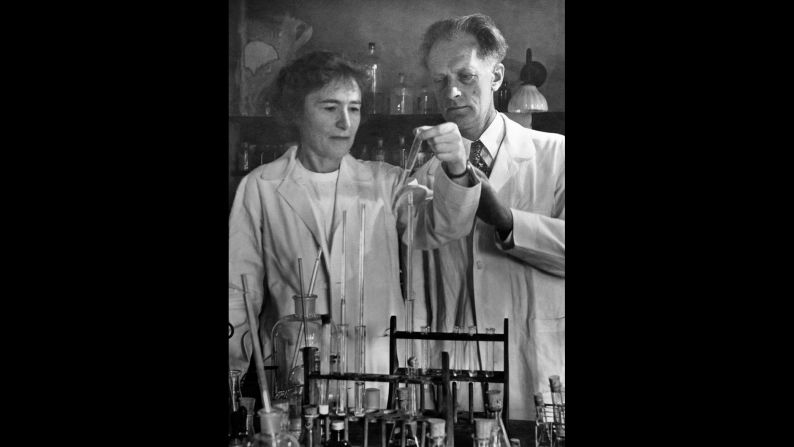
Gerty Cori, the first woman to receive a Nobel Prize in this category, along with her husband, Carl, were the first to discover the cycle that muscle cells use to make and store energy.
1947: Gerty Cori and Carl Ferdinand Cori —
Gerty Cori, the first woman to receive a Nobel Prize in this category, along with her husband, Carl, were the first to discover the cycle that muscle cells use to make and store energy.
Bettmann Archive/Getty Images
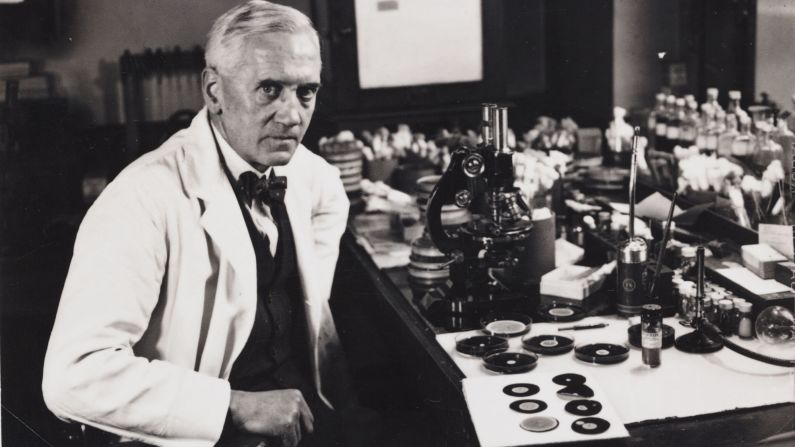
While studying staphylococci bacteria, Alexander Fleming and his colleagues said they noticed one petri dish had been contaminated with a fungus that had killed all of the bacteria inside. They identified the anti-bacterial fungus as a member of the Penicillium genus, and it was found to successfully kill a host of other bacteria -- making it the world's first successful antibiotic.
1945: Sir Alexander Fleming, Ernst Boris Chain and Sir Howard Walter Florey —
While studying staphylococci bacteria, Alexander Fleming and his colleagues said they noticed one petri dish had been contaminated with a fungus that had killed all of the bacteria inside. They identified the anti-bacterial fungus as a member of the Penicillium genus, and it was found to successfully kill a host of other bacteria -- making it the world's first successful antibiotic.
Daily Herald Archive/SSPL/Getty Images
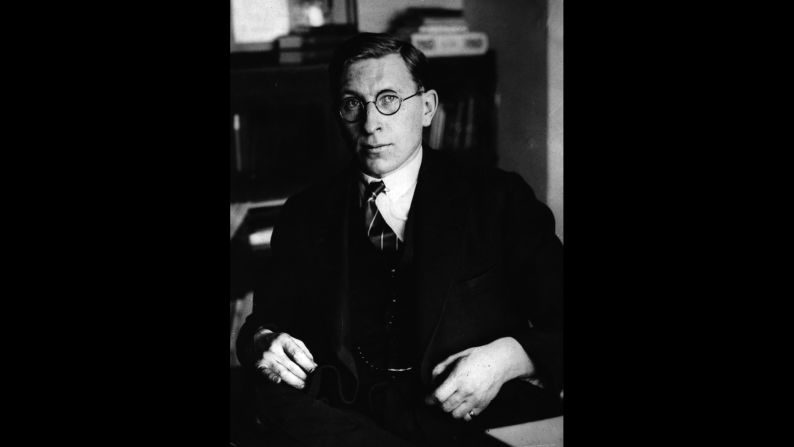
Just 32 at the time, Frederick Grant Banting remains the youngest Nobel Prize recipient in medicine and physiology. He and John Macleod changed diabetes treatment by discovering insulin, a hormone secreted by the pancreas that regulates sugar metabolism. To treat diabetics, Banting obtained insulin from the pancreases of living dogs and fetal cows.
1923: Frederick Grant Banting and John Macleod —
Just 32 at the time, Frederick Grant Banting remains the youngest Nobel Prize recipient in medicine and physiology. He and John Macleod changed diabetes treatment by discovering insulin, a hormone secreted by the pancreas that regulates sugar metabolism. To treat diabetics, Banting obtained insulin from the pancreases of living dogs and fetal cows.
Hulton Archive/Getty Images
Though Ivan Pavlov received the award for his research in digestion, particularly regarding his experiments with dogs. When his dogs salivated, Pavlov would collect the saliva and analyze it, looking for different responses when introduced to different food. He was especially interested in "psychic secretion," when dogs salivated before food entered their mouths.
1904: Ivan Pavlov —
Though Ivan Pavlov received the award for his research in digestion, particularly regarding his experiments with dogs. When his dogs salivated, Pavlov would collect the saliva and analyze it, looking for different responses when introduced to different food. He was especially interested in "psychic secretion," when dogs salivated before food entered their mouths.
Sovfoto/Universal Images Group Editorial/Getty Images
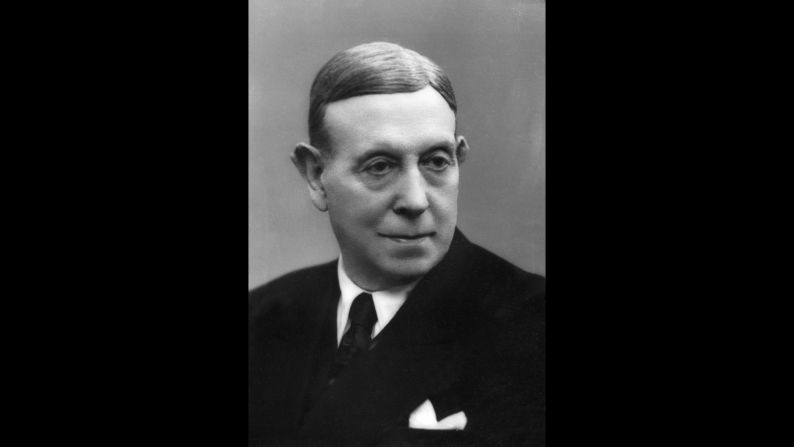
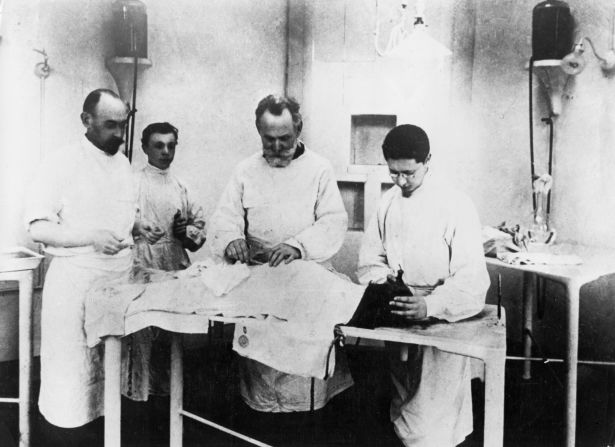
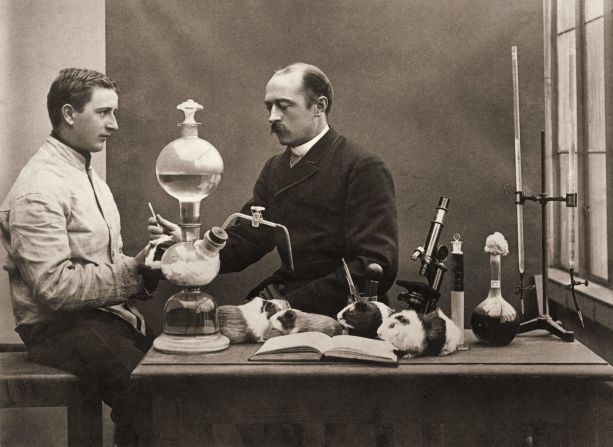
Known as the "savior of children," Emil Adolf von Behring is credited for developing an antitoxin for diphtheria, a disease that killed hundreds of thousands of children in the 19th and early-20th centuries. Behring was the first recipient of the Nobel Prize in Physiology or Medicine.
1901: Emil Adolf von Behring —
Known as the "savior of children," Emil Adolf von Behring is credited for developing an antitoxin for diphtheria, a disease that killed hundreds of thousands of children in the 19th and early-20th centuries. Behring was the first recipient of the Nobel Prize in Physiology or Medicine.
Stock Montage/Archive Photos/Getty Images

My Account
  • Settings
  • Newsletters
  • Topics you follow
  • Sign out
Your CNN account Sign in to your CNN account

Live TV Listen Watch
  • World
    • Africa
    • Americas
    • Asia
    • Australia
    • China
    • Europe
    • India
    • Middle East
    • United Kingdom
  • US Politics
    • Trump
    • Facts First
    • CNN Polls
    • Elections 2026
    • Redistricting Tracker
    • Epstein Files
  • Business
    • Tech
    • Media
    • Calculators
    • Videos
  • Markets
    • Pre-markets
    • After-Hours
    • Fear & Greed
    • Investing
  • Health
    • Life, But Better
    • Fitness
    • Food
    • Sleep
    • Mindfulness
    • Relationships
  • Entertainment
    • Movies
    • Television
    • Celebrity
  • Tech
    • Innovate
  • Style
    • Arts
    • Design
    • Fashion
    • Architecture
    • Luxury
    • Beauty
    • Video
  • Travel
    • Destinations
    • Food & Drink
    • Stay
    • News
    • Videos
  • Sports
    • Football
    • Tennis
    • Golf
    • Motorsport
    • US Sports
    • Olympics
  • Science
    • Space
    • Life
    • Unearthed
  • Climate
    • Solutions
    • Weather
  • Weather
    • Video
    • Climate
  • Ukraine-Russia War
  • Israel-Hamas War
  • Features
    • As Equals
    • Call to Earth
    • Freedom Project
    • Impact Your World
    • Inside Africa
    • CNN Heroes
  • Watch
    • Live TV
    • Featured
    • CNN Headlines
    • Shows A-Z
    • CNN 10
    • CNN TV Schedule
  • Listen
    • All There Is with Anderson Cooper
    • Chasing Life with Dr. Sanjay Gupta
    • The Assignment with Audie Cornish
    • Terms of Service with Clare Duffy
    • CNN 5 Things
    • All CNN Podcasts
  • Games
    • Daily Crossword
    • Jumble Crossword
    • Photo Shuffle
    • Sudoblock
    • Sudoku
    • 5 Things Quiz
  • About CNN
    • Subscribe
    • Photos
    • Investigations
    • CNN Profiles
    • CNN Leadership
    • CNN Newsletters
    • Advertise With Us
    • Work for CNN

Health
Watch Listen Live TV
My Account
  • Settings
  • Newsletters
  • Topics you follow
  • Sign out
Your CNN account Sign in to your CNN account
Follow CNN

Download the CNN app

Terms of Use Privacy Policy Ad Choices Advertise With Us Accessibility & CC About Newsletters Transcripts Sitemap

© 2026 Cable News Network. All Rights Reserved.
CNN Sans ™ & © 2016 Cable News Network.

Download the CNN app

Scan the QR code to download the CNN app on Google Play.

Scan the QR code to download the CNN app from Google Play.

Download the CNN app

Scan the QR code to download the CNN app from the Apple Store.

Scan the QR code to download the CNN app from the Apple Store.