Your effort and contribution in providing this feedback is much
appreciated.
Close
Ad Feedback
Ad Feedback
Elephants & bees project africa
Farmers in some African countries are moving into new territories located on the elephant's natural migration routes, causing friction between man and beast -- sometimes with deadly consequences.
Mark Kolbe/Getty Images AsiaPac/Getty Images
Exploring solutions, environmental researcher Lucy King has implemented her doctoral research, using bees as a deterrent to elephants who have in the past destroyed crops and agricultural equipment.
Lucy King/Elephants & Bees Project
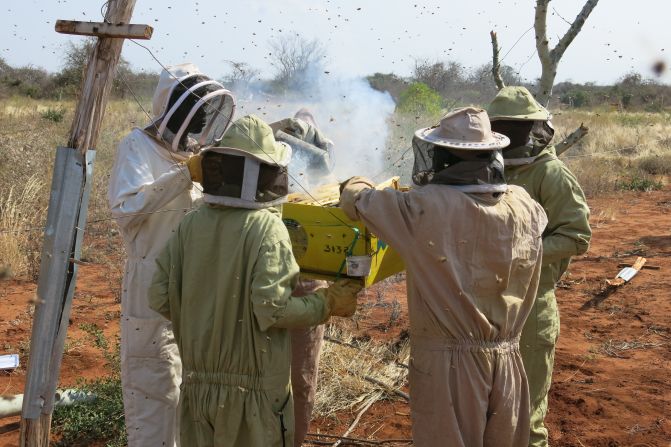
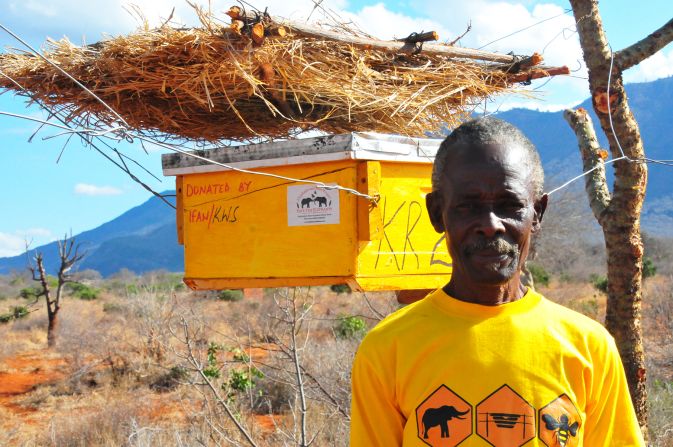
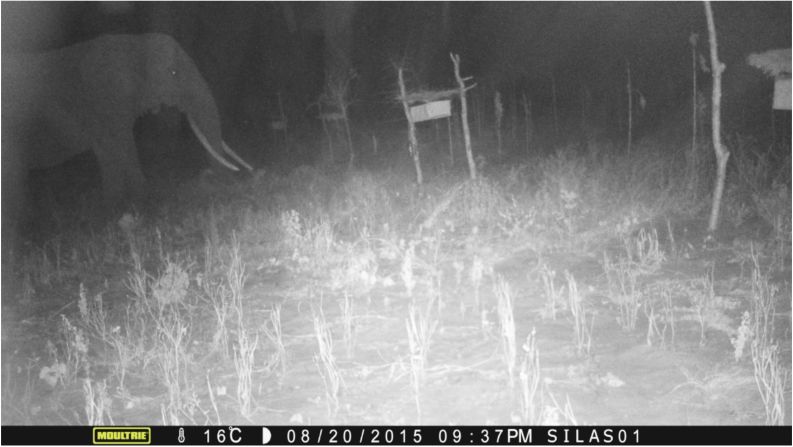
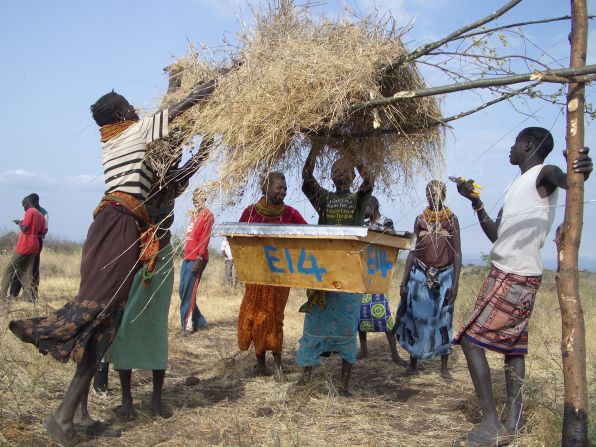
King's solution, the beehive fence, combines real and dummy beehives full of African honey bees. Triggered by a simple wire fence the hives are disturbed, swinging and releasing irate bees upon elephants.
Lucy King/Elephants & Bees Project
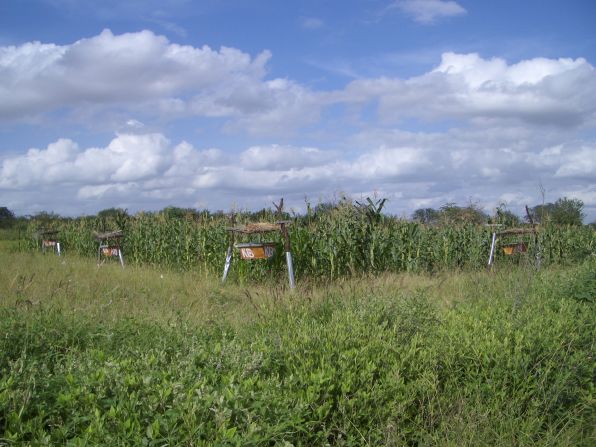
Twelve to 15 hives can protect an area between 1.5 and 2 acres -- the size of the sustenance farms King is targeting.
Lucy King/Elephants & Bees Project
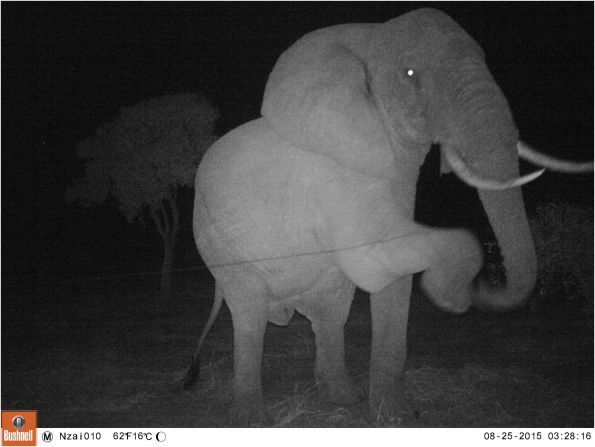
An elephant attempts to negotiate a beehive fence wire at night. Bees are known to sting elephants in the trunk, around the eyes and mouth.
Lucy King/Elephants & Bees Project
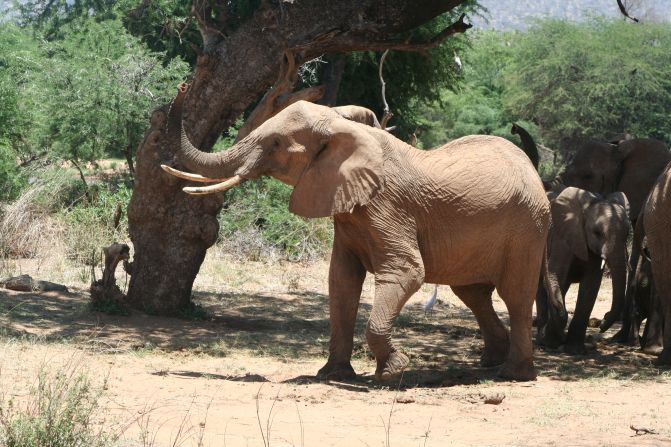
King's research showed 94% of the elephants she studied moved away from the source of bee sounds within 80 seconds and "will avoid live beehives at all costs."
Lucy King/Elephants & Bees Project
"Elephants can identify bees by sound alone, indicating that they may associate the sound with a negative historic event," says King. "Once they learn that there is an active beehive in a tree or on some posts around a farm, we suspect that they remember that local threat and will avoid it in the future."
Lucy King/Elephants & Bees Project
There's plenty of secondary benefits to bees too. King says there's some evidence a healthy bee population in proximity to a farm can increase crop production by 15-30%.
Lucy King/Elephants & Bees Project
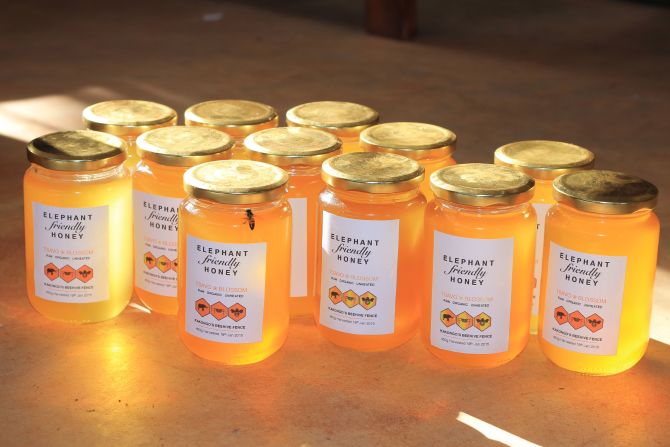
Rural Kenyans are no strangers to beekeeping, and honey, wax, royal jelly, propolis and pollen are all harvested, boosting the income of farmers by as much as 50%. In 2015 500 jars of honey were made from King's study site in Tsavo East National Park, and 2016's yield could be even higher.