Juno, meet Jupiter | CNN

CNN values your feedback

1. How relevant is this ad to you?
2. Did you encounter any technical issues?
Thank You!
Your effort and contribution in providing this feedback is much appreciated.
Close
Ad Feedback
Health
Life, But Better
Fitness
Food
Sleep
Mindfulness
Relationships
More
Life, But Better Fitness Food Sleep Mindfulness Relationships
Watch Listen Live TV
My Account
  • Settings
  • Newsletters
  • Topics you follow
  • Sign out
Your CNN account Sign in to your CNN account

My Account
  • Settings
  • Newsletters
  • Topics you follow
  • Sign out
Your CNN account Sign in to your CNN account

Live TV Listen Watch
Edition
US
International
Arabic
Español
Edition
  • US
  • International
  • Arabic
  • Español

Life, But Better
Fitness
Food
Sleep
Mindfulness
Relationships

Follow CNN
Download the CNN App

  • World
    • Africa
    • Americas
    • Asia
    • Australia
    • China
    • Europe
    • India
    • Middle East
    • United Kingdom
  • US Politics
    • Elections 2026
    • Trump
    • Facts First
    • CNN Polls
    • Redistricting Tracker
    • Epstein Files
  • Business
    • Tech
    • Media
    • Calculators
    • Videos
  • Markets
    • Pre-markets
    • After-Hours
    • Fear & Greed
    • Investing
  • Health
    • Life, But Better
    • Fitness
    • Food
    • Sleep
    • Mindfulness
    • Relationships
  • Entertainment
    • Movies
    • Television
    • Celebrity
  • Tech
    • Innovate
  • Style
    • Arts
    • Design
    • Fashion
    • Architecture
    • Luxury
    • Beauty
    • Video
  • Travel
    • Destinations
    • Food & Drink
    • Stay
    • News
    • Videos
  • Sports
    • Football
    • Tennis
    • Golf
    • Motorsport
    • US Sports
    • Olympics
  • Science
    • Space
    • Life
    • Unearthed
  • Climate
    • Solutions
    • Weather
  • Weather
    • Video
    • Climate
  • World Cup 2026
  • Ukraine-Russia War
  • Israel-Hamas War
  • Features
    • As Equals
    • Call to Earth
    • Freedom Project
    • Impact Your World
    • Inside Africa
    • CNN Heroes
  • Watch
    • Live TV
    • Featured
    • CNN Fast
    • Shows A-Z
    • CNN 10
    • CNN TV Schedule
  • Listen
    • All There Is with Anderson Cooper
    • Chasing Life with Dr. Sanjay Gupta
    • The Assignment with Audie Cornish
    • Terms of Service with Clare Duffy
    • CNN 5 Things
    • All CNN Podcasts
  • Games
    • Daily Crossword
    • Jumble Crossword
    • Photo Shuffle
    • Sudoblock
    • Sudoku
    • 5 Things Quiz
  • About CNN
    • Photos
    • Investigations
    • CNN Profiles
    • CNN Leadership
    • CNN Newsletters
    • Work for CNN

Download the CNN App
Health

Juno, meet Jupiter

Updated 11:07 AM EST, Wed February 27, 2019
Link Copied!
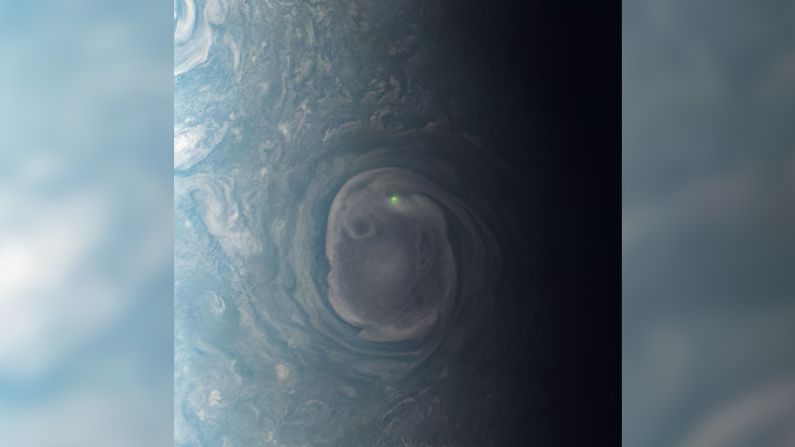
In this image captured on December 30, 2020, Juno spotted lightning striking near Jupiter's north pole.
NASA/JPL-Caltech/SwRI/MSSS
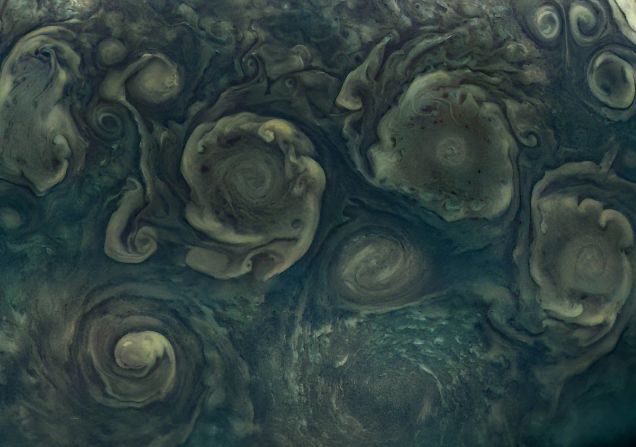
Jupiter's northernmost cyclone, seen to the right along the bottom edge of image, was captured by Juno.
NASA/JPL-Caltech/SwRI/MSSSImage
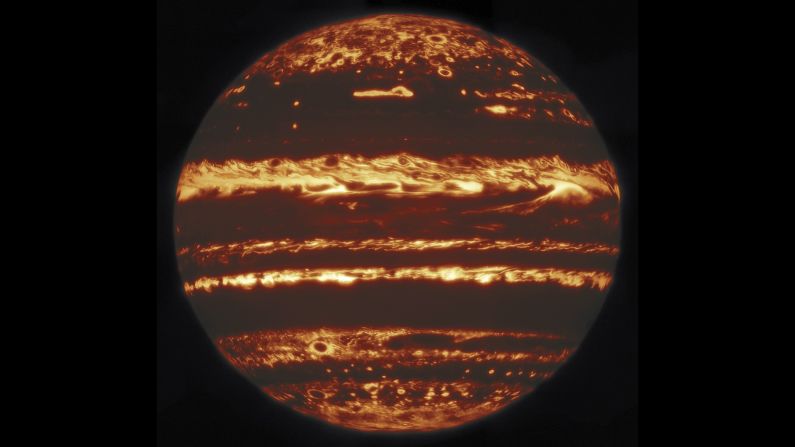
This jack-o-lantern-esque view of Jupiter is a mosaic of images taken by the Gemini North telescope in Hawaii. The bright spots represent Jupiter's internal heat escaping through holes in the planet's massive cloud cover.
International Gemini Observatory/NOIRLab/NSF/AURA/M.H. Wong/Mahdi Zamani
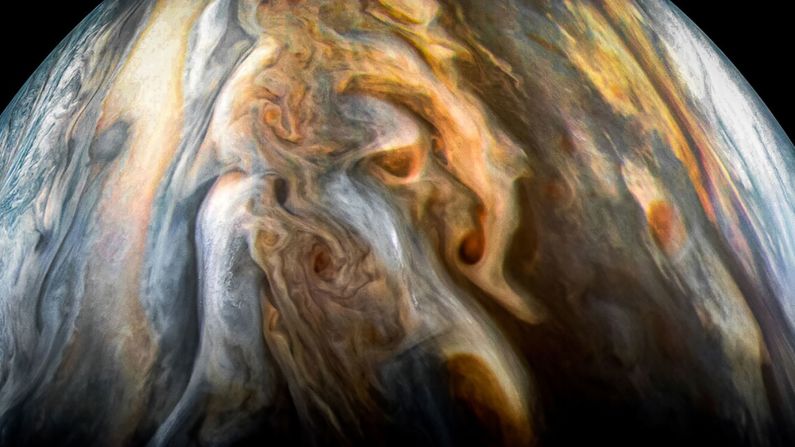
Part of Jupiter's southern equatorial region can be seen in this image captured by Juno's JunoCam imager. But it's flipped to show the expanse of Jupiter's atmosphere, with the poles to the left and right, rather than top to bottom.
NASA/JPL-Caltech/SwRI/MSSS/Kevin M. Gill
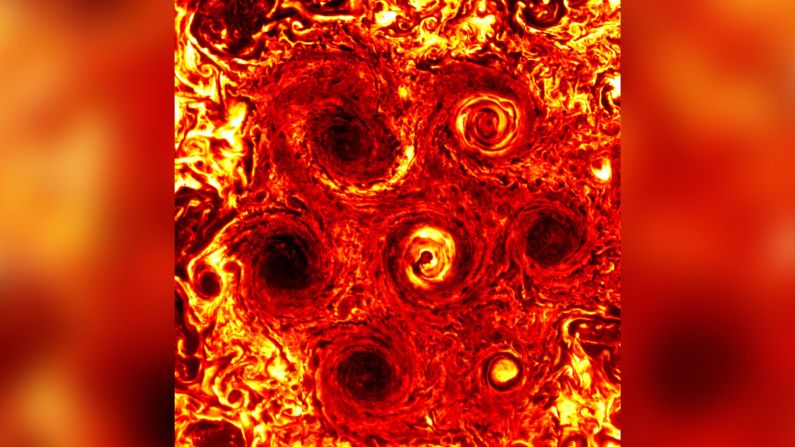
In this image captured by Juno, six cyclones remain stable at Jupiter's south pole. A small cyclone, seen at the bottom right in yellow, has recently joined the party.
NASA/JPL-Caltech/SwRI/ASI/INAF/JIRAM
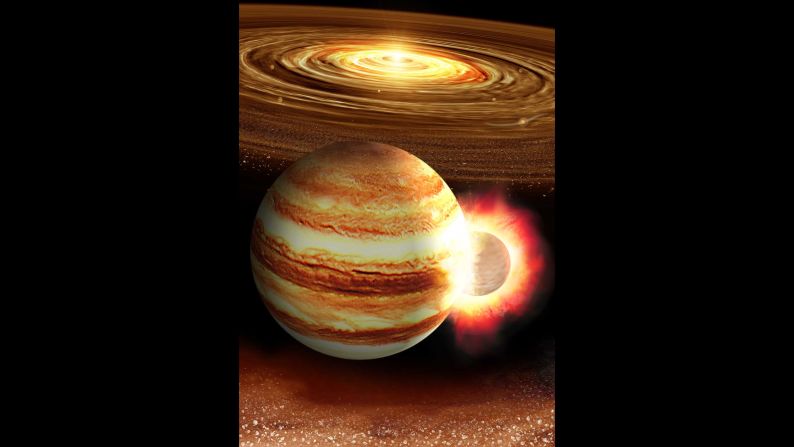
An artist's impression of a collision between a young Jupiter and a massive, still-forming protoplanet in the early solar system.
K. Suda & Y. Akimoto/Mabuchi Design Office/Astrobiology Center Japan
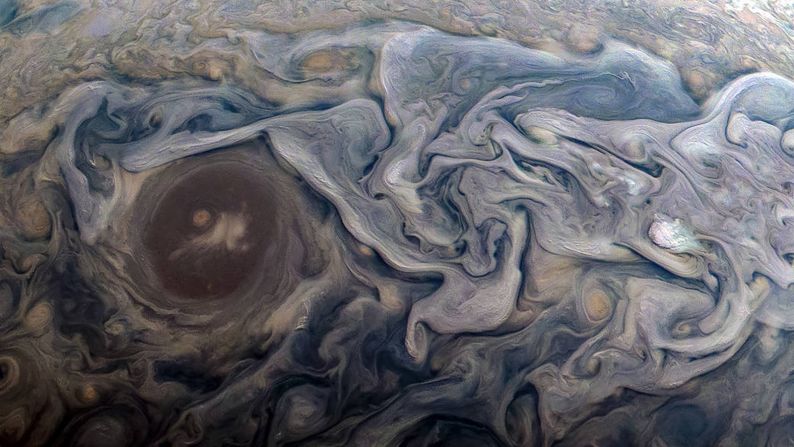
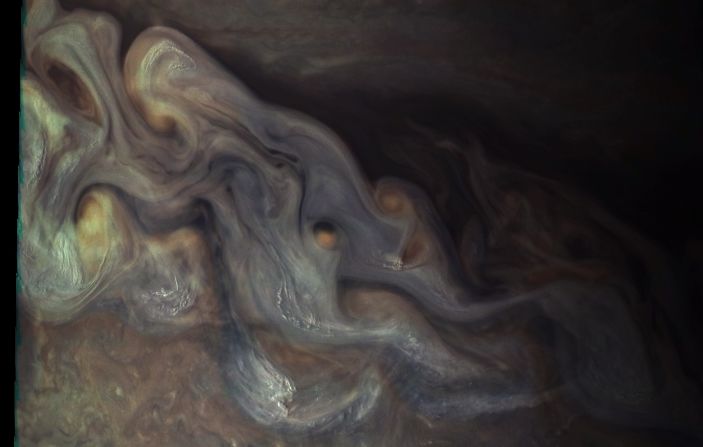
These dramatic swirls on Jupiter are atmospheric features. Clouds swirl around a circular feature in a jet stream region.
Kevin M. Gill/NASA
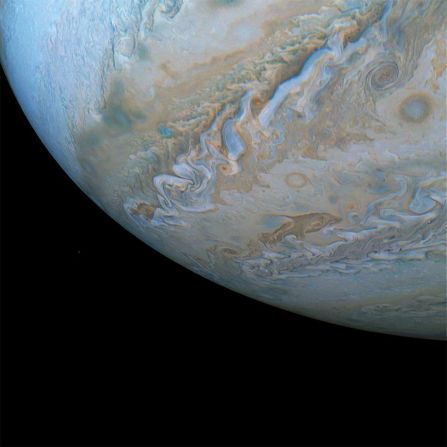
Is that a dolphin on Jupiter? No, but it definitely looks like one. It's actually a cloud that looks like it's swimming through cloud bands along the South Temperate Belt.
Brian Swift/Seán Doran/NASA
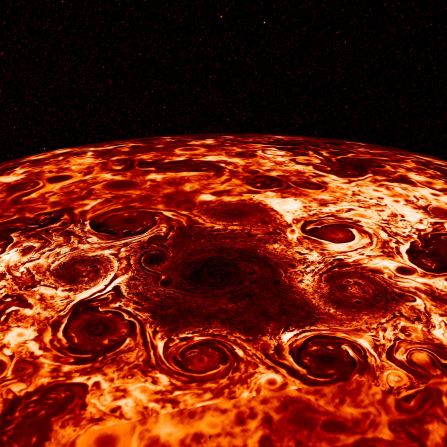
This composite image, derived from data collected by the Jovian Infrared Auroral Mapper (JIRAM) instrument aboard NASA's Juno mission to Jupiter, shows the central cyclone at the planet's north pole and the eight cyclones that encircle it.
JPL-Caltech/SwRI/ASI/INAF/JIRAM/NASA
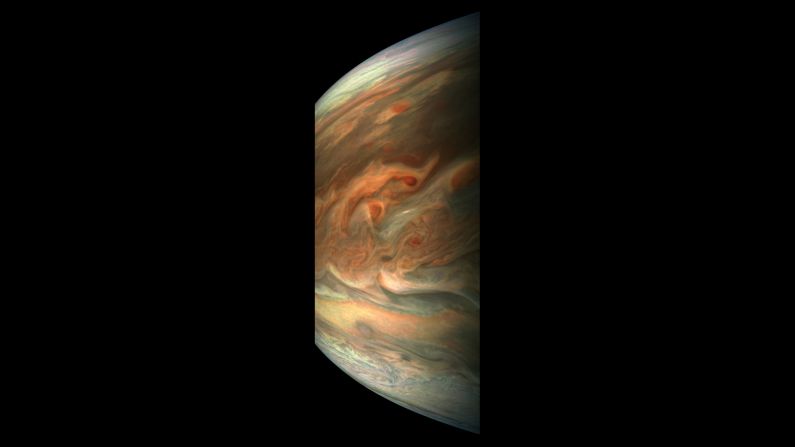
This striking image of Jupiter was captured by NASA's Juno spacecraft as it performed its eighth flyby of the gas giant.
NASA/JPL-Caltech/SwRI/MSSS/Gerald Eichstädt
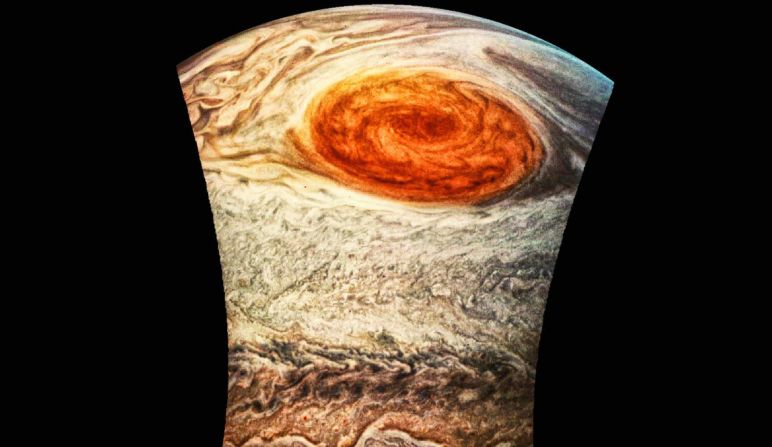
Algorithmic-based scaling and coloring reveal a vivid look at the Great Red Spot in July 2017.
Shawn Handran/NASA
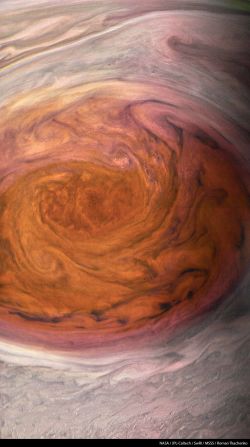
Jupiter's Great Red Spot is a storm with a 10,000-mile-wide cluster of clouds in July 2017.
NASA
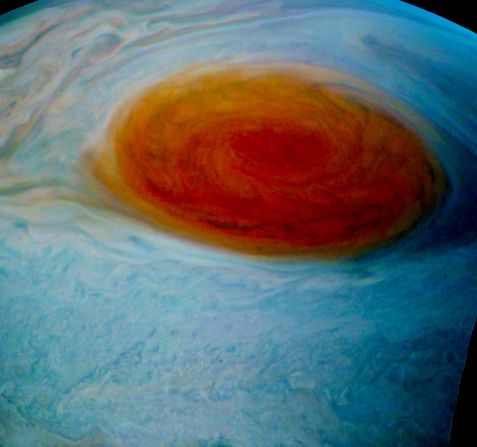
Color enhancements offer a detailed look into the Great Red Spot.
Tom Momary/NASA
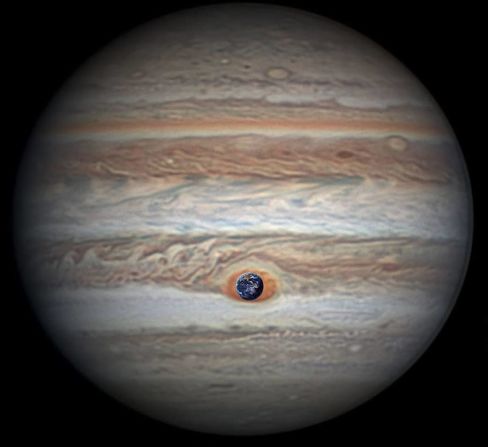
NASA configured this comparison of its own image of Earth with an image of Jupiter taken by astronomer Christopher Go.
NASA/JPL-Caltech/SwRI/MSSS/Christopher Go
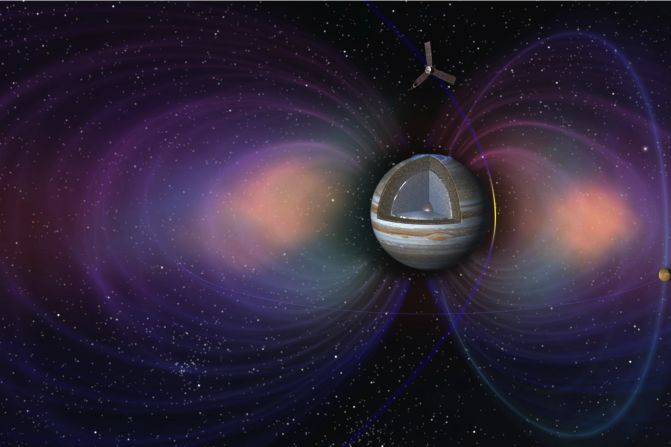
This artist's concept shows the pole-to-pole orbits of the NASA's Juno spacecraft at Jupiter.
NASA/JPL-Caltech/SwRI
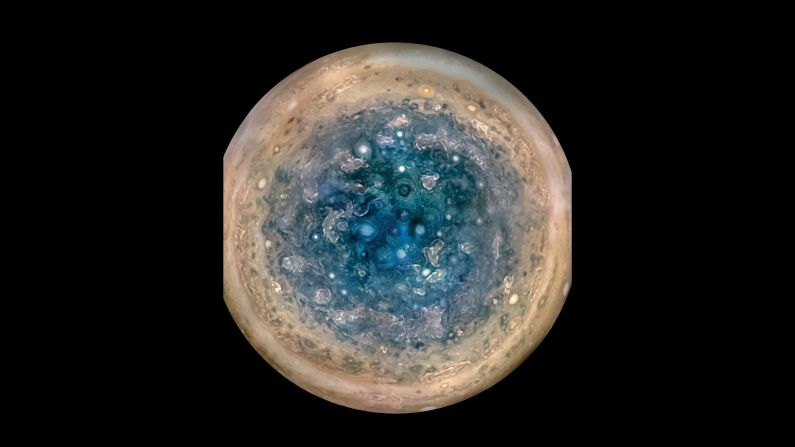
This image shows Jupiter's south pole, as seen by NASA's Juno spacecraft from an altitude of 32,000 miles (52,000 kilometers). The oval features are cyclones, up to 600 miles (1,000 kilometers) in diameter. Multiple images taken with the JunoCam instrument on three orbits were combined to show all areas in daylight, enhanced color and stereographic projection.
NASA/JPL-Caltech/SwRI/MSSS/Betsy Asher Hall/Gervasio Robles
An even closer view of Jupiter's clouds obtained by NASA's Juno spacecraft.
NASA/SWRI/MSSS/Gerald Eichstädt/Seán Doran
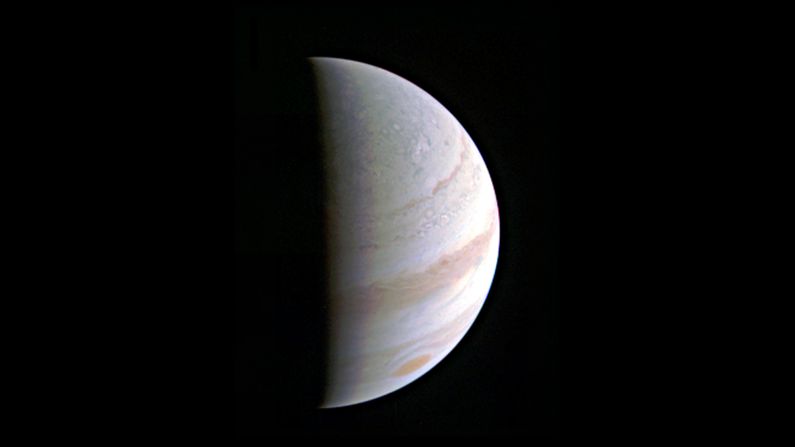
Jupiter's north polar region comes into view as NASA's Juno spacecraft approaches the giant planet. This view of Jupiter was taken when Juno was 437,000 miles (703,000 kilometers) away during its first of 36 orbital flybys of the planet.
JPL-Caltech/SwRI/MSSS/NASA
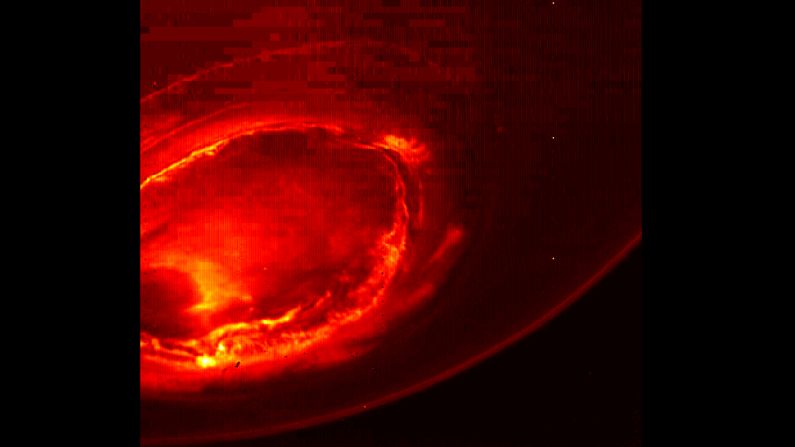
This infrared image gives an unprecedented view of the southern aurora of Jupiter, as captured by NASA's Juno spacecraft on August 27, 2016. Juno's unique polar orbit provides the first opportunity to observe this region of the gas-giant planet in detail.
NASA/JPL-Caltech/SwRI/ASI/INAF/J
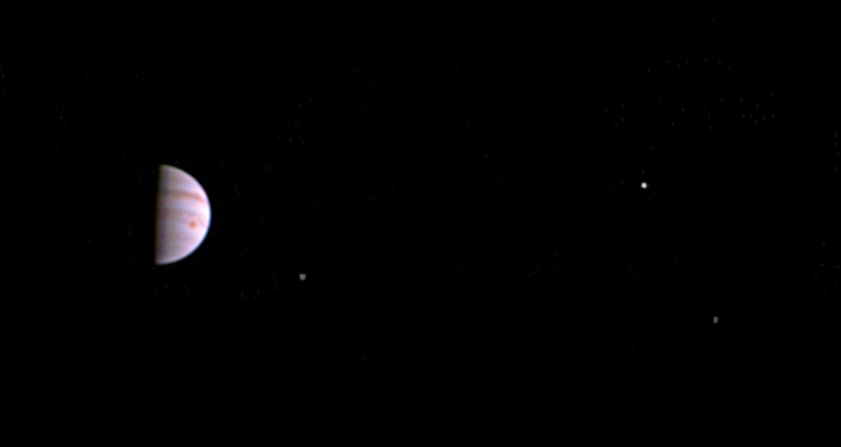
NASA's Juno spacecraft has sent back its first photo of Jupiter, left, since entering into orbit around the planet. The photo is made from some of the first images taken by JunoCam and shows three of the massive planet's four largest moons: from left, Io, Europa and Ganymede.
NASA/JPL-Caltech/SwRI/MSSS
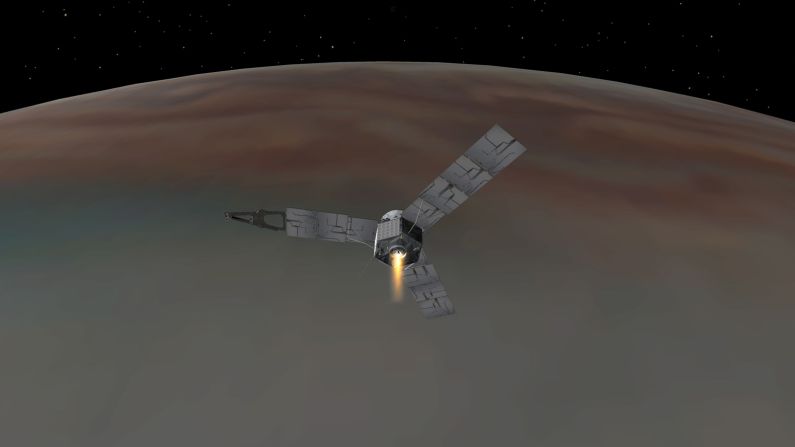
An illustration depicts NASA's Juno spacecraft entering Jupiter's orbit. Juno will study Jupiter from a polar orbit, coming about 3,000 miles (5,000 kilometers) from the cloud tops of the gas giant.
Caltech/JPL/NASA
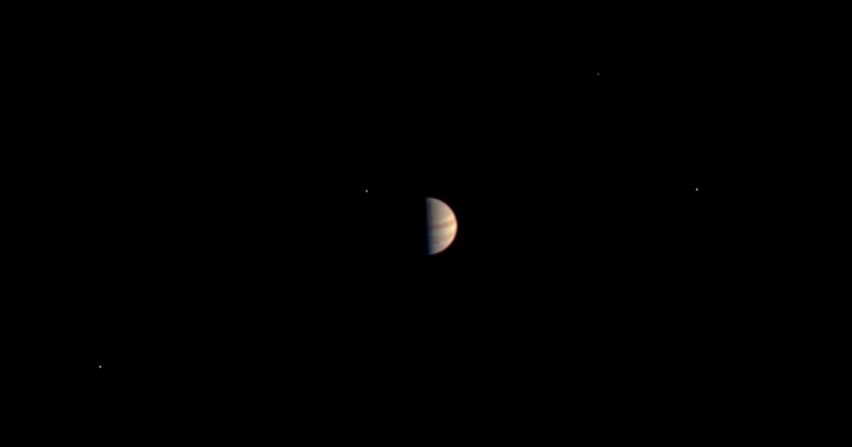
This was the final view of Jupiter taken by Juno before the on-board instruments were powered down to prepare for orbit. The image was taken June 29, 2016, while the spacecraft was 3.3 million miles (5.3 million kilometers) from Jupiter.
NASA
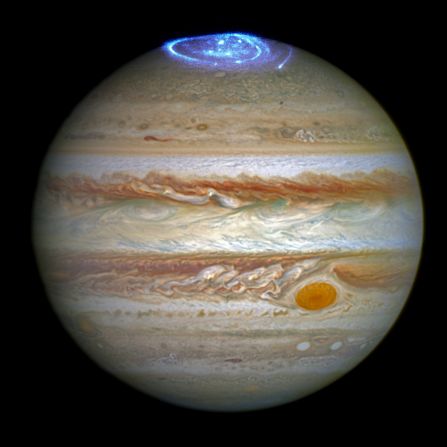
NASA's Hubble Space Telescope captured images of Jupiter's auroras on the poles of the gas giant. The observations were supported by measurements taken by Juno.
NASA/ESA/J. Nichols
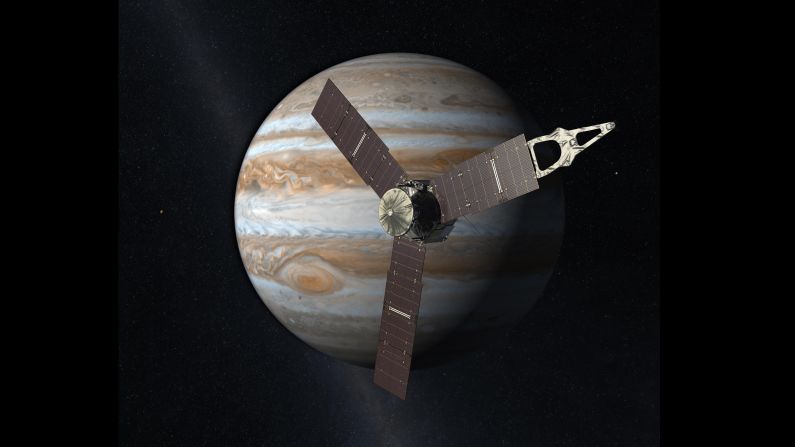
This artist rendering shows Juno orbiting Jupiter.
NASA
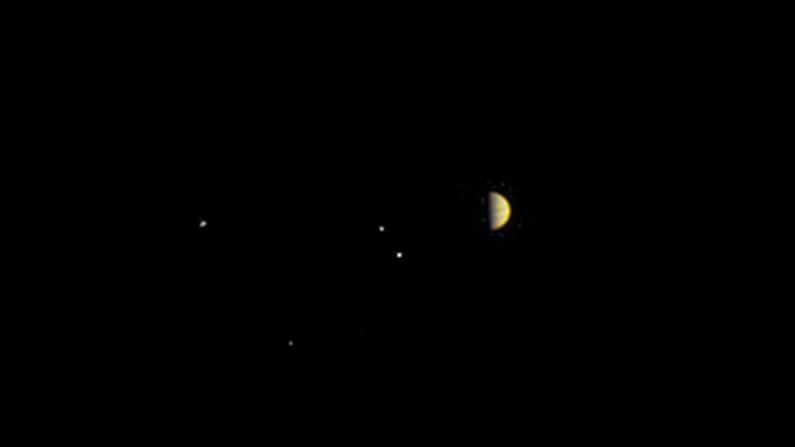
Jupiter and the gaseous planet's four largest moons -- Io, Europa, Ganymede and Callisto -- are seen in a photo taken by Juno on June 21, 2016. The spacecraft was 6.8 million miles (10.9 million kilometers) from the planet.
NASA
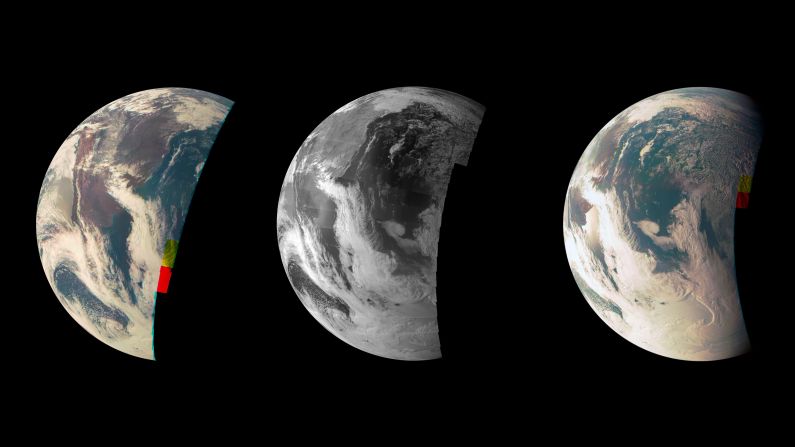
Juno made a flyby of Earth in October 2014. This trio of images was taken by the spacecraft's JunoCam.
NASA
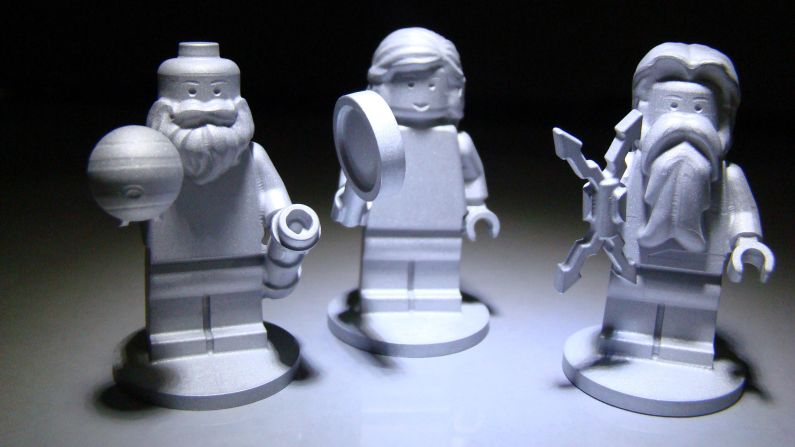
Three Lego figurines are flying aboard the Juno spacecraft. They represent the Roman god Jupiter; his wife, Juno; and Galileo Galilei, the scientist who discovered Jupiter's four largest moons on January 7, 1610.
NASA
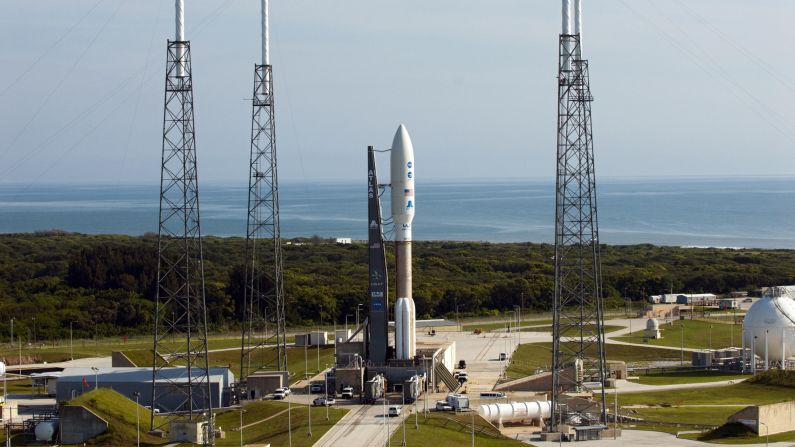
Jupiter was 445 million miles (716 million kilometers) from Earth when Juno was launched from Cape Canaveral, Florida, on August 5, 2011. But the probe traveled a total distance of 1,740 million miles (2,800 million kilometers) to reach Jupiter, making a flyby of Earth to help pick up speed.
NASA
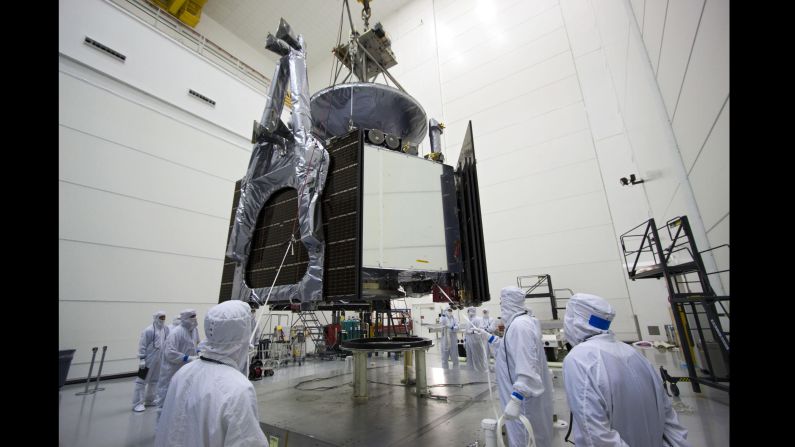
Technicians use a crane to lower Juno onto a stand where the spacecraft was loaded with fuel for its mission.
NASA
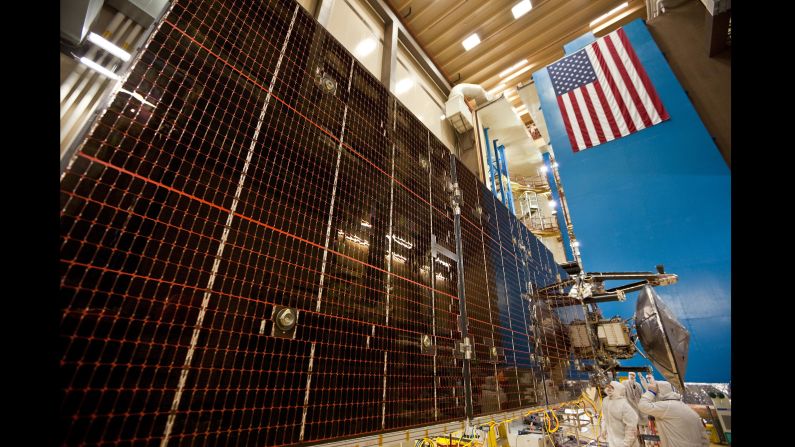
Technicians test the three massive solar arrays that power the Juno spacecraft. In this photo taken February 2, 2011, each solar array is unfurled at a Lockheed Martin Space Systems facility in Denver.
NASA

My Account
  • Settings
  • Newsletters
  • Topics you follow
  • Sign out
Your CNN account Sign in to your CNN account

Live TV Listen Watch
  • World
    • Africa
    • Americas
    • Asia
    • Australia
    • China
    • Europe
    • India
    • Middle East
    • United Kingdom
  • US Politics
    • Trump
    • Facts First
    • CNN Polls
    • Elections 2026
    • Redistricting Tracker
    • Epstein Files
  • Business
    • Tech
    • Media
    • Calculators
    • Videos
  • Markets
    • Pre-markets
    • After-Hours
    • Fear & Greed
    • Investing
  • Health
    • Life, But Better
    • Fitness
    • Food
    • Sleep
    • Mindfulness
    • Relationships
  • Entertainment
    • Movies
    • Television
    • Celebrity
  • Tech
    • Innovate
  • Style
    • Arts
    • Design
    • Fashion
    • Architecture
    • Luxury
    • Beauty
    • Video
  • Travel
    • Destinations
    • Food & Drink
    • Stay
    • News
    • Videos
  • Sports
    • Football
    • Tennis
    • Golf
    • Motorsport
    • US Sports
    • Olympics
  • Science
    • Space
    • Life
    • Unearthed
  • Climate
    • Solutions
    • Weather
  • Weather
    • Video
    • Climate
  • World Cup 2026
  • Ukraine-Russia War
  • Israel-Hamas War
  • Features
    • As Equals
    • Call to Earth
    • Freedom Project
    • Impact Your World
    • Inside Africa
    • CNN Heroes
  • Watch
    • Live TV
    • Featured
    • CNN Headlines
    • Shows A-Z
    • CNN 10
    • CNN TV Schedule
  • Listen
    • All There Is with Anderson Cooper
    • Chasing Life with Dr. Sanjay Gupta
    • The Assignment with Audie Cornish
    • Terms of Service with Clare Duffy
    • CNN 5 Things
    • All CNN Podcasts
  • Games
    • Daily Crossword
    • Jumble Crossword
    • Photo Shuffle
    • Sudoblock
    • Sudoku
    • 5 Things Quiz
  • About CNN
    • Photos
    • Investigations
    • CNN Profiles
    • CNN Leadership
    • CNN Newsletters
    • Work for CNN

Health
Watch Listen Live TV
My Account
  • Settings
  • Newsletters
  • Topics you follow
  • Sign out
Your CNN account Sign in to your CNN account
Follow CNN

Download the CNN app

Terms of Use Privacy Policy Ad Choices Accessibility & CC About Newsletters Transcripts Sitemap

© 2026 Cable News Network. A Warner Bros. Discovery Company. All Rights Reserved.
CNN Sans ™ & © 2016 Cable News Network.

Download the CNN app

Scan the QR code to download the CNN app on Google Play.

Scan the QR code to download the CNN app from Google Play.

Download the CNN app

Scan the QR code to download the CNN app from the Apple Store.

Scan the QR code to download the CNN app from the Apple Store.