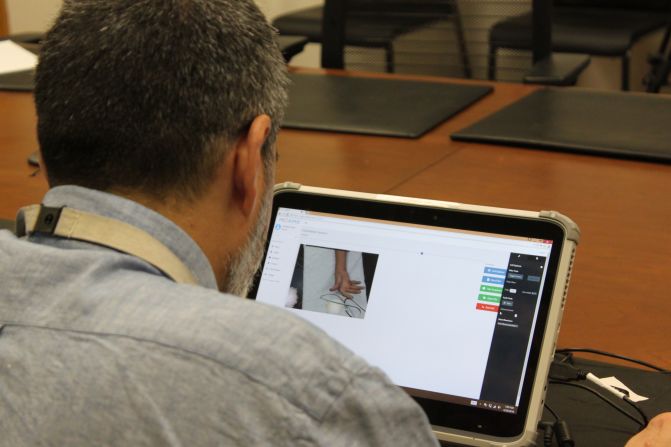
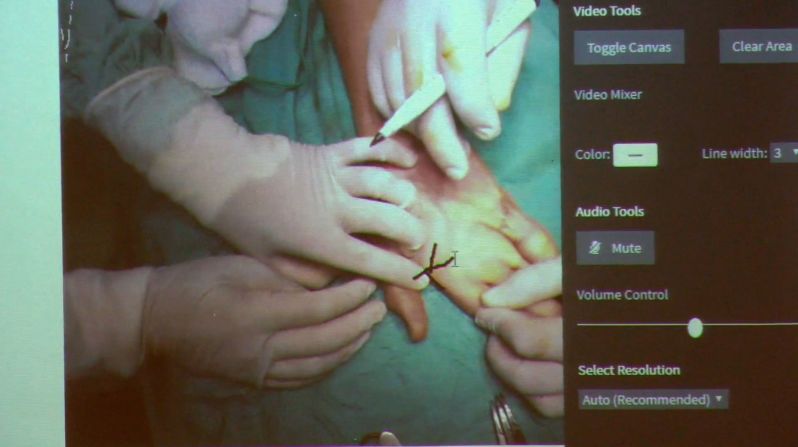
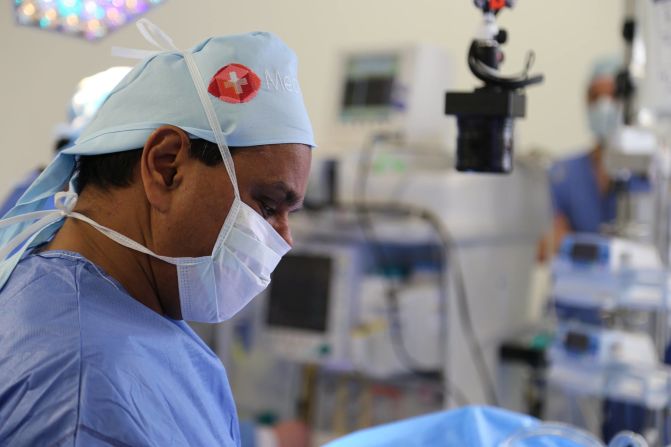
Proximie is a software that enables surgeons to lead operations from thousands of miles away using a computer, tablet or smart phone.
AUBMC
They can mark on the screen where to make incisions, guiding the team conducting the operation as it progresses.
AUBMC
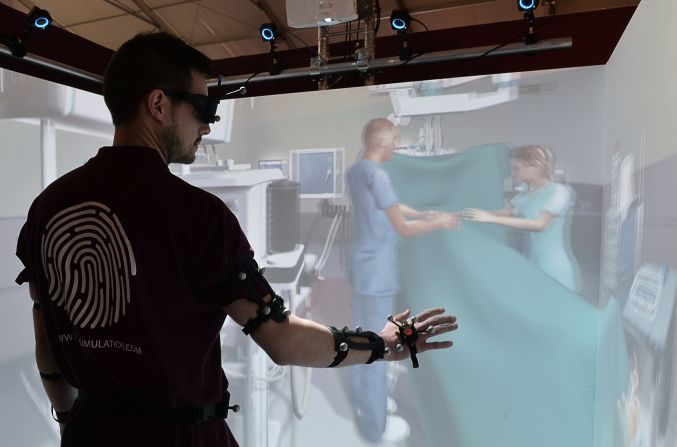
As well as remote surgery, it's also possible to perform virtual reality surgery for training purposes. The VirTeaSy Surgery Training Simulator allows students to practice gestures used in bone surgery, without any risk to patients.
JEAN-FRANCOIS MONIER/AFP/AFP/Getty Images
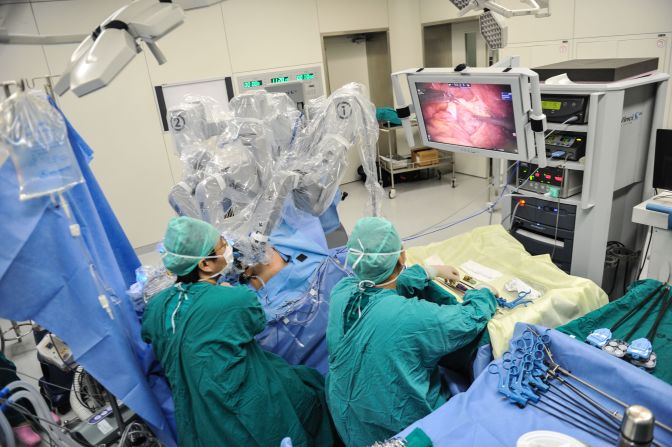
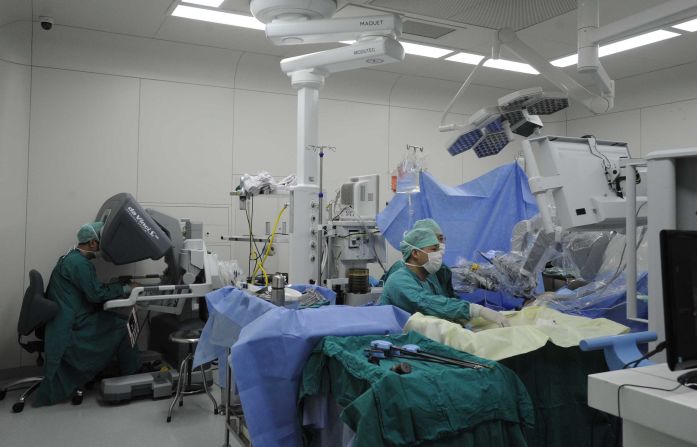
Robots have also become useful when it comes to operating. The da Vinci Sugery System lets surgeons control a multi-armed robot which has tiny wristed instruments that can bend and rotate more effectively than the human hand.
ChinaFotoPress/Getty Images AsiaPac/Getty Images
Here the surgeon (left) controls the da Vinci robot to remove a tumor in a patient. The robot has a magnified 3D vision system which can give the surgeon a clearer view of the operation.
ChinaFotoPress/Getty Images AsiaPac/Getty Images
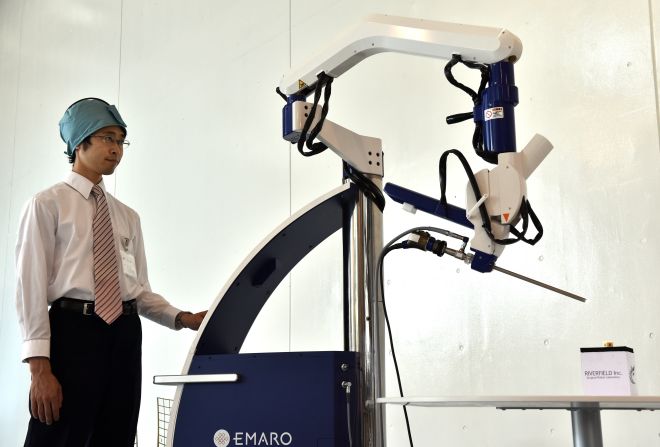
Pictured is the world's first pneumatically controlled endoscope robot which can assist in low invasive surgery. A sensor in the surgeon's cap gives them control of the camera's movement while operating.
YOSHIKAZU TSUNO/AFP/AFP/Getty Images
Health care company Medical Realities is using virtual reality to transport people directly into an operating room to watch surgeons as they operate.
Courtesy Medical Realities
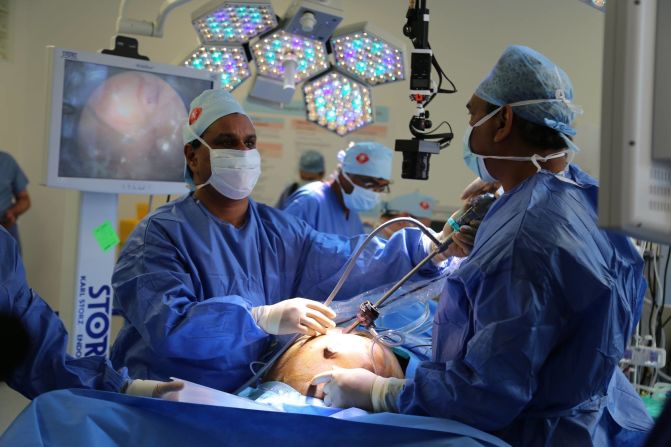
Medical students -- and members of the public -- tuned in from all over the globe to watch as surgery was performed on a 70-year old British colon cancer patient.
Courtesy Medical Realities
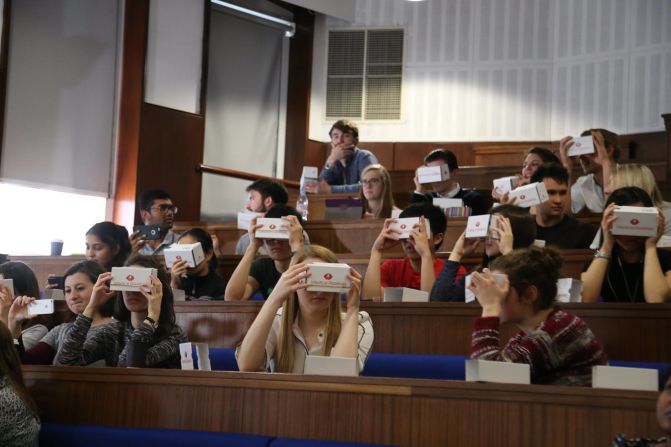
People could watch using the VRinOR app available on Android and iOS as well as the Medical Realities website. The team at the Royal London provided viewing equipment to a range of schools and training hospitals.
Justin Sullivan/Getty Images
The team at Medical Realities is not stopping simply at immersion inside an operating theater. The next goal is to provide truly virtual surgery, where the viewer conducts the operation.
Courtesy Medical Realitis
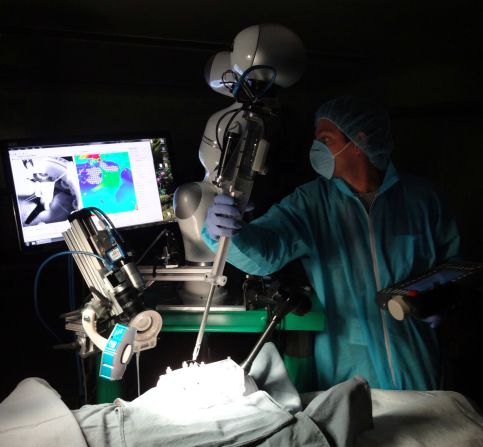
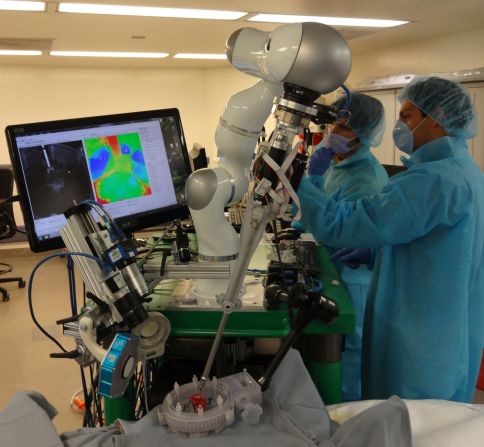
The Smart Tissue Autonomous Robot (STAR) is the first autonomous robot to perform a soft-tissue operation. The supervised robot stitched together a pig's bowel during open surgery.
Sheikh Zayed Institute for Paediatric Surgical Innovation
The robot comes equipped with tools for suturing, fluorescent and 3D imaging, force sensing, and submillimeter positioning. Researchers found that the robot performed better than manual surgery.