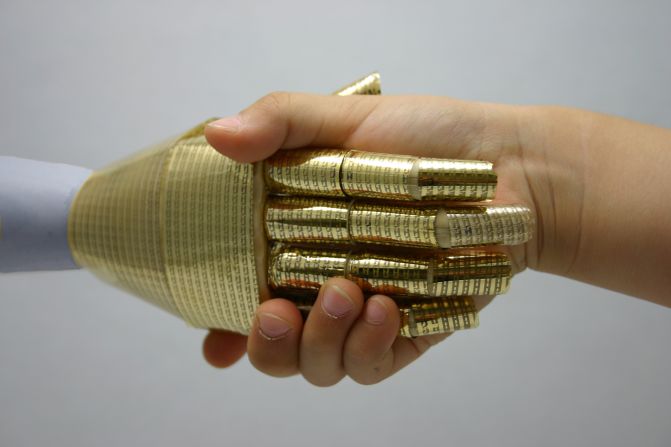
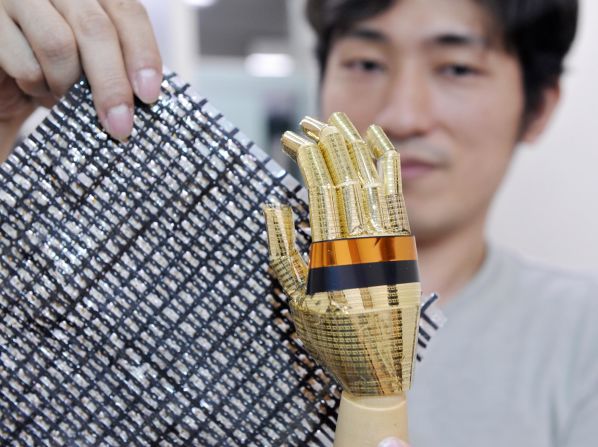
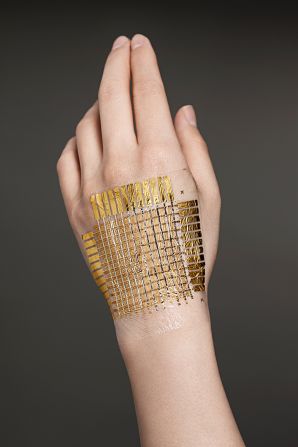
In 2003, Takao Someya, Professor of electrical engineering at the University of Tokyo, had the "futuristic" idea to invent an e-skin that would enable a robot to gauge a person's emotion simply by shaking their hand.
Someya Labs
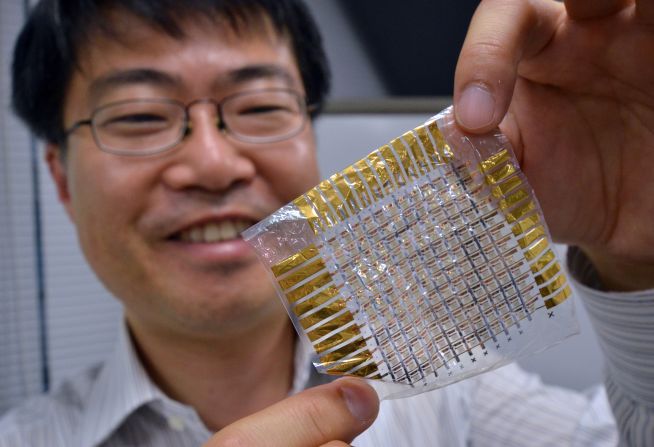
This may look like a chocolate wrapper, but the incredibly sophisticated e-skin has flexible integrated circuits and a touch sensor system, which can be used as wearable healthcare sensors. Pictured, Someya with his e-skin.
YOSHIKAZU TSUNO/AFP/AFP/Getty Images
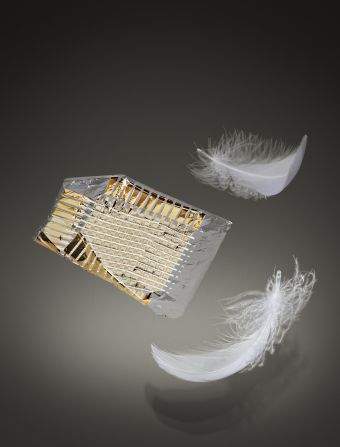
The technology is ultrathin -- less than two micrometers thick -- and sensitive to pressure and temperature, while being lighter than a feather in weight.
Someya labs
The skin is flexible enough to bend around circular surfaces.
Someya Labs
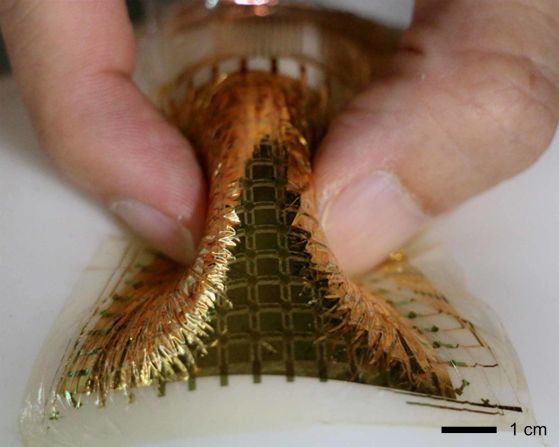
It can also withstand being crumpled without breaking.
Someya Labs
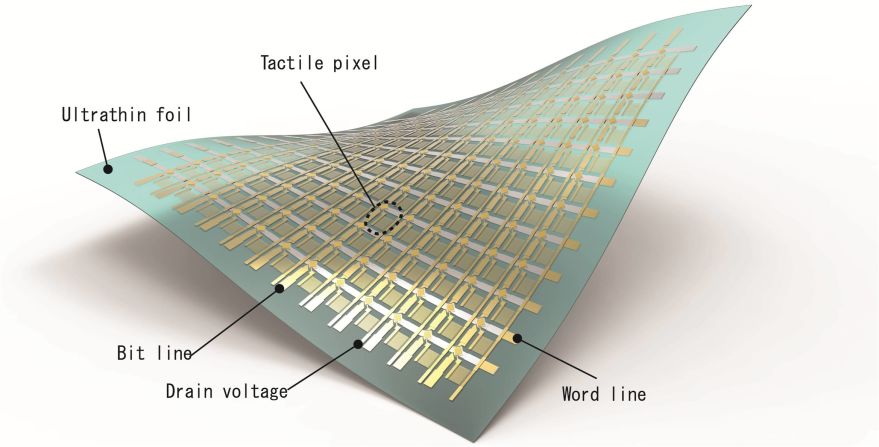
The design consists of organic sensors and transistors laid in a grid format onto an ultra-thin plastic substrate.
Someya labs
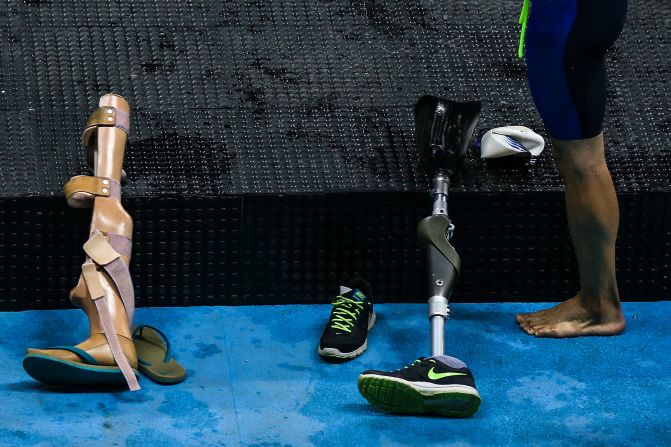
Someya's team hope the technology in their e-skins could enable prosthetics to communicate with the human brain in order to become more effective.
Buda Mendes/Getty Images South America/Getty Images
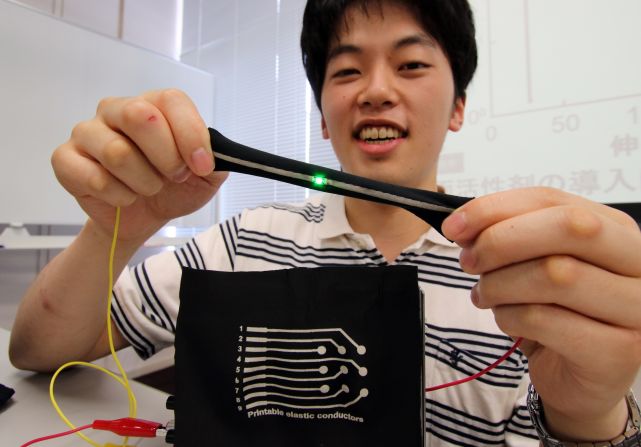
In 2008, Someya's team made the skin both flexible and stretchable, by incorporating into the design an elastic sheet containing carbon nano-tubes that can conduct electricity.
YOSHIKAZU TSUNO/AFP/AFP/Getty Images
Naoji Matsuhisa, a doctoral student of Japan's University of Tokyo, demonstrates a printed elastic electric conductor on a fabric which can be stretched to more than three times its original length. This technology can be used to make wearable devices embedded with biometric sensors.
YOSHIKAZU TSUNO/AFP/AFP/Getty Images
Someya says one of his main aims is to make his e-skin comfortable to the point that people forget they are wearing it.