Your effort and contribution in providing this feedback is much
appreciated.
Close
Ad Feedback
Ad Feedback
Green machine provides clean water, energy
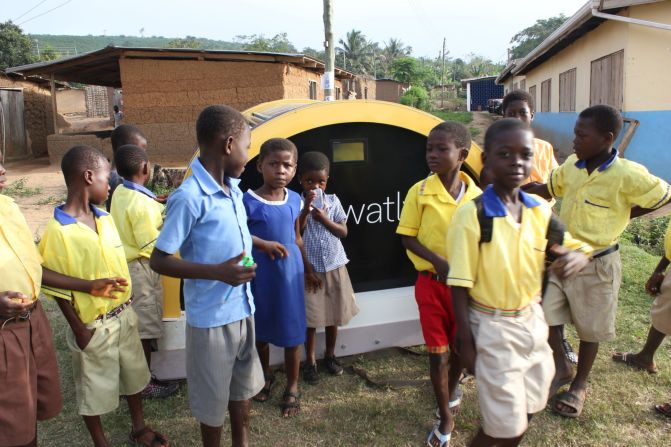
A solar powered machine currently being tested in Ghana could boost development across the rural areas of Sub-Saharan Africa - where around 625 million people are without electricity and 39% lack access to safe water.
Courtesy Watly
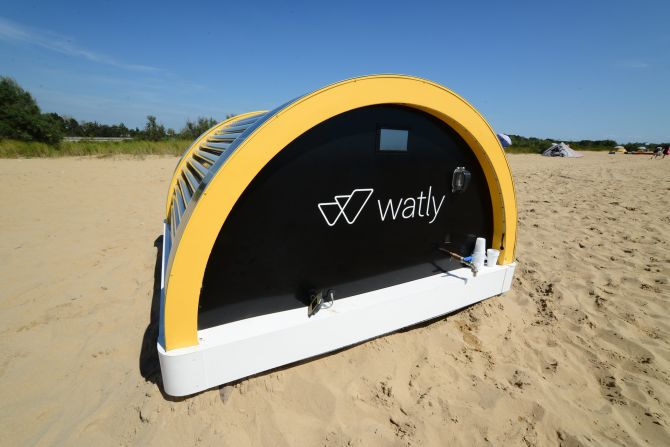
The Watly machine, created by an Italian-Spanish startup, works by capturing solar energy through photovoltaic panels which is then converted into electricity through an internal battery.
Courtesy Watly
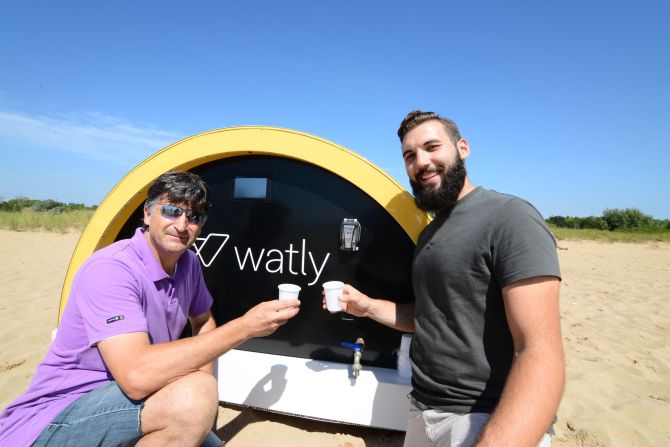
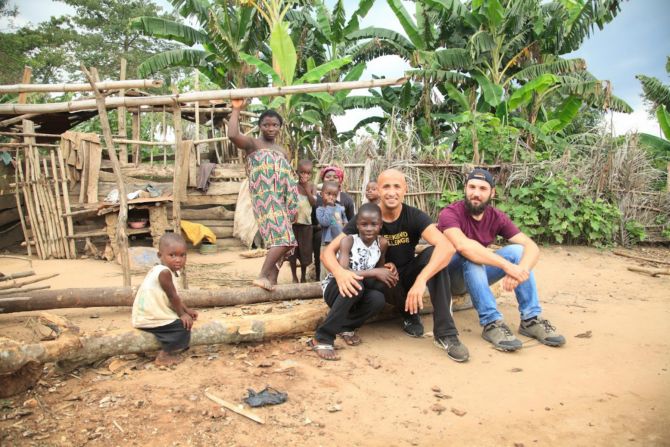
The energy generated through the solar panels is used to produce clean water using a graphene-based filtering process. The company has been testing the technology in rural Ghana and the nest step is to roll out units across Africa. Pictured here are Watly's Matteo Squizzato and Stefano Buiani testing the water.
Courtesy Watly
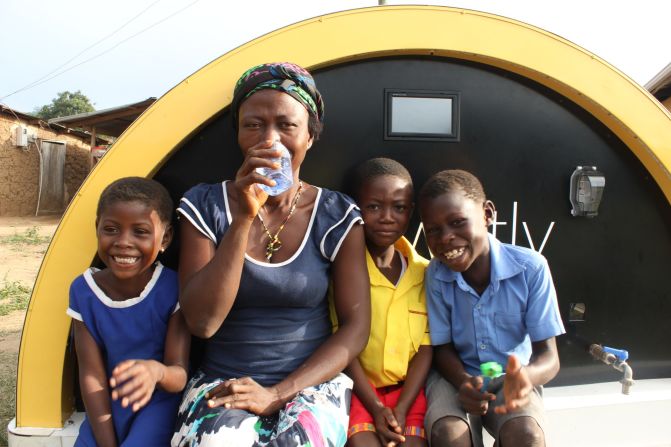
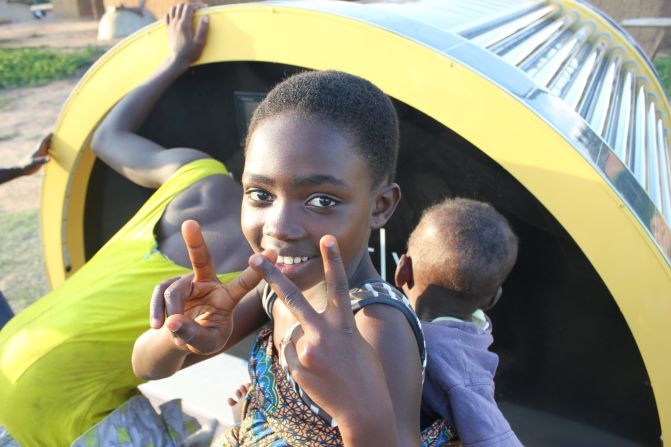
Watly can deliver 5,000 liters of safe drinking water each day. The battery also powers a connectivity hub that provides wireless internet within an 800-meter radius, and a charging station for electronic and mobile devices.
Courtesy Watly
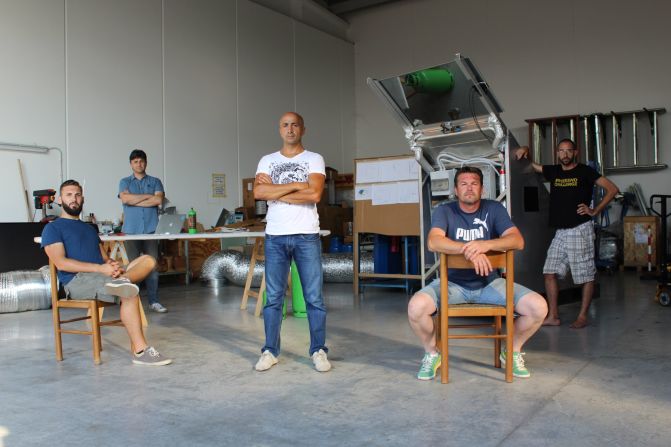
The team behind Watly hopes the machine will bring much needed aid in the development of these areas."This is an infrastructure solution for people without access to three fundamental pillars of civilization," says Watly founder Marco Attisani (center). "We are (taking) people to the heart of the 21st century."
Courtesy Watly
The project has received 1.4 million euros from the European Union's Horizon 2020 research funding program and are planning to collaborate with NGOs and civil society on a local level. "No technology can change the world without a human factor," says Attisani. "Local partners will care for the logistics, spread the word, play a role in education, and leverage functionality."
Courtesy Watly
The team also hopes that the machine could lead to a surge of economic growth by helping local entrepreneurs to start businesses. They plan to install 10,000 Watly units across Africa over the next eight years, which they hope will create an estimated 50,000 jobs.