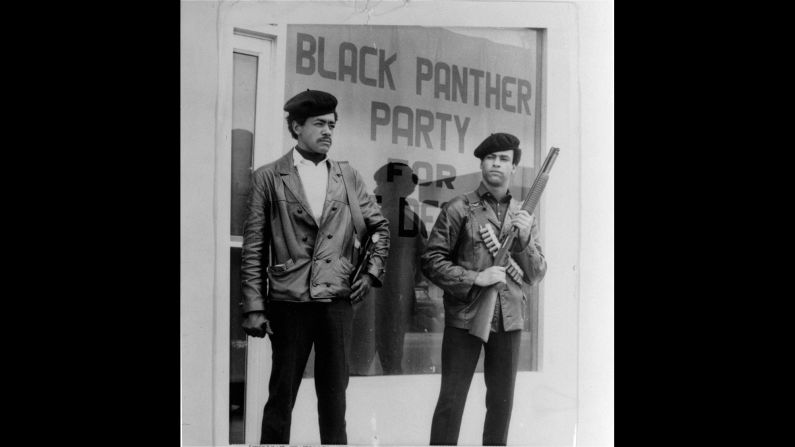
Black Panther National Chairman Bobby Seale, left, wears a Colt .45, and Huey Newton, right, carries a shotgun in Oakland, California, in the 1960s. The group's look and defiant rhetoric made black militancy fashionable in the late '60s.
SAN FRANCISCO EXAMINER/AP
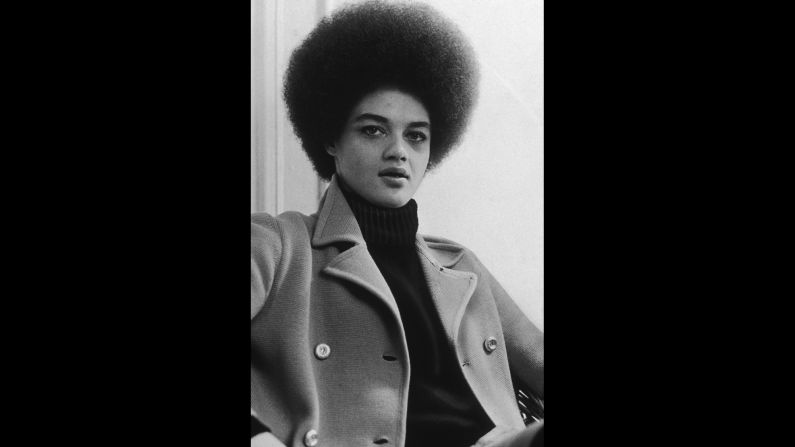
Black Panther leader Kathleen Cleaver in 1968. Though men got most of the attention in the Black Panther Party, the group recruited many strong women leaders. Cleaver is now a law professor at Emory University in Atlanta, Georgia.
New York Times Co/Getty Images
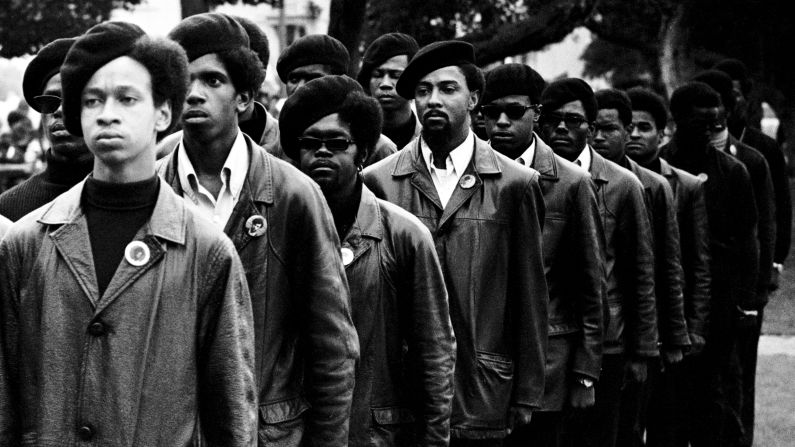
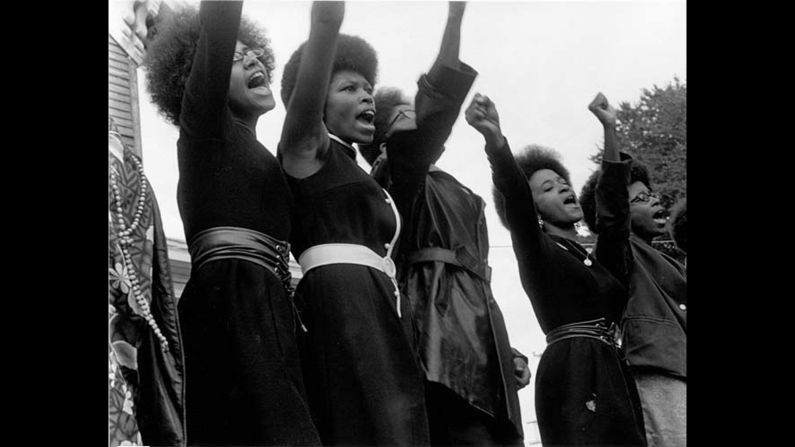
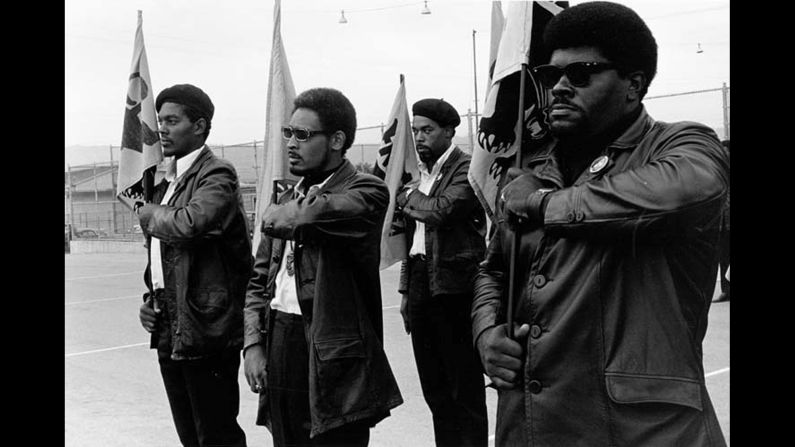
Panthers line up at a rally in DeFremery Park, in Oakland, California. The Panthers' focus on police brutality in the black community and racial bias in the criminal justice system anticipated the Black Lives Matter movement 50 years later.
Stephen Shames/Polaris/ITVS
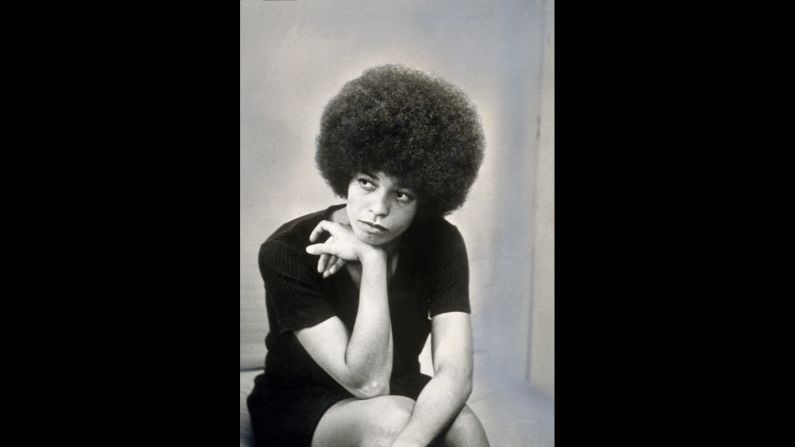
American revolutionary and educator Angela Davis is pictured in November 1969, shortly after she was fired as philosophy professor at UCLA due to her membership in the Communist Party of America. Davis followed up her brilliant early academic career by joining the Black Panthers and being added to the FBI Most Wanted list. She was acquitted of all charges and continues to be a writer, educator, and activist for race, class, and gender equality.
Hulton Archive/Getty Images
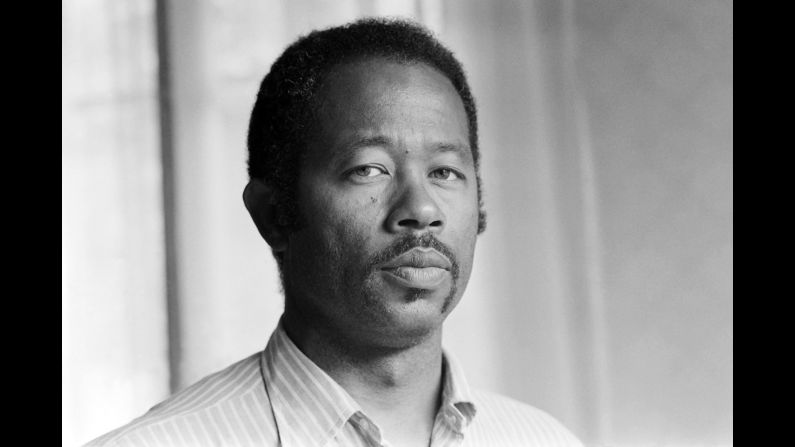
Eldridge Cleaver, one of the original members of the radical Black Panther Party, poses in Paris in May 1975. Appointed the Panthers' minister of information, Cleaver wrote "Soul on Ice," regarded as a handbook of the movement that preached violence and revolution as the only means to achieve black liberation in America. He fled the U.S. in the late '60s and after three years in exile turned his back on the Black Panthers.
Cleaver returned to the U.S. in 1975 to face justice. Denouncing his former movement, he was given a conditional release and sentenced to 2,000 hours of community service.
STRINGER/AFP/Getty Images
Black Panthers demonstrate in Oakland, California. The group created free breakfast programs for poor kids and free health clinics for the needy. It also produced a Black Panther newspaper that reaches thousands of readers at the group's peak.
ITVS
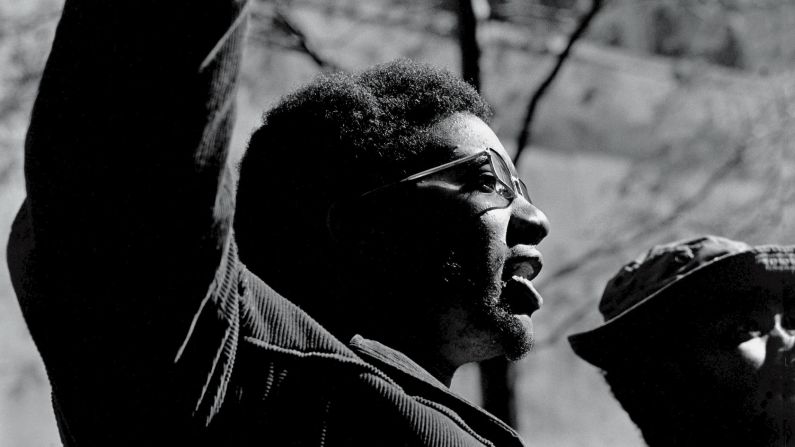
American political and social activist and Black Panther Party member Fred Hampton speaks at the Days of Rage rally in Chicago in October 1969. Hampton was shot to death in his bed by police in a predawn raid only two months later.
David Fenton/Getty Images
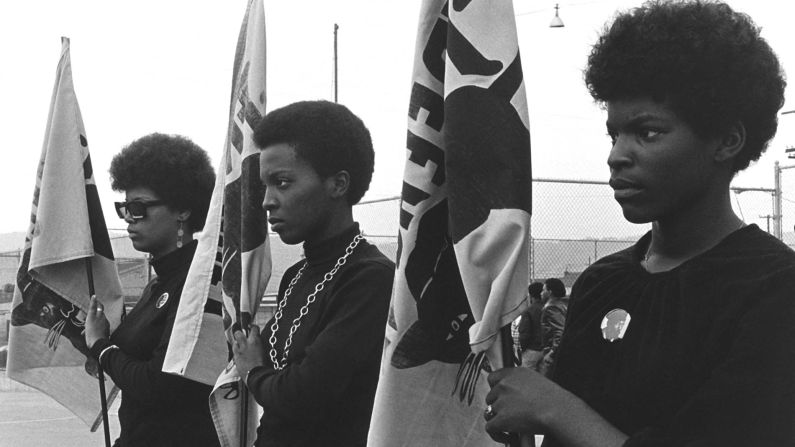
The Black Panther Party weren't just revolutionaries, they were fashion trendsetters. Their Afros and emphasis on "black is beautiful" changed how blacks dressed and carried themselves in the late 1960s and early 1970s.
ITVS
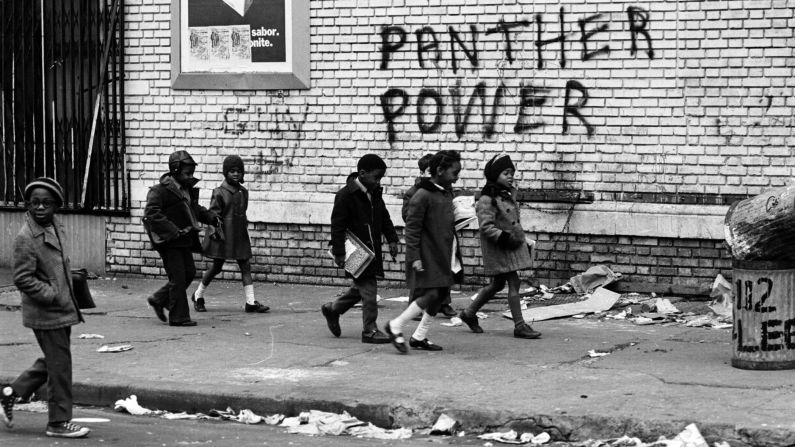
Children walk by Panther Power graffiti. The group saw themselves as the vanguard of a worldwide revolution, a revolution that had sparked uprisings in places like Vietnam and Cuba in the 1960s.
Stephen Shames/Polaris/ITVS
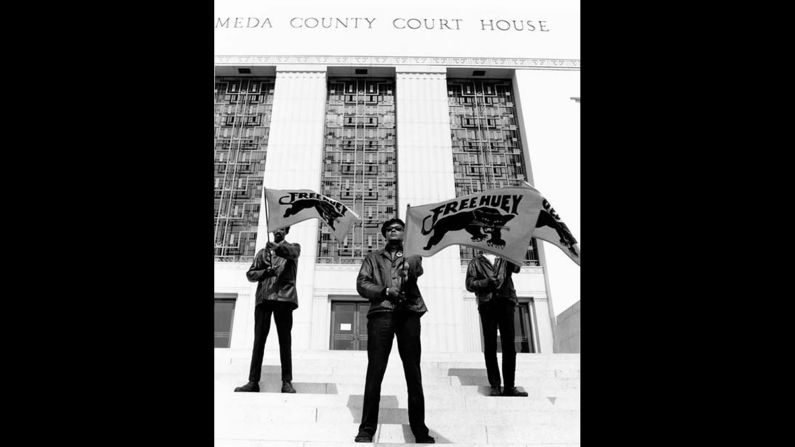
Black Panthers demonstrate at the Alameda County Court House in Oakland in July 1968. There are still several Panthers serving time in prison 50 years after the group's formation.
ITVS
The Panthers said they carried guns as a form of self-defense against police brutality. The Panthers, not the NRA, were forerunners of the open carry gun movement and were fierce defenders of the Second Amendment's right to bear arms.