Your effort and contribution in providing this feedback is much
appreciated.
Close
Ad Feedback
Ad Feedback
Refugee camp Olympians
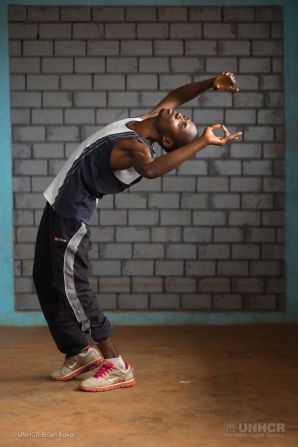
William Kopati, 22, was a high-jumper and long-jumper in Bangui. That was before he was forced to flee in late March 2013, when militants attacked the house where he was living.
Since 2006, Kopati has competed several times in the national championships for high jump, long jump and 400-meter run -- winning the gold medal for high-jump in 2009.
"In 2009, I won the gold medal in long jump in the national championships. I cleared 1.7 meters. I entered my last competition in 2012, before I was forced to flee."
This is the second time Kopati has fled to the DRC, having been a refugee from 2001 to 2003. His dream is to continue his career in athletics, despite the challenges.
"I was here in Mole from 2001 to 2003. I attended primary school here and went to high school when I returned to Bangui. I love it so much, but I had to abandon it because of the situation in my country. My first dream is to continue with athletics."
UNHCR/Brian Sokol
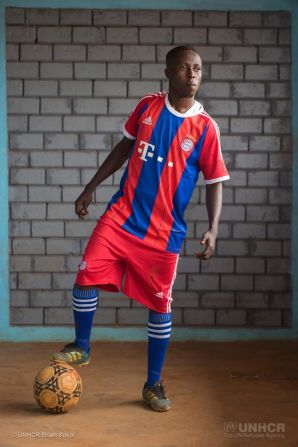
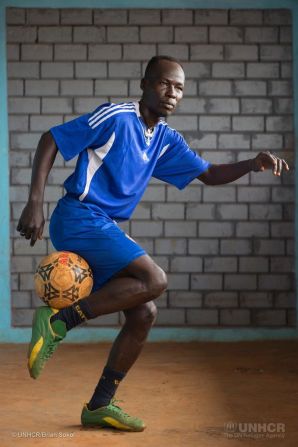
Teddy Gossengha, 23, was once the youngest player on the CAR junior national soccer team, and then played for professional clubs in Bangui -- first Tempete Mocaf, then ASOPT -- before fleeing violence two years ago.
Now, as president of the soccer team in Mole camp, Gossengha is intent on sharing his knowledge and skills with others. But the camp is taking its toll on his skills.
"I've lost almost two years. I would like to develop my sporting talent, because I don't know when the war will finish. The more I stay here, the more I will lose my talent."
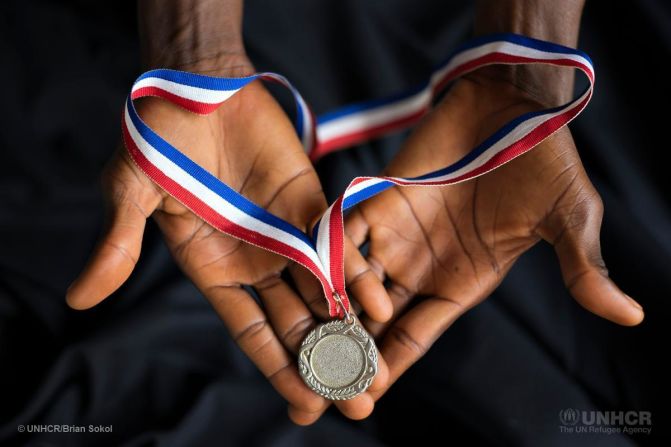
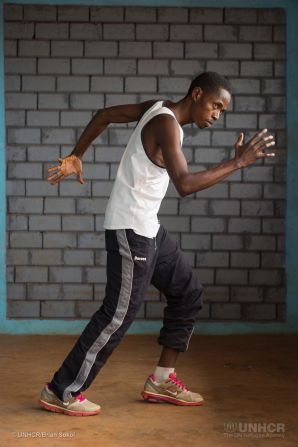
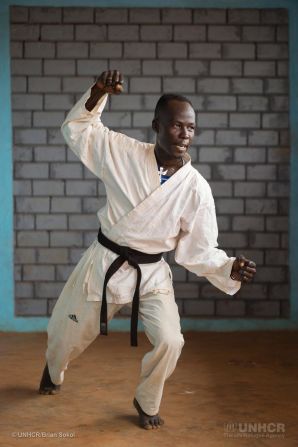
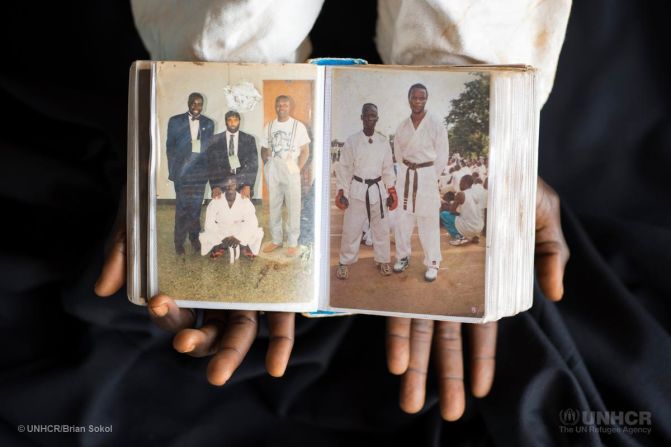
Martial Nantouna, 36, won the national championship in karate for his age group in 1998 and 2000, and was named runner-up for all of Africa in 1998.
"My best performance was at the Africa championship. I brought back two medals: the silver medal for the individual games and the bronze medal for the team. I am still on the national team."
UNHCR/Brian Sokol
Nantouna was living in Miskin, a neighborhood in Bangui, when he heard gunshots on December 15, 2013 and fled to the airport. After three months there he crossed the river and made his way to Mole refugee camp, where he reunited with his wife and children.
"I never go out of Mole," says Martial "I am scared. I ask God to bring peace back to my country."
In Mole refugee camp, Nantouna offers free karate classes three times a week. He is hoping that peace will return soon, allowing him to go home and resume his athletic career.
Nadine Adremane, 27, started playing soccer when she was 16, and was eventually selected for the women's national team, where she played for three years.
"My best memory is when I received the silver medal in the national championship. I scored the goal that qualified my team."
UNHCR/Brian Sokol
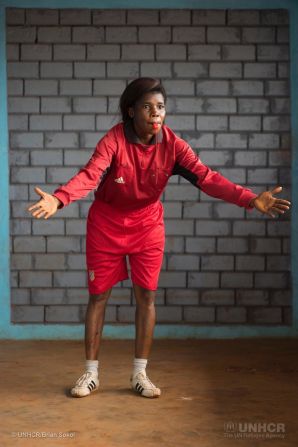
Because there's no professional league for women in CAR, Adremane turned to refereeing games in Bangui and was in the process of qualifying as an international referee before she was forced to flee. She still does not know if she passed.
"There were four of us doing the tests [to become international referees], but I am the only one who came here. I am not in touch with the others. I will go again to the cybercafe and send them an email."
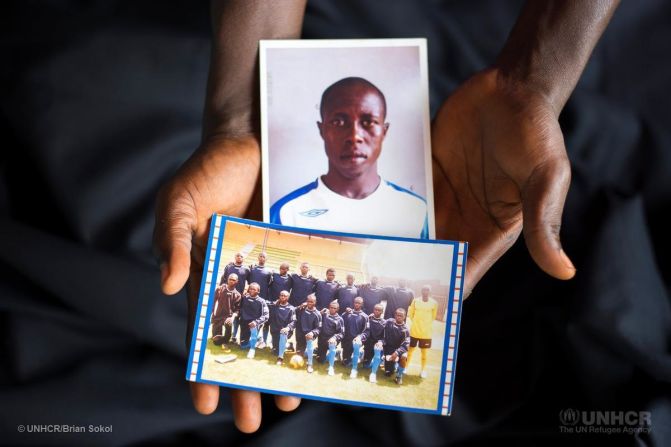
Jason Nyakouna, 32, played for Tempete Mocaf, a first-division soccer club in Bangui, and then for Kpètene Star, before he fled the CAR on December 5, 2013.
"I went to play competitions in Sao Tome, Nigeria, Guinea and Cameroon. After that I went to play for Kpetene Star. The team was in the second division, and I helped them join the first division."
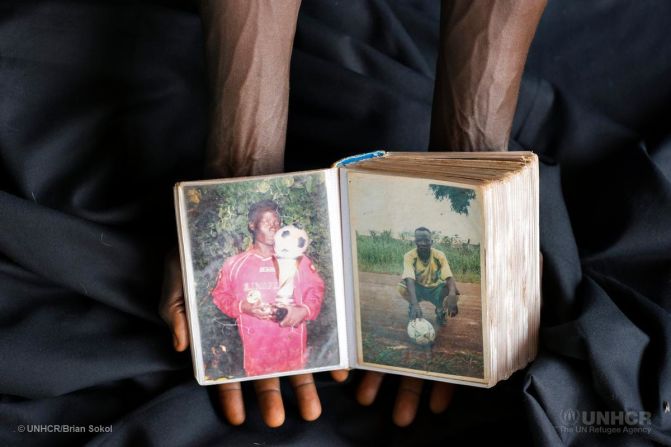
Fleeing to the Mole refugee camp, Nyakouna left behind all his gear and photos of his triumphs. Now he trains young refugees at Mole camp.
"I do that for free because I love football," he says. "I want to improve the level of soccer players in Mole. I want to become a famous trainer, like Jose Mourinho, who trains the team of Chelsea."
Herman Ouagondas, 19, joined CAR soccer club Video at age 15. He fled Bangui when his house was attacked and looted. Still scared by conditions back home, he does not want to return before peace has been restored.
UNHCR/Brian Sokol
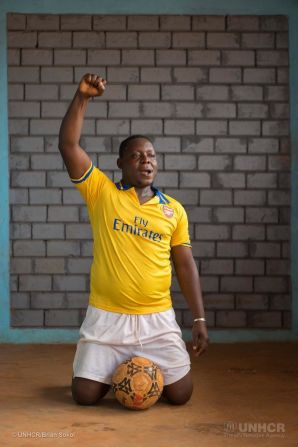
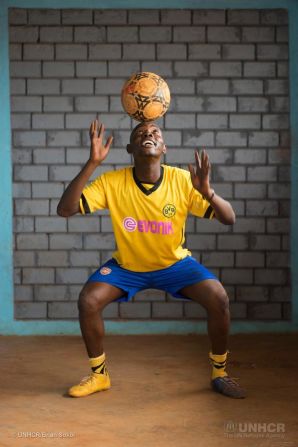
Now a refugee in Mole camp, Ouagondas doesn't see his refugee status as a barrier to his success.
"I want to become like [Liberian soccer player] George Weah. He learned [soccer] in his country but was forced to flee. He continued even if he was a refugee and was selected by famous teams. I want to be like the famous football players I see on TV."
![Because there's no professional league for women in CAR, Adremane turned to refereeing games in Bangui and was in the process of qualifying as an international referee before she was forced to flee. She still does not know if she passed.<br /><br />"There were four of us doing the tests [to become international referees], but I am the only one who came here. I am not in touch with the others. I will go again to the cybercafe and send them an email."](https://media.cnn.com/api/v1/images/stellar/prod/151109151244-mole-refugees-8.jpg?q=w_1200,h_800,x_0,y_0,c_fill/h_447)
![Now a refugee in Mole camp, Ouagondas doesn't see his refugee status as a barrier to his success.<br /><br />"I want to become like [Liberian soccer player] George Weah. He learned [soccer] in his country but was forced to flee. He continued even if he was a refugee and was selected by famous teams. I want to be like the famous football players I see on TV."](https://media.cnn.com/api/v1/images/stellar/prod/151109151946-mole-refugees-12.jpg?q=w_1200,h_800,x_0,y_0,c_fill/h_447)