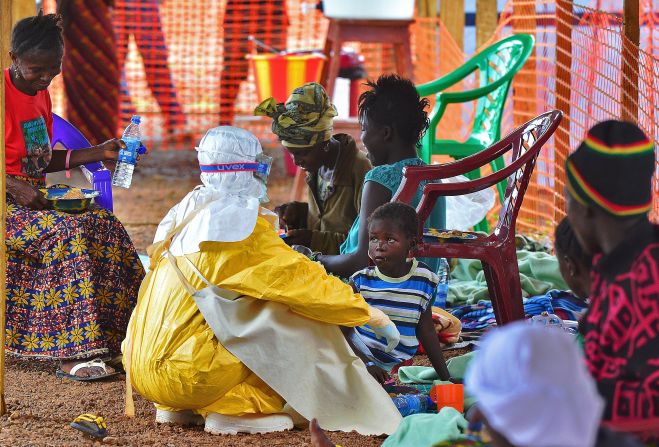
Although the 2014 Ebola outbreak reached nine countries (with the epicenter in three countries), it remains defined as an outbreak, rather than a pandemic, because it has not spread globally. Here, an MSF medical worker feeds a child with Ebola in Kailahun, Sierra Leone.
CARL DE SOUZA/AFP/Getty Images
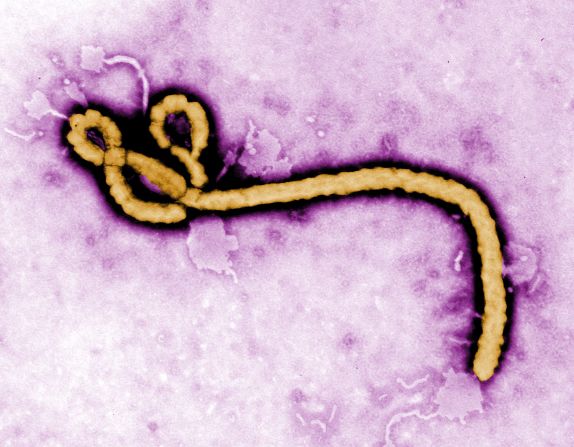
In 2014, the Ebola virus became internationally known due to an outbreak in West Africa, which killed more than 11,300 people. Pictured is a colorized transmission electron micrograph of an Ebola virus particle.
CDC
Burkholderia pseudomallei can cause can cause melioidosis, or Whitmore's disease. "It is predominately a disease of tropical climates, especially in Southeast Asia and northern Australia where it is widespread," according to the CDC website.
Larry Stauffer/Oregon State Public Health Laboratory/CDC
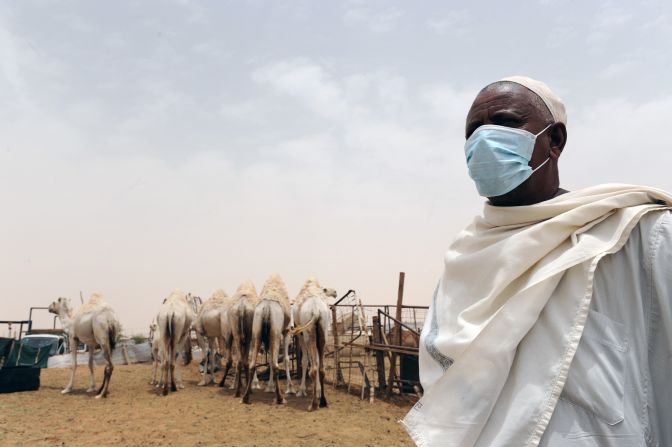
A farmer wears a mask as he works near camels at his farm outside Riyadh, Saudi Arabia, to avoid spreading the Middle East Respiratory Syndrome coronavirus (MERS-CoV). Since Spring 2012, MERS-CoV spread slowly in the Middle East but has now reached 25 countries, with an outbreak currently in South Korea.
FAYEZ NURELDINE/AFP/Getty Images
In 2003, Severe Acute Respiratory Syndrome (SARS) became a global pandemic, infecting over 8,000 people worldwide and causing the death of 774. Pictured, people wear surgical masks to try to reduce the chance of infection from SARS whilst walking through the business district April 1, 2003 in Hong Kong.
Christian Keenan/Getty Images
In 2009, the H1N1 influenza virus swept across the globe causing a pandemic that infected more than 18,000 people.
NIAID
The greatest pandemic to date was Spanish flu, which spread in 1918 and is estimated to have infected a third of the world's population at the time and caused approximately 50 million deaths. Two men wearing and advocating the use of flu masks in Paris during the Spanish flu epidemic in March 1919.
Topical Press Agency/Getty Images
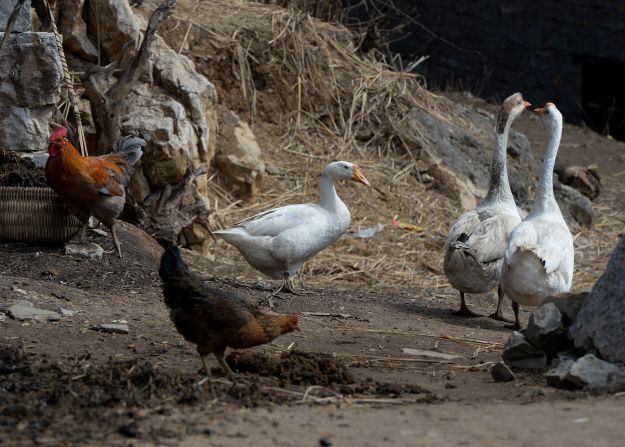
Th H7N9 influenza virus began infecting animals and people in March 2013 in China. Cases continue to emerge, including two reported in Canada in February 2015. The virus is not thought to transmit easily from person to person, and sustained human-to-human transmission has not been reported. Pictured, chickens and geese outside a village house after poultry markets closed due to the risk of spreading the H7N9 bird flu virus at Guiyang in Guizhou Province, in February 2014.