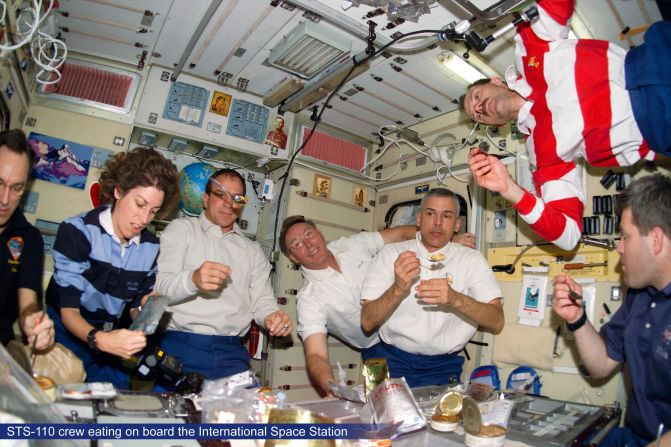
Astronauts floating around at meal time. On the International Space Station astronauts eat at a fold-down table, with food items secured with Velcro or bungee cords. But what do they actually eat?
NASA
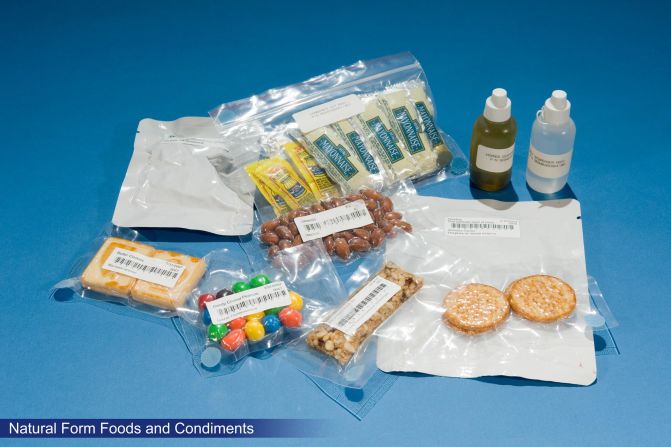
These days food on the International Space Station includes natural form foods and condiments such as mayonnaise, mustard, chilli sauce and wasabi -- all popular with astronauts trying to make up for the flavor deficit caused by zero gravity. The fare has certainly come a long way since the early days of space travel ...
NASA
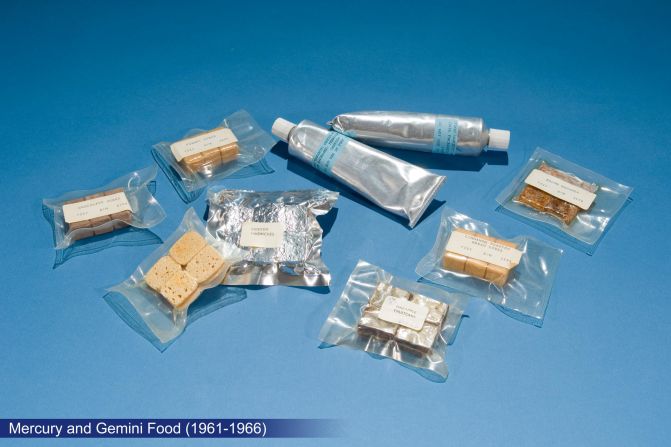
Early space food from the Mercury and Gemini missions (1961-1969), including meals served in toothpaste-style aluminum tubes and gelatin-covered cubes, which were "almost universally despised" by astronauts, according to NASA.
NASA
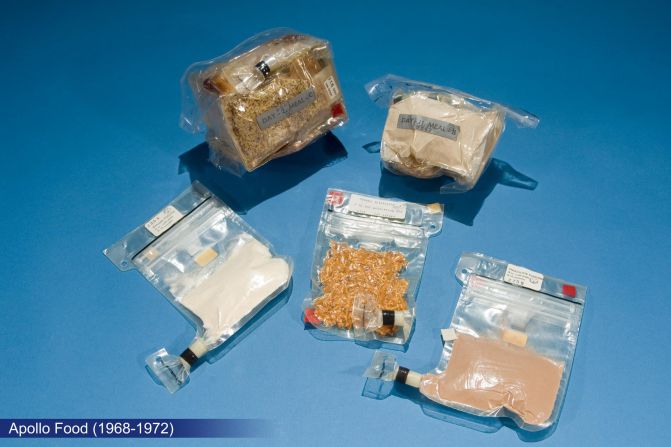
Food served on the Apollo missions (1968-1972). Seen at the bottom is the famous "spoon bowl," an advance that meant astronauts no longer had to eat food directly from tubes. Food was rehydrated and warmed with a hot water gun and eaten with real utensils. Food didn't float off the spoon as some had feared, as the food's moisture made it stick to the spoon.
NASA
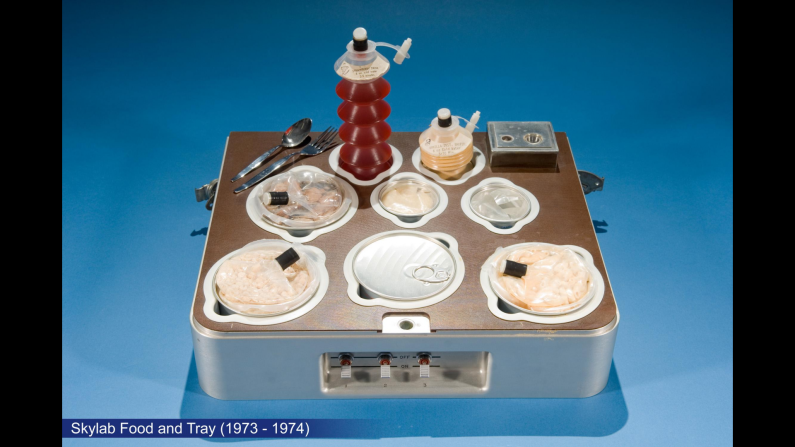
The food and drink served aboard Skylab (1973-1979). Because Skylab had freezers, it was the closest experience yet to eating at home. Meals were defrosted and reheated, with the three astronauts supplied for 112 days at a time.
NASA
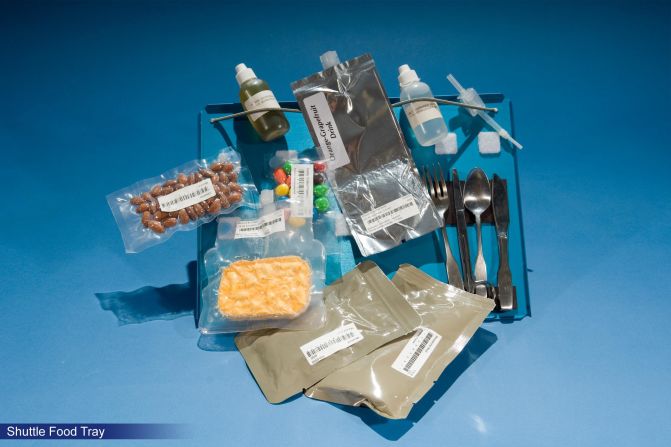
Rehydratables from the Space Shuttle missions (1981-1989), and the first appearance of M&Ms on the space food menu. Referred to simply as "candy-coated chocolates" by NASA, they are now a regular space snack. Note also the magnets securing the cutlery to the tray.
NASA
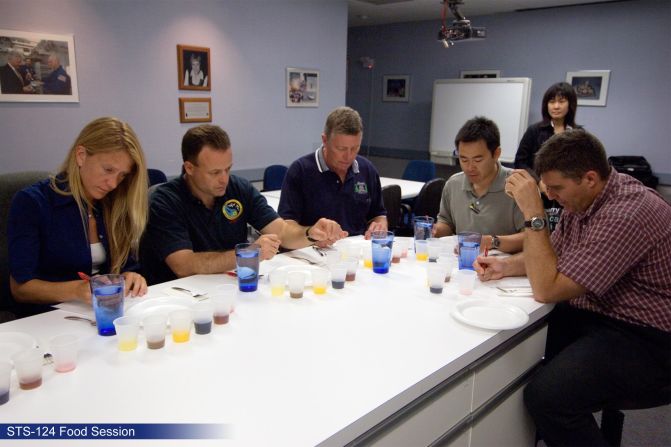
Food scientists at the Johnson Space Center, in Houston, conduct extensive research into the astronauts' diet. Many formulas will be tried out before anything is sent to the Space Station.
NASA
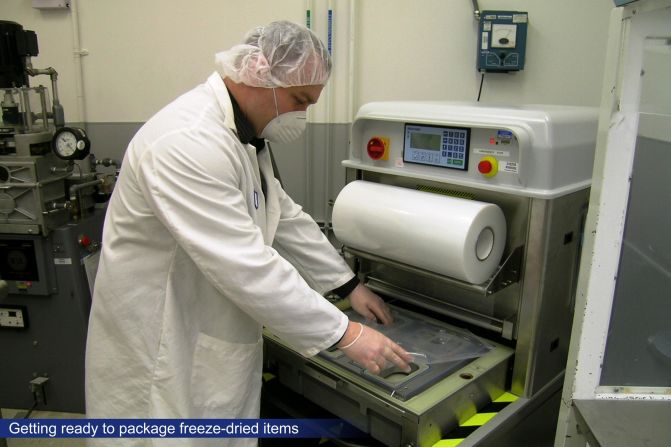
Because there are no refrigeration facilities aboard the ISS, food must be heat processed, freeze-dried and vacuum packed to prevent spoilage.
NASA
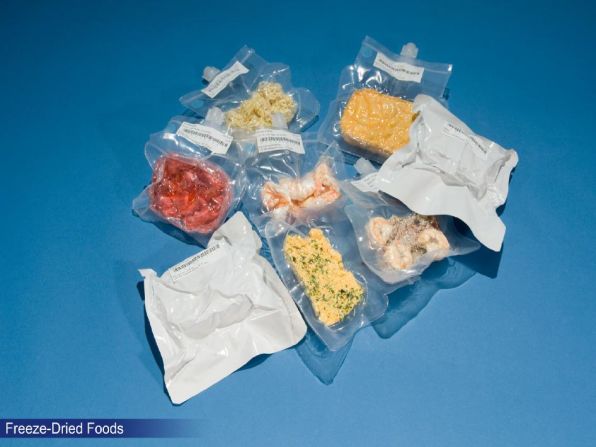
Freeze-dried meals ready for take off. The process locks in all of the flavor and nutrients whilst preventing the food from biodegrading.
NASA
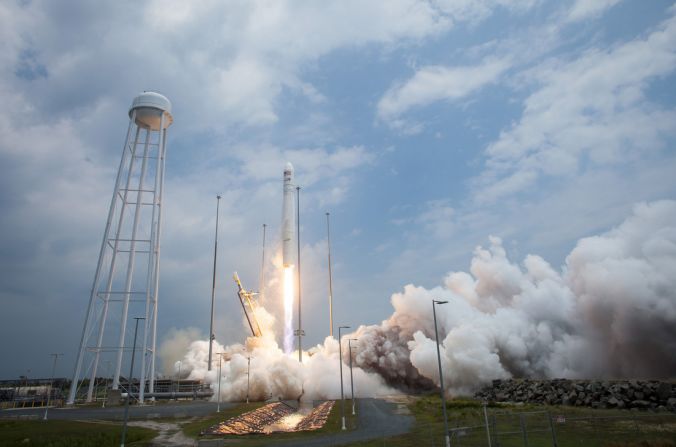
A supply vessel takes off from Wallops Flight Facility in Virginia, July 2014. The spacecraft contained 3,000 pounds of supplies destined for the ISS, including hardware, spare parts and food for the astronauts.
NASA
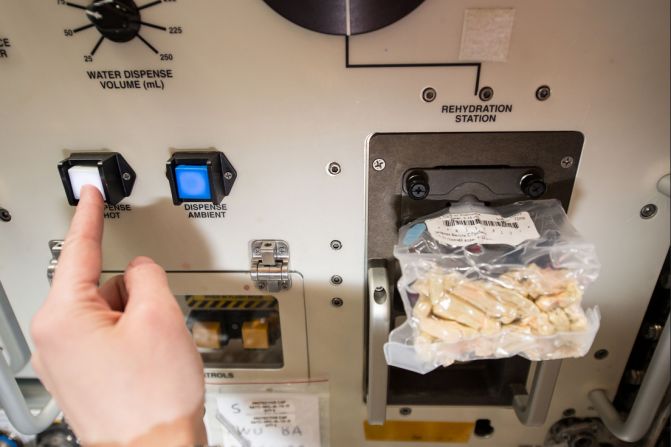
Food is rehydrated on board the ISS using its limited water supply. The ISS employs an extensive recycling program -- including air humidity and the astronauts' urine.