Your effort and contribution in providing this feedback is much
appreciated.
Close
Ad Feedback
Tide of climate change swamping Kiribati
Tide of climate change swamping Kiribati —
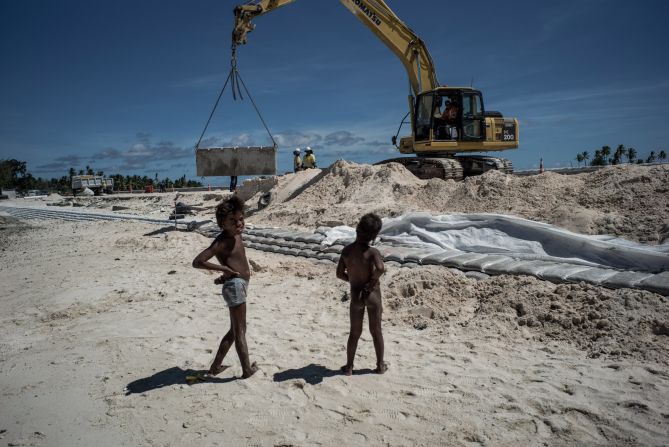
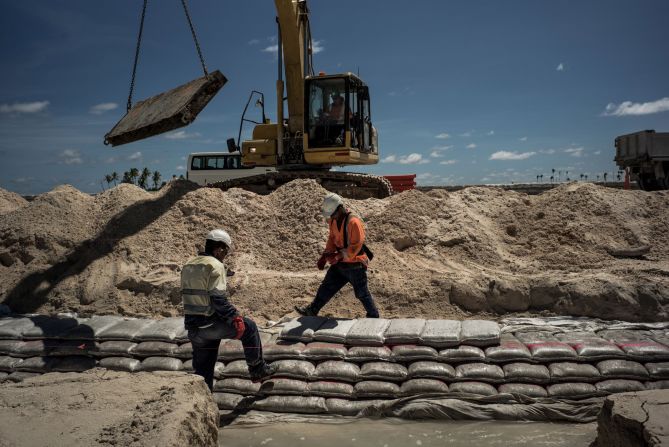
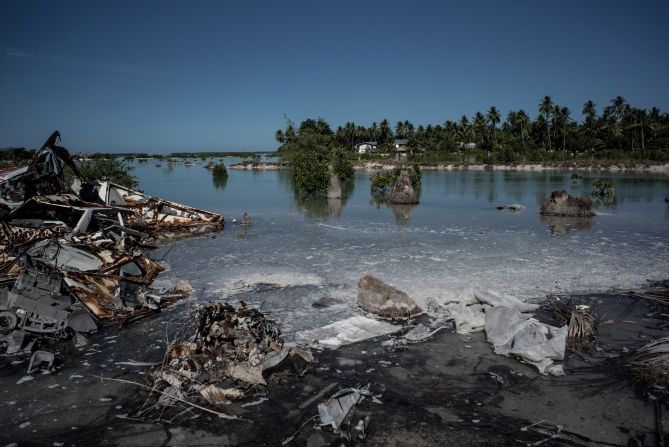
The U.N.'s Intergovernmental Panel on Climate Change identified Kiribati as one of the six Pacific island nations that "face a serious threat of permanent inundation from sea-level rise." In a never-ending fight against the rising tides, both residents and their government construct seawalls to preserve the land.
Gianluca Panella
Climate change swamps Kiribati —
Kiribati residents and their government are engaged in seemingly perpetual construction of seawalls. Seawalls provide temporary relief but need maintenance on a regular basis.
Gianluca Panella
Climate change swamps Kiribati —
Children play in the sea. More than 60% of Kiribati's population is under 30-years-old.
Gianluca Panella
Climate change swamps Kiribati —
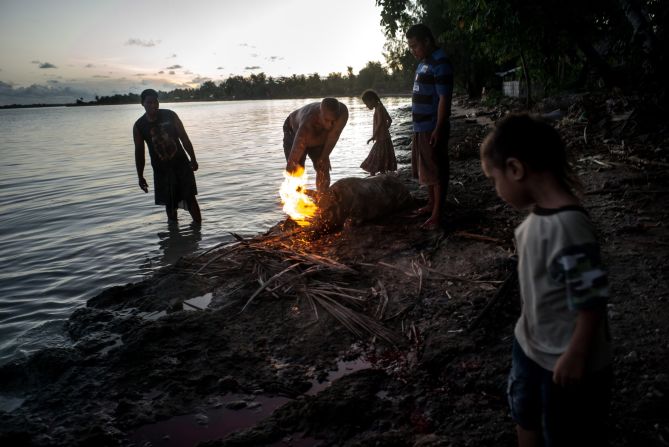
Residents butcher a pig in preparation for a feast. Pigs are commonly kept as pets by many of Kiribati's citizens.
Gianluca Panella
Climate change swamps Kiribati —
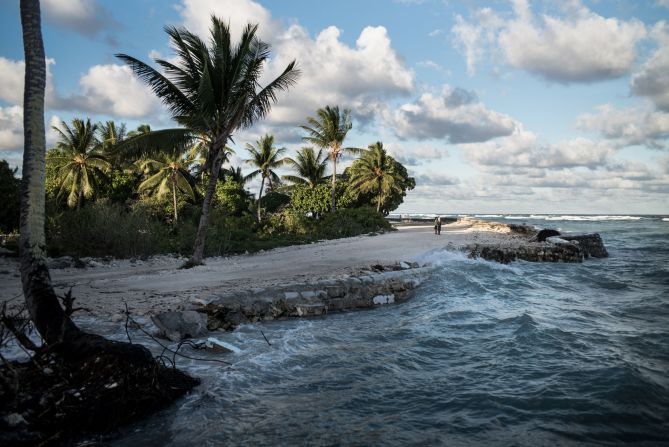
Waves pummel the coast of Temwaiku, a village on the capitol island of South Tarawa. Many residents have been forced to leave this area due to flooding.
Gianluca Panella
Climate change swamps Kiribati —
The South Tarawa community of Eita is one of Kiribati's villages most affected by climate change. The rising sea have turned this town's neighborhoods into a maze of contaminated streams and swamps.
Gianluca Panella
Climate change swamps Kiribati —
Children play on a swing. Kiribati's youth may be the last generation to live on these islands.
Gianluca Panella
Climate change swamps Kiribati —
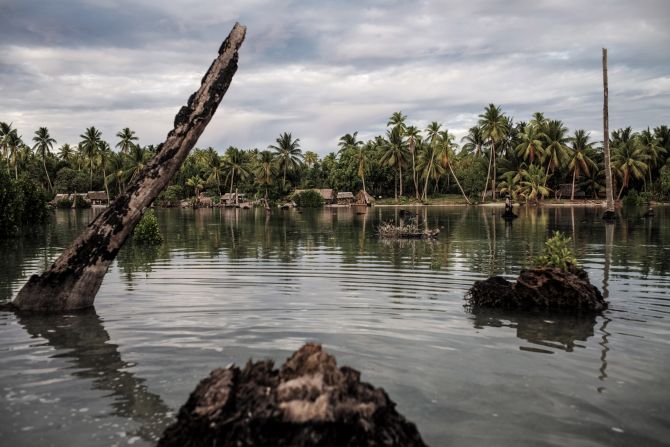
The village of Tebunginako was once a thriving harbor. Today, it lies under several meters of water. Dead coconut trees still emerge from the sea, a reminder of a time before saltwater contamination.