Voyager 1: ‘The little spacecraft that could’ | CNN Business
Thank You!
Your effort and contribution in providing this feedback is much
appreciated.
Close
Ad Feedback
Voyager 1: ‘The little spacecraft that could’
What Voyager saw —
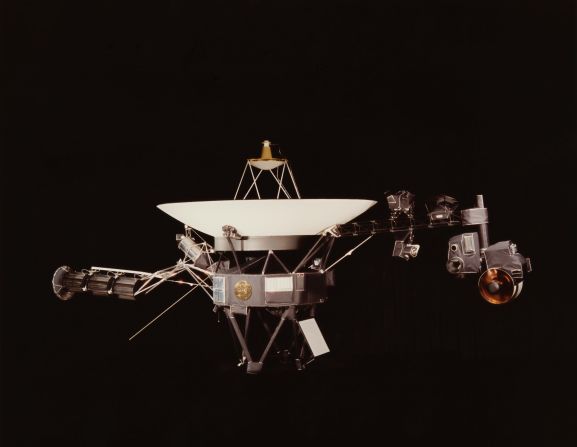
Scientists may dispute the exact location of Voyager 1, but the spacecraft remains one of NASA's greatest success stories. Take a look at some of the amazing images the probe has provided its Earthbound audience.
NASA/Hulton Archive/Getty Images
What Voyager saw —
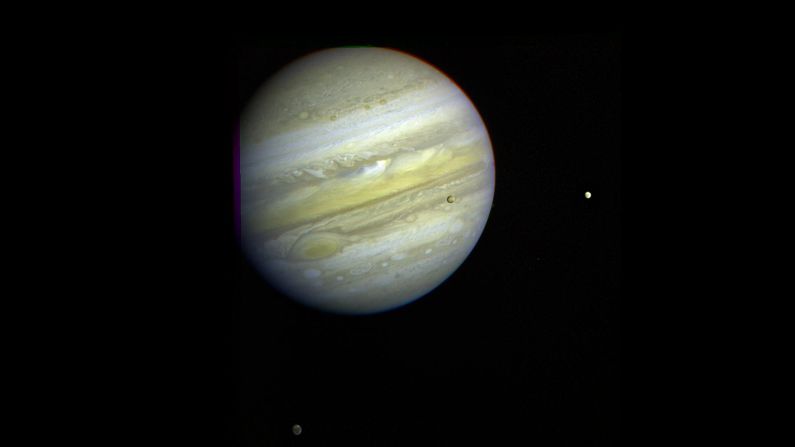
Jupiter, its Great Red Spot and three of its four largest satellites are visible in this photo taken February 5, 1979, by Voyager 1.
JPL-Caltech/NASA
What Voyager saw —
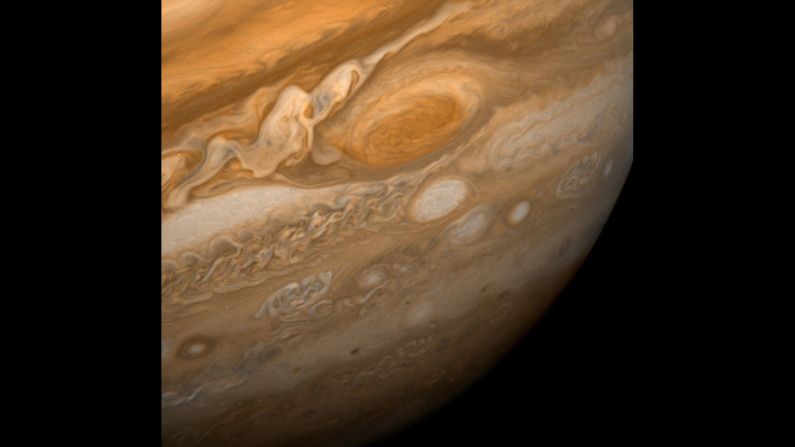
A dramatic view of Jupiter's Great Red Spot and its surroundings was obtained by Voyager 1 on February 25, 1979.
JPL-CALTECH/NASA
What Voyager saw —
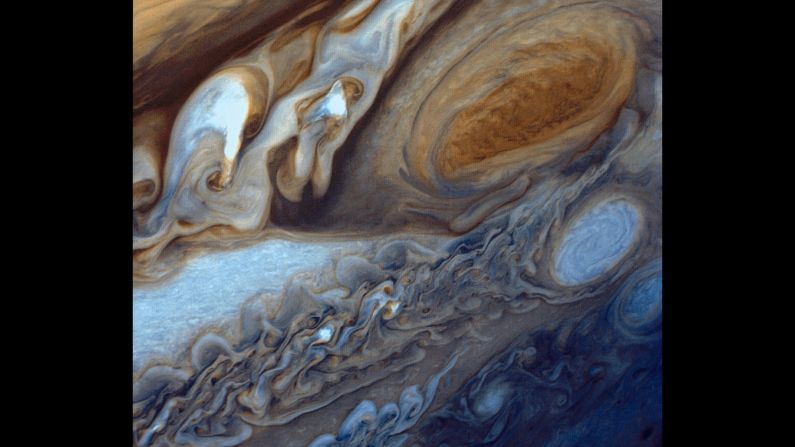
This image of Jupiter was assembled from three black and white negatives from different color filters and recombined to produce the color image.
JPL-CALTECH/NASA
What Voyager saw —
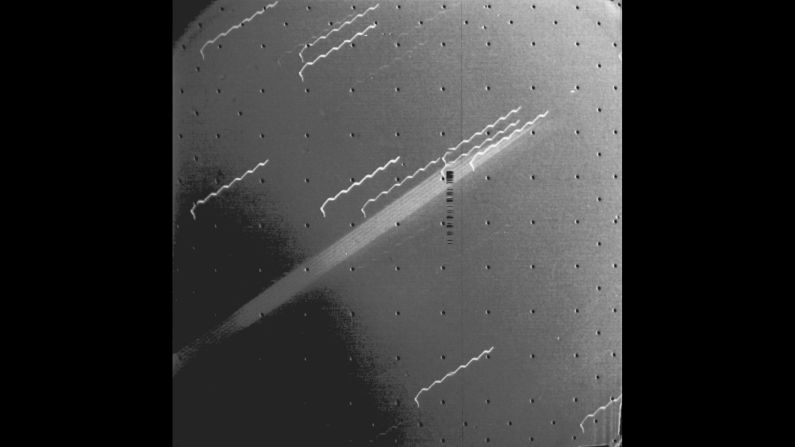
Voyager 1 captured the first evidence of a ring around the planet Jupiter. The multiple exposure of the extremely thin faint ring appears as a broad light band crossing the center of the picture. The background stars look like broken hairpins because of spacecraft motion during the 11-minute exposure. The black dots are geometric calibration points in the camera.
JPL-CALTECH/TECH
What Voyager saw —
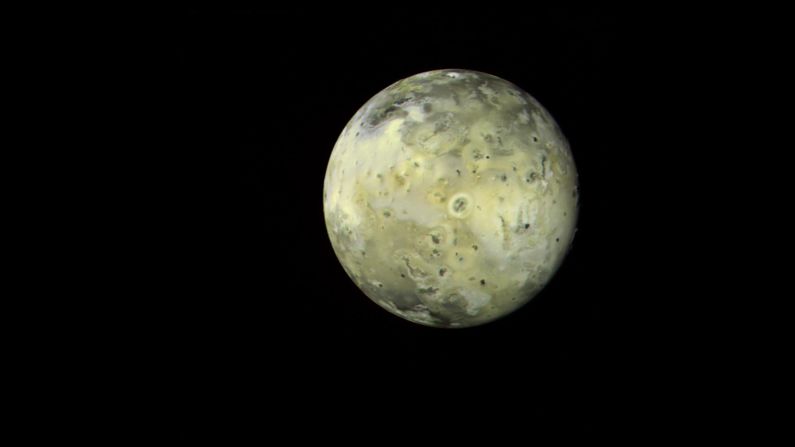
This mosaic image of Jupiter's moon "Io" shows a variety of features that appear linked to the intense volcanic activity. The circular, doughnut-shaped feature in the center has been identified as a known erupting volcano.
JPL-CALTECH/TECH
What Voyager saw —
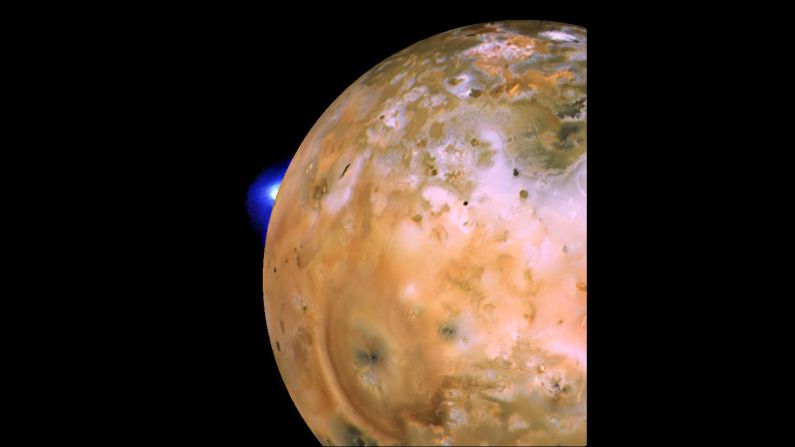
Another image of "Io" shows an active plume of a volcano dubbed "Loki."
What Voyager saw —
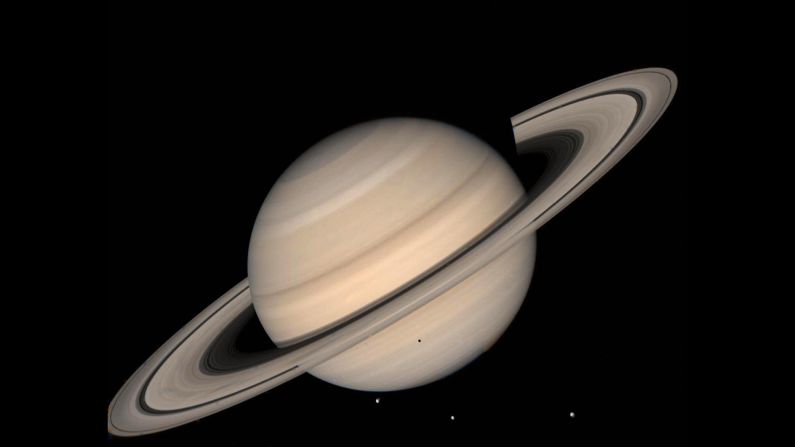
This August 1998 NASA file image shows a true color photo of Saturn assembled from the Voyager 2 spacecraft.
NASA/HO/AFP/Getty Images
What Voyager saw —
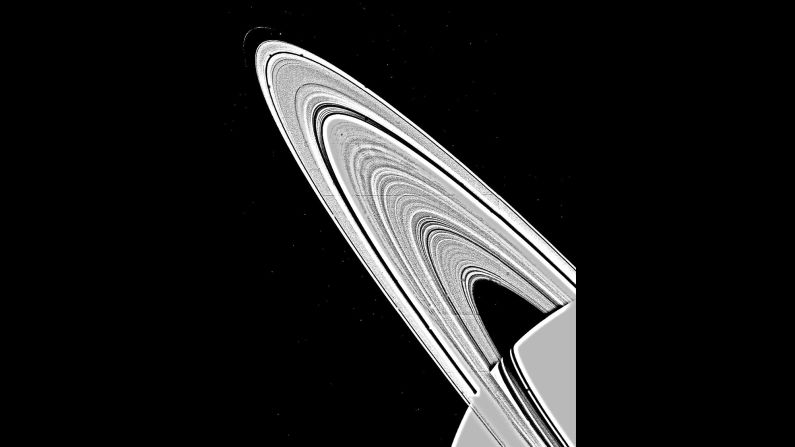
A mosaic image of Saturn's rings, taken by NASA's Voyager 1 on November 6, 1980, shows approximately 95 individual concentric features in the rings. The ring structure was once thought to be produced by the gravitational interaction between Saturn's satellites and the orbit of ring particles, but has now been found to be too complex for this explanation alone.
JPL-CALTECH/NASA
What Voyager saw —
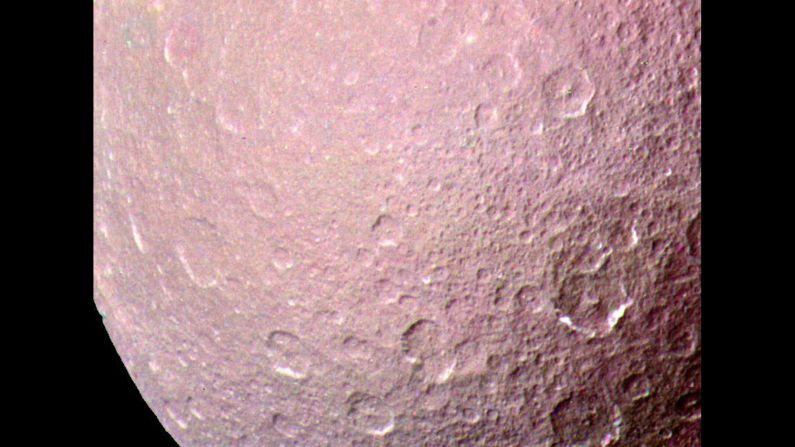
This image of Rhea, the largest airless satellite of Saturn, was acquired by the Voyager 1 spacecraft on November 11, 1980.
JPL-CALTECH/NASA
What Voyager saw —
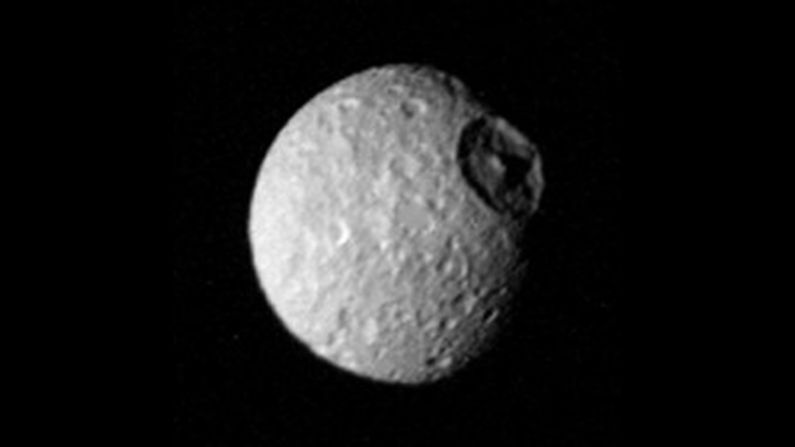
The cratered surface of Saturn's moon "Mimas" is seen in this image taken by Voyager 1 on November 12, 1980. Impact craters made by the infall of cosmic debris are shown; the largest is more than 100 kilometers (62 miles) in diameter and displays a prominent central peak.
JPL-CALTECH/NASA
What Voyager saw —
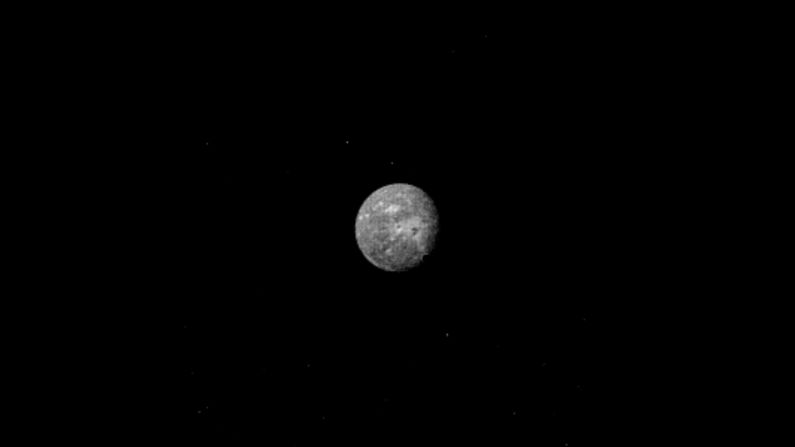
Uranus' outermost and largest moon, Oberon, is seen in this Voyager 2 image, obtained January 22, 1986.
JPL-CALTECH/NASA
What Voyager saw —
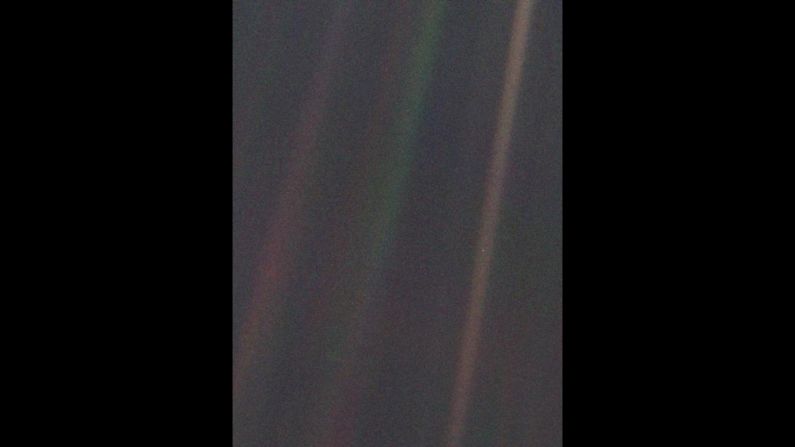
This image of Earth, dubbed "Pale Blue Dot," is a part of the first "portrait" of the solar system taken by Voyager 1. The spacecraft acquired a total of 60 frames for a mosaic of the solar system from a distance of more than 4 billion miles from Earth. Earth lies right in the center of one of the scattered light rays, which are the result of taking the image so close to the sun.
JPL-CALTECH/NASA
What Voyager saw —
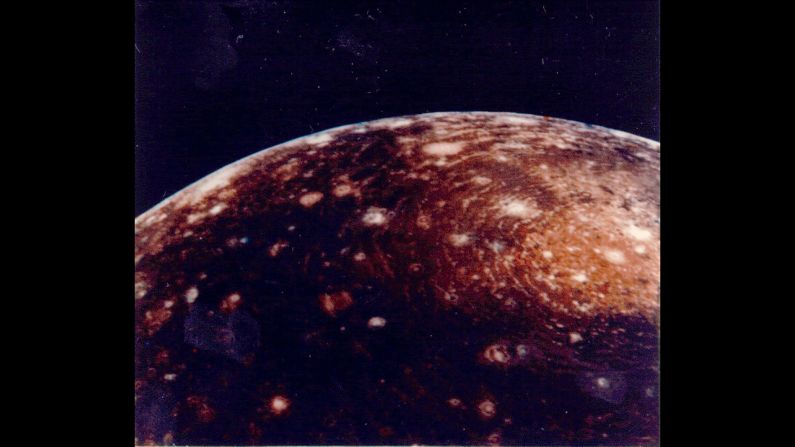
This image of Jupiter's moon "Callisto" was captured from a distance of 350,000 kilometers. The large "bull's-eye" at the top of the image is believed to be an impact basin formed early in Callisto's history. The bright center of the basin is about 600 kilometers across and the outer ring is about 2,600 kilometers across.
JPL-CALTECH/NASA
What Voyager saw —
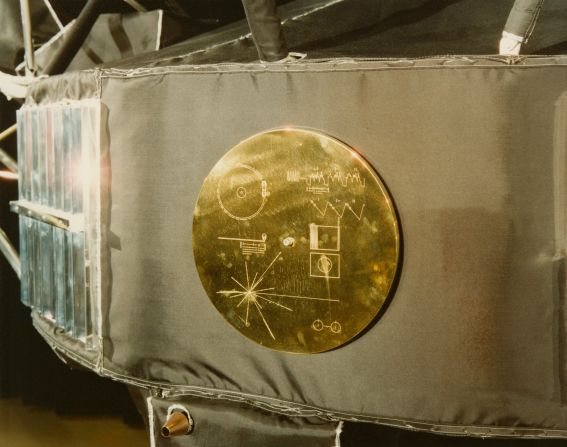
A gold record in its cover was attached to the Voyager 1 space probe prior to launch. The record, entitled "The Sounds Of Earth" contains a selection of recordings of life and culture on Earth. The cover also contains instructions for any extraterrestrial being wishing to play the record.