Living on the brink: Africa’s dying species | CNN

CNN values your feedback

1. How relevant is this ad to you?
2. Did you encounter any technical issues?
Thank You!
Your effort and contribution in providing this feedback is much appreciated.
Close
Ad Feedback
World
Africa
Americas
Asia
Australia
China
Europe
India
Middle East
United Kingdom
Africa Americas Asia Australia China Europe India Middle East United Kingdom
Watch Listen Live TV
My Account
  • Settings
  • Newsletters
  • Topics you follow
  • Sign out
Your CNN account Sign in to your CNN account

My Account
  • Settings
  • Newsletters
  • Topics you follow
  • Sign out
Your CNN account Sign in to your CNN account

Live TV Listen Watch
Edition
US
International
Arabic
Español
Edition
  • US
  • International
  • Arabic
  • Español

Africa
Americas
Asia
Australia
China
Europe
India
Middle East
United Kingdom

Follow CNN
Download the CNN App

  • World
    • Africa
    • Americas
    • Asia
    • Australia
    • China
    • Europe
    • India
    • Middle East
    • United Kingdom
  • US Politics
    • Elections 2026
    • Trump
    • Facts First
    • CNN Polls
    • Redistricting Tracker
    • Epstein Files
  • Business
    • Tech
    • Media
    • Calculators
    • Videos
  • Markets
    • Pre-markets
    • After-Hours
    • Fear & Greed
    • Investing
  • Health
    • Life, But Better
    • Fitness
    • Food
    • Sleep
    • Mindfulness
    • Relationships
  • Entertainment
    • Movies
    • Television
    • Celebrity
  • Tech
    • Innovate
  • Style
    • Arts
    • Design
    • Fashion
    • Architecture
    • Luxury
    • Beauty
    • Video
  • Travel
    • Destinations
    • Food & Drink
    • Stay
    • News
    • Videos
  • Sports
    • Football
    • Tennis
    • Golf
    • Motorsport
    • US Sports
    • Olympics
  • Science
    • Space
    • Life
    • Unearthed
  • Climate
    • Solutions
    • Weather
  • Weather
    • Video
    • Climate
  • Ukraine-Russia War
  • Israel-Hamas War
  • Features
    • As Equals
    • Call to Earth
    • Freedom Project
    • Impact Your World
    • Inside Africa
    • CNN Heroes
  • Watch
    • Live TV
    • Featured
    • CNN Headlines
    • CNN 10
    • CNN TV Schedule
  • Listen
    • All There Is with Anderson Cooper
    • Chasing Life with Dr. Sanjay Gupta
    • The Assignment with Audie Cornish
    • Terms of Service with Clare Duffy
    • CNN 5 Things
    • All CNN Podcasts
  • Games
    • Daily Crossword
    • Jumble Crossword
    • Photo Shuffle
    • Sudoblock
    • Sudoku
    • 5 Things Quiz
  • About CNN
    • Subscribe
    • Photos
    • Investigations
    • CNN Profiles
    • CNN Leadership
    • CNN Newsletters
    • Advertise With Us
    • Work for CNN

Download the CNN App

Living on the brink: Africa’s dying species

Updated 7:51 AM EDT, Tue April 15, 2014
Link Copied!
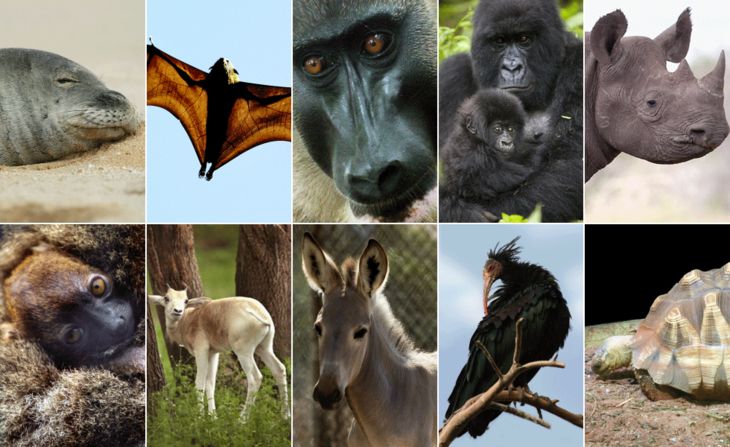
Africa is home to much unique wildlife, but many of its iconic species are threatened. Using information from the International Union for Conservation of Nature, we look at some of its most endangered animals.
Africa's endangered animals —
Africa is home to much unique wildlife, but many of its iconic species are threatened. Using information from the International Union for Conservation of Nature, we look at some of its most endangered animals.
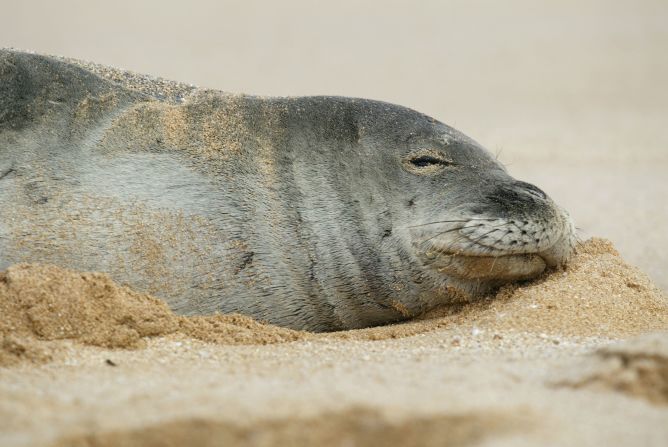
<strong>Mediterranean Monk Seal:</strong><br />There are fewer than 450 left in the wild, including a colony of about 130 off the coast of Mauritania and Western Sahara.<br />These seals were once a common sight in Europe and along the West coast of Africa. More recently, their numbers have dwindled to the point of near extinction. They have been hunted by fishermen, who see them as competition; many of the caves that they use for breeding have been destroyed. In 1997, around two thirds of the African population died, possibly from disease or toxic algae blooms.<br /><em>Source: IUCN</em>
Mediterranean Monk Seal —
Mediterranean Monk Seal:
There are fewer than 450 left in the wild, including a colony of about 130 off the coast of Mauritania and Western Sahara.
These seals were once a common sight in Europe and along the West coast of Africa. More recently, their numbers have dwindled to the point of near extinction. They have been hunted by fishermen, who see them as competition; many of the caves that they use for breeding have been destroyed. In 1997, around two thirds of the African population died, possibly from disease or toxic algae blooms.
Source: IUCN
Phil Mislinski / Getty Images
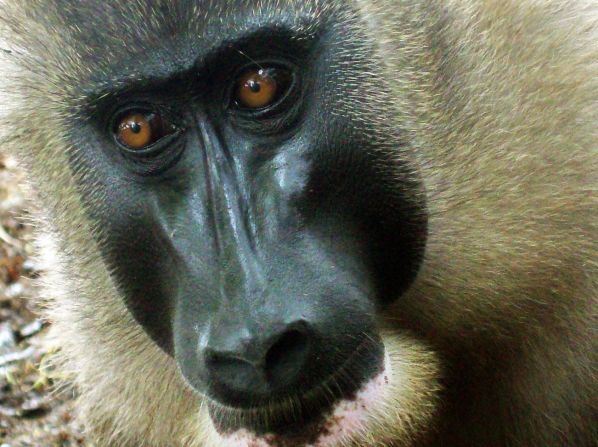
<strong>Drill Monkey:</strong><br />Between 3,000 and 8,000.<br />In Cameroon -- the heart of their range -- new factories and settlements have cleared much of the drill's habitat. In Nigeria, where they also live, their numbers have declined due to excessive hunting. Many drills are killed by local farmers protecting their crops. Though there have been some attempts at reforestation, often the newly planted crops are incompatible with the drill monkey's diet.<br /><em>Source: IUCN</em>
Drill Monkey —
Drill Monkey:
Between 3,000 and 8,000.
In Cameroon -- the heart of their range -- new factories and settlements have cleared much of the drill's habitat. In Nigeria, where they also live, their numbers have declined due to excessive hunting. Many drills are killed by local farmers protecting their crops. Though there have been some attempts at reforestation, often the newly planted crops are incompatible with the drill monkey's diet.
Source: IUCN
Helen Vesperini /AFP/Getty Images
<strong>Addax:</strong><br />It is estimated that fewer than 300 addax live on a strip of land between Niger and Chad.<br />Formerly, addax were commonplace in Africa's Sahelo-Sahara region, though hunting, drought and the encroachment of pastoral lands into the desert landscape have greatly diminished their numbers. The addax population is also fragmented, which makes it difficult for them to ultimately increase their numbers.<br /><em>Source: IUCN</em>
Addax —
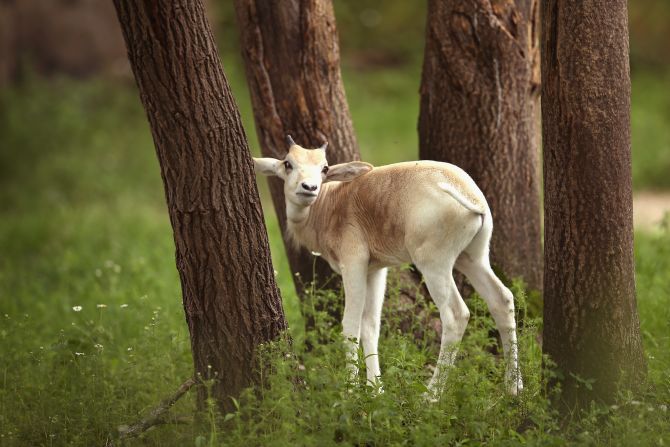
Addax:
It is estimated that fewer than 300 addax live on a strip of land between Niger and Chad.
Formerly, addax were commonplace in Africa's Sahelo-Sahara region, though hunting, drought and the encroachment of pastoral lands into the desert landscape have greatly diminished their numbers. The addax population is also fragmented, which makes it difficult for them to ultimately increase their numbers.
Source: IUCN
Scott Olson/Getty Images
<strong>Black Rhino:</strong><br />The black rhino population has declined by an estimated 95% since 1960, with an estimated 4,880 left.<br />Black rhinos are unfortunate to reside in areas with a large degree of civil unrest. Populations in Angola, Cameroon, the Central African Republic, Chad, the Democratic Republic of the Congo, Mozambique, Namibia, Rwanda, Somalia, Sudan and Uganda have been particularly vulnerable, as there has been little political incentive to protect them. Their horns are also valuable in the black market, making them a tempting target.<br /><em>Source: IUCN</em>
Black Rhino —
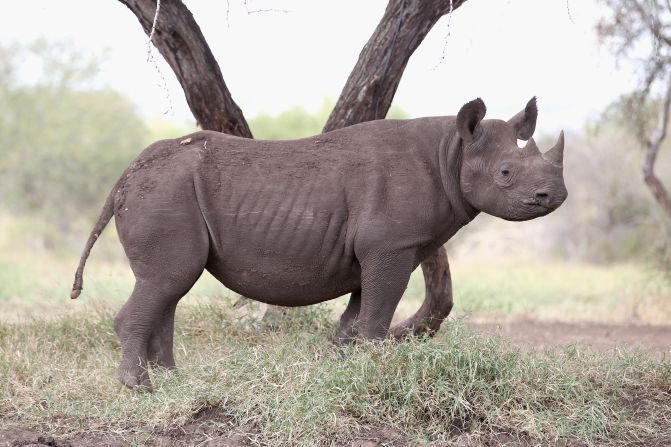
Black Rhino:
The black rhino population has declined by an estimated 95% since 1960, with an estimated 4,880 left.
Black rhinos are unfortunate to reside in areas with a large degree of civil unrest. Populations in Angola, Cameroon, the Central African Republic, Chad, the Democratic Republic of the Congo, Mozambique, Namibia, Rwanda, Somalia, Sudan and Uganda have been particularly vulnerable, as there has been little political incentive to protect them. Their horns are also valuable in the black market, making them a tempting target.
Source: IUCN
courtesy Chris Jackson/Getty Images
<strong>African Wild Ass:</strong><br />There hasn't been a recent survey, though rough estimates put the number at about 600 throughout Eritrea, Ethiopia and Somalia.<br />Unfortunately, the species is regularly hunted, not just for food but for medicinal purposes (a soup made from the bones is sometimes used locally to treat ailments ranging from tuberculosis to backache). The animals also compete with local livestock for water and food. Breeding with domestic donkeys also threatens to make their species extinct.<br /><em>Source: IUCN</em>
African Wild Ass —
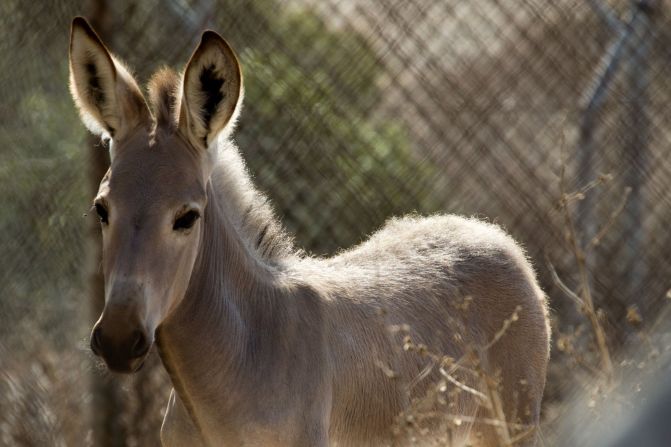
African Wild Ass:
There hasn't been a recent survey, though rough estimates put the number at about 600 throughout Eritrea, Ethiopia and Somalia.
Unfortunately, the species is regularly hunted, not just for food but for medicinal purposes (a soup made from the bones is sometimes used locally to treat ailments ranging from tuberculosis to backache). The animals also compete with local livestock for water and food. Breeding with domestic donkeys also threatens to make their species extinct.
Source: IUCN
Jack Guez /AFP/Getty Images
<strong>Mountain Gorilla:</strong><br />680 gorillas are spread between two isolated populations in Rwanda, Uganda and the Democratic Republic of Congo<br />The biggest threat to the mountain gorilla is humans. These gorillas are surrounded by some of the highest rural human population densities in the continent. Encroachment on their land, poaching, deforestation and disease (some possibly passed by humans) all continue to have an adverse effect on their population.<br /><em>Source: IUCN</em>
Mountain Gorilla —
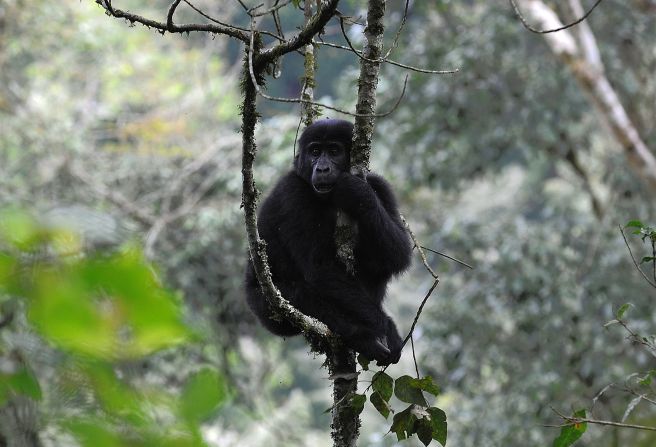
Mountain Gorilla:
680 gorillas are spread between two isolated populations in Rwanda, Uganda and the Democratic Republic of Congo
The biggest threat to the mountain gorilla is humans. These gorillas are surrounded by some of the highest rural human population densities in the continent. Encroachment on their land, poaching, deforestation and disease (some possibly passed by humans) all continue to have an adverse effect on their population.
Source: IUCN
Simon Maina /AFP/Getty Images
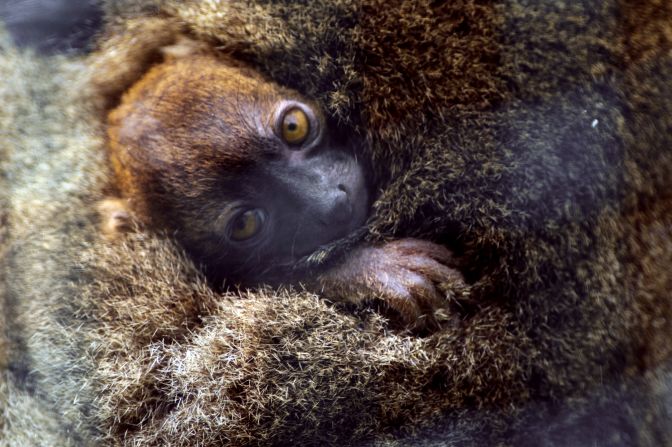
<strong>Lac Alaotra Bamboo Lemur:</strong><br />A survey in 2004 estimated around 5,000 in Madagascar.<br />The lemurs are dependent on marshland for their survival. Their diet is dependent on local crops (namely papyrus stems and reed shoots). Unfortunately, much of the marsh has been turned over to make rice fields. The lemurs also face dangers from poachers, who trap them either for food, or to sell on as exotic pets.<br /><em>Source: IUCN</em>
Lac Alaotra Bamboo Lemur —
Lac Alaotra Bamboo Lemur:
A survey in 2004 estimated around 5,000 in Madagascar.
The lemurs are dependent on marshland for their survival. Their diet is dependent on local crops (namely papyrus stems and reed shoots). Unfortunately, much of the marsh has been turned over to make rice fields. The lemurs also face dangers from poachers, who trap them either for food, or to sell on as exotic pets.
Source: IUCN
Sebastien Bozon/AFP/Getty Images
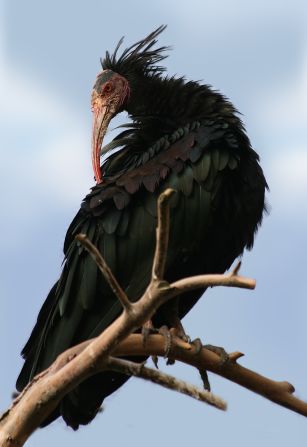
<strong>Northern Bald Ibis:</strong><br />It is estimated that there are fewer than 500 of these birds left in the wild.<br />There is a cluster of these birds in Souss-Massa National Park in Morocco, though these are continuously under threat, primarily as a result of building that takes place near their breeding grounds. When breeding does occur, the eggs often fall victim to predators, as do newly hatched chicks (many of whom die as a result of starvation).<br /><em>Source: IUCN</em>
Northern Bald Ibis —
Northern Bald Ibis:
It is estimated that there are fewer than 500 of these birds left in the wild.
There is a cluster of these birds in Souss-Massa National Park in Morocco, though these are continuously under threat, primarily as a result of building that takes place near their breeding grounds. When breeding does occur, the eggs often fall victim to predators, as do newly hatched chicks (many of whom die as a result of starvation).
Source: IUCN
Richard Batz
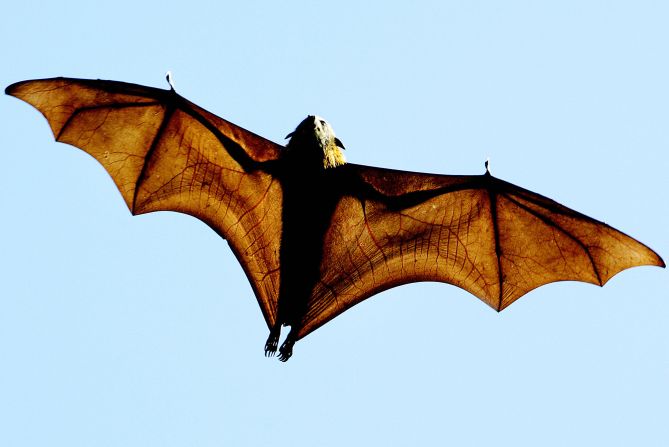
<strong>Rodrigues Flying Fox:</strong><br />As of 2006, there were about 4,000 of these bats living on the island of Rodrigues.<br />The species is particularly susceptible to tropical cyclones. In 1979, Cyclone Celine II reduced their population to around 70 bats. They've recovered in recent years, but deforestation has not only threatened their food supply, it has also made their habitats even more susceptible to cyclones.<br /><em>Source: IUCN</em>
Rodrigues Flying Fox —
Rodrigues Flying Fox:
As of 2006, there were about 4,000 of these bats living on the island of Rodrigues.
The species is particularly susceptible to tropical cyclones. In 1979, Cyclone Celine II reduced their population to around 70 bats. They've recovered in recent years, but deforestation has not only threatened their food supply, it has also made their habitats even more susceptible to cyclones.
Source: IUCN
Greg Wood/AFP/Getty Images
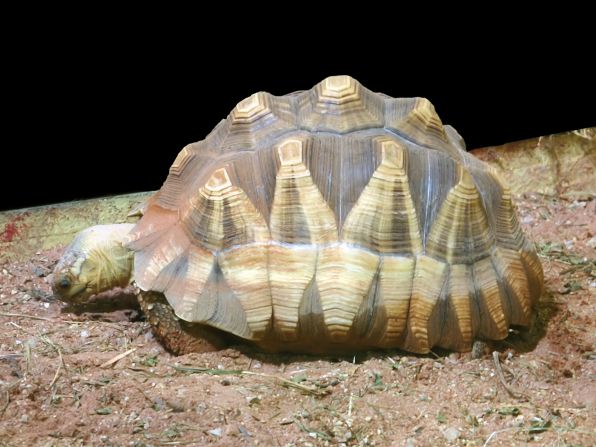
<strong>Madagascar Tortoise:</strong><br />It is estimated that there are fewer than 400 Madagascar tortoises left in the wild.<br />Many tortoises have perished in fires started deliberately to improve grazing conditions for local cattle.<br />The species has also suffered from the illegal pet trade. They are extremely valuable in the Asian black market. It is estimated that the species could face extinction in 10 to 15 years.<br /><em>Source: IUCN</em>
Madagascar Tortoise —
Madagascar Tortoise:
It is estimated that there are fewer than 400 Madagascar tortoises left in the wild.
Many tortoises have perished in fires started deliberately to improve grazing conditions for local cattle.
The species has also suffered from the illegal pet trade. They are extremely valuable in the Asian black market. It is estimated that the species could face extinction in 10 to 15 years.
Source: IUCN

Hans Hillewaert / CC-BY-SA-3.0

My Account
  • Settings
  • Newsletters
  • Topics you follow
  • Sign out
Your CNN account Sign in to your CNN account

Live TV Listen Watch
  • World
    • Africa
    • Americas
    • Asia
    • Australia
    • China
    • Europe
    • India
    • Middle East
    • United Kingdom
  • US Politics
    • Trump
    • Facts First
    • CNN Polls
    • Elections 2026
    • Redistricting Tracker
    • Epstein Files
  • Business
    • Tech
    • Media
    • Calculators
    • Videos
  • Markets
    • Pre-markets
    • After-Hours
    • Fear & Greed
    • Investing
  • Health
    • Life, But Better
    • Fitness
    • Food
    • Sleep
    • Mindfulness
    • Relationships
  • Entertainment
    • Movies
    • Television
    • Celebrity
  • Tech
    • Innovate
  • Style
    • Arts
    • Design
    • Fashion
    • Architecture
    • Luxury
    • Beauty
    • Video
  • Travel
    • Destinations
    • Food & Drink
    • Stay
    • News
    • Videos
  • Sports
    • Football
    • Tennis
    • Golf
    • Motorsport
    • US Sports
    • Olympics
  • Science
    • Space
    • Life
    • Unearthed
  • Climate
    • Solutions
    • Weather
  • Weather
    • Video
    • Climate
  • Ukraine-Russia War
  • Israel-Hamas War
  • Features
    • As Equals
    • Call to Earth
    • Freedom Project
    • Impact Your World
    • Inside Africa
    • CNN Heroes
  • Watch
    • Live TV
    • Featured
    • CNN Headlines
    • CNN 10
    • CNN TV Schedule
  • Listen
    • All There Is with Anderson Cooper
    • Chasing Life with Dr. Sanjay Gupta
    • The Assignment with Audie Cornish
    • Terms of Service with Clare Duffy
    • CNN 5 Things
    • All CNN Podcasts
  • Games
    • Daily Crossword
    • Jumble Crossword
    • Photo Shuffle
    • Sudoblock
    • Sudoku
    • 5 Things Quiz
  • About CNN
    • Subscribe
    • Photos
    • Investigations
    • CNN Profiles
    • CNN Leadership
    • CNN Newsletters
    • Advertise With Us
    • Work for CNN

World
Watch Listen Live TV
My Account
  • Settings
  • Newsletters
  • Topics you follow
  • Sign out
Your CNN account Sign in to your CNN account
Follow CNN

Download the CNN app

Terms of Use Privacy Policy Ad Choices Advertise With Us Accessibility & CC About Newsletters Transcripts Sitemap

© 2026 Cable News Network. All Rights Reserved.
CNN Sans ™ & © 2016 Cable News Network.

Download the CNN app

Scan the QR code to download the CNN app on Google Play.

Scan the QR code to download the CNN app from Google Play.

Download the CNN app

Scan the QR code to download the CNN app from the Apple Store.

Scan the QR code to download the CNN app from the Apple Store.