Your effort and contribution in providing this feedback is much
appreciated.
Close
Ad Feedback
Mars Exploration Rovers: 10 years
A decade of discoveries on Mars —
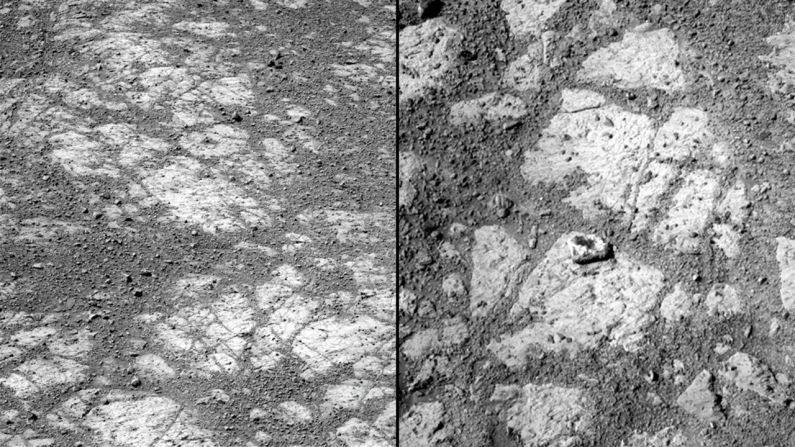
Scientists are baffled by the sudden appearance of a jelly doughnut-like rock that the Opportunity rover spotted in January 2014. These are images of the same location; the rock on the right was not there 12 days earlier. Researchers now believe the rover's wheels flicked the rock into its current spot.
NASA
A decade of discoveries on Mars —
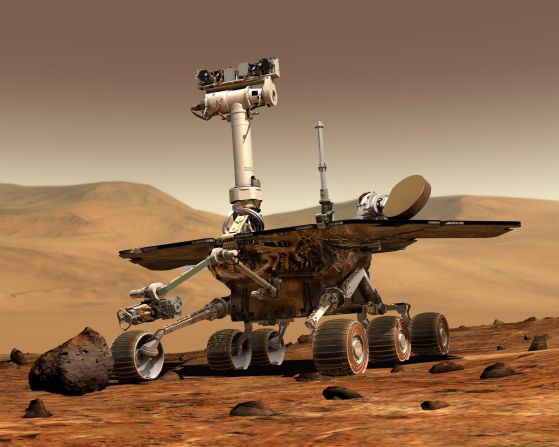
NASA's twin rovers, Spirit and Opportunity, have revealed many secrets of the Red Planet since landing on Mars in January 2004. Spirit stopped communicating in 2010, but Opportunity is still collecting data. This illustration depicts the identical look of both rovers.
NASA
A decade of discoveries on Mars —
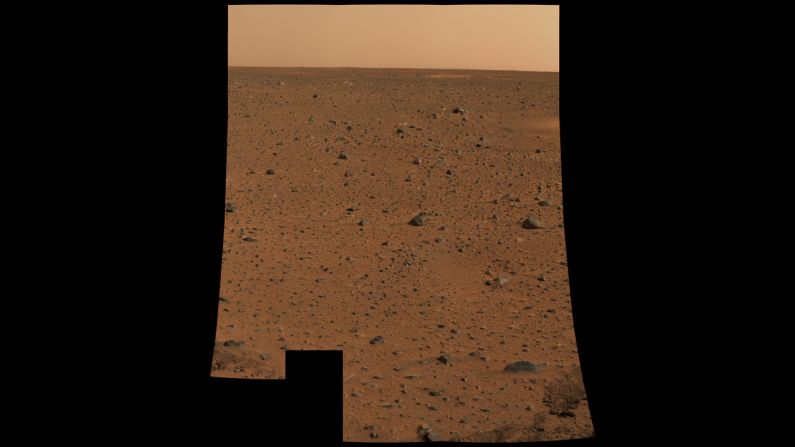
This first color photo using Spirit's panoramic camera was the highest-resolution image ever taken on another planet's surface at the time.
NASA/Jet Propulsion Laboratory/Cornell
A decade of discoveries on Mars —
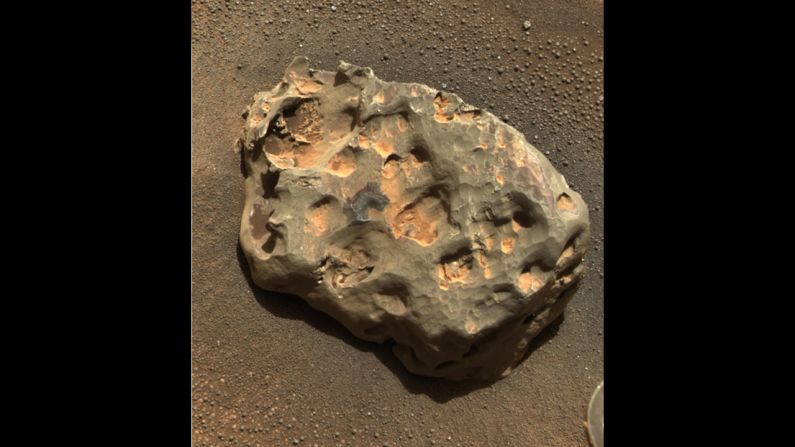
Opportunity discovered the first meteorite identified on a planet other than Earth. The rover's panoramic camera photographed the basketball-size object mostly composed of iron and nickel on January 6, 2005.
NASA/Jet Propulsion Laboratory-Caltech/Cornell
A decade of discoveries on Mars —
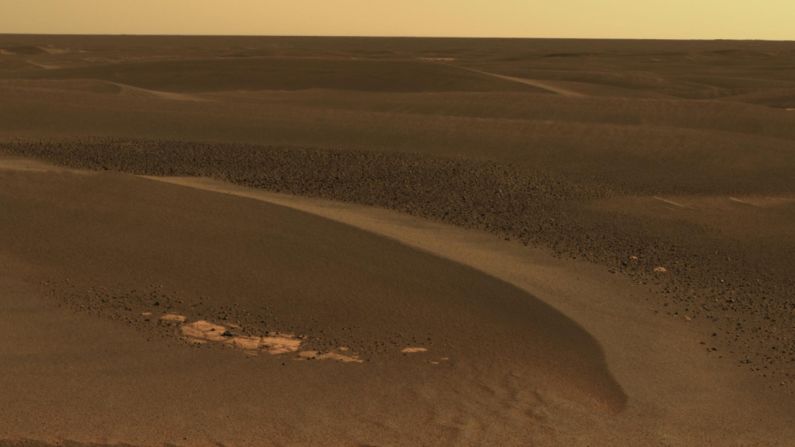
The Opportunity rover has studied windblown ripples in an area called the Meridiani Planum. This image, taken on April 27, 2006, shows a field of rocks known as cobbles among ripples about 8 inches high. The windblown ripples are likely left from a time when wind patterns were different,said planetary scientist Ray Arvidson.
NASA/Jet Propulsion Laboratory/Cornell
A decade of discoveries on Mars —
In February 2006, Spirit arrived at a geological feature called Home Plate, about 260 feet in diameter. It was so named because it looks like a baseball diamond's home plate from orbit. In this area, the rover found a material called opaline silica, a discovery important for understanding conditions that would have supported life on Mars. Scientists believe this material formed when water interacted with volcanic material known as with magma.
Spirit made another discovery linked to the possibility that Mars could have supported life. This photo is from that location -- an outcrop called Comanche -- in 2005. In 2010, scientists combined data from the rover's three spectrometers and suggested the composition of Comanche is about one-fourth magnesium iron carbonate. This finding indicates the environment was once wet and nonacidic and could have been favorable to life.
NASA/JPL-Caltech/Cornell University
A decade of discoveries on Mars —
Soft soil was exposed when Spirit's wheels dug into a patch of ground dubbed Troy in 2009. While stationed there, the rover was able to show scientists that water, possibly in the form of snowmelt, had trickled into the subsurface relatively recently. Layers of soil with different compositions suggest that thin films of water may have gotten into the ground from frost or snow. Scientists believe Mars could have had cyclical climate changes when the planet was tilted farther on its axis.
NASA/Jet Propulsion Laboratory-Caltech/Cornell
A decade of discoveries on Mars —
Both Spirit and Opportunity examined the frequency and dynamics of dust devils, which help scientists understand how wind moves dust and sand in a thin atmosphere. Spirit saw dozens of dust devils, but Opportunity, located halfway around the planet, likely never encountered one until more than six years into its mission. An image from July 15, 2010, shows a column of swirling dust.
NASA
A decade of discoveries on Mars —
Opportunity found bright veins of a mineral that appeared to be gypsum. The vein shown here is informally called Homestake. The mineral is deposited by water. It and other deposits that look similar are in an area where sulfate-rich and volcanic bedrock meet -- at the rim of Endeavour Crater, where Opportunity is currently located.
NASA
A decade of discoveries on Mars —
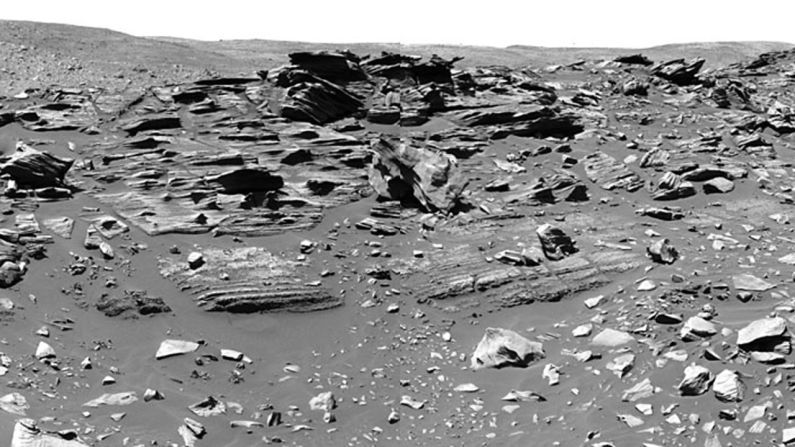
A 2014 study with data from Opportunity suggests that water in the Endeavour Crater region would have been more favorable to microbial life before rather than after the crater formed. This rock is from an area known as Whitewater Lake, part of the crater's rim.
Science/American Association for the Advancement of Science
A decade of discoveries on Mars —
Another interesting formation that Opportunity has discovered is at an outcrop called Kirkwood. This image shows spherical objects that are as much as one-eighth of an inch in diameter.
Science/American Association for the Advancement of Science