Your effort and contribution in providing this feedback is much
appreciated.
Close
Ad Feedback
The top 10 strangest Olympic sports
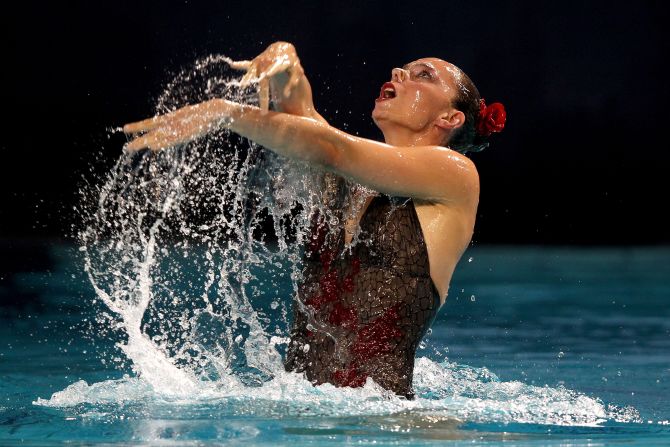
Hands solo —
It sounds like an oxymoron, but solo synchronized swimming was made an Olympic sport in 1984 -- and discontinued in 1992. Here, Bulgarian Kalina Yordanova competes at the 2012 European Synchronized Swimming Championships in the Netherlands.
Getty Images
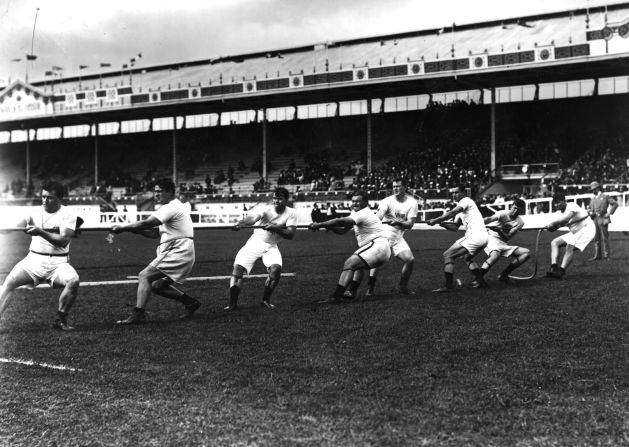
Pulling your leg? —
Tug-of-war was one of the events at the 1908 London Olympics. Here, members of the U.S. team test their strength at the stadium in White City.
Getty Images
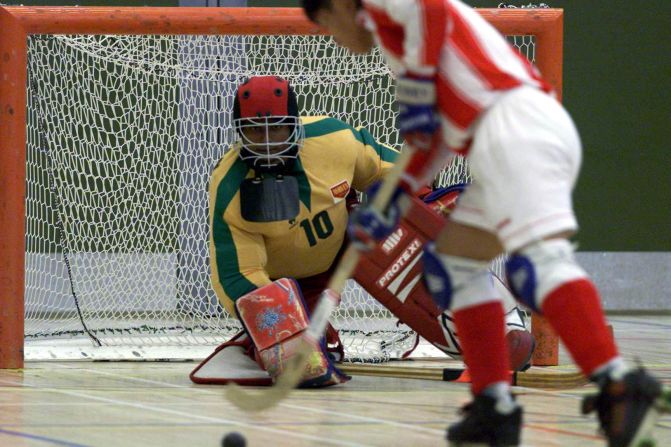
Hockey rolled —
Roller hockey, unlike its ice cousin, failed to capture the imagination. It appeared at just one Olympics -- Barcelona in 1992.
Getty Images
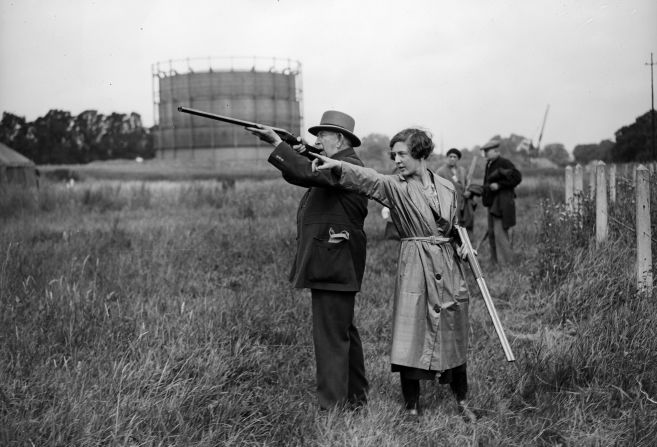
Shooting the breeze —
Live pigeon shooting only appeared once -- at the 1900 Olympics in Paris. Nearly 300 birds were slain in the bloody spectacle. Today, clay targets are standard.
Getty Images
Against all obstacles —
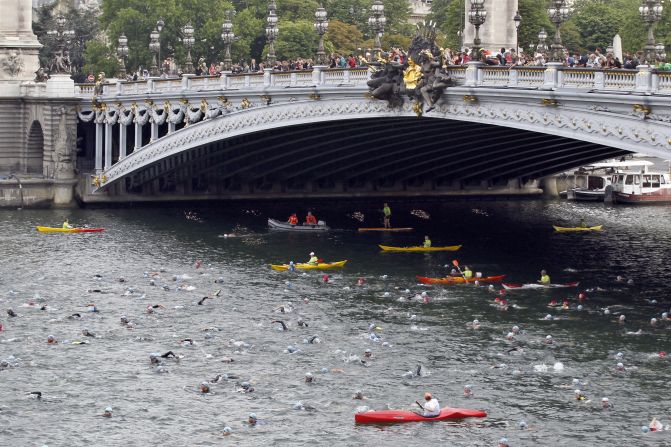
At the same 1900 Olympics, obstacle course swimmers had to negotiate boats and poles. Today the River Seine is more likely to accomodate triathletes in the city's annual competition.
AFP/Getty Images
Fencing's foundations —
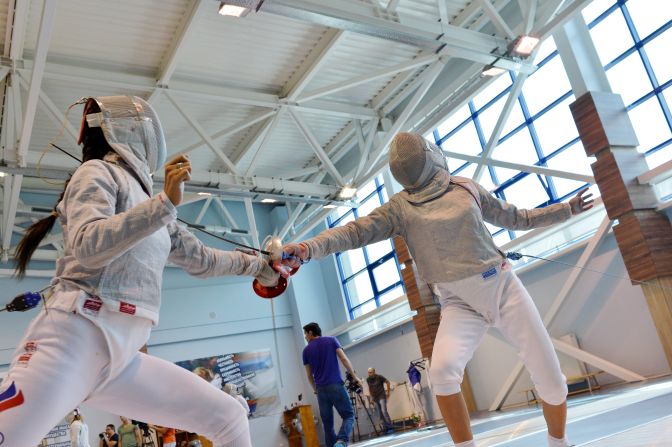
Before there was fencing, there was the French martial art La Canne. The sport first appeared at the 1924 Paris Olympics and much like the name suggests, involved wooden canes.
AFP/Getty Images
Roped in —
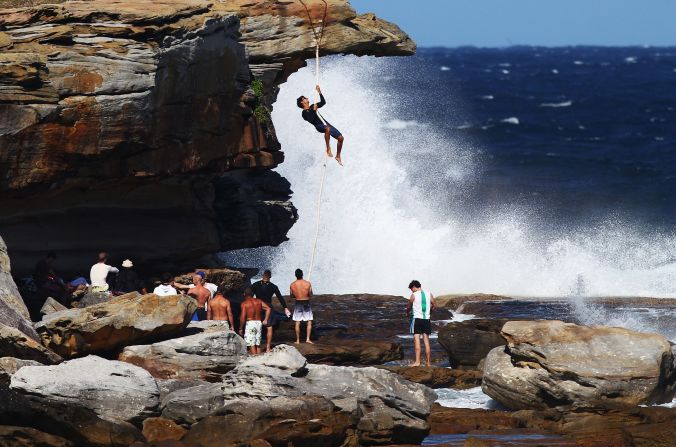
Rope climbing was dropped from the Olympics in 1932. But that hasn't stopped professional climbers still keeping the sport alive. Here, climber Marcus Bottay scales a five-meter rope bare-handed in Sydney, Australia.
Getty Images
Swinging times —
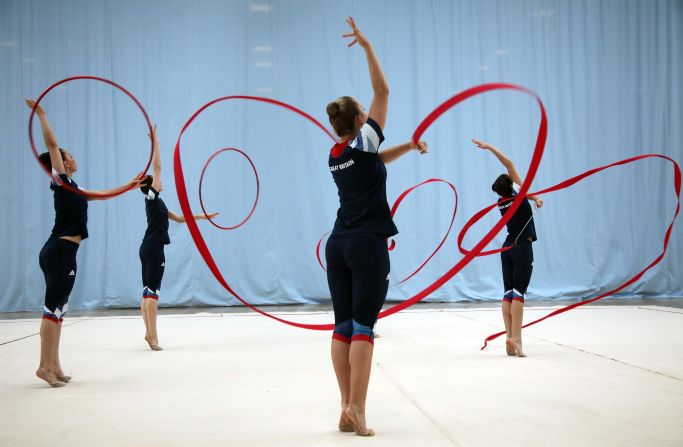
Club swinging first appeared at the 1904 St. Louis Olympics and involved athletes twirling clubs. Historians believe it was the precursor to rhythmic gymnastic events that use ribbons and hoops.
Getty Images
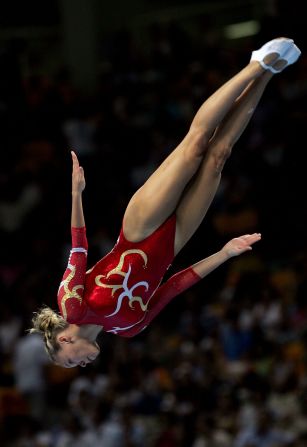
Jumping for joy —
When it comes to trampolining, "precise technique and perfect body control are vital for success, with judges delivering marks for difficulty, execution and time of flight, minus penalties," Olympic officials say.
Getty Images
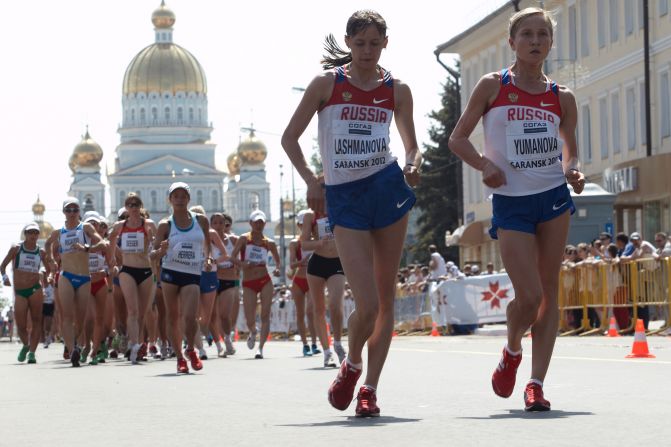
Walk this way —
Race walkers must have one foot on the ground at all times or risk disqualification. The result? A distinctive sashay.