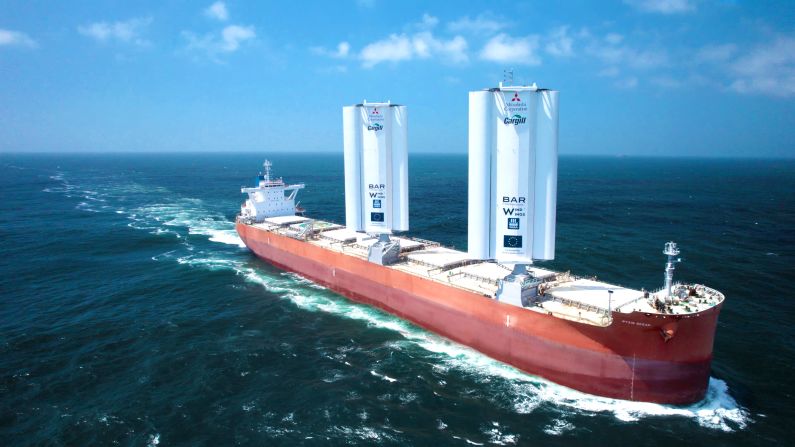
Pyxis Ocean, a ship chartered by Cargill, embarked on its maiden voyage in August. Fitted with two WindWings, large steel sails designed by UK company BAR Technologies, the ship could see emissions savings of up to 30%. Look through the gallery to see how wind power could be making a comeback.
BAR Technologies/Cargill
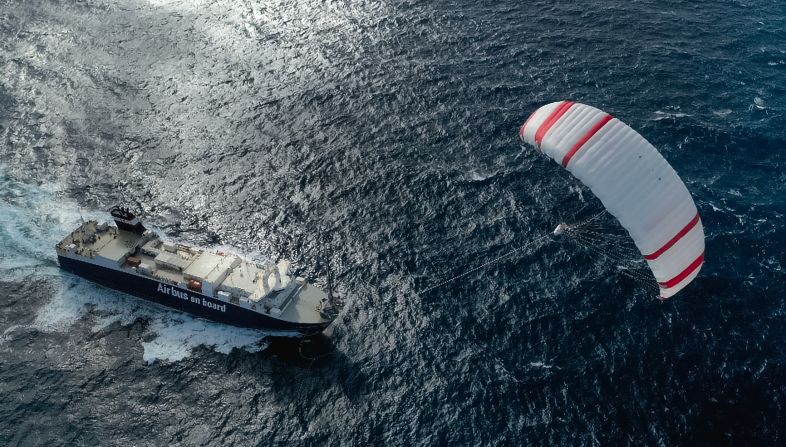
French company Airseas has developed the Seawing, which it says could help ships cut their carbon emissions by an average of 20%. Pictured, the Seawing being tested on the cargo ship "Ville de Bordeaux."
Maxime Horlaville/polaRYSE/Airseas
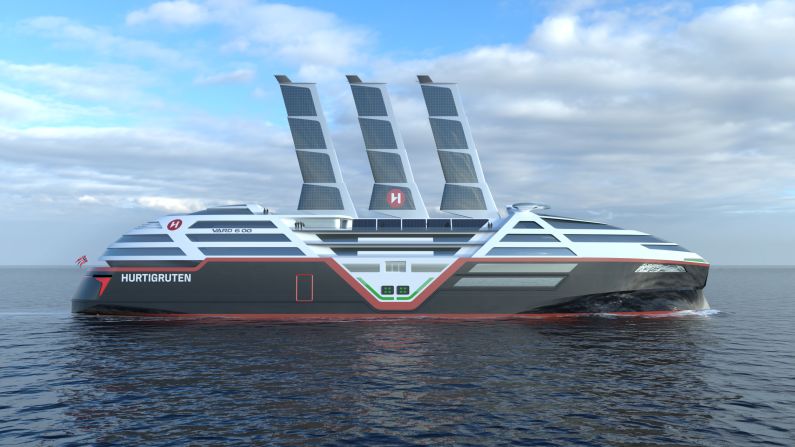
Cruise company Hurtigruten Norway has unveiled a design for a zero-emission ship that relies on wind and solar power. The vessel, shown here in a rendering, will be electric and equipped with batteries that will be charged with renewable energy when in port. They will also be powered by retractable sails covered in solar panels.
VARD Design
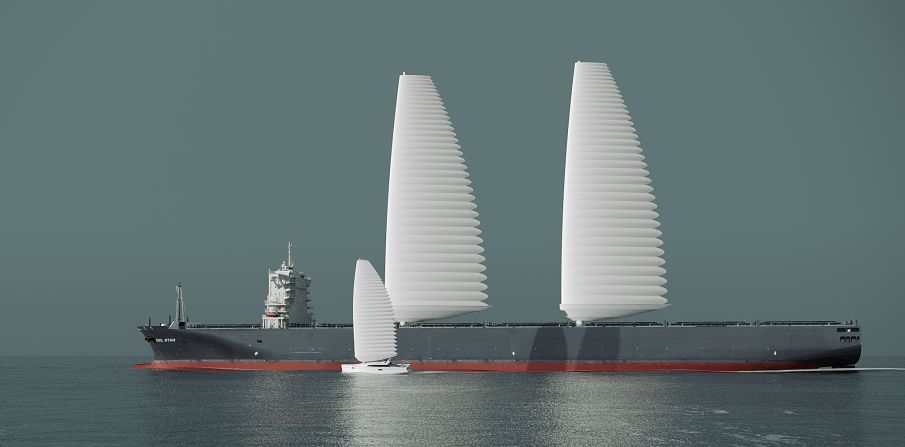
In 2021, tire manufacturer Michelin released a design for giant inflatable sails, shown here in a rendering, that can be fitted to existing cargo ships, and inflate or deflate at the push of a button -- making it easy for the ship to enter a harbor or pass under a bridge.
Courtesy Michelin
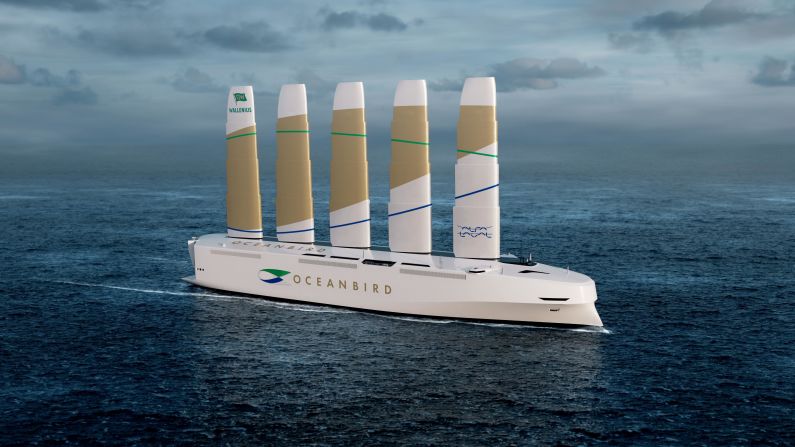
Rigid sails, which look more like aircraft wings than traditional cloth sails, are also being installed on Oceanbird, a transatlantic car carrier (seen here in a rendering) that is due to set sail in 2024. It will rely mostly on wind power, cutting carbon emissions by 90%.
Courtesy Oceanbird
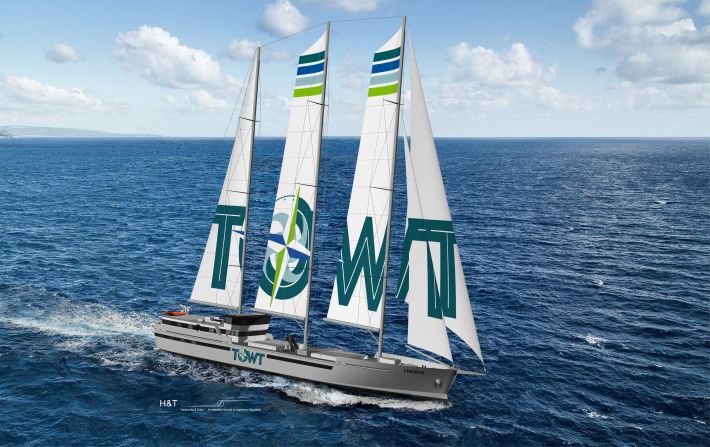
French company TOWT (TransOceanic Wind Transport) also depends almost entirely on wind power and will launch its first fleet of industrial-scale cargo ships in 2024. The vessels (pictured here in a rendering) will carry cocoa, coffee, champagne, sugar and other goods across four maritime routes. Each ship will be equipped with smart tracking systems so that high-end clients can monitor shipments and see how much carbon emissions they are saving.
Courtesy H&T
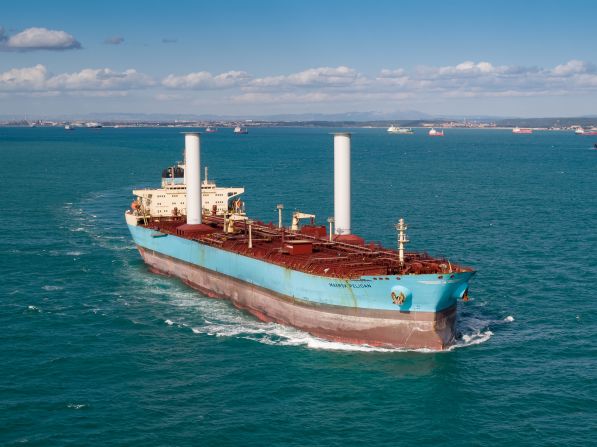
Rotors -- vertical cylinders that spin with the wind and create a forward motion -- are another type of wind propulsion technology being deployed on cargo ships. In 2018, Finnish company Norsepower installed two of its rotors on the 800-foot-long Timberwolf (formerly Maersk Pelican) tanker. During the first year of operation, fuel savings of 8% were recorded.
Courtesy Norsepower
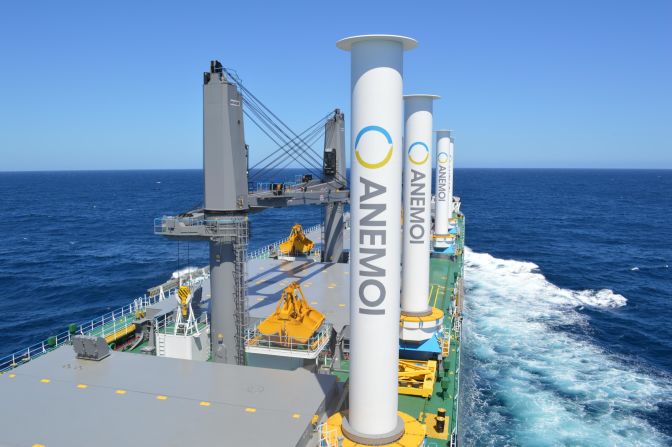
British company Anemoi Marine installed four of its 16-meter-tall rotors on the m/v Afros bulk carrier. On one of its regular routes from Nantong to Vancouver and back, the estimated savings were 12.5% -- a reduction of 73 tons of fuel and 235 tons of CO2.