The polar photographer pushing the limits for the perfect shot
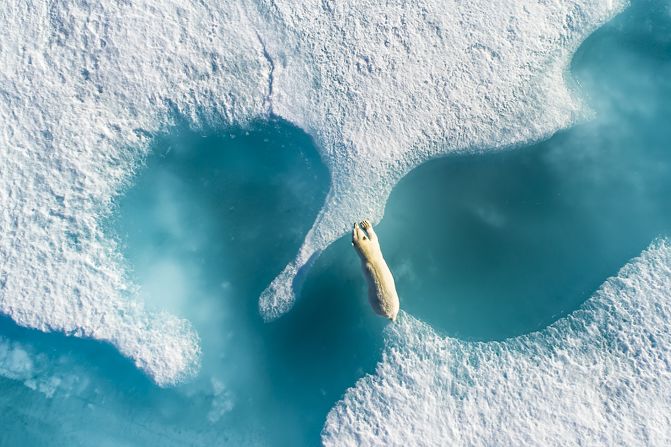
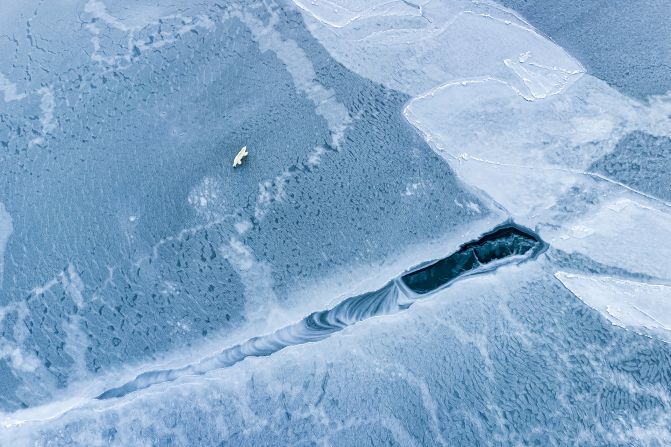
French photographer Florian Ledoux is famous for aerial photography, especially his images of icy scenes in the Arctic. This photo, which won a number of awards including the grand prize in SkyPixel's 2017 photography contest, was taken in the summer months and shows a male polar bear crossing the melting sea ice in Nunavut, Canada.
Florian Ledoux
Ledoux has spent the last two winters in the Arctic, and as soon as it's light enough he'll return this winter too. Temperatures dip to below minus 40 degrees Celsius, but he bundles up, gets into position, and waits to capture the perfect shot.
Florian Ledoux
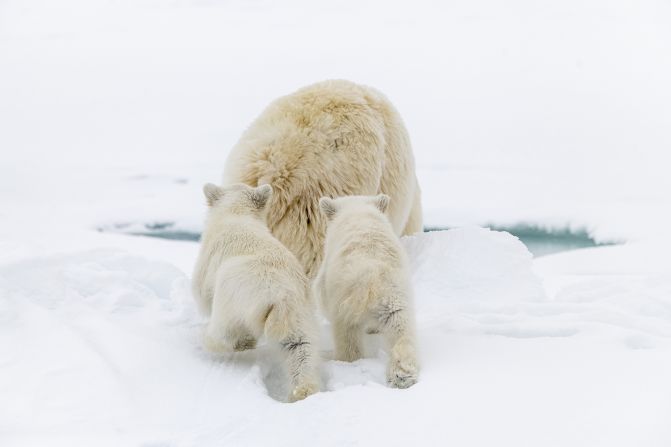
He has filmed iconic scenes for the BBC's nature documentary series "Frozen Planet" and the Disney film "Polar Bear." For the latter, which tells the story of polar bear parenthood in an increasingly challenging environment, he spent weeks following a mother bear and her two cubs.
Florian Ledoux
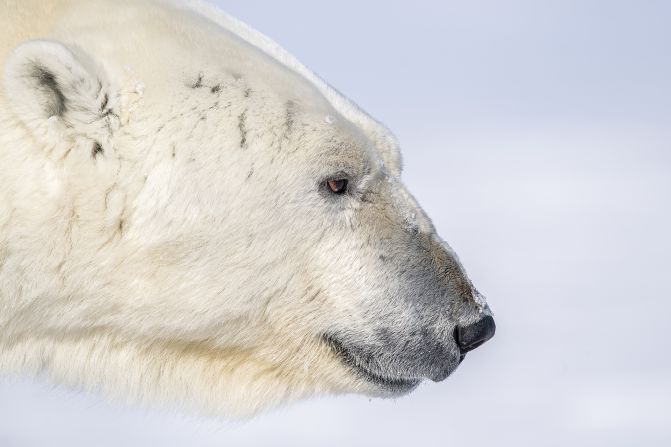
Being in the presence of a polar bear is awesome, says Ledoux: "They are so majestic and beautiful to witness." Before photographing a bear, the crew must work to gain its trust, he adds, following at a distance and then gradually coming closer. This can take hours or days.
Florian Ledoux
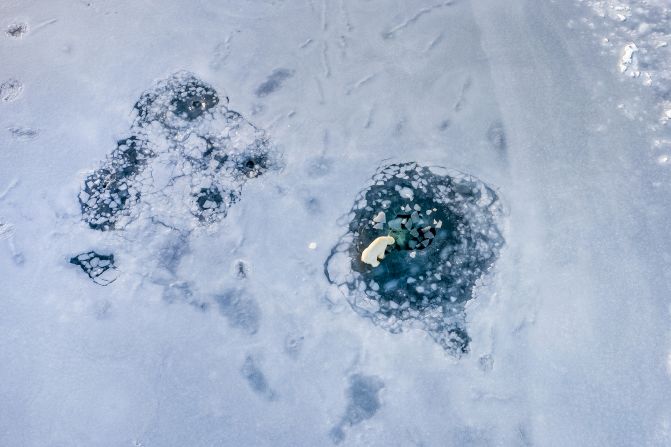
Over time, Ledoux believes you get to know each bear's character. Some are shy, while others are curious and playful. This photo was taken as Ledoux watched two young polar bears playing together on fresh ice -- one bear would go for a swim while the other would run between holes trying to guess where it would surface.
Florian Ledoux
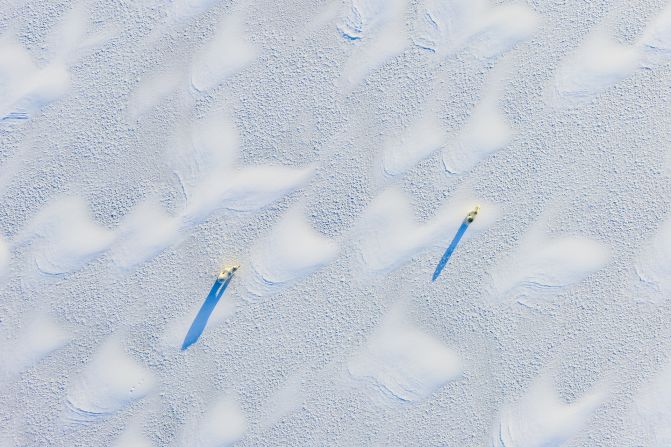
Another time, Ledoux followed two polar bears in courtship during winter. He observed from above as the male followed the female, copying all her moves, until a few weeks later she accepted him as a mate. "(They) started to wrestle and cuddle and kiss ... you have tears in your eyes, there's so much emotion," he recalled.
Florian Ledoux
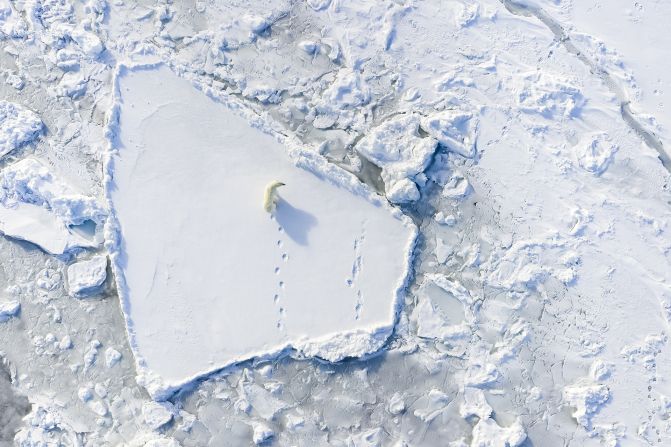
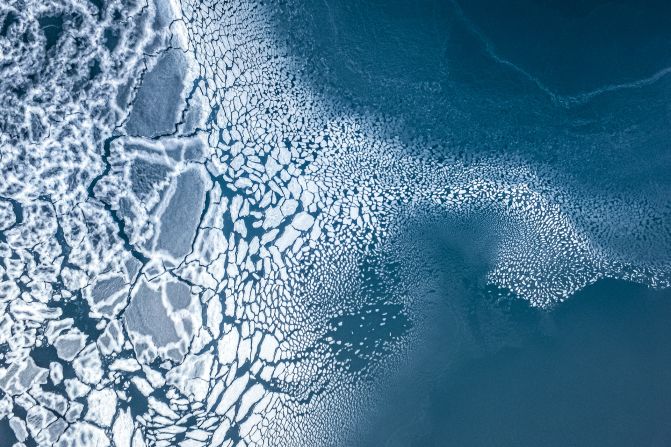
Ledoux specializes in drone photography, which he believes brings a new, more abstract and artistic perspective to the wide expanse of the Arctic. As ice melts more rapidly due to climate change, drones can also increase access, filming places where unstable sea ice would make it too dangerous for humans to go.
Florian Ledoux
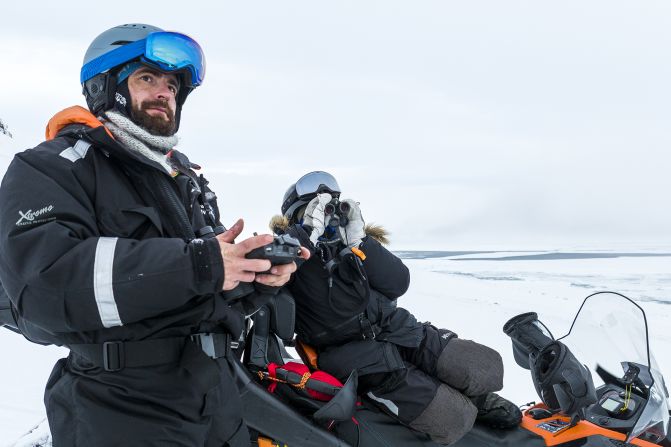
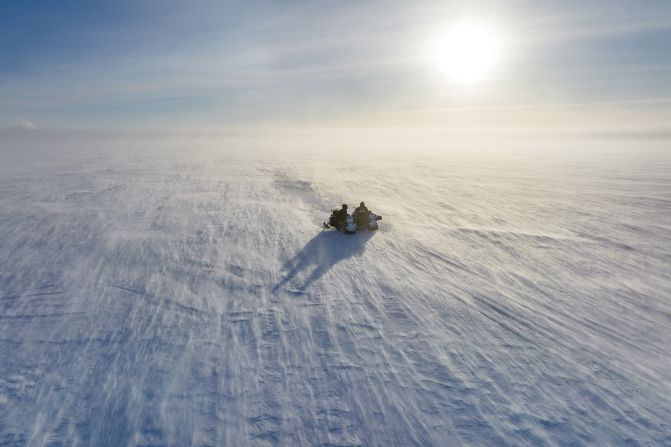
The crew usually travel across the sea ice in snowmobiles, exposed to the Arctic's extreme winter conditions. However many layers you wear, the freezing temperatures and windchill still bite through, says Ledoux.
Florian Ledoux
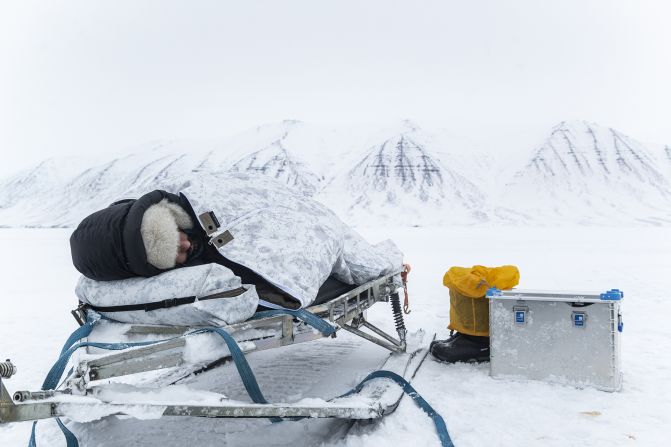
On occasions when the crew stay out for hours on the sea ice to capture a specific shot, they might take a short nap on the snowmobile. But even that can come at a cost: "When you wake you feel terrible, colder, your body slows down a bit," says Ledoux.
Florian Ledoux
Ledoux has always been attracted to wild, big landscapes. He grew up in the French province of Champagne, but it was only after joining the French Navy aged 19, that he started to explore true wilderness. After a two-month mission to northern Canada, he quit his naval contract and pursued Arctic photography full time.
Florian Ledoux
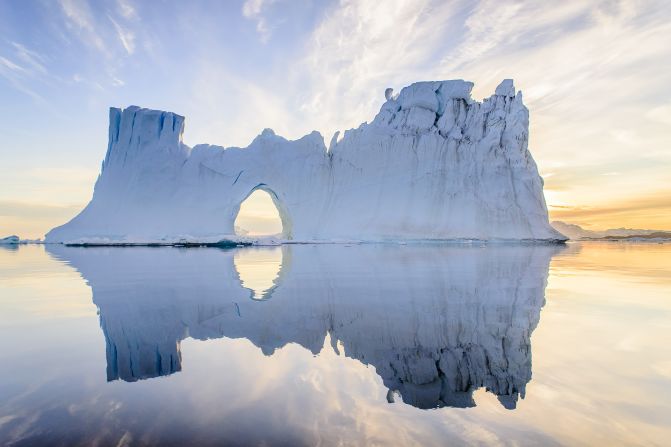
Today, just five years into his photography career, Ledoux finds it hard to imagine a life without ice. It is the ideal photographic subject, allowing for unlimited creativity with its endless number of patterns and forms. "It's an open-air museum that is constantly changing day after day," he says.
Florian Ledoux
On a few occasions, Ledoux has taken a job that has transported him out of the Arctic into warmer oceans where he has photographed whale sharks or other animals. Despite this being a dream for many people, it left him feeling depressed and empty. "The sea without ice is like music without melody," he says.