Stunning photographs capture starlings migrating through Europe
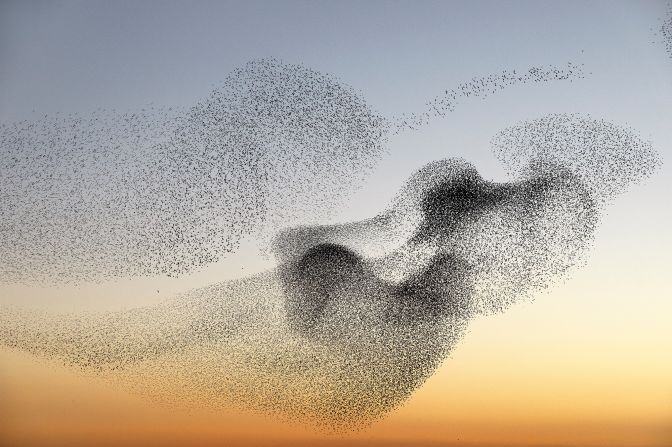
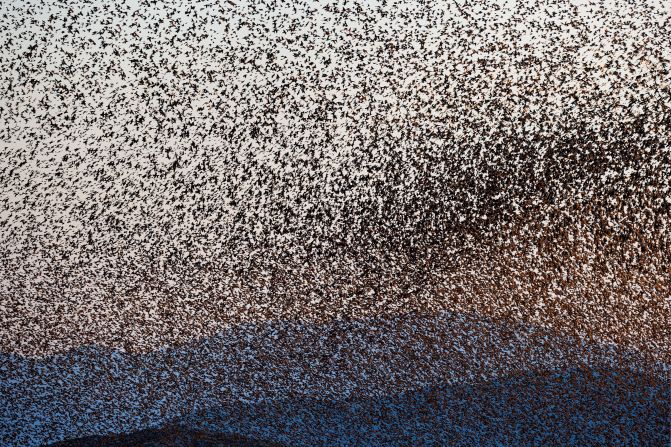
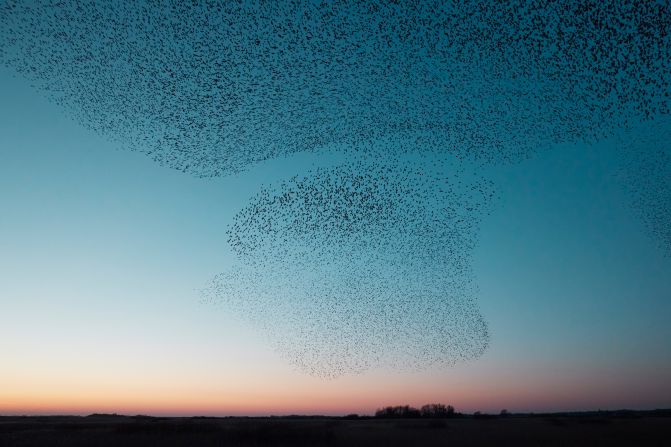
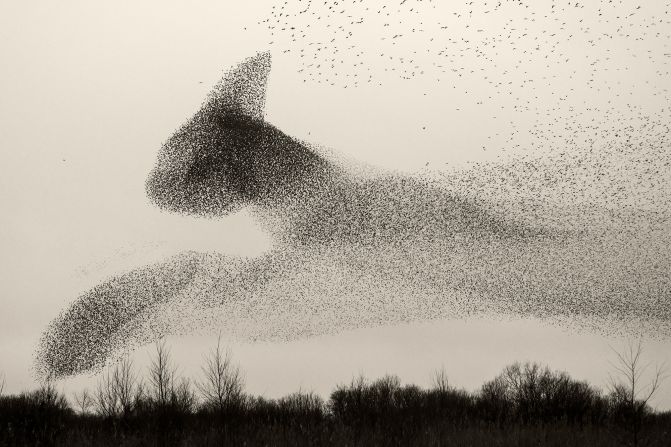
Danish photographer Søren Solkær first witnessed starling murmurations as a child, and has been fascinated by the phenomenon for four decades. In his latest photobook, "Starling," he shows the birds like never before, from the marshes of Denmark to the rooftops of Rome. Look through the gallery to learn more about the mesmerizing murmurations.
Søren Solkær
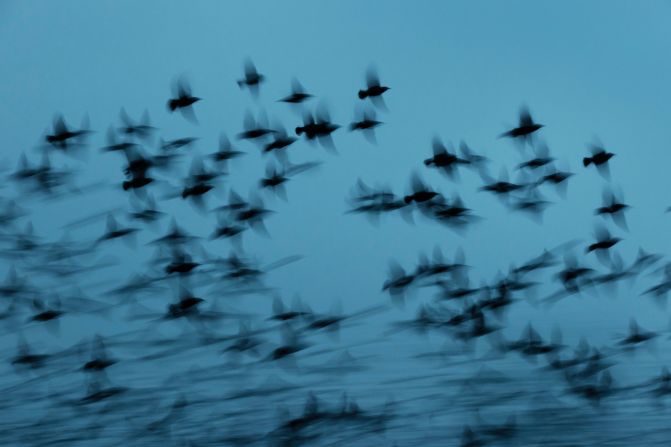
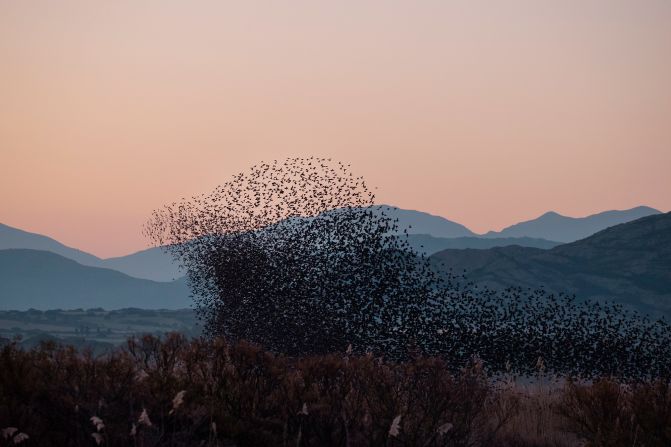
Murmurations are often made up of thousands, sometimes millions, of starlings. Scientists don't know exactly why birds gather in these dense aerial formations, but it is theorized the flock is making itself appear larger to fend off predators, or trying to attract other starlings to the roost and generate warmth in the cold winters.
Søren Solkær
Solkær began photographing the starlings in 2017 near his childhood home in the marshlands of Southern Denmark and quickly became obsessed. "Every time it happens, it's new, it's unique," he said.
Søren Solkær
In 2020, Solkær published his first photobook on starling murmurations, called "Black Sun," the term for the phenomenon in Danish. In this collection, Solkær's shots of the murmurations were predominantly monochrome, taking on the aesthetic of ink on parchment.
Søren Solkær
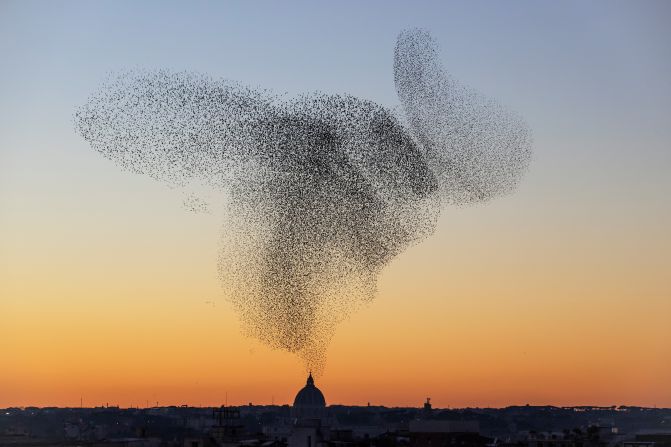
After the success of "Black Sun," Solkær decided to follow the starlings on their migration route across Europe. Many images in the book are taken in Rome, Italy — home to one of the largest wintertime flocks in the world. Solkær was inspired by the southern light in Rome and began to play with color. "The light is much more golden, the sky's very beautiful," he said.
Søren Solkær
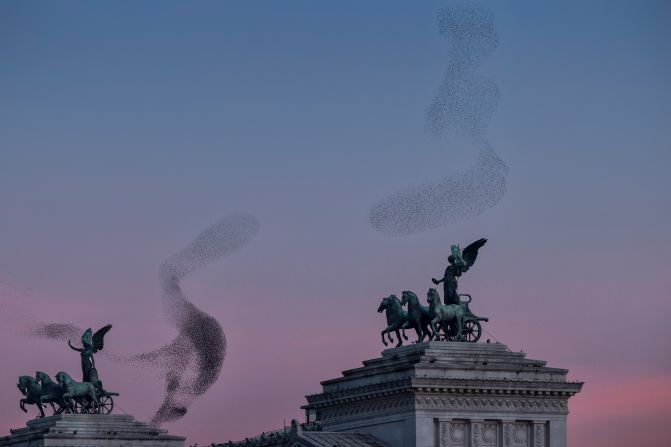
Solkær also began including architecture in some images — like this one, which captures the starlings rising above the quadrigas of unity and freedom atop the Victor Emmanuel II National Monument in Rome, Italy.
Søren Solkær
In ancient Rome, starling murmurations were considered messages from the gods, and diviners would read the auspicious signs, or bad omens, which influenced political decisions. Today, though, the city has a difficult relationship with the birds. "Rome spends a lot of money trying to scare the birds and get them out of the city, because they make a big mess," explained Solkær.
Søren Solkær
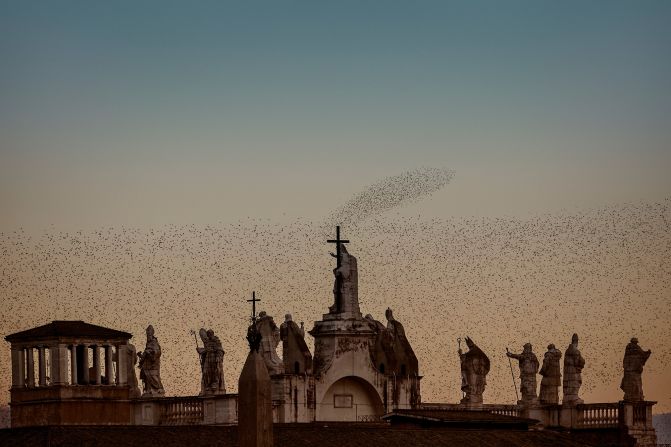
"Starling" explores the juxtaposition between wild and manmade, like this photo taken over the rooftop of Archbasilica of Saint John Lateran in Rome. Solkær said the murmurations are "a very different experience" in an urban setting, compared to the coastal marshes of Denmark: "It even seems more surreal when you're in the city," he added. "It doesn't fit in so well, and that's also what's causing the big struggle between the city of Rome and the birds."
Søren Solkær
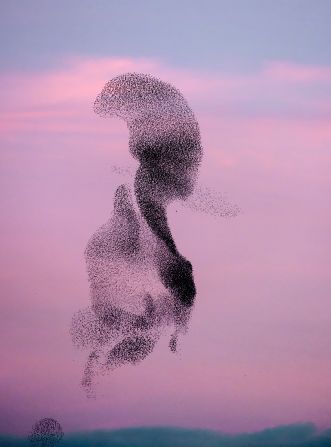
Solkær found inspiration in another unusual place while photographing "Starlings": Nobel Prize-winning physicist Giorgio Parisi, who uses the mumurations as an example of critical systems. "Just like these other systems, when the flock is impacted in one place, there's an instant impact on the whole flock," explained Solkær. "How they work together as one organism, it's very beautiful to watch. They're fighting for their lives but they're doing it in a very graceful way."
Søren Solkær
Often thought of as a common bird in Europe and North America, starling populations have been in decline for decades, falling 53% between 1995 and 2018. Solkær hopes to "inspire a closer connection to nature" with his work, and encourage people to appreciate natural wonders like the murmurations. "The shapes that appear in the sky happen only once in the history of the world," he said. "I think that's a very good reason to photograph them and to try to capture and share them with others."