Northern bald ibis: Back from the brink | CNN

CNN values your feedback

1. How relevant is this ad to you?
2. Did you encounter any technical issues?
Thank You!
Your effort and contribution in providing this feedback is much appreciated.
Close
Ad Feedback
Science
Space
Life
Unearthed
More
Space Life Unearthed
Watch Listen Live TV
My Account
  • Settings
  • Newsletters
  • Topics you follow
  • Sign out
Your CNN account Sign in to your CNN account

My Account
  • Settings
  • Newsletters
  • Topics you follow
  • Sign out
Your CNN account Sign in to your CNN account

Live TV Listen Watch
Edition
US
International
Arabic
Español
Edition
  • US
  • International
  • Arabic
  • Español

Space
Life
Unearthed

Follow CNN

  • World
    • Africa
    • Americas
    • Asia
    • Australia
    • China
    • Europe
    • India
    • Middle East
    • United Kingdom
  • US Politics
    • Trump
    • Facts First
    • CNN Polls
    • 2025 Elections
    • Redistricting Tracker
  • Business
    • Tech
    • Media
    • Calculators
    • Videos
  • Markets
    • Pre-markets
    • After-Hours
    • Fear & Greed
    • Investing
    • Markets Now
    • Nightcap
  • Health
    • Life, But Better
    • Fitness
    • Food
    • Sleep
    • Mindfulness
    • Relationships
  • Entertainment
    • Movies
    • Television
    • Celebrity
  • Tech
    • Innovate
    • Foreseeable Future
    • Mission: Ahead
    • Work Transformed
    • Innovative Cities
  • Style
    • Arts
    • Design
    • Fashion
    • Architecture
    • Luxury
    • Beauty
    • Video
  • Travel
    • Destinations
    • Food & Drink
    • Stay
    • News
    • Videos
  • Sports
    • Football
    • Tennis
    • Golf
    • Motorsport
    • US Sports
    • Olympics
    • Climbing
    • Esports
    • Hockey
  • Science
    • Space
    • Life
    • Unearthed
  • Climate
    • Solutions
    • Weather
  • Weather
    • Video
    • Climate
  • Ukraine-Russia War
  • Israel-Hamas War
  • Features
    • As Equals
    • Call to Earth
    • Freedom Project
    • Impact Your World
    • Inside Africa
    • CNN Heroes
  • Watch
    • Live TV
    • CNN Fast
    • Shows A-Z
    • CNN10
    • CNN Max
    • CNN TV Schedules
  • Listen
    • CNN 5 Things
    • Chasing Life with Dr. Sanjay Gupta
    • The Assignment with Audie Cornish
    • One Thing
    • Tug of War
    • CNN Political Briefing
    • The Axe Files
    • All There Is with Anderson Cooper
    • All CNN Audio podcasts
  • Games
    • Daily Crossword
    • Jumble Crossword
    • Photo Shuffle
    • Sudoblock
    • Sudoku
    • 5 Things Quiz
  • About CNN
    • Photos
    • Investigations
    • CNN Profiles
    • CNN Leadership
    • CNN Newsletters
    • Work for CNN
SeriesBanner-DarkTheme.png
Call to Earth Dark Theme
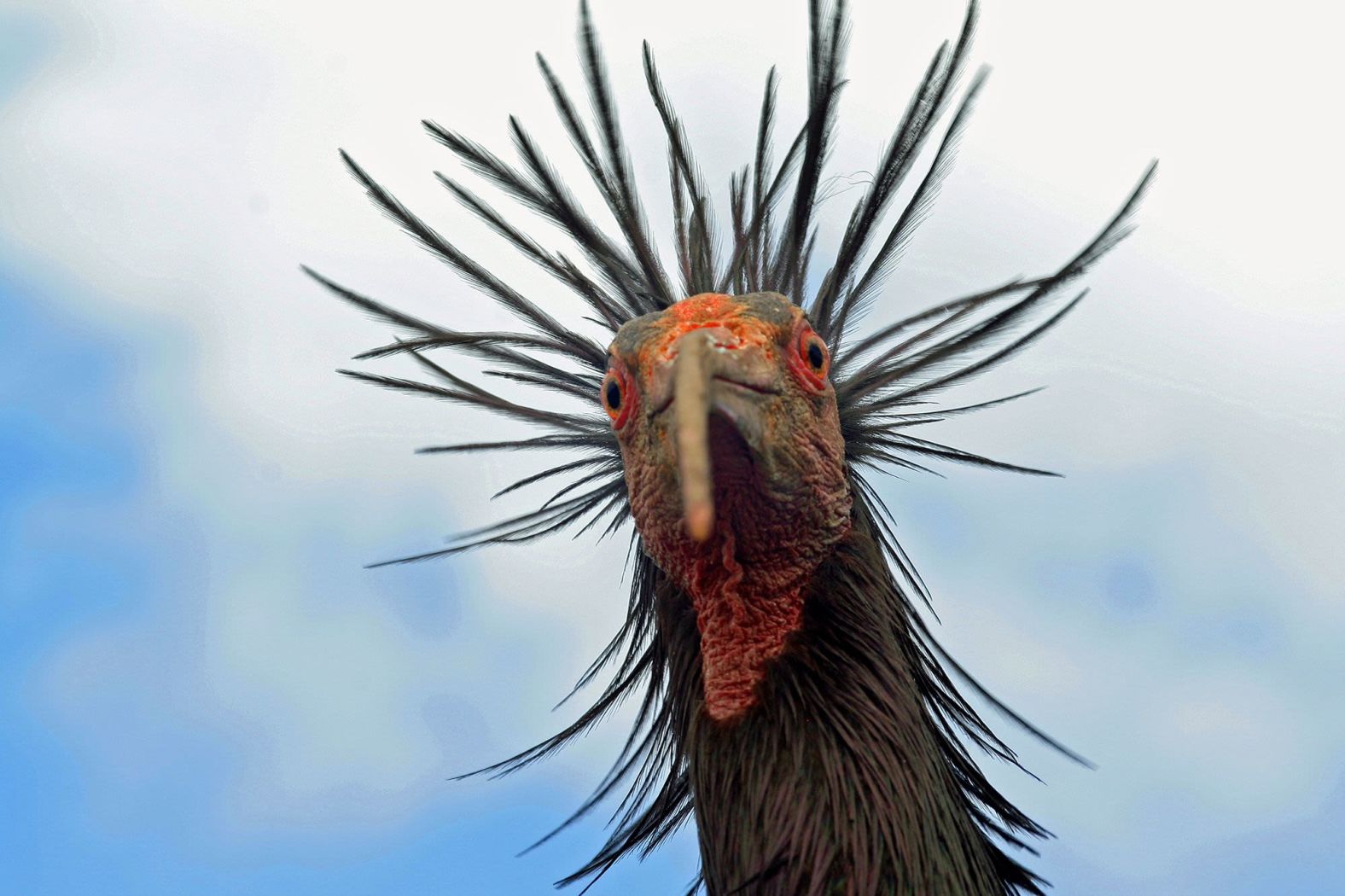
Once common, the northern bald ibis was hunted to near extinction.
G M Therin-Weise/imageBROKER/Shutterstock

Northern bald ibis: Back from the brink

By Joshua Korber Hoffman, CNN
Updated 4:53 AM EDT, Mon September 30, 2024
Link Copied!

Editor’s Note: Call to Earth is a CNN editorial series committed to reporting on the environmental challenges facing our planet, together with the solutions. Rolex’s Perpetual Planet Initiative has partnered with CNN to drive awareness and education around key sustainability issues and to inspire positive action.

After the northern bald ibis disappeared from Europe more than 300 years ago, some assumed that 16th century drawings of its gleaming plume and long, arching beak were works of the imagination.

The birds, which were once found in three continents, were so revered in the ancient world that they have their own hieroglyph – a depiction of their distinctive outline that represents the word akh, meaning “spirit”.

But by the 1990s, the once-thriving species was considered one of the rarest birds in the world, with its global population in the wild reduced to just 59 pairs – all in Morocco – due to hunting, habitat loss, and the use of pesticides.

Today, tenacious conservation efforts in Morocco have increased the population to more than 500 individuals, resulting in the IUCN Red List of Threatened Species changing its status from critically endangered to endangered in 2018.

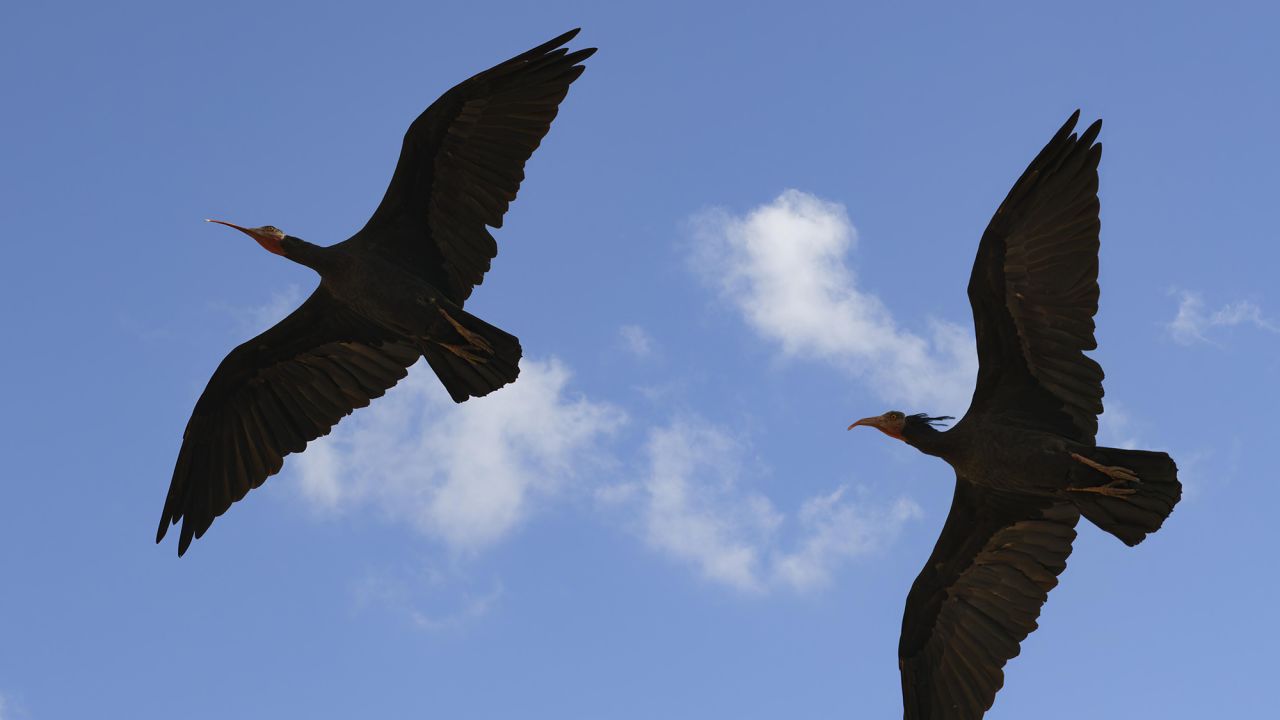
In addition, thanks to a first-of-its-kind reintroduction program, the ibises are back migrating in Europe for the first time since the 1600s, with a managed migratory population of around 270 birds.
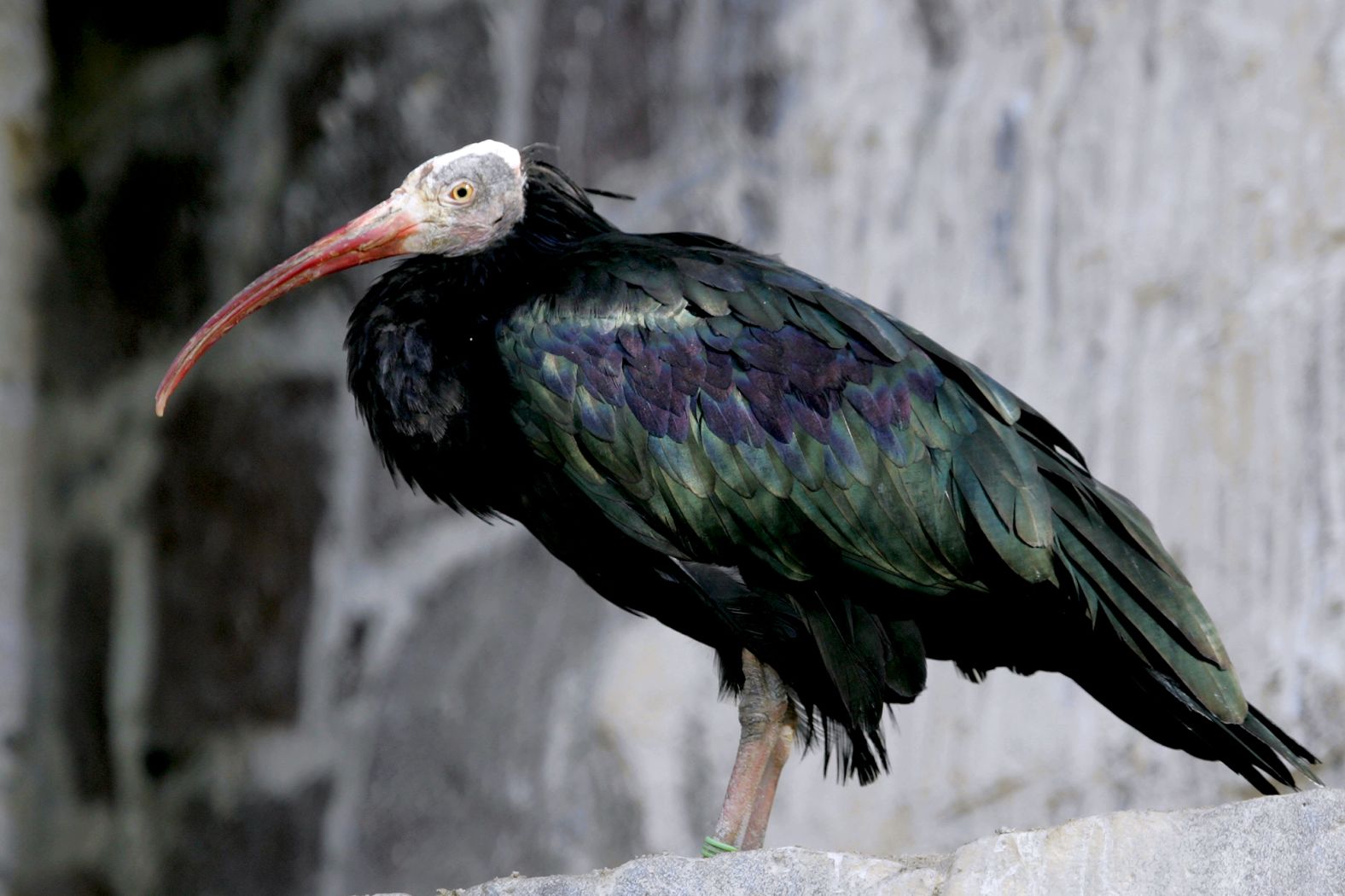
The northern bald ibis was once found in Europe, the Middle East and North Africa. But today, it occupies only a fraction of its former range. Typically, breeding colonies reside in cliffs and rocky outcrops, as well as inside castles and ruins in urban areas. They feed largely on insects, worms, and larvae but are frequently forced to be flexible foragers in their often-remote living locations.
ullstein bild/Getty Images
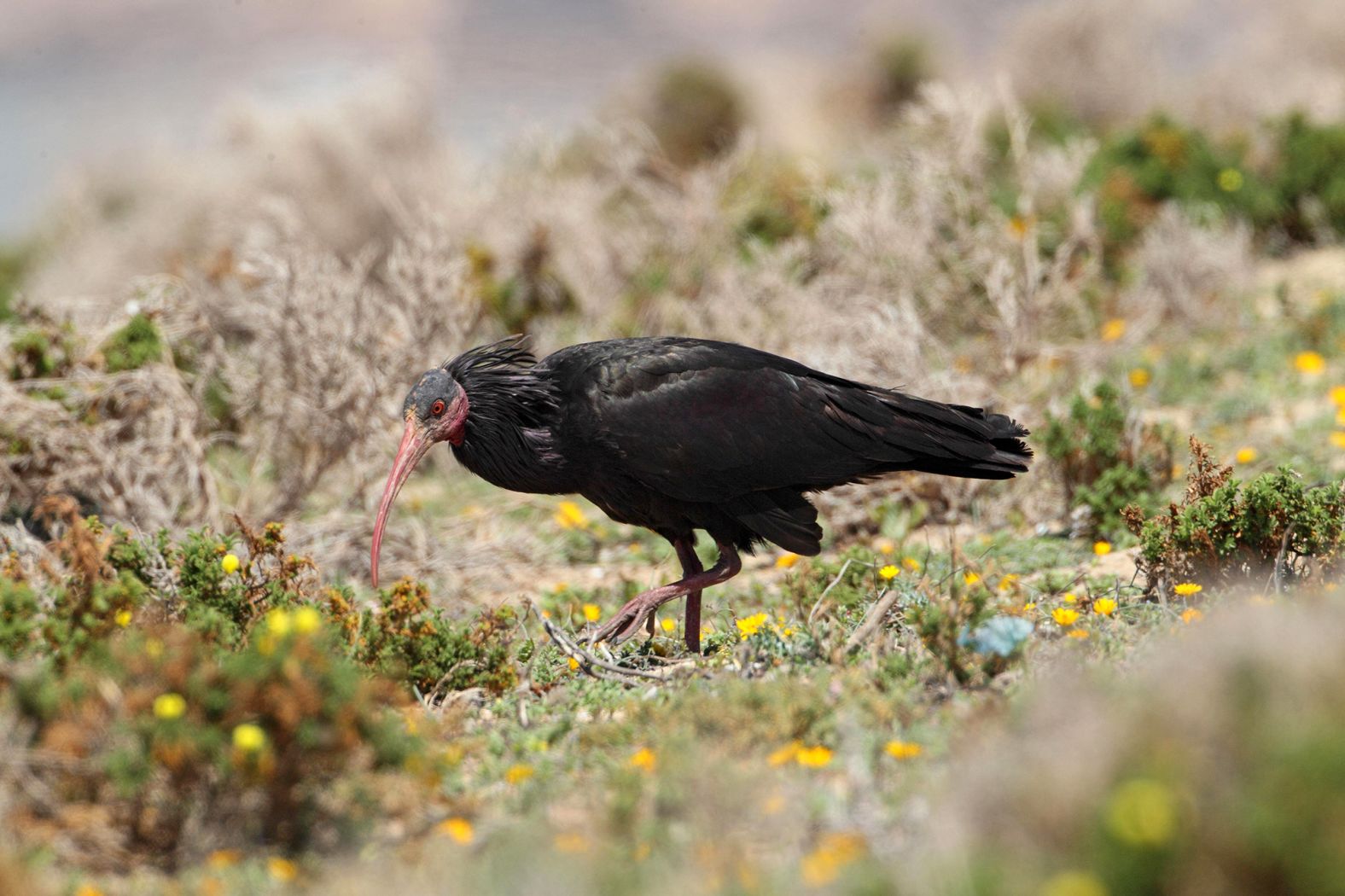
Morocco is home to the largest remaining wild population of the northern bald ibis, thanks in part to extensive conservation efforts. The creation of the Souss-Massa national park on the west coast of Morocco in 1991 helped to protect <a href="index.php?page=&url=https%3A%2F%2Fdatazone.birdlife.org%2Fspecies%2Ffactsheet%2Fnorthern-bald-ibis-geronticus-eremita%2Ftext" target="_blank">nesting and feeding areas</a>. In 1994 a research program was set up to monitor the endangered species. According to <a href="index.php?page=&url=https%3A%2F%2Fwww.iucnredlist.org%2Fspecies%2F22697488%2F130895601%23assessment-information" target="_blank">the IUCN</a>, the Moroccan population, which doesn’t seasonally migrate, is now stable. In this picture, an ibis forages in Agadir, Morocco.
Morocco is home to the largest remaining wild population of the northern bald ibis, thanks in part to extensive conservation efforts. The creation of the Souss-Massa national park on the west coast of Morocco in 1991 helped to protect nesting and feeding areas. In 1994 a research program was set up to monitor the endangered species. According to the IUCN, the Moroccan population, which doesn’t seasonally migrate, is now stable. In this picture, an ibis forages in Agadir, Morocco.
Bill Baston/imageBROKER/Shutterstock
The Middle Eastern population of the northern bald ibis was found in Turkey and Syria, and was known for its vast migration route – an odyssey of thousands of miles to and from Ethiopia, <a href="index.php?page=&url=https%3A%2F%2Fdatazone.birdlife.org%2Fspecies%2Ffactsheet%2Fnorthern-bald-ibis-geronticus-eremita%2Ftext" target="_blank">flying through Eritrea, Sudan, Saudi Arabia and Jordan</a>. But populations dwindled dramatically in the 20th century, and the colony was assumed regionally extinct when <a href="index.php?page=&url=https%3A%2F%2Fdatazone.birdlife.org%2Fspecies%2Ffactsheet%2Fnorthern-bald-ibis-geronticus-eremita%2Ftext" target="_blank">no birds returned to Syria in 2015</a>.
The Middle Eastern population of the northern bald ibis was found in Turkey and Syria, and was known for its vast migration route – an odyssey of thousands of miles to and from Ethiopia, flying through Eritrea, Sudan, Saudi Arabia and Jordan. But populations dwindled dramatically in the 20th century, and the colony was assumed regionally extinct when no birds returned to Syria in 2015.
Waldrappteam Naturschutz & Forschung
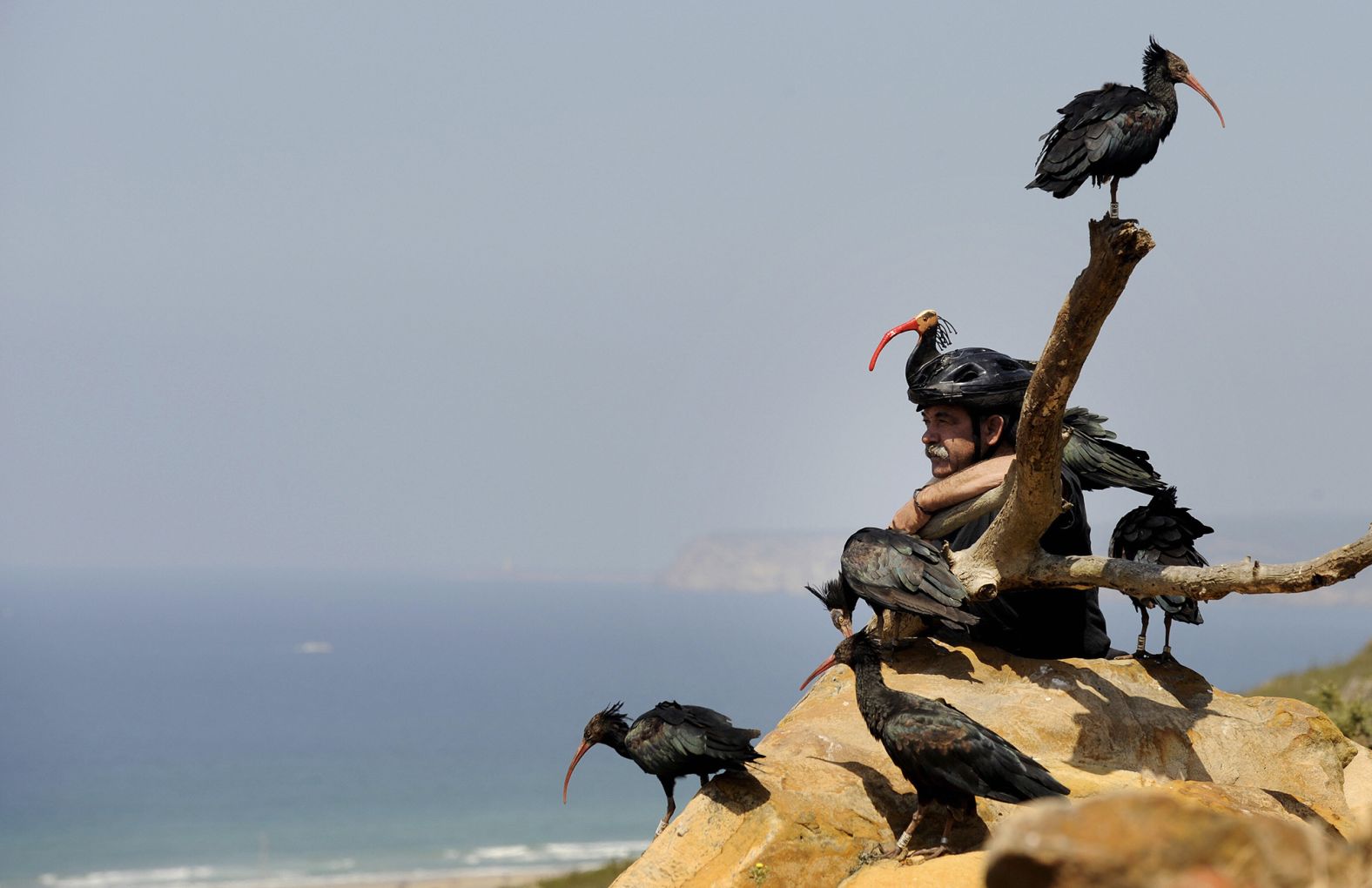
Historically, the northern bald ibis, also known as the hermit ibis, also occurred across parts of southern Europe up until the 16th century. Projects to reintroduce the species to the continent are underway, including <a href="index.php?page=&url=https%3A%2F%2Fwww.zoobotanicojerez.com%2Fproyecto-eremita" target="_blank">one in Andalusia</a>, Spain, which began in 2004. Adoptive human parents hand-reared the chicks born in captivity, before they were gradually released into the wild. In this picture from 2008, a keeper with a fake ibis attached to his helmet looks out to sea at a hermit ibis sanctuary near Barbate de Franco, Spain.
Historically, the northern bald ibis, also known as the hermit ibis, also occurred across parts of southern Europe up until the 16th century. Projects to reintroduce the species to the continent are underway, including one in Andalusia, Spain, which began in 2004. Adoptive human parents hand-reared the chicks born in captivity, before they were gradually released into the wild. In this picture from 2008, a keeper with a fake ibis attached to his helmet looks out to sea at a hermit ibis sanctuary near Barbate de Franco, Spain.
Jose Luis Roca/AFP/Getty Images
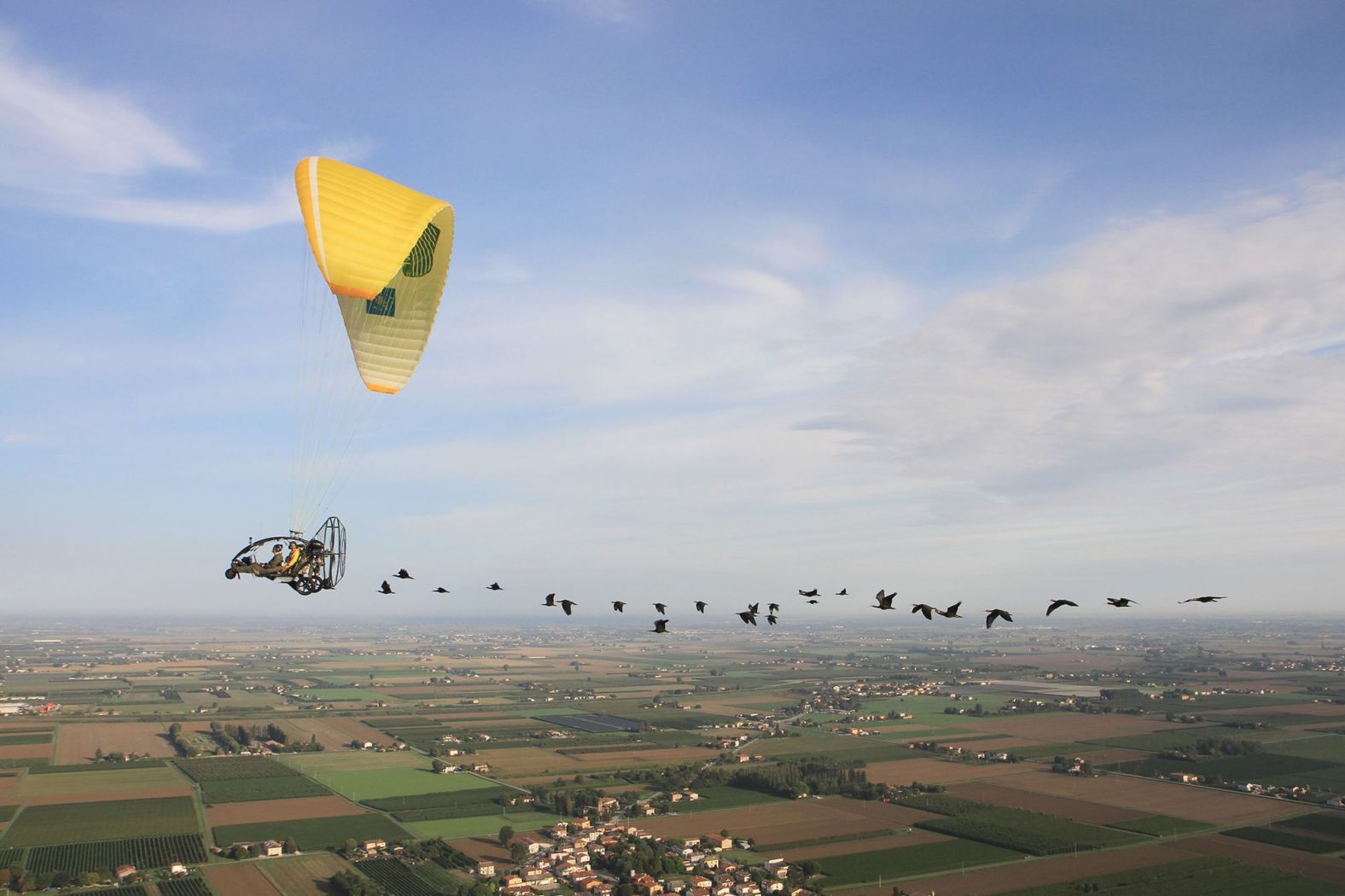
Another unique effort to establish a migratory population in Austria and Germany is ongoing, led by Austrian biologist Johannes Fritz. In 2003, Fritz, along with his conservation and research group <a href="index.php?page=&url=https%3A%2F%2Fwww.waldrappteam.at%2Fmigration%2F" target="_blank">Waldrappteam</a>, began reintroducing captive birds into the wild, but having been raised in zoos they did not know which way to migrate. Inspired by the 1996 film “Fly Away Home,” in which a teenager leads a flock of migrating geese in a hang glider, Fritz concocted the idea of personally teaching the migration path by leading the flock in an ultralight aircraft, flying from Germany to Italy. In this picture, a group of ibises follow the Waldrappteam hang glider during their migration.
Another unique effort to establish a migratory population in Austria and Germany is ongoing, led by Austrian biologist Johannes Fritz. In 2003, Fritz, along with his conservation and research group Waldrappteam, began reintroducing captive birds into the wild, but having been raised in zoos they did not know which way to migrate. Inspired by the 1996 film “Fly Away Home,” in which a teenager leads a flock of migrating geese in a hang glider, Fritz concocted the idea of personally teaching the migration path by leading the flock in an ultralight aircraft, flying from Germany to Italy. In this picture, a group of ibises follow the Waldrappteam hang glider during their migration.
Waldrappteam Naturschutz & Forschung
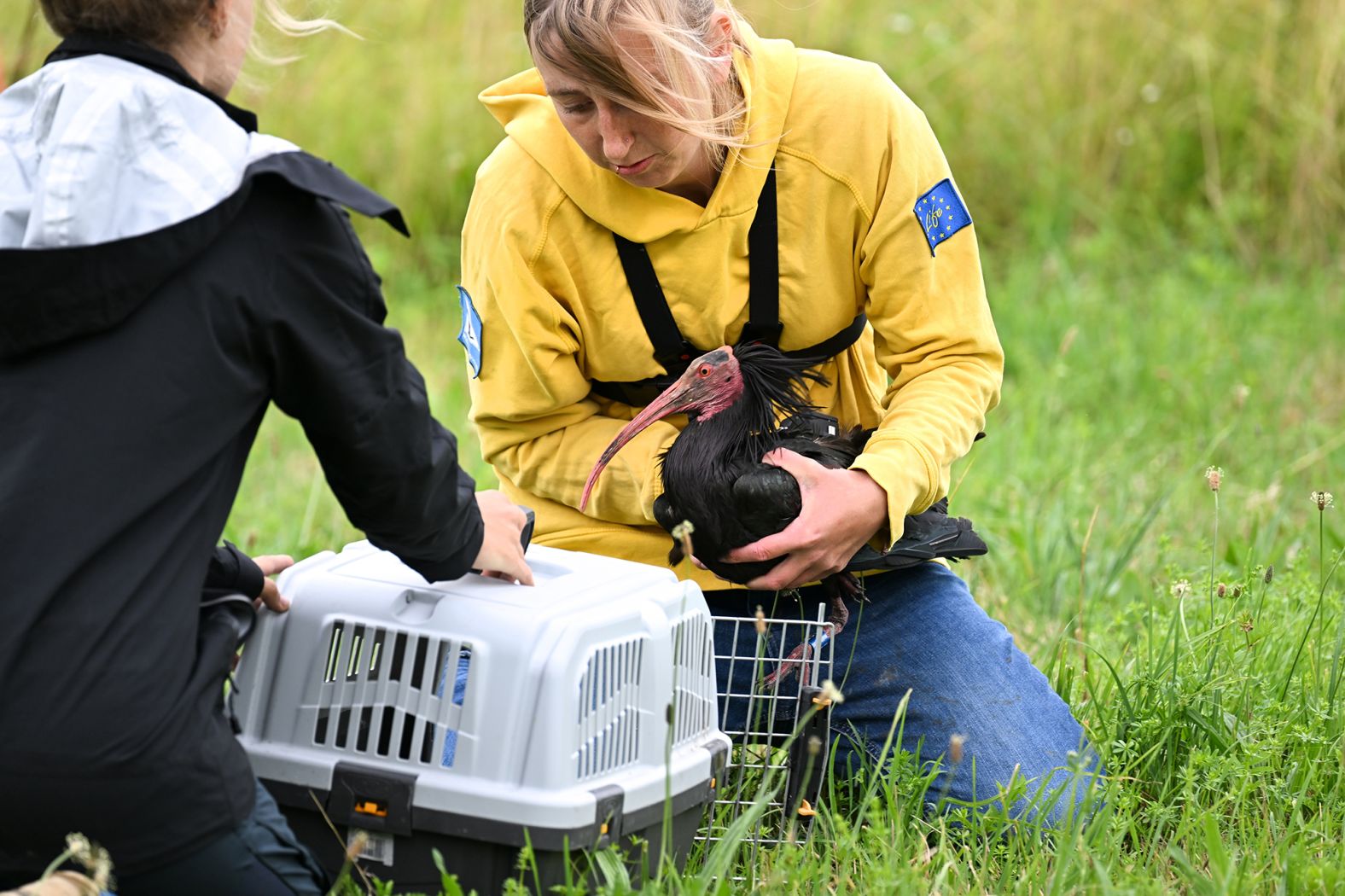
According to Waldrappteam, there have been 17 migratory journeys since – in August and September of each year – and there is now a population of around 270 birds. In 2023, they changed the <a href="index.php?page=&url=https%3A%2F%2Fwww.waldrappteam.at%2Fhlm%2F" target="_blank">migration route</a> to end in Spain rather than Italy to due to environmental factors. In this picture from 2022, a member of the Waldrapp team maneuvers an ibis into a cage, before it is transported to an area of Germany near Lake Constance where there is a modern colony of the species.

According to Waldrappteam, there have been 17 migratory journeys since – in August and September of each year – and there is now a population of around 270 birds. In 2023, they changed the migration route to end in Spain rather than Italy to due to environmental factors. In this picture from 2022, a member of the Waldrapp team maneuvers an ibis into a cage, before it is transported to an area of Germany near Lake Constance where there is a modern colony of the species.

Felix Kästle/picture alliance/Getty Images
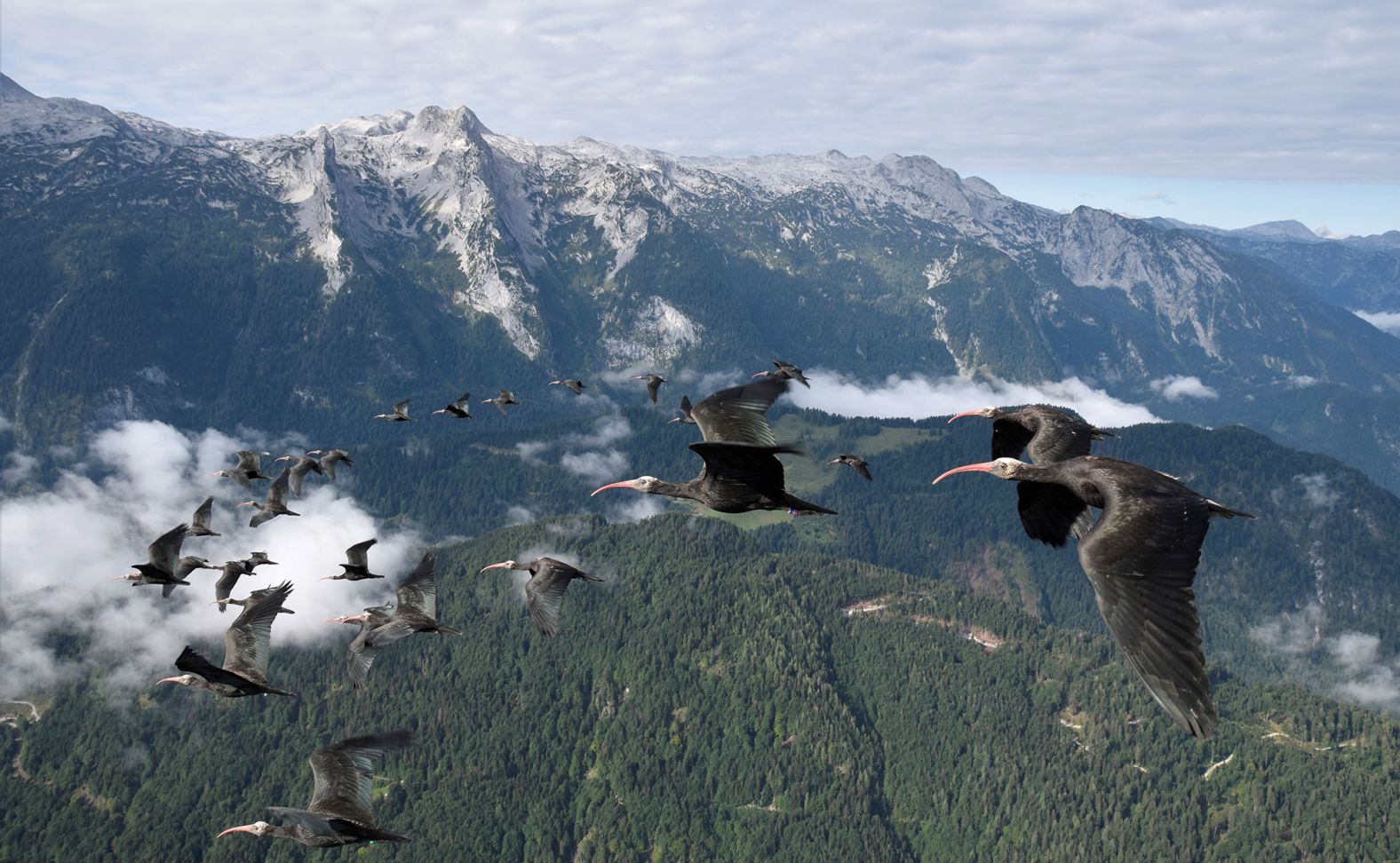
Today, most of the European birds no longer need human guidance. But the northern bald ibis still faces various threats. It feeds largely on insects, and pesticide use affects its food supply. Poaching <a href="index.php?page=&url=https%3A%2F%2Fwww.waldrapp.eu%2Fwp-content%2Fuploads%2F2024%2F06%2FAnnual-Report-2023.pdf" target="_blank">killed 17%</a> of all the ibises that migrated in Europe in 2023, and climate change is also affecting the birds, necessitating changes in the times of year at which they migrate, and increasing the challenges along the way. In this picture, a group of ibises fly above the clouds on their migration from Germany to Southern Europe.
Today, most of the European birds no longer need human guidance. But the northern bald ibis still faces various threats. It feeds largely on insects, and pesticide use affects its food supply. Poaching killed 17% of all the ibises that migrated in Europe in 2023, and climate change is also affecting the birds, necessitating changes in the times of year at which they migrate, and increasing the challenges along the way. In this picture, a group of ibises fly above the clouds on their migration from Germany to Southern Europe.
Waldrappteam Naturschutz & Forschung

My Account
  • Settings
  • Newsletters
  • Topics you follow
  • Sign out
Your CNN account Sign in to your CNN account

Live TV Listen Watch
  • World
    • Africa
    • Americas
    • Asia
    • Australia
    • China
    • Europe
    • India
    • Middle East
    • United Kingdom
  • US Politics
    • Trump
    • Facts First
    • CNN Polls
    • 2025 Elections
    • Redistricting Tracker
  • Business
    • Tech
    • Media
    • Calculators
    • Videos
  • Markets
    • Pre-markets
    • After-Hours
    • Fear & Greed
    • Investing
    • Markets Now
    • Nightcap
  • Health
    • Life, But Better
    • Fitness
    • Food
    • Sleep
    • Mindfulness
    • Relationships
  • Entertainment
    • Movies
    • Television
    • Celebrity
  • Tech
    • Innovate
    • Foreseeable Future
    • Mission: Ahead
    • Work Transformed
    • Innovative Cities
  • Style
    • Arts
    • Design
    • Fashion
    • Architecture
    • Luxury
    • Beauty
    • Video
  • Travel
    • Destinations
    • Food & Drink
    • Stay
    • News
    • Videos
  • Sports
    • Football
    • Tennis
    • Golf
    • Motorsport
    • US Sports
    • Olympics
    • Climbing
    • Esports
    • Hockey
  • Science
    • Space
    • Life
    • Unearthed
  • Climate
    • Solutions
    • Weather
  • Weather
    • Video
    • Climate
  • Ukraine-Russia War
  • Israel-Hamas War
  • Features
    • As Equals
    • Call to Earth
    • Freedom Project
    • Impact Your World
    • Inside Africa
    • CNN Heroes
  • Watch
    • Featured
    • Shows & Films
    • Network TV
    • Clips
    • CNN Headlines
    • CNN Shorts
    • TV Shows A-Z
    • CNN 10
    • CNN Max
    • TV Schedule
  • Listen
    • CNN 5 Things
    • Chasing Life with Dr. Sanjay Gupta
    • The Assignment with Audie Cornish
    • One Thing
    • Tug of War
    • CNN Political Briefing
    • The Axe Files
    • All There Is with Anderson Cooper
    • All CNN Audio podcasts
  • Games
    • Daily Crossword
    • Jumble Crossword
    • Photo Shuffle
    • Sudoblock
    • Sudoku
    • 5 Things Quiz
  • About CNN
    • Photos
    • Investigations
    • CNN Profiles
    • CNN Leadership
    • CNN Newsletters
    • Work for CNN

Science
Watch Listen Live TV
My Account
  • Settings
  • Newsletters
  • Topics you follow
  • Sign out
Your CNN account Sign in to your CNN account
Follow CNN

Download the CNN app

Terms of Use Privacy Policy Ad Choices Accessibility & CC About Newsletters Transcripts

© 2025 Cable News Network. A Warner Bros. Discovery Company. All Rights Reserved.
CNN Sans ™ & © 2016 Cable News Network.

Download the CNN app

Scan the QR code to download the CNN app on Google Play.

Scan the QR code to download the CNN app from Google Play.

Download the CNN app

Scan the QR code to download the CNN app from the Apple Store.

Scan the QR code to download the CNN app from the Apple Store.