Sustainable funerals: How to go green when everyone’s wearing black
New York-based Transcend is offering a new kind of green burial. Customers will pay for their remains to be buried on land undergoing reforestation and a tree of their choice will be planted above their bodies. The body's nutrients will feed the growing tree, which will act as a living memorial to the deceased. It intends to launch burials in the US in 2023.
Courtesy Transcend
An illustration demonstrating the tree burial concept. Transcend buries the body surrounded by wood chips, local soil and a mix of fungi, designed to help compost the human remains and encourage the tree above to take up the body's nutrients. To learn more about the green burial movement and more sustainable funeral practices, scroll through the gallery.
Courtesy Transcend
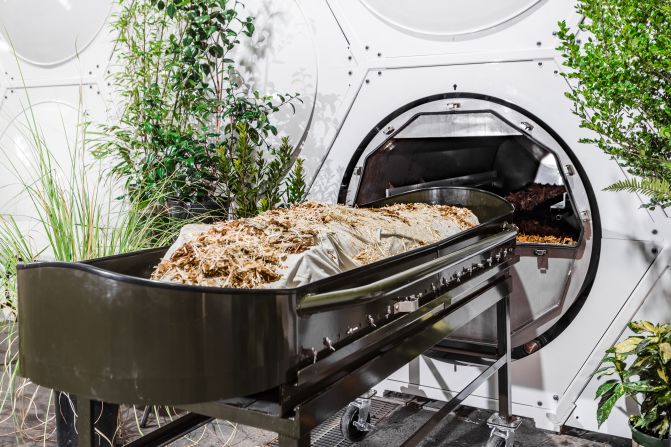
Human composting is legal in a handful of US states, most recently New York. In Seattle, Recompose places human remains in a stainless steel container along with wood chips, alfalfa and straw, which decomposes into roughly one cubic yard of soil. Six to 10 weeks later, the soil is ready for collection or donation to Bells Mountain, a protected forest in Washington state.
Recompose
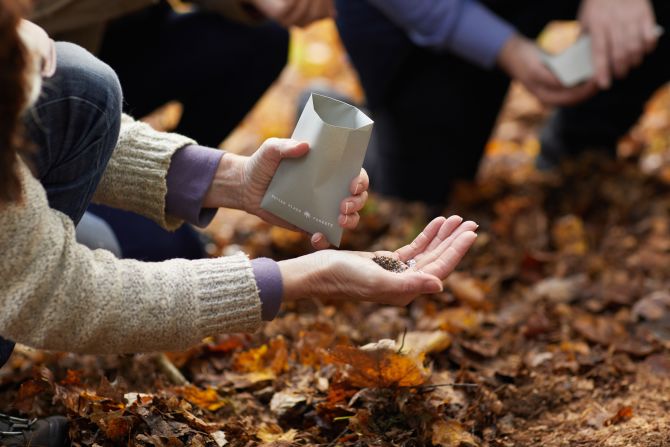
Better Place Forests owns a series of memorial forests in the US, allowing loved ones to scatter a mixture of cremated ashes and fertilizer at the foot of a designated tree, chosen by the deceased. A plaque is placed nearby, creating a living memorial that can be visited by family and friends.
Courtesy Better Place Forests
Better Place Forests co-founder and CEO Sandy Gibson lost his parents at a young age. The idea for memorial forests came from visiting their graves in a "noisy urban cemetery in downtown Toronto." Today, the company has locations in California, Arizona, Minnesota, Connecticut and Massachusetts, with a forest in Illinois coming soon.
Courtesy Better Place Forests
Aquamation, otherwise known as resomation or liquid cremation, is legal in more than half of US states. It uses an alkaline solution and gentle heat to break down the body, leaving just bones, which are first dried then pulverized. The by-product is a nutrient-rich liquid fertilizer. Liquid cremation received a publicity boost in 2022 when Nobel Peace Prize winner Desmond Tutu chose for his remains to undergo the process.
Shafiek Tassiem/Reuters
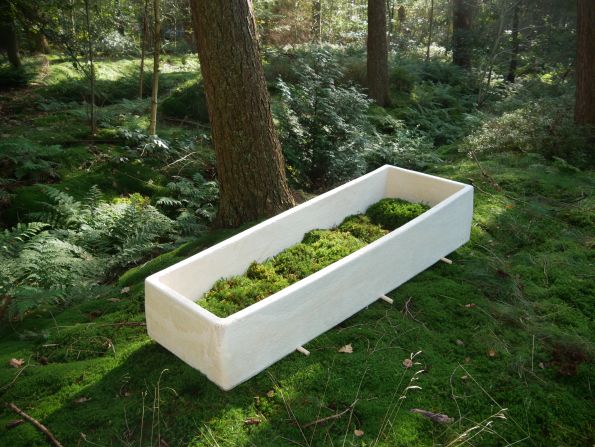
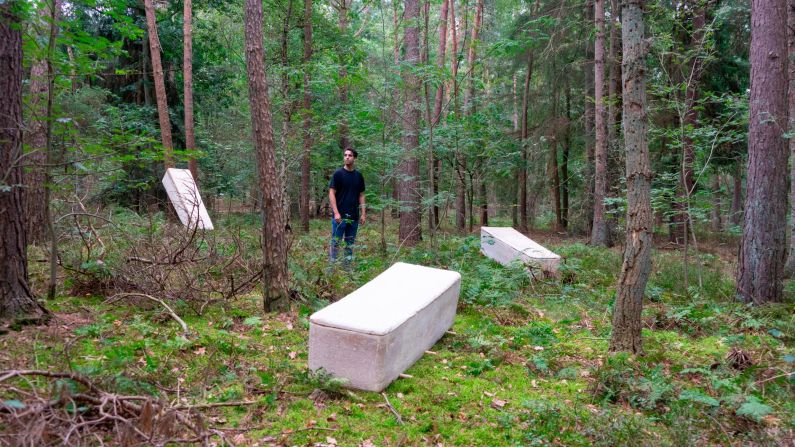
This "living cocoon" coffin, created by Dutch company Loop, is made from mycelium -- fungal fibers that usually live underground but can be cultivated in a laboratory.
courtesy Loop
The coffin (pictured with inventor Bob Hendrikx) is designed to decompose in roughly 45 days once placed in the ground. A traditional wooden coffin, in comparison, can take up to 20 years.
courtesy Loop
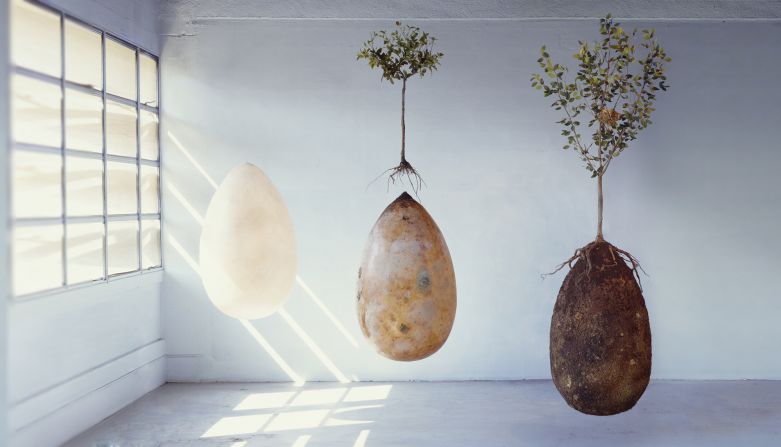
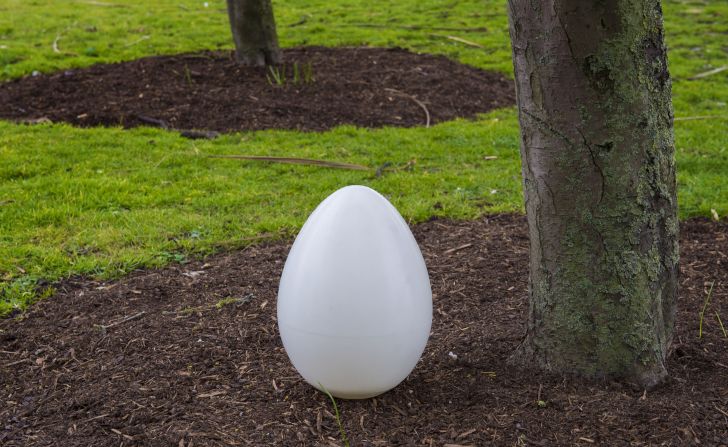
The Capsula Mundi burial pod by Italian designers Raoul Bretzel and Anna Citelli is a bioplastic capsule designed to break down once planted in the ground, providing nutrients for the sapling planted above it.
Courtesy Giacomo Bretzel
An urn version of the Capsula Mundi suitable for ashes is available, with the designers also testing a casket version designed to hold a human body.
Courtey Brenda Fitzsimons
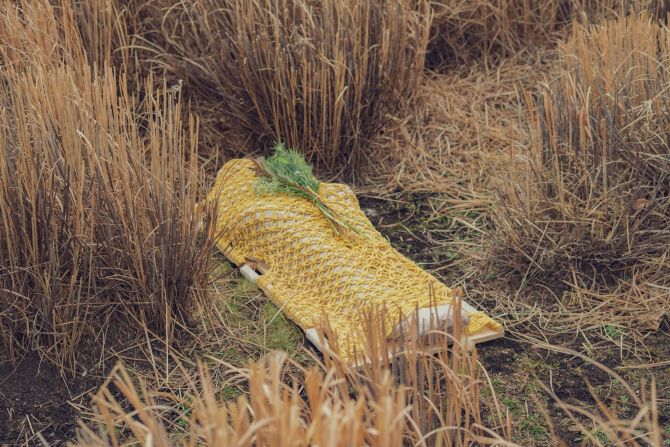
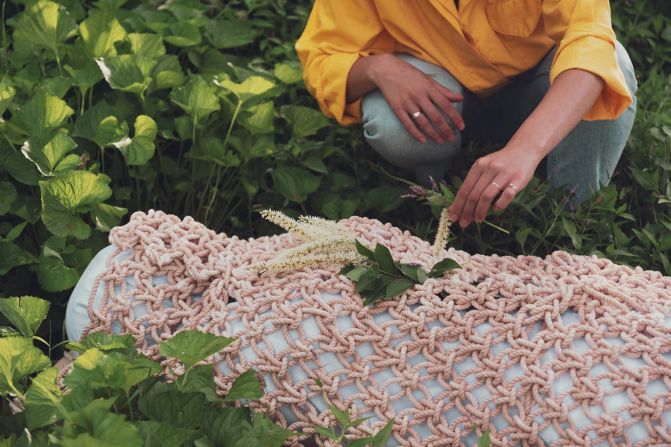
US company Leaves With You crafts macrame coffins made from biodegradable recycled cotton rope and Fairtrade sourced wood. Designer Shaina Garfield's creations cost between $1,500 and $2,220 and have a low impact on the environment.
Steph Mantis/Leaves With You
Leaves With You coffins are made in collaboration with the bereaved, who are taught how to make the woven coffins and are encouraged to tie the last knots themselves.
Spencer Hill/Leaves With You
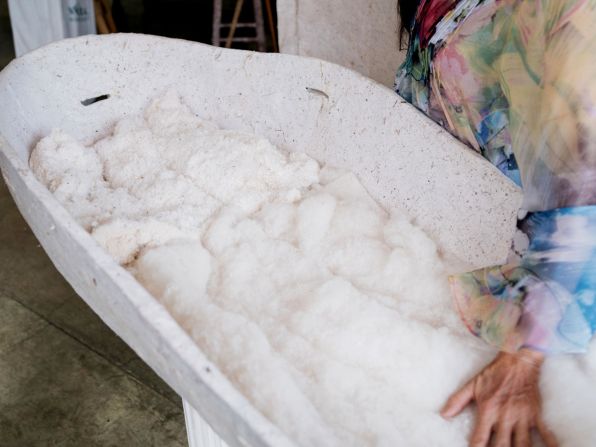
In the US, the Natural Burial Co. sells caskets made from recycled newspaper as a sustainable alternative to virgin wood. Coffins made from recycled materials are increasingly popular. The Ecopod, designed by ARKA, uses mulberry pulp.
Daniel Cronin/Bloomberg/Getty Images
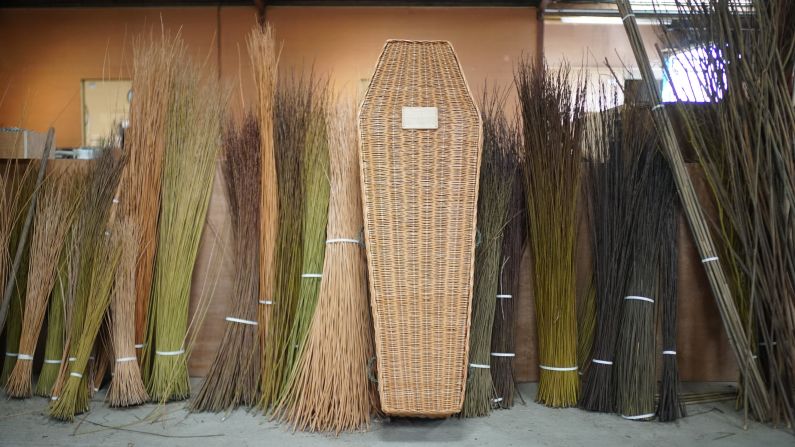
Musgrove Willows Ltd grows 60 varieties of the tree on about 200 acres of farmland in Somerset, England. It produces more than 100 coffins each week, which are organic and biodegradable.
Ed Scott-Clarke/CNN
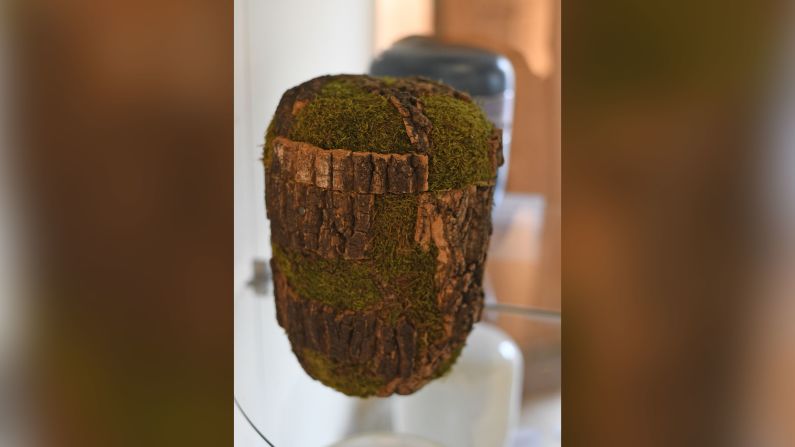
Biodegradable urns are becoming increasingly popular. The urn pictured is made from cork oak wood, for sale in Germany.
Henning Kaiser/picture alliance/Getty Images
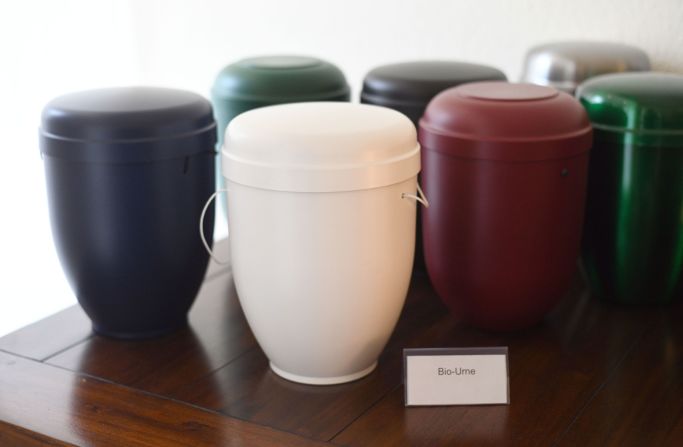
A variety of biodegradable materials have been used by the industry. The urns pictured are made from cellulose, an organic material found in plants that can be processed into everything from photographic film to explosives, but can also be manufactured so that it's able to break down naturally.