What we covered
• War with Iran: Explosions have been heard in cities including Dubai, Abu Dhabi and Doha, after Iran’s top official said Tehran “will not negotiate” with the US. President Donald Trump earlier warned of more US casualties after three Americans were killed.
• Hezbollah joins conflict: Israel has vowed more strikes on Lebanon as the country and Hezbollah are trading blows. The group had said it attacked an Israeli base over the killing of Supreme Leader Ayatollah Ali Khamenei.
• Briefings undercut White House claim: Pentagon briefers acknowledged to congressional staff that Iran was not planning to strike US forces unless Israel attacked Iran first, undercutting the administration’s claim of an imminent threat as a reason to launch strikes, sources said.
• Global shockwaves: The war has disrupted air travel, hit Gulf states usually regarded as safe, and hindered the flow of oil. Countries looking to evacuate their citizens also face major challenges.
Iran fired a new wave of missiles, says Israeli military
Iran has fired a new barrage of missiles toward Israel on Monday, Israel’s military said.
“Defense systems are operating to intercept the threat,” said the Israel Defense Forces (IDF), adding that preliminary alerts have been sent to mobile phones in affected areas.
Sirens ring out over Bahrain
Sirens have been sounded over Bahrain, according to the country’s Ministry of Interior which urged residents to “remain calm and head to the nearest safe place” in a post on X.
China stands to become the big loser in Trump’s attack on Iran

In less than two months, United States President Donald Trump has taken out two of Beijing’s closest allies — threatening China’s oil supply in the process.
Venezuelan President Nicolás Maduro was seized by the US in January. Now Iranian Supreme Leader Ali Khamenei is dead. Beyond robbing China of its strategic partners in South America and the Middle East, the two military actions have struck at something far more vital to Beijing: Oil.
Both nations supply most of their crude to China — more than half of Venezuela’s crude exports and nearly all of Iran’s shipped crude likely ended up in China last year, according to data analytics firm Kpler.
Together, their supplies accounted for about 15% of China’s oil imports, CNN’s calculations based on data from Columbia University’s Center on Global Energy Policy showed.
Rob Thummel, Portfolio Manager at Tortoise Capital counts China as a potential major loser in the Iran conflict because it produces far less oil than it consumes.
“The higher price might impact economic growth, but the physical supply is even more important since China relies on crude oil imports to keep its economy going,” he said.
China’s Foreign Minister Wang Yi has called the US-Israeli attack on Iran “unacceptable,” and condemned the “blatant killing of a sovereign leader and the incitement of regime change.” But Beijing has so far not commented on the potential economic impact.
Beyond oil supply disruptions, China and other Asian economies also face potential logistical challenges if the Strait of Hormuz — a critical shipping route for crude from countries including Saudi Arabia and Kuwait — is closed or disrupted.
Iran’s semi-official Mehr News Agency reported that a tanker, which was struck Sunday after attempting an “unauthorized passage through the Strait of Hormuz,” was sinking after sustaining damage.
Iran controls the Strait’s northern side and has previously threatened to choke off access to the waterway during conflicts with the US. Analysts warn that closing the Strait of Hormuz, or major disruptions there, would trigger a significant global energy crisis.
CNN’s David Goldman and Simone McCarthy contributed to this post.
CNN teams hear explosions in Dubai, Abu Dhabi and Doha

CNN teams in the region are reporting loud blasts in Dubai, Abu Dhabi and Doha.
In Dubai, a CNN team heard “two back-to-back blasts” and jets flying overhead.
In the Qatari capital Doha, video from a CNN reporter shot at around 8 a.m. local time shows what appears to be missiles being intercepted in the skies. It is the first major round of incoming projectiles the CNN team has heard since around the same time yesterday morning.
And in Abu Dhabi, a CNN team reported hearing a “huge explosion.”
US and Israel have violated international law, Iran's foreign minister says


Iran’s Minister of Foreign Affairs has condemned the US and Israel’s military operation in Iran, calling it a “violation” of international law in a letter to the United Nations.
He called the killing of Iran’s Ayatollah Ali Khamenei an attack which “has profound and far reaching consequences, for which the perpetrators bear full responsibility alone.”
He said: “This will in no way negate the inherent and inalienable right of the Islamic Republic of Iran to defend its sovereignty, territorial integrity, and people in full compliance with Article 51 of the United Nations Charter.”
Iran’s top security official said Tehran “will not negotiate” with the US as the conflict expands.
Israel's military says it will intensify its strikes on Lebanon
The Israeli military said it will increase and intensify its strikes on Lebanon and it has reinforced troop deployment along the border.
“Shortly after Hezbollah’s rocket fire… we launched a first broad wave of strikes in Beirut and southern Lebanon, targeting senior operatives, headquarters, and terrorist infrastructure,” Israel’s Northern Command chief Maj. Gen. Rafi Milo said.
The Israeli military launched a series of strikes in Lebanon, including the capital Beirut early Monday, after Iran-backed militant group Hezbollah claimed responsibility for firing projectiles from Lebanon into Israel.
The Israel Defense Forces ordered evacuations across 52 settlements in the south of Lebanon and confirmed plans to strike Hezbollah.
Iran "will not negotiate" with US, top Iranian official says

Iran’s top national security official Ali Larijani said Iran “will not negotiate with the United States,” in a post on X.
Larijani, who is one of the country’s most powerful figures, made the comment responding to media reports suggesting Iran had reached out the United States through intermediaries asking to resume talks.
US President Donald Trump has “plunged the region into chaos with his ‘false hopes’ and is now worried about further casualties of American troops,” said Larijani, secretary of the Supreme National Security Council, on X.
Larijani, who was a key adviser to the late Supreme Leader Ayatollah Ali Khamenei, said Iranian forces “did not initiate the invasion.”
Trump says potential candidates to take over Iran killed in Saturday strikes

President Donald Trump told ABC News that potential candidates identified by the US who might take over Iran were killed in Saturday’s joint strikes by the US and Israel.
“The attack was so successful it knocked out most of the candidates,” Trump told ABC News’ Jonathan Karl. “It’s not going to be anybody that we were thinking of because they are all dead. Second or third place is dead.”
Trump’s comments come as questions loom about how the transition of power in Iran will play out after the death of longtime Iranian supreme leader, Ayatollah Ali Khamenei.
The president also referenced Khamenei’s killing, saying, “I got him before he got me. They tried twice. Well I got him first.”
The Justice Department in 2024 announced federal charges in a thwarted plot to kill Trump prior to the presidential election. According to court documents, Iranian officials asked one of the suspects, Farhad Shakeri, to focus on surveilling and ultimately assassinating Trump.
Building in Beirut's southern suburbs on fire after Israeli strikes
Video geolocated by CNN shows the top floor of a building in flames in Ghobeiry, southern Beirut as Israel launched strikes on Lebanon.
Earlier Monday, the Israeli military said it had struck “senior Hezbollah terrorists in the Beirut area.”
Heavy traffic was seen in severals part of the country as residents tried to put distance between themselves and the strikes.
Videos from social media and geolocated by CNN showed cars on a congested highway in the capital Beirut.
The Lebanese government called an urgent meeting Monday morning, according to the state-run National News Agency (NNA).
This post has been updated with additional information.
UAE to cover cost of meals, accommodation for stranded travelers


The United Arab Emirates will cover the food and accommodation costs of tens of thousands of travelers stranded in the country during the conflict in the Middle East, according to state media.
The UAE’s Department of Culture and Tourism sent a notice to hotels requesting them to extend the stay of passengers who are unable to travel “for reasons beyond their control,” reported The National.
“The cost of the extended stay will be covered by DCT Abu Dhabi,” the notice reportedly said. Other reports also said costs would be covered by the state.
Iran launched an unprecedented missile and drone barrage targeting the UAE’s capital Abu Dhabi and economic and tourist hub, Dubai, in response to US-Israeli strikes on Saturday that killed the country’s supreme leader.
More than 20,000 travelers have been affected by flight cancellations since UAE airports closed on Saturday, the site reported, with both Dubai International Airport and Abu Dhabi’s Zayed International Airport suffering damage from Iranian strikes.
Videos showed long queues of passengers as airlines cancelled flights through UAE hubs – stranding travelers at the airport and many others around the world with planned trips.
Kuwait says intercepted "hostile drones" early Monday morning
Loud bangs rang out over Kuwait early Monday local time as air defenses intercepted “hostile drones” approaching the country via “maritime routes,” state media reported.
Kuwaiti Air Defense forces shot down “the majority” of drones, the Director General of Civil Defense told state-run Kuwait News Agency.
There were no casualties reported from the interceptions, the news agency said.
Major challenges for countries trying to evacuate citizens as spreading conflict upends lives

As hostilities in the Middle East intensify, escalating attacks have triggered widespread travel paralysis, leaving nations scrambling to devise evacuation strategies for stranded citizens.
Dubai International Airport, one of the world’s busiest, was damaged in missile strikes. Blasts have also been reported in other major cities in the region, including Abu Dhabi and Doha.
A wide corridor of airspace over the Middle East was closed this weekend while neighboring countries restricted flights.
The ripple effects of this freeze is being felt far beyond the region’s borders, as foreign governments work to ensure the safety and repatriation of their nationals.
Thailand has announced it is “readying to evacuate its citizens from the Middle East by military or charter flights,” according to Prime Minister Anutin Charnvirakul. Approximately 110,000 Thai nationals currently reside in the region, including roughly 65,000 in Israel and about 250 in Iran.

Similarly, Pakistan said efforts are “underway to facilitate the safe return of Pakistanis through Azerbaijan,” according to a statement from the prime minister’s office.
The Cabinet Committee on Security in India said it has “directed all concerned departments to take necessary and feasible measures to assist Indian nationals affected by the developments” in a statement Monday.
Japan is also “preparing for the possibility of evacuating Japanese nationals by land as a precautionary measure,” its cabinet secretary Minoru Kihara said during a news conference Monday.
Some context: The Middle East is home to a massive population of migrant workers, particularly from south and southeast Asia.
Countries including India, Pakistan, Bangladesh, Thailand and the Philippines have millions of citizens living and working across Gulf states as well as in Israel and Jordan.
This post has been updated with additional information.
Patients evacuated from Tehran hospital damaged in strike, Iranian state media reports
Patients were evacuated from a hospital in northern Tehran Sunday night after it was badly damaged in strikes, Iranian state media reported.
Footage posted by Iran’s state broadcaster IRIB shows the damaged exterior of the Gandhi hospital in Tehran, with debris and glass strewn in the street.
An IRIB reporter said patients, including babies, were evacuated from the facility following the strike.
Two witnesses told Reuters news agency Sunday that Israeli strikes hit a hospital in Tehran’s Gandhi Street area, saying the hospital was badly damaged and patients were being taken out.
CNN cannot independently verify the reports.
World Health Organization Director-General Tedros Ghebreyesus said they were working to verify the incident.
“Reports of Tehran’s Gandhi Hospital being damaged during today’s bombardment of the Iranian capital are extremely worrying,” Tedros said in a post on X. “Health facilities are protected under international humanitarian law.”
Fresh explosions heard in Tehran in recent hours
Multiple explosions have been heard in the Iranian capital Tehran and the city of Karaj in recent hours, state media reported.
“Moments ago, the sound of multiple explosions was heard in some areas of Tehran,” the state-affiliated Fars News Agency reported early Monday local time.
Meanwhile, Tasnim reported “several loud explosions heard around Karaj.”
Iran releases propaganda video showing off drone tunnels


Iran has released video showing off what it said were Revolutionary Guard drone tunnels storing weapons used to hit US bases in the region.
Rows of drones can be seen lined up in an underground tunnel or packed onto rocket launchers in the video published by Iran’s state-affiliated Fars News Agency. The Iranian flag and pictures of revolutionary figures adorn the walls.
Rockets and drones can also be seen being launched from several areas and firing at what Fars said was “US bases.”
The release of the highly-produced video is part of Iran’s propaganda push following the joint US-Israeli strikes on the country.
It is not clear when or where the footage was filmed, nor whether it shows drones and rockets being used in Iran’s retaliation to the joint US-Israelis strikes.
Lebanese government to hold emergency meeting Monday morning

The Lebanese government has called an urgent meeting for 8 a.m. Monday morning local time (1 a.m. EST), according to the state-run National News Agency (NNA).
Some schools in Beirut, Lebanon’s capital, are opening their doors to evacuees after the Israeli military ordered evacuations across 52 settlements in the south and confirmed plans to strike Hezbollah.
Residents are receiving evacuation calls on their phone, the Israel Defense Forces said.
"Strikes continue," CENTCOM says in newly released video of "Operation Epic Fury"

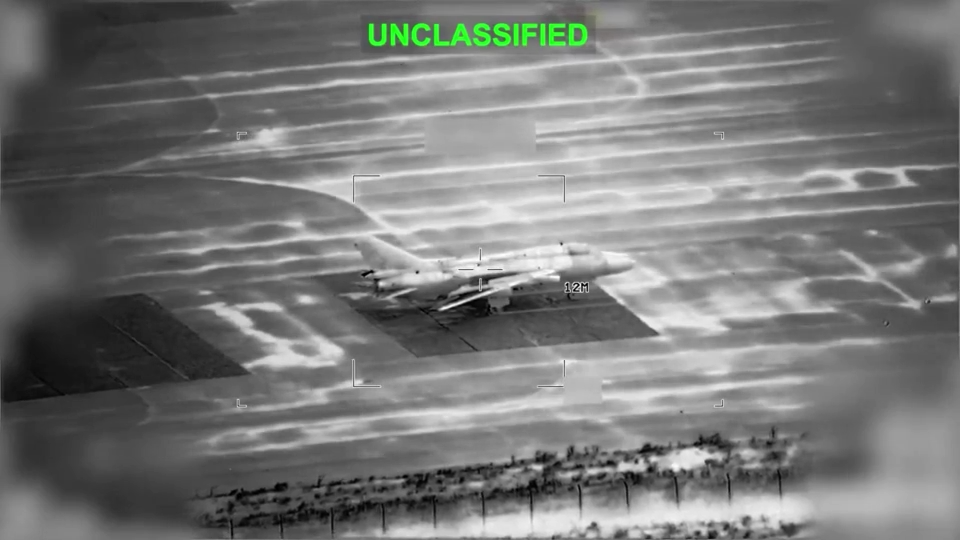
US Central Command released a brief video on X with footage from “Operation Epic Fury.”
“U.S. forces are taking bold action to eliminate imminent threats posed by the Iranian regime. Strikes continue,” the post said.
Inside the precision strikes that shattered Iran’s leadership
CNN analyzes videos and satellite imagery to break down how US and Israeli strikes killed Iranian supreme leader Ayatollah Ali Khamenei and dismantled the regime’s command structure.

CNN analyzes videos and satellite imagery to break down how US and Israeli strikes killed Iranian supreme leader Ayatollah Ali Khamenei and dismantled the regime’s command structure.

Trump says Pentagon projects US casualties “could be quite a bit higher”


President Donald Trump told The New York Times on Sunday that his administration expects “quite a bit higher” casualties than the three service members killed in action so far in war with Iran, pointing toward projections from the Pentagon.
“Three is three too many as far as I’m concerned,” Trump told The Times. “If you look at projections, they do projections … it could be quite a bit higher than that.”
CNN reported earlier that the three died in a suspected drone strike early Sunday in Kuwait, according to multiple sources familiar with the matter.