Here's the latest
• Blaming the war: Many Republicans are moving swiftly to pin blame on Defense Secretary Pete Hegseth for the war with Iran, which both President Donald Trump and Vice President JD Vance said contributed to the GOP shellacking in the midterms. Trump said he fields calls from people unhappy with Hegseth but still intends to keep him.
• New oversight: Senate Democrats have issued document preservation letters ahead of expected investigations into the Trump administration. And the Department of Homeland Security is bracing for an onslaught of congressional oversight efforts, according to current and former officials.
• El-Sayed targets RFK Jr.: In an interview with CNN, Michigan Democratic Sen.-elect Abdul El-Sayed said he wants to investigate Health and Human Services Secretary Robert F. Kennedy Jr. over staffing cuts.
• What we’re tracking: Democrats could win their largest House majority since the early 1990s. In the Senate, two contests have yet to be called: Mississippi and Alaska.
Updates
(18)Sen.-elect Abdul El-Sayed says he wants to investigate RFK Jr.


Michigan Democratic Sen.-elect Abdul El-Sayed told CNN this morning that he wants to investigate Health and Human Services Secretary Robert F. Kennedy, Jr., over staffing cuts at the FDA and CDC that he says has contributed to food recalls.
El-Sayed told CNN’s Kate Bolduan he wants to understand “the decision-making that’s gone on and what we need to do to solve the problem.”
El-Sayed argued that staffing cuts at the Food and Drug Administration and Centers for Disease Control and Prevention stopped the agencies from adequately preventing and responding to the cyclospora outbreak over the summer. He also raised recent recalls of blueberries, blackberries and meat.
El-Sayed later pointed to Kennedy’s “anti-science” approach as HHS secretary to argue that any nomination the Trump administration puts forward should be scrutinized.
Democrats could win 260 House seats — which would be the most since the early 1990s

It’s looking like Democrats could win their largest House majority since the early 1990s — with possibly more than 260 seats, according to a CNN review of outstanding election results.
As things currently stand, CNN has projected Democrats have won 245 seats — a net gain of 34 seats. Republicans are nearly 100 seats behind, at 147 seats.
And Democrats are currently ahead in many of the remaining 43 races.
They hold substantial leads in Arizona’s 1st and 6th Districts, with more than 80% of ballots counted.
They also lead in around a dozen races by between 1 and 5 points, but there are enough ballots out that the races haven’t been called. (That includes around four races in North Carolina, each where they lead by two points.)
And they lead by less than a percentage point in five districts: Colorado’s 4th, Florida’s 9th, Minnesota’s 1st, North Carolina’s 5th and Tennessee’s 4th.
All told, they lead in 264 districts. If they won them all, they would have a 264-171 majority. That would be the biggest majority since 1991-93, when Democrats held 267 seats.
They got up to 257 seats in the 2008 wave that swept Barack Obama into office.
The total number of seats flipped will likely be less than in the 2010 election, when Republicans flipped more than 60. But a big reason the GOP was able to flip that many seats was because they began with so few (thanks to Democrats’ huge post-2008 majority) and had lots of red territory to pick off.
In 2026, by contrast, the House started nearly evenly split. And Democrats still racked up major — and apparently historic — gains.
Democrat who flipped Indiana House seat agrees with Vance on Iran war’s role in GOP losses


Democrat JD Ford, who unseated GOP Rep. Victoria Spartz in Indiana’s 5th Congressional District, told CNN he agrees with Vice President JD Vance that the war with Iran contributed to Republican midterm losses.
“Surprisingly, I actually agree with the vice president,” Ford told CNN’s Kate Bolduan. “And, what I would say to that is that people in the 5th district connected the dots between the high costs of groceries and the high cost of gas to what was going on over in Iran.”
Ford said residents in his district are questioning why the US is at war with Iran “with no clear plan of what we’re doing there” and asking how the conflict could be safely wound down.
“And we’ve got to do something about that when we get to Congress in January,” he said.
Asked whether he would support impeaching Defense Secretary Pete Hegseth, Ford said he is aware that GOP Rep. Thomas Massie of Kentucky plans to trigger a vote on the issue.
“If that petition is still there, we’ll definitely take a look at that,” Ford said, adding that his main focus would be the key issues he campaigned on. “It’s going to be, you know, lowering the cost of gas, groceries, utilities. It’s going to be tackling our health care system. And these are the big-ticket items that I — that I heard all across the congressional district.”
Trump says he's getting calls from people unhappy with Hegseth


President Donald Trump told ABC News on Thursday that he has been fielding calls from people who are unhappy with Defense Secretary Pete Hegseth, but still has “every intention to keep him.”
“I get these calls, you know, about him. I don’t understand why,” Trump said in a phone call with ABC’s Chief Washington Correspondent Jonathan Karl.
It comes after Vice President JD Vance said yesterday that the Iran war is the cause for sweeping Republican losses in the midterms, and CNN reported that some allies see Hegseth as potentially vulnerable.
Republican Rep. Thomas Massie also said he plans to trigger a vote to impeach Hegseth next week, which is expected to pass, according to multiple GOP sources.
Karl said that Trump acknowledged confirming a potential new Defense Secretary would be easier before Democrats take over Congress in January.
Trump told reporters on Wednesday that he doesn’t have any plans to replace Hegseth.
Andrews: South Carolina result shows Republicans rejected a Washington-picked candidate



Democratic Senator-elect Annie Andrews told CNN that a rift between Republicans in her state — and in the country — was a factor in her election.
She said the GOP primary between Rep. Ralph Norman and Sen. Darline Graham was “a symbol of how fractured the Republican Party is here.”
Graham defeated Norman in a close runoff this year. Afterward, Norman revealed to CNN his entire family was not voting for his former opponent, who was hand-picked by President Donald Trump.
“I also think it’s just a rejection by some Republicans in South Carolina about the idea that Washington would pick our next senator,” she told CNN’s Kaitlan Collins on Wednesday night.
Andrews went on to say that voters in her state have rejected “dirty politics” and that “they wanted something different.”
“So they took a chance on a mom of three and a pediatrician,” she said.
From the "No Sabo" to the "Sí Votan": Young Latinos proved decisive in Democratic wave

In recent years, some young Latinos have been identified as the “No Sabo” generation, a popular expression referring to those who, having grown up in the United States, do not speak Spanish or are not fluent in their parents’ language. In these midterm elections, a new way of describing them began to gain traction: “Sí Votan,” or “They Do Vote.” These are young people who not only went to the polls but also mobilized their families and helped Democrats regain control of Congress.
The results of CNN’s Voter Poll reflect that generational preference. For instance, 79% of Latinos between the ages of 18 and 29 voted for Democratic candidates for the House of Representatives, compared with 18% who supported Republicans. Among young people ages 18 to 24, the difference was even greater: 84% versus 14%.
In Texas, Eric Holguin, state director of UnidosUS, encountered young people who had previously shown no interest in politics but decided to participate this time.
Gina Hinojosa — who scored a surprise victory over Republican Greg Abbott in the Texas gubernatorial race — devoted part of her campaign to mobilizing young voters and urging them to vote early.
Support for Hinojosa was high among the youngest voters. According to data from the CNN Voter Poll, 80% of those between the ages of 18 and 29 voted for the Democrat, compared with 20% who supported Abbott.
“We have seen these young voters energized within our electorate. And I think it is a sign of what is to come,” said Janet Murguía, president and CEO of UnidosUS.
Final results could take weeks, but here's what happens after all of the races are called

While it is now clear that Democrats have won control of Congress, some ballots have yet to be counted.
Senate races in Alaska and Mississippi, plus dozens of House races, have not yet been projected. It could potentially take weeks for the full official results of the election to be known.
According to the Campaign Legal Center, there are several legal and administrative steps to be taken following an election, namely the canvass, certification, and seating.
During the canvass, local election officials count all the votes cast in their jurisdiction, including those cast during the early voting period, by mail and on Election Day. Each state then sends a list of its election winners to Congress.
Before a new Congress convenes in January, elected candidates typically travel to Washington, DC, to take part in new member orientation, according to the Bipartisan Policy Center.
Following the election, the newly formed Congress will convene in early January, according to the Constitution.
A new speaker of the House will be elected by the other members-elect on the first day of Congress, according to the Campaign Legal Center. To be elected speaker, a candidate must win a majority of votes out of all votes cast.
House Democratic Leader Hakeem Jeffries is expected to be the next speaker. Jeffries formally announced his bid to become the House’s next speaker in a letter to fellow Democrats on Wednesday.
After a speaker is chosen, newly elected senators and all House members are sworn into office and then begin their terms.
According to the Congressional Research Service, on the first day of Congress, the House also “often adopts resolutions assigning some or many of its Members to committees. This process regularly continues over several more weeks.”
The majority and minority leaders of the Senate, as well as other party floor officers, are elected “privately by their respective caucuses and not ratified on the floor,” according to the Bipartisan Policy Center.
Republican governor-elect says GOP must focus on lowering costs
Florida Governor-elect Byron Donalds told CNN’s Dana Bash that if the party focuses on affordability and prices, the “elections will take care of themselves.”

While Republicans saw losses in the midterms, Florida Governor-elect Byron Donalds told CNN’s Dana Bash that if the party focuses on affordability and prices, the “elections will take care of themselves.”

Democratic wave prompts GOP anxiety over future of Supreme Court


The Democratic rout in elections sparked an immediate sense of unease on the right about the future of the Supreme Court and a new round of Republican anxiety over decisions by Justices Samuel Alito and Clarence Thomas to stick it out rather than step down.
Multiple sources close to both conservative justices who were granted anonymity to speak freely told CNN on Wednesday they did not anticipate either man leaving the court because of the election results.
But while that may tamp down speculation about an attempt to confirm a justice during a lame duck session of Congress, it will nevertheless leave some legal conservatives on edge for years.
As it became clear Democrats would capture the Senate, some Republicans began to openly fret that President Donald Trump’s opportunity to shore up the Supreme Court’s 6-3 conservative majority had slipped from reach. They noted that Alito, 76, and Thomas, 78, may be in their 80s by the time the next GOP president has a chance at a high court nomination with a Republican Senate.
Both Alito and Thomas, the court’s oldest justices, made clear before the court’s current term began in October that they did not intend to retire.
But that conviction will be tested in coming days as Republicans attempt to pick up the pieces from Democrats’ sweeping victory and others inevitably draw comparisons to Justice Ruth Bader Ginsburg, a liberal whose decision to not retire when Democrats controlled Washington let Trump solidify the court’s conservative tilt by naming Justice Amy Coney Barrett.
The Mississippi Senate race is a nail-biter. Here's why it's taking so long to call


Votes are still being tallied in Mississippi, where the Senate contest between Democrat Scott Colom and Republican Sen. Cindy Hyde-Smith has turned into the nail-biter of the midterms.
Colom was leading by just over 1,000 votes as of midnight, with about 96% of the ballots in. While the race is still too close to call, it’s another sign of the midterms’ seismic shift toward Democrats, even in deep-red territory.
The race is expected to come down to the roughly 15,000 provisional ballots — known as affidavit ballots. Voter advocates and legal observers expect it could take until next week, at the earliest, before we know how many of those ballots will go into the final count.

Track the latest election results here.
One reason a person in Mississippi would have to vote provisionally is a lack of photo ID. Those voters will see their ballots counted if they provide the required ID in five business days – or by November 10.
Another reason a voter may have to submit an affidavit ballots is they are not in the pollbook, something that could happen if the voter was tagged as inactive.
Voter advocates believe this could be a large portion of affidavit ballots because of new protocols the state to clean its voter rolls, which resulted in some voters being incorrectly tagged as inactive.


A final potential category of disputed ballots could be affidavit ballots cast by people who submitted registration forms, but were not registered because of incomplete forms.
State law requires that clerks try to reach out to the registrant missing that information to complete their registrations, but officials’ willingness to do so varies county by county, Merchant said.
Keisha Lance Bottoms will be governor where her ancestors were enslaved
Georgia Governor-elect Keisha Lance Bottoms honored her ancestors, who were enslaved in the state over 160 years ago, in her victory speech after being elected the first Black female governor in US history.

Georgia governor-elect Keisha Lance Bottoms honored her ancestors who were enslaved in the state over 160 years ago during her victory speech after being elected the first Black female governor in US history.

Top Iranian official mocks Vance after VP blames Iran war for midterm rout

A senior Iranian negotiator mocked JD Vance on Thursday after the US Vice President blamed Republican midterm losses on the war in Iran.
Iran’s Speaker of Parliament Mohammed Bagher Ghalibaf said on Thursday that Vance showed “losing-gambler energy,” and that he “can’t walk away from the table.”
Trump has admitted that the war in Iran was partly to blame for the Republicans’ losses. Vance was more explicit, saying in a lengthy X post Wednesday that “the reason we lost is the war.”
Ghalibaf has been the main negotiator in US-Iran talks to end the war.
"Woke is so back": The internet is buzzing with memes after blue wave
Social media is abuzz with a “Woke 3.0” trend after Democrats took the House and Senate. CNN’s Aleena Fayaz reports and reflects.

Social media is abuzz with a “Woke 3.0” trend after Democrats took the House and Senate in the midterms. CNN’s Aleena Fayaz reflects on what preceded it.

The House is called — but dozens of races aren't. Here are the ones we're watching

Democrats have already clinched the House, according to CNN projections, but with dozens of races still uncalled, the final size of their majority is an open question — and a handful of contests are worth watching closely as the counting grinds on.
- California is worth watching for how much counting remains. Its seven districts in CNN’s tracker have an estimated 41% to 72% of votes reported. Democrats have already notched projected pickups there under the state’s redrawn 2025 map — including Marni von Wilpert’s flip of the 48th and Randy Villegas’ ouster of GOP Rep. David Valadao in the 22nd (CNN also projects that, in a separate intraparty upset, Democratic socialist Angela Gonzales-Torres will unseat Democratic Rep. Jimmy Gomez in the 34th) — but more seats remain outstanding, and Democratic wins in contests against Republicans could pad the Democratic margin.
- One closely watched contest is in Colorado. Republican Rep. Lauren Boebert trails Democratic challenger Eileen Laubacher by fewer than 2 percentage points in the 4th District — a seat President Donald Trump carried by 18 points in 2024. An estimated 93% of votes have been reported. If that lead holds, it would be another sign of how far the political environment shifted against the GOP, with even a reliably Republican seat changing hands.
- Florida’s House seats are close. Several are separated by about a percentage point or less with an estimated 99% of votes reported, including the races involving GOP Reps. Maria Elvira Salazar (27th) and Mario Diaz-Balart (26th), Anna Paulina Luna (13th), and Democrat Darren Soto (9th) — a cluster of narrow leads for both parties.
- A few other races still hanging: In North Carolina, longtime GOP Rep. Virginia Foxx — who has held her seat since 2005 — is in a contest too close to call (Democrat Chuck Hubbard narrowly leads), part of what one Republican operative told CNN was a “blue tsunami from Manteo to Murphy.” In Maine’s 2nd District, former Gov. Paul LePage holds a roughly 1-percentage-point edge. And across the map, the dozens of uncalled races will determine the final size of Democrats’ majority.
CNN’s Shikha Subramaniam contributed to this report.
China assessing midterm rout while focused on possible Xi-Trump-Putin summit


China kept a watchful eye as President Donald Trump received a drubbing in the midterms.
Publicly, Beijing remains cautious and tight-lipped as any conclusion would be too soon to draw.
The only official response has been from China’s Foreign Ministry spokesperson Mao Ning, who was quick to call the midterms “an internal matter for the United States.” She reiterated that China is ready to work with the US to build a constructive and stable bilateral relationship, a consensus reached by Chinese leader Xi Jinping and Trump during their May summit.
Beijing understands that even though the Democrats have taken back the both chambers of Congress, a lame duck Trump is still powerful when it comes to trade and foreign policy.
A fragile trade truce between the world’s two biggest economies will expire in January – and some analysts say that a Trump administration no longer concerned about Chinese countermeasures’ impact on elections may become more willing to play hard ball during future negotiations.
With the Republicans’ resounding defeat widely viewed as a rebuke to Trump, some GOP members of Congress may also be less fearful of crossing him and taking a tougher stance on China if Trump continues to laud Xi and take a perceived soft approach to Beijing.
Beijing is also preparing to host the Asia-Pacific Economic Cooperation summit in less than two weeks in its high-tech hub Shenzhen, where Xi is ready to showcase a stronger China and welcome a slew of leaders.
There, Xi is expected to meet Trump for the third time this year – and the two men may hold a historic meeting with Russian President Vladmir Putin on the sidelines.
Last month, Trump said he was open to this idea. He told reporters: “We would have it to talk about nuclear weapons and denuclearization,” adding, “I’m sure we’d talk about other things like trade too.”
In Alaska, a Senate seat hangs on late ballots and a possible ranked-choice count


The contest between Republican incumbent Sen. Dan Sullivan and Democratic former Rep. Mary Peltola remains unresolved, and a winner may not be known for weeks – a delay election officials stress is routine for Alaska.
Peltola led Sullivan by just over 600 votes by the end of Wednesday, with an estimated 75% of the vote counted. The race remained uncalled, though CNN Sightline favored Peltola, whose victory would give Democrats another pickup amid their sweeping midterm gains.
Geography helps explain the wait. The state is vast, and some ballots from far-flung communities must be flown in to be counted. Because of that remoteness, Alaska allows absentee ballots postmarked by Election Day to arrive within 10 days after the election if mailed from within the US, or 15 days if mailed from overseas.

Ranked-choice voting could add another step. If no candidate receives more than 50% of first-choice votes, the candidate with the fewest votes is eliminated. Those ballots transfer to each voter’s next-ranked candidate still in the race. The process continues until a candidate has a majority of the votes. Alaska waits until the 15-day ballot-receipt deadline has passed before conducting that tabulation.
Alaska’s Senate race has already been overshadowed by controversy over how a second Dan Sullivan ended up on the ballot, which has sparked lawsuits, criminal investigations and threats to block certification of the election if the incumbent is defeated.
Only a trickle of votes had come in for Daniel J. Sullivan, a retired teacher, by the end of Wednesday.
All eyes on Mississippi and Alaska as America awaits final Senate results
As both parties digest election results, Democrats are already moving to reshape Washington’s agenda by outlining investigations and promising action on affordability, while Republicans confront divisions over the Iran war and responsibility for their losses.
Results continue to trickle in, with several Democrats flipping House seats across the country and a flip for the GOP last night.
But there are no final results yet in Mississippi’s Senate race, which could come down to roughly 15,000 provisional ballots pending verification, according to Democrat Scott Colom’s campaign.
In Alaska, a result in the controversial contest between Republican incumbent Sen. Dan Sullivan and Democratic former Rep. Mary Peltola may not be known for weeks – a delay election officials stress is routine for Alaska.
Here’s what else is going on in the elections space:
- Defense Secretary Pete Hegseth faces mounting pressure as Republican lawmakers and allies are moving to blame him for the party’s historic losses, and the House could vote as soon as next week to impeach him.
- The Senate Foreign Relations Committee has issued letters asking for preservation of documents ahead of expected investigations into the Trump administration’s actions, a Democratic Senate aide told CNN. Describing it as a “standard committee process,” the aide said letters were sent to the Trump administration, to Elon Musk regarding the slowdown of Starshield in Ukraine, and to ports, banks and private entities involved in the Russia diesel deal.
- Rep. Robert Garcia, the incoming House Oversight chairman, said Trump investigations won’t distract Democrats from lowering costs, naming four targets: the Trump family’s businesses, immigration enforcement, corporate donations to the White House ballroom and the Epstein files.
- Florida Gov. Ron DeSantis was critical of many Republican races, telling CNN that voters were “disappointed in the productivity” of Congress and playing the blame game on gas prices.


- Across the party aisle, Democratic Sen.-elect Annie Andrews of South Carolina also said the Republican party is “fractured,” with the GOP primary between Rep. Ralph Norman and Sen. Darline Graham being a symbol of that rift.


- New York City Mayor Zohran Mamdani attributed Democrats win to focusing on working-class Americans and the issues that matter most to them, including cutting costs and building trust with voters.


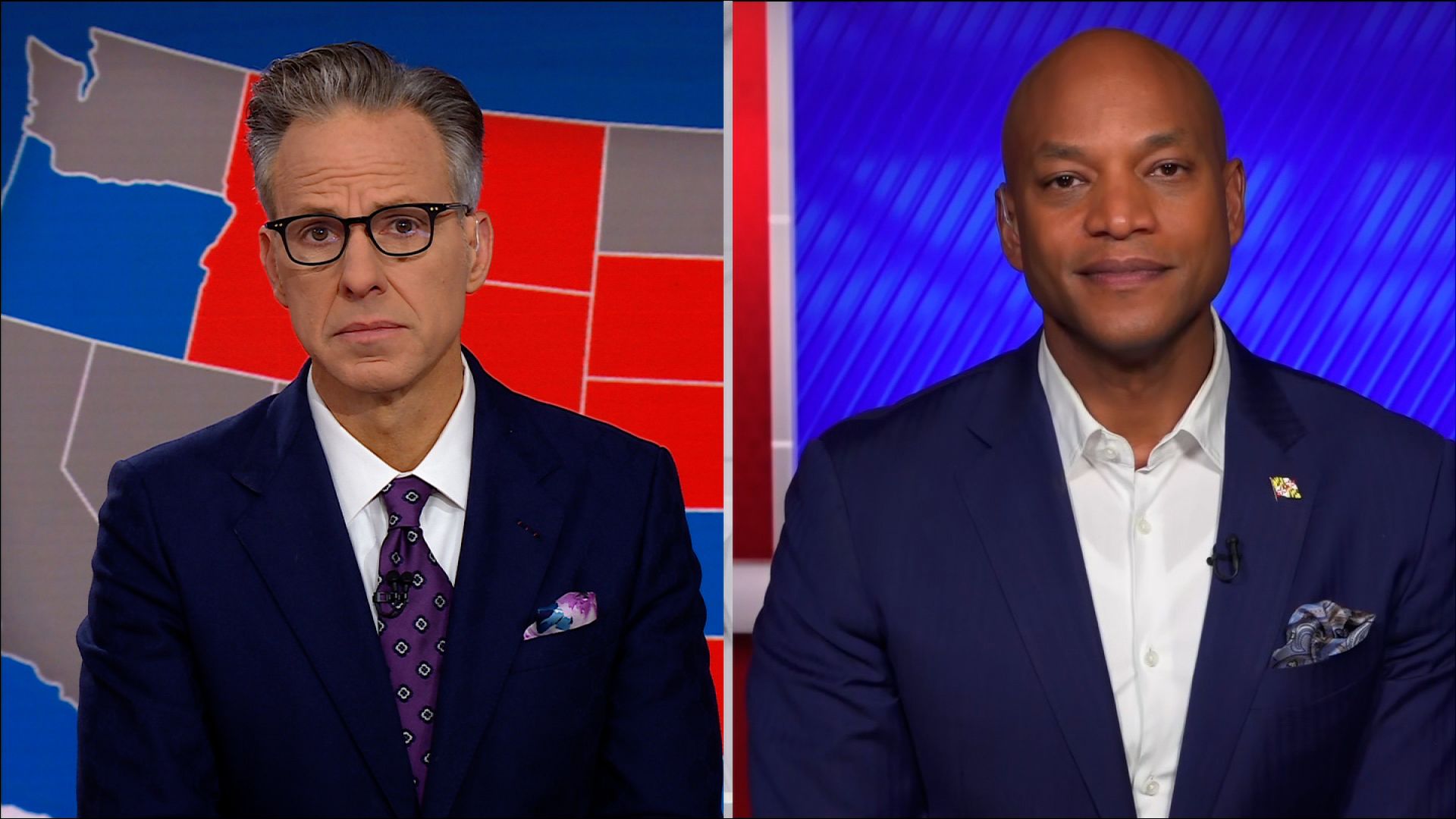
- Maryland’s Wes Moore used to hold the title of the only Black governor in the US, but soon he will be joined by four others. He emphasized to CNN the historic election of Georgia’s Keisha Lance Bottoms, who is the first Black woman to hold the office.

- Looking ahead, former House Speaker Newt Gingrich put doubt on Vice President JD Vance leading the party as the presidential nominee in 2028, saying the GOP loss in the midterms, along with several strategies Vance has taken, has made “a good bit of the luster has come off the bloom.”
CNN’s Aditi Sangal, Tori B. Powell, Elise Hammond, Katherine Koretski, Arpita Dasika and Aaron Blake contributed to this report.
Is the MAGA/Trump era over?
CNN’s Jake Tapper explores whether the MAGA/Trump era is coming to a close after the Democrats won control of the Senate and the House of Representatives.

After the Democrats won control of the Senate and the House of Representatives in the midterm elections, CNN's Jake Tapper explores whether the MAGA/Trump era is coming to a close.