Here's what happened
• Deadly rail crash: Scores of people have been killed and about 100 injured after a high-speed train collided with a stationary train south of Madrid. Spain’s transport minister called it “inexplicable” that a train was allowed to continue its journey despite a red signal being in place.
• ‘People were hurled into the air’: Several witnesses told CNN about the chaotic moment when passengers were thrown airborne during the collision. Rescue operations are still ongoing and the high-speed line linking Madrid with Andalusia remains suspended.
• Third train crash this year: This is the third rail disaster in Spain in 2026. In January, two high-speed trains collided near Adamuz, in southern Spain’s Córdoba province, killing more than 40 people. A commuter train near Barcelona derailed days later.
Updates
(41)Our live coverage has ended. Read more about the deadly train crash here.
Crews work into the night after 68 killed in Spain train collision. Here’s what we know


At least 68 people were killed and about 100 were injured after a high-speed train smashed into a stationary train in Spain on Wednesday.
Crews are now working with flood lights to search for anyone else trapped in the wreckage as investigators try to figure out what led to the tragedy.
What we know: A computer system failure led to an issue with the safety system along a 63-kilometer (40-mile) stretch of track between Madrid and Seville causing all trains in the area to be stopped automatically, said Óscar Puente, the country’s transport minister.
Puente said Adif, the state-owned company that manages Spain’s railways, then took manual command of the system and allowed the high-speed Renfe train to continue southbound toward Seville despite a red light. That train later collided with the stationary Iryo train.
Response: More than 500 emergency personnel have been deployed to the site, the Spanish Interior Ministry said. The Civil Guard said investigators are using drones to create a 3D reconstruction of the area and determine the accident’s possible causes.
Spain’s Prime Minister Pedro Sánchez said authorities are working hard to identify the cause of the crash and vowed that any negligence, if identified, will be addressed with “utmost firmness.” This is the third rail incident in Spain this year.
Other key things to know:
- Spanish trade union CSIF is demanding Puente resign after he said an “inexplicable” erroneous order from a train controller resulted in the crash.
- Service has been suspended for Thursday between Madrid and the Andalusia region, Renfe announced.
- A surviving passenger, Eduarda Contreras, said some of the train cars were on fire and people were trapped. Others were breaking windows to escape. “They told me, ‘Stay with them, don’t let them fall asleep – they’ll die, they’re slipping away,’” she said.
- Another woman traveling on one of the trains described “awful” scenes as people were thrown into the air. “Several” US citizens were among those injured, a US State Department spokesperson told CNN.
- Spain’s King Felipe VI said he shares in the “sorrow of the families and loved ones” of the deceased. A host of European leaders also offered their condolences.
CNN’s Billy Stockwell, Michael Rios, Pau Mosquera and Duarte Mendonca, Jennifer Hansler, Sophie Tanno and Sol Amaya contributed reporting to this post.
Police clash with protesters in Madrid following deadly train crash, Reuters reports

Police were seen clashing with protesters and far right groups in the Spanish capital Madrid on Wednesday night as crowds demanded the resignation of Spanish government officials following a deadly train crash that left at least 68 dead.
Around 500 demonstrators gathered outside the Transport Ministry, with some throwing bottles and flares at police, Reuters reported. Video showed police deploying tear gas in an attempt disperse the large group gathered.
Protesters held signs saying “Leave!” next to a picture of Spanish Prime Minister Pedro Sanchez, while others held signs saying “Criminals” and “Corruption kills.” Sanchez’s socialist PSOE party has suffered a series of setbacks and corruption scandals this year involving close associates that have tarnished its reputation.
Spanish trade union calls for resignation of country's transport minister

Spanish trade union CSIF is demanding the resignation of Óscar Puente, the country’s transport minister, after he said an “inexplicable” erroneous order from a train controller resulted in Wednesday’s deadly crash.
While discussing the circumstances of the collision, Puente said a computer system failure led to an issue with the safety system along a 63-kilometer (40-mile) stretch of track causing all trains in the area to be stopped automatically.
Puente said Adif, the state-owned company that manages Spain’s railways, then took manual command of the system and a decision was made to allow the high-speed Renfe train to continue southbound toward Seville despite a red light. That train later collided with the stationary Iryo train.
CSIF, an independent trade union and civil servants’ association, accused Puente of using a “hardworking person” as a scapegoat instead of “assuming his responsibilities.” The trade union also said it had warned in September of “excess hours in Adif’s working days.”
CNN has approached Spain’s transport ministry for comment.
CNN’s Lauren Kent contributed reporting.
Train service suspended Thursday between Madrid and Andalusia, operator says
Renfe, Spain’s state-owned national railway operator, announced it has suspended service Thursday between Madrid and the Andalusia region.
One of Renfe’s trains was involved in a deadly collision earlier today, which killed at least 68 people. The Renfe train plowed into a stationary train operated by the private company Iryo, at a time when all train traffic in the area was disrupted due to a problem with the LZB train management safety system.
The collision occurred on the route between Madrid and Seville and an alternative transportation plan will be provided on Friday, Renfe said.
The service suspension also applies to trains coming from Barcelona and Valencia to Seville and Malaga, Renfe said in a post on X.
Some of cars derailed and officials are still searching for anyone trapped in the rubble.
Her dog was rescued from train wreckage. But her husband remains missing
Ana has been searching for her husband, Pepe, all day. But so far, no luck.
She raced to Madrid as soon as she heard about Wednesday’s deadly train collision in the Spanish province of Toledo, she told Reuters. Pepe was traveling on the high-speed Renfe train that crashed into the stationary Ilyo train while heading from Madrid to Seville.
Ana, who only provided her first name, told Reuters that Pepe’s name was not on the list of victims who have been identified.
Local police did however find Ana’s dog, who had been traveling with Pepe.
“Poor thing, I think he’s had a bad time,” she told Reuters, speaking from a school in Urda – the town closest to the site of the train crash – where relatives have been advised to wait.
Renfe, a state-owned railway company, said it had opened a special phone line for families of victims, Reuters reported.
What officials will be looking at during collision investigation, according to one expert

In the days ahead, investigators in Spain will continue to gather details to understand what exactly led to the deadly train collision that killed at least 68 people, said Janos Rozsa, a railway accident investigator and safety specialist.
Spain’s transport minister said the was crash caused by human error after a computer system failure, but Rozsa said “accidents rarely have a single cause.”
Incidents like this “usually result from a combination of different contributing factors that are present at the same time,” he told CNN’s Isa Soares.
Officials will use things like surveillance cameras and data recorders on the trains and on the signaling system to piece together how the trains were moving and how they ended up on the same piece of track.
While human error may be one part of the what caused the crash, it will also be important for investigators to fully understand “the circumstances in which people were working and how the overall system was designed to keep these trains apart.”
While this is the third rail disaster in Spain this year, Rozsa said it is too early to draw any conclusions if the incidents had any common threads.
What do we know about the cause of the deadly collision?

Scores of people were killed after two trains collided in Spain on Wednesday, in a crash that authorities say was caused by both computer system failure and apparent human error.
Spain’s transportation minister Óscar Puente said that a computer system failure led to an issue with the safety system along a 63-kilometer (40-mile) stretch of track causing all trains in the area to be stopped automatically.
At that point, the state-owned company that manages Spain’s railways, ADIF, took manual command of the system and a decision was made to allow the high-speed Renfe train to continue southbound along the tracks despite a red light.
The Renfe train was authorized to proceed without any speed restrictions due to an erroneous order from a train controller. As a result, Puente said that between 8:36 a.m. and 8:52 a.m. local time, it resumed traveling at about 124 miles per hour, eventually colliding with the stationary Iryo train.
You can read more about the circumstances of the collision here.
More than 500 first responders deployed to crash site


Night has fallen in Spain and crews are working against the clock to find anyone who is trapped in the rubble after Wednesday’s deadly train collision.
More than 500 emergency personnel have been deployed to the site of the crash Wednesday’s deadly train collision, the Spanish Interior Ministry said.
The Civil Protection has sent 102 people while the Civil Guard has deployed 422 personnel and 123 resources, the ministry added.
Crews are also using three helicopters, several drones, cavalry, dogs, an advanced command post, and citizen assistance offices.
The Civil Guard said investigators are using drones to create a 3D reconstruction of the area and determine the accident’s possible causes.
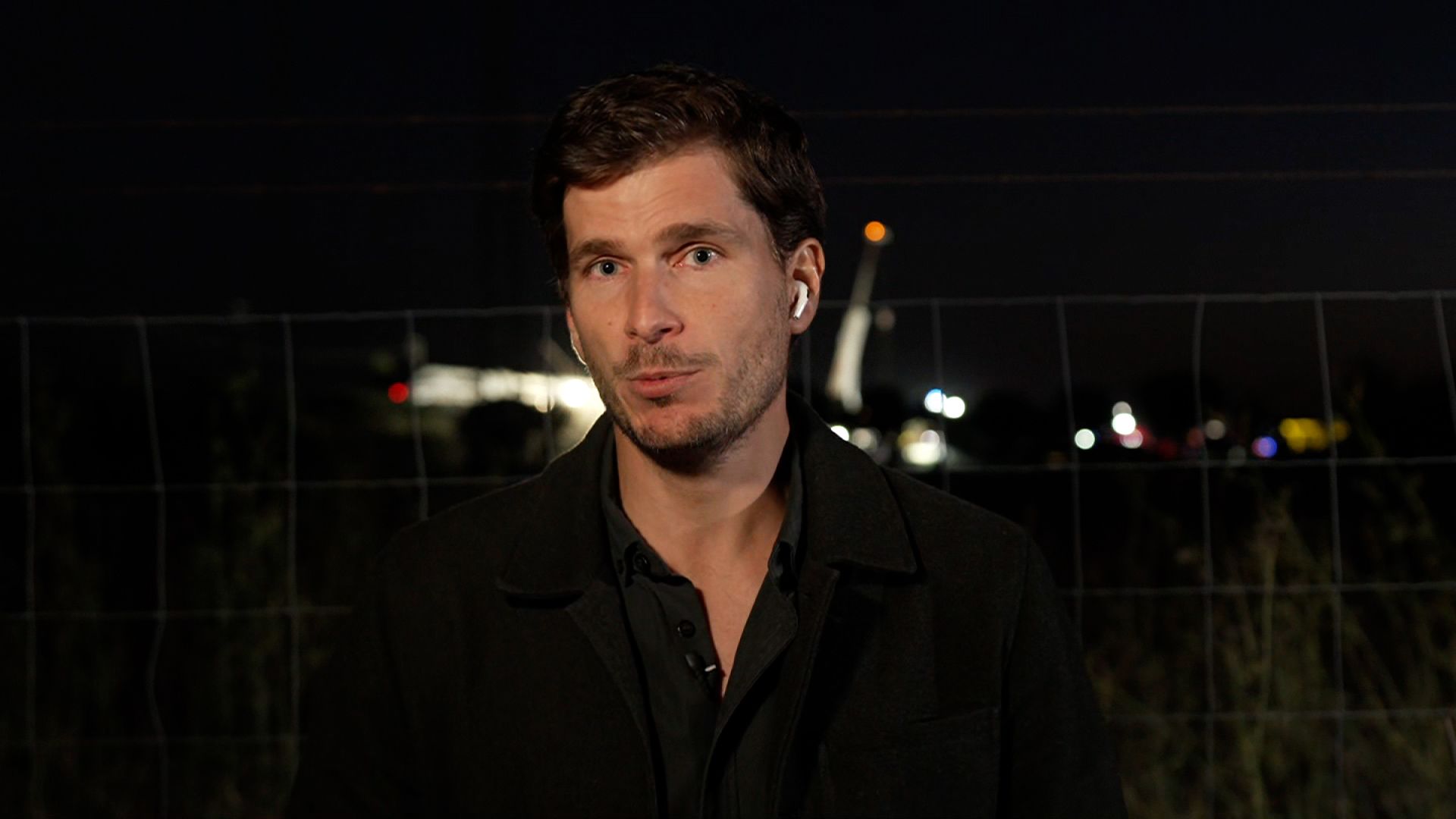
Right now, crews have bright flood lights set up at the site so that they can keep working all night, CNN correspondent Pau Mosquera reported from the scene.
At least 24 killed on high-speed train, 44 on stationary train, regional government says

Of the at least 68 people who died in Wednesday’s horrific crash, at least 24 were traveling on the high-speed AVE train and 44 people were found on the stationary Iryo train, the regional government of Castilla-La Mancha said.
The AVE train, operated by the state-owned Renfe railway company, had 393 passengers on board when it collided with the Iryo train, which had 151 passengers.
There are currently more than 100 people with injuries of “varying severity,” the regional government added.
Authorities say they have deployed “all the means and resources” at their disposal to deal with the emergency.
Several US citizens injured in crash, State Department spokesperson says


“Several” US citizens were injured in the train crash in Spain, a US State Department spokesperson told CNN.
They did not provide specific details on the number of Americans hurt in Wednesday’s deadly train crash, which has killed at least 68 people.
“The Department of State and the US Embassy in Madrid are working closely with local authorities to assist Americans following the train collision,” the spokesperson said. “We extend our deepest condolences to the families and loved ones of all those affected.”
CNN saw US embassy officials at the scene of the collision in Spain’s Toledo province.
The spokesperson noted that Americans in need of consular assistance, or with concerns about American loved ones in Spain, can contact the State Department 24/7 at +1-202-501-4444 from abroad or +1-888-407-4747 from the US and Canada.
“We encourage US citizens in the area to notify loved ones of their safety and monitor local media for updates,” they said.
“Don't let them fall asleep – they'll die,” passenger recalls being told


A surviving passenger from Spain’s deadly train crash has described scenes of chaos as she tried to assist fellow travelers to safety.
Three train cars were in “terrible shape,” Eduarda Contreras told CNN. “One was on fire, in another there were people trapped and crying … And then in the main one (impacted) – there were people buried under debris, people who are probably dead.”
Other passengers were trying to break the train’s windows to escape, she said.
Contreras recalls being told not to let injured passengers fall asleep while assisting in rescue efforts before help arrived. “They told me, ‘Stay with them, don’t let them fall asleep – they’ll die, they’re slipping away.’”
Spain’s King says he shares in "sorrow" of grieving families
Spain’s King Felipe VI has conveyed his condolences over today’s deadly train crash in the Spanish province of Toledo, saying he shares in the “sorrow of the families and loved ones” of the deceased.

The social media post said the royal family’s support goes out to the emergency teams involved in the recovery effort and “all those working in the area to help as much as possible under these circumstances.”
CNN’s Duarte Mendonca contributed reporting.
More international leaders offer condolences after deadly train crash
After a host of European leaders offered their condolences for the victims of the deadly train crash in Spain this morning, other international leaders are also expressing their solidarity today.
- Cuba’s Foreign Minister Bruno Rodríguez Parrilla sent his country’s “deepest condolences” to the people of Spain, “especially to the families and loved ones of the victims.”
- Uruguay’s Foreign Ministry sent its “deepest condolences to the families of the victims, to the Government and the Spanish people.”
- Jordan’s Foreign Ministry expressed “solidarity and full support with the government and people of Spain,” offering “condolences to the families of the victims and wishing a speedy recovery to the injured.”
- The Palestinian Authority in Ramallah also said it extends “its warmest condolences and sincere sympathy to the families” of those affected by the collision.
- Egypt’s Foreign Ministry expressed “solidarity” toward Spain’s “painful affliction” after the incident.
- Pakistani Prime Minister Shehbaz Sharif said he is “profoundly grieved by the devastating train collision,” sending his condolences to those affected by it. “Pakistan stands with Spain in its hour of sorrow,” he said.
- Israeli Foreign Minister Gideon Sa’ar offered his country’s “solidarity and most sincere condolences” to those affected. “In these difficult times we join the sorrow of the Spanish,” he said.
- Armenian Prime Minister Nikol Pashinyan offered “solidarity with the victim’s families and a quick recovery for the injured” in a post on X. “Armenia shares your pain and wishes you strength,” he said.
- Meanwhile, World Health Organization chief Dr. Tedros Adhanom Ghebreyesus told grieving families that “our hearts are with you,” while saying that the WHO stands with Spain on this “dark day.”
Transport minister says "inexplicable" erroneous control center order caused crash



An erroneous order from a train controller, following a signaling system failure, resulted in Wednesday’s deadly train crash, according to Spain’s transport minister.
Speaking during a press conference on Wednesday afternoon, Óscar Puente said that a computer failure with the main LZB signalling system triggered an automatic stop for all trains in that area, including the Renfe high-speed train and Iryo train involved in the collision.

The control system for Adif, Spain’s railway infrastructure manager, then took command of the system and a decision was made for the Renfe train to continue its journey and the train was authorized to proceed despite a red signal prohibiting movement remaining in place.
The Iryo train remained stationary on the track around 25 kilometers (16 miles) ahead.
The Renfe train was authorized to proceed without any speed restrictions, meaning that between 8:36 a.m. and 8:52 a.m. local time, it traveled approximately 25 kilometers (16 miles) at a speed of about 200 kilometers per hour (124 miles per hour) before colliding with the Iryo train, Puente said.
The transport minister described the crash as “truly implausible” and said that the control center’s decision to allow the Renfe train to resume its journey while the Iryo train was stopped on the track was “inexplicable.”
This post has been updated with additional reporting.
Sánchez promises accountability for deadly crash if faults are identified


Spain’s Prime Minister Pedro Sánchez said authorities are working hard to identify the cause of today’s deadly train crash in Toledo province, and vowed that any negligence, if identified, will be addressed with “utmost firmness.”
Sánchez added that if Spain must “strengthen safety even further in order to rebuild confidence in our high-speed rail system, we will do so. Because what is unacceptable for a country like Spain is to suffer two high-speed rail accidents in the same year, as we have.”
“Therefore, every measure considered appropriate will be taken,” he said.
He also said the cause of the crash was “not for me to say,” but rather for the train network operators and the country’s Independent Commission on Rail Accidents to investigate.
"Spain is in mourning today," Sánchez says from near scene of crash


Spain’s Prime Minister Pedro Sánchez is at the scene of the train collision, where he offered his condolences and announced three days of official mourning.
“Today, Spain is in mourning. All of Spain is in mourning,” he said, saying he expressed his “full solidarity” with victims’ families.
“Behind every person who has died today, there are shattered lives, there are broken families. There is also the anguish of those families who still do not know the whereabouts of their loved ones. And, of course, there is a great deal of pain, a great deal of pain that Spanish society as a whole naturally shares.”
At least 68 killed in Spanish train collision, authorities say. Here's the latest
At least 68 people have been killed and another 58 have been injured after two trains collided in the Spanish province of Toledo, local officials have said.
Here are some of the latest developments:
- Human error may have played a part in the deadly crash, Spanish media has suggested, suggesting that a railway controller could have made a mistake that led to the collision.
- A woman traveling on one of the trains involved in the deadly collision has described “awful” scenes as people were thrown into the air.
- Several passengers were seen by a CNN team with minor injuries, including cuts on their faces and around their eyes, and what appeared to be bloody noses. Many people also had blood on their hands and arms.
- The scene at the site of the crash is frantic as a serious rescue operation is underway, with dozens of fire trucks, ambulances and police cars present, according to CNN’s team on the ground in Toledo province.
- The Spanish Civil Guard has opened four offices in different cities of Spain in order to swiftly identify the victims of the crash.
- Spain’s Prime Minister Pedro Sánchez will travel to Urda, the town closest to the site of the collision, the country’s government said on X.
- European leaders have been quick to share their condolences, with Portuguese Prime Minister Luís Montenegro offering his country’s “availability for whatever may be necessary” following the collision.
CNN’s Magdalena Sofia Vitores Moreno, Benjamin Brown, Sophie Tanno, Vasco Cotovio, Pau Mosquera and Lauren Kent contributed to this reporting.
In pictures: Helicopters and emergency workers deployed after deadly Spanish train crash

Emergency crews are working at the site of a deadly train collision in Spain’s Toledo province today, in which at least 64 people were killed and dozens more injured.


Passengers describe "very chaotic" moment of train crash, as people were thrown from seats

Train passengers have told CNN that the moment of the crash was “very chaotic” and people were immediately thrown out of their seats and on top of one another inside the train carriages.
Authorities have moved at least one bus full of passengers who do not have serious injuries away from the site. Several passengers being bussed away had minor injuries, including cuts on their faces and around their eyes, and what appeared to be bloody noses. Many people also had blood on their hands and arms.


“There was terrible communication. No one could leave the trains for 10 minutes after the crash, we didn’t know what was happening,” said one passenger, Rey, who declined to give his last name.
He said he and his family, who were on the way to a vacation in Seville, are OK but also “desperate to go.” More busses have arrived on the scene now to move additional passengers away from the area.
Another passenger, Yoander, 25, told CNN: “I was sleeping, and when I woke up I was already crashing into the seats in front of me.”
“I hit my face and my leg,” he said. “I’m in pain, but there are people that need more help than I do.”