Our live coverage has moved
• Get the latest updates on the war with Iran here.
Key developments
• Status of negotiations: Iran is expected to hand over its reply Thursday to mediators about the US proposal to end the war, a regional source told CNN. Earlier, President Donald Trump said the US has had “very good talks” with Iran over the past 24 hours.
• Key waterways: Iran’s Islamic Revolutionary Guard Corps Navy said safe passage through the Strait of Hormuz is possible under “new procedures,” Iranian media reported. The US military also disabled an Iranian-flagged tanker in the Gulf of Oman when it attempted to sail toward an Iranian port.
• In Lebanon: Prime Minister Benjamin Netanyahu said Israel targeted a top Hezbollah commander in the first strike in Beirut since the ceasefire in Lebanon.
Iran expected to reply to mediators about a proposal to end the war. Catch up on the latest


Iran is expected to hand over its response to mediators about the US proposal to end the war on Thursday, a regional source told CNN. This comes after President Donald Trump said earlier today that the US has had “very good talks” with Iran over the past 24 hours.
The war with Iran entered its second month in late April.
Catch up on other headlines here:
- Trump said Wednesday — after referencing the war in Iran — that he met with top executives from major US oil companies, including Chevron and ExxonMobil, to discuss oil and Venezuela. The president said the energy companies are eager to expand operations.
- Strait of Hormuz updates: French President Emmanuel Macron called for the resumption of traffic in the Strait of Hormuz after a conversation with Iranian President Masoud Pezeshkian on Wednesday. The French leader also encouraged others to consider joining a multinational mission to secure shipping in the critical waterway.
- A photo investigation: The Israeli military is looking into a photo circulating on social media showing a soldier appearing to desecrate a statue of the Virgin Mary in Debel, Lebanon – the same town where Israeli soldiers were photographed destroying a crucifix last month.
- Also in Lebanon, Prime Minister Benjamin Netanyahu said Israel targeted a top Hezbollah commander Wednesday evening in the first strike in Beirut since a truce was called.
CNN’s Joseph Ataman, Mitchell McCluskey, Max Saltman, Dana Karni, Thomas Bordeaux, Kit Maher, Alejandra Jaramillo, and Nic Robertson contributed reporting.
Iran expected to respond to US proposal on Thursday, source says

Iran is expected to hand over its reply to mediators about the US proposal to end the war on Thursday, a regional source told CNN.
Iran has been reviewing the proposal from the US, as a source said that both sides are advancing toward an agreement to end the war.
CNN’s Kristen Holmes reported this evening on Trump’s timeline for ending the war with Iran.

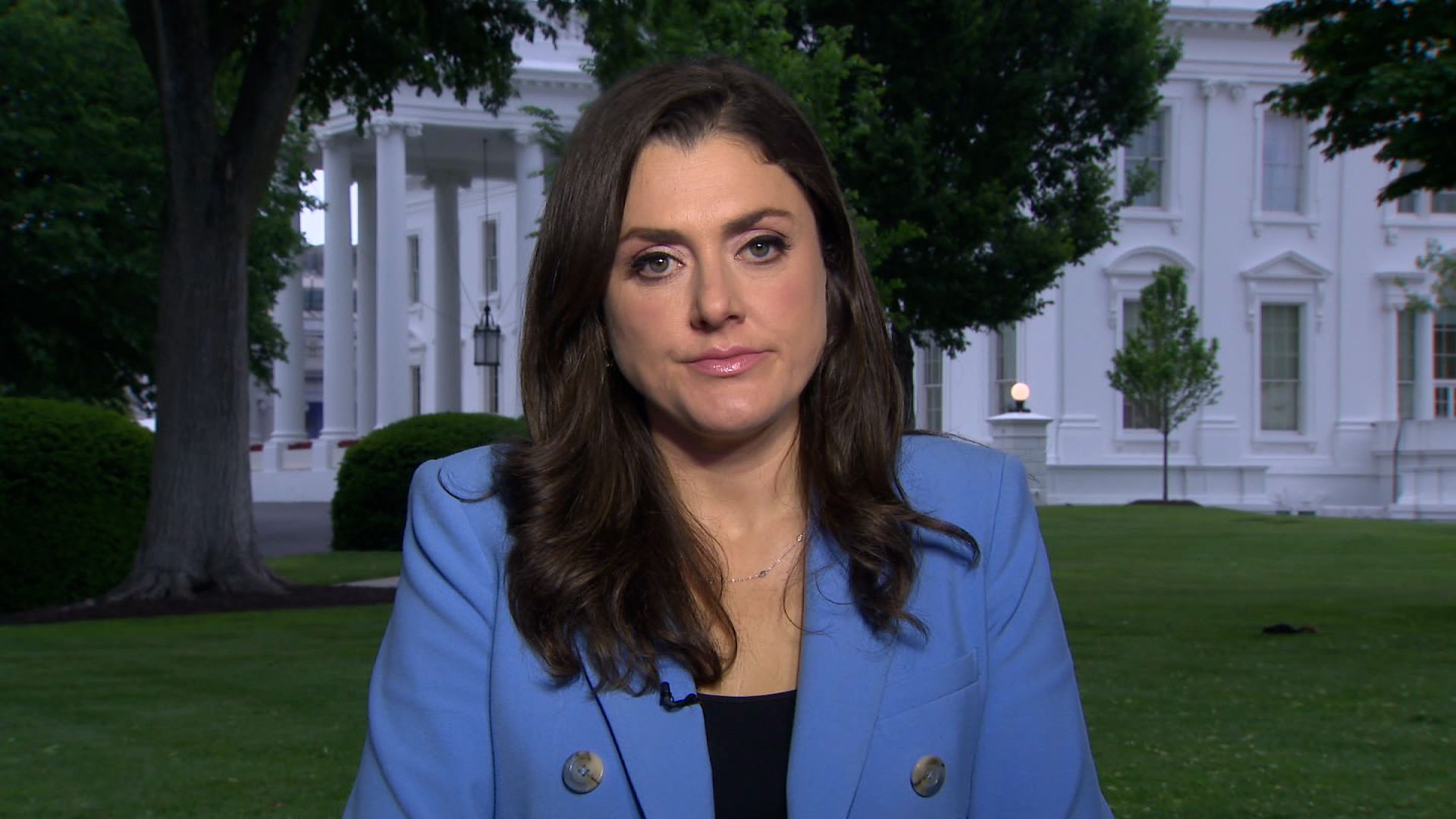
Iran’s wartime crackdown includes a rise in executions
As the world watches tensions between Washington and Tehran, Iran has been carrying out the fastest wave of political executions in its recent history. In just seven weeks, at least 28 people have been put to death on political, protest-related, or espionage charges, according to a US-based human rights group. CNN’s Clarissa Ward reports.

Since the war in Iran began, the country has been carrying out the fastest wave of political executions in its recent history, with at least 28 people who have been put to death on political, protest-related, or espionage charges, according to a US-based human rights group. CNN’s Clarissa Ward reports.

What to know about Trump-Pope Leo tensions ahead of Rubio’s meeting with the pontiff
US Secretary of State Marco Rubio will sit down with Pope Leo XIV tomorrow against the backdrop of a historically tense period between Washington and the Vatican.
CNN’s Christopher Lamb explains the criticism the US-born pontiff has faced from President Donald Trump for opposing the Iran war:

CNN's Christopher Lamb breaks down Pope Leo's response to President Donald Trump's saying that the US-born pontiff is "endangering a lot of Catholics" with his stance on the Iran War.

How shipping companies are calculating the dangers in the Strait of Hormuz

About 1,600 ships are still stuck in the Strait of Hormuz, with shipping companies facing an expensive and risky situation, looking for windows of opportunity to leave the waterway for more than two months.
President Donald Trump’s operation to “guide” ships through the strait lasted just 48 hours. Only two ships were guided through.
Now, on their own again, companies are unwilling to bear the risk of transit — letting ships leave would endanger both cargo and personnel.
Any damage to a multimillion-dollar ship would set companies back financially and logistically. Insurers have wartime clauses in their contracts that do not require them to cover vessels stuck in the middle of a war. So, moving ships without that financial backing risks being extraordinarily costly.
Thirty-two ships have been hit with missiles since the beginning of the war, resulting in 10 deaths and at least a dozen injuries, according to the International Maritime Organization, or IMO.
The IMO continues to urge ships to “exercise maximum caution” and says that “naval escorts are not a sustainable long-term solution.”
CNN’s Lynda Kinkade spoke with Selena Victor, Mercy Corps’ senior director for policy and advocacy, about the humanitarian effect of the blockade.


Trump says he met with Chevron and ExxonMobil executives to discuss oil


President Donald Trump said Wednesday — after referencing the war in Iran — that he met with top executives from major US oil companies, including Chevron and ExxonMobil, to discuss oil and Venezuela.
“Enemies have great pride. We went into Venezuela, smart people, great people, a really strong military. We won it very quickly, and it’s been a great thing for Venezuela,” Trump told reporters in the Oval Office, after saying that Iranians, “have great pride.”
The president added that energy companies are eager to expand operations. He also met with some oil executives last week, when some praised his move to blockade Iranian ports, according to previous CNN reporting.
The president hosted guests at the White House Tuesday night for a “Rose Garden Club” dinner.
Trump touts "very good talks" over past 24 hours but says "never a deadline" on response


President Donald Trump said the US has had “very good talks” with Iran over the past 24 hours but that there’s “never a deadline” on when he expects to hear back from Tehran on a US proposal to end the war.
“We’re in good shape,” Trump told reporters in the Oval Office on Wednesday. “Now we’re doing well, and we have to get what we have to get. If we don’t do that, we’ll have to go a big step further. But with that being said, they want to make a deal.”
Pressed on whether there’s a deadline for hearing back from Iran on the latest US proposal, Trump hinted at an open-ended timeframe. “Never a deadline; it’ll happen. It’ll happen, but never a deadline,” he said.
Trump also again claimed that Iran has agreed to his chief demand of not having a nuclear weapon.
“Iran cannot have a nuclear weapon, and they won’t, and they’ve agreed to that, among other things,” the president said, though there is no indication yet on what Iran has or has not agreed to.
Photo shows Israeli soldier desecrating statue of Mary in Lebanon

The Israeli military is investigating after a photo circulating on social media shows a soldier appearing to desecrate a statue of the Virgin Mary in Debel, Lebanon – the same town where Israeli soldiers were photographed destroying a crucifix last month.

The Israeli military is investigating after a photo circulating on social media shows a soldier appearing to desecrate a statue of the Virgin Mary in Debel, Lebanon – the same town where Israeli soldiers were photographed destroying a crucifix last month. CNN's Oren Liebermann reports.

In the photo, which was geolocated by CNN, a soldier in Israeli army fatigues holds what appears to be a lit cigarette to the mouth of a statue of Mary to make it seem as if the statue is smoking.
The Israel Defense Forces (IDF) said Wednesday that it is reviewing the picture and “views the incident with the utmost severity.” The IDF said the picture was taken “several weeks ago.”
CNN is unable to verify when the photo was taken, or which account originally posted it. Satellite imagery of the site on April 24 shows the same group of tanks and military vehicles seen in the photo parked next to the building where the statue stands. The vehicles are not present in subsequent imagery on May 3.
The photo’s circulation follows two other incidents in Debel, a small, predominantly Christian village in southern Lebanon that the Israeli military has occupied for weeks. The Israeli military jailed two troops and questioned six others after an Israeli soldier was photographed damaging a statue of Jesus Christ in April.
Days later, the IDF said it had launched another review after a video appeared to show Israeli troops damaging solar panels and a vehicle outside of Debel.
Israel’s military chief Lt. Gen. Eyal Zamir later cautioned top defense officials about unspecified “unethical incidents,” warning that the “erosion of values and standards can be as dangerous as operational threats.”
"All parties must lift the blockade," France's Macron says after talk with Iran's president


French President Emmanuel Macron has called for the resumption of traffic in the Strait of Hormuz after holding a conversation with Iranian President Masoud Pezeshkian on Wednesday.
“All parties must lift the blockade of the strait, without delay and without conditions. We must durably return to the regime of full freedom of navigation that prevailed before the conflict,” Macron said in a statement posted to X.
The French leader encouraged others to consider joining a multinational mission proposed by France and the United Kingdom that would seek to secure shipping in the waterway.
“Recent events clearly demonstrate the usefulness that such a mission would have. I have invited the Iranian president to seize this opportunity, and I intend to discuss this matter with President (Donald) Trump,” Macron said.
“The return of calm in the strait will help advance negotiations on the nuclear issue, the ballistic issue, and the regional situation,” he added.
During the phone call with Macron, Pezeshkian spoke about Iran’s “deep distrust toward the United States,” according to a statement in Iranian state media.
Here's the latest on diplomatic efforts to end the US war with Iran

The United States and Iran are moving closer to an agreement on a short memorandum that aims to end the Iran war, a regional source familiar with the negotiations said.
Remember: The one-page memorandum would declare an end to the conflict and trigger a 30-day period resolving nuclear demands, unfreezing of Iranian assets and negotiating security in the Strait of Hormuz, one person familiar told CNN.
US President Donald Trump has threatened the resumption of bombing if Iran doesn’t agree to a deal.
Here’s where things stand:
- Iran is still reviewing the US’ latest proposal, Foreign Ministry spokesperson Esmaeil Baghaei said in interviews with Iranian media outlets. Tehran will convey its response to Pakistani mediators, he said.
- The terms of a potential deal with Iran would include Tehran shipping its enriched uranium stockpile to the US and pledging not to operate its underground facilities, Trump told PBS News.
- Israeli Prime Minister Benjamin Netanyahu is holding talks with Trump administration officials to better understand the latest developments in the negotiations between the US and Iran, according to an Israeli source. Israel is concerned about potential last-minute US concessions, the person said.
- Trump said at an event today the US has the situation in Iran “very much under control.” He said: “We’re dealing with people that want to make a deal very much. We’ll see whether or not they can make a deal that’s satisfactory to us.”
- Meanwhile, the speaker of Iran’s parliament and one of the negotiators in past talks with the US in Pakistan, Mohammad Ghalibaf, warned Iranians of a hard road ahead in a series of audio messages posted by state media.
CNN’s Kit Maher, Max Saltman, Nic Robertson, Alayna Treene, Kevin Liptak and Tal Shalev contributed reporting ton this post.
Israel targets top Hezbollah commander in first strike in Beirut since ceasefire

Israel targeted a top Hezbollah commander on Wednesday evening in the first strike in Beirut since the ceasefire in Lebanon.
Prime Minister Benjamin Netanyahu said in a statement that Israel had targeted the commander of the elite Radwan force. The strike was coordinated in advance with the US, an Israeli source told CNN.
Netanyahu did not name the target of the strike, but he said the Radwan force militants under his command were responsible for launching attacks at Israeli communities and soldiers.
The joint statement with Defense Minister Israel Katz did not say the target of the strike had definitively been killed. An Israeli official told CNN that Israel believes the deputy commander of the Radwan force was also hurt in the attack.
Israel has not carried out a strike in the Lebanese capital of Beirut since the beginning of the US-brokered ceasefire, instead focusing its firepower on southern Lebanon, which the Israeli military asserted was permitted under the ceasefire agreement.
At the beginning of Wednesday’s cabinet meeting, Netanyahu said he expected to speak with President Donald Trump later Wednesday night.
The strike comes as the Trump administration is trying to arrange a direct meeting between Netanyahu and Lebanese President Joseph Aoun. But Aoun said such a meeting would first require Israel to stop attacking Lebanon.
Melania Trump reflects on attending dignified transfer while honoring military mothers

First lady Melania Trump at an event for military mothers on Wednesday reflected on attending a dignified transfer of US service members last March, acknowledging that the United States is in a time of “military conflict.”
Thirteen US service members have died in Operation Epic Fury, which Secretary of State Marco Rubio told reporters Tuesday had concluded.
“And whereby we honor our selfless and valiant service members regularly, today is the day we hold their mothers in the highest regard,” she said from the East Room. She also said that while most people know her husband as a “strong commander in chief,” that his “empathy transcends the role” — a line that spurred laughs in the room.
The first lady hosted a similar event last year at the White House, but this year it was hosted amid President Donald Trump’s war with Iran. Just hours before the event, Trump warned on social media that if a deal isn’t reached, the “bombing starts” and it will “higher level and intensity than it was before.”
Vice President JD Vance, second lady Usha Vance, Education Secretary Linda McMahon and the wife of Defense Secretary Pete Hegseth also attended.
President Trump brought some guests on stage to deliver brief remarks, including Melody Wolfe, the mother of Andrew Wolfe, a national guardsman who was shot outside a metro station near the White House last November and survived his injuries.
US military disables Iranian-flagged tanker trying to reach Iranian port

The US military disabled an Iranian-flagged tanker in the Gulf of Oman on Wednesday by firing “several rounds” of ammunition from a fighter jet into the ship’s rudder when it attempted to sail towards an Iranian port, US Central Command announced Wednesday.
The M/T Hasna, an oil tanker, was in international waters enroute to an Iranian port in the Gulf of Oman when US forces “issued multiple warnings” telling the ship it was in violation of the ongoing US’ blockade, the command said.
“After Hasna’s crew failed to comply with repeated warnings, US forces disabled the tanker’s rudder by firing several rounds from the 20mm cannon gun of a US Navy F/A-18 Super Hornet launched from USS Abraham Lincoln (CVN 72),” the CENTCOM post on X said. “Hasna is no longer transiting to Iran.”
The US and Iran have been exchanging fire over the last several days despite the nearly month-old ceasefire, which US officials insisted on Tuesday was still in effect. Chairman of the Joint Chiefs of Staff Gen. Dan Caine said at a press briefing on Tuesday that Iran had attacked US forces more than 10 times since the ceasefire’s start.
President Donald Trump said, in a social media post Tuesday night, that although diplomatic talks between Iran and the US were progressing, he would continue the US blockade of Iranian ports.
Trump tells military mothers US has situation in Iran "very much under control"

The US has the situation in Iran “very much under control,” President Donald Trump told told military mothers at the White House on Wednesday, musing about the potential for reaching a deal.
“We’re dealing with people that want to make a deal very much. We’ll see whether or not they can make a deal that’s satisfactory to us. We have it very much under control,” Trump said, calling the US naval blockade of ships entering and exiting Iranian ports “like a wall of steel nobody goes through.”
Trump reiterated that if Tehran doesn’t agree to a deal to end the war, they’ll eventually be forced to.
“We’ll see whether or not they are agreeing, and if they don’t agree, they’ll end up agreeing shortly thereafter. So that’s the way it is. And I thought you might want to have a little rundown,” he said.
Trump has threatened the resumption of bombing if Iran doesn’t agree to a deal, though the administration has stressed in recent days that the president prefers a diplomatic resolution.
Why Iran's "mosquito fleet" is having a big impact
What some military experts refer to as Iran’s “mosquito fleet” is causing disruption in the Strait of Hormuz.
CNN’s Nic Robertson explains why these small boats are so effective:

What some military experts refer to as Iran’s “mosquito fleet” is causing disruption in the Strait of Hormuz. CNN’s Nic Robertson explains why this fleet of small boats is so effective.

Pope Leo jumps on video call with priests in southern Lebanon


Pope Leo XIV surprised a group of parish priests from villages in southern Lebanon with a video call on Wednesday morning, according to Vatican News.
A screenshot of the conference call shows several small screens with the faces of each priest smiling broadly at the surprise appearance of the pontiff, who can be seen in the center, dialing in from Rome.
During the call, which was only a few minutes long, Pope Leo passed on his “encouragement” to the priests for their work. He also said they were in his prayers and gave them his blessings.
The holy men are from several villages near Lebanon’s border with Israel that have been fully surrounded by Israeli forces.
The priests had been asked to join a virtual morning meeting with the Vatican’s ambassador to Lebanon, Archbishop Paolo Borgia. But once everyone had joined, Borgia told them Leo wanted to say a few words.
Father Toni Elias, parish priest in Rmeish, described the call as “beautiful.”
“The pope encouraged us, told us he prays for us, that he supports us, and he gave his blessing, in the hope that peace will soon be achieved,” he told Vatican News. “It was a breath of hope and trust that was much needed.”
The video call comes ahead of US Secretary of State Marco Rubio’s meeting with Leo on Thursday. Yesterday Rubio denied the upcoming meeting is an attempt to improve diplomatic relations after US President Donald Trump’s barrage of attacks against the US-born pontiff.
Iran still reviewing US proposal, Foreign Ministry spokesperson tells media

Iran is still reviewing the United States’ latest proposal, Foreign Ministry spokesperson Esmaeil Baghaei said in interviews with Iranian media outlets.
“The US plan and proposal is still under review by Iran, and after finalizing its viewpoints, Iran will convey them to the Pakistani side,” Baghaei told the Iranian Student News Agency (ISNA) on Wednesday.
The spokesperson later emphasized in an interview with state broadcaster IRIB that the review is still underway and that Iran hasn’t yet submitted its reply to the Pakistani mediators.
“The exchange of messages through the Pakistani mediator is ongoing, and reviews of the exchanged texts continue,” Baghaei said. “Iran’s response to the US views regarding our country’s 14-point proposal has not yet been conveyed to the Pakistani side.”
Iran's parliament speaker and negotiator warns country of tough times ahead
Mohammad Ghalibaf, the speaker of Iran’s parliament and one of the negotiators in past talks with the US in Pakistan, warned Iranians of a hard road ahead in a series of audio messages posted by state media.
The US seeks “to destroy the country’s unity in order to force us into surrender,” Ghalibaf said. “Of course, let me also say that we do not underestimate the possibility of military attacks, especially terrorist attacks.”
Ghalibaf’s statements come as President Donald Trump has threatened to bomb Iran further if a final agreement isn’t reached. Around the same time on Wednesday, Iran’s Foreign Ministry spokesperson Esmaeil Baghaei appeared to suggest in a social media post that the US is negotiating in bad faith.
Much of Ghalibaf’s audio message focused on belt-tightening, saying that the US intends to break Iran through “economic pressure,” and requesting that Iranians practice thriftiness, calling frugality a “missile that people can fire into the heart of the enemy.”
“My request to all people is that you yourselves practice saving and frugality, and also seriously encourage others to do the same,” Ghalibaf said, calling all “intellectuals and specialists” to approach the government directly with ideas to “solve the problems that arise because of the war.”
The parliamentarian also noted that “the people of America are facing a serious challenge from rising living costs,” favorably contrasting Iranians with their American counterparts.
“Experts specializing in Iran admit that no matter how much economic pressure the Iranian nation faces, because of their independence, the dignity of their homeland, and their faith and beliefs, they will endure these hardships,” Ghalibaf said.
A deal with Iran would require Tehran to send enriched uranium stockpile to US, Trump says



President Donald Trump told PBS News today that the terms of a potential deal with Iran would include Tehran shipping its enriched uranium stockpile to the United States and pledging not to operate its underground facilities.
News of positive movement from Pakistani mediators helped spur Trump on Tuesday to announce a pause of “Project Freedom” — an operation to guide stranded ships out of the Strait of Hormuz — citing progress in negotiations with Iran, two administration officials said.
Trump’s top priority is finding a diplomatic offramp to the war and reopening the strait swiftly, the administration officials said.
The president on Wednesday expressed optimism about the prospects of soon reaching a deal, but he acknowledged the US has been down this road before. “Yeah, I think so, but I felt that way before with them, so we’ll see what happens,” he told PBS News.
More on negotiations: A one-page plan being floated internally contains provisions that have been at the heart of negotiations to end the conflict, a person familiar with the plan told CNN. The document would declare an end to the war while triggering a 30-day negotiation period on resolving sticking points, including on nuclear issues, unfreezing Iranian assets and future security in the Strait of Hormuz, the person said.
Precise details of the plan couldn’t immediately be verified, but the source familiar said it would include discussion of a moratorium on uranium enrichment for a period of longer than 10 years. A previous US proposal had set it at 20 years. The plan also requires Iran to ship its stockpile of highly enriched uranium out of the country, but details were still being negotiated.