Our live coverage has moved
• Get the latest updates on the war with Iran here.
Key developments
• Shaky peace: President Donald Trump said he will soon review a new plan from Iran as state media reported that Tehran submitted a 14-point proposal. Meanwhile, the US fast-tracked $8 billion in arms sales to its Middle East allies.
• Strait of Hormuz: Iran’s parliament is poised to approve a law that would place restrictions on which vessels can pass through the critical waterway, Iranian state TV reported. Israeli vessels will never be allowed through and ships from “hostile countries” will be required to pay reparations to obtain a permit, it reported.
• Troop withdrawal: Trump says the US plans to remove “a lot further” than the 5,000 troops the Pentagon said it would withdraw from Germany over the next year.
• In Lebanon: Israel and Hezbollah continued to strike each other Saturday despite a declared ceasefire in Lebanon, according to statements from the Israeli military and the pro-Iranian militant group.
Troubled budget carrier Spirit shuts down amid high jet fuel costs due to Iran war
Spirit Airlines has become the first major US airline to shut down in 25 years amid financial stress.
The company was in financial trouble well before the Iran war sent jet fuel prices surging, but a source familiar with the airline’s deliberations said the shutdown is an example of how the conflict is putting pressure on American consumers. CNN’s Betsy Klein has more.

Spirit Airlines has grounded all operations, becoming the first major US airline to shut down in 25 years amid financial stress. CNN's Betsy Klein reports.

Iran submitted a 14-point response to US proposal, according to state-linked media

Iran submitted a 14-point response to a proposal from the United States, Iran’s Islamic Revolutionary Guard Corps-affiliated Tasnim news agency reported on Saturday.
Iran’s proposal was submitted through a Pakistani intermediary and calls for “ending the war on all fronts, including Lebanon,” Tasnim reported.
Tasnim reported that the US proposed a two-month ceasefire, but that Iran believes “that the issues should be resolved within 30 days” and that negotiations should focus on the “termination of the war” rather than extending a ceasefire.
Iranian officials have not yet publicly commented on the details of the reported response. US President Donald Trump said Saturday that he would soon review the plan but that he “can’t imagine that it would be acceptable.”
The response follows a nine-point US proposal, Tasnim reported, and addresses topics like guarantees against military aggression and the withdrawal of US military forces from the region surrounding Iran.
The response also includes the release of frozen Iranian assets, the removal of sanctions, and calls for the introduction of a “new mechanism for the Strait of Hormuz.”
Iran’s deputy foreign minister, Kazem Gharibabadi, said that Iran’s proposal was “aimed at the permanent end” of the war, Iranian state broadcaster IRIB reported.
“Now the ball is in the United States’ court to choose either the path of diplomacy or continuation of a confrontational approach,” Gharibabadi said.
Trump says US plans to cut "a lot further than 5,000" troops in Germany


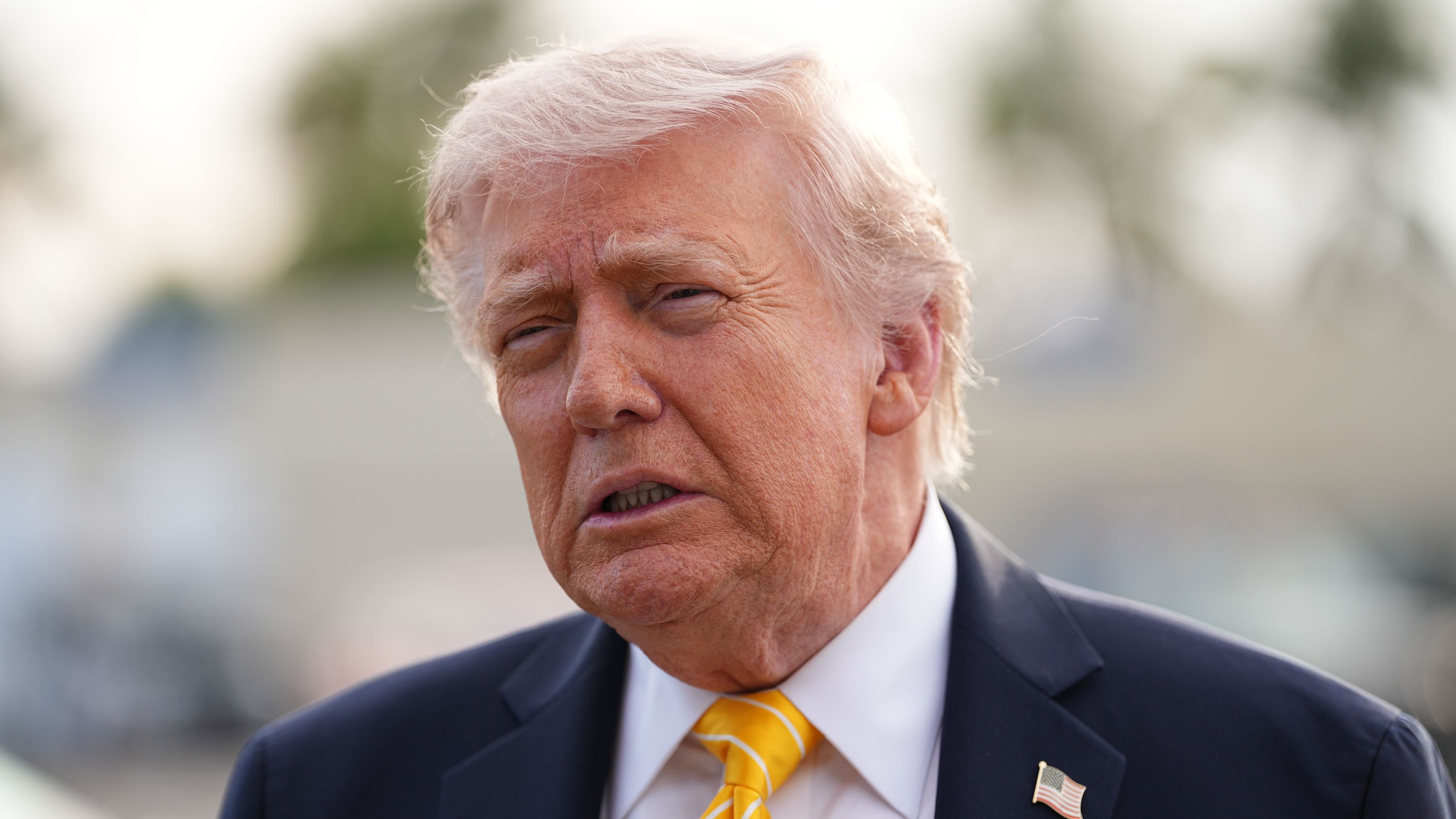
President Donald Trump said Saturday the US plans to remove “a lot further” than the initial 5,000 troops the Pentagon said it would withdraw from Germany over the next year.
“We’re going to cut way down and we’re cutting a lot further than 5,000,” Trump told reporters in South Florida as he boarded Air Force One.
Trump’s comments come nearly a day after the Pentagon announced the US will withdraw roughly 5,000 troops over the next six to 12 months following a “thorough review of the Department’s force posture in Europe.”
The president foreshadowed the cuts earlier this week after German Chancellor Friedrich Merz said the US was being “humiliated” by Iran. Friction between European leaders and the Trump administration has intensified due to the war with Iran, which the US launched without notifying most NATO allies.
German Defense Minister Boris Pistorius, for his part, played down the move, calling it “foreseeable,” adding it showed the need for Europe to take greater responsibility for its own security.
Germany is home to Ramstein Air Base, which is the headquarters for US Air Forces in Europe — including the unit that does “airlift, airdrop and aeromedical evacuation operations” — and a North Atlantic Treaty Organization installation, according to its website.
CNN’s Natasha Bertrand and Kit Maher contributed to this post.
Trump says he’s reviewing new proposal from Iran

President Donald Trump said Saturday evening he will soon review a new plan from Iran but that he “can’t imagine that it would be acceptable.”
Trump’s post came shortly after he told reporters as he boarded Air Force One in Florida, “I’ll let you know about it later.”
“They told me about the concept of the deal. They’re going to give me the exact wording now,” he said, after state media reported Iran sent a 14-point proposal to the US.
Trump denies previous remarks: The president also pushed back on remarks he made Friday night, when he said, “Frankly, maybe we’re better off not making a deal at all. Do you want to know the truth? Because we can’t let this thing go on.”
“I didn’t say that,” Trump said Saturday.
“I said that if we left right now, it would take them 20 years to rebuild. But we’re not leaving right now,” he told reporters before departing from Palm Beach to Miami.
US Central Command chief visits troops aboard ship in Arabian Sea

Adm. Brad Cooper, the commander of US Central Command, visited sailors and Marines aboard the USS Tripoli in the Arabian Sea earlier today, the military said.
Cooper “interacted with service members, recognized top performers, and toured various spaces throughout the amphibious assault ship, including the Combat Information Center,” US Central Command said in a post on X, alongside photos of the visit.
The US is continuing its blockade of ships using Iranian ports amid a ceasefire with Iran. On Friday, Trump said the US may be “better off” if no deal is reached.
Clashes continue in Lebanon despite ceasefire. Here's the latest news


Israel and Hezbollah continued to strike each other Saturday despite a declared ceasefire in Lebanon, according to statements from both the Israeli military and the pro-Iranian militant group.
The Israel Defense Forces said that it struck “approximately 70 military structures and approximately 50 Hezbollah infrastructure sites” in several areas. The militants said they attacked a cluster of Israeli troops and vehicles in the south Lebanese town on Qantara.
Meanwhile, the US-Iran ceasefire has been holding, although US President Donald Trump on Friday rejected the latest proposal from Tehran.
These are other headlines you should know:
- New law: Iran’s parliament is poised to approve a law that would place restrictions on which vessels are allowed to pass through the Strait of Hormuz, Iranian state television Press TV reported on Saturday.
- The Trump administration has fast-tracked billions of dollars in arms sales to Israel, Qatar, the United Arab Emirates and Kuwait, according to statements released by the US State Department on Friday. Cumulatively, the weapons are valued at more than $8 billion. They include air-defense systems for Kuwait and Qatar, and laser-guided rockets for Qatar, the UAE and Israel.
- The family and foundation of Iranian Nobel Peace Prize laureate Narges Mohammadi, who was imprisoned, say the human rights activist has been denied proper treatment and has not gotten better since being transferred from prison to a hospital. After Mohammadi suffered a suspected heart attack in March, her family repeatedly appealed for authorities to allow Mohammadi to receive treatment as her condition worsened.
CNN’s Mitchell McCluskey, Jomana Karadsheh, Jennifer Hansler, Max Saltman, Eyad Kourdi, Eugenia Yosef contributed reporting.
Iran to pass law restricting Strait of Hormuz traffic, state media reports
Iran’s parliament is poised to approve a law that would place restrictions on which vessels are allowed to pass through the Strait of Hormuz, Iranian state television Press TV reported on Saturday.
Citing Vice Parliamentary Speaker Ali Nikzad, Press TV reported that under the proposed 12-point plan, Israeli vessels will never be allowed through. Ships from “hostile countries” – a likely reference to the United States – will be required to pay war reparations to obtain a permit before crossing the waterway.
All other vessels will have to seek Iran’s authorization to transit the strait, the outlet reported.
The measure will come as talks between Tehran and Washington have stalled, with both sides refusing to back down on their demands.
On Friday, Iran submitted a revised peace proposal to negotiators after US President Donald Trump rejected a previous version.
Iran’s deputy foreign minister, Kazem Gharibabadi, said on Saturday that “the ball is in America’s court to choose the path of diplomacy or confrontation,” state broadcaster IRIB reported.
Israel and Hezbollah continue to trade blows in Lebanon


Israel and Hezbollah continued to strike each other on Saturday despite a declared ceasefire in Lebanon, according to statements from both the Israeli military and the pro-Iranian militant group.
The Israel Defense Forces (IDF) said that it struck “approximately 70 military structures and approximately 50 Hezbollah infrastructure sites” in several areas. Earlier Saturday, the IDF’s Arabic spokesperson warned the residents of nine towns and villages in southern Lebanon to evacuate ahead of strikes, urging people to “stay at least 1,000 meters away” from the locations and move to open areas.
Lebanese state media reported late Saturday night that an Israeli strike on a mosque in the village of Saamaiyeh killed three people. CNN asked the IDF for comment.
Meanwhile, Hezbollah said in a statement on Telegram that it attacked a cluster of Israeli troops and vehicles in the south Lebanese town on Qantara on Saturday afternoon, justifying the strike by saying that Israeli actions have “resulted in martyrs and a number of wounded civilians.”
The IDF told CNN that no Israeli soldiers were hurt in the strike.
Clashes have steadily continued between the two sides despite a ceasefire brokered by Washington between Israel and the Lebanese government. Israel insists that the terms of the truce allow it to continue to strike. The Lebanese Ministry of Health reports that at least 2,659 people have died in Lebanon and over 8,000 have been injured since Israel and Hezbollah began fighting in March.
“Our freedom of action to thwart threats – immediate threats and emerging threats – is part of the agreement we made with the United States and also with the Lebanese government,” Israeli Prime Minister Benjamin Netanyahu said last week.
CNN’s Charbel Mallo contributed to this report.
This post has been updated with additional details.
Trump administration fast-tracks $8 billion in arms sales to Middle Eastern countries


The Trump administration has fast-tracked billions of dollars in arms sales to Israel, Qatar, the United Arab Emirates and Kuwait, according to statements released by the US State Department on Friday.
Cumulatively, the weapons are valued at more than $8 billion. They include air-defense systems for Kuwait and Qatar, and laser-guided rockets for Qatar, the UAE and Israel.
Included in the sales to Qatar are Patriot missiles. An April report by the Center for Strategic and International Studies found that US Patriot stockpiles had been significantly depleted by weeks of war with Iran.
In justifying the State Department’s bypassing of Congress to approve the weapons sales, each statement says that Secretary of State Marco Rubio “determined and provided detailed justification that an emergency exists that requires the immediate sale” of the arms to the countries.
It isn’t the first time since the start of the war with Iran that the administration has cited an emergency to skip a congressional review for weapons sales.
In early March, the State Department made an emergency determination to bypass Congress and immediately sell 12,000 bombs to Israel. Later that month, Rubio declared an emergency and expedited a multibillion-dollar weapons sale to the UAE and Kuwait, along with aircraft and munitions support for Jordan.
Family of imprisoned Iranian Nobel laureate push for transfer to Tehran hospital


The family and foundation of Iranian Nobel Peace Prize laureate Narges Mohammadi say the human rights activist has been denied proper treatment and has not gotten better since being transferred from prison to a hospital.
After Mohammadi suffered a suspected heart attack in March, her family repeatedly appealed for authorities to allow Mohammadi to receive treatment as her condition worsened.
Eventually, Mohammadi was transferred to a cardiac care unit (CCU) in a hospital in Zanjan, where she is serving a prison sentence for charges of threatening national security.
Her brother, Hamidreza Mohammadi, told CNN that the family has pushed for her to receive proper treatment, but their efforts have been blocked by prosecutors in Zanjan, who say she needs to stay in the CCU.
“We have no doubt that they want her dead, and we are fighting for her life now,” he said.
On Saturday, Mohammadi’s family and the foundation she started pushed for her to be transferred from Zanjan to the Iranian capital of Tehran to receive better treatment.
The Narges Foundation said that the activist has been treated with only the “most basic care” as doctors attempt to stabilize her heartbeat and blood pressure.
“She must be transferred to her own doctors in Tehran without any further delay,” the foundation said in a statement. “The authorities are fully responsible for the health of the world’s only imprisoned Nobel Peace Prize laureate. Whatever happens to her will be on the Islamic Republic.”
“She’s still very stressed, and she had terrible nausea,” Hamidreza Mohammadi told CNN.
“She is not getting better in CCU because the underlying issues she has, they are not solved, and she must be transferred to hospital in Tehran,” he said.
One of Iran’s most prominent human rights activists, Mohammadi was awarded the 2023 Nobel Peace Prize for “her fight against the oppression of women in Iran and her fight to promote human rights and freedom for all.”
Mohammadi has been repeatedly arrested and imprisoned over her activism and criticism of the Iranian government. In the latest case in February, she was sentenced to over seven more years in prison.
Renewed conflict with the US is possible, Iranian official says. Catch up here
A senior Iranian military official has said renewed conflict with the US is “possible” after President Donald Trump rejected the latest peace proposal from Tehran. The nations are currently observing a ceasefire.
On Friday, Trump said the US may be “better off” if no deal is reached.
Meanwhile, official Iranian outlets restated an uncompromising position on navigation through the Strait of Hormuz.
Catch up on the latest headlines:
- Strait of Hormuz advisory: The US Treasury Department released an advisory yesterday indicating shipping companies could face sanctions if they choose to pay tolls to pass through the waterway. The Iranian chokehold has caused oil prices to rise sharply. Before the war, about 3,000 vessels passed through during a typical month. In March, it was just 154 vessels, according to recent data.
- Troop withdrawal: The Pentagon said Friday the US will be withdrawing roughly 5,000 troops from Germany over the next year, a move the German defense minister said was “anticipated.” Here’s why US troops were in Europe anyways.
- GOP response: The Republican chairmen of the House and Senate Armed Services committees released a statement saying they are “very concerned” by the Pentagon’s decision to withdraw troops.
- Air traffic update: The United Arab Emirates has lifted “all precautionary measures” on air traffic during Iranian attacks on the country, a statement by the General Civil Aviation Authority said.
CNN’s Kit Maher, Natasha Bertrand, Dalia Abdelwahab, Tim Lister and Mostafa Salem contributed reporting.
Chairmen of Armed Services committees condemn planned withdrawal of US troops from Germany

The Republican chairmen of the House and Senate Armed Services committees released a statement today saying they are “very concerned” by the Pentagon’s decision to withdraw 5,000 troops from Germany.
The statement comes after the Pentagon said Friday that the US would withdraw roughly 5,000 troops from Germany over the next year after President Donald Trump lashed out at the German chancellor over his criticism of the US’ war with Iran.
The chairmen urged the Pentagon to keep US troops present in Europe by moving them to the east, where allies “have made substantial investments to host U.S. troops … while strengthening NATO’s front line to help deter a far more costly conflict from ever beginning.”
The Mississippi senator and Alabama congressman said that “any significant change to the U.S. force posture in Europe warrants a deliberate review process and close coordination with Congress and our allies” and that they expect the Pentagon to engage with oversight committees on the decision.
Reduction in US troop numbers in Germany is good news for Putin, NYT’s Sanger says
Germany is downplaying news that the US is pulling 5,000 troops out of the country, describing the Pentagon move as “anticipated.”
All the same, it remains striking that the announcement – which represents an almost 15% reduction in US troop numbers – came just days after German Chancellor Friedrich Merz said Iran was ‘humiliating” the US in stumbling peace talks.


CNN’s Victor Blackwell discussed the US drawdown with David Sanger of the New York Times on Saturday morning.
Perhaps the main beneficiary of the Trump administration’s decision, Sanger said, would be Russia’s President Vladimir Putin.
Iran says renewed conflict with US "possible" after Trump rejects latest peace proposal

A senior Iranian military official has said renewed conflict with the US is “possible” after Donald Trump rejected the latest peace proposal from Tehran.
“Evidence has shown that the United States is not committed to any promises or agreements,” said Brig. Gen. Mohammad Jafar Asadi, spokesman for Iran’s military headquarters, in remarks carried by Iranian news agencies.
“Surprise measures are planned for the enemy, beyond their imagination,” Asadi said.
Official Iranian outlets also meanwhile restated an uncompromising position on navigation through the Strait of Hormuz.
“With its dominance and control over nearly 2,000 kilometers of Iran’s coastline in the Persian Gulf and the Strait of Hormuz, the IRGC (Revolutionary Guards) Navy will make this water area a source of livelihood and power for the dear Iranian people and a source of security and prosperity for the region,” the semi-official Tasnim news agency reported Saturday.
US President Donald Trump has repeatedly demanded that freedom of navigation be restored through Hormuz since declaring a ceasefire early last month. But Iranian officials have responded that the strait will remain under Iran’s supervision.
Here are Trump’s latest comments on a deal with Iran

President Donald Trump made several remarks yesterday about a prospective deal with Iran, after an Iranian offer to end the war was sent by Pakistani mediators to the US.
Here’s the latest, if you haven’t been keeping up:
In the afternoon, Trump said he is dissatisfied with Iran’s latest proposal, telling reporters at the White House, “They want to make a deal,” but “I’m not satisfied with it.”
In the same gaggle with reporters, Trump cast doubt on Iran’s ability to accept a deal, saying, “They’ve made strides, but I’m not sure if they ever get there,” describing “tremendous discord” among Iran’s leaders.
The president also said his options, as it relates to Iran, are striking a deal or to “blast the hell out of them and finish them forever.”
Then, while delivering remarks in the evening at an event in West Palm Beach, Florida, Trump said the US may be “better off” if no deal is reached with Iran, adding “Because we can’t let this thing go on. Been going on too long.”
CNN has reached out to the White House for clarity on Trump’s next steps in the war, and whether the US plans to resume strikes in the country.
UAE lifts all precautionary air traffic measures imposed during Iranian attacks

The United Arab Emirates has lifted “all precautionary measures” on air traffic during Iranian attacks on the country, a statement by the General Civil Aviation Authority said.
The authority announced the full resumption of air navigation operations across UAE airspace “following a comprehensive evaluation of operational and security conditions.”
The UAE had imposed limited air travel restrictions after Iran attacked the country using hundreds of missiles and drones in retaliation for US and Israeli strikes on Iranian targets in late February.
How US-Iran peace talks appear stuck



The White House says Iran’s latest offer to get beyond a ceasefire is unsatisfactory, though President Donald Trump insisted to reporters, “we’re doing everything in terms of negotiating right now.”
CNN’s International Diplomatic Editor Nic Robertson breaks it down for us from Islamabad.
Iran and the US may tolerate a deadlock at the Strait of Hormuz, but the world will pay the price
With talks between the United States and Iran once again still deadlocked, both Washington and Tehran are signaling their ability to endure a prolonged stalemate. Yet this standstill may force the rest of the world to pay a heavy price for a war it did not choose.
Iran’s “very good” negotiators – as described by Secretary of State Marco Rubio – have sent Trump a fresh proposal he views as unsatisfactory. Tehran’s lack of willingness to make a compromise acceptable to the US suggests its comfort with a prolonged stalemate, despite a US naval blockade intended to squeeze the regime into capitulation.
As the conflict drags on without a military or diplomatic resolution, Iran believes its vision for a new regional order is gradually edging closer to acceptance. In a message on Thursday, the new supreme leader declared victory over the US and implied dominance over the Persian Gulf, before proclaiming Tehran’s control over the Strait of Hormuz.
And as proposals move slowly between capitals, Trump has declared he’s in “no rush” and is committed to his naval blockade, even as analysts expect it will take weeks to fully exert the necessary pressure on a regime battle-hardened by years of sanctions.
While both sides continue their shadowboxing, rising global prices have squeezed consumers worldwide with analysts projecting a further rise in global inflation and countries scrambling to prepare for additional shocks should the conflict persist.
“We’re going to get this thing done properly,” Trump said. “We’re not going to leave early and then have the problem arise in three more years.”
How many US troops are in Europe — and why are they there?
The withdrawal of 5,000 US troops from Germany, as we’ve been reporting today, will take the total back to about the level before Russia’s full-scale invasion of Ukraine in 2022.
According to Department of Defense data, there were 36,436 US military personnel in Germany as of December last year, second only to the numbers in Japan.
The Pentagon did not indicate whether the troops would return to the US or be redeployed elsewhere. A long-range fires battalion that was due to be deployed later this year will be canceled, depriving Germany of the cover of a significant missile capability.
Former President Joe Biden approved the deployment of 7,000 additional US troops to Germany in February 2022, days after Russia’s invasion of Ukraine.
The US military presence in Germany peaked during the Cold War, when there were roughly 250,000 forces stationed in West Germany.
Other European countries where significant numbers of active duty US personnel are based include Italy, with more than 12,000, and the UK, with just over 10,000.
There are nearly 4,000 US troops in Spain, but US President Donald Trump has threatened to withdraw them over the Spanish government’s refusal to allow bases there to be used in the war with Iran.
Besides playing an important role in the Cold War, US facilities in Europe have served a role in multiple crises in the Middle East.
European countries host US forces at several important air force and naval bases, including the US airbase at Ramstein in Germany, RAF Lakenheath and RAF Mildenhall in the United Kingdom, Aviano in Italy and Lajes Field in the Portuguese Azores.
The headquarters of US European Command and US Africa Command are in Stuttgart, Germany, and there are two facilities that support the US Navy in Naples and Sigonella, Italy.