Our live coverage has ended
• Follow the latest updates on the war with Iran here.
What we know so far
• Energy strikes: President Donald Trump said the US will hold off on targeting Iranian energy sites another 10 days as “talks are ongoing” with Tehran. The pause on strikes had been set to expire Friday.
• Latest on the negotiations: Trump has insisted that it’s up to Iranian leaders to convince him to halt the war, saying he doesn’t care about making a deal. Iranian state media has said the regime has “complete doubt” about Washington’s willingness to negotiate.
• Iran navy chief dead: The commander of Iran’s Islamic Revolutionary Guard Corps navy, a key figure behind the near-total blockade of the Strait of Hormuz, has been killed, according to Israel’s defense minister.
Asian markets fall after US markets have biggest drop since start of war


Investors across Asia are deeply worried about when the war will end.
Shares in the region are falling after markets in the US had their biggest drop since the start of the conflict.
Investors are continuing to sift through the contradictory messaging from Iran and US President Donald Trump, and are not seeing a de-escalation in the conflict which is disrupting energy shipments through the Strait of Hormuz.
Also weighing on the markets is a fresh warning on inflation from the OECD.
It has sharply raised its inflation forecasts for major economies and now sees the average rate for the G20 economies soaring this year to 4%. The OECD has also downgraded its global growth forecast from 3.3% last year to 2.9%.
Countries across Asia are set to be among the hardest hit. The region relies more heavily on crude, gas, and fuel from the Middle East than other parts of the world.
In the Philippines, transport workers are protesting over rising fuel costs, and the president has declared a state of “national energy emergency” – becoming the first country to do so.
The country’s foreign secretary told CNN it only has 40 to 45 days of petroleum supply left.
Two more South Asians die in the Gulf amid strikes: embassies

A Pakistani and an Indian national were killed by falling debris in the United Arab Emirates this week, their respective embassies confirmed on Thursday, after a ballistic missile was intercepted. This once again underscores the region’s heavy reliance on a large South Asian migrant workforce whose members often work in precarious conditions.
The latest incident brings the total number of South Asian nationals killed in the UAE since the war began to at least six, according to a CNN tally of public information from foreign embassies and the UAE defense ministry.
Earlier this month, a Bangladeshi national was killed in Bahrain and two Indian nationals died in Oman, according to authorities.
Laborers from South Asian countries are a key part of the region’s economic engine, essential to the Gulf’s prosperity. Yet, they remain among its most exposed and unprotected demographic.
The International Labor Organization estimates there are more than 24 million migrant workers in the Arab states.
Many of them are in low-income work and rights groups have repeatedly warned that migrant workers in these wealthy states often face miserable conditions.
Australian PM pushes back on Trump’s dig at Canberra


Australian Prime Minister Anthony Albanese said Canberra hadn’t rejected any requests from US President Donald Trump for help in the US-Israeli war against Iran in the Middle East.
His comments came after Trump expressed disappointment in Australia’s response during a cabinet meeting Thursday.
“Australia was not great. I was a little surprised by Australia,” Trump had said.
Australia sent a Royal Australian Air Force E-7A Wedgetail surveillance plane to the region earlier this month at the request of the United Arab Emirates (UAE), to help it fend off missile strikes from Iran.
When Trump called on allies to help safeguard the passage of tankers through the Strait of Hormuz, Australia said it wouldn’t be participating, not least because it hadn’t received a direct request.
But Canberra later signed up to a pledge by 22 nations to begin planning for an eventual mission to clear the way for shipping as oil prices rose.
Albanese said in a news conference Friday he’d “enjoyed a very constructive relationship” with Trump but added, “there is no request being made to Australia that has not been agreed to.”
The Australian leader also pointed out the lack of consultation by the US and Israel with their allies before the attack on Iran.
“Australia wasn’t consulted before this action was undertaken, and I respect that that’s a matter for the United States,” he said. “What Australia is responsible for… is Australia’s response.”
Catch up on what Trump and top officials said about the war in the cabinet meeting.
Why Iran has the upper hand in the Strait of Hormuz
The Strait of Hormuz has been effectively closed for almost four weeks – throwing global oil markets into chaos – and there is no clear end in sight.
Iran’s threats and attacks on vessels in the Gulf have raised the risk of transit enough to stop almost all traffic through the narrow waterway, which is the main conduit for about 20% of the world’s oil and natural gas, plus fertilizers that help grow crops the world relies on.
As the energy crisis deepens, US President Donald Trump has touted diplomatic efforts to end the blockade, while also moving to deploy thousands more troops to the Middle East and looking into possible US Navy escorts for oil tankers.
But Iran still has the upper hand in many ways – in part because of its unconventional warfare methods, including cheap drones and sea mines, and in part because of its geography. Taken together, these two realities make it harder for the United States or others to defend vessels or to secure the strait militarily.
And it’s lucrative for Iran to retain control. Iranian officials have said they will continue charging fees for the safe passage of some tankers through the strait, after Lloyd’s List Intelligence released a report on March 23 saying at least two vessels had paid large sums to cross.
Read how the geography favors Iran and the threats vessels face in the strait.
War is driving mortgage rates higher
With uncertainty from the war in Iran and the weakening job market causing higher mortgage rates in the United States, CNN’s Vanessa Yurkevich breaks down what that means for potential home buyers.

With uncertainty from the war in Iran and the weakening job market causing higher mortgage rates in the United States, CNN's Vanessa Yurkevich breaks down what that means for potential home buyers.

Lebanese medics save lives amid strikes while they fear for their own
The day after the funeral of two fellow medics killed in an Israeli strike, medics working in the southern Lebanese town of Nabatieh fear for their own lives while they continue to rescue others.
“The drones are flying over us, but we don’t have any options,” medic Ali Hariri told CNN’s Nick Paton Walsh. “We have to go.”


Israeli strikes on Lebanon have killed 1,116 people and injured 3,229 others since March 2, the Lebanese Ministry of Health reported Thursday. Of those, at least 121 were children and 42 were health workers, the Health Ministry said.
CNN’s Sana Noor Haq contributed to this report.
Trump claims CIA told him Iran’s new supreme leader is gay

President Donald Trump claimed during a Fox News interview today that the CIA told him that Iran’s new supreme leader, Mojtaba Khamenei, is gay.
Asked by Fox News host Jesse Watters, “Did the CIA tell you that Ayatollah Jr. is gay?”
Trump responded: “Well, they did say that, but I don’t know if it was only them. I think a lot of people are saying that. Which puts him off to a bad start in that particular country.”
Trump did not indicate what evidence there was to support the CIA’s assertion. Homosexuality is illegal in Iran, which considers same-sex relations a breach of Islamic values, punishable under the country’s Sharia-based law.
The New York Post reported previously that Trump had been briefed on the matter. Trump has previously questioned whether Iran’s new supreme leader is even still alive after US strikes.
Key news developments in the war with Iran over the last few hours


The US will pause strikes on Iranian energy sites for another 10 days, President Donald Trump announced Thursday after markets closed. The pause currently in place was set to expire in a matter of hours.
Trump said “talks are ongoing” with Tehran, and US Secretary of State Marco Rubio — who departed for a G7 meeting in France — told reporters “progress has been made” in the negotiations.
If you’re just joining us, you can also read a recap of Trump’s comments about the war at Thursday’s Cabinet meeting.
Here are the other essential headlines from the last few hours:
Mounting death toll: Thousands of people have been killed in the Middle East over nearly four weeks of conflict in the region, a CNN tally found.
Strikes by Iran, the US and Israel across the region have shown little sign of abating:

Gulf nations are facing a wave of Iranian missile and drone attacks, as Tehran retaliates against ongoing US and Israeli strikes. CNN’s Matthew Chance reports on what's at stake for the energy-rich region as the conflict escalates.

From Israel:
- Israel said it killed Hassan Mohammad Bashir, a senior Hezbollah commander in Lebanon on Wednesday.
- Israeli forces also struck sites in the Kermanshah province of western Iran, and further south in Dezful.
- With multiple war fronts open, the Israel Defense Forces (IDF) is under severe strain, the Israeli military’s chief of staff warned government ministers Wednesday, according to a source.
In Iran:
- A key Iranian navy commander, Rear Adm. Alireza Tangsiri, was killed in an Israeli operation, the US and Israel said. Iranian authorities have not commented on the claims of Tangsiri’s death.
- Any damage to Iran’s Bushehr nuclear power plant could cause a “major radiological accident affecting a large area in Iran and beyond,” according to the director general of the UN’s nuclear watchdog agency. Bushehr contains “a large amount of nuclear material,” the director general said, after Iran reported strikes near the facility. CNN has reached out to the US Department of Defense and the Israeli military for comment.
- Iran issued a broad warning that hotels in the Middle East hosting US military forces could be considered “legitimate defensive targets.”
Cascading effect of war: The Philippines announced a state of emergency in response to energy shortages triggered by the war in the Middle East. The country had 40-45 days’ worth of petroleum supply left, Foreign Affairs Secretary Maria Theresa Lazaro told CNN.
CNN’s Samantha Waldenberg, Mohammed Tawfeeq, Dana Karni, Tal Shalev and Kaanita Iyer contributed to this post.
Trump says Iran asked for a 7-day pause on energy site strikes and he gave 10

President Donald Trump told Fox News on Thursday that Iran initially asked him to pause US strikes on the country’s energy sites for seven days, but he decided to give them 10, making the deadline April 6.

President Donald Trump said the US will hold off on targeting Iranian energy sites for another 10 days as “talks are ongoing” with Tehran. The pause on strikes had been set to expire Friday. CNN's Kaitlan Collins reports.

“They said to me very nicely, through my people, ‘Could we have more time?’ Because we’re talking about tomorrow night, which is pretty quick, and if they don’t do what they have to do, I will knock out their power plants,” Trump said.
“They asked for seven, and I said, ‘I’m going to give you 10,’ because they gave me ships,” he added.
Trump said that Iranian officials were “very thankful” about that.
When Trump first threatened to strike Iranian energy sites, he said the country had just 48 hours to open up the Strait of Hormuz. He then pushed that deadline back five days, to Friday, before pushing it back again today.
Hotels hosting US forces could be "legitimate" targets, Iran warns

Iran has issued a broad warning to hospitality operators across the Middle East, claiming that hotels and other civilian facilities used to house US military personnel could be considered “legitimate defensive targets” if such activity continues.
Iran’s semi-official Fars News Agency, citing “informed sources,” said locations used by US personnel are “not limited” to Bahrain and the United Arab Emirates. It alleged that alternative accommodation sites for foreign forces have been identified in other parts of the region, including Syria, Lebanon and Djibouti.
The sources cited by Fars, which is close to the Islamic Revolutionary Guard Corps, said Iran’s warning to hotel operators is “comprehensive and definitive.” It asserted that any facility hosting foreign military personnel — “regardless of its geographic location” — would be treated as a legitimate target if the alleged activity is not halted immediately.
Earlier Thursday, Iranian Foreign Minister Abbas Araghchi said in a post on X, that US troops have moved out of military bases in Persian Gulf Arab countries belonging to the Gulf Cooperation Council (GCC) and are staying in hotels and offices.
“From outset of this war, U.S. soldiers fled military bases in GCC to hide in hotels and offices,” Araghchi wrote, claiming that US forces are using “GCC citizens as human shield.” He urged hotels in the gulf countries to deny bookings to US military personnel.
CNN cannot independently verify the allegations in the Fars report or Araghchi’s claims. US and GCC officials have not publicly responded.
Trump announces he will hold off on striking Iranian energy sites for another 10 days

President Donald Trump announced today that his administration will continue to hold off on strikes to Iranian energy sites for another 10 days.
“As per Iranian Government request, please let this statement serve to represent that I am pausing the period of Energy Plant destruction by 10 Days to Monday, April 6, 2026, at 8 P.M., Eastern Time. Talks are ongoing and, despite erroneous statements to the contrary by the Fake News Media, and others, they are going very well,” the president said on Truth Social.
The pause currently in place was set to expire on Friday. The president’s post came shortly after markets closed this afternoon.
Mideast death toll reaches thousands one month into US-Israeli assault


Thousands of people have been killed in the Middle East nearly four weeks after the US and Israel first bombed Iran, unleashing a tide of violence on communities in the region.
Scenes have emerged of entire neighborhoods reduced to rubble, homes blown out and thousands of families displaced on the streets. Rights advocates warned that the scale and frequency of the fighting “reveal callous disregard for civilian life and property.” Human Rights Watch urged world leaders on Thursday to “strongly condemn violations” and “demand accountability.”
As the Trump administration keeps changing tack on reaching an end to the fighting, men, women, children and paramedics in Iran, Lebanon and elsewhere are bearing the brunt of the bloodshed.
Here’s what you need to know:
- In Iran: More than 1,750 people have been killed in Iran since the US and Israel launched strikes on February 28, Iran’s deputy permanent representative to the International Maritime Organization said Wednesday, according to the state-run Islamic Republic News Agency. In that time, 217 children have been killed, the US-based Human Rights Activists News Agency (HRANA) said Wednesday. At least 1,167 Iranian military personnel have been killed, HRANA added.
- In Lebanon: Israeli strikes on Lebanon have killed 1,116 people and injured 3,229 others since March 2, the Lebanese Ministry of Health reported Thursday. Of those, at least 121 were children and 42 were health workers, the Health Ministry said.
- In Iraq: At least 96 people have been killed across Iraq, according to authorities. In the Kurdistan Region, a semi-autonomous federal region of Iraq, at least 13 people have been killed, the regional government said.
- In Israel: At least 18 civilians have been killed in Israel since the latest escalation, including a civilian who was killed by Israeli fire along the border with Lebanon this weekend, the Israeli military said Thursday. In addition, four Israeli soldiers have been killed in southern Lebanon.
- In the Israeli-occupied West Bank: An Iranian missile killed four Palestinians in the West Bank, the Israeli military said Thursday. Israeli settler violence on Palestinian communities has also shot up. At least five Palestinians have been killed by Israeli settlers since February 28, the Israeli human rights group B’TSelem said Thursday.
- In Gaza: Israeli attacks in Gaza have killed 72,267 people since October 7, 2023, the Palestinian Ministry of Health reported Thursday. Of those, 691 were killed after October 11, when Israel and Hamas signed a US-led “ceasefire” deal.
- US: Thirteen US service members have been killed since late February, according to the US Central Command.
- Elsewhere in the region: More than 30 people have been killed in Arab countries along the Persian Gulf since February 28, according to local authorities. Many of the victims were migrant workers, an unprotected and exposed demographic there.
CNN’s Charbel Mallo, Aqeel Najim, Nechirvan Mando, Dana Karni, Eugenia Yosef, Oren Liebermann, Tal Shalev, Tamar Michaelis, Ibrahim Dahman, Haley Britzky, Brad Lendon, Piper Hudspeth Blackburn, Isabelle D’Antonio and Mohammed Tawfeeq contributed to this report.
Supreme leader’s adviser warns any attack on Iran will “boomerang” on participants

Ali Akbar Velayati, a senior adviser to Iran’s supreme leader, warned that any country taking part in military action against Iran would face “a boomerang” of repercussions, the state-run Islamic Republic News Agency (IRNA) reported Thursday.
“Any participation in military aggression against Iran will definitely return to the participants like a boomerang,” Velayati said, and he suggested that the Persian Gulf would be a focal point for retaliation.
“The geography of the Persian Gulf cannot remain without consequences,” he said. He added that “events will definitely occur” that would be “to the detriment of those threatening Iran’s national security.”
IAEA chief says strikes near Iran nuclear plant could trigger "major radiological accident"

The head of the UN nuclear watchdog expressed “deep concern” Thursday over recent military strikes that “reportedly” took place near Iran’s Bushehr nuclear power plant, warning that any damage to the operating facility could cause a “major radiological accident.”
International Atomic Energy Agency (IAEA) Director General Rafael Grossi said the latest strikes took place on Tuesday evening.
Because Bushehr is an operating nuclear power plant and contains “a large amount of nuclear material,” Grossi warned that damage to the facility could result in “a major radiological accident affecting a large area in Iran and beyond.”
Grossi again called for “maximum restraint” to avoid the risk of a nuclear accident and stressed the importance of observing what the IAEA describes as the “seven pillars” for ensuring nuclear safety and security during armed conflict.
The Atomic Energy Organization of Iran said Tuesday that a projectile struck the grounds of the Bushehr nuclear plant on Tuesday night local time. It described the incident as a “renewed attack” by the “American–Israeli enemy.”
CNN has reached out to the US Department of Defense and the Israeli military for comment.
Israeli forces kill Hezbollah senior commander in Lebanon, military says
Israeli forces killed a senior Hezbollah commander in Lebanon on Wednesday, according to the military, as Israeli troops expanded the deadly assault in the south.
The Israeli Air Force “struck and eliminated” Hassan Mohammad Bashir, a senior commander in the Hajir area, the Israel Defense Forces (IDF) said in a statement Thursday.
Israel has pressed on with military attacks in Lebanon since March 2, after Hezbollah launched projectiles into Israel following deadly US-Israeli strikes on Iran.
Elsewhere in the region: Israeli forces also struck sites in the Kermanshah province of western Iran, and further south in Dezful.
The military was “targeting weapons storage and launching sites intended for ballistic missiles and aerial defense systems,” the IDF said, adding that its strikes on Iran’s ballistic missile array are aimed at “reducing the scope of fire directed at Israeli civilians.”
IDF chief of staff warns of strain on military as it fights on multiple fronts


The Israeli military’s chief of staff, Lt. Gen. Eyal Zamir, warned government ministers Wednesday that the Israel Defense Forces (IDF) are under severe strain due to manpower shortages and expanded operational demands, an Israeli source told CNN.
“I am raising 10 red flags before the IDF collapses into itself,” Zamir said, according to remarks first reported by Israel’s channel 13 and confirmed to CNN on Thursday.
The Israeli military is currently operating on multiple active fronts, including Iran, Lebanon, the Gaza Strip, Syria and the occupied West Bank.
The broadened military activity has intensified pressure on IDF manpower. An IDF spokesperson acknowledged Thursday that the military has a shortage of about 15,000 soldiers.
The shortfall comes amid an ongoing conscription crisis. Prime Minister Benjamin Netanyahu’s government has not passed legislation regulating the conscription of ultra-Orthodox youth and has not taken steps to extend mandatory service or reform reserve duty.
Zamir made the comments during a security cabinet meeting that discussed, among other topics, the recent increase in settler violence in the West Bank.
Last week, the chief of staff said that “in recent weeks there has been a rise on nationalistic crime incidents,” and he urged state institutions to act against the phenomenon.
CNN has previously reported that the IDF diverted a combat battalion from the northern border with Lebanon to the West Bank amid the wartime surge in settler violence against Palestinians.
Rubio says "progress has been made" in negotiations with Iran


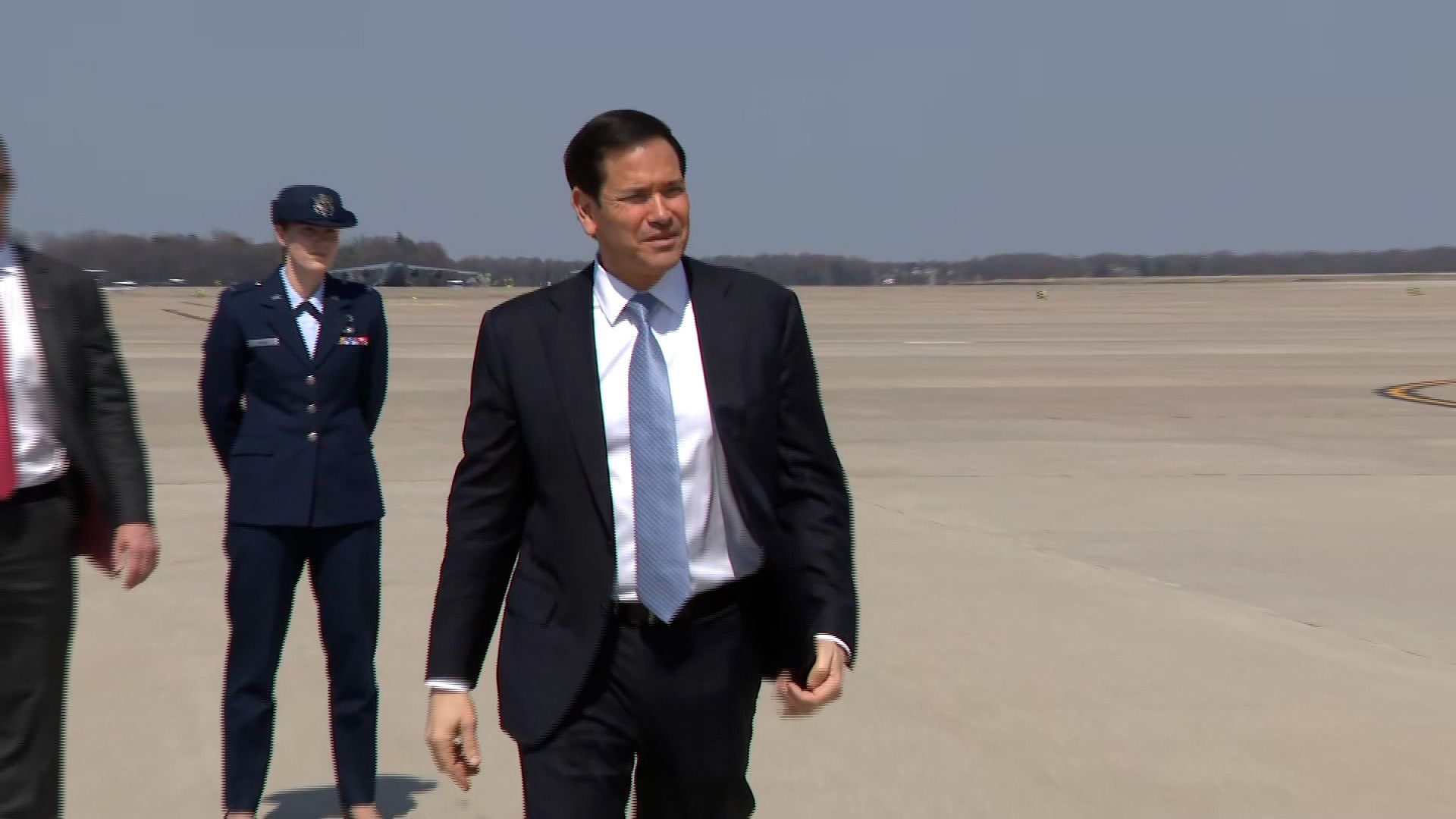
US Secretary of State Marco Rubio said Thursday that “progress has been made” in negotiations with Iran but declined to get into the specifics of whom he’s had discussions with.
Negotiations are an “ongoing and fluid process,” he added.
Special envoy Steve Witkoff confirmed earlier today at President Donald Trump’s Cabinet meeting that the US has been negotiating with Iran through diplomatic channels with Pakistan.
When asked if he’s going to ask the other G7 countries to help reopen the Strait of Hormuz, Rubio said, “it’s in their interest to help.”
When asked if he’s concerned about the reception he might receive amid the war, Rubio said, “I’m not concerned about it.”
“I’m not there to make them happy. I get along with all of them on a personal level and we work with those governments very carefully but the people I’m interested in making happy are the people of the United States,” he added.
Iran's slain naval chief oversaw Hormuz closure and tanker attacks, US and Israel say


The commander of Iran’s Islamic Revolutionary Guard Corps (IRGC) navy, Rear Adm. Alireza Tangsiri, was killed in an Israeli operation, according to the Israeli military and US Central Command on Thursday. Iranian authorities have not commented on the claims of Tangsiri’s death.
Tangsiri, 62, was instrumental in the blockade of the Strait of Hormuz and orchestrated hundreds of drone strikes on commercial vessels throughout his years in charge, Israeli and American officials said in separate statements.
Tangsiri, born in the Iranian port city of Arvandkenar at the northern tip of the Persian Gulf, was appointed as chief of the IRGC navy in 2018. He previously served as the first regional commander of the IRGC navy, according to the Israeli military.
During his tenure, he led military buildup efforts that included the acquisition of thousands of weapons, particularly missiles and naval mines, according to an Israeli military official. The official also said that Tangsiri’s authority expanded during the war and that “he became the sole approver for most terror activities carried out in the maritime domain in southern Iran.”
He was designated as a terrorist by the US Treasury Department in June 2019 for acting on behalf of the IRGC, and additional sanctions were imposed in 2023 related to the development of Iranian drones. At the time, he was chairman of the board for Paravar Pars, an Iranian-based firm sanctioned by Western allies for manufacturing Shahed drones supplied to Russia.
US Central Command said in a statement that Tangsiri was was responsible for killing “countless innocent civilians” and harassing “thousands of innocent merchant mariners” with attacks on vessels in the Persian Gulf.
Iranians say Trump “cannot really be trusted” as his agenda keeps fluctuating


Young women waved Iranian flags and held photos of the slain supreme leader, Ayatollah Ali Khamenei, in Tehran on Thursday as US-Israeli bombing entered a fourth week with no end in sight.
The heavy rumble of traffic reverberated through the Iranian capital, in footage published by Reuters. For several residents in Tehran, the realization that their fate may depend on the whims of one man compounded the anxiety, frustration and fears of persistent US-Israeli bombing across the country.
Diplomatic channels between Iran and the US seem to be open — but the status and frequency of talks are unclear. On Thursday, US President Donald Trump belligerently declared that “I don’t care” about reaching a deal with Tehran to end the violence, just hours after the White House claimed the discussions were proceeding apace. Iranian officials have maintained they are in “complete doubt” over Washington’s willingness to engage in ceasefire discussions.
One Iranian woman in Tehran told Reuters, “If they (the Americans) had truly destroyed our forces, then why are they making so many requests for negotiations?
Another resident said Trump’s conflicting remarks were “part of his media game, aimed at creating division between the people.” The man added, “His statements cannot really be trusted,” Reuters reported.