What we covered
• Maduro on US soil: Captured Venezuelan President Nicolás Maduro is being held at the Metropolitan Detention Center in Brooklyn and will face drugs and weapons charges.
• Trump’s plan for Venezuela: President Donald Trump said the US will “run the country” until a “judicious transition” can happen. He also said the US will seize Venezuela’s massive oil reserves.
• Uncertain future: Venezuela’s Supreme Court has directed Vice President Delcy Rodriguez to assume the powers and duties of acting president. Meanwhile, opposition leader María Corina Machado has called for an opposition candidate to assume power. Venezuelans across the country and abroad have expressed joy and hope — but also apprehension and anxiety.
• Flights to resume: Flights through Caribbean airspace were set to resume from midnight Eastern Time after a large part of it was closed after the strike. Some airlines said they plan to restart service by Sunday.
Our live coverage has moved here.
Heightened US military presence off Venezuela is likely to remain for now, retired major general says

The military presence which the US has built up off the coast of Venezuela since last year is likely to stay put as part of a carrot-and-stick approach, a retired major general of the Australian Army told CNN on Sunday.
The US has dispatched warships and fighter jets to the region to pile pressure on President Nicolás Maduro in recent months, striking dozens of alleged drug boats as part of what it called a counter-narcotics campaign and blocking sanctioned oil tankers going in and out of the South American country.
Even after the capture of Maduro and his wife, Retired Maj. Gen. Mick Ryan believed that the US forces are unlikely to immediately scale down their presence.
“The Trump administration is clearly keen to have the Venezuelan government that remains to work with them,” he said.
“It’s like a roller coaster,” says Venezuelan after witnessing Maduro in US custody
Seeing images of Venezuelan President Nicolás Maduro in handcuffs on US soil reminded Niurka Melendez of both her native country’s troubled past and the “light at the end of the tunnel,” the Venezuelan told CNN on Sunday.
“It’s like a roller coaster. So many emotions at the same time,” said Melendez, who is the co-founder of Venezuelans and Immigrants Aid, a group in New York which helps Venezuelan asylum seekers.
Melendez added that Maduro’s arrest means “justice,” a step much needed before the Venezuelan people can start rebuilding their country.
“I mean, our country is in a mess. We lost our country and are now getting pieces into place… I know it’s going to be a really complicated task,” she said.
Why the US is interested in Venezuela’s oil

President Donald Trump on Saturday said the US would take control of Venezuela’s massive oil reserves and recruit American companies to invest billions of dollars to refurbish the country’s gutted oil industry.
Venezuela is sitting on a massive 303 billion barrels worth of crude — about a fifth of the world’s global reserves, according to the US Energy Information Administration (EIA).
A US-led revamp could eventually make Venezuela a much bigger supplier of oil and could create opportunities for Western oil companies and could serve as a new source of production. It could also keep broader prices in check, although lower prices might disincentivize some US companies from producing oil.
The kind of oil Venezuela is sitting on — heavy, sour crude — requires special equipment and a high level of technical prowess to process.
The United States, the world’s largest oil producer, has light, sweet crude, which is good for making gasoline but not much else. Heavy, sour crude like the oil from Venezuela is crucial for certain products made in the refining process, including diesel, asphalt and fuels for factories and other heavy equipment.
Unlocking Venezuelan oil could be particularly beneficial to the United States: Venezuela is nearby and its oil is relatively cheap.
Venezuela is home to the largest proven oil reserve on Earth, but its potential far outweighs its actual output: Venezuela produces only about 1 million barrels of oil per day — about 0.8% of global crude production.
International sanctions on the Venezuelan government and a deep economic crisis contributed to the decline of the country’s oil industry — but so did a lack of investment and maintenance, according to the EIA.
Read more here.
China calls on US to “immediately” release Maduro and his wife
China has called on the US to “immediately” release Venezuelan President Nicolás Maduro and his wife, who are in custody in the US after being snatched by American forces from the Venezuelan capital Caracas.
Beijing previously said it was “deeply shocked by and strongly condemns the US’s blatant use of force against a sovereign state.”
Fred He contributed reporting
In pictures: Venezuelan leader Maduro lands in New York City

Venezuelan President Nicolás Maduro arrived at the Metropolitan Detention Center in Brooklyn after he was brought by helicopter to Manhattan and escorted to the facility by a motorcade of law enforcement vehicles, according to law enforcement officials.
See more photos from today here.


United and Delta Air Lines set to resume Caribbean flights
Delta Air Lines and United Airlines said they plan to resume flights to the Caribbean by Sunday.
United told CNN it is preparing to restart service with departures to San Juan, Puerto Rico on Saturday night, as federal restrictions on Caribbean airspace expire.
The airline expects to operate most of its scheduled Caribbean flights on Sunday and is working to add additional Sunday flights to assist customers whose travel was disrupted.
Delta Air Lines said in a statement it will resume flights Sunday to and from 13 Caribbean airports previously affected by the FAA notice and expects to operate its normal schedule in the region that day.
Delta also issued a travel waiver for customers traveling to or from the affected airports over the coming days.
Sending US troops to Venezuela to secure oil would be “difficult,” former NATO commander says
Potential hostility in Venezuela could make it difficult for the US to secure oil with its troops, a former NATO commander told CNN on Saturday.
“It’s going to be difficult to just hold on to the oil in a country that could turn hostile,” he added.
Since the capture of Venezuelan President Nicolás Maduro and his wife, the country’s Vice President Delcy Rodríguez demanded the “immediate release” of the pair and said her nation’s territorial integrity was “savagely attacked” by the US operation.
Clark said the aftermath of the military operation is “still unclear.”
US plan to “run” Venezuela will be complicated task, says former ambassador

The United States’ plan to “run” Venezuela, as floated by President Donald Trump, would be a complicated task given the local political situation and potential security risks, the former US ambassador to the South American country told CNN on Saturday.
Charles Shapiro said it’s hard to tell whether Venezuelans who voted for the opposition in 2024 were genuine opposition supporters or voters unhappy with the country’s collapsed economy. He also estimated that at least “20%, maybe more of the population” remain President Nicolás Maduro’s supporters.
“How you win those people over and turn that around is going to be very, very difficult,” Shapiro, who is also the former President of the World Affairs Council of Atlanta, said.
Protests broke out across Venezuela in 2024 after the country’s electoral body, which is stacked with regime allies, announced Maduro as the winner with 51% of the votes. Though Maduro had promised free and fair elections, the process was marred with allegations of foul play.
Security issues are also at stake given the country’s population of about 30 million and it being home to some guerrilla groups.
Yet, the Trump administration is unlikely to send troops and appears to rely on Vice President Delcy Rodríguez and the Venezuelan army to maintain security, he said.
“That’s going to be a very, very difficult needle to thread,” he added.
This post has been corrected to say Shapiro is a former President of the World Affairs Council of Atlanta, not its current President.
Starlink says it is providing free broadband to Venezuela until Feb 3
Starlink says it is providing free broadband services to people in Venezuela until February 3, following the US operation that ousted President Nicolás Maduro.
The US-based service, owned by billionaire Elon Musk’s SpaceX, delivers mobile broadband via a network of orbiting satellites.
In a post on X, the company said it pledged “continued connectivity” to Venezuela, a country that is known to grapple with online censorship, with Maduro’s government having previously blocked Facebook, YouTube, Instagram and other platforms in the past.
Metrics from Netblocks show a sudden loss of internet connectivity in parts of Caracas on Saturday, which it said corresponded to “power cuts during the US military operation.”
Local media reports also suggest there is no internet connection in some parts of the capital.
Plan to remove Maduro floated during Trump’s first term, former national security adviser John Bolton says

A plan to remove Venezuelan leader Nicolás Maduro was floated to US President Donald Trump during his first term but did not go anywhere as administration officials were unable to keep the president “focused” on the issue, his former national security adviser told CNN.
John Bolton, who advised Trump between 2018 and 2019, said Trump was already “very interested in the Venezuelan oil” during his first term.
He and his team were able to get Trump interested in the idea of removing Maduro but “couldn’t keep him focused on it,” Bolton recalled.
He also said the opposition in Venezuela at that time believed that economic pressure would be enough to split Maduro’s regime.
Secretary of State and acting National Security Adviser Marco Rubio appeared to have had more success convincing Trump to take action in his second term, Bolton said.
“I think this time Trump was persuaded, obviously, to engage in it because of Rubio’s persistence and because of the political benefits,” he said.
Following his term as national security adviser, Bolton has since become a prominent critic of Trump. He is currently facing a raft of charges over the transmission and retention of defense information.
CNN has reached out to the White House for comment on Bolton’s remarks.
Riane Lumer contributed reporting
Flights set to resume over Caribbean from midnight Eastern Time

Flights over Caribbean airspace are set to resume from midnight Eastern Time, US Transport Secretary Sean Duffy said.
Much of Caribbean airspace has been closed since the United States struck Venezuela, captured President Nicolás Maduro and his wife and flew them out of the country. Hundreds of flights from Caribbean airports were canceled or delayed.
Venezuelan court directs Vice President Delcy Rodriguez to assume duties of acting president


Venezuela’s Supreme Court has ordered Vice President Delcy Rodriguez to assume the powers and duties of acting president after the United States removed Nicolás Maduro.
The order was announced on Saturday night, local time, concluding that Maduro is in a “material and temporary impossibility to exercise his functions.”
Rodriguez will “assume and exercise, as acting president, all the powers, duties, and faculties inherent to the office of president of the Bolivarian Republic of Venezuela, in order to guarantee administrative continuity and the comprehensive defense of the nation,” according to the order, read by Justice Tania D’Amelio in a session broadcast by the state television channel VTV.
Venezuela’s constitution states that when there is a temporary or absolute absence of the president, the person holding the vice presidency must replace them.
A glimpse inside the prison planned for Nicolás Maduro
Venezuelan President Nicolás Maduro is set to be transferred from his life of luxury to the Metropolitan Detention Center (MDC) in New York City.
Described as “disgusting” with “horrifying” conditions, the MDC is known for its squalid conditions, chronic understaffing, inmate violence and power outages.
Built in the 1990s to combat prison overcrowding, the facility has housed people including singer R. Kelly, “Pharma Bro” Martin Shkreli, socialite Ghislaine Maxwell, one-time cryptocurrency whiz kid Sam Bankman-Fried and music mogul Sean “Diddy” Combs. Suspected cartel leader Ismael “El Mayo” Zambada Garcia was also held there as he awaited trial on murder and drug trafficking charges.
“It’s a very difficult place to be an inmate,” Combs’ attorney Marc Agnifilo argued in court in late 2024, telling the judge it would be difficult for his client to get ready for trial if he were to be housed there.
Violence can be a constant threat. One inmate was fatally stabbed in June 2024 and another died in a fight a month later.
A 2019 power outage plunged prisoners into near-total darkness in frigid temperatures for a week. The incident prompted a Justice Department investigation that resulted in a $10 million settlement for 1,600 affected inmates. Inmates had been confined to their cells for days and forced to endure unsanitary conditions with malfunctioning toilets, according to the lawsuit filed on their behalf.
The MDC is the only federal correction center serving New York City following the closure of Manhattan’s complex after multimillionaire financier and accused sex trafficker Jeffrey Epstein’s death by suicide in 2019.
Analysis: Venezuela’s opposition cheers, but Trump doesn’t seem interested in working with them

In the immediate hours following US forces bombing Caracas and abducting Venezuelan President Nicolás Maduro and his wife, Venezuela’s beleaguered opposition was ecstatic.
But after US President Donald Trump expressed a lack of confidence in Machado and suggested he’d instead partner with Maduro loyalist Delcy Rodríguez, the opposition’s official channels were quiet for most of the day.
Machado had called for the immediate installation of Edmundo González Urrutia as president, and for the Venezuelan military to fall in behind him. Most Western governments regard González as the legitimate winner of the contested 2024 presidential election in Venezuela.
Then came a press conference from Trump. Asked whether Machado would have any part in the post-Maduro government, Trump said that he had not been in contact with her, and that while Machado was a “very nice woman,” she “doesn’t have the support within or the respect within the country” to lead Venezuela.
Read the full analysis here.
Analysis: Was Maduro’s abduction legal?
The US launched what President Donald Trump called a “large scale strike against Venezuela” and captured its president, Nicolás Maduro, to face charges. It launched this regime change effort without the approval of Congress.
CNN’s Katelyn Polantz explores the legality of it:

The US launched what President Donald Trump called a “large scale strike against Venezuela” and captured its president, Nicolás Maduro, to face charges. And it launched this regime change effort without the approval of Congress. CNN's Katelyn Polantz explores the legality of this move.

Venezuelans grapple with fear and anxiety over who will govern the country

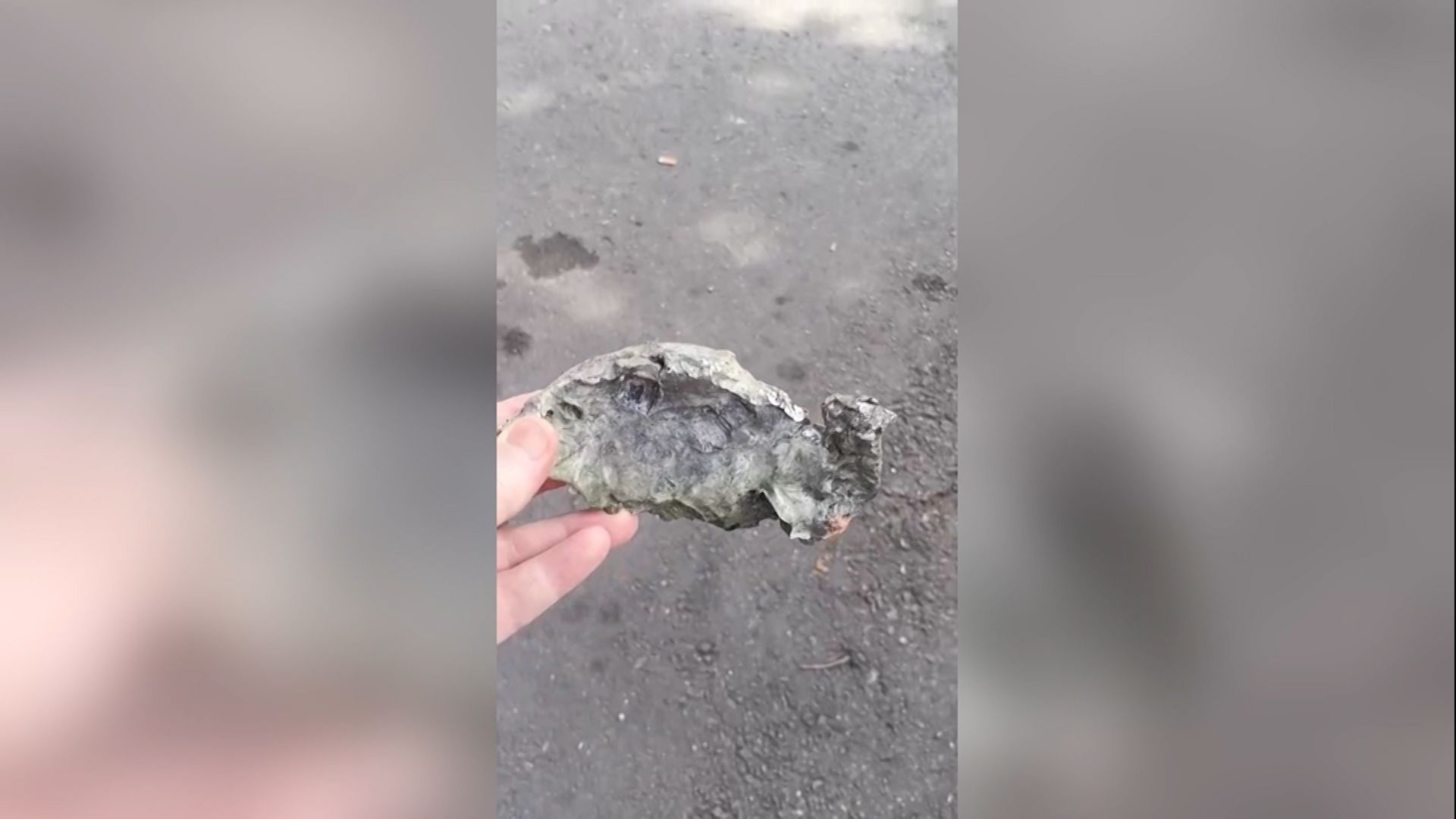
In the aftermath of US airstrikes early Saturday, residents of Caracas awoke to streets littered with debris and visible signs of explosions.
One resident, a surgeon who asked to remain anonymous for security reasons, shared video with CNN showing shattered building walls, punctured vehicles and fragments he identified as missile shrapnel.
As Venezuelans cautiously take stock of the destruction, many are grappling with apprehensions about who will govern the country.
Another Caracas resident, who also requested anonymity, said civilians’ fear is palpable. “We cannot let our guard down because you can always be put in prison for dissenting with the government in any way,” she told CNN.
She said overall anxiety now mostly centers on what a transition would look like.
The woman said she thought Machado, the opposition leader who won the Nobel Peace Prize last year, would be at the helm. But in a news conference earlier, US President Donald Trump said Maduro’s vice president, Delcy Rodríguez, was being sworn in.
“She is a terrifying figure of the government,” the Caracas resident said of Rodríguez. “She’s the head of many of the most oppressive tactics that have been applied to Venezuelans.”
“I don’t know how much sense it makes to remove Maduro but leave them in charge — or her in charge,” she said.
She cited the vice president’s brother, National Assembly President Jorge Rodríguez, saying, “I don’t see that making much sense.” She added that she is also “terrified” of Interior Minister Diosdado Cabello because of his involvement with the military.
White House account posts video of apparent perp walk by Maduro
The White House’s official rapid response account posted video of what appeared to be a perp walk by ousted Venezuelan leader Nicolás Maduro.
“Perp walked,” Rapid Response 47 wrote above the video, which shows Maduro, in a black hooded sweatshirt, walking down a hallway with a blue carpet labeled “DEA NYD.” Maduro was processed and fingerprinted at the Drug Enforcement Administration office in Manhattan.
The video shows Maduro, handcuffed and walking alongside DEA agents, attempting to speak English after arriving on American soil.
“Good night,” he says.
He then questions himself in Spanish, saying, “Es buenas noches, no?” — which translates to, “That is good night, no?”
Maduro repeats “good night” to those in the room before adding, “Happy New Year,” with a slightly more animated tone.


This post has been updated with additional information.
Maduro arrives at the Metropolitan Detention Center in Brooklyn
Venezuelan President Nicolás Maduro has arrived at the Metropolitan Detention Center in Brooklyn after he was brought by helicopter to Manhattan and escorted to the facility by a motorcade of law enforcement vehicles, according to law enforcement officials.
A massive crowd of people were seen gathering outside the facility, many of whom were seen cheering and holding up Venezuelan flags, along with a large law enforcement presence.
Maduro is set to face drugs and weapons charges in a Manhattan federal court next week.
Remember: Several key figures in high-profile federal cases, such as Sean “Diddy” Combs and Sam Bankman-Fried, have been held at the detention center.
Top defense lawyers already angling to represent Maduro, CNN legal analyst says
Top criminal defense lawyers are already angling to represent Nicolás Maduro, the president of Venezuela captured by US forces to face charges in Manhattan federal court, according to CNN senior legal analyst Elie Honig.
Maduro’s legal case is attractive to high-powered defense lawyers for a few reasons, Honig told CNN’s Kaitlan Collins on Saturday.
First, the case is “extremely high stakes.”
Additionally, the Venezuelan president “is obviously a very wealthy individual who can pay top dollar for his defense team.”
The case is also going to be “massively high profile” — and “big-time criminal defense lawyers like to be involved in big-time cases.”
Finally, the case will likely involve “novel constitutional and international law arguments” that “some of these defense lawyers would like a chance to argue,” Honig said.
“We’ve really seen very little like this,” he said.