Our live coverage has ended
• Follow the latest updates on the war in Iran here.
What we know so far
• Threat of retribution: President Donald Trump threatened to “blow up” the world’s largest gas field, a key Iranian asset, if Iran keeps up its attacks on Qatar. He also said the US “knew nothing” about Israel’s plan to strike the South Pars field yesterday. Oil prices surged again as energy facilities in the region came under attack.
• Diplomatic showdown: Saudi Arabia said it “reserved the right to take military action” against Tehran while Qatar expelled Iran’s military and security attachés.
• Fire onboard: A vessel has been reported struck by an “unknown projectile” late Wednesday off the east coast of the UAE near the Strait of Hormuz, UK’s maritime agency said.
• Intel assessment: A day after his resignation, former Trump administration counterterrorism chief Joe Kent said there was “no intelligence” that Iran was going to launch a “big sneak attack” akin to 9/11 or Pearl Harbor.
Trump threatens to "blow up" Iran's largest gas field if attacks on Qatar continue

President Donald Trump tonight threatened to “massively blow up” Iran’s largest gas field, South Pars, if the nation continues attacks on Qatar in retaliation for an Israeli strike on the gas field.
“Israel, out of anger for what has taken place in the Middle East, has violently lashed out at a major facility known as South Pars Gas Field in Iran,” Trump posted on Truth Social.
“The United States knew nothing about this particular attack,” he said, adding that Qatar was similarly unaware. “Unfortunately, Iran did not know this, or any of the pertinent facts pertaining to the South Pars attack, and unjustifiably and unfairly attacked a portion of Qatar’s LNG Gas facility.”
Trump said Israel would not attack the gas field again unless Iran strikes an innocent party, “in which instance,” he said, “the United States of America, with or without the help or consent of Israel, will massively blow up the entirety of the South Pars Gas Field at an amount of strength and power that Iran has never seen or witnessed before.”
Some context: Iran’s Islamic Revolutionary Guard Corps (IRGC) on Wednesday accused the US and Israel of targeting its oil and gas facilities, including the South Pars natural gas field, the world’s largest.
Iran struck the Ras Laffan Industrial City, Qatar’s main energy hub, with ballistic missiles hours after an earlier attack, the Qatari Ministry of Defense said early Thursday. State-owned QatarEnergy said the hub sustained extensive damage after the attacks.
Qatar says main energy hub sustained "extensive damage" from Iranian attacks

Qatar’s main energy hub, the Ras Laffan Industrial City, has sustained extensive damage after being attacked by Iranian missiles twice in 12 hours, state-owned QatarEnergy said.
Ras Laffan, an industrial hub about 80 kilometers (50 miles) north of Doha, is a bedrock of the Persian Gulf state’s economy and the largest liquefaction facility in the world, according to the International Energy Agency.
Qatar’s rescue department was responding to the fire, the interior ministry said.
Ras Laffan had already sustained “extensive damage” in another strike on Wednesday, QatarEnergy said.
There were no reported casualties from either attack.
The attacks followed a warning by Iran’s Revolutionary Guards, saying Iran’s enemies should “await the powerful action” of the country’s armed forces, after blamed the United States and Israel for an attack on Iran’s own fuel and energy infrastructure.
Asian markets slide as strikes on energy infrastructure send oil prices surging


Asian stock benchmarks declined on early Thursday as Iran struck major energy facilities in the Middle East, sending oil prices above $110 per barrel.
Japan’s benchmark Nikkei 225 index sank 2.7% in early trading, while South Korea’s Kospi lost 2.6%. Hong Kong’s Hang Sang index dropped 1.4%, and Taiwan’s Taiex was down 1.4%.
Foreign ministers of 12 Arab and Islamic states call on Iran to "immediately halt its attacks"

The foreign ministers of 12 Arab and Islamic states called on Iran to “immediately halt its attacks” and respect international law, in a joint statement released Thursday after their meeting in the Saudi capital Riyadh.
In the statement, the ministers denounced Iran’s attacks on the Gulf states, Jordan, Azerbaijan and Turkey, which they said had targeted “residential areas, civilian infrastructure, including oil facilities, desalination plants, airports, residential buildings and diplomatic premises.”
The ministers also condemned Israel’s attacks on Lebanon and “reaffirmed support for the security, stability and territorial integrity of Lebanon.”
The joint statement came as Iran targeted energy infrastructure across the Gulf, with fires reported at facilities in Qatar and ballistic missiles intercepted in Saudi Arabia.
Earlier, Iranian state media accused the US and Israel of attacking parts of its oil and natural gas production facilities.
The statement was issued on behalf of ministers representing Azerbaijan, Bahrain, Egypt, Jordan, Kuwait, Lebanon, Pakistan, Qatar, Saudi Arabia, Syria, Turkey and the United Arab Emirates.
Macron calls for moratorium on striking energy and water facilities

French President Emmanuel Macron has called for a moratorium on strikes targeting civilian infrastructure, including energy and water facilities, after attacks Wednesday on energy infrastructure in Persian Gulf countries.
Macron said he spoke to US President Donald Trump and Qatari Emir Sheikh Tamim bin Hamad Al-Thani following the strikes on oil and gas production facilities in Qatar and Iran.
Iran’s Islamic Revolutionary Guard Corps (IRGC) on Wednesday accused the US and Israel of targeting its oil and gas facilities, including the South Pars natural gas field.
Saudi Arabia has “reserved the right to take military actions” against Iran, FM says

Saudi Arabia has “reserved the right to take military actions” against Iran if deemed necessary, Foreign Minister Prince Faisal bin Farhan told reporters Thursday after a meeting with Arab and Islamic foreign ministers about Iranian attacks in the region.
“Iran’s message today was quite clear… The targeting of Riyadh, while a number of diplomats are meeting, I cannot see as coincidental,” the Foreign Minister said, hours after Saudi air defenses intercepted ballistic missiles over the capital.
“It doesn’t believe in talking to its neighbors. It tries to pressure its neighbors. And what I can say, categorically, that’s not going to work.”
Saudi Arabia “is not going to succumb to pressure,” bin Farhan added, saying the pressure will “backfire.”
“We have reserved the right to take military actions, if deemed necessary, and if the time comes, the leadership of the Kingdom will take the necessary decision. We will not shy away from protecting our country and our economic resources.”
Iran turned its attention to attacks on energy facilities in the region Wednesday after accusing the US and Israel of targeting oil and gas facilities – including the South Pars natural gas field, the world’s largest.
Two refineries in Riyadh “were attacked,” bin Farhan said. An Iranian missile strike also caused “extensive damage” at Qatar’s Ras Laffan Industrial City, a key natural gas processing facility.
Global oil prices surged, hitting $110 per barrel, as the sthrikes on energy infrastructure across the Middle East jolted markets.
Contradictions between US intelligence chiefs and Trump over Iran's retaliation
CNN’s Zachary Cohen reports how top US intelligence officials appeared to contradict President Donald Trump’s previous claim that “nobody” expected Iran to retaliate against allies in the Middle East.

In testimony at the Senate Worldwide Threats hearing, US top intelligence officials appear to contradict President Trump’s previous claim that “nobody” expected Iran to retaliate against allies in the Middle East. CNN’s Zachary Cohen reports.

Fire onboard after vessel struck near United Arab Emirates, UKMTO says
A vessel has been reported struck by an “unknown projectile” late Wednesday off the east coast of the United Arab Emirates near the Strait of Hormuz, the UK Maritime Trade Operations (UKMTO) centre said early Thursday.
The vessel was hit in the Gulf of Oman 11 nautical miles east of Khor Fakkan, in the UAE, resulting in a fire on board, according to the maritime authority with responsibility for the region.
More than 20 oil tankers, cargo ships and other vessels have reported incidents in and around the Arabian Gulf, Strait of Hormuz and Gulf of Oman since the war began, according to previous UKMTO figures.
Kent says he spoke with Trump prior to departure

Former US National Counterterrorism Center Director Joe Kent said tonight he spoke directly with President Donald Trump prior to his departure from the administration, calling the president “very respectful” and “very kind” in their conversation.
“I spoke with him before I departed the administration,” Kent told Tucker Carlson, adding, “It went great. I mean, not the best conversation ever. You know, I told him why I was leaving. He heard me out.”
Kent welcomed the prospect of speaking with Trump again, noting that he believes he and the president “departed personally on good terms.”
CNN previously reported that Kent met with Vice President JD Vance on Monday, laying out why he intended to step down over concerns about the war in Iran and presenting his resignation letter.
Senate Republicans again reject effort to rein in Trump over Iran war

Republicans again rejected a resolution aimed at requiring President Donald Trump to seek congressional approval for future US military action against Iran.
The Senate voted 47 to 53 to put down the measure, with GOP Sen. Rand Paul joining with Democrats in voting to advance it, and Democratic Sen. John Fetterman voting with Republicans to block it.
This is the second time since the current conflict between the US and Iran started that Democrats have forced an unsuccessful vote over Iran war powers. Democrats have pledged to keep forcing votes until Secretary of State Marco Rubio and Secretary of Defense Pete Hegseth publicly testify about Iran on Capitol Hill. To date, the GOP-led Congress has not held any open oversight hearings on the conflict, although there have been classified sessions for members.
Even if the measure had advanced, it faced an uphill battle on Capitol Hill, as it would have needed to withstand a full amendment process in the Senate before moving to the House, and then a likely presidential veto that requires a two-thirds vote to override.
GOP senators’ decision to shield the president comes after Trump had railed against five members of the party who voted to advance a previous war powers resolution on military action in Venezuela. Of those five, only one — Paul — voted again to check the president’s powers.
Kent says former Supreme Leader Ali Khamenei was moderating Iran's nuclear program

Former Trump administration counterterrorism chief Joe Kent said the late Iranian Supreme Leader Ali Khamenei had been moderating the country’s nuclear program ahead of his death.
“I’m no fan of the former supreme leader, you know, Ali Khamenei, however, he was moderating their nuclear program. He was preventing them from getting a nuclear weapon,” Kent told former Fox News host and influential conservative podcaster Tucker Carlson in his first interview since his resignation.
“If you take him out, if you kill him aggressively, people are going to rally around that regime,” Kent added.
Asked by Carlson if Iran was on the verge of getting a nuclear weapon, Kent replied,“No, they weren’t,” before adding that Iran’s strategy was “to not completely abandon the nuclear program.”
Khamenei, who ruled Iran with an iron fist as its supreme leader for nearly four decades, was killed last month in joint US and Israeli strikes.
Iran-backed militia announces pause in attacks on US Embassy in Baghdad – with conditions


A powerful Iran-backed Iraqi militia has said it will pause attacks on the US Embassy in Baghdad – but only if the US and Israel meet certain conditions.
The US Embassy in Baghdad has faced multiple rocket and drone attacks since the war with Iran began nearly three weeks ago, with Iran-backed militias claiming responsibility.
The militia Kataib Hezbollah said it would pause attacks for a five-day period, but if its conditions were not met it would respond with “intensified” attacks.
Chief among its demands was an end to what it described as Israel’s “displacement of civilians and bombardment” in Beirut’s southern suburbs.
It also called for a halt to airstrikes on residential areas in Baghdad and other Iraqi provinces and demanded that CIA personnel stop operating outside the embassy and remain confined to the compound, with limited exceptions.
Dozens of militia fighters have been killed in strikes across the country since March 1. Iraqi authorities and militia groups have often blamed the US and Israel for the attacks.
Kent: "key decision makers" couldn't express opinions to Trump in prelude to Iran war

Former US National Counterterrorism Center Director Joe Kent said today that a “good deal of key decision makers were not allowed to come and express their opinion” to President Donald Trump in the lead up to war with Iran.
“In the lead up to this last iteration, good deal of key decision makers were not allowed to come and express their opinion to the president,” Kent told former Fox News host Tucker Carlson in an interview, noting that there was “robust debate” preceding US strikes on Iranian nuclear sites last year.
By contrast, the intelligence community’s ability to offer a “sanity check” when briefing the president “was largely stifled in this second iteration,” Kent said.
“They had that discussion, you know, behind closed doors, and there wasn’t a chance for any dissenting voices to come,” he said later on in the podcast.
Gas operations at key UAE facilities suspended temporarily due to falling debris

Gas operations at crucial energy sites in Abu Dhabi were temporarily suspended after debris from intercepted missiles fell on the facilities, according to the Abu Dhabi Media Office.
The media office said emergency teams were “responding to incidents” at the Bab oil field and the Habshan gas complex – home to one of the world’s largest onshore gas processing facilities.
No injuries were reported.
Kent says Israel drew US into Iran war

Joe Kent, who resigned as head of National Counterterrorism Center over concerns about the Iran war, said Wednesday that he felt Israel had pulled the US into the conflict and was broadly influencing American policy in the Middle East.
Kent pointed to comments from Secretary of State Marco Rubio, who argued earlier this month that Iran was an imminent threat because the US believed Iran would hit back if Israel attacked. He cast Rubio’s thinking as flawed, because, he said, there was no reason to believe Iran was going to attack without being provoked.
Kent’s comments came in an interview with Tucker Carlson – his first since resigning. Carlson has similarly been skeptical of the US involvement in Iran.
Kent, whose checkered past includes giving an interview to a Nazi sympathizer and White nationalist when he ran for a congressional seat, had focused extensively on Israel in his resignation letter. The message drew significant criticism for being antisemitic, including from GOP Sen. Mitch McConnell, who had voted to confirm Kent to his post.
“He said it would be an honor to return to the fight against terrorism, and he pledged to lead with integrity and accountability,” he recalled of Kent’s confirmation hearing last year in a post on X. “The virulent anti-Semitism of his resignation letter makes it clear that Mr. Kent is incapable of upholding these pledges.”
Correction: This post has been updated to properly attribute a question to Carlson and a response to Kent.
Kent says there was “no intelligence” Iran was prepared to launch “big sneak attack”

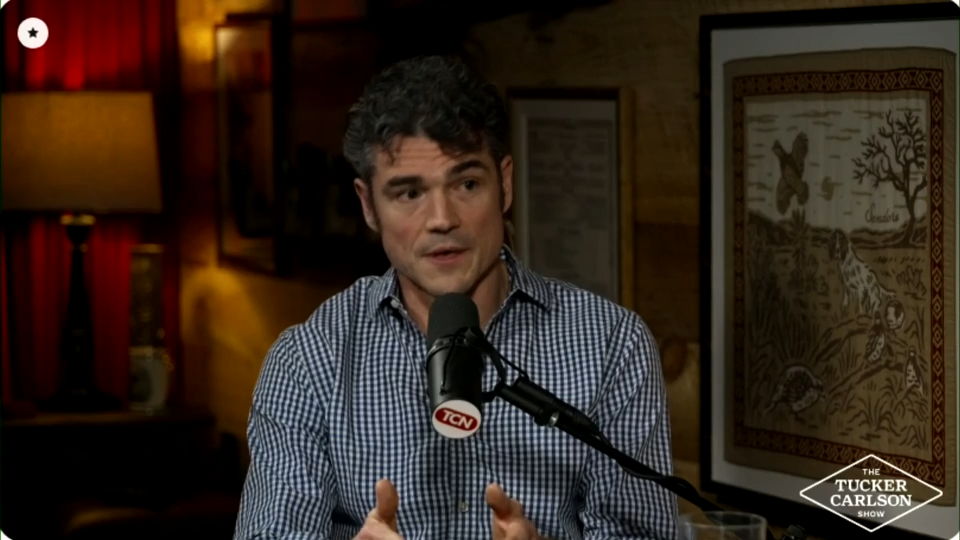
Former Trump administration counterterrorism chief Joe Kent said in an interview Wednesday, just one day after resigning from his role, that there was “no intelligence” that Iran was going to launch a “big sneak attack” akin to 9/11 or Pearl Harbor.
“There was no intelligence that said, hey, on whatever day it was, March 1st, the Iranians are going to launch this big sneak attack, they’re going to do some kind of a 9/11, Pearl Harbor, etc. They’re going to attack one of our bases. There was none of that intelligence,” Kent said in an interview with former Fox News host and influential conservative podcaster Tucker Carlson.
“Again, back to what we know about the Iranians. They’re very, very deliberate with the escalation ladder,” Kent said.
Kent announced Tuesday that he was resigning from the administration due to disagreements over the Iran war.
The White House has repeatedly cited an “imminent nuclear threat” posed by Iran as an impetus for launching strikes against the country.
Foreign national killed in Iranian missile attack, Israel says

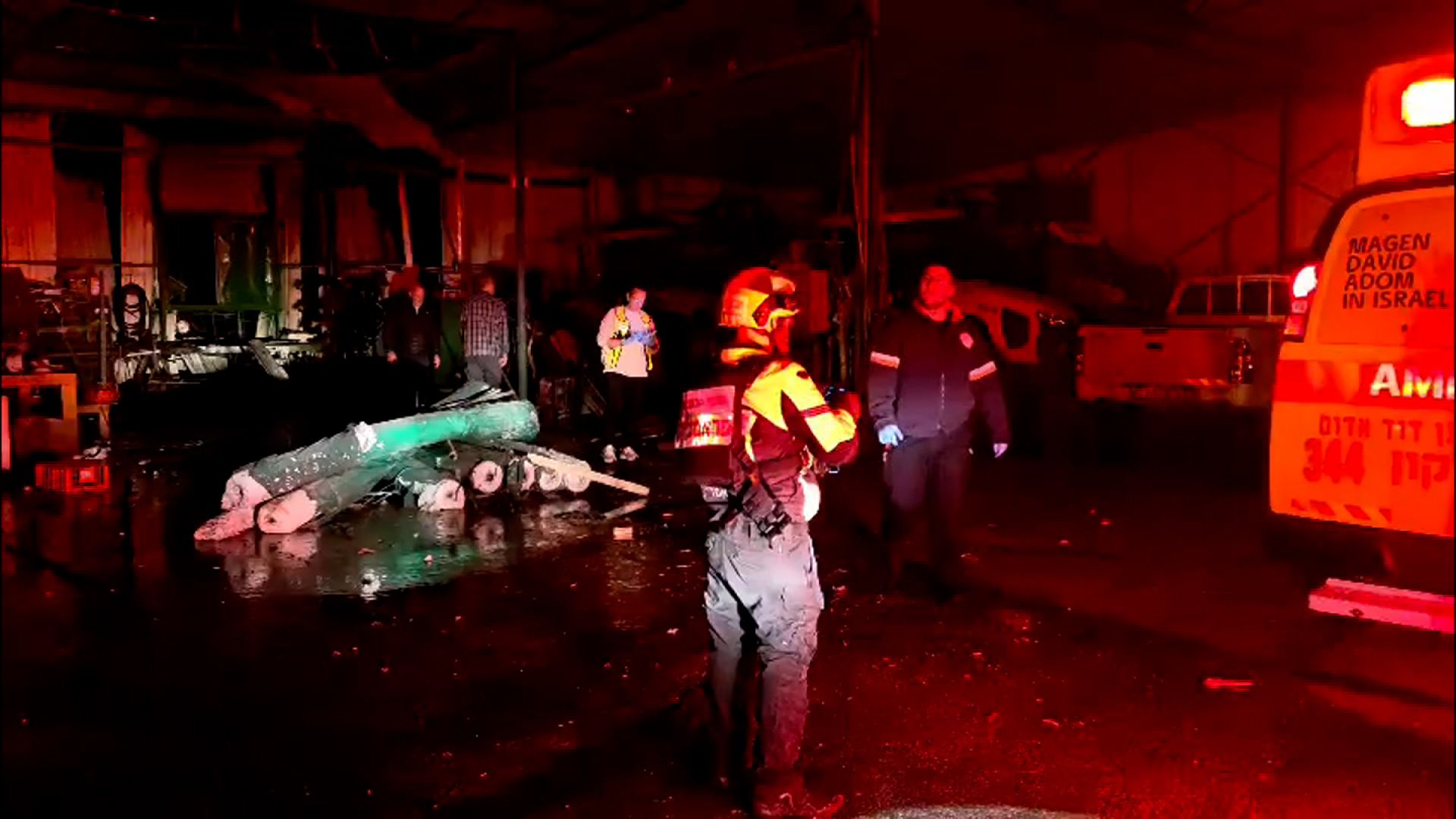
A foreign national has been killed in an Iranian missile attack, Israel’s emergency services said.
A 30-year-old man was pronounced dead after sustaining shrapnel injuries in the southern Sharon region.
Israeli authorities have not specified the man’s nationality, or said whether the missile fired was intercepted or made impact.
The Israeli military said it had identified missiles launched from Iran and that air defenses were working to intercept the attack.
Impacts were seen across central Israel.
Speaker Johnson maintains US mission in Iran “will come to a close very soon”

Speaker Mike Johnson on Wednesday maintained the US mission in Iran would soon come to a close, echoing President Donald Trump’s messaging about the conflict even as violence in the region has persisted.
Asked by CNN about the price tag of the war, the speaker responded he did not think it could be calculated yet because “the operation is still ongoing.”
He later acknowledged to reporters the closure of the Strait of Hormuz, a critical waterway for passage of much of the world’s oil supply, has complicated the timeline.
“This Strait of Hormuz thing is dragging it out a little bit,” he told reporters.
See what locations have been struck across the Middle East in the war
Nearly twenty days in, US-Israeli attacks against Iran continue as Tehran retaliates with strikes across the region, including against US-allied Gulf states. Israel and Lebanon-based Hezbollah are also trading blows in the deepening conflict.