Our live coverage has ended
Follow the latest updates on the war in Iran here.
What we know so far
• Top officials killed: Iran has vowed revenge for the killing of one of its most powerful decision-makers, Ali Larijani, who died in an Israeli strike Tuesday. The head of Basij, Iran’s feared paramilitary force, has also been killed.
• Strikes continue: At least two people died in an Iranian ballistic missile attack in central Israel. The US, meanwhile, dropped 5,000-pound guided bombs on Iranian missile sites along the Hormuz strait. There have also been renewed attacks at the US Embassy in Baghdad.
• Marines on their way: A US warship believed to be carrying Marines and sailors to the Middle East was nearing the Malacca Strait off Singapore as it made its way to the region, maritime tracking data showed Tuesday.
• Intel official resigns: A senior US intelligence official appointed by President Donald Trump abruptly announced his resignation, citing misgivings about the administration’s war with Iran. Trump called his resignation a “good thing.”
Debris impacts at several sites after Iran fired more missiles at Israel

Multiple locations in central Israel have been struck by falling debris, Israeli police said, after a new wave of missiles launched from Iran were detected.
“Officers from the Tel Aviv district, Border Police fighters and bomb disposal teams are currently dealing with several locations where items of weaponry have fallen within the district,” a police spokesperson said just before 5 a.m. local time on Wednesday.
Video from emergency services showed debris in a residential street and a vehicle on fire.
No casualties have been reported, police said, adding that officers were working to isolate impact sites.
Two people were killed in central Israel earlier on Wednesday morning, after another Iranian missile strike.
Death toll rises in Lebanon as Israel announces attacks across the country

At least 17 people were killed and dozens injured by Israeli strikes across Lebanon Tuesday night as Israel’s military said it was launching attacks across the country.
Beirut: In the Lebanese capital six people were killed and 24 injured in two Israeli strikes, according to The Ministry of Public Health’s Emergency Operations Center. Remains were also recovered from the scene and their identities will be determined after DNA testing is completed.
Southern Lebanon: An airstrike on the town of Haboush in the Nabatieh district killed three and injured one, according to the ministry. Search operations are still underway to remove debris and locate eight missing people. Four Syrian nationals were also killed in a separate attack in the nearby town of Jebchit.
Beqaa Valley: Four people were killed and seven injured in an Israeli attack on Baalbek in Lebanon’s northeast.
Israel said it had launched strikes targeting Hezbollah’s “rocket launching cells and launchers,” in a statement on Tuesday.
At least 850 people have been killed in Lebanon and more than 1 million have been internally displaced since the conflict began, according to Lebanese authorities.
Deadly Iranian missile strike targets Tel Aviv

Earlier on Wednesday, two people were killed in central Israel after an Iranian ballistic missile attack.

CNN cameras captured what appeared to be a cluster munition in the skies over central Israel. CNN's Jeremy Diamond reports on the ground in Tel Aviv.

Trump to attend dignified transfer tomorrow


President Donald Trump will attend a dignified transfer at Dover Air Force Base in Delaware tomorrow afternoon, according to a schedule released by the White House.
Ohio Governor Mike DeWine said tonight that he and his wife will also attend the transfer “to pay our respects” to the three Ohio service members killed when their refueling aircraft crashed in western Iraq last week. A total six US service members died in the crash, which the US military said was “not due to hostile fire or friendly fire.”
Earlier this month, Trump attended the dignified transfer of six US Army Reserve soldiers who were killed in an Iranian drone strike in Kuwait. He was joined by first lady Melania Trump and Vice President JD Vance as well as top military officials.
Iran vows retaliation for Ali Larijani's killing


Iran has vowed revenge for the killing of its top national security advisor Ali Larijani.
Sardar Mousavi, the commander of Iran’s Islamic Revolutionary Guard Corps’ Aerospace Force, announced a “rapid strike,” saying “tonight, the enemy’s sky will become more spectacular for you,” according to Iranian state media.
The IRGC later said it had launched “intense” attacks against Israel “in retaliation” for Larijani’s killing.
Commander-in-chief of Iran’s army, Maj. Gen. Amir Hatami, said Iran’s response to Larijani’s death will be “decisive and regrettable,” adding that “the blood of this exalted martyr and other esteemed martyrs will be avenged,” according to the state-affiliated Tasnim news agency.
Maj. Gen. Ali Abdollahi, the commander of Iran’s Khatam al-Anbiya Central Headquarters, said US President Donald Trump “must wait for our surprises” and that the armed forces’ response will be “more devastating than the actions and imagination of the enemy, and this path will continue until his surrender,” Tasnim reported.
Senior Iranian advisor, Ali Akbar Velayati, said Iran will “deliver a strong blow to the sinister face of global arrogance,” referring to the US and Israel, Tasnim reported.
Renewed attacks on US Embassy in Baghdad


Drone and rocket attacks resumed around the United States Embassy in Baghdad early Wednesday morning local time, a local security official told CNN.
The attacks caused some damage around the embassy, which is located in the fortified Green Zone in central Baghdad, according to the official.
Security officials also told CNN that two rockets targeting the embassy were brought down.
The embassy and other US-linked sites have faced a series of drone and rocket attacks since the US and Israel began a military campaign against Tehran nearly three weeks ago.
In early March the embassy ordered all of its non-essential staff to leave due to security concerns.
US military dropped new 5,000-pound, GPS-guided bomb on underground Iranian missile sites

The US military dropped 5,000-pound guided bombs designed to penetrate targets deep underground on Iranian missile sites along the Strait of Hormuz on Tuesday, US Central Command announced on X.
“Hours ago, US forces successfully employed multiple 5,000-pound deep penetrator munitions on hardened Iranian missile sites along Iran’s coastline near the Strait of Hormuz,” CENTCOM said. “The Iranian anti-ship cruise missiles in these sites posed a risk to international shipping in the strait.”
A US official said the munitions were the GBU-72 Advanced 5K Penetrator, a bomb released by US aircraft for the first time in 2021. The GBU-72 “was developed to overcome hardened deeply buried target challenges,” an Air Force release said in 2021. In a video posted on Facebook on 2023 from Nellis Air Force Base, airmen described the munition as “nothing like anything we have right now.”
“This is a GPS-guided kit, instead of laser guided, so rain, shine, snow — it’ll hit target,” Air Force Staff Sgt. Zachary Schaeffer said in the 2023 video.
The Strait of Hormuz has been effectively closed due to threats from Iran to target ships from the US, Israel and their allies. Adm. Brad Cooper, commander of CENTCOM, said Monday that the US would “continue to rapidly deplete Iran’s ability to threaten freedom of navigation in and around the Strait of Hormuz.”
Two killed by Iranian ballistic missile in central Israel, emergency response service says

Two people were killed in an Iranian ballistic missile attack in central Israel, according to Israel’s emergency response service.
Paramedics from Magen David Adom (MDA) arrived at the scene in the city of Ramat Gan and declared the death of a man and a woman who suffered severe shrapnel injuries. Video from MDA showed a partially destroyed building and a street covered with debris from the impact.
CNN cameras captured what appeared to be a cluster munition in the skies over central Israel, with impact sites reported at Tel Aviv’s Savidor train station, as well as the nearby cities of Petah Tikva, Rosh HaAyin and Kafr Qasim. The video appeared to show dozens of bomblets disbursing in the sky before making impact.
Shrapnel from the missile also hit the city of Beni Brak just north of Tel Aviv and injured one person lightly, MDA said
Iran has "potential leaders" who can lead it in "right direction," Israel's UN envoy says


Israel’s Ambassador to the United Nations Danny Danon has said there are alternative leaders in Iran who could open the door to diplomacy.
Asked whether Israel has identified any Iranian leaders it would be willing to negotiate with, Danon declined to name individuals but made clear such figures exist.
But Danon added that any diplomatic path would depend on a change in leadership direction.
“But if there will be an opening and we will see someone who is actually willing to change course, you know, we believe in diplomacy and we understand that the next stage, after we retarget this regime, will be using diplomacy and peaceful measures,” he said.
Senior intelligence official met with Vance and Gabbard day before resigning over Iran war



National Counterterrorism Center director Joe Kent met with Vice President JD Vance on Monday, laying out why he intended to step down from his intelligence job over concerns about the war in Iran and presenting his resignation letter, according to two White House officials and a person familiar with the matter.
The meeting came one day before Kent posted the letter publicly to X in a remarkable public break with the White House.
The person familiar with the meeting said Vance and Director of National Intelligence Tulsi Gabbard were in the room as Kent laid out his reasoning for resigning, and the White House officials said Vance encouraged Kent to speak with Susie Wiles, Trump’s chief of staff, before formally submitting his letter.
One of the White House officials told CNN Kent did ultimately speak with Wiles before announcing his resignation publicly.
The meeting is notable given Gabbard, Vance and Kent all have expressed similar anti-interventionist views in the past.
Vance’s office declined to comment. The White House pointed CNN to Press Secretary Karoline Leavitt’s statement earlier Tuesday criticizing Kent and pushing back on his assertion that there was no imminent threat that necessitated US strikes in Iran. CNN has reached out to the Office of the Director of National Intelligence for comment.
The Washington Post first reported on the meeting between Vance and Kent.
Iran says “hostile projectile” hit nuclear power plant site
Iran’s Atomic Energy Organization said a “hostile projectile” struck the site of the Bushehr Nuclear Power Plant in western Iran on Tuesday, but reported no casualties and no damage to the facility.
In a statement carried by Iranian media, the organization said the country’s Nuclear Safety Center had confirmed the incident and found that it caused “no financial, technical, or human damage,” adding that “no part of the power plant was damaged.”
The organization said the projectile struck the plant’s grounds at around 7 p.m. local time but did not say which country was behind the attack.
“Such actions are against all international regulations on immunity of nuclear facilities from military attacks and can have irreparable consequences for the entire region, including the countries bordering the Persian Gulf,” the statement said.
The International Atomic Energy Agency (IAEA) said Iran had informed it about the strike and that it had caused no damages or injuries.
The nuclear watchdog said its Director General Rafael Grossi “reiterates (his) call for maximum restraint during the conflict to prevent risk of a nuclear accident.”
CNN has reached out to the Israeli army and the US Department of Defense for comment.
Israel works to intercept missiles from Iran
Israel said it was working to intercept a new salvo of missiles launched from Iran.
Air raid sirens have been heard in Tel Aviv and Jerusalem. CNN teams in both cities witnessed flashes in the night sky, including what appeared to be a cluster munition missile over Tel Aviv.
Israeli fire and rescue teams were on their way to several impact sites in the greater Tel Aviv area, authorities said.
CNN’s Cyril Theophilos, Abeer Salman and Dana Karni contributed to this report.
Second day of attacks on US embassy in Iraq as Baghdad vows to track down "outlaw groups"
The US Embassy in Baghdad came under attack for a second day in a row on Tuesday, according to Iraqi security officials.
The renewed attacks came as the Iraqi army vowed to track down the “outlaw groups” behind the violence.
“Once again, outlaw groups have carried out a criminal act of aggression by targeting the headquarters of the United States Embassy in the capital, Baghdad, this evening,” the Iraqi army statement said.
“This criminal act, condemned and rejected by the state, constitutes a blatant terrorist assault on Iraq’s sovereignty and authority,” the statement added, vowing to track down “the perpetrators and bring them to justice so that they receive their fair punishment.”
Security officials said the embassy compound was targeted by at least four projectiles, including two drones, with at least one landing in the vicinity of the compound. Earlier Tuesday, air defense systems intercepted another projectile aimed at the embassy, the officials said.
In a separate incident, two projectiles were fired at a US diplomatic facility near Baghdad International Airport. Air defense systems were activated in response, but officials said they could not immediately provide further details on the outcome or any damage.
The Islamic Resistance in Iraq – an umbrella group comprising several Iran-backed militias – claimed on Tuesday that it had carried out 47 attacks using dozens of drones and rockets against US-linked sites inside and outside Iraq. CNN cannot independently verify the group’s claim.
It's past midnight in Tehran. Here's what you should know

Tehran has confirmed that its top security official Ali Larijani, secretary of Iran’s Supreme National Security Council, has been killed. The council said Larijani, who had emerged as one of the most important figures in Iran in recent months, died alongside several others, including his son and security personnel.
It comes after the Israeli military said it killed Gholamreza Soleimani in a targeted strike on Monday, saying his death was “an additional significant blow to the regime’s security command-and-control structures.”
Catch up on the latest:
- More strikes: Israel said on Tuesday it continued striking Hezbollah targets across Lebanon, including what it said were “weapon storage facilities, launchers and launching sites, terrorists, and structures belonging to the organization.” Also, The Israel Defense Forces (IDF) said it would continue to target anyone who “poses a threat to the state of Israel,” including Iran’s new Supreme Leader Mojtaba Khamenei.
- Help from Ukraine: Ukraine’s President Volodymyr Zelensky said on Tuesday that 200 Ukrainian air defense experts are currently in the Middle East helping to counteract Iranian drone attacks.
- Evacuation order: A new evacuation order issued by the Israeli military has sparked an exodus of people from the coastal Lebanese city of Tyre and surrounding villages and refugee camps, with photos shared on social media showing large traffic jams of cars on roads leading out of the city.
- Conversations out of Tehran: Tehran is in discussions with eight countries outside the Middle East over its offer to grant safe passage to oil traded in the Chinese currency, an Iranian security source told CNN.
- A State Department order: The US State Department on Tuesday ordered all diplomatic posts to “immediately” review their security postures amid the volatile situation in the Middle East “and the potential for spill-over effects,” according to a diplomatic cable sent worldwide and seen by CNN.
CNN’s Ivana Kottasova, Catherine Nicholls, Tala Alrajjal, Morgan Rimmer, Lauren Fox, Dana Karni, Frederik Pleitgen, Mohammed Tawfeeq, Eugenia Yosef, Tal Shalev, Dana Karni, Jennifer Hansler, Mostafa Salem, Emily R. Condon, Nadeen Ebrahim contributed reporting.
Residents flee Tyre after Israel orders evacuation of the Lebanese city

A new evacuation order issued by the Israeli military has sparked an exodus of people from the coastal Lebanese city of Tyre and surrounding villages and refugee camps, with photos shared on social media showing large traffic jams of cars on roads leading out of the city.
“Hezbollah’s terrorist activities are forcing the (Israel Defense Forces) to act against it with force. The IDF does not intend to harm you,” the IDF’s spokesperson Col. Avichay Adraee said in a post on X.
Israel issued an evacuation warning for Tyre last week, but some residents of Lebanon’s fourth largest city defied the orders and stayed.
Tehran confirms top security official Ali Larijani has been killed

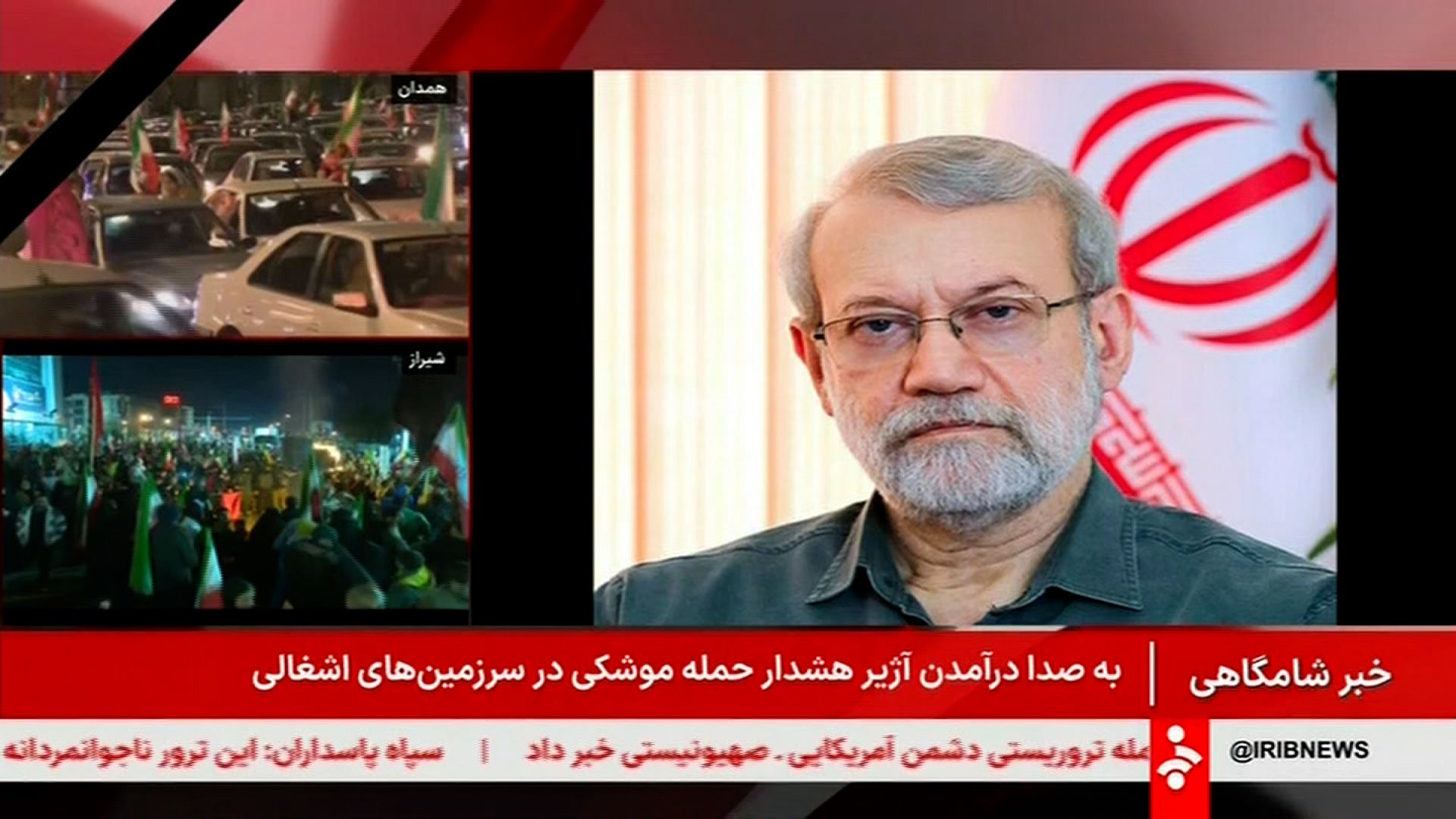
Tehran has confirmed that its top security official Ali Larijani, secretary of Iran’s Supreme National Security Council, has been killed.
The Supreme National Security Council of Iran announced the death of Larijani in a statement early Wednesday local time, describing him as having been killed and “martyred” following a lifetime of public service.
It comes after Israeli Defense Minister Israel Katz said Larijani had been “eliminated” Monday night.
The council said Larijani, who had emerged as one of the most important figures in Iran in recent months, died alongside several others, including his son and security personnel.
The statement praised Larijani’s long political career, describing him as a figure who “until the very last moments of his life” worked toward the advancement of Iran and called for unity in the face of external threats.
Earlier Tuesday, Iran also confirmed the head of its Basij paramilitary force, Gholamreza Soleimani, had been killed in what it called “a terrorist attack by the American-Zionist enemy.”
Funerals for both Larijani and Soleimani will be held on Wednesday, according to Iran’s semi-official Mehr news agency.
Iran’s Fars news agency said President Masoud Pezeshkian expressed “deep sorrow and regret” at Larijani’s death.
“I saw nothing from him but benevolence, insight, companionship, and foresight,” Fars quoted him as saying. “Undoubtedly, it is very difficult to compensate for this loss.”
MAGA media is divided over Joe Kent’s resignation

Joe Kent’s resignation as director of the National Counterterrorism Center over the Iran war has split key voices in the MAGA movement.
Candace Owens and Megyn Kelly, two right-wing media figures who have broken with President Donald Trump on issues in recent months, posted in support of Kent’s move.
Owens took to X to say that Kent is “an American hero, patriot and veteran” while “Trump is a shameful President” in a post that also attacked Israeli Prime Minister Benjamin Netanyahu. Kelly, for her part, reposted Kent’s resignation announcement and at least three other posts highlighting his military and career achievements and that he is a Gold Star husband.
But just as polls show most Republicans still back Trump on the war, other MAGA media figures are siding with the White House against Kent.
Conservative host Ben Shapiro used his show to call Kent’s claims that the war started because of Israeli pressure “conspiracy trash.”
Mark Levin, meanwhile, posted over a dozen times on Tuesday on the topic, accusing Kent of “backstabbing” the administration and mocking media coverage of his resignation. “Sorry if I don’t praise and thank him. He deserves widespread condemnation,” Levin wrote.
After US allies balk at Trump's Hormuz request, UAE says it's open to helping
The United Arab Emirates is open to playing a part if there is an international effort to safeguard maritime security in the Strait of Hormuz, a senior official from the country has said.
Speaking at the Council on Foreign Relations on Tuesday, Anwar Gargash, diplomatic adviser to the UAE president, said Abu Dhabi was focused on avoiding further escalation but remained open to contributing to efforts aimed at ensuring safe navigation through the strategic waterway.
It comes after a string of American allies balked at a request by US President Donald Trump to send warships to help transport oil through the strait, through which a fifth of the world’s oil ordinarily travels.
Gargash described the strait as an international passage vital to global trade and energy flows, and said responsibility for its security extended beyond regional states.
Responding to a question about the UAE’s potential role, he said any contribution would likely form part of a broader international initiative, potentially led by the United States, that should involve countries from Asia, Europe, and the wider region.
“I don’t see any sort of formal structure plan right now, but the UAE’s thinking is that this is an international waterway … The idea of holding the world hostage, whether on issues of trade or issues on energy, is something that is deplorable, and we all need to move in unison to address that,” Gargash said.
“So if that is ready, the UAE’s thinking is that rightfully it will be part of any construct in order to achieve that,” he added.
Gargash said discussions on a collective plan were ongoing.
US State Department orders all diplomatic posts to "immediately" review security postures


The US State Department on Tuesday ordered all diplomatic posts to “immediately” review their security postures amid the volatile situation in the Middle East “and the potential for spill-over effects,” according to a diplomatic cable sent worldwide and seen by CNN.
The directive comes as diplomatic facilities throughout the Middle East have faced retaliation from Iran. The State Department reduced its diplomatic footprint at most of those embassies after the war began. Other US diplomatic posts, including in Canada and Norway, have been targeted following the start of US and Israeli military action against Iran.
“Given the ongoing and developing situation in the Middle East and the potential for spill-over effects, Under Secretary for Management Jason Evans (M) reiterates the need for continued vigilance and is instructing ALL posts worldwide to immediately convene an EAC to review posts’ security posture,” the cable said. An EAC, or Emergency Action Committee, is responsible for crisis planning and management at each diplomatic post.
According to the cable, diplomatic posts are to report back that they held the EAC meeting and that “all available threat information” was reviewed.
The Washington Post first reported on the cable.
A State Department spokesperson would not comment on the cable itself but said that “every embassy in the region conducted Emergency Action Committees (EACs) that included interagency representatives before Operation Epic Fury began.”
“We have continually conducted EACs throughout this period,” the spokesperson added.
“While we do not discuss specific security measures or threat assessments, the Department of State regularly directs its diplomatic posts to convene Emergency Action Committees as part of our ongoing commitment to the safety and security of U.S. personnel and facilities,” they said.