Titan submersible report released | CNN

US Coast Guard report identifies causes of Titan submersible’s deadly implosion

thumbnail.jpg
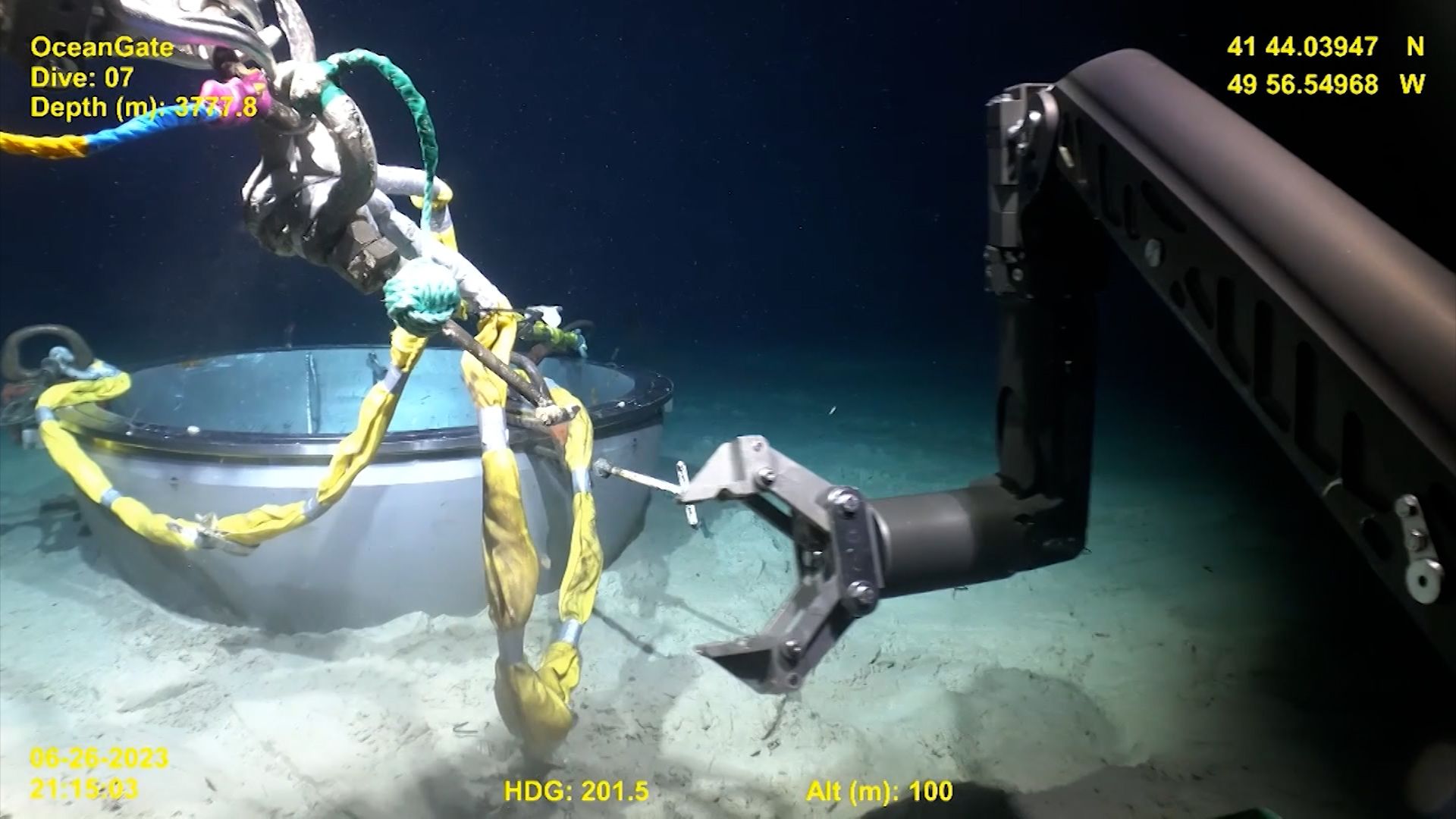
Coast Guard releases footage of Titan submersible after implosion (2024)
00:37 • Source: CNN
00:37

What we covered here

A “preventable” disaster: The 2023 implosion of the Titan submersible as it dove to the Titanic wreckage site was preventable and OceanGate — the company that operated the Titan — is largely responsible for the disaster that killed five people, according to a report by the US Coast Guard Marine Board of Investigation.

Toxic culture concerns: The report detailed how OceanGate spent several years sidestepping regulators while operating with a “toxic workplace culture.” The board also identified a potential crime under “seaman’s manslaughter” and said it would have recommended referring the matter to the Department of Justice if OceanGate’s CEO had survived.

OceanGate responds: A spokesperson today offered condolences to the families of the victims, adding that Oceangate has ceased operations and has “directed its resources fully towards cooperating with the Coast Guard’s inquiry through its completion.”

33 Posts

Our live coverage on the release of the report from the US Coast Guard Marine Board of Investigation into the implosion of the Titan submersible has concluded. Please scroll through the posts below for today’s developments.

Key takeaways from the Coast Guard report on Titan submersible implosion

A new US Coast Guard Marine Board of Investigation report found several “primary contributing factors” to the OceanGate submersible implosion that killed five people in 2023.

Some of those factors included inadequate design and maintenance of the Titan and a “toxic safety culture” within the company.

Here are the key takeaways from the more than 300-page report:

  • Various failures: The report detailed numerous technical issues, repairs and maintenance problems with the Titan and its hull during tests and dives throughout 2021, 2022 and the beginning of 2023. Notably, in one incident in July 2022, the Titan became stuck in the Titanic wreckage and suffered “irreversible” hull damage that was not properly investigated. The report also in large part attributed the implosion to inadequate design, construction and testing of the hull.
  • Company culture: Operational and safety practices at OceanGate were “critically flawed” and contributed to the implosion, the report said. The investigators found OceanGate CEO Stockton Rush, who died in the implosion, inflated numbers “to bolster the perceived safety and dive count” of the final Titan hull, creating “a false impression of the submersible’s proven reliability and safety.” The report said Rush had all of the decision-making power, despite having engineers on his team, and he fired people when they spoke out.
  • Financial pressure: As financial pressure mounted by 2023 at OceanGate, employees were asked to forgo their salaries, creating a host of safety concerns. Among them were more reliance on contractors rather than full-time skilled personnel, the decision to use text-based communications in the Titan rather than voice communication and improper storage of the submersible between seasons. The report also found Rush did not fill a vacant engineering director position, which removed potential pushback on safety measures.
  • Recommendations: The US Coast Guard Marine Board of Investigation recommended mandating enhanced communication capabilities for all submersibles. It also called on the Coast Guard to pursue a new regulation requiring all submersibles in the US to be built and maintained under uniform standards.

The Titan was left in an outdoor parking lot in Canada over the winter

The Titan submersible was stored in an outdoor parking lot in Canada during the winter of 2022-2023, in part because OceanGate wanted to save money, according to the report.

In July 2022, the submersible was taken to a marine base in St. John’s, Canada, and stored in the parking lot for about seven months, the report states.

The base emailed OceanGate a vendor’s quote for a form-fitting wrap to cover the Titan and protect it from the elements, totaling 1,750 Canadian dollars plus tax, or about $1,270 US. OceanGate did not respond to the email, and the tarp was not installed.

Meanwhile, OceanGate was working to sign a “memorandum of understanding” with Memorial University to display the Titan for educational purposes, which would provide relief from certain Canadian taxes. The agreement was finalized in December 2022, and the Titan was moved into storage at the Fisheries and Marine Institute of Memorial University of Newfoundland on February 6, 2023.

During those seven months outdoors, the Titan was exposed to temperatures ranging from 84.2 degrees Fahrenheit to 1.4 degrees, as well as precipitation including freezing rain, sleet and snow, and multiple freeze-thaw cycles. This exposure may have damaged the carbon fiber hull, according to the report.

Why it matters: The Titan catastrophically imploded during its first dive to the sea floor of the 2023 season. The investigative report attributed the implosion to a “loss of structural integrity” in the submersible’s carbon fiber hull.

OceanGate's financial pressure led to a host of safety concerns, according to report

Debris from the Titan submersible, recovered from the ocean floor near the wreck of the Titanic, is unloaded from the ship Horizon Arctic at the Canadian Coast Guard pier in St. John's, Newfoundland, Wednesday, June 28, 2023.

By 2023, as financial pressure mounted at OceanGate, employees were asked to forgo their salaries, creating a host of safety concerns, according to a new Coast Guard investigative report. That year, the company’s Titan submersible imploded, killing five people.

OceanGate’s former director of engineering said the company asked employees to volunteer to forgo their paychecks and be paid back “after the first of the year,” but no one agreed, according to the Marine Board of Investigation report.

This is one example investigators found of how OceanGate’s financial stress affected day-to-day operations. The former engineering director, who eventually left the company over safety concerns, told investigators that financial pressures led to increased risks.

Here’s how:

  • Contractors: According to the report, around the time the former engineering director left, there was also “a broader exodus of skilled personnel from OceanGate,” which forced the company to rely more heavily on contractor support for the Titan missions in 2023. Cuts to full-time employees “disrupted operational continuity and dangerously weakened the company’s capacity to proactively address safety risks,” the report said.
  • Empty positions: The MBI found that OceanGate CEO and co-founder Stockton Rush did not fill the vacant engineering director position. Investigators said the first director had previously testified they would not sign off on the first Titan hull due to damage and other concerns. “This consolidation of engineering authority removed a potential intervention to cancel TITAN’s 2023 operations,” the report said.
  • Communication technology: The report also cites financial pressures as the reason the Titan used text-based communications instead of “the industry-standard for submersibles which enables voice communication.”
  • Storage: The report said the Titan submersible and other equipment were stored outdoors in Canada, where they could have been compromised. Investigators called this an example of a “consistent pattern of sacrificing safety and operational integrity for financial gain.”

“OceanGate’s financial mismanagement, reliance on contractors, and prioritization of cost-cutting over safety left the company ill-equipped to manage the complexities and risks of deep-sea exploration,” the MBI said.

Paid passengers, or "mission specialists," were pressured into signing liability waivers just before dives

Mission specialists were required to sign liability waivers before scheduled dives, often shortly after paying and traveling to the departure point, according to the Marine Board of Investigation report.

OceanGate did not provide adequate safety training or measures when mission specialists agreed to help with labor-intensive duties, including bolting down the Titan’s forward dome, according to the report.

The terms of the waiver were only discussed in detail after arrival, leaving little opportunity for participants to decline. “We will discuss this in more detail upon boarding and give an opportunity to ask questions on the contents and to sign at that time,” the form read, according to the report.

The money paid by mission specialists was absorbed directly into OceanGate’s operating account, with no guarantee of a refund or a future opportunity if a mission was canceled or aborted, according to the report.

OceanGate misrepresented the role of “mission specialists” to conceal that they were actually paying passengers. Many mission specialists did not participate in expedition assignments and contributed little or nothing to scientific tasks.

“The immediate use of mission specialist funds added pressure on OceanGate to conduct TITAN operations to fulfill its obligations and protect its reputation,” the report stated.

OceanGate CEO valued maintaining credibility with public despite "critical issues" with Titan, report says

OceanGate CEO and co-founder Stockton Rush speaks in front of a projected image of the wreckage of the ocean liner SS Andrea Doria during a presentation on their findings after an undersea exploration, on June 13, 2016, in Boston. Rescuers in a remote area of the Atlantic Ocean raced against time Tuesday, June 20, 2023, to find a missing submersible before the oxygen supply runs out for five people, including Stockton, who were on a mission to document the wreckage of the Titanic.

On May 29, 2019, a Titan pilot discovered what appeared to be a crack in the carbon fiber structure during a pre-dive inspection in the Bahamas, according to the Coast Guard report.

The crack extended approximately 4 feet longitudinally and about a third of the way around the hull, the report said.

In June 2019, OceanGate’s engineering director traveled to the Bahamas and confirmed “the crack was both larger and deeper than initially assessed.”

“After the crack was detected and fully assessed, OceanGate did not make any external notifications (e.g., customers with pending deposits, government authorities, classification societies) regarding the crack found in the TITAN hull,” the Coast Guard report said.

The engineering director told Coast Guard investigators that Rush “planned to grind it out, repair it, and reassemble the sub in three weeks, then dive it again.”

“I was strongly opposed to diving in a hull with a significant crack, even at the dock,” the engineering director told investigators. “But (Mr. Rush) was insistent — he was focused on making sure the media saw that OceanGate was still in operation, so he could explain the delay in the TITANIC mission. His story was that the (support) ship wasn’t available, which was why we couldn’t complete the TITANIC dives that year, and he wanted to maintain credibility with the public, despite the critical issues with the sub.”

In July 2019, Rush invited the engineering director to lunch and fired him.

Referring to Rush, the engineering director told investigators: “According to him, the message was clear: Either he or I had to go. Then he looked at me and said, ‘It’s not going to be me.’”

Inexperience and setbacks created frustration leading up to 2023 fatal implosion, report finds

The start of OceanGate’s 2023 expedition to the Titanic, which led up to the fatal submersible implosion, was marked by setbacks, an inexperienced crew, and rising frustrations, according to a new Coast Guard investigation report.

In May 2023, one of the mission specialists who paid $250,000 to dive to the Titanic told investigators that “there seemed to be a lack of direction” during the process of attaching the Titan submersible to the support ship that would tow it to the wreckage site.

The person told the Marine Board of Investigation they saw “people working shackles, handling heavy lines without gloves, loose items on deck” during the process. The mission specialist also said he felt there were “the wrong people in the wrong positions” and that many crew members on the vessels didn’t know how to complete some tasks.

“I’m not impressed with the seamanship and deck work standards of OceanGate — while they are engineers, the effort feels amateurish,” the mission specialist wrote in a diary entry shared with MBI.

The next several missions and planned dives were plagued by technical issues, repairs, and maintenance, according to the report. By mid-June, OceanGate CEO and co-founder Stockton Rush was becoming frustrated because no dives had been able to leave the support platform, the report said.

The Titan submersible imploded on June 18, 2023.

Previous seasons: According to the report, the challenges faced in 2023 were not new for OceanGate. Coast Guard investigators found that the submersible experienced numerous issues during tests and dives throughout the 2021 and 2022 seasons.

Additionally, OceanGate’s last director of engineering told the MBI that crews wanted to conduct tests on the Titan’s hull between the 2022 and 2023 seasons. After speaking with Rush, the director was told “it was a cost issue” and there was no way to transport the submersible from St. John’s for the work.

The director testified that around that time they had “gotten quite frustrated with some of these issues” and decided to leave OceanGate.

OceanGate CEO did not consult board of directors, allowing him to proceed unchecked for Titan expeditions

Stockton Rush speaks at a news conference next to the Cyclops 1 in June 2016.

The Marine Board of Investigation believes that OceanGate CEO Stockton Rush sidelined the company’s board of directors so he could proceed without checks and balances.

OceanGate’s leadership structure concentrated decision-making power in the hands of CEO Stockton Rush. Despite having a credentialed and experienced board of directors, Rush’s dominant behavior rendered it largely ineffective, according to the report.

The inclusion of a retired US Coast Guard admiral on the board of directors was disingenuous, according to the report, because the admiral stated in an MBI interview that “he had no marine safety background or experience when he was added to the Board.” He was brought on to help ensure regulatory compliance, the report stated.

Rush assumed multiple roles within the company — including safety officer, CEO, secretary of the board of directors, and chief pilot — which allowed him to solidify centralized control over all of OceanGate’s decisions.

MBI witnesses said board of directors meetings were informational, with Rush highlighting achievements and dictating decisions, according to the report.

“Overall, the MBI believes Mr. Rush deliberately sidelined OceanGate’s Board and did not solicit its collective expertise so he could proceed unchecked with his vision to conduct TITANIC expeditions, regardless of any mounting safety concerns,” the report stated.

OceanGate's marine director said the focus was more on image and marketing, not safety

OceanGate’s director of marine operations — whose responsibilities included “ensuring the safety of crew and clients during operations” — testified the company dismissed his concerns about safety and was more focused on “image and marketing than on building a safe and reliable operation,” according to the Coast Guard’s report on the implosion of the Titan submersible.

The director, who had more than 25 years of experience in subsea operations, was hired in early 2016, according to the report.

He characterized OceanGate’s working culture as “toxic” and said CEO Stockton Rush and the engineering department “would brush off any concerns he raised regarding serious failure points.”

He described how the operations and engineering teams lacked clear communication, and noted that engineering sometimes withheld information from operations. There was a “culture of secrecy,” he said, which “contributed to the ongoing dysfunction between the teams.”

“The dismissal of safety concerns by experienced operators is highly abnormal and unacceptable in the submersible industry,” the director added. He said the engineering team was inexperienced, with many of the employees being “fresh out of universities, or even without formal education in submersible design.”

The director said no one in OceanGate’s leadership, including Rush, had previous experience building submersibles — “which was evident in the engineering flaws and subpar decisions.”

Concerns about OceanGate’s safety culture surfaced as early as 2010, report says

An explorer and submersible pilot hired to pilot an early OceanGate expedition in 2010 said an incident he witnessed showed that “safety (was) not important” to the company, according to Tuesday’s Coast Guard report.

The vessel was not the doomed Titan submersible, but one called Antipodes, which OceanGate acquired in 2009, the same year the company was founded, the report says. The vessel was built by another company in 1973 and upgraded in 1994 and 1995.

OceanGate used Antipodes to train pilots and develop its submersible operations, the report says. Between September and October of 2010, OceanGate collaborated with another party to operate the vessel on an expedition near Los Angeles, the report says.

During this trip, the report says, there was an “incident” that damaged Antipodes, requiring $10,000 in repairs and ending OceanGate’s collaboration with the other party.

The incident suggested safety was not important to Oceangate, the explorer and pilot hired for the trip told investigators, according to the report.

The report adds that, on the eighth dive of that expedition, CEO Stockton Rush told the pilot to “sit the dive out so he could take his ‘rich friends’ on the dive.”

A whistleblower filed a complaint against OceanGate in 2018. It didn’t go anywhere, investigators found

An experienced submersible pilot was fired after raising critical safety concerns about the Titan. The whistleblower report he filed after his firing failed to get traction, Coast Guard investigators found.

OceanGate’s director of marine operations was tasked with overseeing safety operations and personnel at OceanGate between 2016 to 2018, a report by the US Coast Guard Marine Board of Investigation states.

Before OceanGate’s first expedition to the Titanic wreck site in 2018, the director inspected the Titan and flagged critical safety concerns that needed to be addressed before the submersible set out with passengers.

“These concerns were not just theoretical; the Director of Marine Operations believed they could pose a significant risk to personnel if left unaddressed,” the report says.

The director raised his concerns directly to OceanGate CEO Stockton Rush on January 19, 2018, in a conversation Rush recorded, in which he pushes back against the concerns.

“… Quite frankly, everyone is replaceable,” Stockton said, according to a transcript of the call.

“You’re going to be highly uncomfortable if we continue down this path to the level of it’s not appropriate for me to put you in that position, for me to go do stuff that you think is insane, that I’m going to kill myself with a vehicle that hasn’t been checked out to the way you want,” Stockton continued.

The director was fired days later, the report states, and filed a retaliation complaint with the Occupational Safety and Health Administration, claiming that he was fired for raising valid safety concerns.

OceanGate in turn filed a lawsuit against the director, claiming that he shared confidential information with OSHA, the report says.

OSHA never began an investigation into the director’s complaint against OceanGate, and communication about the matter between OSHA and the Coast Guard appeared to fall through the cracks, the report notes.

By December 2018, the director withdrew his complaint against OceanGate, citing “the emotional toll of the ensuing legal battle and stating that he and his wife had simply wanted the ordeal to be over due to the lack of progress on his case,” the report says.

OceanGate might have tried to meet regulatory requirements or abandon its plans for Titanic expeditions altogether had government agencies intervened after the whistleblower report, the investigative board said.

The former director of marine operations, David Lochridge, previously said the tragedy may have been prevented if authorities had investigated the seriousness of his concerns.

In a statement, a Department of Labor spokesperson said OSHA only had the authority to investigate the claims of employment retaliation and referred the matter to the Coast Guard to investigate the safety issues.

“Mr. Lochridge and Ocean Gate Inc. entered an independent settlement agreement on December 13, 2018, at which time OSHA terminated its investigation pursuant to the terms of the parties’ agreement,” the statement said.

This story has been updated with additional information.

Titan submersible got stuck in Titanic wreckage and suffered "irreversible" damage during earlier dive

About a year before its fatal implosion, the Titan submersible became temporarily stuck in the Titanic’s wreckage and then suffered “irreversible” damage while ascending from the sea floor, according to the report.

Dive 80 took place on July 15, 2022, carrying a pilot, a content expert and two paying passengers known as “mission specialists.”

At the sea floor, the Titan moved toward the Titanic’s midsection for a closer view but became entangled in the ship’s stairwell.

The Titan was trapped “for a moment,” but the pilot was able to work the controls to free the submersible and continue the dive, the report states.

Later in Dive 80, as the Titan ascended to the surface, the submersible made a loud bang noise, alarming the passengers.

The crew of a small boat at the surface assisting with the Titan’s recovery also heard the loud bang, according to an OceanGate contractor.

When Rush was asked about the loud bang during a later debrief with employees, he “brushed it aside” and said it was “probably just the sled banging against the frame,” the contractor told the investigative board. The contractor privately raised concerns about the noise to OceanGate’s director of administration, who told her she had a “bad attitude” and lacked an “explorer mindset,” according to the report. The contractor left on a flight home the next day.

On subsequent dives, the Titan showed unusual responses under pressure that “strongly suggests that the carbon fiber hull sustained irreversible damage at the end of Dive 80,” the report states. The loud bang was the result of a “substantial delamination,” or a failure in which a material fractures into layers, according to the report.

OceanGate team members conducted only a cursory external examination of the Titan and found nothing wrong. They did not conduct a meaningful investigation, and Rush concluded the bang was due to a shift in the submersible’s position within its frame, the report states.

“The failure to properly analyze post-surfacing data … represents a grave oversight, due to negligence,” the report states.

OceanGate CEO submitted fraudulent letter to the Coast Guard, report says

Stockton Rush, CEO of OceanGate exhibitions, poses at Times Square in New York, on April 12, 2017.

OceanGate CEO Stockton Rush submitted a fraudulent sea service letter to the USCG National Maritime Center to obtain a mariner credential that allows for the operation of vessels up to 25 gross register tons (GRT) on inland waters, the Coast Guard’s report stated.

Rush claimed as a crew member on the Titan that its tonnage was 26 GRTs, when it had never been registered or officially measured. In a post-accident assessment, the USCG Marine Safety Center estimated the Titan’s tonnage was 4 GRTs, a number that is significantly lower, according to the report.

This act would be subject to a civil penalty under the Coast Guard’s administrative Civil Penalty Program. Since the company has permanently ceased all maritime operations, the Marine Board of Investigation is not making any referrals for separate civil penalty enforcement against OceanGate.

The report also provided the evidence for three additional civil penalties: operating the submersible without a USCG required certificate of inspection, failing to obtain a stability letter before carrying passengers for hire and operating a commercial vessel in a negligent manner that endangered lives or property.

OceanGate CEO made all engineering decisions, despite having engineering directors

Three of OceanGate’s directors of engineering told the US Coast Guard Marine Board Investigation that CEO Stockton Rush “made all engineering decisions independently, despite having a Director of Engineering in place.”

The most recent director of engineering – who left OceanGate in February 2023, months before the deadly implosion – told investigators there were “frequent disagreements” between Rush and the engineering team. The director said Rush prioritized cost-cutting solutions as the company developed its submersible, leading to tensions over safety.

The report describes a “notable lack of experience in submersible design” on OceanGate’s engineering team after the company shifted its focus to developing its own submersibles in May 2017.

The engineering team grew to 18 members, but many of the new hires were “either current college students or recent graduates,” the report says. Engineering students were hired to develop prototype battery systems.

The director of engineering told Coast Guard investigators the team struggled with a lack of “subsea expertise.”

Although the team had grown, it had shrunk considerably by the time of the June 2023 dive that killed five people, including Rush. That year, the engineering team had just three members, the report finds.

OceanGate never filled the position of director of safety

The position of director of safety was never clearly filled despite the role being clearly outlined in OceanGate’s Health, Safety, and Environmental (HSE) Manual.

The Marine Board of Investigation (MBI) could not identify who held the position at OceanGate. Employees considered CEO Stockton Rush the company’s default safety officer.

OceanGate used a proprietary “Risk Index” to identify anomalies and issues that could affect deep dive decisions. The index considered factors such as crew health, crew experience level, and equipment condition.

The board found that OceanGate never canceled a dive due to anomalies or strikes.

“While anomalies were documented in the dive logs, there was no evidence of consistent identification or documentation of strikes,” the report states. “Additionally, there was no clear evidence to suggest that this system was properly applied, as there was no documentation about how the Risk Index for each dive was calculated.”

The submersible’s entanglement in the Titanic wreckage was never classified as an incident that undermined the safety procedures outlined in the HSE manual.

The board concluded that having a director of safety would have given the company someone with the authority to oversee safety and risk management practices and intervene when necessary to save lives.

Titan's liability waiver mentioned death 9 times, report says

An undated photograph of OceanGate's Titan submersible. It can hold up to five people on a dive to the bottom of the ocean.

Passengers who signed on to dive aboard the Titan to the wreckage of the Titanic were required to sign a liability waiver that outlined the risks and dangers of OceanGate’s experimental submersible, the US Coast Guard Marine Board Investigation report says.

That waiver “mentioned death 9 times,” the report says. It also included:

  • The submersible had not been certified by any regulatory body.
  • The vessel would be subjected to extreme pressures during the dive, with the risk of severe injury or death.
  • A portion of the expedition would be conducted inside an experimental submersible vessel.
  • Mission specialists had the option to decline participation at any time.

OceanGate CEO wanted a carbon fiber hull, but the material was unproven for deep sea, report says

OceanGate CEO Stockton Rush wanted to develop a submersible made of a carbon fiber hull in hopes of reducing costs to transport the vessel around the world, Tuesday’s report says – but the material was not recommended for deep-sea exploration.

The US Coast Guard Marine Board of Investigation attributed the Titan’s June 2023 implosion to the “loss of structural integrity” of its carbon fiber hull.

In founding OceanGate, Rush and a co-founder hoped to cater to a “high-end market for deep-sea tourism,” the report found, and envisioned a fleet of submersibles capable of diving as deep as 6,000 meters.

The costs of building such a vessel, however, “exceeded” OceanGate’s “financial parameters,” the report found. Rush turned to finding a more viable solution – namely, building his own submersible, with a focus on carbon fiber.

A carbon fiber hull would “significantly reduce the vehicle’s weight,” the report found, easing transportation costs, which Rush believed were the “greatest costs associated with submersible operations.” He also believed it would enhance buoyancy, allowing for improved handling underwater.

But the material was not suited to the intense pressures found in the deep sea, the report says, though it has “demonstrated its effectiveness” when the primary stress is tension.

Other vessels OceanGate had operated prior to Titan utilized steel hulls, the report notes.

Who was Stockton Rush, OceanGate CEO and Titan pilot?

Stockton Rush

The Coast Guard report offers significant criticism of Stockton Rush, 61, the CEO and co-founder of OceanGate and the pilot of the Titan submersible that imploded in June 2023.

Rush, who graduated from Princeton in 1984 with a degree in aerospace engineering, founded OceanGate in 2009 with a stated mission of “increasing access to the deep ocean through innovation.”

Even before the 2023 implosion, Rush had a reputation as an experimental “MacGyver” who took safety shortcuts and was skeptical or dismissive of regulations that might slow innovation.

“At some point, safety just is pure waste,” Stockton told journalist David Pogue in a 2022 interview. “I mean, if you just want to be safe, don’t get out of bed. Don’t get in your car. Don’t do anything.”

The report released Tuesday states Rush “exerted full control” over the company’s decisions and operations and was dismissive of safety concerns.

“Several OceanGate employees confirmed that Mr. Rush was essentially Ocean Gate’s CEO, Safety Officer, and primary submersible pilot, which enabled him to set operational safety parameters and then make all final decisions for TITAN operations without adequate input or checks and balances from the Board of Directors, the other OceanGate employees, regulators, or third-party organizations (e.g., classification societies).

“The cumulative effect was an authoritarian and toxic culture where safety was not only deprioritized but actively suppressed. This toxic environment, characterized by retaliation and belittling against those who expressed safety concerns combined with a lack of external oversight, set the stage for the TITAN’s ultimate demise.”

Toxic workplace culture, design flaws, inadequate testing. Here's what Titan disaster investigators found

The implosion of OceanGate’s Titan submersible, which killed five people in 2023, was a preventable tragedy caused by OceanGate’s failure to follow safety protocols and a toxic workplace culture, according to a report released Tuesday by the US Coast Guard Marine Board of Investigation.

Here are some of the report’s key findings:

  • OceanGate, the private company that marketed deep-sea exploration and tourism, was “able to operate TITAN completely outside of the established deep-sea protocols” after years of evading regulatory scrutiny through intimidation tactics and exploiting confusion around industry standards.
  • OceanGate did not adequately address the design and testing of the hull and continued to use the Titan without proper inspection after multiple incidents had compromised the hull’s integrity.
  • The Occupational Safety and Health Administration missed an opportunity to intervene after a 2018 whistleblower report cited critical safety issues with the Titan.
  • The investigative board called for clearer and more extensive regulatory requirements for commercial and research submersibles, urging the Coast Guard to pursue changes at the federal level.

Following the release of the report, an OceanGate spokesperson offered condolences to the families of those lost in the Titan submersible implosion. CNN has reached out to the Occupational Safety and Health Administration for comment.

Passengers paid 6-figure sums to dive with Titan submersible

Hamish Harding looks on before boarding the submersible Titan on June 18.

Three of the five people who died in the Titan submersible implosion paid six-figure sums to join the dive as so-called “mission specialists.”

The “mission specialists” on board the Titan’s final dive were Hamish Harding and the father-son duo Shahzada and Suleman Dawood.

The report states that two of them paid $250,000 each, and the other paid $150,000 to join the dive. In addition, two “mission specialist companions” paid $25,000 each to accompany them on the support vessel but did not join the dive.

Vice-Chairman of Engro Corporation Limited Shahzada Dawood, who is said to be among the passengers onboard the submarine that went missing on trip to the Titanic wreckage is seen with his son Suleman Dawood in this undated handout picture. Courtesy of Engro Corporation Limited/via REUTERS  THIS IMAGE HAS BEEN SUPPLIED BY A THIRD PARTY. MANDATORY CREDIT. NO RESALES. NO ARCHIVES

OceanGate referred to them as “mission specialists” and encouraged them to actively participate in the missions alongside the crew. However, the report said the “mission specialist” title was an attempt to avoid certain requirements for paying passengers under US law.