August 4, 2023 The latest on Trump's 2020 election interference case

Live Updates

August 4, 2023 The latest on Trump’s 2020 election interference case

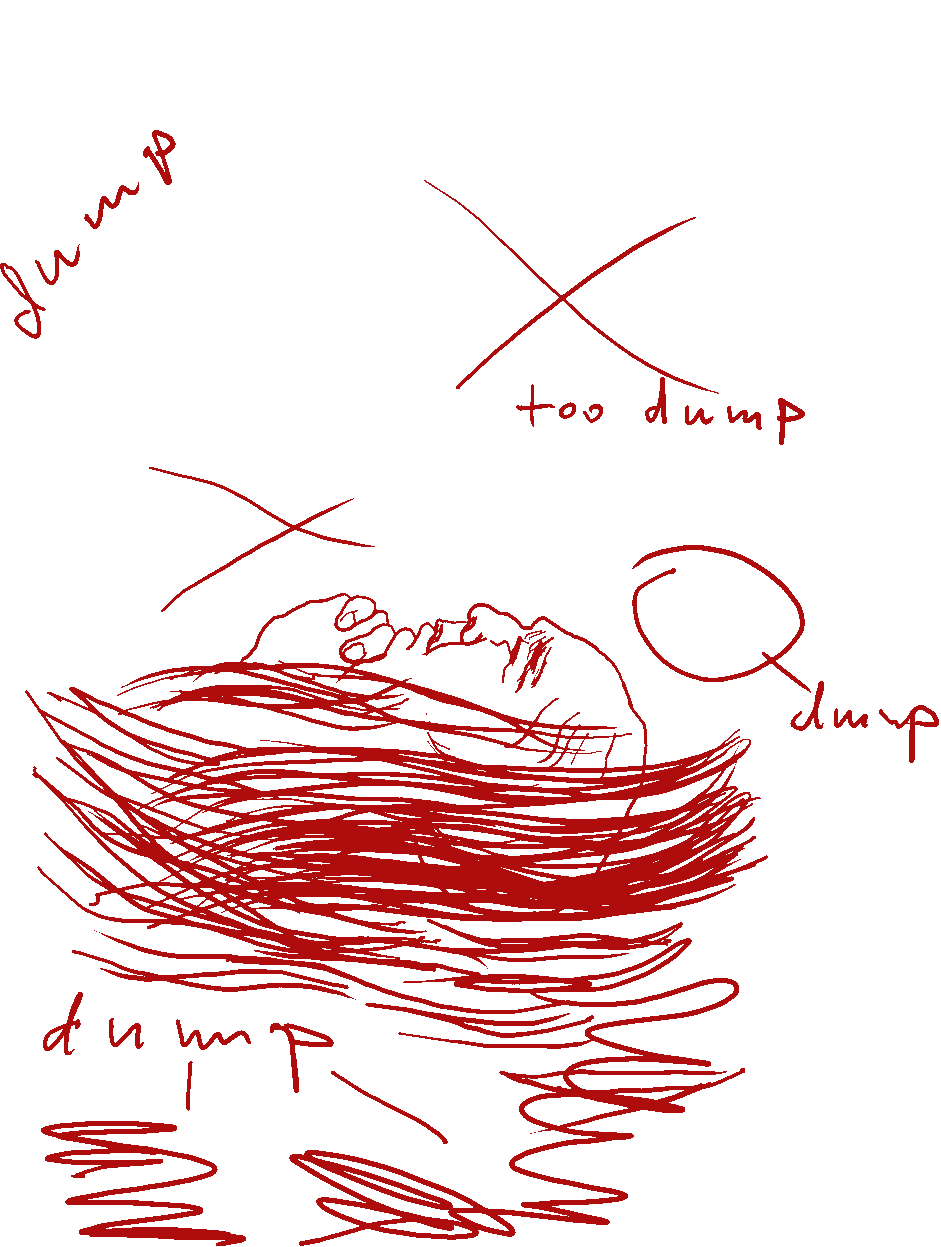
Court sketch of moment Donald Trump plead "not guilty"
Reporter describes how Trump acted in courtroom during arraignment
3:17 • Source: CNN
Court sketch of moment Donald Trump plead "not guilty"
3:17

What we covered here

Our live coverage has ended. Scroll through the posts below to read about today’s news or click here for the latest US political news.

Updates

(16)

Trump rails against 2020 election charges at first campaign event since third indictment

Former President Donald Trump on Friday railed against the federal criminal charges he faces over his efforts to remain in the White House after losing the 2020 election at his first campaign event since being indicted a third time. 

Trump delivered an unusually short speech at a fundraiser hosted by the Alabama Republican Party in Montgomery that focused heavily on his legal issues one day after appearing in court in Washington, DC, and pleading not guilty to the charges brought by special counsel Jack Smith. 

Trump touted his lead in the polls over GOP 2024 rivals and argued the indictments were only giving him a boost.  

Trump’s court and campaign calendar is growing ever more crowded as possible charges loom in Georgia 

There’s likely more to be added to the pile of legal problems on former President Donald Trump’s plate.

In Georgia, in the coming weeks, Fulton County District Attorney Fani Willis is expected to bring charges in her election subversion probe and it’s possible that Trump will be indicted in that.

Willis, a Democrat, is considering bringing conspiracy and racketeering charges. The probe was launched in 2021 following Trump’s call that January with Georgia Secretary of State Brad Raffensperger, in which he pushed the Republican to “find” votes to overturn the election results.

The special grand jury issued a report – which remains mostly under seal – that found there was no widespread voter fraud in the state and also suggested perjury charges be considered against some people who testified. Overall, it recommended charges against more than a dozen people, the foreperson said in interviews in February.

Willis is expected to present her case to a grand jury by September 1.

And then there’s the other case from special counsel Jack Smith alleging Trump mishandled classified documents from his White House and then obstructed the probe into the materials. That case is currently scheduled to go trial next May, and there will be regular pre-trial proceedings (at which, Trump is not required to appear) before that.

There’s also the criminal case that Manhattan prosecutors brought against Trump for a 2016 campaign hush money scheme, currently slated for trial in March.

Additionally there’s number of civil lawsuits he faces, including a second defamation case brought by E. Jean Carroll, well as the New York attorney general’s civil fraud case against his family and businesses.

This court calendar is overlaid against his 2024 campaign schedule as well. The first Republican presidential debate, for instance, is on August 23.

Though Trump will not be required to appear in court for hearings on pre-trial matters, he may seek to do so, if he embraces a strategy of making a spectacle out of the election subversion case. Speaking on the airport tarmac, Trump made brief remarks that the prosecution was political after Thursday’s hearing, and he routinely fundraises off of every new development putting him in deeper legal trouble.

Read more about the legal challenges Trump faces here.

CNN’s Dan Berman contributed reporting to this post.

New Trump video attacks prosecutors who have brought cases against him or are investigating him

Donald Trump’s campaign released a new video Friday attacking the prosecutors who have brought cases against or are investigating the former president one day after Trump was arrested and arraigned for a third time. 

The video attacks federal special prosecutor Jack Smith, New York Attorney General Letitia James, Manhattan District Attorney Alvin Bragg and Fulton County District Attorney Fani Willis and dubs the group the “Fraud Squad.” 

“Meet the cast of unscrupulous accomplices he’s assembled to get Trump,” the narrator says in the video.

Trump appeared in court on Thursday in Washington, DC, and pleaded not guilty to charges brought by Smith related to his efforts to overturn the 2020 election results.

Trump is now bracing for a potential fourth indictment as Willis has said she will announce charging decisions by September 1 in her investigation into efforts by Trump and his allies to overturn Georgia’s 2020 presidential election results.

Analysis: Why Trump’s indictments haven’t shattered the deadlock between the parties

Former President Donald Trump, who was arraigned on federal charges related to attempts to overturn his 2020 election defeat, prepares to depart Washington at Reagan Washington National Airport in nearby Arlington, Virginia, on August 3.

Former President Donald Trump’s mounting legal jeopardy is raising a stark political question: can anything break the sustained electoral stalemate that has left the country divided almost exactly in half between the Republican and Democratic coalitions?

Trump was indicted for a third time on Tuesday and is facing a swarm of criminal accusations unprecedented for an active presidential candidate, much less a former president. But during this ordeal, his lead in the 2024 GOP presidential primary has solidified. And while polls have highlighted some clear warning signs for him as a general election nominee, mostly they point to another closely fought contest, with President Joe Biden usually holding a small overall lead and a tiny handful of precariously balanced swing states likely to decide the outcome. A New York Times/Siena College poll released on Tuesday, however, found Trump and Biden tied in a hypothetical matchup at 43 percent.

Several big dynamics are converging, including a slowdown in inflation and acceleration of Trump’s legal troubles, that could provide Democrats a tailwind next year, particularly in the presidential race. But all of these forces face the immovable object of the entrenched demographic and geographic divisions that have produced one of the longest periods in American history in which neither party has been able to establish a durable or decisive advantage over the other.

The parties now represent coalitions with such divergent visions of America’s future, particularly whether it welcomes or resists racial and cultural change, that it’s unclear what could allow one side to break out from the close competition between them. And that includes the prospect of Republicans choosing a presidential nominee who could be shuttling between the campaign trail and the courtroom.

Democrats have won the popular vote in seven of the past eight presidential elections – something no party has done since the formation of the modern party system in 1828. That suggests the Democratic coalition, on a national basis, is somewhat larger than the GOP’s.

But the Democrats’ difficulty competing outside of large metropolitan areas, as well as the small state bias in the Senate and the Electoral College, has allowed the GOP to remain highly competitive in this era.

Read the full analysis here.

Trump pleads not guilty twice in 24 hours with plea to new charges in classified documents case

Former President Donald Trump, a candidate for the Republican presidential nomination, arrives at Reagan National Airport in Washington en route to his arraignment in federal court on Thursday, August 3.

Former President Donald Trump, in a court filing Friday, pleaded not guilty to the new charges special counsel Jack Smith brought against him in the case alleging mishandling of classified documents from his time in the White House.

The filing marked the second time in 24 hours that the former president entered a not guilty plea, following his arraignment Thursday in the special counsel’s separate investigation into efforts to overturn the 2020 presidential election.

Last week, Smith charged Trump, who had already faced 37 criminal charges in the classified documents case, with one additional count of willful retention of national defense information and two additional obstruction counts. He also filed new charges against Walt Nauta, the former president’s aide, and added Mar-a-Lago property manager Carlos De Oliveira to the case.

Trump and Nauta had pleaded not guilty to the initial charges earlier this summer.

With the new fling, Trump indicated to the court that he would not be physically present for an arraignment on the new superseding indictment scheduled for August 10 before a US magistrate judge in Fort Pierce, Florida.

Trump’s co-defendants, De Oliveira and Nauta, have not indicated in court filings their plans for the arraignment.

What we know about the next hearing in Trump's election interference case later this month

Former President Donald Trump sits between his attorneys in court in Washington on Thursday.

Magistrate Judge Moxila Upadhyaya scheduled the next hearing in the 2020 election subversion case for August 28 at 10 a.m. ET.

That proceeding will happen before US District Judge Tanya Chutkan, who is no stranger to January 6, 2021, litigation.

Prosecutor Thomas Windom said the government was available all days that the magistrate judge offered as potential hearing days, but would prefer the earliest one. Former President Trump’s team requested August 28, the latest of the three options. 

Prosecutors from special counsel Jack Smith’s office did not seek pretrial detention for Trump. Instead, the former president was released on very minimal conditions of release, which includes not being allowed to communicate with anyone known to be a witness in the case unless through an attorney. 

As the case against Trump progresses to a trial, the 2024 election calendar looms large.  

Prosecutors pushed for a speedy trial at the hearing on Thursday, and for the case to proceed just as others do. “This case will benefit from normal order, including speedy trial,” Windom said. 

Upadhyaya said that federal Judge Tanya Chutkan – who will preside of the case — “intends to set a trial date at that first hearing on August 28.” 

But John Lauro, an attorney for the former president, highlighted the “massive amount” of discovery they would need to look through before suggesting a trial date.  

Upadhyaya said prosecutors are required to file a recommendation in seven days of when the trial should be held. After their recommendation is filed, Trump’s attorneys will have another seven days before filing their own recommendations.  

The hearing will happen five days after the first Republican presidential primary debate. Trump has not yet committed to participating.

The judge who will preside over Trump's criminal 2020 election case is no stranger to January 6 litigation

Judge Tanya Chutkan.

District Judge Tanya Chutkan, who’s assigned to preside over former President Donald Trump’s criminal case in Washington, DC, has repeatedly spoken out in very strong terms against the efforts to overturn the 2020 presidential election and disrupt the transfer of power. 

The next hearing in the case is set for August 28 at 10 a.m. ET.

Chutkan, a Jamaica native, has served as a federal judge since she was appointed by Barack Obama in 2014 and confirmed by the Senate in a 95-0 vote. After graduating from University of Pennsylvania Law School, Chutkan spent more than a decade working as a public defender in Washington, DC.

According to her biography on the court website, Chutkan “argued several appellate cases and tried over 30 cases, including numerous serious felony matters” as a public defender.

Though Chutkan was randomly appointed to oversee the special counsel’s criminal case, she is no stranger to January 6, 2021, litigation.

In November 2021, Chutkan forcefully rejected Trump’s attempts to block the House select committee investigating January 6 from accessing more than 700 pages of records from his White House.

Chutkan, like many other federal judges in Washington, has presided over dozens of criminal cases against alleged January 6 rioters. She has been outspoken about the riot at several sentencing hearings – calling the violence an assault on American democracy and warning of future danger from political violence – and has repeatedly gone over what prosecutors have requested for convicted rioters’ prison sentences.

At a December 2021 sentencing hearing, she looked ahead to the 2024 election, saying that “every day we are hearing about reports of anti-democratic factions, people plotting potential violence in 2024.”

“It has to be made clear that trying to stop the peaceful transition of power, assaulting law enforcement, is going to be met with certain punishment,” she said.

Chutkan has even tacitly referenced Trump during criminal sentencings, saying to one rioter that he “did not go to the United States Capitol out of any love for our country. … He went for one man.”

Read more about the judge here.

In an interview after Trump's 3rd indictment, Barr obliterated the former president's defense in the case 

Former Attorney General Bill Barr on Wednesday undermined a key pillar of his old boss’ defense in the special counsel’s probe into 2020 election interference, telling CNN’s Kaitlan Collins that Donald Trump “knew well he lost the election.”

The former attorney general also described Trump’s alleged actions as detailed in the indictment as “nauseating” and “despicable,” saying on “The Source,” “someone who engaged in that kind of bullying about a process that is fundamental to our system and to our self-government shouldn’t be anywhere near the Oval Office.”

A central premise of the special counsel’s case is that Trump knew the election claims he was making were false after being told by several close aides that he had lost the election. Trump’s lawyers have argued that his statements were protected under the First Amendment, a position that Barr, in his first interview since Trump’s third indictment, said was not a valid argument.

He added: “At first I wasn’t sure, but I have come to believe he knew well he had lost the election.”

Special counsel Jack Smith brought four charges against Trump on Tuesday – including conspiracy to defraud the United States – as part of his investigation into efforts to overturn the 2020 election leading up to the January 6, 2021, attack on the US Capitol. Trump was arraigned and pleaded not guilty to the charges in court on Thursday.

While a loyalist for much of his tenure as Trump’s attorney general, Barr notably contradicted the former president’s claims that the election was rigged when he said in December 2020 that the Justice Department had not found substantial evidence of widespread voter fraud. He resigned soon after and has since emerged as one of Trump’s most significant critics.

Barr defended Smith in the interview Wednesday, breaking from many Republicans who have disparaged the special counsel’s probes into Trump as being politically motivated.

“He is the kind of prosecutor, in my view, that if he thinks someone has committed a crime, he, you know, homes in on it and really goes to try to make that case,” Barr said. “There’s no question he’s aggressive but I do not think he’s a partisan actor.”

The former attorney general added that he believes Smith has more evidence to prove that the former president knew the election was not stolen.

Trump wants Supreme Court to "intercede" in legal fights

Former President Donald Trump arrives at Ronald Reagan Washington National Airport on Thursday.

A day after being arraigned for the third time, former President Donald Trump complained about the time and cost spent on his many legal battles and called on the Supreme Court to “intercede.”

“My political opponent has hit me with a barrage of weak lawsuits, including D.A., A.G., and others, which require massive amounts of my time & money to adjudicate,” Trump complained on Truth Social. “Resources that would have gone into Ads and Rallies, will now have to be spent fighting these Radical Left Thugs in numerous courts throughout the Country. I am leading in all Polls, including against Crooked Joe, but this is not a level playing field. It is Election Interference, & the Supreme Court must intercede.”

Trump pleaded not guilty Thursday to four criminal charges related to special counsel Jack Smith’s investigation into attempts to overturn the 2020 presidential election. 

After the hearing, Trump criticized the latest charges and described the indictment as “a persecution of a political opponent.”

“This is a persecution of a political opponent. This was never supposed to happen in America,” Trump said while giving brief remarks Thursday before boarding his private plane back to New Jersey. “This is the persecution of the person that’s leading by very, very substantial numbers in the Republican primary and leading Biden by a lot. So if you can’t beat him you persecute him or you prosecute him. We can’t let this happen in America.” 

Trump is expected to speak tonight at the Alabama GOP summer dinner in Montgomery.

Post-indictment poll shows more Americans see new charges against Trump as serious

Former President Donald Trump speaks before he boards his plane at Ronald Reagan Washington National Airport on Thursday.

Two-thirds of Americans (65%) say that the charges former President Donald Trump faces over efforts to overturn the 2020 elections are serious, according to a new poll from ABC News and Ipsos conducted after Trump’s latest indictment.

That’s a larger share than felt that way about either the charges he faces over alleged mishandling of classified documents (61%) or the charges related to a hush money payment that he faces in New York (52%). Most (51%) describe the new charges as “very serious,” compared with 42% who said so on the documents charges and 30% on the hush money case.

A majority in the new poll say Trump should have been charged with a crime in this case (52% vs. 32% who say he should not have been charged) and about half say he ought to suspend his presidential campaign because of it (49% say so vs. 36% who say he should not and 15% who say they don’t know).

A sizable share describe the new charges as politically motivated (46%) while 40% feel they are not politically motivated.

There are broad partisan gaps in views of the seriousness of the new charges, with 91% of Democrats calling them serious along with 67% of independents, though just 38% of Republicans agree. The gap between Democrats and Republicans widens to 65 points when looking at those who call the charges “very serious” (84% of Democrats feel that way vs. 19% of Republicans; 53% of independents say the same).

The survey also shows that both Trump and President Joe Biden face negative favorability ratings (30% hold a favorable view of Trump, 33% for Biden).

Asked about how the US Justice Department is handling its investigation into Hunter Biden, 35% said they have at least some confidence it is being handled in a fair and nonpartisan manner, 46% said they were not confident in that and 19% said they did not know.

The poll also shows that 39% of Americans believe the US House of Representatives should start an impeachment inquiry into Joe Biden over Hunter Biden’s business deals, a view driven largely by Republicans (74% of Republicans say the House should start an impeachment inquiry on this matter vs. 35% of independents and just 11% of Democrats).

More about the poll: The ABC News/Ipsos poll was conducted online August 2-3 among a random national sample of 1,076 adults. The results have a margin of sampling error of plus or minus 3.4 percentage points.

Could Trump serve as president if convicted? Here's what an election law expert says

Donald Trump was indicted this week on federal charges related to 2020 election subversion, a stunning third time this year that the former president has faced criminal charges.

But could the former president, who remains the front-runner for the 2024 Republican presidential nomination, assume the Oval Office again if convicted of the alleged crimes? In short, yes.

University of California, Los Angeles law professor Richard L. Hasen – one of the country’s leading experts on election law – said Trump still has a path to serving as president should he win reelection in 2024.

Could a president serve from prison? That’s less clear. “How someone would serve as president from prison is a happily untested question,” Hasen said.

Could Trump pardon himself or dismiss the case if convicted? The newest criminal counts against Trump include: conspiracy to defraud the United States; conspiracy to obstruct an official proceeding; obstruction of and attempt to obstruct an official proceeding; and conspiracy against rights.

Those are in addition to a total of 40 counts in a separate federal indictment related to the special counsel’s investigation into the mishandling of classified documents, as well as 34 felony criminal charges of falsifying business records in Manhattan related to an alleged hush money payment scheme and cover-up involving an adult film star.

If Trump were to be convicted before the 2024 election and win the contest, he could try to grant himself a pardon, according to Hasen.

“Whether he can do so is untested. The Supreme Court may have to weigh in,” Hasen said, adding that Trump could potentially appeal a conviction to the conservative Supreme Court.

Special counsel Jack Smith told reporters that he will seek a “speedy trial,” but if Trump was to be elected before a trial concluded, he may be able dismiss it entirely.

Could Trump vote if convicted? If Trump is convicted of a felony at the federal level or in New York, he would be barred from voting in his adoptive home state of Florida, at least until he had served out a potential sentence.

Trump has been indicted 3 times this year. Catch up on the charges he faces in each case 

Former President Donald Trump walks over to speak with reporters before he boards his plane at Ronald Reagan Washington National Airport on Thursday.

It’s been eight years since he rode down the escalator in Trump Tower and more than two years since the January 6, 2021, insurrection, but the legal drama surrounding Donald Trump has never been more intense.

Here are key things to know about the former president’s three indictments:

Hush-money payments: In New York, a hush-money payment to adult film star Stormy Daniels resulted in Trump’s indictment by a Manhattan grand jury over his alleged role in the scheme – the first time in American history that a current or former president was criminally charged. He was charged with 34 felony counts of falsifying business records.

The former president surrendered and was placed under arrest April 4, before he was arraigned in a historic and unprecedented court appearance, at which he pleaded not guilty.

Mar-a-Lago documents: Special counsel Jack Smith is overseeing the Justice Department’s criminal investigations into the retention of national defense information at Trump’s resort and into parts of the January 6, 2021, insurrection.

Trump was initially indicted on, and has pleaded not guilty to, 37 federal charges related to the investigation of documents that were allegedly mishandled when they were taken to Mar-a-Lago in Florida after Trump left office. Last week, Smith charged Trump with three additional counts in a superseding indictment.

A judge has set a May 2024 start date for the trial.

2020 election and January 6: Smith’s purview also includes the period after Trump’s 2020 election loss to Joe Biden and leading up to the insurrection at the US Capitol.

A federal grand jury indicted Trump on four criminal counts in the investigation: conspiracy to defraud the United States; conspiracy to obstruct an official proceeding; obstruction of and attempt to obstruct an official proceeding; and conspiracy against rights. Trump pleaded not guilty to the federal charges on Thursday.

The next hearing is set for August 28 at 10 a.m. ET.

Read more.

Key takeaways from Trump's arraignment in the special counsel’s 2020 election subversion case

Former President Donald Trump takes an oath during his arraignment on Thursday.

Thursday marked the third occasion that former President Trump was arraigned on criminal charges this year, and the hearing in the 2020 election interference case marked the public debut of the team of lawyers in special counsel Jack Smith’s office who will be leading the prosecution.

Here are key takeaways from the hearing:

Conflicts about the case schedule are emerging: In the classified documents case that Smith has also brought against the former president in June, the Trump team has sought to slow-walk the schedule for the proceedings. There were hints of a similar strategy in the first hearing in the election subversion case.

Much of Thursday’s hearing was staid and to-script. But the tone sharpened when the judge said the prosecutors should file recommendations for the trial date and length in seven days, and that the Trump team should respond within seven days after that.

Trump attorney John Lauro told the judge that they would need to look at the amount of evidence they’ll be receiving from the government — which he said could be “massive” — before they could address that question.

“There is no question in our mind, your honor, that Mr. Trump is entitled to a fair and just trial,” Lauro said, nodding both to Trump’s right to a speedy trial as well as his right to due process.

Prosecutor Thomas Windom previewed that the special counsel would propose this case unfolding under a normal timeline under the Speedy Trial Act, which sets a time limit —unless certain exemptions are sought — for criminal cases to go to trial.

Key prosecutors make their public debut: Thursday marked the public debut of the Smith team that will handle the election subversion prosecution. (Some of the special counsel lawyers who are leading the classified documents case were previously involved in the public proceedings stemming from the lawsuit Trump filed last year challenging the FBI’s search of Mar-a-Lago).

Smith himself attended the hearing, as he did for Trump’s first appearance in the classified documents case in Florida earlier this year. As the courtroom waited for the hearing to start, Smith and Trump occasionally looked over at one another – Smith looking towards Trump more often than Trump looked over to him.

Windom – who moved from the US attorney’s office in Maryland to play a central role in the federal election subversion investigation, spoke on behalf of the government Thursday. Also at the prosecutors’ table was Molly Gaston, an alum of the DC US attorney’s public integrity section, which handles some of the most politically sensitive cases for the Justice Department.

Gaston was a lead prosecutor on last year’s contempt of Congress case against ex-Trump adviser Steve Bannon, and also worked on the prosecutions of Rick Gates – a former Trump campaign aide – and Paul Manafort, Trump’s 2016 campaign chairman. Gaston was also present in the courtroom Tuesday when the foreperson of the grand jury for the 2020 election probe returned the indictment against Trump.

Read more takeaways here.

CNN’s Hannah Rabinowitz, Holmes Lybrand and Katelyn Polantz contributed to this report.

House Democrats urge Trump trial to be televised despite rules against cameras in federal court

Rep. Adam Schiff, center, sits next to other committee members during a hearing on the January 6th investigation in October 2022.

More than three dozen House Democrats have asked Judge Roslynn R. Mauskopf, who oversees administration of federal courts, to allow the trial of former President Donald Trump to be televised. 

Federal courts generally do not allow cameras in the courtroom and there has been no indication from the Judicial Conference that the trial against Trump would be televised. 

But in a letter to the judge, the congressional members argued for the televised trial on grounds of it historic nature.

The 38 lawmakers that signed the letter include former members of the House select committee investigating the January 6 riot: Chairman Bennie Thompson, Adam Schiff, Zoe Lofgren and Jamie Raskin. 

“If the public is to fully accept the outcome, it will be vitally important for it to witness, as directly as possible, how the trials are conducted, the strength of the evidence adduced and the credibility of witnesses,” the letter added.

Trump pleaded not guilty to 4 criminal charges in court yesterday. Catch up here on the key developments

Former President Donald Trump arrives at Ronald Reagan Washington National Airport on Thursday after facing a judge on federal charges.

Former President Donald Trump pleaded not guilty to four counts in federal court in Washington, DC, on Thursday afternoon.

He was indicted in special counsel Jack Smith’s investigation into his efforts to overturn the 2020 presidential election leading up to the January 6, 2021, attack on the US Capitol.

This is Trump’s third arrest in four months.

Here’s what to know about the day’s events:

  • What happened: Trump traveled from his Bedminster, New Jersey, resort to Washington, DC, with two of his lawyers. When he arrived at the courthouse, he was placed under arrest and processed. During the arraignment, after Trump was sworn in, the judge asked him a few questions, including his name and his age. When asked how he pleaded to the counts in the indictment, Trump pleaded not guilty to the four charges. He was released from custody pending trial.
  • What it was like in court: Special counsel Jack Smith was present in the courtroom. He and Trump were seated about 15 feet apart and exchanged several glances as they waited for the hearing to start, according to sources inside. More than 50 members of the press, public and court staff were also in the room along with Secret Service and other security. Seven judges from the court observed the proceedings in the back row.
  • What Trump said: After leaving the courthouse, Trump gave brief remarks to reporters on the tarmac before boarding his plane back to New Jersey. He criticized the latest charges and said the indictment was “persecution of a political opponent.” He added, “This is a very sad day for America.” It was the first time he spoke publically since the indictment was handed down on Tuesday.
  • The judges: The former president appeared before Magistrate Judge Moxila Upadhyaya. Handling the case going forward will be federal District Judge Tanya Chutkan who has repeatedly spoken out in very strong terms against the efforts to overturn the election and disrupt the transfer of power. She was randomly appointed to oversee the special counsel’s criminal case but is no stranger to January 6 litigation.
  • Security: Security was tight outside and inside the federal courthouse where Trump was arraigned. DC’s Metropolitan Police Department led security in the district while US Secret Service oversaw the protection of the former president and the US Marshals Service ran security inside the courthouse. After the arraignment, law enforcement officials continued to monitor protests but did not see any major issues.  
  • What’s next: The next hearing in the election subversion case is set for August 28 at 10 a.m. ET. The proceeding will happen before Judge Chutkan who intends to set the trial date. The Trump team requested this day which was the latest of the three options offered by the magistrate judge.

Analysis: Trump’s arraignment in Washington indicates tense days may be ahead

Former President Donald Trump is seen in court on Thursday in this courtroom sketch.

As former President Donald Trump left Washington after pleading not guilty to four criminal charges related to his efforts to overturn the 2020 presidential election, it felt like all the previous trauma and divisions of his eight-year journey into the nation’s psyche were just the start.

America now faces the prospect of an ex-president repeatedly going on trial in an election year in which he’s the Republican front-runner and is promising a new White House term of retribution. He is responding with the same kind of extreme rhetoric that injected fury into his political base and erupted into violence after the last election. Ominous and tense days may be ahead.

If the arraignment of a former president seems routine, it’s a measure of the historic chaos Trump has wrought since he bulldozed into politics in 2015.

Trump is steering a stormy course to an unknown destination. If he wins back the White House, the already twice-impeached new president could trigger a new constitutional crisis by sweeping away the federal cases against him or even by pardoning himself. Any alternative Republican president could find themselves besieged by demands from Trump supporters for a pardon that, if granted, could overshadow their entire presidency. And if Trump is convicted, and loses a 2024 general election, he risks a long jail term, which would likely become fuel for him to incite his supporters to fresh protest.

“I was sitting watching the proceedings today, and I started feeling this uneasy feeling and this deluge of misinformation and it brought me back to a moment in time leading up to January 6,” said Geoff Duncan, the Republican former lieutenant governor of Georgia, as reminiscent of the rhetoric that put his home state on edge after the last election.

Read more:

Read more: