Here's the latest
• Trump on Iran: President Donald Trump decried Tehran as “dishonorable” for what he said were inaccurate state media descriptions of a potential interim US-Iran agreement.
• Conflicting details: A diplomatic source told CNN the proposal would extend the ceasefire, reopen the Strait of Hormuz and pave the way for talks on Iran’s nuclear program. Meanwhile, a senior Trump official said the agreement includes provisions to dismantle Iran’s nuclear program and end Tehran’s support of proxy groups, contradicting Iranian media.
• Where talks stand: Amid the back-and-forth, Pakistan’s prime minister said the US and Iran had agreed to a final text of the agreement and that negotiators are working to “finalize the next steps.” Iran’s foreign minister said an agreement “has never been closer.”
• Possible signing: Sources say a signing ceremony could be held in Geneva, Switzerland, as early as Sunday. US personnel are also planning for another round of peace talks this weekend, according to sources.
Trump admin "confident" that Israel "will get on board" with deal, US official says


The Trump administration feels “confident” that Israel “will get on board” with the deal between US and Iran, a senior US administration official said Friday.
“We feel like when they see the full terms of the deal and when they appreciate that fundamentally that there has to be delivery from the Iranians before we deliver any of the benefits, that they’re comfortable with that,” the official told reporters, suggesting that the full terms of the memorandum of understanding have not yet been shared with the US’ regional allies.
President Donald Trump has spoken with Israeli Prime Minister Benjamin Netanyahu on Thursday, the official said.
Netanyahu has long been skeptical that a deal with Iran can be reached and in recent weeks has grown increasingly concerned that the US may accept an agreement that, in Israel’s view, would not be as hardline as they want or meet the objectives of the war, sources said.
The senior administration official acknowledged “some skepticism” by Israel “of the misreported details that we’ve seen out there.”
“We feel confident that the deal that we’re actually going to strike, assuming we get there, is going to be a deal that everybody in the region can be comfortable with,” they said.
The senior administration official did not rule out future military action by Israel in Lebanon, which has threatened to scuttle US-Iran diplomatic efforts, saying they “put it back on Hezbollah and on the Iranians.”
They said the “broad regional peace agreement” does include Lebanon, as well as Israel and the Gulf, but “that doesn’t mean they give up the right to self-defense.”
“If the Iranians don’t honor their end of the obligation, I wouldn’t expect the Israelis to not respond,” the official said.
Agreement says Iran cannot have a nuclear weapon "indefinitely," Trump admin official says

Iran is “committing indefinitely to never procure or develop nuclear weapons,” a senior administration official told reporters Friday, which they described as “a significant concession” from Tehran.
Tehran has made similar public commitments before. To that end, the official stressed the importance of verification and enforcement, and the details of that still need to be worked out.
“We’re happy with the commitment to not build a nuclear weapon, but we have to verify that, and that’s why the deal is structured in the way that it is — to ensure that there’s a verification and inspections regime, and that they don’t receive the benefits of the negotiation until we see that they’re actually taking the affirmative steps in order to dismantle that nuclear program,” the senior official said.
Previous talks had discussed a timeline of 10 or 20 years for Iran to commit to not developing a nuclear weapon, but President Donald Trump had indicated that wouldn’t be enough for him.
The senior official indicated that the United States is willing to allow Iran to use nuclear in a civilian capacity.
“We’re not bothered at all by the idea of civilian power plants in Iran. What we’re bothered by is the type of infrastructure that would allow them to jump from civilian power generation to nuclear weapons development, and that’s what they’ve had for a very long time,” they said.
Unclear if Iran’s supreme leader has formally signed off on agreement with US


A senior administration official declined Friday to say whether Iran’s new supreme leader, Mojtaba Khamenei, has personally signed off on the current agreement being negotiated between Tehran and Washington.
Asked directly whether Iran’s supreme leader has approved the memorandum of understanding, the official sidestepped the question.
“All we can take is the people, both on the civilian and military side, both of whom have attested that the supreme leader is comfortable with where we are in the negotiation,” they said.
The official emphasized that under Iran’s system, final approval ultimately rests on the supreme leader’s “sign off.”
“All we can do is strike the deal, enforce the deal, and only provide the benefits to Iran when we get the benefits for the American people, and that’s our plan,” the official said.
US-Iran agreement lays out 60-day period for more "technical" negotiations

The memorandum of understanding being negotiated between the US and Iran states that, if signed, it would trigger a 60-day period for “technical” negotiations to take place, a senior Trump administration official said Friday.
While the memorandum outlines a series of topline commitments that Iran must agree to — including the dismantling of its nuclear program, reopening the Strait of Hormuz and the US destroying Iran’s enriched material — the highly technical talks will focus on how to specifically implement and carry out those points, the official said.
Technical details on destroying Iran's nuclear stockpile have yet to be worked out


Technical details of how to remove Iran’s stockpile of highly enriched uranium have yet to be worked out, a senior US administration official said.
“The Iranians commit to destroying and removing the enriched material, but how do you do that? Is going to take a little bit of time to figure it out,” the official said. “This is very combustible stuff, very volatile stuff. We’re not just going to, like, go down there with a backhoe and a guy with a backpack and start taking it out.”
Iran is believed to have a stockpile of nearly 1,000 pounds of near-bomb-grade uranium buried deep underground at its Isfahan nuclear site.
Various options have been floated for destroying it, including down-blending it with lower-purity uranium.
The official said discussions on how to proceed with the stockpile would occur in the next round of technical talks.
“We’re going to figure out how to do that in the technical negotiations that will follow, but we think that this is the first and most important step to really ensuring that the Iranians do not build a nuclear weapon,” the official said.
What to know as the US and Iran look to reach agreement


An agreement between the US and Iran that could lead to an end to the war appears to be materializing, even as what we know about the framework appears to differ.
Here’s what else we’ve learned over the past few hours:
- What a top Iranian official is saying: A memorandum of understanding between Tehran and Washington “has never been closer,” Iranian Foreign Minister Abbas Araghchi said Friday, while cautioning against speculation about the agreement.
- Key mediator’s comments: The US and Iran have reached a “final, agreed upon text of the peace deal,” according to Pakistani Prime Minister Shehbaz Sharif, who added: “Peace has never been this close as it is now.” Pakistan’s Ministry of Foreign Affairs earlier said it welcomed the “progress” made. Multiple sources said the memo is being called the “Islamabad declaration,” in recognition of the mediating role that Pakistan played.
- Where signing could take place: A signing ceremony for the memo of understanding would most likely be held in Geneva, Switzerland, sources told CNN — not far from where Trump and a US delegation will attend a G7 summit next week in France. Trump yesterday said he anticipated a signing ceremony for the document soon, potentially in Europe, to be attended by Vice President JD Vance.
- Plans for peace talks: Sources tell CNN that US military and security personnel are planning for yet another round of peace talks involving senior US officials, possibly as early as this weekend. But any talks still remain at the mercy of unforeseen day-to-day events.
- Israeli reaction: Israel is pressing the US to prevent the unfreezing of Iranian assets as part of a ceasefire agreement, according to an Israeli source. Defense Minister Israel Katz also said today that Israel will not withdraw from the territories it occupies in Lebanon. Additionally, Prime Minister Benjamin Netanyahu said in a statement today that “as long as I am the Prime Minister of Israel, Iran will not have nuclear weapons.”
- In the strait: Meanwhile, the US military shot down two Iranian drones that were targeting vessels in the Strait of Hormuz last night, according to a US defense official.
This post has reporting from CNN’s Sophia Saifi, Lauren Kent, Mostafa Salem, Nic Robertson, Josh Campbell, Kaanita Iyer, Oren Liebermann, Tal Shalev and Mitchell McCluskey.
Fractures remain in Iranian leadership but “dissent is quite minimal,” US official says

Fractures remain within Iranian leadership about how to proceed, but the Trump administration believes the majority of officials are committed to the prospective agreement, a senior administration official said Friday.
“So we actually feel quite confident that there is consensus within the system. It doesn’t mean there isn’t some dissent, but we think that dissent is quite minimal,” the official told reporters.
Much of the messaging coming out of Tehran, specifically regarding the specifics of what is in the agreement, is due to Iranian hardliners wanting to project a more positive message to their internal audiences, the official argued.
“The Iranian hardliners, some of them want to kill the deal. But I think most of them actually want the deal, but they also want to message it to their internal audiences in a way that maximizes their upside and minimizes our upside,” the official said.
“That’s totally predictable, but just because they’re sort of engaged in domestic propaganda doesn’t mean that we have to follow suit. So, I’d be very skeptical of anything that comes out of IRGC-affiliated media. They’re trying to sell the deal to their internal population,” the official added.
Trump administration outlines agreement with Iran
A senior US administration official spelled out several points in the prospective agreement between the US and Iran, framing the document as accomplishing President Donald Trump’s objectives for the negotiations.
Included in the framework are:
1. The reopening of the Strait of Hormuz and lifting the US blockade on Iranian ports.
2. Leads to the dismantling of Iran’s nuclear program, including the United States obtaining Iran’s enriched material, which the official said would be destroyed on site and then taken out of the country.
3. Iran would be “relieved of a lot of the economic pressures that they’ve been under for many, many years” if the country complies with the deal’s provisions. “Those benefits only accrue if they actually deliver,” the official said.
The question of Iran’s financial relief has been a major sticking point in the talks between the US and Iran. The official was insistent such relief would only be forthcoming after Iran takes steps toward compliance.
“The Iranians don’t get anything upon the signing of the MOU or upon the negotiation itself,” the official said. “What they get is that they get rewarded economically for complying with their obligations under the deal. So, if they turn over the nuclear material as promised, they’ll get something. If they dismantle their nuclear programs or their nuclear facilities, they’ll get something else. If they really commit to regional peace and stability, they’ll get additional things on top of that.”
Pakistan and Swiss foreign ministers discuss state of US-Iran agreement


Pakistan’s Foreign Minister Mohammad Ishaq Dar spoke with his Swiss counterpart, Ignazio Cassis, on Friday, as Islamabad sought to advance peace negotiations between the US and Iran.
Cassis expressed appreciation for mediator Pakistan’s role in “supporting diplomatic engagement and its efforts in helping advance progress towards peace and stability in the region and beyond,” according to a statement from the Pakistani foreign ministry.
The two leaders discussed progress towards an agreement between the US and Iran, it said.
A signing ceremony for a memorandum of understanding with Iran would most likely be held in Geneva, Switzerland, three sources told CNN on Friday.
Dar and Cassis agreed to remain closely engaged on further developments, the ministry said.
Mediator Pakistan says US, Iran have finalized text of peace agreement

The US and Iran have reached a “final, agreed upon text of the peace deal,” Pakistani Prime Minister Shehbaz Sharif said on Friday.
Pakistan, which has served as a mediator during the talks between the two sides, is now working to “finalize the next steps,” Sharif wrote in a post on X.
Sharif also decried what he called the “incessant misinformation campaign being waged by those who want to sabotage the peace deal.”
“Peace has never been this close as it is now,” he added.
US and Iranian accounts of agreement conflict on major issues

What we know about the emerging memo of understanding between the United States and Iran comes from three sources: a diplomat briefed on the negotiations, a Trump administration senior official and Iranian media outlets. CNN has not seen the text of the memo itself.
And the three accounts are deeply misaligned, leaving many questions unanswered about the potential agreement:
- On the Strait of Hormuz: The US official said the strait would reopen. And the diplomat specified that Iran would not be allowed to charge transit fees, but did not say who would oversee maritime traffic. Iranian media outlets make no mention of fees – suggesting Tehran may have dropped that demand – but insist Hormuz would reopen under Iranian management, a condition Washington has repeatedly rejected.
- On nuclear material: The Trump administration official said “Iran’s nuclear program will be dismantled” and nuclear material will be destroyed and removed. In sharp contrast, Iranian media says Iran won’t immediately undertake any new commitments and will only engage in nuclear talks during the 60-day negotiation period following the signing of the memo, “within the framework of its fundamental principles,” including what it calls its right to uranium enrichment. Meanwhile, the diplomat said the agreement “satisfies all US requirements on the nuclear issue,” including on Iran’s stockpile of highly enriched uranium.
- On frozen funds: Conspicuously absent from the diplomat’s account is Iran’s demand to unfreeze billions of dollars of its own funds currently under US sanctions. That issue was reportedly a major obstacle in negotiations over recent weeks. The senior US official told CNN that “none of Iran’s money (is) to be released until they perform.” But Iranian media outlets say the deal includes the release of $24 billion, with half made available immediately upon signing.
- On war reparations: Iranian media has also highlighted a $300 billion reconstruction fund, portraying it as compensation for damage sustained during the war. The US official and the diplomat’s account makes no mention of such a provision.
- On Israel and Lebanon: Despite neither Israel nor Hezbollah being directly involved in the negotiations, sources say the draft includes commitments affecting both parties, such as a ceasefire that includes Lebanon. The arrangement appears to rely on Washington and Tehran to secure compliance from their respective partners. Israel, however, has repeatedly said it will continue striking Hezbollah.
CNN’s Kristen Holmes, Mostafa Salem, Nadeen Ebrahim and Kevin Liptak contributed to this report.
US-Iran agreement "has never been closer," Iran's foreign minister says

A memorandum of understanding between Tehran and Washington “has never been closer,” Iranian Foreign Minister Abbas Araghchi said Friday, as he cautioned against speculation about the agreement.
Until the agreement is finalized, “the media should refrain from entering speculation about its content,” Araghchi wrote on X.
“In line with our responsible and transparent approach, all details will be shared with the public in due course,” he continued.
US President Donald Trump issued a stern rebuke of Tehran earlier Friday after what he said were inaccurate descriptions of the proposal appeared in Iranian state media.
Trump later posted a screenshot of Araghchi’s statement on Truth Social.
Trump admin official: Iran agreed to dismantle nuclear program and end proxy support to terrorist groups

The US-Iran agreement includes provisions to dismantle Iran’s nuclear program and end Tehran’s funding of terrorist groups, according to a senior official in the Trump administration.
The official outlined the following terms, which they said Iran had agreed to:
- Nuclear material will be destroyed and removed
- Iran’s nuclear program will be dismantled
- None of Iran’s money to be released until they perform
- Strait of Hormuz will be open
- No Iran funding of terrorist groups
The official called this “a performance-based deal.” Iranian officials have previously said they would not sign on to an agreement without the release of funds and repeatedly refused to engage on the funding of terrorist groups.
And Vice President JD Vance, calling out what he said is “fake information about a potential deal,” said economic benefits will only flow to Iran if it “meets its obligations.”
“First, the Iranians are not receiving any cash, and no funds are being released for simply signing a deal or attending a meeting,” he wrote on X.
“The deal is structured to ensure that the US and its allies concerns are prioritized, and that if the Islamic Republic of Iran meets its obligations, then economic benefits will flow to them and to the entire region,” he added.
Earlier Friday, President Donald Trump decried Tehran as “dishonorable” for what he said were inaccurate descriptions of the proposal in the media.
CNN previously reported that the interim deal between the US and Iran would extend the ceasefire, reopen the Strait of Hormuz and pave the way for more talks on Iran’s nuclear program, according to a diplomat briefed on the matter.
Iranian state media outlets had reported that Iran would not commit to ceding management of the strait and that the agreement would demand the release of $24 billion of Iran’s frozen funds.
“The terms that Iran leaked out to the Fake News have NOTHING to do with the terms that were agreed to, in writing,” Trump wrote on Truth Social.
Israel will not withdraw from Lebanon, defense minister says, amid potential US-Iran deal


Israel will not withdraw from the territories it occupies in Lebanon, Defense Minister Israel Katz said in a statement Friday, amid a potential US-Iran ceasefire agreement.
Iranian media reported earlier in the day that the agreement under negotiation includes an end to the war on all fronts, including Lebanon. A Trump administration official made no mention of a ceasefire in Lebanon in a conflicting statement on what’s included in the deal.
Katz said the US and Israel have a “shared interest” in preventing Iran from obtaining nuclear weapons. “We expect him to uphold this principle, along with additional principles concerning missiles and proxy terror organizations,” the defense minister said.
US shot down two Iranian attack drones last night, defense official says


The US military shot down two Iranian attack drones that were targeting vessels in the Strait of Hormuz last night, according to a US defense official, which comes as President Doland Trump publicly criticized Iran for continued targeting of ships.
“Iran attempted to strike commercial ships transiting the Strait of Hormuz last night. US forces shot down two Iranian one-way attack drones,” the defense official told CNN. “Traffic flow through the Strait continues.”
For context: US President Donald Trump said he was canceling the strikes against Iran Thursday night that he’d previewed hours earlier because “final points” of a deal with the country had been approved. On Friday morning, Trump decried Tehran as “dishonorable” for what he said were inaccurate descriptions of the proposal.
Trump also said in a social media post that Iran’s continued targeting of ships in the strait was “TOTALLY UNACCEPTABLE.”
Trump lashes out at Iran after terms of deal appear in state media

A day after declaring that an agreement with Iran was all but finalized, President Donald Trump decried Tehran as “dishonorable” for what he said were inaccurate descriptions of the proposal.
“The terms that Iran leaked out to the Fake News have NOTHING to do with the terms that were agreed to, in writing,” Trump wrote on Truth Social.
“What they said, including their weak and pathetic statement on having a deal, bears no relation to the truth,” he went on. “Very dishonorable people to deal with. With them, there is no such thing as dealing in good faith.”
Iranian state media outlets reported earlier Friday on the contours of the deal, including that Iran would not commit to ceding management of the Strait of Hormuz and that the agreement would demand the release of $24 billion of Iran’s frozen funds.
Trump, in his message, said Iran’s continued targeting of ships in the strait was “TOTALLY UNACCEPTABLE.”
“They better get their act together, and FAST!” he said.
60 days is a small window to address persistent issues between Iran and US

An interim deal between the US and Iran – which is by no means firmly agreed yet – would pave the way for more talks on Iran’s nuclear program and to address sanctions removal during a 60-day ceasefire period after its signed, a diplomat briefed on the matter told CNN. Iranian media has reported that compensation for war damages would also be discussed in that time frame.
The need to address three key, contentious points in only 60 days has left commentators wondering if this will truly be a deal to end the war, or rather to kick intractable issues down the road.
The previous nuclear deal with Iran, which President Donald Trump quit in 2018, took more than two years of intense negotiations to agree.
One Middle East analyst told CNN on Friday that if US negotiators rely on similar goals, then a 60-day timeframe is feasible.
Meanwhile, other logistical issues will need to be addressed during the 60-day ceasefire. If the deal to tentatively reopen the Strait of Hormuz is signed, the US and Iran would presumably need to work out how to de-mine the waterway and how to convince shipping companies it’s safe to transit.
“No deal in reality”: Expert cautions on optimism about potential deal

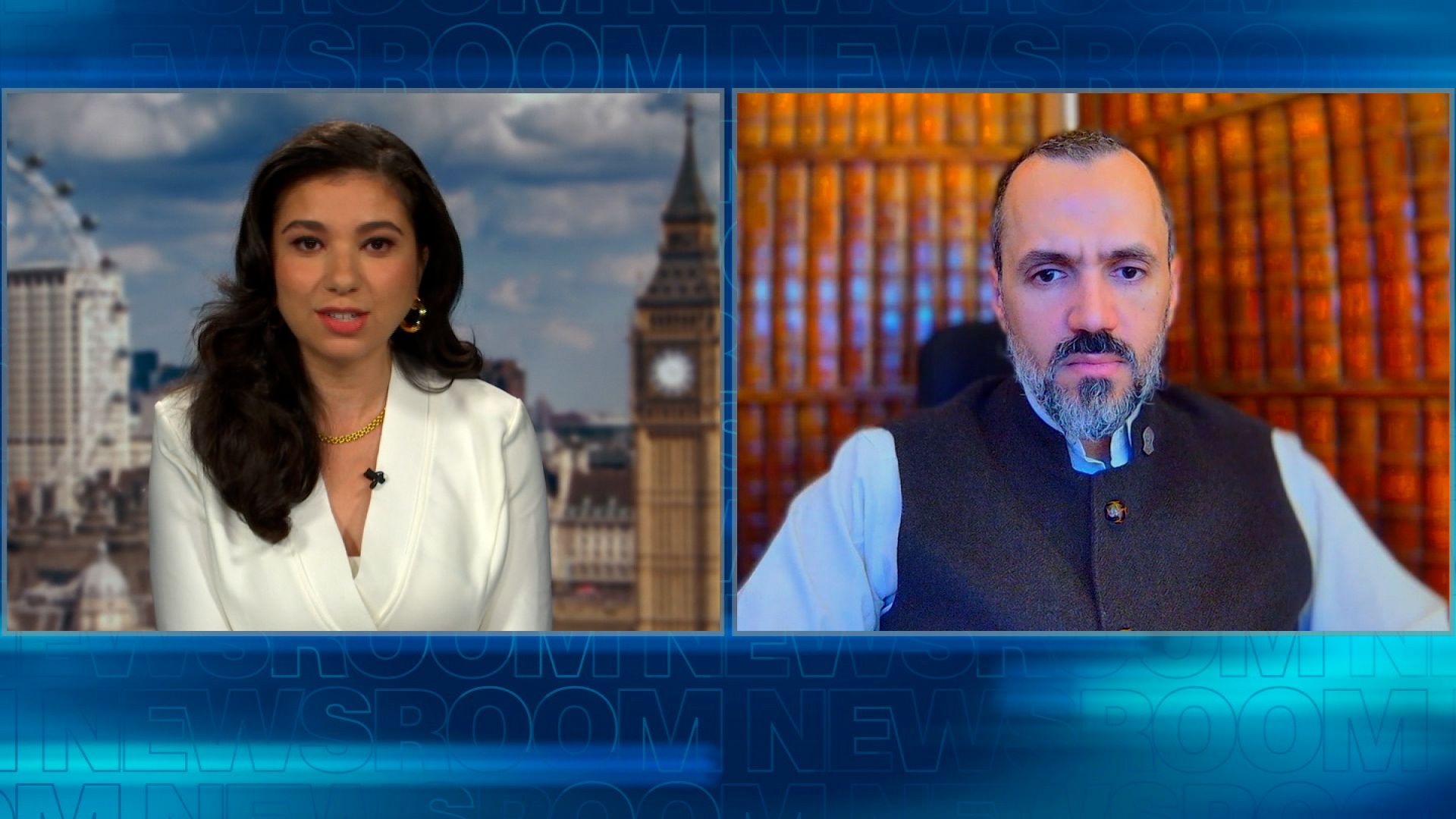
Despite President Donald Trump’s claims that the US had ended the war with Iran and reached an understanding with Tehran, a regional expert cautioned a conclusive deal is still some way off.
Trump said on Thursday that the two sides had agreed to a “very strong memorandum of understanding” to stop the fighting - a provisional agreement that would give room to negotiate other deals. Iran says it is yet to decide on a deal.
And regional expert H.A Hellyer said the two sides were still far from a full agreement.
“This is an MOU (memorandum of understanding) that’s being discussed… But there’s no deal in reality,” he told CNN’s Salma Abdelaziz.
President Trump’s comments came after he canceled further strikes on Iran and suggested an agreement had been reached without detailing its terms.
CNN’s Ellse Hammond contributed to this report.
Israel pressing to prevent unfreezing of Iranian assets as part of ceasefire agreement, source says

Israel is pressing the US to prevent the unfreezing of Iranian assets as part of a ceasefire agreement, according to an Israeli source familiar with the discussions.
Prime Minister Benjamin Netanyahu has spoken regularly with President Donald Trump, including on Thursday night after Trump claimed that Israel was among several nations in the Middle East that approve of the agreement.
Netanyahu later issued a statement saying Trump committed to removing Iran’s enriched uranium, dismantling its nuclear program, limiting its missiles and ending its support for proxies as part of a final deal. Trump has focused his public comments on the enriched uranium; he hasn’t mentioned missiles or proxies in weeks.
CNN previously reported that Trump’s announcement suggesting an imminent agreement with Iran surprised Netanyahu, who was holding a meeting with top security officials about Iran at the time.
“As long as I am the Prime Minister of Israel, Iran will not have nuclear weapons,” Netanyahu said in a statement on Friday.
Israel has long been skeptical of Iran’s intention in negotiations, believing it wasn’t negotiating in good faith. Israel believes that even if a memorandum of understanding is signed between the US and Iran, it will not lead to a final deal, the Israeli source told CNN.
Trump touts an imminent deal with Iran, but we’ve been here before


We’ve been here before, or so it seems, with US President Trump touting he is close to a deal with Iran as the weekend nears.
There are echoes of “The Grand Old Duke of York” - the English nursery rhyme that mocks the futility of military action. York marched his army up and down a hill; similarly, Trump has on 38 times raised expectations of deal before reversing course, tanking briefly buoyant markets.
His war of choice against Iran is exposing limits to the art of his type of deal-making. Iran, which has a history of driving a hard bargain and testing the patience of US presidents with their intransigence, is also stalling.
A former US President, George W. Bush, had something to say about being duped a few years ago, albeit slightly mangling his delivery, “Fool me once, shame on … shame on you. Fool me… You can’t get fooled again!” although the world understood he really meant “fool me twice, shame on me.”
It begs the question are we getting “fooled again” when Trump touts the deal as near done.
He has a lot of reasons, not least to restore confidence in him, to reach a deal this weekend.
A deal with Iran now could gild celebrations for his 80th birthday this weekend, the 250th US independence anniversary and the start of the World Cup – and tee him up for his next trip out on the world stage at the G7 in France.
Sources familiar with the talks say the signing is getting close, talks on phase one are over; they also caveat that phase two, to be completed within 60 days with be more technical and tougher.
Trump may be right, and the end of his war is in sight. But don’t be surprised next week if we are back down the hill again, empty handed.