What we covered today
• The Trump administration has indicted former Cuban President Raúl Castro, 94, on charges that stem from his alleged role in the 1996 shootdown of two civilian aircraft that killed four people, including three Americans.
• While announcing the charges, Acting US Attorney General Todd Blanche said President Donald Trump “will not forget its citizens.” Separately, the president said the US will make an announcement on the embargo against Cuba “pretty soon.”
• The Cuban government condemned the charges, describing them as a “despicable and infamous act of political provocation.”
• The indictment comes at a tense time for US-Cuban relations, with the Trump administration declaring the Cuban government is a threat to US national security. Cuba is also dealing with a collapse of its energy sector due to an oil blockade following the US attack on Cuba’s oil-rich ally Venezuela.
Our live coverage of the US indictment of former Cuban President Raúl Castro has concluded. Please scroll through the posts below to learn about today’s developments.
What we know about the US charges against Raúl Castro

The US government today indicted former Cuban President Raúl Castro with conspiracy to kill US nationals, destruction of an aircraft, and murder.
The charges stem from the 1996 shootdown of two civilian aircrafts belonging to the Cuban-American exile organization, Brothers to the Rescue. Castro, Cuba’s defense minister at the time, is alleged to have ordered the attack, which killed four men, including three American citizens and one permanent resident.
The indictment, originally returned on April 23, included additional defendants, who were the airmen allegedly involved in executing the shootdown. Acting US Attorney General Todd Blanche declined to address why the indictment was unsealed today, Cuban independence day.
The charges come as tensions between the US and Cuba have heightened in recent weeks. In a statement read on state TV, the Havana government condemned the “despicable accusation” made against Castro.
Here’s what we’ve been covering:
- 30 years in the making: Blanche said the move against Castro is not a “show indictment” but the result of an investigation 30 years in the making. Federal prosecutors in Miami first drafted an indictment against Castro in the 1990s.
- Possible life sentence: 94-year-old Castro could face a maximum sentence of life in prison if he is convicted of conspiracy to kill US nationals, Sen. Ashley Moody of Florida said today.
- Spy ring: The court documents described a Cuban spy ring which was embedded at a US military facility and sought to gain information about US military activities, with the ultimate goal of intimidating and terrorizing the community of Cuban exiles in the United States.
- Cuban voices: In Havana, residents interviewed by Reuters pushed back against the US indictment, which they described as a politically driven move that could deepen tensions at a fragile moment.
- Embargo news: Meanwhile, President Donald Trump said the US will make an announcement on the embargo against Havana “pretty soon.” There’s a longstanding economic embargo, as well as an oil blockade, against Cuba that has pushed the island’s energy crisis to its limits.
- US presence: Amid heightened tensions, the US military announced the arrival of the Nimitz Carrier Strike Group in the Caribbean.
- Rubio’s address: US Secretary of State Marco Rubio addressed the Cuban people directly in a Spanish-language video, telling them that “the only thing standing in the way of a better future are those who control your country.”
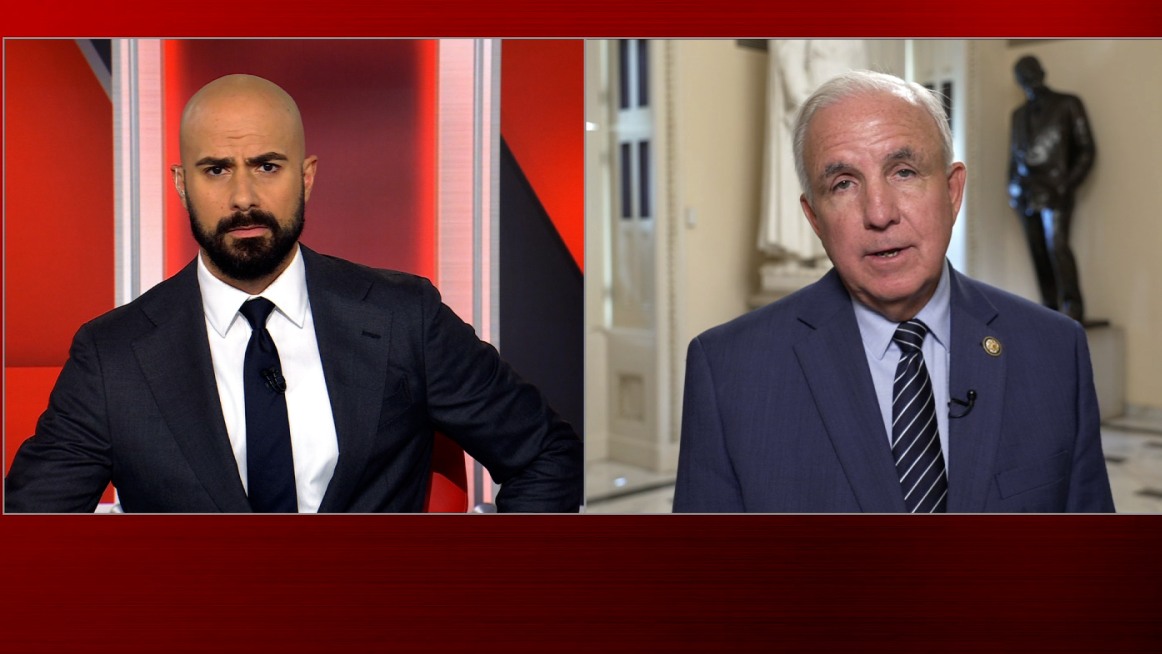
Rep. Carlos Gimenez, the only current member of Congress born in Cuba, told CNN the indictment gives the United States “the legal basis to go and remove” Raúl Castro from Cuba.

CNN’s Maureen Chowdhury, Patrick Oppmann, Michael Rios, Catherine Nicholls, Hira Humayun, Hannah Rabinowitz, Michael Williams, Abel Alvarado, Haley Britzky, Elise Hammond, Caitlin Danaher, Jennifer Hansler, Kit Maher, Gonzalo Zegarra, Max Feliu and Evan Perez contributed to this report.
Cuban government condemns "despicable accusation" against Castro


The Cuban government said it condemns in the strongest possible terms the “despicable accusation” the US made against former President Raúl Castro.
“It is a despicable and infamous act of political provocation,” the government said in a statement that was published online and read in full on state TV.
It said the US government distorted facts about Cuba’s 1996 downing of two planes that killed Americans, which the US cited in its indictment against Castro on Wednesday.
Cuba defended shooting down the planes, saying it had done so after the US ignored its multiple complaints about incursions in its airspace.
“It is highly cynical that this accusation is made by the same government that has murdered nearly 200 people and destroyed 57 vessels in international waters of the Caribbean and the Pacific, far from the territory of the United States, with the disproportionate use of military force,” the statement read, referring to US strikes against alleged drug-trafficking boats.
It said the indictment against Castro is an attempt to justify “collective punishment” against Cubans.
CNN’s Max Feliu contributed to this report.
Cubans in Havana react skeptically to the Castro indictment


Residents in the Cuban capital pushed back today against the US indictment of Raul Castro, something they described as a politically driven move that could deepen tensions at a fragile moment in US-Cuba relations.
In the streets surrounding the Ministry of the Interior and the headquarters of the Revolutionary Armed Forces, several residents denounced the move as a political provocation.
Others expressed frustration toward the situation, indicating that the charges are politically motivated. “After so many years, to bring that up again is truly ridiculous. To me, it’s ridiculous; it makes no sense,” Antonio Iglesias told the news agency.
Others, such as Rosemary Ryan, reacted to the indictment saying the dispute had left people in “diplomatic limbo” and that “there is no better defense than the truth, and the truth always comes to light.”
Aircrafts shot from the sky on February 24, 1996

“Operation Escorption” began with intelligence officers, who passed along detailed information about upcoming rescue flights to Cuban leaders, the indictment against Raúl Castro says.
The intelligence officers were posing as pilots within the organization and were told which specific days in February, 1996 they should not get in an aircraft, the indictment alleges.
In the afternoon of February 24, defendants Lorenzo Alberto Perez-Perez and Francisco Perez Perez shot down the first of two civilian aircrafts, according to the indictment. Minutes later they were ordered to shoot down a second aircraft by General Ruben Martinez Puente, who was the head of the Revolutionary Air Force of the Republic of Cuba, prosecutors say.

Defendants Jose Fidel Gual Barzaga, Raul Simanca Cardenas and Luis Raul Gonzales-Pardo Rodriguez followed them in a separate aircraft.
Three American citizens and one permanent resident were killed.
"He can be brought in a stretcher": Mother of killed pilot welcomes indictment of Castro, 94

The mother of one of the pilots killed in Cuba’s shootdown of two planes in 1996 told CNN she welcomes the news that former Cuban President Raúl Castro faces criminal charges for his alleged role in the incident.
“[His age] doesn’t matter, he can be brought in a stretcher,” Miriam de la Peña, mother of Mario de la Peña, said of the 94-year-old Castro.
Her son had been flying the aircraft for a Miami-based volunteer organization called Brothers to the Rescue when it was shot down with heat-seeking missiles near the Cuban coast on February 24, 1996. Castro, who was defense minister at the time, is alleged to have ordered the attack, according to the unsealed indictment.
Another relative was heard saying “that’s what wheelchairs are for.”
Earlier, Acting Attorney General Todd Blanche told a news conference he expects Castro to appear in the United States to face prosecution by “his own will or by another way,” but did not expand further.
CNN’s Hira Humayun contributed reporting.
Trump says announcement on Cuba embargo coming "pretty soon"



President Donald Trump said Wednesday the United States will make an announcement on the embargo against Cuba “pretty soon.”
“We’ll see. We’ll be announcing it pretty soon,” Trump said when asked how long he anticipates the embargo will be in place.
There’s a longstanding economic embargo, as well as an oil blockade, against Cuba that has pushed the island’s energy crisis to its limits.

Asked whether the Cuban people should expect “any escalation,” Trump told reporters: “No, there won’t be escalation. I don’t think there needs to be. Look, the place is falling apart. It’s a mess, and they’ve sort of lost control. They’ve really lost control of Cuba.”
Trump praised acting Attorney General Todd Blanche in relation to the indictment of former Cuban President Raúl Castro, and said the US has “Cuba on our mind.”
“This was a big — I think it was a very big moment for people that, not only Cuban Americans, but people that came from Cuba that want to go back to Cuba, people who want to see their family in Cuba,” Trump added.
Asked about CIA Director John Ratcliffe’s trip to Cuba last week, Trump said, “We have a lot of people there,” including the CIA, and also noted Secretary of State Marco Rubio’s familial ties to Cuba.
“We have a lot of expertise in Cuba,” Trump said. “They’ve been looking for this moment for 65 years, so we’ll see what happens.”
“In the meantime, we have to help them out. They have no, no way of living. They have no food, they have no electricity, they have no energy at all. But they do have great people,” he added.
Trump admin lays groundwork for military action with Castro indictment

The Trump administration’s indictment of Raul Castro is aimed at further pressuring the Cuban regime into a deal to open up its economy — while making clear that military action is now an option if President Donald Trump so chooses it.
The charges leveled on Wednesday against the former Cuban president mean the US now has the pretext it needs for an operation to capture Castro, similar to the raid in Venezuela that deposed former President Nicolás Maduro and ushered in friendlier leadership.
But with the White House already occupied by the Iran war, there’s little belief that another military operation is imminent, at least for now, former diplomats and those close to the White House said.
“The administration doesn’t really want to pursue military action at this point, but obviously they’re laying the groundwork for it,” said Ricardo Zúñiga, a former Biden-era senior State Department official. “It potentially builds leverage.”
Trump officials instead have sought to force Cuba into a deal by increasingly squeezing its economy and leadership, in hopes the nation will ultimately be forced to make concessions that weaken the Castro regime’s decadeslong grip.
That hasn’t yet produced a breakthrough, to Trump and his team’s frustration.
But the president has continued to insist that the US’ hardline tactics will ultimately generate results.
“Cuba is a failed nation,” Trump said on Tuesday. “And we’re going to get that solved.”
Cuban president says Castro indictment is "political maneuver without any legal basis"


Cuban President Miguel Díaz-Canel said the US indictment against his predecessor Raul Castro is a “political maneuver without any legal basis” that only seeks to justify US aggression against his country.
He said the US is lying about the events surrounding the 1996 downing of aircraft carrying members of Brothers to the Rescue, which he called a “narco-terrorist” organization.
“On February 24, 1996, Cuba acted in legitimate self-defense, within its jurisdictional waters, following successive and dangerous violations of our airspace by notorious terrorists, of which the US administration of the time was alerted on more than a dozen occasions, but disregarded the warnings and permitted the violations,” he said.
Earlier, Díaz-Canel pushed back against the United States’ assertion that the Cuban government is to blame for the suffering of its people.
“The blame lies with those who order the closure of all access to material and financial resources,” he said, referring to Washington’s effective oil blockade on the island.
His comments came before the indictment was announced and after US Secretary of State Marco Rubio said the “real reason” Cubans don’t have electricity, fuel or food is because their leaders have “plundered billions of dollars.”
Raul Castro approved using deadly force against Brothers to the Rescue, prosecutors say

The indictment unsealed Wednesday centers around the 1996 shoot down of two Brothers to the Rescue flights.
Brothers to the Rescue was a a group of volunteer pilots who conducted search-and-rescue flights for people trying to swim from Cuba to South Florida to escape the country’s economic collapse and the Castro regime.
The Cuban government had grown frustrated with the organization over outspoken challenges to the Castro regime and support of protests in the country by flying people over.
Cuban government officials hatched a plan called “Operation Escorption,” prosecutors say, to retaliate and intimidate the Cuban exile community.
Military officials believed downing Brothers to the Rescue planes was the way to move forward, the indictment alleges. The government placed spies amongst the ranks of Brothers to the Rescue, whose information was fed back to Raul Castro and others, the indictment said.
In January 1996, Raul Castro gave official approval for using deadly force against Brothers to the Rescue, prosecutors say.
Every order to kill by the Cuban military was run through Castro and his brother Fidel, they allege.
US aircraft carrier strike group arrives in Caribbean amid Cuba tensions

A US aircraft carrier has arrived in the Caribbean as revealed in a public announcement by the US military amid heightened tensions with Cuba.
The US military announced the arrival of the Nimitz Carrier Strike Group, which includes the aircraft carrier, its carrier air wing, and at least one guided-missile destroyer, on Wednesday.
“The aircraft carrier USS Nimitz (CVN 68), the embarked Carrier Air Wing 17 (CVW-17), USS Gridley (DDG 101) and USNS Patuxent (T-AO 201) are the epitome of readiness and presence, unmatched reach and lethality, and strategic advantage,” US Southern Command said in a post on X. “USS Nimitz has proven its combat prowess across the globe, ensuring stability and defending democracy from the Taiwan Strait to the Arabian Gulf.”
The post comes on the same day the Trump administration announced the indictment of former Cuban President Raul Castro.
CNN previously reported that Cuban officials saw an indictment as setting the stage for a military intervention. Former Venezuelan President Nicholas Maduro had previously been indicted when the US military carried out a capture operation in January that brought Maduro to the US to stand trial.
Cuban President Miguel Díaz-Canel said Monday that Cuba “has the absolute and legitimate right to defend itself against a military assault,” and that such an assault would “cause a bloodbath with incalculable consequences.”
The 1996 shootdown of humanitarian plane behind today's indictment, explained
In 1996, Cuba shot down two planes that were flown by a humanitarian organization run by Cuban-Americans. Four people were killed, including three American citizens.
CNN’s Patrick Oppman explains what happened 30 years ago and the events that led to an indictment of former Cuban President Raúl Castro.

In 1996, Cuba shot down two planes that were flown by a humanitarian organization run by Cuban Americans. Four people were killed, including three American citizens. More than 30 years later, this is the incident behind the Trump administration's indictment of Raul Castro.

Blanche declines to explain why indictment was unsealed today



Acting Attorney General Todd Blanche declined to address why the indictment of former Cuban President Raúl Castro was unsealed today.
Asked by NBC News whether a visit to Cuba by CIA Director John Ratcliffe in recent days played a role in unsealing and announcing the indictment today, Blanche said, “I’m not going to get into why we decided to unseal the indictment today, except to note the place that we’re standing and the important day that today represents.”
May 20 is Cuban Independence Day, and the Freedom Tower operated for more than a decade as a refugee center for Cubans seeking asylum in the United States.
Blanche added that there are “a lot of factors that go into when a sealed indictment is unsealed, if ever.”
Blanche also noted that the actual indictment of Castro “wasn’t that long ago. It was late April. It’s mid-May.”
Why Castro’s indictment could lead to war between the US and Cuba

It’s an indictment that could doom any lingering chance of a deal to avoid armed conflict between the United States and Cuba.
The federal charges against former Cuban leader Raul Castro regarding the downing of a civilian plane in 1996 fired up the exile community in Miami – but for Cubans on the island who support the revolution, there is little chance that Castro is going anywhere, much less a Miami court room.

Cuban President Miguel Díaz-Canel denounced the indictment on X, writing that it “merely exposes the arrogance and frustration that the representatives of the empire feel because of the Cuban Revolution’s unwavering steadfastness.”
“He is the living embodiment of the revolution,” former US diplomat Ricardo Zúñiga told CNN of Castro.
Read more of this analysis for subscribers here.
Senator criticizes prior administrations for trying to "coddle" Cuba into freedom

Florida Sen. Ashley Moody accused previous US administrations of trying to “coddle” Cuba “into freedom,” and commended the current Department of Justice for bringing charges against former Cuban President Raúl Castro.
“Previous administrations would release the one person we convicted related to (the 1996 shootdown), maybe even go down there and go to a baseball game. The last administration decided we were going to, I don’t know, relax our banking restrictions or whatever. Maybe coddle them into freedom. But not this administration,” Moody said.
Moody thanked US President Donald Trump for bringing justice and accountability to the issue.
This administration “took the bold step of actually bringing accountability and understanding that accountability works,” she said. “So we thank President Trump for recognizing that, for being brave and bringing justice for these four men, for their families, and indeed for freedom.”
Spy ring sought to "terrorize" Cuban exile community, Justice Department says
Court documents unsealed today described a Cuban spy ring which was embedded at a US military facility and sought to gain information about US military activities, with the ultimate goal of intimidating and terrorizing the community of Cuban exiles in the United States.
Beginning around 1992, the court documents say, the Cuban government placed several spies around the US, including at a naval installation in Key West, Florida. The documents describe the ring using several methods to maintain its covertness, including “the use of code names, false identities, extensive counter-surveillance measures, concealed communication techniques [and] encrypted high frequency radio messages.”
Spies were also placed within Brothers to the Rescue to report on its activities, according to the indictment.
One spy was accused of providing precise details about its missions in February 1996.
Move against Castro is not a "show indictment," Blanche says


Acting US Attorney General Todd Blanche said the move against former Cuban President Raúl Castro is not a “show indictment” but the result of an investigation 30 years in the making.
“There was a warrant issued for his arrest, so we expect that he will show up here by his own will or by another way and go to prison,” Blanche said of the 94-year-old brother of Fidel Castro.
Former Brothers to the Rescue pilot says indictment is just the start



For Reinaldo Martin, a former pilot with Brothers to the Rescue, the indictment of several people in connection to the shootdown of two of the group’s planes in 1996 was a long time coming.
“It’s hard because we’ve been working on this a while since it happened and I think we (are) finally coming around to getting it done,” he told CNN.
Former Cuban President Raúl Castro was one of the people charged in the now-unsealed indictment. He is charged with conspiracy to kill US nationals, destruction of an aircraft, and murder.
Four people, three of them Americans, were killed in the attack. Martin said he was good friends with two of the people who died, and he himself was supposed to be flying that day. He said former President Raúl Castro “should have been in jail 30 years ago.”
As he listened to a news conference by Acting Attorney General Todd Blanche about the criminal charges this afternoon, Martin shouted, “Finally!”

Martin remembers his friends as “humanitarians who had big hearts,” getting emotional as he flips through photos. “We did a lot of things, a lot of good things, and that’s how I remember them,” he said.
But, for Martin, the indictment is just the beginning. He said he wants the people of Cuba to realize that Brothers to the Rescue was there to help and that there are more changes that need to happen moving forward.
Conspiracy to kill US nationals carries max sentence of life in prison, lawmaker says
Raúl Castro could face a maximum sentence of life in prison if he is convicted of conspiracy to kill US nationals, Sen. Ashley Moody of Florida said today, reading from the penalty sheet at a news conference announcing the charges against the former Cuban president. The audience at the Freedom Tower event cheered as Moody read each charge Castro faces.
The charges are in connection to a 1996 shootdown of a Brothers to the Rescue plane that killed four people.
Castro, who is 94 years old, was also charged with destruction of an aircraft, which carries a maximum sentence of up to five years on each count, Moody said.
The counts of murder, for those killed in the attack, also carry maximum terms of life in prison, she said.
Freedom Tower “is the Ellis Island for Cuban refugees,” Quiñones says

US Attorney for the District of Southern Florida Jason Reding Quiñones said announcing the indictment of former Cuban President Raúl Castro inside the Freedom Tower at Miami Dade College is significant because it “is the Ellis Island for Cuban refugees.”
“It was the main processing center for countless exiles who fled communist Cuba with the hopes of reaching the American dream,” Quiñones said, adding that his own mother “spent her first night (in) the United States in this very building.”
Quiñones continued, “After fleeing brutal communist Cuba, like so many families in Miami, mine understands what it means to arrive here with little more than hope and a chance to rebuild under the protection of American law.”
He said that history reminds him “of the duty we carry.”
“A duty to seek justice for victims, a duty to stand with families who have carried this pain for decades, and a duty to make it clear that those who kill Americans cannot simply wait out American justice,” Quiñones said.
Quiñones added that reviving the case against Castro was a priority of his since he came into office last year.
The Freedom Tower is located directly next to the future location of Trump Library.