Our live coverage has moved
• Get the latest updates on the war with Iran here.
Updates
(19)Key developments
• Standoff in the strait: Iran warned it would launch a “heavy assault” on US assets in the Middle East if its ships face further attacks during the countries’ tenuous ceasefire. The two sides have traded strikes surrounding the Strait of Hormuz in recent days.
• Status of negotiations: US officials said Friday that they were awaiting a response from Tehran on a proposal to end the war, as the ceasefire has yet to yield a major breakthrough on a long-term peace deal. Meanwhile, US special envoy Steve Witkoff and Secretary of State Marco Rubio met with Qatar’s prime minister in Miami.
• In Lebanon: Israel and Iran-backed Hezbollah continue to exchange fire despite a ceasefire agreement that was intended to pave the way for peace talks.
• Impact on Americans: The average price of gas remains well over a dollar higher than this time last year, as consumer sentiment continued to decline.
Shaky ceasefire tested in Lebanon as US awaits a response from Iran. Catch up here

Iran warned it would launch a “heavy assault” on US assets in the Middle East if its ships face further attacks in the waters surrounding the Strait of Hormuz, where the two sides have traded strikes in recent days.
Despite the flare-up, US President Donald Trump has insisted that a ceasefire agreement with Iran is holding, and that Washington is waiting for Tehran to respond to a proposal on ending the war. The ceasefire has yet to yield a major breakthrough on a long-term peace deal.
Here’s what else we’ve been covering:
- Fighting in Lebanon: Israel’s military and Hezbollah, the Iranian-backed militant group in Lebanon, exchanged more strikes Saturday despite a ceasefire agreement that was intended to pave the way for peace talks. The Israeli military said explosive drones launched by Hezbollah had fallen within Israeli territory, and one Israeli reservist soldier had been severely injured. Lebanon’s Health Ministry said the death toll from Israeli airstrikes since March 2 had risen to 2,795.
- UK warship: Earlier Saturday, the United Kingdom announced the deployment of a warship to the Middle East ahead of a potential mission to protect shipping in the Strait of Hormuz. The Royal Navy’s HMS Dragon would support mine clearance efforts and protect vessels as part of a “strictly defensive” plan, the ministry said.
- Iranian energy disrupted: Iranian officials are encouraging the population to consume less electricity and gas, as a US blockade has interrupted the flow of shipments to Iran.
- The war’s economic impact: Global food prices rose in April for the third straight month, the UN Food and Agriculture Organization said on Friday, as conflict in the Middle East fueled global supply concerns and pushed up the cost of fertilizer. Economists say people in developed economies are cutting savings to maintain living standards, as higher costs linked to the Iran war are pushed directly onto households.
CNN’s Charbel Mello, Eugenia Yosef, Eyad Kourdi, Mitchell McCluskey and Mustafa Qadri
Witkoff and Rubio meet with Qatari prime minister in Miami


US special envoy Steve Witkoff and Secretary of State Marco Rubio met with Qatari Prime Minister Sheikh Mohammed bin Abdulrahman Al-Thani on Saturday, the State Department said.
The lunch meeting, which a source familiar with the matter said took place in Miami, comes as Washington awaits a response from Iran about a US proposal aimed at ending the conflict with Tehran.
The lunch, while not official in nature, lasted roughly an hour and included discussions on the bilateral relationship between the two nations, including ways to support the Pakistani mediation efforts toward an Iran peace deal, the source said.
Axios was first to report on the meeting.
This post has been updated with additional developments.
Tehran warns of “heavy assault” if Iranian vessels face aggression

Iran’s military warned of a “heavy assault” against US assets in the Middle East if Iranian vessels face “aggression.”
The warning comes as the United States maintains a blockade of Iranian ships in the Strait of Hormuz in response to Tehran’s assertion of control in the waterway. On Friday, a US fighter jet disabled two Iran-flagged tankers that were said to be attempting to avert the blockade.
The naval command of the Islamic Revolutionary Guard Corps (IRGC) said that “any aggression” targeting Iran’s oil tankers and commercial vessels would result in a “heavy assault against one of the American centers in the region.”
The IRGC Aerospace Force command cautioned that “missiles and drones are locked onto the enemy.”
“We are awaiting the order to fire,” the aerospace force said.
Iranians urged to limit electricity and gas consumption
Iranian officials are encouraging the population to consume less electricity and gas, as a US blockade has interrupted the flow of shipments to Iran.
Iran’s President Masoud Pezeshkian urged Iranians to use less electricity in order to prevent government restrictions, state media reported.
Vice President Saghab Esfahani suggested that society could reduce fuel consumption through “simple actions.”
“It is enough for each person to consume one to one-and-a-half liters less gasoline per day,” Esfahani said, according to Iran’s Mehr News Agency.
Iran has been put under significant economic strain through the US blockade in the Strait of Hormuz and continued international sanctions.
Cross-border attacks continue despite Lebanon ceasefire agreement. Here's the latest

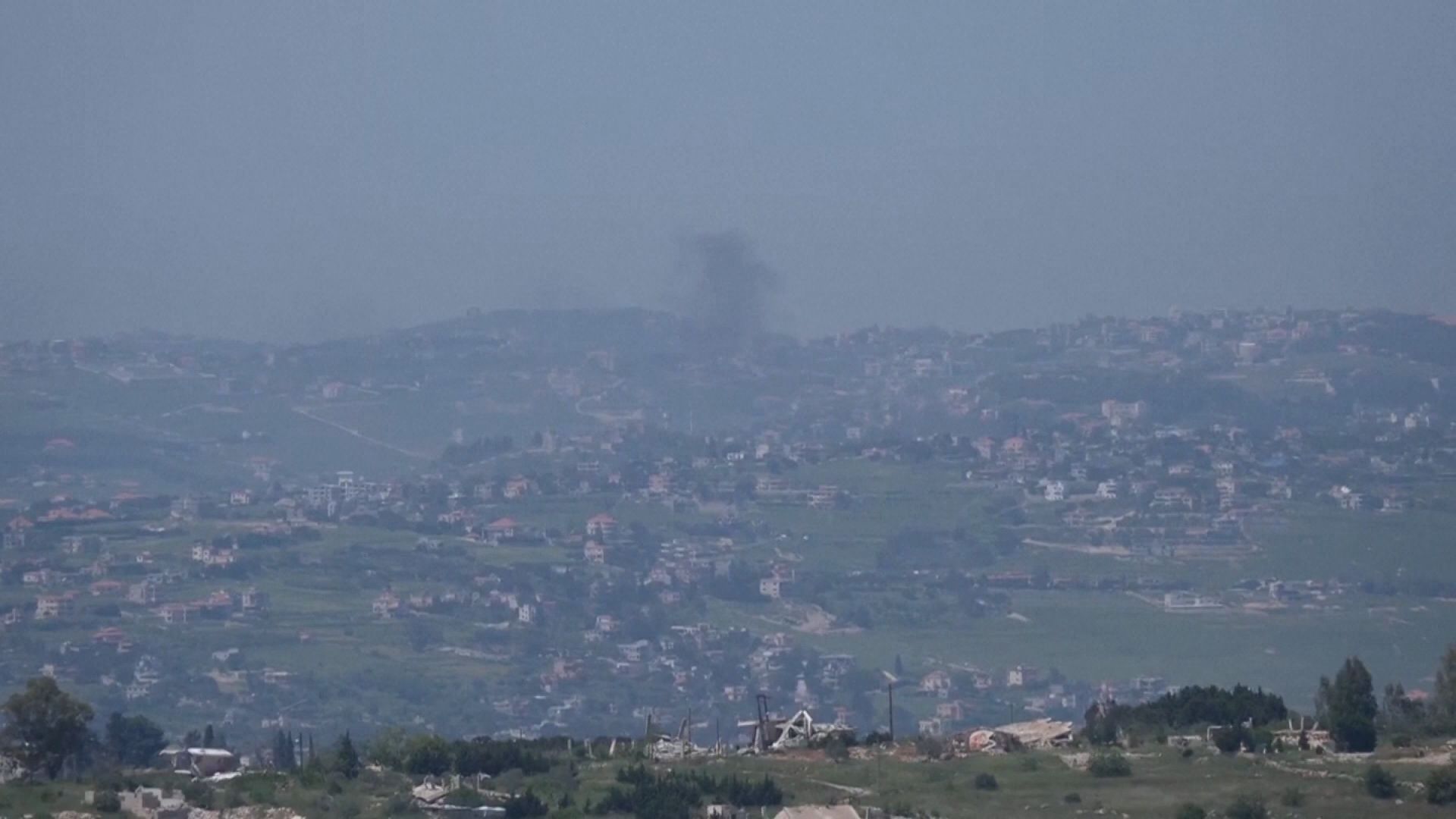
The death toll from an Israeli airstrike on the village of Saksakiyeh in southern Lebanon has risen to seven, with 15 others injured, according to the Lebanese Health Ministry.
The ministry said the cumulative toll from Israeli attacks starting March 2 has risen to 2,795 killed and 8,586 wounded.
Israel and Hezbollah, the Iranian-backed paramilitary group, have continued to exchange fire in recent days despite a ceasefire deal between the Lebanese and Israeli governments that was intended to pave the way for peace talks. Israel and the militant group have repeatedly accused one another of violating the agreement.
These are some of the latest reported attacks:
• An Israeli strike targeted a car on the Multaqa al-Nahrain road in Chouf, killing three people inside, according to Lebanon’s state-run National News Agency.
• The Israel Defense Forces said it continued to operate in southern Lebanon “to remove threats to Israeli civilians and IDF soldiers.” It said it struck weapons storage facilities and a position used by Hezbollah to launch drones toward Israeli soldiers.
• The IDF also said it struck two loaded launchers in southern Lebanon earlier Saturday. It said one launcher had previously fired toward Israeli soldiers, while the other had launched rockets toward Israel.
• The IDF said a projectile fired from Lebanon toward the Baram area in northern Israel landed in an open area, causing no casualties.
• Hezbollah said it targeted a gathering of Israeli soldiers in Deir Seryan, southern Lebanon, with a rocket barrage.
CNN’s Eugenia Yosef contributed to this report.
UK sending warship to Middle East ahead of possible Strait of Hormuz mission

The United Kingdom is deploying a warship to the Middle East ahead of a potential mission to protect shipping in the Strait of Hormuz, the Ministry of Defense announced on Saturday.
The Royal Navy’s HMS Dragon would support mine clearance efforts and protect vessels as part of a “strictly defensive” plan, the ministry said.
The United Kingdom and France have led an effort to build a multinational mission to secure shipping in the waterway while encouraging other international partners to participate.
Israel and Hezbollah trade fire as Israeli military orders more evacuations

Exchanges of fire continued Saturday between Israel’s military and Hezbollah, with the Iranian-backed group claiming nine attacks against Israeli forces.
The Israeli military said explosive drones launched by Hezbollah had fallen within Israeli territory, and one Israeli reservist soldier had been severely injured.
A series of Israeli drone strikes killed at least one person near Nabatieh in southern Lebanon, according to the Lebanese Health Ministry.
CNN has asked the Israeli military for a response.
There was also an airstrike on a vehicle about 17 kilometers (roughly 11 miles) south of Beirut airport, according to Lebanon’s official news agency NNA.
The Israeli military warned civilians in nine villages in southern Lebanon to leave on Saturday because of what it called “Hezbollah’s violation of the ceasefire agreement.” The evacuation orders follow similar demands Friday, when the Israel Defense Forces issued evacuation orders to residents of several areas, including some north of the Litani River, outside a zone which it has occupied.
Both Israel and Hezbollah have accused each other of violating the extended ceasefire deal between Israel and Lebanon. The truce was announced by US President Donald Trump on April 16 to pave the way for peace talks between the governments of Israel and Lebanon.
Here's where US gas prices stand today
The average price of a gallon of gasoline in the United States is down slightly from yesterday and remains well over a dollar higher than this time last year.
It’s one of the most prominent ways Americans have felt the economic impact of the war with Iran. Consumer sentiment continued to decline this month, reaching a fresh record low in the absence of a deal to end the conflict.
Iranian official denies report about people missing in alleged Gulf attack
An Iranian official has denied reports in state media that several people are missing after a US attack “on Iranian fishing and cargo vessels” in the Persian Gulf.
The alleged attack by “American warplanes” was reported by the semi-official Mehr news agency, and quoted the governor of Bandar-e-Lengeh, Fawad Moradzadeh.
Bandar-e-Lengeh is a small port near the Strait of Hormuz.
However, Moradzadeh was later quoted by another Iranian news agency, Tasnim, as saying that “what was published in some media outlets, citing me, is false and no official and confirmed statistics or information regarding the occurrence of such an attack has been announced by the relevant authorities.”
The US military said Friday it had fired on two Iranian-flagged oil tankers trying to bypass the ongoing US blockade, disabling them as they attempted to pull into an Iranian port in the Gulf of Oman, US Central Command said Friday.
The Iran war has changed. Trump’s talking points have not

As the US awaits an Iranian response to its latest proposal for ending the conflict that began at the end of February, President Donald Trump’s statements continue to send several distinct messages.
The ideas he repeats include the key points that: the US is in charge; Iran’s military is devastated; and things are going to be over pretty soon. Trump also insists that Iran cannot be allowed to develop a nuclear weapon, and that freedom of navigation through the Strait of Hormuz must be restored.
All this makes it very difficult to know how seriously to take his assurances about the proximity of a deal.
“They want to make a deal. We’ve had very good talks over the last 24 hours, and it’s very possible that we’ll make a deal,” Trump said Wednesday at the White House.
Trump has said similar for more than a month, asserting when he declared a two-week ceasefire on April 8 that “almost all of the various points of past contention have been agreed to between the United States and Iran, but a two-week period will allow the Agreement to be finalized and consummated.”
That ceasefire has been extended, but there is no sign of further talks on a broad deal.
Six missing after US strikes near Hormuz, Iran says
Six people are missing after what Iranian officials have described as a US attack “on Iranian fishing and cargo vessels” in the Persian Gulf.
The attacks by “American warplanes” took place near the Omani port of Khasab on the southern side of the Strait of Hormuz, according to the governor of Bandar-e-Lengeh, Fawad Moradzadeh.
Several people had been taken to hospital in Khasab, he said.
CNN is reaching out to the US military for comment on then claim.
The US military said Friday it had fired on two Iranian-flagged oil tankers trying to bypass the ongoing US blockade, disabling them as they attempted to pull into an Iranian port in the Gulf of Oman, US Central Command said Friday.
“A US Navy F/A-18 Super Hornet from USS George H.W. Bush (CVN 77) disabled both tankers after firing precision munitions into their smokestacks, preventing the non-compliant ships from entering Iran,” the release on X said. The tankers disabled were the M/T Sea Star III and M/T Sevda.
The disabling of the two tankers comes after the US carried out strikes on several Iranian targets on Thursday in what Central Command said was a response to Iran’s attacks on US warships in the Strait of Hormuz.
Very little shipping is passing through the Strait, according to marine tracking sites, as both Iran and the United States exercise blockades in or near the waterway.
What to know about US fighter jet’s attack on Iranian tankers

A US fighter jet disabled two Iran-flagged tankers on Friday by firing precision munitions into their funnels, the US military said, demonstrating the precision of the weapons in use.
US Central Command, which oversees Middle East military operations, released a video it says shows the tankers – the Sea Star III and the Sevda – being hit by a US Navy F/A-18. It said the vessels were violating the US blockage of Iranian ports.
The video shows slight puffs of smoke from the Sea Star’s smokestack, and then darker smoke rising from it after the strike.
In the Sevda clip, a burst of flame is followed immediately by plumes of heavy black smoke.
No damage beyond the funnel, or smokestack, area is evident in the videos provided by CENTCOM. The release did not mention any casualties on the tankers.
Military experts told CNN the Navy fighter jet likely used 500-pound laser-guided bombs to hit the tankers with such precision.
Global food prices rise for 3rd straight month, UN data shows, as war fuels supply concerns


Global food prices rose in April for the third straight month, the UN Food and Agriculture Organization (FAO) said on Friday, as conflict in the Middle East fuelled global supply concerns and pushed up the cost of fertilizer.
Prices of cereals, vegetable oil and meat all rose, though dairy and sugar prices fell, according to the FAO’s Food Price Index, which tracks a basket of internationally traded food commodities.
“Despite the disruptions linked to the crisis in the Strait of Hormuz, global agrifood systems continue to show resilience,” said FAO Chief Economist Máximo Torero. “Cereal prices have increased only moderately so far, supported by relatively strong stocks and adequate supplies from previous seasons.”
The FAO said it expects global cereal supplies to hold up through 2026, with production forecast to rise 6% year-on-year, but that uncertainty remains over next year’s wheat output as the closure of the Strait of Hormuz drives up energy and fertilizer costs.
Hezbollah claims responsibility for cross-border attacks while Israel strikes south Lebanon
Hezbollah has claimed responsibility for 26 attacks on Friday, including two on targets inside Israel for the first time since the ceasefire agreement.
Friday’s attack on a military base in Israel marked the first time the Iranian-backed militant group has publicly claimed responsibility for a cross-border strike since a delicate truce between Israel and Lebanon was ordered in mid-April.
In a statement, Hezbollah said it targeted an Israeli military base south of the city of Nahariya on Friday afternoon.
Later on Friday, Hezbollah said it launched an attack on Israel’s Meron military base, which the Israeli military said was intercepted with some projectiles falling in open areas.
Israel also carried out attacks on Hezbollah in south Lebanon, according to the country’s military, which said it had targeted more than 85 sites linked to the group in the past 24 hours.
At least 16 people, including four children, were killed by Israeli attacks in southern Lebanon on Friday and 54 people were wounded, according to Lebanon’s health ministry.
Lebanon’s National News Agency (NNA) reported multiple airstrikes on Friday in the south, as well as two on Nabi Sheit area east of Bekaa Valley.
Both Israel and Hezbollah have accused each other of violating the extended ceasefire deal between Israel and Lebanon.
Eugenia Yosef contributed reporting.
Higher costs linked to war pushed onto households, economist says

People in developed economies are cutting savings to maintain living standards, as higher costs linked to the Iran war are pushed directly onto households, an economist told CNN.
“Companies are effectively passing costs on to the end consumer,” said Paul Donovan, global chief economist for UBS Wealth Management.
His comments come as consumer sentiment in the US continued to decline this month, hitting a record low as the ongoing closure of the Strait of Hormuz rattles global energy markets.
Donavon also warned that rising energy prices could leave households with less room for other everyday spending, as customers will prioritize higher fuel and utility bills.
“The problem comes in when consumers are no longer willing to keep cutting back on their savings rate,” Donavon said. “Then you would start to see consumption have to be cut back in order to pay for the higher energy costs.”
US intel: Iran’s injured supreme leader is still shaping war strategy



US intelligence assesses that Iran’s new supreme leader is playing a critical role in shaping war strategy alongside senior Iranian officials, according to multiple sources familiar with the intelligence. The reports found that precise authority within a now-fractured regime remains unclear, but that Mojtaba Khamenei is likely helping direct how Iran is managing negotiations with the US to end the war.
Khamenei has not been seen in public since he sustained serious injuries during an attack that killed his father and several of the country’s top military leaders at the beginning of the war, leading to speculation about his health and role in the Iranian leadership structure.
The Trump administration continues to pursue a diplomatic end to the conflict as a ceasefire stretches past a month with US intelligence assessing that Iran continues to dig out from the US bombing campaign that left significant Iranian military capabilities intact and the ability to survive months more of an American blockade, according to sources.
Khamenei was announced as Iran’s new supreme leader replacing his father days after the strike that injured him, but to date the US intelligence community has not been able to visually confirm his whereabouts, the sources said.
Part of the uncertainty stems from Khamenei not using any electronics to communicate, instead only interacting with those who can visit him in-person or by sending messages via a courier, one of the sources added.
US sanctions Chinese firms over Iran links just days ahead of Trump-Xi summit
Days ahead of a critical summit between US President Donald Trump and China’s leader Xi Jinping in Beijing, the United States has placed fresh sanctions on a number of Chinese firms for links with Iran.
On Friday, the State Department sanctioned four firms, three of which are based in China, linked with providing satellite imagery it said enabled Iranian strikes on US forces in the Middle East.
The US Treasury Department, meantime, designated 10 individuals and companies, including several based in China, on Friday, which it said helped Iran secure weapons and materials needed to build ballistic missiles and drones.
“Today’s action holds China-based entities accountable for their support to Iran,” said Secretary of State Marco Rubio in a statement Friday. “The United States will take all necessary action at its disposal to target third-country entities and individuals aiding Iran’s military and defense industrial base.”
The US recently imposed sanctions on several Chinese refineries over purchases of Iranian crude oil, prompting a pushback from China which ordered companies not to comply.
Beijing’s foreign ministry has consistently said it opposes “unilateral sanctions that have no basis in international law” and will safeguard the rights of Chinese citizens and companies.
Trump is expected to travel to China next week.
The US is expecting Iran's response to a proposal to end the war. Where things stand now

President Donald Trump told CNN on Friday that his administration was expecting to hear back from Iran later that evening about a US proposal aimed at ending the conflict.
Asked by CNN’s Kristen Holmes whether he had received a response from Iran, Trump said, “We’ll hear from them supposedly tonight.”
Pressed on whether he believed the Iranians were slow-rolling negotiations, Trump replied that he did not know. “We’ll find out soon enough,” he said.
As at Saturday morning Eastern time, it is not clear if Iran has responded to the US.
The president’s comments came after Secretary of State Marco Rubio said the US expected a response from Iran on Friday regarding a proposal intended to end the war.
Other headlines to know:
- Project Freedom: Trump told reporters that the US might resume a short-lived operation, named “Project Freedom,” that guided ships through the Strait of Hormuz.
- Attacks on vessels: US Central Command said on Friday the US military fired on and disabled two Iranian-flagged oil tankers as the ships tried to bypass the blockade. The attacks came after the US said it targeted Iranian military facilities responsible for attacking its warships in the Strait of Hormuz.
- Exchange of fire: According to Iranian media, the US and Iran have been embroiled in a “limited exchange of fire” around the strait, while Trump maintains the ceasefire is still in effect. Rubio said that the latest US military action was “separate and distinct from Operation Epic Fury” and that the US would continue to respond “defensively.”
- Hezbollah attacks: Hezbollah said it attacked a military base in Israel on Friday, which appears to be the first time the Iranian-backed group has publicly claimed responsibility for a cross-border strike since a truce between Israel and Lebanon was ordered in mid-April.
- Port blockade: US Central Command said Friday that more than 70 vessels are being stopped from entering or leaving Iran’s ports amid the US blockade.
CNN’s Alejandra Jaramillo, Haley Britzky, Zachary Cohen, Billy Stockwell, Brad Lendon, Eleni Giokos, Tim Lister, Aida Karimi, Sana Noor Haq, Jennifer Hansler, Sarah Tamimi, Charbel Mallo, Eugenia Yosef, Kevin Liptak, Kaanita Iyer and Mustafa Qadri contributed to this report.