Our live coverage has moved
Get the latest updates on the war with Iran here.
Key developments
• Peace talks: President Donald Trump said the US could be “better off” if officials don’t reach a deal with Iran. He previously said he is not satisfied with Iran’s latest proposal to end the war.
• War powers: Trump also called a law limiting the use of force without congressional authorization “totally unconstitutional,” although in a letter to Congressional leaders, he argued that “hostilities” have “terminated.” Separately, Trump told an event in Florida he considers it “treasonous” for people to say the US is not “winning” the war.
• Troop withdrawal: The Pentagon said the US will be withdrawing roughly 5,000 troops from Germany. Trump had said that the US was considering removing troops after the German chancellor criticized the war with Iran.
• In Lebanon: More than a dozen people were killed in Israeli strikes in southern Lebanon yesterday and today, the country’s health ministry said, despite an extended ceasefire.
Trump on Iran deal, taking over Cuba and seized cargo ship: What he said at Florida event


President Donald Trump delivered remarks at an event in West Palm Beach, Florida, where he addressed a pending deal with Iran, taking over Cuba and a recently seized cargo ship.
Here’s what he said:
- On a deal with Iran: Trump said Friday that the United States could be “better off” if officials don’t reach a deal with Iran, as negotiations again appear snagged. “Frankly, maybe we’re better off not making a deal at all. Do you want to know the truth? Because we can’t let this thing go on,” he said. “Been going on too long.”
- On “taking over” Cuba: Trump quipped about the prospect of the US immediately “taking over” Cuba, suggesting military forces could move on the country on their way back from the war in Iran. “We’ll do on the way back from Iran, we’ll have one of our big — maybe the USS Abraham Lincoln aircraft carrier, the biggest in the world. We’ll have that come in, stop about 100 yards offshore, and they’ll say, thank you very much, we give up,” he said of the Cuban leaders.
- On seized Iranian cargo ship: Trump also likened the US to being “sort of like pirates” as he described a recent incident in which the Navy fired on and seized an Iranian cargo ship. “The ship stopped. They used tugboats, and then we landed on top of it, on top of everything else. … We took over the cargo, took over the oil,” he said.
Trump says "maybe we're better off not making a deal" with Iran

President Donald Trump said Friday that the United States could be “better off” if officials don’t reach a deal with Iran, as negotiations again appear snagged.
“Frankly, maybe we’re better off not making a deal at all. Do you want to know the truth? Because we can’t let this thing go on,” Trump said. “Been going on too long.”
Earlier Friday, Trump told CNN before departing for Florida that he was not satisfied with Iran’s latest proposal aimed at ending the conflict. The president also told reporters that his options on Iran come down to “go and just blast the hell out of them and finish them forever? Or do we want to try and make a deal?”
Trump quips that US will be “taking over” Cuba, perhaps on the way back from Iran war

President Donald Trump joked Friday about the prospect of the US immediately “taking over” Cuba, suggesting military forces could move on the country on their way back from the war in Iran.
Trump then suggested any action against Cuba would follow quickly after operations in the Middle East conclude.
“We’ll finish one first, I like to finish the job,” Trump said regarding the war in Iran.
As he delivered his remarks on the subject, Trump appeared to be smirking, and the audience laughed. The president’s comments come as he signed an executive order earlier Friday expanding US sanctions on the Cuban government and its affiliates.
Trump says US is "sort of like pirates" as he describes recent seizure of Iranian ship

President Donald Trump said that the US was “sort of like pirates” as he described a recent incident in which the Navy fired on and seized an Iranian cargo ship.

President Donald Trump said that the US was “sort of like pirates” as he described a recent incident in which the Navy fired on and seized an Iranian cargo ship.
“We have such a great military, a great Navy,” Trump said at an event Friday night.
He recalled US forces recently firing into the engine room of a ship that was attempting to ram into what he called the “iron wall.” He appeared to be referencing USS Spruance intercepting the Iranian-flagged “Touska” as it traveled towards an Iranian port in violation of the blockade last month.
“The ship stopped. They used tugboats, and then we landed on top of it, on top of everything else. We then land on top of it, and we took over the ship. We took over the cargo, took over the oil. It’s a very profitable business,” the president said, musing that the activity was “like pirates.”

At the time the seizure occurred, Iran’s military called it “maritime highway robbery” and “piracy.”
“We warn that the Armed Forces of the Islamic Republic of Iran will soon respond to and retaliate against this U.S. armed piracy,” Iran’s military said at the time, according to Iran’s state broadcaster IRIB in a post on Telegram.
"No one has any money": Life gets harder to afford in Iran
Years of sanctions, government mismanagement and now war have had a catastrophic impact on Iran’s economy. As prices rise and jobs disappear, people say essentials like food and medicine are becoming out of reach.

As prices rise and jobs disappear, people across Iran say essentials like food and medicine are becoming out of reach.

Trump: "It's treasonous" to say the US is not winning the war. Catch up on the latest here

President Donald Trump said he considers it “treasonous” for people to say that the United States is not “winning” the war with Iran, despite notifying Congress earlier that the hostilities have “terminated.”
Catch up on other headlines here:
- The US will be withdrawing roughly 5,000 troops from Germany, a process that will be completed over the next 6-12 months, the Pentagon said Friday. That would still leave over 30,000 US troops in the country, however. Trump had earlier said that the US was “studying and reviewing” removing troops from Germany after Chancellor Friedrich Merz criticized the US’ war with Iran.
- A new statement attributed to Iran’s Supreme Leader Mojtaba Khamenei was published by Iranian state media on Friday, marking Iran’s Labor Day and Teachers’ Day. Khamenei, who has still not been seen in public more than seven weeks after he was announced as the new supreme leader, praised Iran’s workers and teachers in the message which he also used to rally support among Iranians.
- Israeli strikes against southern Lebanon have killed 11 people despite the ceasefire. Ten people, including a woman and a child, died in the town of Habbouch and one woman was killed in Ain Baal.
- Several US Marine Corps personnel, civilian employees and their families this week received “unsubstantiated” threats via text message from a hacking group affiliated with Iran, the Naval Criminal Investigative Service (NCIS) said in a statement to CNN on Friday.
CNN’s Ivana Kottasová, Eyad Kourdi, Charbel Mallo, Sean Lyngaas, Natasha Bertrand, and Kit Maher contributed reporting.
US withdrawing 5,000 US troops from Germany after chancellor criticized war with Iran


The US will be withdrawing roughly 5,000 troops from Germany, a process that will be completed over the next 6-12 months, the Pentagon said Friday.
That would still leave over 30,000 US troops in the country, however. As of December 2025, there were 36,436 active-duty US military personnel permanently stationed in Germany, according to data from the US Defense Manpower Data Center (DMDC).
President Donald Trump said Wednesday in a post on Truth Social that the US was “studying and reviewing” removing troops from Germany after its chancellor criticized the US’ war with Iran.
German Chancellor Friedrich Merz said the US was being “humiliated” by Iran and criticized the administration for not having an effective strategy to end the war.
Trump previously threatened to reduce troop numbers in the country in 2020, during his first tenure in office and while Angela Merkel held the German chancellorship.
Trump says he considers it "treasonous" to say US is not winning war with Iran


President Donald Trump said he considers it “treasonous” for people to say that the United States is not “winning” the war with Iran, despite notifying Congress earlier that the hostilities have “terminated.”

President Donald Trump said he considers it “treasonous” for people to say that the United States is not “winning” the war with Iran, despite notifying Congress earlier that the hostilities have “terminated.”
Speaking of the swift January military action in Venezuela, which he called “one of the greatest military movements in history,” Trump said he doesn’t want to speak too soon about victory in Iran.
Trump has repeatedly said the US has destroyed Iran’s navy and emphasized the “genius” of the US blockade on ships entering and exiting Iranian ports. However, Iran still maintains leverage over the Strait of Hormuz.
US Navy says Iranian group is sending threatening text messages to Marine Corps personnel

Several US Marine Corps personnel, civilian employees and their families this week received “unsubstantiated” threats via text message from a hacking group affiliated with Iran, the Naval Criminal Investigative Service (NCIS) said in a statement to CNN on Friday.
One threatening message reviewed by CNN said, “Your identities are fully known to our missile units, and every move you make is under our surveillance.”
Some service members appeared to reply mockingly. “Good luck,” one recipient of the texts wrote, adding sunglasses and American flag emojis, according to a screenshot of the message posted by the Iranian hackers.
The Iranian group this week also claimed to leak personal contact information for US Marines stationed in the Middle East amid the US-Iran war, which is currently in a delicate ceasefire.
“These types of digital harassment and misinformation campaigns are routinely monitored by authorities and generally intended to cause alarm rather than signal an actual physical danger,” an NCIS spokesperson told CNN.
The Navy secretary last month issued a memo to service members telling them to tighten their online security in response to “adversary cyber actors” that are targeting Navy personnel.
“These actors seek to psychologically influence DON [Department of Navy] personnel and their families, and also seek to trick personnel into clicking” on potentially malicious links, the memo says.
The Iranian group in question is known for psychological operations that exaggerate the impact of their digital attacks. They hacked the personal email account of FBI Director Kash Patel in March and posted years-old photos of Patel online.
This post has been updated with additional details.
Israeli strikes on southern Lebanon kill 11 people, despite the ceasefire



Israeli strikes against the southern Lebanese town of Habbouch have killed 10 people, including a woman and a child, according to Lebanon’s Ministry of Health.
Several more people were injured, the ministry added.
The Israeli military confirmed to CNN that it was striking against the area, with a spokesperson saying that an evacuation order was issued for the town before the attack.
The spokesperson said “the results” of the strikes were still being investigated.
Separately, one woman was killed and seven people were injured in a strike in the southern Lebanese town of Ain Baal, the country’s health ministry said.
For context: The strikes on Habbouch and Ain Baal are just the latest Israeli attack against Lebanese towns and villages during what was supposed to be a ceasefire between Israel and the Iranian-backed militant group Hezbollah.
More than a dozen people were killed in Israeli strikes in southern Lebanon yesterday. The Lebanese health ministry said more than 2,600 people have been killed since the latest conflict started in early March.
This post was updated with the latest details on the death toll.
Iran "has emerged as a military power," says Labor Day message attributed to supreme leader

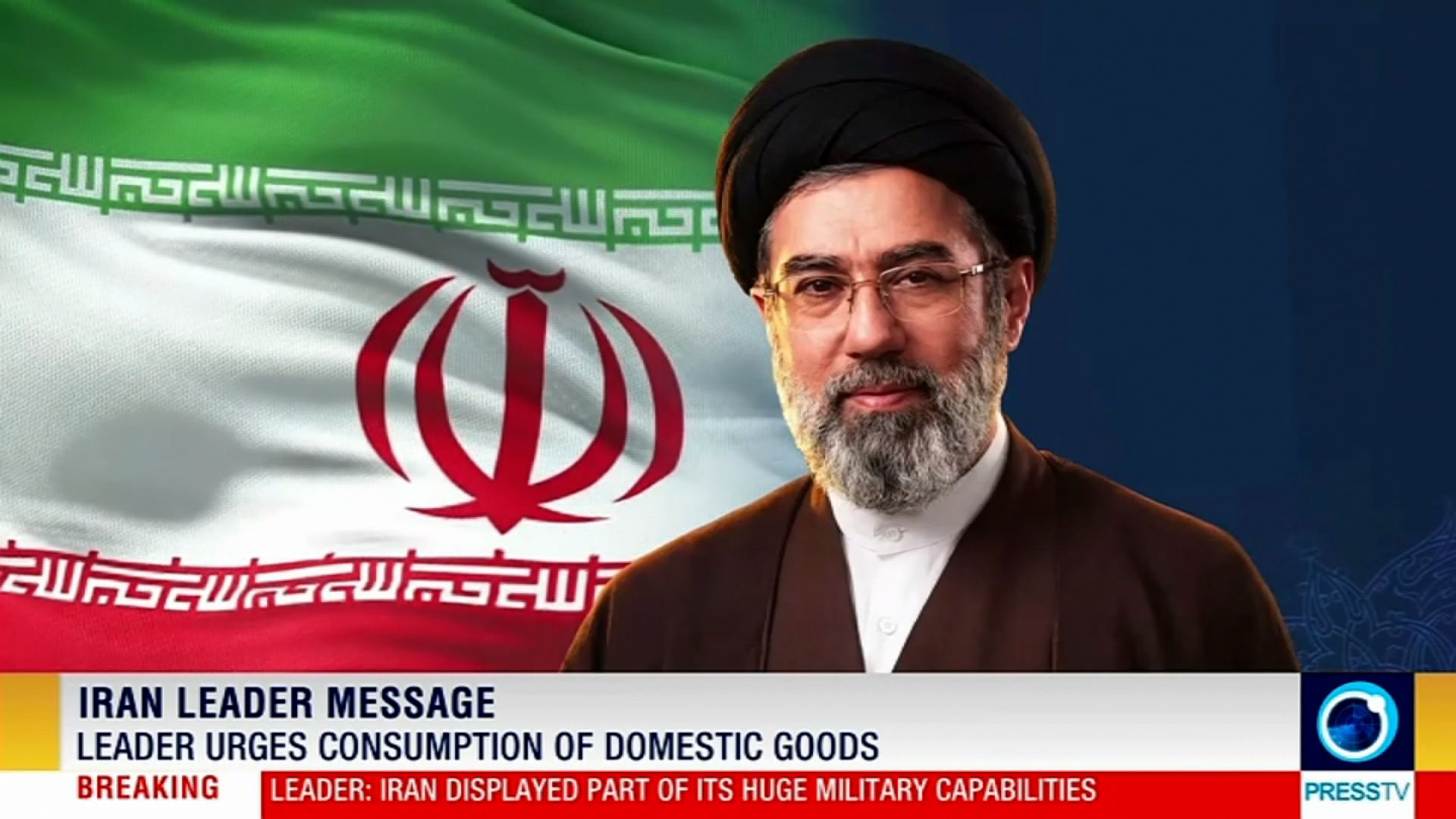
A new statement attributed to Iran’s Supreme Leader Mojtaba Khamenei was published by Iranian state media on Friday, marking Iran’s Labor Day and Teachers’ Day.
Khamenei, who has still not been seen in public more than seven weeks after he was announced as the new supreme leader, praised Iran’s workers and teachers in the message which he also used to rally support among Iranians.
The statement attributed to him called on people to support workers by buying domestically-made products, and said business owners should avoid layoffs if at all possible.
The statement said Iran “has emerged as a military power after years of effort” and said teachers and educators should penetrate “the Iranian-Islamic identity into the minds and souls of the youth.”
The message marks the second statement this week attributed to Khamenei. On Thursday, the supreme leader doubled down on his uncompromising vision for the region and taunted the country’s neighbors.
Imprisoned Iranian Nobel peace laureate hospitalized after 'catastrophic' deterioration

The Iranian Nobel Peace Prize laureate Narges Mohammadi has been transferred from prison to a hospital after “a catastrophic deterioration in her health,” her foundation said in a statement.
Mohammadi’s family and supporters have spent weeks calling on the Iranian regime to allow her to receive urgent medical care. Until Friday, these appeals appeared to have been ignored.
The Narges Foundation said Mohammadi has been transferred from the Zanjan prison to a local hospital in Zanjan province in Iran. The foundation said in February that Mohammadi was on hunger strike.
In March, it said Mohammadi was in extremely poor health, had suffered a suspected heart attack, and was denied specialist medical care.

One of Iran’s most prominent human rights activists, Mohammadi was awarded the 2023 Nobel Peace Prize for “her fight against the oppression of women in Iran and her fight to promote human rights and freedom for all.”
Catch up on everything Trump just said about war negotiations

US President Donald Trump said he is not satisfied with Iran’s latest proposal to end the war, casting doubt on Iranian officials’ ability to ever accept a deal.
Iran sent its latest proposal for negotiations with the United States to Pakistani mediators on Friday, according to sources familiar with the negotiation process. Despite Trump saying that Tehran has made “strides” in negotiations, it isn’t yet clear what is in the updated Iranian proposal.
Here’s what he said:
- Trump’s warning: The US president said his options on Iran boil down to a major military escalation or striking a deal. “There are options. Do we want to go and just blast the hell out of them and finish them forever? Or do we want to try and make a deal. That’s the options,” Trump said, confirming he’d received an updated briefing for military options from US Central Command yesterday evening.
- Who’s in charge?: Trump called the country’s leadership “very disjointed” when expressing his dissatisfaction with the latest peace proposal. Earlier, Iran’s Fars news agency reported that Iran’s Supreme Leader Ayatollah Mojtaba Khamenei is “completely well” and overseeing “negotiations.”
- War powers: Trump dismissed the 60-day war powers deadline as well, calling it “totally unconstitutional.” The remarks represented the latest administration dismissal of the War Powers Resolution of 1973, which requires the president to obtain a declaration of war from Congress to continue the use of force beyond 60 days.
Outside the US:
- Deep distrust: One Iranian source told CNN that Tehran could see talks restarting if the US lifts its blockade of Iranian ports and Iran fully reopens the Strait of Hormuz. The source also said that Iran remains deeply distrustful of the US.
- Flurry of calls: Meanwhile, in Iran, Foreign Minister Abbas Araghchi made a series of phone calls to several of his counterparts today, the country’s semi-official state news agency Tasnim reported. Araghchi spoke with the foreign ministers representing Turkey, Egypt, Qatar, Iraq, Saudi Arabia and Azerbaijan to brief them about the latest developments on the efforts to end the US and Israel’s war with Iran, according to Tasnim.
- Strikes in Lebanon: Israeli strikes against the southern Lebanese town of Habbouch have killed six people, including a woman and a child, according to Lebanon’s Ministry of Health. More than a dozen people were killed in Israeli strikes in southern Lebanon yesterday.
CNN’s Kevin Liptak, Mostafa Salem, Aida Karimi, Issy Ronald and Adam Cancryn contributed to this report.
Most Americans call Iran war a mistake as economic worries continue, new poll finds

A 61% majority of Americans say that it was a mistake for the US to use military force against Iran, according to a Washington Post/ABC News/Ipsos poll released today.
As the Post notes, that’s on par with the 59% who called the Iraq war a mistake in a May 2006 Post/ABC poll. A Gallup poll from 1971 noted that roughly six in 10 Americans said the same thing about the Vietnam war.
Roughly nine in 10 Democrats currently call the military action against Iran a mistake, as do 71% of independents and 19% of Republicans.
There are mixed opinions on America’s next steps, with 48% of the public saying the US should make a peace deal with Iran even if it results in a worse deal for the US, and 46% saying that the US should push Iran for a better deal, even if that means resuming military action.
On the economy: The survey also finds that 23%, roughly one-quarter of Americans, say they’re falling behind financially — up from 17% in February. Another 52% say they have just enough to maintain their standard of living, with 24% saying that they’re getting ahead.
On the impact of high gas prices: The poll showed 44% saying they’ve cut back on driving, 42% say they’ve cut household expenses and 34% say they’ve changed travel or vacation plans. Half of Americans say they expect gas prices to get worse over the next year, while only 21% say they expect them to get better.
The Washington Post/ABC News/Ipsos poll surveyed 2,560 US adults on April 24-28, using a nationally representative panel. Results among the full sample have a margin of sampling error of +/- 2 percentage points.
Trump argues "hostilities" with Iran "have terminated" in war powers letter to Congress
While President Donald Trump stated Friday that the war powers resolution is “totally unconstitutional,” his administration appears to be making an effort to comply with Congress, according to a letter obtained by CNN.
In the Friday letter to House Speaker Mike Johnson and Senate President Pro Tempore Chuck Grassley, Trump argues that the Iran war “hostilities,” which began with US strikes on February 28, “have terminated,” after a ceasefire was declared — an argument that aligns with prior CNN reporting.
“On April 7, 2026, I ordered a 2-week ceasefire. The ceasefire has since been extended. There has been no exchange of fire between United States Forces and Iran since April 7, 2026. The hostilities that began on February 28, 2026, have terminated,” the letter states.
It notifies Johnson and Grassley of changes to the United States’ posture in Iran, as part of his “efforts to keep the Congress fully informed, consistent with the War Powers Resolution.”
At the same time, Trump writes that the threat from the Iran regime “remains significant” and the Defense Department will continue to “update its force posture” to address it “as necessary and appropriate.”
The law states Trump would need to “terminate any use of the United States Armed Forces” or seek congressional authorization after the Iran conflict’s 60-day mark. For some, Friday marked 60 days, but others argue that since the ceasefire paused military action, the days after it was declared don’t count toward the 60 days.
Read here for more context on the war powers resolution.
Trump claims US has more weapons inventory than ever, but assessments suggest otherwise


President Donald Trump just claimed that the United States has “tremendous amounts of inventory” all over the world, adding that “we have more than we’ve ever had.”
He criticized his predecessor, former President Joe Biden, for providing Ukraine with US weapons.
However, CNN reported last month that the US military has significantly depleted its stockpile of key missiles during the war with Iran and created a “near-term risk” of running out of ammunition in a future conflict should one arise in the next few years, according to experts and three people familiar with recent internal Defense Department stockpile assessments.
Here’s how much of the US stockpile has been expended over the last seven weeks of war, according to a recent analysis conducted by the Center for Strategic and International Studies:
- At least 45% of its stockpile of Precision Strike Missiles
- At least half of its inventory of THAAD missiles, which are designed to intercept ballistic missiles
- Nearly 50% of its stockpile of Patriot air defense interceptor missiles
Those numbers closely align with classified Pentagon data about US stockpiles, according to the sources familiar with the assessment. Earlier this year, the Pentagon signed a series of contracts that would help expand missile production, but the delivery timeline to replace these systems is three to five years even with the increased capacity, the CSIS experts and the sources said.
CNN’s Zachary Cohen and Natasha Bertrand contributed reporting.
Trump says Kurds did not deliver weapons to Iranian protesters


President Donald Trump said he is “not happy” with Kurdish groups who were supposed to deliver US weapons to protesters in Iran to foster an uprising.
Trump said at the White House today that the “Kurds did not deliver the weapons.”
“I’m not happy with the delivery of the weapons. I’m not thrilled with it, but a small amounts of weapons were sent and we’ll see who has them. But I’m not happy with what happened with the Kurds,” Trump said when asked about reports that the weapons were still in Iraqi Kurdistan.
In March, CNN reported the Trump administration was in active discussions with Iranian opposition groups and Kurdish leaders in Iraq about providing them with military support, according to sources.
Any attempt to arm Iranian Kurdish groups would need support from the Iraqi Kurds to let the weapons transit and use Iraqi Kurdistan as launching ground.
Kurdish groups have denied Trump’s allegations to various news outlets in recent weeks.
Trump says Iran options are a deal or "blast the hell out of them"


President Donald Trump said his options on Iran boil down to a major military escalation or striking a deal.
“There are options. Do we want to go and just blast the hell out of them and finish them forever? Or do we want to try and make a deal. That’s the options,” Trump said, confirming he’d received an updated briefing for military options from US Central Command yesterday evening.
Trump said his preference was not to restart the bombing campaign.
Trump dismisses 60-day war powers deadline as "totally unconstitutional"


President Donald Trump on Friday called a law limiting the use of force without congressional authorization “totally unconstitutional,” signaling he would not seek official permission from Congress to continue the war with Iran.
Trump’s remarks represented the latest administration dismissal of the War Powers Resolution of 1973, which requires the president to obtain a declaration of war from Congress to continue the use of force beyond 60 days.
Many lawmakers see today as the 60-day mark, based on Trump notifying Congress of the beginning of hostilities on March 2.
Defense Secretary Pete Hegseth had previously claimed that the open-ended ceasefire between US and Iran constituted a pause of the war and meant the administration had not yet reached the 60-day mark.
On Friday, Trump said his administration is in constant contact with lawmakers but asserted incorrectly that “nobody’s ever sought” authorization from Congress to go to war. Then-President George W. Bush sought and received congressional authorization for the Iraq war in 2002.