


What we're covering
• Double-tap controversy: The admiral who Secretary of Defense Pete Hegseth said ordered a follow-up strike that killed survivors during an attack on an alleged drug boat is facing questions from Congress about the military operation. President Donald Trump said he’d support releasing video of the second strike, which has raised questions over the legality of US attacks on vessels in the Caribbean and sparked bipartisan backlash against Hegseth.
• Ukraine war talks: Ukrainian officials are traveling to the US for talks with their American counterparts, a Ukrainian source told CNN. Highlighting a key sticking point in negotiations, Russian President Vladimir Putin has said Moscow would seize a contested region of eastern Ukraine by any means.
• Peace deal for African nations: Trump is hosting the presidents of Rwanda and the Democratic Republic of Congo today, and the leaders are expected to sign a peace deal that builds on agreements signed this year, throughout which the conflict has continued.
Himes after strike briefing: "One of the most troubling things I’ve seen in my time in public service"
The top Democrat on the House Intelligence Committee said leaving a briefing with top US military officials that what he learned about September’s double-tap strike in the Caribbean was “one of the most troubling things” he’s seen as a congressman.
Rep. Jim Himes of Connecticut told reporters that Admiral Frank “Mitch” Bradley defended the decisions taken during the September strike. But Himes concluded after reviewing video of the incident that “you have two individuals in clear distress, without any means of locomotion, with a destroyed vessel, were killed by the United States.”
“People will someday see this video, and they will see that that video shows, if you don’t have the broader context, an attack on shipwrecked sailors,” the congressman said.
He said the admiral said there was no “kill them all” order and there was not an order to grant no quarter.
Himes said he thinks the video should be released publicly.
Catch up on the latest on the US strikes against alleged drug boats
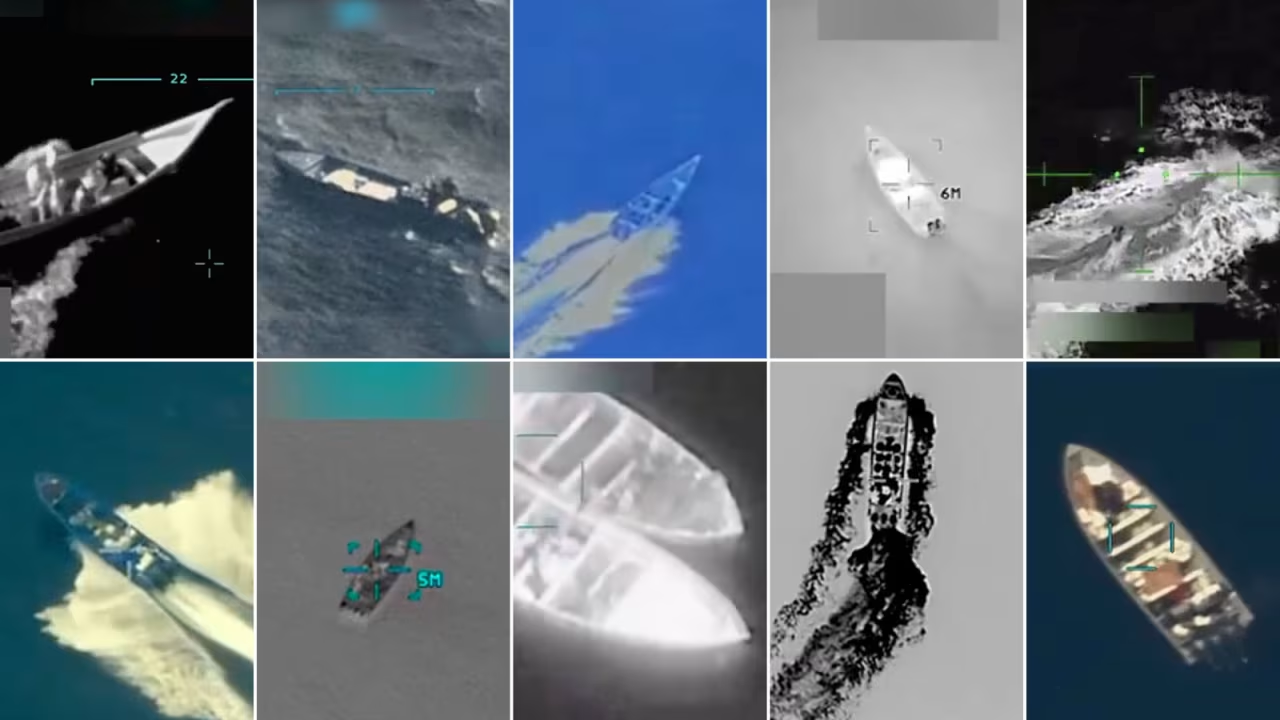
The US military has killed at least 83 people in strikes that have destroyed 22 boats as part of a campaign that Washington says is aimed at curtailing the flow of drugs into the United States. See a timeline of the strikes here.
There had been three survivors of those strikes, two of whom were briefly detained by the US Navy before being returned to their home countries. The other is presumed dead after a search by the Mexican Navy.
The Trump administration has told Congress that the US is now in an “armed conflict” against drug cartels, beginning with its first strike on September 2, labeling those killed “unlawful combatants” and claiming the ability to engage in lethal strikes without judicial review due to a classified Justice Department finding.
The US military’s September strike has come under increased scrutiny as the Trump administration’s explanation has shifted. CNN and other outlets have reported that after an initial strike on a boat killed some of the crew and appeared to disable the ship, the military determined there were survivors and ordered at least one additional strike, according to sources.
Trump revived a playbook carried out in Afghanistan for his campaign targeting alleged drug boats. The US spent more than a decade carrying out attacks, known as “signature strikes,” based on similar rough intelligence profiles as part of its drone campaign in the Middle East.
Admiral and Joint Chiefs of Staff chairman arrive at US Capitol for briefing
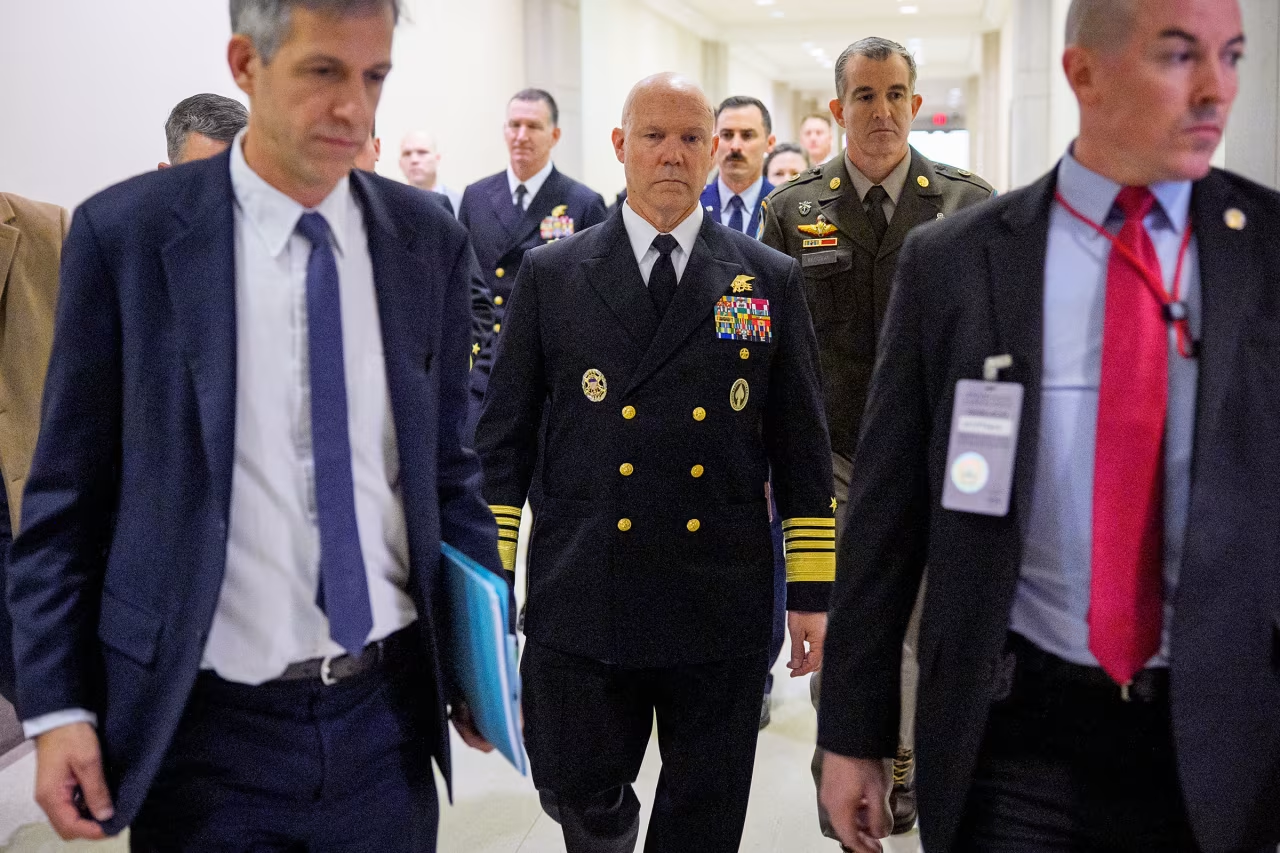
Adm. Frank “Mitch” Bradley and Joint Chiefs of Staff Chairman Gen. Dan Caine arrived at the US Capitol roughly half an hour ago, ahead of a day of briefing senior lawmakers.
The briefings will be related to the controversial double-tap strike the US conducted against a suspected drug vessel in the Caribbean in September.
They did not respond to a shouted question from a reporter as they arrived.
Pentagon officials make case for follow-up strike, saying survivors were still "in the fight"
The Defense Department has been making the case for the follow-up strike that killed survivors during an attack on an alleged drug boat in the Caribbean by arguing that the survivors were still “in the fight.” They appeared to be radioing for help and could have theoretically continued trafficking drugs if they’d been rescued, according to people briefed on the strike.
Adm. Frank “Mitch” Bradley, who will brief Congress today on the double-tap strike, is expected to make a similar case to lawmakers and will show the video of the operation, an official said.
What we know about the Navy SEAL leader facing questions from Congress today about the double-tap strike
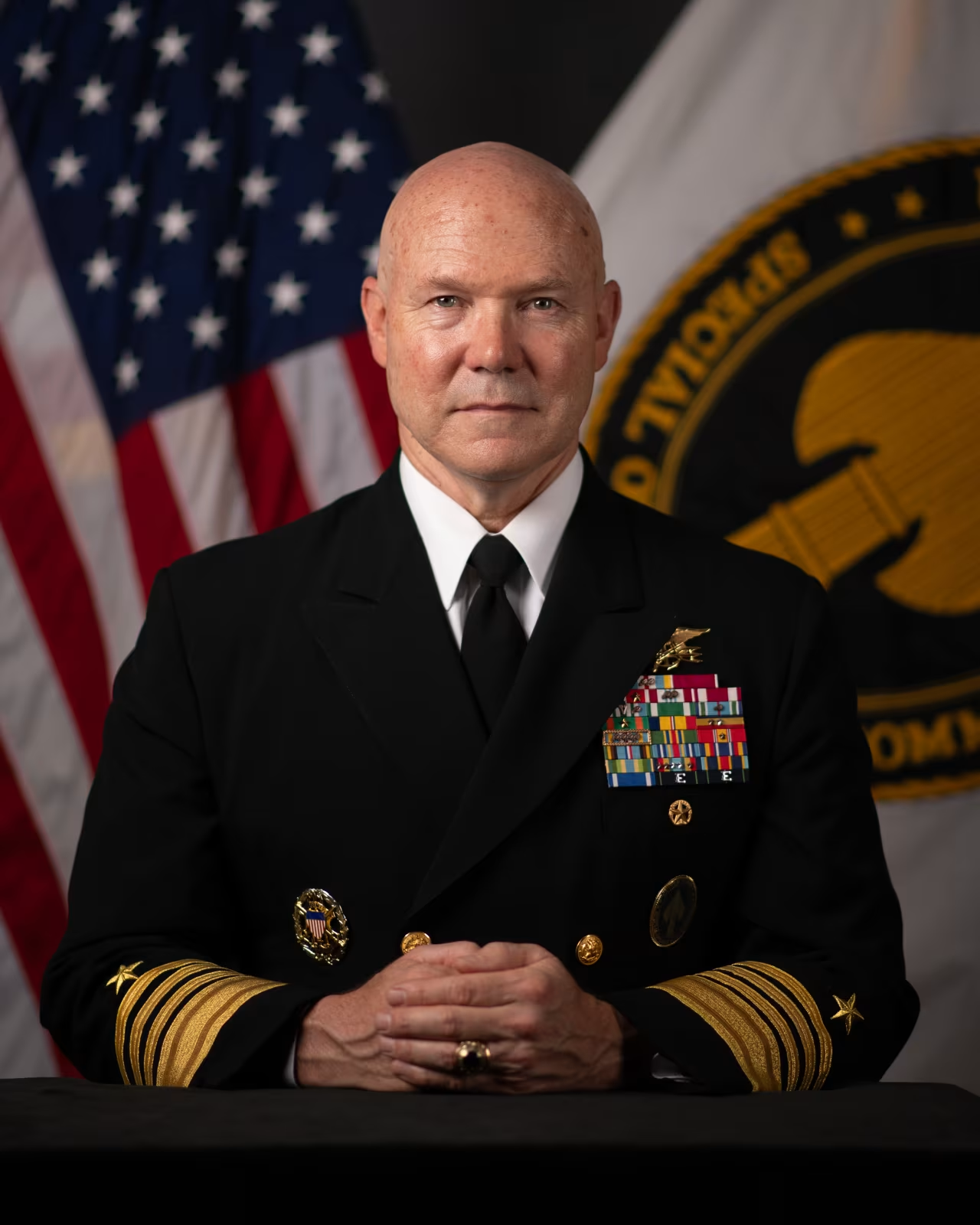
More than two months after a reported double strike on a suspected drug vessel in the Caribbean, lawmakers are set to question a career Navy SEAL with over 30 years of military experience about the attack.
Adm. Frank “Mitch” Bradley, a Navy SEAL officer was the commander of Joint Special Operations Command at the time of the strike, has had the responsibility of the follow-up attack pinned on him by Secretary of Defense Pete Hegseth, as well as White House press secretary Karoline Leavitt.
Bradley is broadly respected by Republicans and Democrats alike, and sources who served alongside him or under him praised him as a quintessential Naval officer.
A source familiar with Bradley described him as stoic, meticulous, and “very level-headed.” He has largely approached the idea of speaking with Congress positively and with an understanding that this is what the job requires, the source said.
The admiral, who now leads US Special Operations Command, had carried out “thousands of strikes over his career,” the source familiar said. “This was his 37th month at [Joint Special Operations Command] — he knew what he was doing.”
Republican Speaker of the House Mike Johnson said earlier this week that Bradley is “a highly decorated, highly respected” officer. Democratic Sen. Mark Kelly said he has a “stellar reputation” and said any decision to carry out a follow-on strike is the fault of the culture fostered by Hegseth, as well as President Donald Trump.
Read more about the admiral in our full article here.
Ahead of US-Ukraine talks, Putin says Russia will seize Donbas by any means
Russian President Vladimir Putin said Moscow would seize the Donbas region of eastern Ukraine “in any case,” including by military means, according to state media.
One of the Kremlin’s biggest demands has been for Ukraine to surrender territory in the Donbas region, which has been annexed but not yet conquered by Russia.
Ahead of a summit with Indian Prime Minister Narendra Modi in New Delhi on Thursday, Putin gave an interview with India Today, in which he said Russia would “liberate Donbas and Novorossiya in any case — by military or other means,” according to Russian state media TASS.
Novorossiya, or New Russia, is a historical term referring to territories toward the west during the Russian empire. Putin has revived the term and used it in declaring Crimea part of Russia in 2014.
Putin also described his meeting with US envoy Steve Witkoff and President Donald Trump’s son-in-law, Jared Kushner, about a plan to end the war on Tuesday as lasting a long time since both parties had to “go through each point of the peace proposals,” according to TASS.
Putin said Russia did not agree with some of the points of the US-brokered proposal, but that it was a “difficult task.” He reiterated Russia’s demands that Ukraine withdraw its troops from Donbas and “refrain from military action,” according to TASS.
Trump said the US delegation had a “very good meeting” with Putin, and that they believed the Russian president “would like to see the war ended” — though the talks failed to yield a breakthrough.
Ukrainian officials are traveling to the US, where they have been invited to hold talks with their American counterparts on a plan to end Russia’s war, a Ukrainian source told CNN.
Here's what is on Trump's schedule today
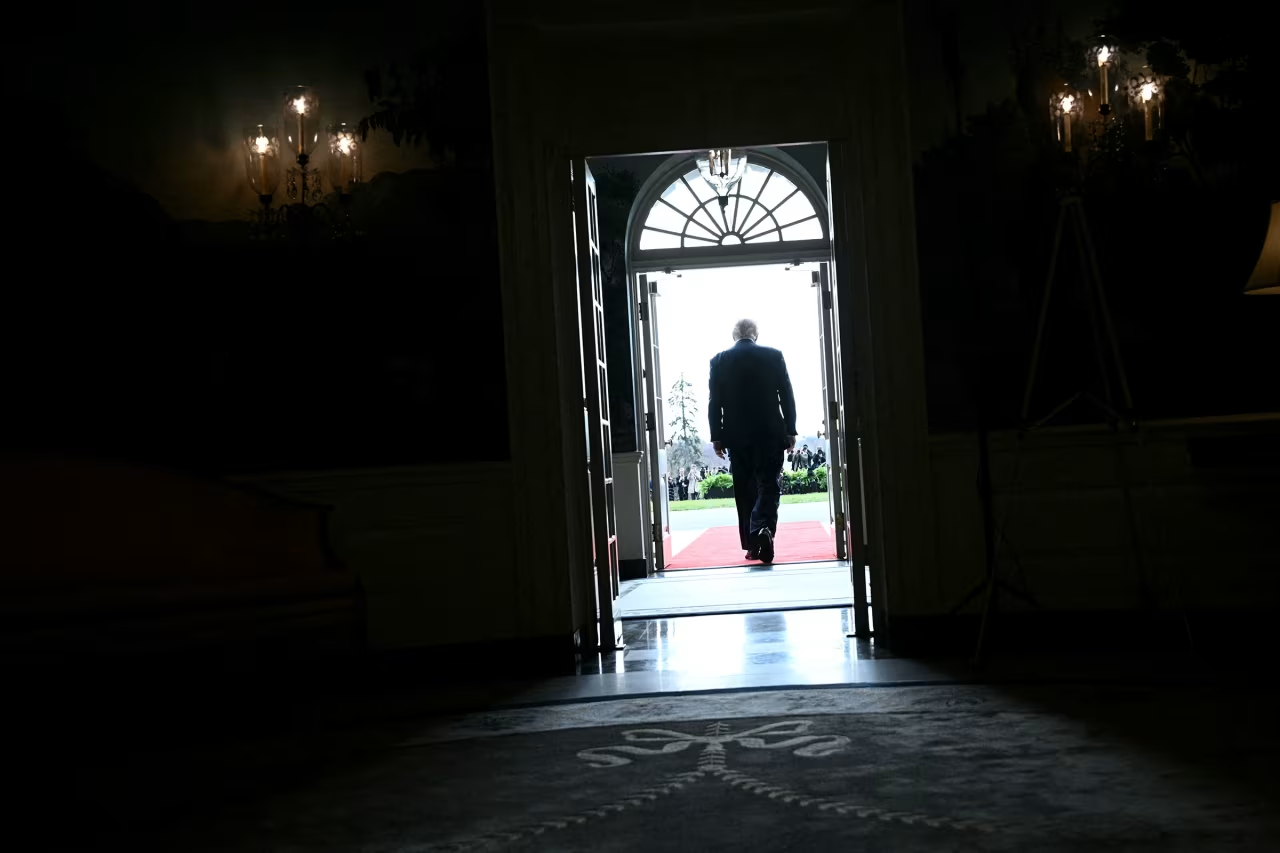
On top of his efforts to bring about an end to the war in Ukraine, President Donald Trump also has ambitions of stopping a decades-long conflict in the Democratic Republic of Congo.
The foreign ministers of Rwanda and DR Congo signed a White House-brokered peace deal in Washington, DC back in June. Today, the leaders of both countries are set to meet with Trump and then each other.
Here’s what’s on Trump’s schedule today. Most early events are closed to the press, though we’re expected to have access to the signing ceremony around noon.
- 11 a.m. ET: Trump greets Rwanda’s President Paul Kagame.
- 11:10 a.m. ET: Trump also greets the President of the Democratic Republic of the Congo Felix Tshisekedi.
- 11:20 a.m. ET: The three presidents participate in a trilateral greeting.
- 12:10 p.m. ET: Trump, Kagame and Tshisekedi participate in a signing ceremony at the Institute of Peace — which now bears Trump’s name after the administration gutted the independent agency earlier this year. This event is set to be open to the press, so we’ll bring you updates as it happens.
- 6 p.m. ET: Trump participates in the National Tree Lighting Ceremony at President’s Park alongside first lady Melania Trump. This is also open to the press.
Ukraine delegation traveling to US for talks on peace plan, source says
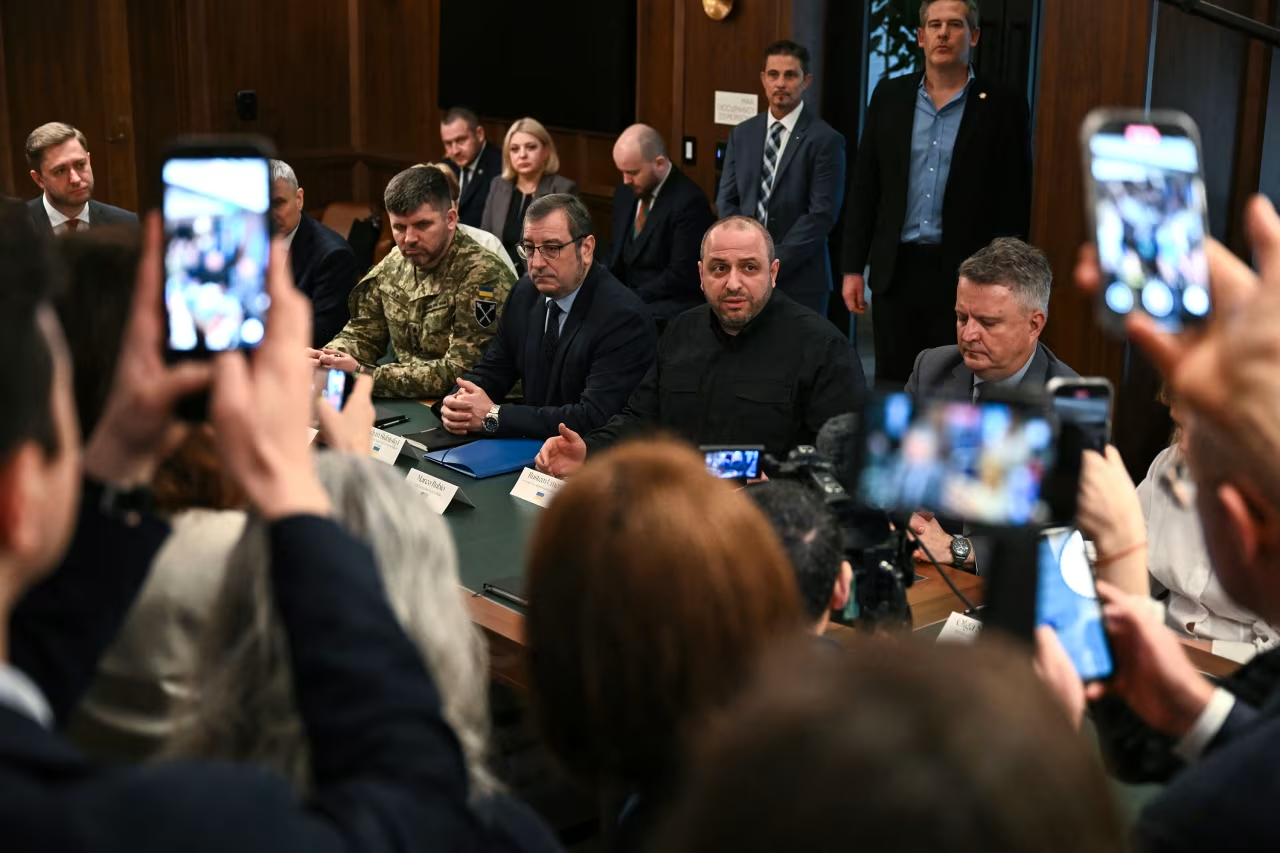
Ukrainian officials are travelling to the US, where they have been invited to hold talks with their American counterparts on a plan to end Russia’s war, a Ukrainian source told CNN.
The head of the Ukrainian delegation Rustem Umerov and Kyiv’s Chief of the General Staff Andrii Hnatov are travelling to Miami, the source said.
Peace talks are gaining momentum following a lengthy meeting in Moscow on Tuesday between Russian President Vladimir Putin and US President Donald Trump’s special envoy Steve Witkoff and son-in-law Jared Kushner.
Those talks were “very useful, constructive, and highly substantive,” but a “compromise option was not found,” Russian foreign policy adviser and Putin aide Yuri Ushakov said.
Zelensky said Wednesday that Umerov and Hnatov will “begin preparations for a meeting with the envoys of President Trump in the United States.”
GOP senator says Hegseth is responsible for processes that led to strike on survivors in the Caribbean
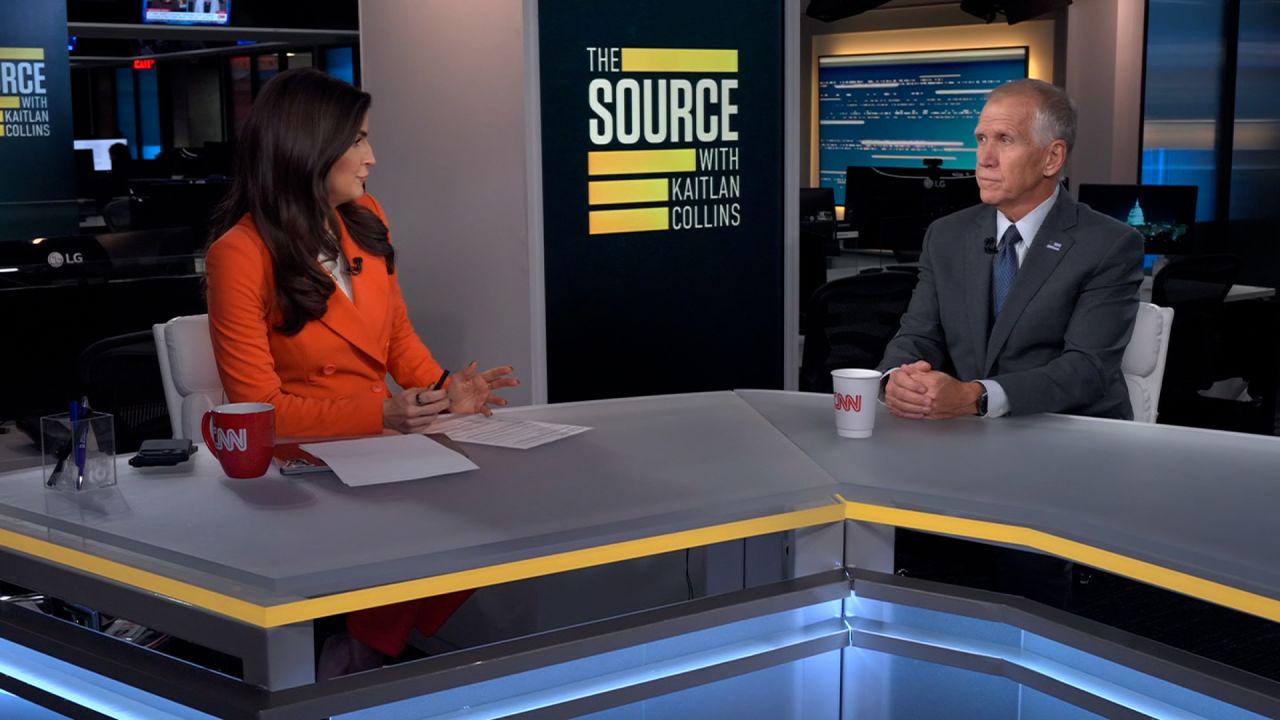
North Carolina Republican Sen. Thom Tillis tells CNN’s Kaitlan Collins that Secretary of Defense Pete Hegseth is responsible for the processes that led to the killing of survivors from a boat strike in the Caribbean.
Trump's pressure on Venezuela is raising questions at home and abroad. Here's what we know
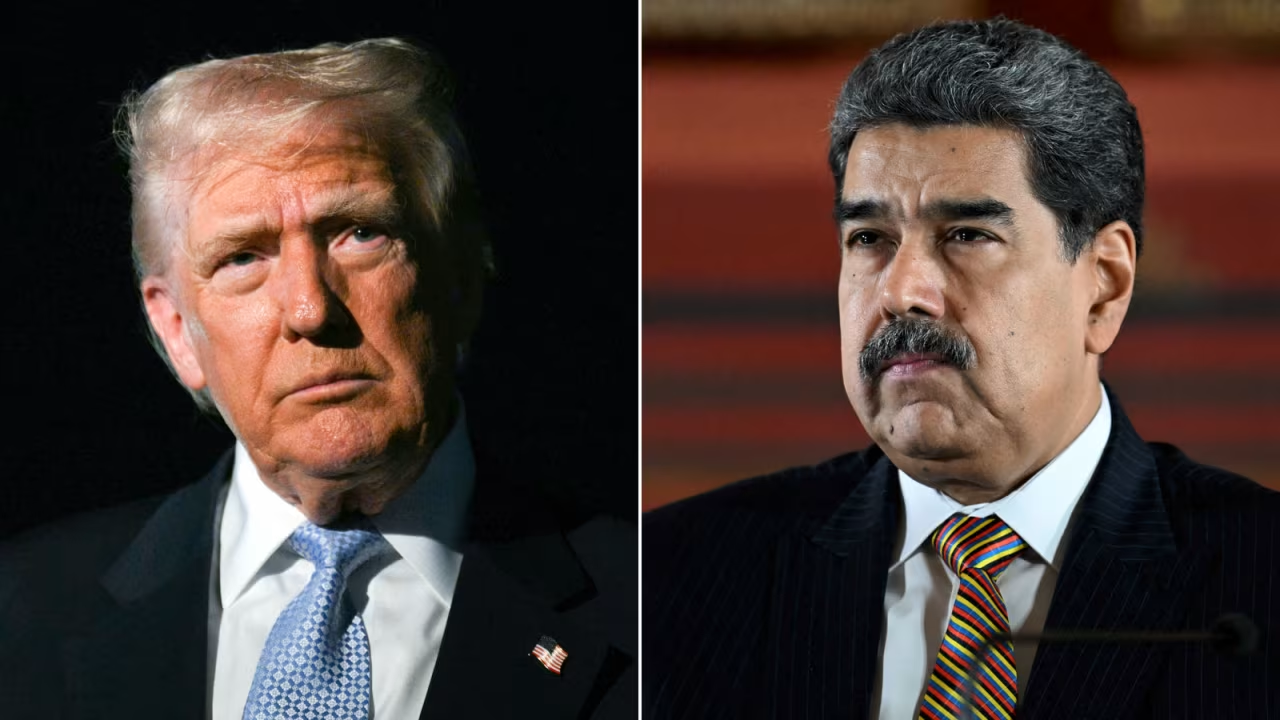
President Donald Trump says a massive show of force from the US around Venezuela is “much beyond” a pressure campaign on his Venezuelan counterpart Nicolas Maduro, as he weighs next steps after saying strikes on the alleged drug targets in the country would start “soon.”
The US military has amassed roughly 15,000 troops and more than a dozen warships in the region, and Trump has been briefed on a range of options, including targeted strikes on Venezuelan government and military facilities, or potentially a more direct attempt to oust Maduro.
The US military has already struck a string of boats that it alleges are carrying drugs, killing 83 people since the first attack in September.
That attack is coming under growing scrutiny after a followup strike — or so-called double-tap — was ordered following an initial hit that did not kill everyone on board.
Trump and Defense Secretary Pete Hegseth also sought to distance themselves from the decision to launch the second strike, insisting they weren’t aware of what the military had done after the first strike.
Hegseth said the admiral who ordered the second strike, Frank “Mitch” Bradley, has his full support. And Trump said his administration would release video of the second strike
Today, Bradley will face questions from Congress over that strike as bipartisan criticism from lawmakers grows, with particular concerns over its legality.
CNN’s Donald Judd, Samantha Waldenberg, Alayna Treene, Alejandra Jaramillo, Morgan Rimmer, Natasha Bertrand, Annie Grayer and Betsy Klein contributed reporting to this post.