



What we're covering here
• Today’s meeting: Vaccine advisers to the US Centers for Disease Control and Prevention are meeting today, the first of two days, and are expected to vote around 2:30 p.m. ET on a major change to the childhood vaccination schedule.
• On the schedule: An updated agenda for the meeting includes presentations about hepatitis B disease and vaccine safety. The vote could abandon the universal hepatitis B vaccine recommendation for infants. On Friday, the discussion turns to ingredients and timing for vaccines on the childhood schedule.
• About the panel: The members of the committee were handpicked by US Health and Human Services Secretary Robert F. Kennedy Jr., a longtime anti-vaccine activist, after he abruptly fired the 17 sitting members earlier this year.
Doctor reacts to ACIP: “They are not following science”
The presentations Thursday on hepatitis B vaccination “are not following science,” Dr. Jason Goldman, a liaison to the ACIP for the American College of Physicians, told CNN.
Studies casting doubt on the need for hepatitis B vaccination and its safety were quoted out of context, and the proposed language for voting on vaccine recommendations “is inappropriate,” Goldman added.
The first vote scheduled for Thursday is whether to remove the universal recommendation that newborns receive a hepatitis B vaccine that’s been in place in the US since 1991. Instead, for babies whose mothers haven’t tested positive for the virus, the recommendation would move to “individual-based decision-making.” If parents forgo a birth dose, the vote would recommend babies receive the vaccine no earlier than two months of age.
But, Goldman pointed out, “all decisions are individual-based. Nothing is a mandate.”
He compared the nature of the recommendation that all babies receive a dose at birth with one he might make as a physician for other health decisions, such as whether patients should get a colonoscopy to screen for colorectal cancer.
“I recommend a colonoscopy to a patient. They still have a choice to do it. The evidence shows colonoscopy reduces incidence of cancer,” Goldman told CNN. “Same analogy. I recommend the hepatitis B vaccine. [The] patient can refuse. The evidence shows benefit of [the] vaccine in reducing disease.”
Speaking during the meeting, Goldman said the meeting should be ended now, before a vote.
“You are wasting taxpayer dollars by not having scientific rigorous discussion on issues that truly matter,” he said. “The best thing you can do is adjourn the meeting and discuss vaccine issues that actually need to be taken up.”
Non-experts whose research has been discredited presented on hepatitis B
In another departure from past practices, the CDC vaccine committee heard a presentation from Dr. Cynthia Nevison, a research associate at the University of Colorado at Boulder, where she is an atmospheric scientist.
One of her research studies, called “Autism Tsunami,” was written with the next ACIP presenter — Dr. Mark Blaxill, who introduced himself as a critic of the CDC who is now working at the agency — was retracted by the journal that published it.
The editors of the journal said the authors misrepresented and selectively cited. or cherrypicked, data and that there were no valid justifications for the mechanisms the authors proposed for prevention.
“This is someone with no hepatitis B expertise and a well documented anti-vaccine bias. They could not find an expert to present on this?” wrote Dr. Dorit Reiss, a law professor at the University of California at San Francisco and a vaccine policy expert who was posting about the meeting on social media.
In her presentation, Nevison, who introduced herself as a contractor to the CDC, suggested that hepatitis B infections had never been a real threat to infants.
Nevison’s presentation sought to cast doubt on the importance of the hepatitis B vaccine and on recent modeling evidence that indicated doing away with the birth dose would increase the number of preventable hepatitis B cases and deaths in kids.
“There’s very little evidence that horizontal transmission has ever been a significant threat to the average American child, and the risk probably has been overstated,” Nevison said.
Nevison noted that the greatest declines in hepatitis B cases had been among younger adults, ages 20 to 39 — exactly the age group born after the universal birth dose was first recommended in 1991.
Instead, she said the decline in cases in this age group “had to be [due to] other measures.” She said other measures that may have been driving down hepatitis B infections, including better screening of blood products used for transfusion, safer dialysis and the adoption of safer sex practices due to the AIDS epidemic.
In reality, the adoption of screening and recommendations to lower the risk of transmission to infants has been stepwise.
In 1984, the CDC first recommended vaccination of infants born to mothers who tested positive for hepatitis B. Four years later, in 1988, the CDC first recommended hepatitis B screening for all pregnant women. In 1991, the CDC recommended universal hepatitis B vaccination for infants, then, in 2005, the CDC updated the recommendation to specify that babies should get a shot before they leave their birth hospital. In 2018, the recommendation was revised to specify that all infants should get the shot within 24 hours of birth. Nevison failed mention this history in her presentation.
Dr. Cody Meissner, a professor of pediatrics at Dartmouth and the only current member of ACIP who has experience on the committee, said he took “strong positions against each of the three presentations.”
“This disease has gone down in the United States thanks to the effectiveness of our current immunization program,” Meissner said.
“The way I look at a neonatal birth dose is that it is a safety net.”
What is hepatitis B?
Hepatitis B is a liver infection caused by a virus.
After an acute hepatitis B infection, many adults clear the virus. But acute infection can lead to chronic hepatitis B, which is linked to increased risk of liver cancer, organ failure and cirrhosis, or scarring over the liver. People with chronic hepatitis B are 70 to 85% more likely to die early.
Infants and children who are infected with hepatitis B are more likely to develop chronic disease, including about 90% of infants and 30% of children ages 1 to 5.
How is hepatitis B spread?
The hepatitis B virus is extremely infectious. It is transmitted when blood, semen, or another body fluid from a person infected with the virus enters the body of someone who’s not infected.
Certain medical conditions, behaviors and other factors increase an individual’s risk of acquiring hepatitis B — including injecting drugs and sexual activity — but anyone can get it. The hepatitis B virus can also be passed easily during childbirth from a pregnant woman to child during either a vaginal delivery or C-section.
How common is hepatitis B?
Many people with hepatitis B do not have symptoms, and more than half may not be aware of their infection.
The latest data from the CDC shows that there were about 2,200 newly reported cases of acute hepatitis B in 2023, but estimates suggest that the actual number of cases was more than six times higher — closer to 14,400.
The CDC also estimates that about 640,000 adults in the US have chronic hepatitis B.
Globally, the World Health Organization estimates that WHO estimates that 254 million people were living with chronic hepatitis B infection, with about 1.2 million new infections each year.
Can hepatitis B be treated?
There is no treatment for acute hepatitis B, but there are some medications that can be used to treat chronic cases. There is no cure but treatment for chronic hepatitis B can be lifelong.
How can hepatitis B be prevented?
The best way to prevent hepatitis B infection is vaccination.
Most people who have hepatitis B were infected as infants or young children when their immune systems were not fully developed. Currently, it is recommended that all infants get vaccinated shortly after birth.
Why infants are vaccinated against hepatitis B
Universal vaccination against hepatitis B was first recommended for infants in 1991, and the strategy has been credited with cutting the number of hepatitis B infections in kids from about 18,000 cases a year to an estimated 20 cases a year now.
The hepatitis B birth dose is given to infants within 24 hours of birth, before they leave the hospital. Anti-vaccine activists, including HHS Secretary Robert F. Kennedy Jr., have long questioned the necessity and safety of this vaccine, despite decades of evidence supporting it. The virus spreads through bodily fluids — drug use and sex can increase risk.
However, many people do not know they are infected. Everyday activities can also spread the virus, and it’s especially easy to transmit to babies during birth.
On Tucker Carlson’s podcast in June, Kennedy incorrectly claimed that the birth dose of the hepatitis B vaccine was linked to higher risk for autism and suggested that the recommendation was made to drive profits for pharmaceutical companies.
“They recommended the hepatitis B vaccines for babies when they’re an hour old, the first day of life, they get that. And you know, hepatitis B, if your mother’s got it, you should get it. And you can pass through maternal transmission, but every mother that goes to the hospital in this country is tested for it. So we know which ones are vulnerable, which aren’t,” Kennedy said
But testing doesn’t catch every case.
At the committee’s September meeting, CDC scientists reviewed recent studies showing that an estimated 12-16% of pregnant women are not screened for hepatitis B during pregnancy, and fewer than half of infants born to mothers infected with hepatitis B are identified through prenatal screening.
Women are typically tested during their first three months of pregnancy. t’s possible to miss maternal infections if a woman catches the virus after she’s tested for it. Maternal testing also doesn’t protect babies from being exposed to other positive family members or caregivers.
Infectious disease experts say vaccinating every baby provides a critical safety net to catch those at risk when maternal screening misses.
Cassidy: "ACIP is totally discredited"
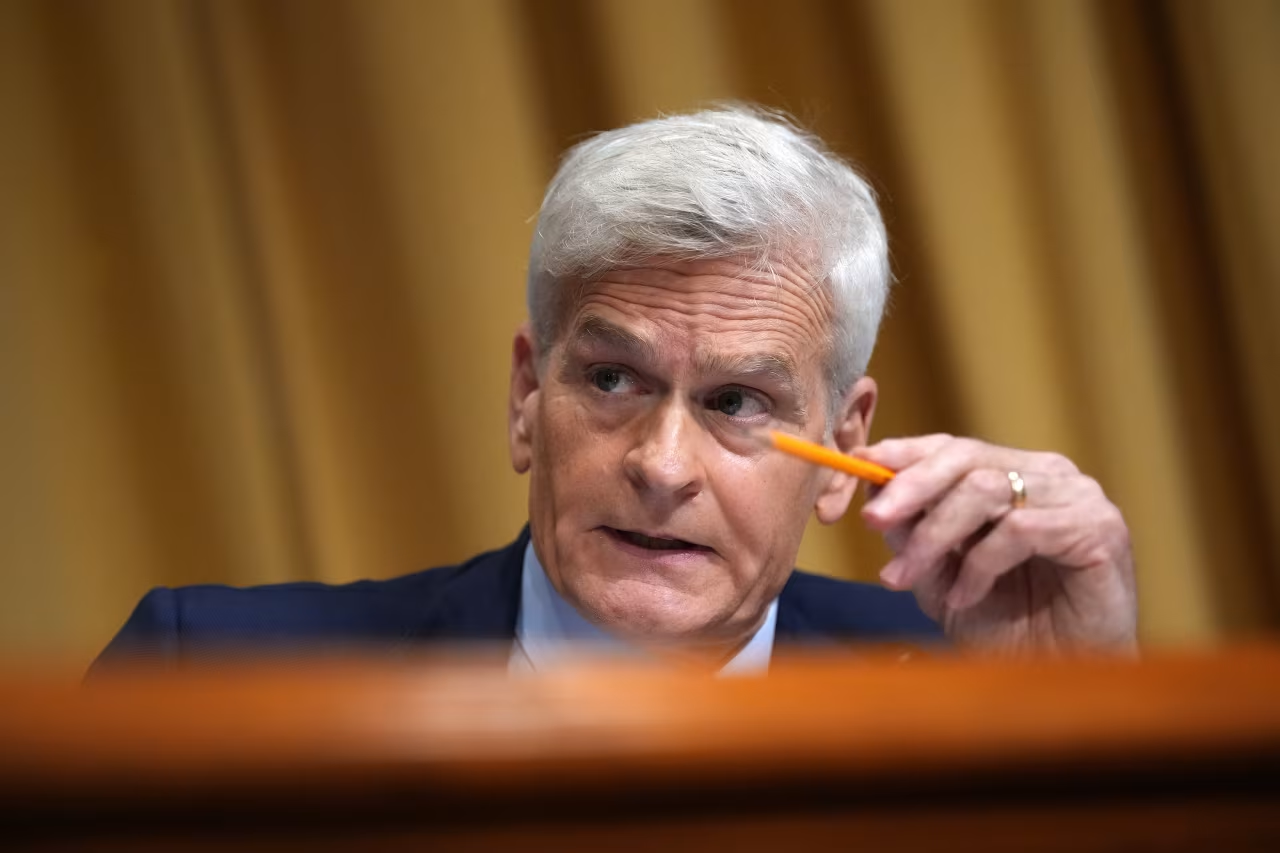
Senator Bill Cassidy, the Republican doctor who chairs the Senate Health, Education, Labor and Pensions Committee, posted on X Thursday morning that “the ACIP is totally discredited. They are not protecting children.”
Cassidy, who struggled openly with his pivotal vote to confirm Robert F. Kennedy Jr. as health secretary, linked to the meeting’s agenda and specifically cited a Friday presentation by Aaron Siri, an attorney Cassidy said “makes his living suing vaccine manufacturers. He is presenting as if an expert on childhood vaccines.”
Siri, who’s worked closely with Kennedy and served as his personal lawyer during Kennedy’s presidential campaign, has handled a number of vaccine-related cases, particularly challenging vaccine requirements. In 2022, he filed a petition on behalf of the Informed Consent Action Network, or ICAN, a nonprofit that challenges the safety of vaccines and vaccine mandates, for the US Food and Drug Administration to revoke approval of the polio vaccine used in the US.
A managing partner at the law firm Siri & Glimstad LLP, Siri is scheduled to open Friday’s ACIP meeting with a presentation about the childhood and adolescent vaccine schedule.
With reporting by CNN Health’s Brenda Goodman
ACIP vice chair explains why previous hepatitis B vote was postponed
In an opening statement at today’s meeting, ACIP Vice Chair Dr. Robert Malone said that a vote about the hepatitis B vaccination schedule was postponed at the last meeting because there were gaps in the data that was presented to the committee, and the evidence fell short of what was needed to make a “confident evidence-based recommendation.”
“That decision was not about hesitation or reluctance. It was about standards,” he said. “I want to emphasize this is exactly how the scientific process is supposed to function.”
Since then, a dedicated working group was formed to examine those issues in greater depth. Malone said that he was “not able to disclose the nuance of that work group, but it is quite diverse in membership and represents a full spectrum of opinion regarding hepatitis B vaccination.”
He underscored that the primary mission of ACIP is to provide independent advice to the CDC director, and said that his hope was that the committee approach today’s meeting “with seriousness, clarity and a willingness to challenge our own prior assumptions as its credibility depends on our commitment to a deliberative, transparent, evidence-based process.”
Deputy Health and Human Services Secretary Jim O’Neill is serving as acting director of the CDC. He assumed the role after HHS Secretary Robert F. Kennedy Jr. fired Director Dr. Susan Monarez earlier this year.
CDC vaccine committee membership shifts again under Kennedy
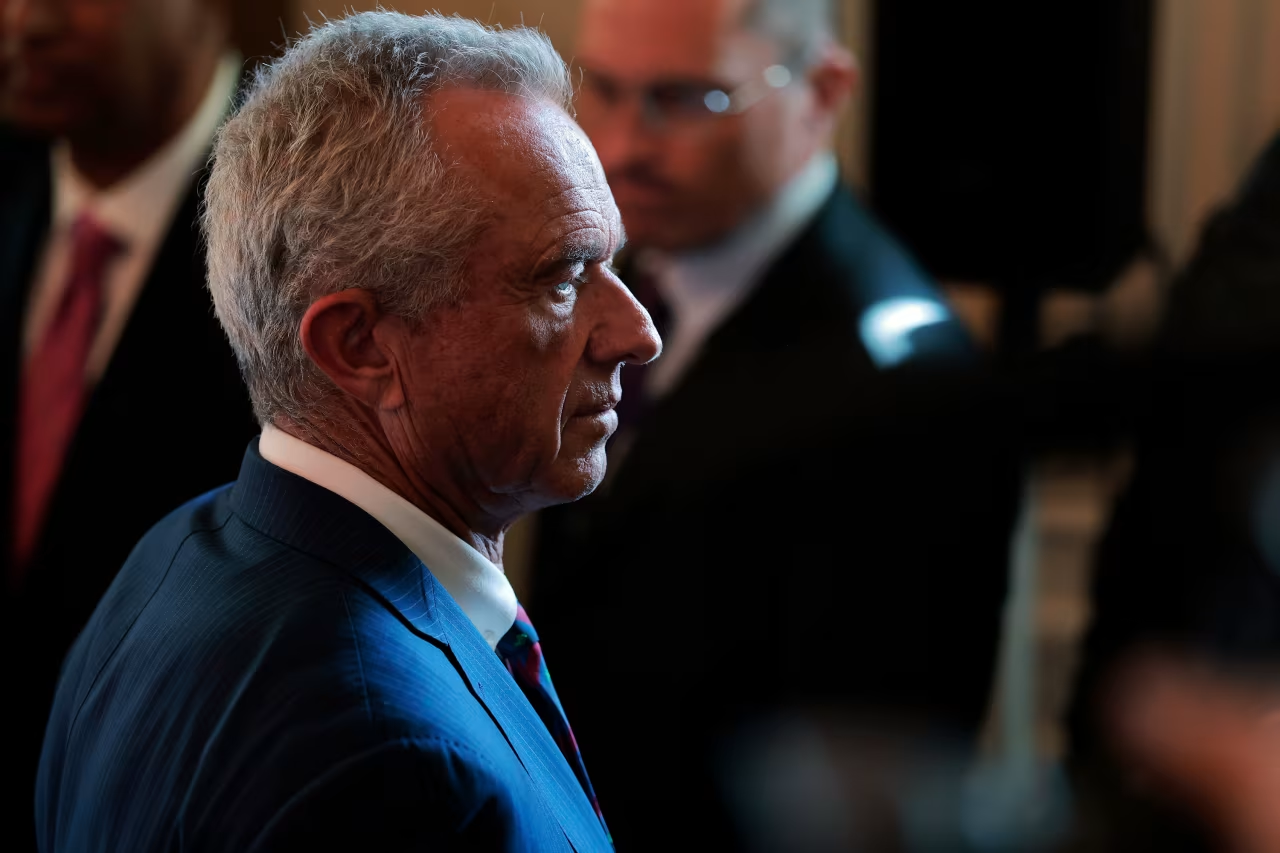
This is the third meeting of the Advisory Committee on Immunization Practices since HHS Secretary Robert F. Kennedy, Jr. — who has long questioned the safety of vaccines while downplaying their benefits — abruptly dismissed all 17 of its sitting members in June.
Kennedy immediately replaced them with eight of his own picks One of his choices, Dr. Michael Ross, dropped out during a mandatory review of each member’s financial holdings, leaving seven members on the panel.
In September, Kennedy announced five additional members bringing the committee’s roster to 12 voting members.
This week, the reconstituted committee lost its chair, Dr. Martin Kulldorff, who was appointed to a new role within HHS: chief science officer for the Assistant Secretary for Planning and Evaluation, or ASPE. During the last meeting, Kulldorff broke an important tie vote when the committee deadlocked 6-6 over a proposed recommendation that people should get a prescription from their doctor before they could get a Covid-19 vaccine, a shift that would have made it more complicated for people who wanted the shots to get them.
That brings the total number of voting members to 11. The new chair is Dr. Kirk Milhoan, who is trained as a pediatric cardiologist. Because Milhoan was joining the meeting remotely on Thursday, the committee’s vice chair, Dr. Robert Malone, was facilitating the meeting.
Malone was an early researcher of mRNA technology and has suggested that Covid-19 vaccines cause cancer — something regulatory agencies say is not the case. Malone also served as a paid expert witness in an antitrust lawsuit over Merck’s measles, mumps and rubella vaccine, testifying that plaintiffs compensated him at a rate of $350 per hour.
CDC advisers will vote whether to abandon universal hepatitis B vaccine recommendation for newborns
For decades, infants born in the United States have been universally recommended to get the first dose of the hepatitis B vaccine as early as the day they’re born.
CDC vaccine advisers selected by US Health and Human Services Secretary Robert F. Kennedy Jr., a longtime anti-vaccine activist, will vote Thursday on whether to change that recommendation, although the strategy nearly eradicated hepatitis B cases among children.
Anticipated votes posted online late Wednesday suggest “individual-based decision-making, in consultation with a health care provider” for a “birth dose” of the hepatitis B vaccine when parents have tested negative for the virus or whose status is unknown. For babies not receiving the birth dose, “it is suggested that the initial dose is administered no earlier than 2 months of age,” it says.
A second vote considers whether parents of a child who has already received a dose of the hepatitis B vaccine should work with a doctor to test the level of protection ahead of additional doses.
Here’s the voting language:
VOTE 1: ACIP recommends a birth dose of Hepatitis B virus (HBV) vaccine and Hepatitis B Immunoglobulin for infants born to women who test HBsAg-positive. ACIP recommends individual-based decision-making, in consultation with a health care provider, for parents deciding whether to give the HBV vaccine birth dose to infants born to women who are HBsAg-negative or whose HBsAg status is unknown. Parents should consult with health care providers and decide when or if their child will begin the HBV vaccine series. Parents and health care providers should consider vaccine benefits, vaccine risks, and infection risks. For those not receiving the HBV birth dose, it is suggested that the initial dose is administered no earlier than 2 months of age. Y/N
Footnote: Parents and health care providers should also consider whether there are risks, for example, such as a household member is HBsAg-positive or when there is frequent contact with persons who have emigrated from areas where Hepatitis B is common.
VOTE 2: When evaluating the need for subsequent HBV vaccine dose in children, parents should consult with health care providers to determine if a post-vaccination anti-HBs serology testing should be offered prior to subsequent HBV vaccine dose administration. Serology results should determine whether the established protective anti-HBs titer threshold of ≥10 mIU/mL has been achieved. The cost of this testing should be covered by insurance. Y/N
CDC vaccine advisers will begin meeting today and will vote on change to the childhood vaccine schedule
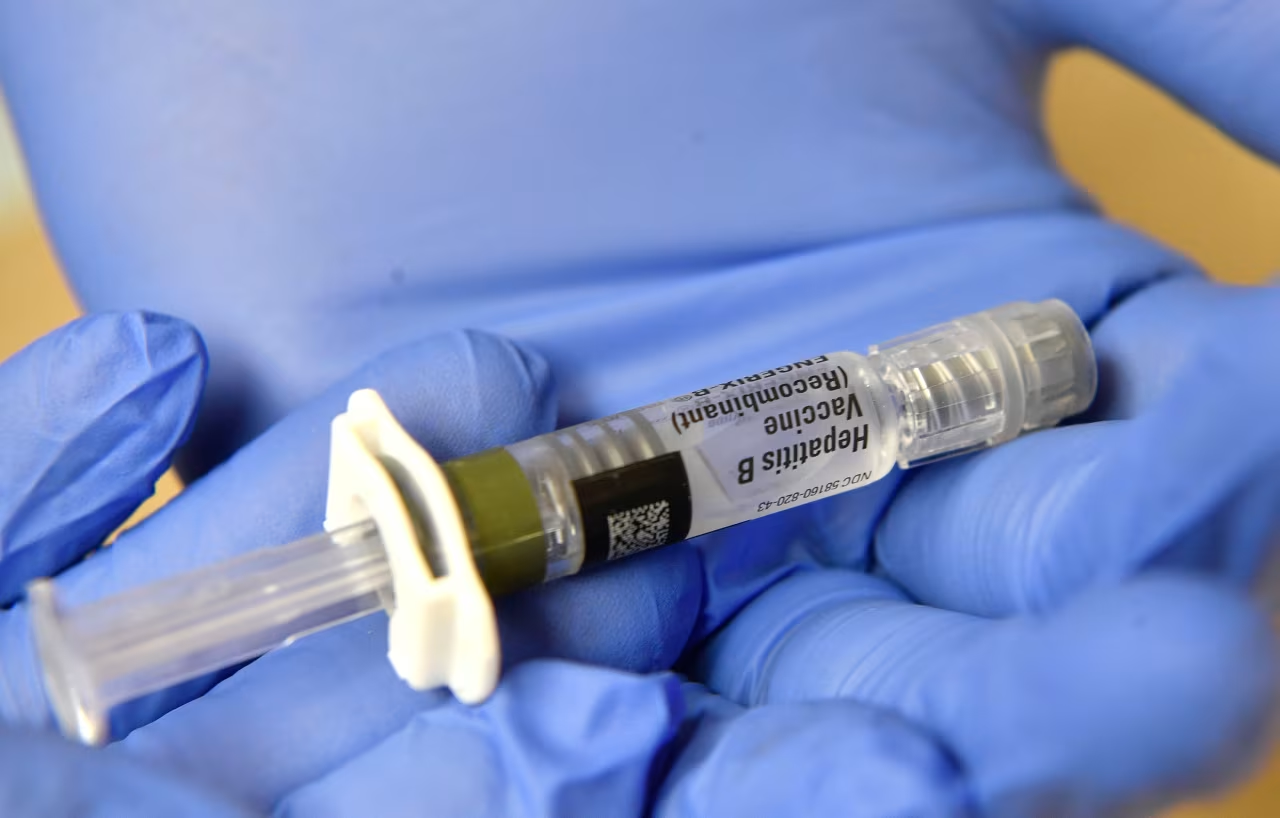
Vaccine advisers to the US Centers for Disease Control and Prevention are expected to vote today whether to make a major change to the childhood vaccine schedule.
The members of the Advisory Committee on Immunization Practices were handpicked by US Health and Human Services Secretary Robert F. Kennedy Jr., a longtime anti-vaccine activist, after he abruptly fired the 17 sitting members earlier this year.
The agenda for the Advisory Committee on Immunization Practices meeting — which runs today and tomorrow — includes a vote about hepatitis B vaccines for newborns, and more discussion on ingredients and timing for vaccines on the childhood schedule.