What we know so far
• Growing death toll: At least 111 people are confirmed dead and many injured after a powerful 7.4 magnitude earthquake struck western Colombia, President Abelardo de la Espriella said today. You can track developments here, in maps and charts.
• Rescue efforts: Emergency responders are racing to dig people out of the rubble. Among the collapsed structures were the pediatric and neonatal sections of a hospital in Cali. The government has declared a national disaster and deployed soldiers to the area.
• Where it occurred: The epicenter was located in San José del Palmar, in an underdeveloped area of western Colombia, about 150 miles west of Bogotá. The tremor was felt strongly in the nation’s capital, with alarms sounding and people evacuating to the streets as a precaution.
US committing $15.5 million for earthquake response in Colombia

The United States is committing $15.5 million in funding to Colombia for shelter, food, protection and earthquake assessments after a magnitude 7.4 quake struck the country today, the State Department announced Monday on X.
What do earthquakes in Colombia and Venezuela have in common, and how do they differ?

The 7.4 magnitude earthquake that struck Colombia occurred just over a month after two quakes killed more than 6,300 people in neighboring Venezuela. Other than sharing the same tectonic plate, however, the tremors don’t have much in common, according to a geology expert.
“The geological and geotectonic context is completely different,” said Gustavo Ortiz, a PhD in geological sciences from Argentina’s National Scientific and Technical Research Council.
In western South America, quakes often strike when one plate — in this case the Nazca Plate in the Pacific — sinks beneath the South American Plate, in a process known as subduction, Ortiz told CNN’s Rafael Romo.
Ortiz noted the earthquakes in Venezuela occurred near the surface — at a depth of less than 20 kilometers (about 12.5 miles) — whereas the seismic event recorded earlier this Monday in Colombia took place at a depth of more than 100 kilometers ( about 62 miles).
CNN journalist recounts his experience during earthquake

When the shaking started, I was on my way to my son’s school in southern Cali for an 8 a.m. appointment. My car began moving in a very strange way, and it wasn’t until we saw utility poles swaying that we realized an earthquake was happening.
When I arrived at the school, the appointment had been cancelled because they were busy assessing damage. On the drive back home to southwestern Cali, we encountered areas without power and traffic lights that weren’t working.
An hour after the quake, many people were still being evacuated from their buildings, unable to re-enter because of the damage.
Some of the damage was concentrated in the area near the bullring (Plaza de Toros), where buildings have collapsed facades and cracks and one building has completely collapsed.
At my home, books fell off the shelves and drawers slid open. There is a large crack in my apartment block, and many roof tiles are on the verge of falling.
I have received reports from acquaintances whose apartment is no longer habitable due to cracks and the risk of imminent collapse. Reports keep coming in from people across the city: commercial buildings that have collapsed and street corners in southern Cali that have been devastated.
It is usually very hot in Cali, but today is exceptionally hot.
At 7 a.m. there wasn’t a single cloud in the sky, and it has remained largely clear since then. Right now, the temperature is 33°C (91°F), with a “feels-like” temperature of 34°C (93°F).
World Central Kitchen deploys to Colombia, José Andrés says

World Central Kitchen founder José Andrés says his disaster-relief network has been “activated” to deploy emergency food aid to Colombia following today’s earthquake.
“Let’s hope for the best… ” Andrés said in a post on social media.
The chef-led relief organization often sets up outdoor kitchens in disaster areas and war zones, distributing free meals. The charity has served people in the Gaza Strip, Lebanon and Ukraine, and last month was active in Venezuela after the devastating pair of earthquakes there.
Juan Camilo Jiménez, the organization’s response director for Colombia, told CNN that WCK already has local networks on the ground there.
The main challenge in earthquake-affected areas are finding safe spaces to work that can withstand any earthquake aftershocks, Camilo said. The next is refrigeration for ingredients. He added that WCK does not set a deadline or target number of meals they want to provide, preferring to assess the situation on the ground first.
“We arrive and we like to understand the situation firsthand, then we’re going to find the scope of the response,” said Camilo.
Colombia’s vice president travels to Manizales to lead earthquake response
Colombian Vice President José Manuel Restrepo announced he is heading to Manizales to lead the Unified Command Post, from where he will coordinate the response to the earthquake.
Manizales, located in the department of Caldas, is one of the areas hardest hit by the 7.4 magnitude earthquake that struck western Colombia on Monday.
The vice president also stated he would work with the Foreign Ministry to arrange for the arrival of resources and support from the international community.
The earthquake shook both Colombia’s poorest region and its “Coffee Axis”
The epicenter of Monday’s earthquake was in Chocó, Colombia’s poorest department, where more than two-thirds of the population live in poverty, according to government statistics.
Apart from Quibdo, the capital, much of the region is accessible only by air or water because it has few roads, according to a 2021 report by ACAPS. In recent years, the region has also struggled with violence from organized crime groups and militant organizations, including the National Liberation Army (ELN).
Outside of Chocó, the quake also shook part of the country’s “Coffee Axis,” a hub for the prodigious Colombian coffee business. Dozens of people have died in Riselralda, a department in the heart of the Coffee Axis, and cities throughout the region have reported extensive damage.
Patients trapped inside partially collapsed hospital in Cali


Several patients are trapped under the rubble of a partially collapsed hospital in Cali, western Colombia, according to a local official.
Some sections of the Cali’s University Hospital, including the pediatrics department, “have collapsed,” the governor of Valle del Cauca, Dilian Francisca Toro, told local media.
“Consequently, there are people trapped,” she said in a video posted to X. Firefighters and the army are “working to get them”.
About 30% of the hospital’s infrastructure has collapsed, including three floors reserved for pediatrics, internal medicine and part of the neonatal unit, the manager Irne Torres Castro told reporters.
At least four people have been rescued from under the rubble, according to the government of Cali. Many patients were evacuated and treated outside at the hospital’s gardens. Some were taken to other health facilities.
The hospital is among several health institutions in Cali that have been closed and evacuated because of structural damage, the local government said.
Paramedics could be seen wheeling people out on gurneys as medical workers circled the hospital courtyard, in social media footage.
More than 100 dead after magnitude 7.4 earthquake strikes Colombia. Here’s the latest



We’re continuing to track developments after a powerful magnitude 7.4 earthquake struck Colombia earlier today.
At least 111 people have died, according to Colombia’s President Abelardo de la Espriella. The government has declared a state of national disaster, and soldiers are being deployed to affected areas of the country.
The epicenter was located in San José del Palmar, in the northwestern department of Chocó, about 240 kilometers (or 150 miles) west of Bogotá.
If you’re just joining us, catch up on the latest:
- The quake has left at least 87 people injured, 61 buildings collapsed and 1,575 homes damaged, the president said. Eighteen health centers, 52 educational centers, 17 community centers and 18 roads were also damaged.
- Several patients are trapped under the rubble of a partially fallen hospital in Cali, western Colombia, according to a local official. At least four people have been rescued from under the rubble, according to the government.
- Emergency crews from around the country are racing to save people trapped beneath the wreckage of collapsed buildings. “The priority is to try to rescue the people who are still under the rubble,” De la Espriella said.
- De la Espriella announced he would head to Quibdó, the capital of the Chocó department, one of the most affected regions nationwide.
- World Central Kitchen founder José Andrés says his disaster-relief network has been “activated” to deploy emergency food aid to Colombia.
- Richard Emblin, the director of The City Paper Bogotá, described the quake as a “really tough wake-up call this morning for Colombians.” While speaking to CNN, Emblin said sirens were ringing out in Bogotá as aftershocks are possible.
CNN’s Michael Rios, Gonzalo Zegarra, Max Saltman, Juan Carlos Paz, Sana Noor Haq, Sol Amaya and Elise Hammond contributed to this report.
In pictures: Powerful earthquke hits Colombia
The strongest earthquake to hit Colombia in the last decade shook the South American country on Monday, killing dozens of people, pancaking buildings to the ground and catapulting communities into a state of national disaster.
With the death toll steadily climbing following the 7.4 magnitude quake, emergency crews are racing to try and recover survivors trapped beneath the rubble.
Colombian President Abelardo de la Espriella – who only took office on Friday – called an emergency committee to “personally lead efforts” to try and rescue people trapped in the wreckage.
Further afield, international leaders in the US, South America, Europe and the Middle East have also pledged to support ongoing rescue operations.


Here's how the number of earthquakes so far this year stacks up
More than 110 people are dead after a 7.4 magnitude earthquake hit Colombia early Monday, according to officials.
It marks the 122 “significant” earthquakes worldwide so far this year.
Here’s how that compares to years past:
At least 111 people dead after earthquake, Colombian president says
At least 111 people have died as a result of the powerful 7.4 magnitude earthquake that struck Colombia earlier today, President Abelardo de la Espriella said.
The quake also left at least 87 people injured, 61 buildings collapsed and 1,575 homes damaged, he said.
It also damaged 18 health centers, 52 educational centers, 17 community centers and 18 roads.
Emergency crews from around the country are racing to save people trapped beneath the wreckage of collapsed buildings.
“The priority is to try to rescue the people who are still under the rubble,” the president said.
De la Espriella announced that he would head to Quibdó, the capital of the Chocó department, one of most affected regions nationwide.
Colombian pop star Shakira expresses "love for my homeland" after deadly earthquake

The Grammy Award-winning artist Shakira paid tribute to her “beloved” Colombia in a heartfelt post on Instagram, saying, “My heart is with everyone who felt this earthquake today and with the families who are going through moments of anguish.”
Born Shakira Isabel Mebarak Ripoll in the Colombian port city of Barranquilla, she left her home at age 13 to pursue a music career in the capital, Bogotá. A year later, she released her first album after signing a contract with Sony.
CNN contributor experienced "intense" earthquake in his apartment


CNN contributor Wilson Barco rushed with his family into his Cali apartment’s bathroom when a powerful earthquake shook Colombia on Monday morning.
Video from Barco shows the light fixtures swaying on the apartment ceiling and wall decorations shuddering as the earthquake shook his building. When the quake ended, Barco walked to his balcony and filmed the Cali skyline draped in dust and smoke.
“My God,” he said. “That was really intense.”


Reuters footage captures some of the damage on the streets of Cali, with bricks and rubble strewn near a busy intersection. One resident, speaking to Reuters, said that she received a Google alert on her phone and managed to evacuate her building in time with a neighbor, “but many people didn’t manage to do so.”
“I think they are going to have to demolish it,” she said, pointing to a nearby building badly damaged in the quakes. “Really, this is a call for us as a community to come together and solve these types of situations that can happen at any moment.”
What it was like in Colombia's capital city as the earthquake hit


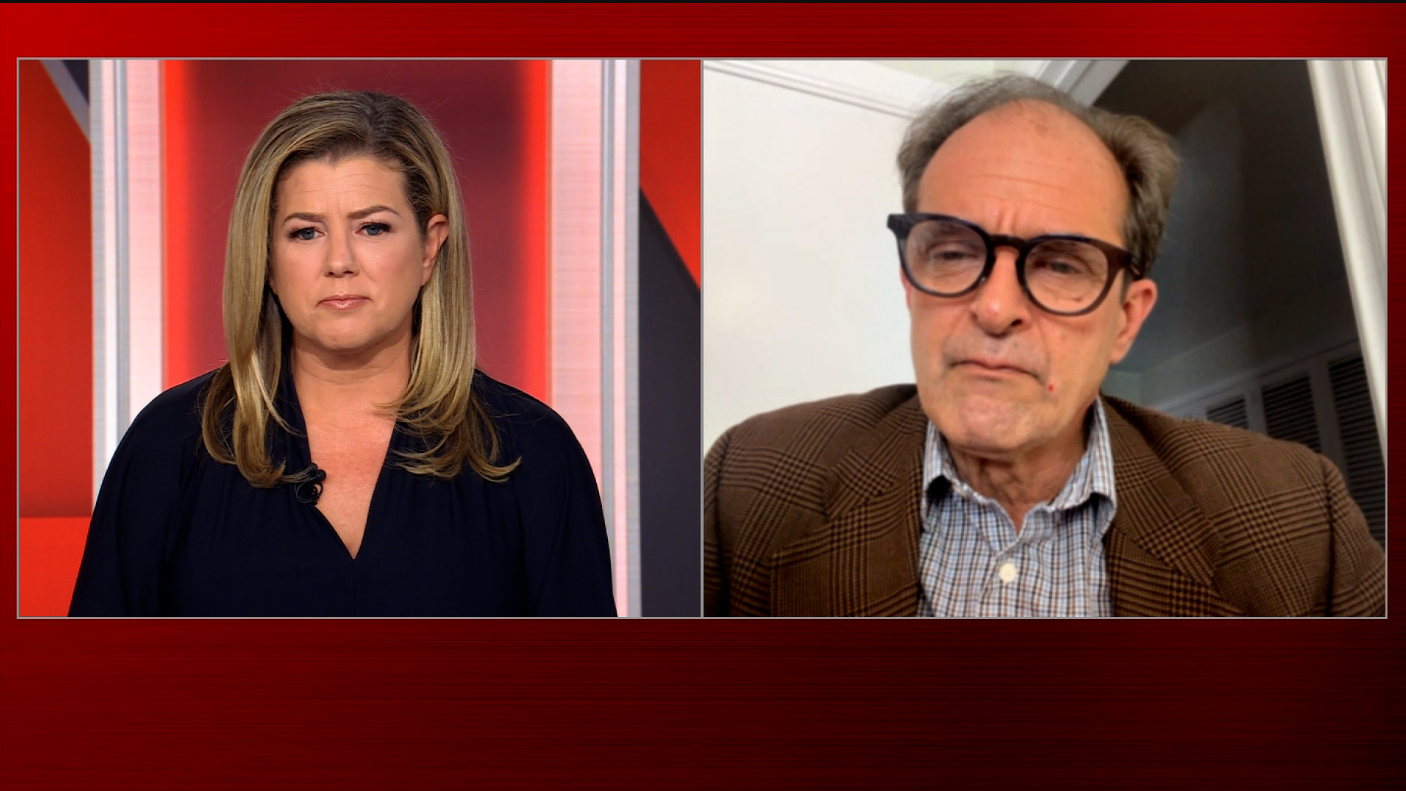
Office workers evacuated and crowds started gathering on major streets, said Richard Emblin, the director of The City Paper Bogotá, in the moments after a powerful 7.4 magnitude earthquake hit the northwestern part of the country.
It happened in the early hours of the work day in what was a “really tough wake-up call this morning for Colombians,” Emblin told CNN.
While he was speaking to CNN, Emblin said sirens were ringing out in Bogotá as aftershocks are possible. People will now be looking to the government to show that it has the resources to respond, he said.
The epicenter was located in San José del Palmar, in the northwestern department of Chocó, about 240 kilometers (or about 149 miles) west of the country’s capital.
As we’ve been reporting, the quake’s impacts are being felt in other parts of the country. In Colombia’s third-largest city, Cali, there are “scenes of widespread devastation” and at least 20 buildings have collapsed, Emblin said. Cali has a “large vulnerable population” and poor neighborhoods with houses that were built “very informally,” he said, so it’s the number of collapsed buildings is possibly even higher.
“What people will be needing urgently is first response in hospitals,” along with blood and food donations, Emblin said.
At least 80 dead in Colombia earthquake, according to CNN tally based on official sources
At least 80 people have died following the powerful 7.4 magnitude earthquake that struck Colombia earlier today, according to a CNN tally based on preliminary reports from governors and mayors in the affected areas.
The department of Riseralda in western-central Colombia has emerged as a major source of fatalities, Risaralda Governor Juan Diego Patiño told radio station BluRadio, with at least 40 deaths confirmed there so far.
This post has been updated with the latest death toll.
Earthquake is early challenge for Colombia’s new president
It’s Abelardo de la Espriella’s first Monday as Colombia’s president, and plate tectonics have dealt him one of his first major challenges in public office: a 7.4 magnitude earthquake.
De la Espriella, a conservative, took office last Friday promising to rein in crime and reform Colombia’s tax system. Three days later, he’s now “personally lead(ing) efforts” to steer the country through the aftermath of a significant national disaster.
On Monday, de la Espriella said in a statement that he has convened an emergency committee to confront the damage caused by the quake, and “will do whatever is necessary” to protect Colombians affected.
What we know about the strongest earthquake to hit Colombia in a decade

At least 74 people are dead after a powerful earthquake hit Colombia on Monday, according to a CNN tally based on official sources.
Colombia declared a state of national disaster after the 7.4 magnitude quake. It was the strongest earthquake in the country in the last decade, according to Julio Fierro Morales, the director of the Colombian Geological Service, with videos showing buildings collapsing and power lines shaking.
Here’s what we know:
- Where it happened: The epicenter was located in San José del Palmar, in the northwestern department of Chocó, about 240 kilometers (or 150 miles) west of Bogotá. It was also felt in parts of Venezuela — a country still grappling with the aftermath of the twin earthquakes on June 24.
- Damage: Dilian Francisca Toro, the governor of Valle Del Cauca, said the “situation is serious” and there are “collapses in some areas.” In the city of Pereira, video shows a four-story building falling and the facade of the Iglesia San José partially collapsing. People at Aeropuerto Internacional Matecaña in Pereira scrambled for cover as debris fell around them.
- Response: The Colombian Army is deploying five platoons of rescue soldiers to areas across Colombia that may require attention. Bogotá, the capital which was spared the brunt of today’s earthquake, is also sending rescuers to affected cities.
- Emergency committee: Colombian President Abelardo de la Espriella has convened an emergency committee to address the damage caused by earthquake, he said.
- Reaction: International leaders in the US, South America, Europe and the Middle East have offered to bolster rescue efforts. The mayor of a town in Colombia’s western Chocó department told Caracol Radio that the earthquake was the “strongest in our entire history.”
CNN’s Juan Carlos Paz, Catherine Nicholls, Sana Noor Haq, Sol Amaya, Maureen Chowdhury, Oliver Sherwood, Farida Elsebai, Gonzalo Zegarra, Max Saltman and Jose Alvarez contributed reporting.
Colombia declares state of national disaster after powerful earthquake
The Colombian government has declared a state of national disaster after the 7.4 magnitude earthquake killed more than 70 people on Monday, the Association of Capital Cities of Colombia said.
The move will help mobilize extra resources to the most affected regions, according to the association, which took part in a disaster management committee meeting chaired by President Abelardo de la Espriella who made the declaration.
This earthquake is the strongest recorded in Colombia in the last decade, authorities say
The 7.4 magnitude earthquake that shook Colombia on Monday was the strongest recorded in the country “in the last decade,” according to the director of the country’s geological service.
Julio Fierro Morales, director of the Colombian Geological Service, said in a video statement that two aftershocks have been recorded so far, with magnitudes of 2.8 and 4.8. The latter was “widely felt.”

Fierro Morales noted that western Colombia lies along a subduction zone, where one tectonic plate slides beneath another.
Dozens of people were killed and hundreds injured in the 1979 earthquake, according to the National Oceanic and Atmospheric Administration’s records.
At least 29 dead following Colombia earthquake
Eighteen deaths have been recorded in Pereira (Risaralda department), two in Manizales (Caldas), four in the Chocó department, three in Calima El Darién, one in Zarzal (Valle del Cauca), and one in Támesis (Antioquia).
So far, at least 29 people have been confirmed dead following the strong 7.4 magnitude earthquake that struck Colombia on Monday, according to a CNN count based on reports from governors and mayors in the affected areas.

Correction: A previous version of this post incorrectly stated the latest death toll.