Where things stand
• Case won’t be dismissed: The judge in ousted Venezuelan leader Nicolás Maduro’s case said he would not dismiss it despite an ongoing dispute over their legal fees. Maduro and his wife, Cilia Flores, were back in a New York court today for a hearing. Sigue nuestra cobertura en vivo en español.
• The charges: The ousted Venezuelan leader and first lady, who were captured in a stunning overnight US military operation this year, have pleaded not guilty to drug and weapons charges. Shortly before the hearing started, President Donald Trump said “other cases are going to be brought” against Maduro.
• About the fee dispute: Maduro’s lawyer said the couple have testified they cannot pay their legal fees on their own, and he argued the Venezuelan government should be able to pay for it.
Our live coverage has ended. Scroll through the posts below to read about today’s hearing.
Nicolás Maduro’s second court hearing has come to a close. Here’s what happened
Nicolás Maduro and his wife, Cilia Flores, faced their second court hearing in New York since they were captured by a US raid on their presidential compound in Caracas in January.
Maduro sought to convince the federal judge today that the US government is interfering with his ability to defend himself against narco-terrorism related charges and the case should be dismissed.
Here’s what you should know about the hearing:
What we saw from Maduro: The former Venezuelan president and first lady sat at the defense table wearing headphones for translation throughout the proceedings, occasionally jotting down notes.
What his lawyer said: Ahead of the hearing, Maduro’s defense attorney Barry Pollack declined to directly answer CNN’s questions about how Maduro was holding up after spending nearly three months in detention. “You will see him in the courtroom,” he replied. Asked if he could confirm reports claiming that Maduro may be having anxiety issues and that he frequently screams out in his cell that he had been kidnapped and is still the legitimate president, Pollack said, “I am not there at nights, but I wouldn’t put much stock in that.”
How Maduro appeared: Maduro and Flores both appeared thinner than they did in their last court hearing in January, though the difference wasn’t dramatic. Maduro still had a slight limp, which his lawyers had previously said was a result of injuries sustained during the US operation that captured him. Maduro seemed less defiant than last time. He smiled, greeted his lawyers, shook hands and even joked with them a bit. Flores appeared thinner than her husband. Her lawyer said she had been having problems getting medical care for a heart condition and is awaiting a requested echocardiogram. The bruise she had on her face last time appeared to have cleared up.
What prosecutors argued: A federal prosecutor accused Maduro and Flores of “plundering the wealth of Venezuela” as he sought to convince the judge from entering an order that would permit Venezuela to pay their legal fees.
What defense argued: Maduro’s lawyer said the ousted leader and first lady testified they cannot pay their legal fees on their own and the Venezuelan government should be able to pay for it. The ousted president’s attorney pointed to a “property interest” his client has in the foreign funds.
What the judge said during the case: Alvin Hellerstein, the federal judge overseeing the case, pushed back against prosecutors who said the US government should have the ability to “use sanctions to influence foreign policy or national security.” The judge also asked prosecutors multiple times about the availability of other funds to pay for the legal defense of Maduro and Flores.
How the hearing concluded: Hellerstein promised to issue a decision soon on whether to order the Trump administration to permit Venezuela to pay legal fees for Maduro and Flores, though Hellerstein said he wouldn’t dismiss the case over the payment issue.
Here’s what was going on outside the courtroom:
- Shortly before Maduro’s appearance in court, President Donald Trump said at a Cabinet meeting that “other cases are going to be brought” against Maduro.
- Venezuela’s ruling party expressed solidarity with the ousted president and first lady in a statement published during their court hearing, calling for the defense of their “legitimate rights”. Maduro’s supporters held a rally at Bolívar Square in Caracas demanding the release of the ousted president and first lady from US custody.
- People began lining up for Maduro’s hearing shortly before 6 a.m., five hours before the hearing was scheduled to start. Several Venezuelans demonstrating outside the courtroom told CNN they hoped Maduro would be punished and felt offended by protesters arguing for his freedom.
CNN’s Kara Scannell, Nicki Brown, Kaanita Iyer, Michael Rios and Gonzalo Zegarra contributed to this report.
Maduro supporters rally in Caracas during his hearing

Supporters of ousted Venezuelan President Nicolás Maduro held a rally at Bolívar Square in Caracas during his court hearing in New York.
Dozens of people waved Venezuelan flags and held up posters demanding the release of Maduro and his wife Cilia Flores from US custody. Screens were set up at the square to watch news updates on the hearing.
In a speech to the crowd, Maduro’s son, lawmaker Nicolás Maduro Guerra, called his father’s trial “illegitimate and illegal,” and urged Venezuelans to continue supporting him.

Venezuela’s ruling party had called on supporters to gather at the rally on Thursday.
“This is an important day for the nation, as with love and patriotism we will demonstrate the innocence of our leaders,” the party said. It has been regularly publishing images of Maduro and Flores with hashtags such as “We want them back” and “Free Maduro.”
Acting President Delcy Rodríguez did not attend the rally. She was holding a meeting with economic advisers, according to state media.
The hearing has concluded

A high-stakes hearing in Nicolás Maduro’s criminal case has ended.
Senior US District Judge Alvin Hellerstein promised to soon issue a decision on whether to order the Trump administration to permit the South American country to pay legal fees Maduro and his wife, who is also a defendant in the case, that are racking up.
Though the appointee of former President Bill Clinton said he wouldn’t dismiss the case at this time over the payment issue, he has hinted at the possibility that he could revisit that decision depending on how he rules in the legal fees fracas.
“Thank you very much for excellent arguments,” Hellerstein said. “I hope to get this out as soon as I can.”
What we've seen from Maduro so far during the hearing

Nicolás Maduro is leaning over to whisper to his attorney as the prosecutor is speaking with the judge.
The former Venezuelan president and his wife have been seated at the defense table wearing headphones throughout the proceedings.
The couple has periodically appeared to jot down notes as lawyers for each side address the judge.
Judge says he won’t dismiss Maduro’s case over legal fees dispute
The federal judge overseeing Nicolás Maduro’s criminal case said he won’t toss out the narco-terrorism related charges over a dispute stemming from the ousted Venezuelan leader’s ability to pay his legal fees at this time.
“I’m not going to dismiss the case,” said senior US District Judge Alvin Hellerstein during the high-stakes hearing Thursday.
Lawyers for Maduro and his wife, who is also a defendant in the case, had asked Hellerstein to kill the long-running criminal case because of the Trump administration’s decision to not permit the government of Venezuela to pay their legal fees, which they said effectively violated the two defendants’ right to counsel in the case.
But, Hellerstein added later, he could revisit that decision if he eventually finds that the administration arbitrarily decided to stand in the way of Venezuela paying the legal fees. Should he come to such a conclusion, the judge said, lawyers for Maduro and his wife could make the dismissal ask again.
“At this point, it’d be such a serious step based on hypotheticals, that I don’t think we should get into it now,” he said.
Judge highlights the lack of a clear alternative for funding Maduro's defense
US District Judge Alvin Hellerstein has asked prosecutors multiple times about the availability of other funds to pay for the legal defense of Nicolás Maduro and his wife, Cilia Flores.
The Maduros have testified they do not have their own funds available to pay their legal fees, according to the couple’s lawyer, Barry Pollack.
Assistant US Attorney Kyle Wirshba said the government was still investigating. “We do not have anything to bring to bear at this time,” he said.
“The likelihood is, if there were any such funds available, they’d be forfeitable or subject to sanctions,” the judge noted.
Hellerstein asked the prosecutor if he could issue an order to the Office of Foreign Assets Control (OFAC) to release the funds. The prosecutor said he didn’t think the judge could do that, and the rightful way to challenge sanctions is for Maduro to file a civil lawsuit.
Venezuela's ruling party expresses solidarity with Maduro and his wife

Venezuela’s ruling party expressed solidarity with ousted President Nicolás Maduro and First Lady Cilia Flores in a statement published during their court hearing in New York.
The United Socialist Party of Venezuela called for the defense of the “legitimate rights” of Maduro and Flores, saying that doing so also meant “defending international law itself”.
The wide-ranging statement also expressed support for Venezuela’s self-determination and for the country’s acting government led by Delcy Rodríguez.
Prosecutor: “The defendants are plundering the wealth of Venezuela”
A federal prosecutor accused Nicolás Maduro and his wife of “plundering the wealth of Venezuela” as he sought to convince the judge overseeing their criminal case from entering an order that would permit the South American country to pay their legal fees.
Wirshba said that the defendants have a right to use personal funds available to them, but not necessarily the funds of a third party.
“They have the ability to use their own funds, or joint funds, for the purpose of their defense,” he said. “They knew that they were sanctioned, they knew that there was nothing available to them in the United States from this third party.”
Judge says he doesn't see national security interest in blocking Maduro's defense funds
US District Judge Alvin Hellerstein is pressing prosecutors on their efforts to block the Venezuelan government from funding ousted leader Nicolás Maduro’s defense.
Assistant US Attorney Kyle Wirshba said the government should have the ability to “use sanctions to influence foreign policy or national security.”
“That is the purpose of the sanctions and a justifiable reason for limiting access to funds,” the attorney said. “As your honor knows, that purpose predated the criminal case here.”
The Office of Foreign Assets Control’s role is to determine if there are existing national security and foreign policy reasons that warrant keeping sanctions in place, Wirshba said, and “they are still in place.”
But the judge pushed back.
Some Venezuelans outside the courthouse are pushing back on calls to free Maduro


Several Venezuelans demonstrating outside Nicolás Maduro’s hearing this morning said they hoped for him to be punished and felt offended by protesters arguing for his freedom.
Maduro’s second hearing has been a colorful spectacle, with protesters holding flags, signs and props outside the courthouse. People began lining up shortly before 6 a.m. ET, five hours before the court was scheduled to begin.
Wilmer Contreras, who is Venezuelan and lives in New York, described Maduro’s hearing today as a “moment of immense happiness after more than 25 years.”
Venezuela has seen little change since the US captured Maduro, Contreras said, “but we want to keep fighting so that this man receives the maximum sentence he deserves, and so Venezuela can become free again and we can rebuild it as a united, happy nation.”
Olga Clavo, another Venezuelan protester outside the courtroom, said it was “sad to see people who have never lived in Venezuela protesting in favor of Maduro.”
CNN’s Alfredo Meza and Maria Sole Campinoti contributed to this report.
Maduro has a "property interest" in having Venezuela foot his legal fees, attorney says
As Nicolás Maduro’s lawyer pressed the judge overseeing his client’s criminal case for an order that would permit Venezuela to pay its ousted leader’s legal feels, he pointed to a “property interest” his client has in the foreign funds.
“The court should not be appointing counsel for somebody who has a property interest in resources that could be used to fund his own defense,” the lawyer, Barry Pollack said at one point, referring to the possibility that Maduro may have to get a court-appointed attorney if he has to exit the case due to the payment dustup.
But senior US District Judge Alvin Hellerstein noted that a criminal defendant’s right to counsel “does not necessarily mean counsel of choice, it also means appointed counsel.”
“That is true in the case of someone who does not have untainted funds available to them,” Pollack responded. “But, conversely, it is not true of someone who does have untainted funds available to them.”
Venezuelan government should be able to pay for Maduro's defense, his lawyer argues
Nicolás Maduro and his wife, Cilia Flores, are seated at the defense table wearing headphones as the hearing gets underway.
The judge has asked to hear from Barry Pollack, Maduro’s attorney, about their argument over the ousted Venezuelan leader’s right to counsel.
Pollack said defendants have a right to “not just competent counsel, but counsel of his choice, and the right to use untainted funds for that purpose.”
Maduro and his wife have testified they cannot pay their legal fees on their own, Pollack said, and the Venezuelan government should be able to pay for it.
“They have an absolute right to use their funds to pay for their defense,” Pollack said.
Maduro's hearing is now underway
Judge Alvin Hellerstein is on the bench and Nicolás Maduro’s hearing is now underway.
The legal team for the ousted Venezuelan leader is expected to argue that the US government is interfering with his defense. Maduro and his wife, Cilia Flores, pleaded not guilty to drug and weapons charges after they were captured from their presidential compound in Caracas in January in a stunning overnight US military operation.
Maduro’s attorney said last month he will need to withdraw from the case if the US doesn’t allow the government of Venezuela to pay his legal fees. The Maduros and Venezuelan government are both sanctioned by the US, meaning anybody seeking payment needs to obtain a license to avoid violating US sanctions laws.
Trump says "other cases are going to be brought" against Maduro


Shortly before Nicolás Maduro’s appearance in a New York court, President Donald Trump at a Cabinet meeting at the White House said “other cases are going to be brought” against the ousted Venezuelan leader.
Maduro currently faces drug and weapons charges, to which he has pleaded not guilty.
At the White House, Trump touted the the capture of Maduro, calling it “a great military operation.”
He went on to accuse Maduro of having “killed a lot of people” and “emptied his prisons into our country.”
SOON: Maduro will appear in court
Ousted Venezuelan President Nicolás Maduro will soon appear for a hearing in a New York federal court.
The hearing, which was originally set to begin at 11 a.m. ET, has been delayed by more than a half hour and is now expected to begin shortly before noon. CNN reporters have yet to see Maduro appear in the courtroom.
There’s already been a colorful spectacle surrounding Maduro’s second hearing, with protesters holding flags, signs and props joining a large crowd of journalists and other onlookers outside the courthouse.
Remember: Maduro and his wife, Cilia Flores, have pleaded not guilty to drug and weapons charges. The two were captured from their presidential compound in Caracas in January in a stunning overnight US military operation.
The former president will try to convince a federal judge that the US government is interfering with his ability to defend against narco-terrorism related charges and the case should be dismissed.
This post has been updated to note the delayed start time to today’s hearing.
Where US-Venezuela relations stand since Maduro's capture

Since removing President Nicolás Maduro from power, the US has maintained steady pressure on Venezuela’s acting government, forcing it to meet a series of demands and priorities outlined by the secretary of state: stabilization, economic recovery, and reconciliation and transition.
Venezuela’s acting leader Delcy Rodríguez has complied at almost every turn. She and her ruling party have reopened US investments in Venezuela’s oil industry, passed a law to release hundreds of political prisoners and began reestablishing diplomatic relations with Washington after a break of seven years.
In return, the US has been easing some of the punishing sanctions it imposed on the country during Maduro’s reign.
Rodríguez, who has also made dozens of changes within the cabinet and military, has insisted that her country is experiencing a new political moment.
But civilians and experts have questioned whether the so-called transition will restore some of the democratic rights that were dismantled under Maduro. Nearly three months since his capture, Venezuela’s government remains centralized, people are still reporting being searched and detained without probable cause, and there are no signs that an election will be held any time soon.
A look at Maduro's life inside a notorious Brooklyn jail

Nicolás Maduro and Cilia Flores are being held at the Metropolitan Detention Center (MDC) in Brooklyn, New York – a facility known both for its tough conditions and for having housed high profile inmates such as the Jeffrey Epstein accomplice Ghislaine Maxwell and hip-hop mogul Sean “Diddy” Combs.
“I would expect their routine to be 23 hours a day in solitary confinement,” explained Cameron Lindsay, a former director of the facility. That implies near-total confinement to a cell, meals delivered through a slot in the door, little or no contact with other inmates, and limited recreation, usually alone.

Ousted Venezuelan President Nicolás Maduro, who just days ago was living in a presidential palace in Caracas, is now being held at the Metropolitan Detention Center in Brooklyn—one of the most notorious federal prisons in the United States. CNN senior legal analyst Elie Honig looks back at the history of the MDC, a facility widely described as “hell on Earth.”

The Federal Bureau of Prisons did not confirm which specific unit he is in or give details about the conditions of his detention. However, experts and lawyers say prisoners of this profile are usually held in the Special Housing Unit. “It’s the most restrictive level within the facility,” criminal and civil rights attorney Daniel McGuinness explained. Even if he wasn’t in solitary confinement, Maduro would be unable to see his wife.
Venezuelan lawmaker Nicolás Maduro Guerra said Monday that his father remains “in high spirits” and “very strong,” that he exercises daily, and that he could reappear looking “thinner, more athletic.” But there’s another possible explanation: the quality of the food inside the center. For years, lawyers have alleged that inmates receive expired, undercooked or contaminated food, including spoiled meat and deteriorated dairy products.
The Metropolitan Detention Center is dark, overcrowded and noisy, according to Elie Honig, a senior legal analyst for CNN, who has been inside the facility numerous times.
Here's a recap of Maduro's capture and how we got here

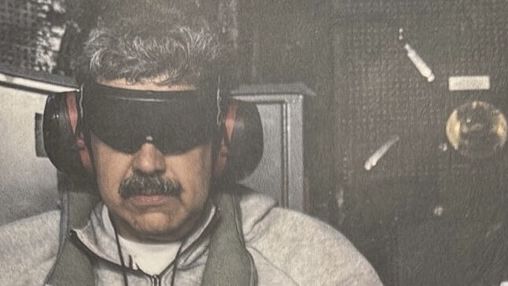
US forces carried out a large-scale military operation to seize President Nicolás Maduro and his wife from a fortified compound in Venezuela in the early morning of January 3.
At the beginning of the daring raid, a series of US strikes hit targets across Venezuela. Radar, communications and air defense infrastructure were knocked out, according to CNN’s review of videos and satellite imagery, clearing a path for special operations helicopters to move in.
At 1:58 a.m. two US transport helicopters were seen flying low toward Fort Tiuna in Caracas, Maduro’s likely extraction point. These aircraft would have unloaded US troops near the compound to capture the president.
In the second phase of the mission, US attack helicopters arrived to provide protective overhead cover and fight Venezuelan air defenses, as US transport helicopters removed Maduro and the forces that captured him from his compound.
One of the transport helicopters was seen leaving the Fort Tiuna area before disappearing into the darkness. The gunfire and explosions in Caracas – which left more than 100 people dead – had stopped by 3 a.m., a witness said.
US forces flew out of Venezuelan airspace at around 4:29 a.m., according to a US general.
Trump later posted a photo of Maduro aboard the USS Iwo Jima, where the ousted Venezuelan president and his wife were held before being transported to New York to face charges.
What it's like outside the courthouse ahead of Maduro's hearing

There were already 30 people in line to enter Nicolás Maduro’s hearing shortly before 6 a.m. ET, five hours before court is scheduled to begin.
Most identified themselves as journalists. One of them, Jorge Torrealba, was waiting to enter the courtroom to draw Nicolás Maduro. The day before, the 35-year-old Venezuelan had collected scrap materials and spent two days assembling a huge effigy of the ousted president, dressed in prison clothes and with a mustache made from broom bristles.
“It’s a way to leave a record of this historic moment,” he told CNN. Some of the people in line began joking around the effigy, which is as tall as the real Maduro. One of them was imitating his voice.

It’s all part of the colorful spectacle surrounding the second hearing in the trial against the deposed Venezuelan president and his wife, Cilia Flores, who face drug trafficking charges in a federal court in New York.
Later in the morning, protesters started gathering outside the federal courthouse, with some holding signs that read “Free Maduro” and “Hands Off Venezuela.”
There have been some altercations between protesters and counterprotesters, with some accusing others of not being Venezuelan and not understanding the struggles of the people who endured life under the Maduro regime.