Our live coverage has ended
• Follow the latest updates on the war with Iran here.
What we know so far
• Strike threat: US President Donald Trump threatened to “hit and obliterate” Iran’s power plants if Tehran doesn’t open the Strait of Hormuz within 48 hours. He also said Iran wants to make a deal but he does not, arguing he’s met his goals “weeks ahead of schedule.”
• Iran missiles hit Israel: The Israeli military said it failed to intercept a missile before it struck Dimona, injuring several people and destroying a small building in the home of the country’s nuclear program. Meanwhile in the south, officials declared a mass casualty event as missiles appeared to have pierced the defense array and hit Arad. Israel said strikes on Iran will “increase significantly” this week.
• US-UK base targeted: The UK denounced what it called “Iran’s reckless attacks” after missiles were fired toward the Diego Garcia military base in the Indian Ocean. The attempt has renewed questions about Tehran’s military capabilities and how far its missiles can reach.
EU states encouraged to lower gas storage targets

The European Commission has urged member states to lower gas storage targets, as the Iran war impacts critical suppliers and drives up energy prices.
EU Energy Commissioner Dan Jørgensen reminded the bloc’s energy ministers of the “flexibilities” available under current gas storage regulations and encouraged them to make use of them, a spokesperson told CNN.
The move signals concern in Brussels that rigid storage targets could add to the upward pressure on European energy prices.
In a letter on Friday, Jørgensen highlighted that member states can reduce storage targets by up to 20 percentage points – 10 in “difficult conditions to fill underground gas storages,” a further five under “certain technical conditions” and an additional five in cases of “persistent unfavourable market conditions.”
Benchmark natural gas prices surged just over 13% on Thursday, having soared by 25% at one point, and have now nearly doubled since the war began on February 28.
Iran's power plants are under threat. What to know about them

US President Donald Trump has threatened to “hit and obliterate” Iran’s power plants , “STARTING WITH THE BIGGEST ONE FIRST!” if it does not open the Strait of Hormuz within 48 hours. Here’s a look at the facilities in the country:
Iran has about 110 gas plants, a small number of which are hybrid, according to data from OpenInfraMap, an open-source intelligence tool for researching energy infrastructure, compiled by volunteers.
The country also operates solar, hydro, wind, oil, diesel, coal, geothermal and nuclear plants, according to the site.
The three biggest plants by output run on gas:
- Damavand Combined Cycle Power Plant: located around 70 km southeast from downtown Tehran. Output: 2,868MW.
- Shahid Salimi: located in Mazandaran province, near the Caspian Sea. Output: 2,215 MW.
- Shahid Rajai: located some 110 km northeast of downtown Tehran. Output: 2,043 MW.
For context: Florida’s West County Energy Center is the largest operating natural gas power plant in the US, with an output of 3,750 MW, according to OpenInfraMap.
Iran produces most of its electricity via fossil fuels. Over 340,000 GWh came from such fuels, while almost 28,000 GWh was from renewable energy in 2023, according to data from the International Atomic Energy Agency (IAEA) website.
Iran says it only has one nuclear power reactor in operation — the Bushehr Nuclear Power Plant in the west — and another under construction, according to the IAEA. In 2023, Iran produced 5,740 GWh of electricity by nuclear energy.
Iran’s Atomic Energy Organization said a “hostile projectile” struck the Bushehr site on Tuesday, but reported no casualties and no damage to the facility.
Teele Rebane contributed to this report.
Search operation underway after Qatar helicopter crashes

A search for crew members and passengers is underway after a helicopter crashed in its regional waters due to a “technical malfunction,” Qatar’s Ministry of Defense said early Sunday.
The ministry said the helicopter was on “routine duty” when the crash occurred.
Explosion reported near bulk carrier off UAE's coast, UKMTO says
An unknown projectile caused an explosion “in close proximity” to a bulk carrier off the central northern coast of the United Arab Emirates, the United Kingdom Maritime Trade Operations (UKMTO) said early Sunday.
“UKMTO has received a report of an incident 15NM(nautical miles) north of Sharjah, United Arab Emirates,” said the body.
“All crew are reported safe,” it added.
Iran has effectively closed the Strait of Hormuz through which 20% of the world’s crude normally passes, sparking a spike in fuel prices.
The attack came as US President Donald Trump threatened to “hit and obliterate” Iran’s power plants if Tehran doesn’t open the crucial waterway within 48 hours.
Trump has threatened to "obliterate" Iran's power plants. More updates here

US President Donald Trump has threatened to strike Iranian power plants if Tehran does not reopen the Strait of Hormuz. His latest threat comes after he said on Friday that the US is considering “winding down” military efforts in the Middle East.
Meanwhile, Israel said earlier that strikes on Iran will “increase significantly” this week.
What else you should know:
Strike threat: President Donald Trump threatened Saturday to “hit and obliterate” Iranian power plants if Tehran does not reopen the Strait of Hormuz within 48 hours. He also said Iran wants to make a deal but he does not, arguing he’s met his goals “weeks ahead of schedule” and that the US has “blown Iran off of the map.”
Dozens wounded: Israel’s emergency response service declared a mass casualty event after an Iranian missile hit the city of Arad in the south and wounded at least 74 people. In the city of Dimona, an Iranian ballistic missile slammed into a building and injured several people, according to the Fire and Rescue Services. The Israeli military said it failed to intercept the missile before it hit Dimona, which is home to the country’s nuclear program.
New Israeli strikes: The Israel Defense Forces says it has hit over 200 targets so far this weekend after launching simultaneous “wide-scale” waves of strikes on Iran and Hezbollah in Lebanon.

The Persian Gulf has become one of the key battlegrounds of the Iran War – and one where the US is looking vulnerable, CNN's Matthew Chance reports from Doha, Qatar.

Iranian arrests: Iran arrested 25 people for “spreading rumors, filming damages, and sending them to anti-revolutionary networks,” the state-affiliated Tasnim news agency reported yesterday.
CNN’s Dana Karni, Oren Liebermann, Sophie Tanno, Alejandra Jaramillo and Catherine Nicholls contributed to this report.
Trump threatens to “hit and obliterate” Iran's power plants if Strait of Hormuz not opened in 48 hours


President Donald Trump threatened Saturday to “hit and obliterate” Iranian power plants if Tehran does not reopen the Strait of Hormuz within 48 hours.
“If Iran doesn’t FULLY OPEN, WITHOUT THREAT, the Strait of Hormuz, within 48 HOURS from this exact point in time, the United States of America will hit and obliterate their various POWER PLANTS, STARTING WITH THE BIGGEST ONE FIRST!” Trump wrote in a Truth Social post.
Trump posted at 7:44 p.m. ET on Saturday, which means his deadline expires at 7:44 p.m. ET on Monday (3:14 a.m. on Tuesday in Tehran).
The threat marks an escalation in rhetoric from Trump, who’s previously dangled the option of hitting Iranian infrastructure but cautioned it would impair the country’s ability to rebuild. And it’s a tacit acknowledgement that the strait’s closure provides Iran significant leverage.
Trump’s latest threat comes a day after he said the US is considering “winding down” military efforts in the Middle East and dismissed questions about the White House’s plan for restoring traffic through the Strait of Hormuz, saying that “at a certain point, it’ll open itself.”
It also comes after Trump said Thursday that he’d told Israeli Prime Minister Benjamin Netanyahu to stop attacks on Iranian oil and gas facilities.
But as gas prices have risen at home, US officials have been furiously trying to avert a potential monthslong closure of the strait, privately acknowledging that reopening the key waterway is a problem without a clear solution, CNN previously reported.
This post has been updated with additional information.
Trump says Iran wants a deal but he does not

President Donald Trump said Saturday that Iran wants to make a deal but he does not, arguing he’s met his goals “weeks ahead of schedule” and that the US has “blown Iran off of the map.”
“Their leadership is gone, their navy and air force are dead, they have absolutely no defense, and they want to make a deal. I don’t!” Trump said in a Truth Social post.
A day earlier, Trump downplayed the prospect of a ceasefire, telling reporters at the White House that ongoing US actions have left Iran significantly weakened.
“Well look, we can have dialogue, but you know, I don’t want to do a ceasefire,” Trump said Friday.
“You don’t do a ceasefire when you’re literally obliterating the other side. They don’t have a Navy. They don’t have an Air Force. They don’t have any equipment. They don’t have any spotters. They don’t have anti-aircraft. They don’t have radar. And their leaders have all been killed at every level. We’re not looking to do that,” he added.
Trump also said Friday he believes the US has already “won” its war with Iran, later adding in a Truth Social post that the the US is considering “winding down” military efforts in the Middle East.
Iran tried to strike a US-UK base over 2,000 miles off its coast. What that says about its capabilities



On Friday morning local time, Iran launched two intermediate-range ballistic missiles at Diego Garcia, a joint US-UK military base in the Indian Ocean, a US official told CNN, adding that neither of them struck the base.
This marks what appears to be the first known attempt to target the base, which was deliberately built in a remote location beyond the reach of many adversaries. The base is over 2,000 miles (over 3,000 kilometers) off Iran’s coast.
While the attack was unsuccessful, it shows that Iran may not be adhering its self-imposed missile range limit of 2,000 kilometers, raising concerns about whether Tehran could hit US and European interests further away than previously thought.
Trita Parsi, the co-founder of the Quincy Institute for Responsible Statecraft, believes the US homeland is safe from Iranian strikes, but he told CNN that the attempted attack “suggests that other bases that the US thought is outside of the range of Iran may actually be within the range,” along with American ships “that have been kept 3,000 kilometers away.”
President Donald Trump has repeatedly claimed that Tehran has been building missiles that “could soon reach the American homeland.”
However, an unclassified assessment from the Defense Intelligence Agency from 2025 said that Iran could develop a “militarily-viable” intercontinental ballistic missile by 2035 “should Tehran decide to pursue the capability.”
Sources also told CNN late last month that there was no intelligence to suggest that Iran is pursuing an intercontinental ballistic missile program to hit the US at this time.
Small business owners are left with a handful of bad choices as fuel costs soar

Shirley Modlin was in meetings all day Thursday searching for costs to cut. Her small manufacturing facility in Powhatan, Virginia, relies on carbide tools made of tungsten to make precise cuts.
The chemical element is used in armor-piercing artillery. So carbide tool prices have more than doubled in the past two weeks, Modlin says.
Modlin, owner of 3D Design and Manufacturing, said customers won’t tolerate increased prices to cover the rising tool costs.
Modlin offers her staff competitive benefits and raises every year to retain and attract new workers. But last year, tariffs rocked the US manufacturing industry, sending the costs of imported raw materials surging – Modlin’s aluminum and steel costs jumped 65%.
She wasn’t able to give any raises last year. And on Thursday, facing another round of surging costs, Modlin had to cut an administrator back from full-time to part-time without benefits.
“He’s got a house payment; he’s got bills he’s gotta pay. It’s just awful,” Modlin said. “We have to do something. You can only cut so many breakroom supplies.”
Modlin was one of four business owners — a clothing store owner, a bread baker, a spot shipper and a factory owner — CNN spoke to about how they plan to deal with surging fuel costs.
Dozens wounded and mass casualty event declared after Iranian missiles hit southern Israel



Dozens of people were wounded and Israel’s emergency response service declared a mass casualty event after an Iranian missile hit a city in southern Israel Saturday evening.
Magen David Adom (MDA) said at least 74 people were injured at two different impact sites in Arad, including seven in serious condition. MDA said there were still people missing at the scene. The strike on Arad appears to have resulted in the highest number of people injured in a single attack since the start of the war with Iran.
Videos from United Hatzalah, another emergency response service, showed multiple buildings that took major damage, including outer walls ripped off and smoke rising from at least one building.
It is the second time in a matter of hours that Iranian missile appears to have pierced Israel’s missile defense array and struck cities in southern Israel.

Social media footage shows the moment of impact and the aftermath of a strike hitting Dimona, Israel. A spokesman for the Fire and Rescue Services said the missile destroyed a one-story building in Dimona.

Iran strike on Dimona shows “effective command and control,” says Israel’s top Iran expert

The Iranian missile strike on the city of Dimona in southern Israel shows Tehran retains “effective command and control,” argued one of Israel’s top Iran experts.
Danny Citrinowicz, a senior fellow on Iran at Israel’s Institute for National Security Studies, said the Saturday evening attack on Dimona, which is home to Israel’s nuclear program, is part of a pattern of escalation management.
“The Iranian strike on Dimona and the Haifa refinery following the Israeli attack on the South Pars gas field highlights a clear and consistent pattern: escalation managed through deliberate signaling,” Citrinowicz said on social media. He said the decision to strike Dimona shows “effective command and control, with strategic guidance translating into precise operational execution at the tactical level.”
Iran’s national broadcaster said the attack on Dimona was in response to what Tehran called a US-Israeli strike on the Natanz nuclear facility. The Israeli military said it was “not familiar” with a strike on Natanz. The US carried out a strike on Natanz during the 12-day war in June.
Israel has repeatedly said it is dismantling Iran’s command and control by killing the country’s leaders, making it difficult for the military to function coherently. But Citrinowcz said, “This is not random retaliation. It is structured deterrence, designed to shape behavior and impose costs.”
Gas prices are soaring across the US. Check what they're like in your state
Gas prices have skyrocketed since the start of the war, largely due to the effective closure of the Strait of Hormuz, which is responsible for 20% of the world’s oil supply. Prices hit a nationwide average of $3.91 per gallon on Friday, up 93 cents from February 28, when the conflict began.
See what gas prices are in each state:
Taken collectively, the figures are staggering. Drivers have pumped nearly $4.5 billion more into their gas tanks since the US and Israel first attacked Iran, estimated Patrick De Haan, head of petroleum analysis at GasBuddy, an online price tracker.
A household with two cars is spending an average of $20 to $40 a week more on gas than prior to the conflict, De Haan said.
CNN’s Tami Luhby contributed to this report.
Iranian missile slams into building in Dimona in southern Israel, authorities say

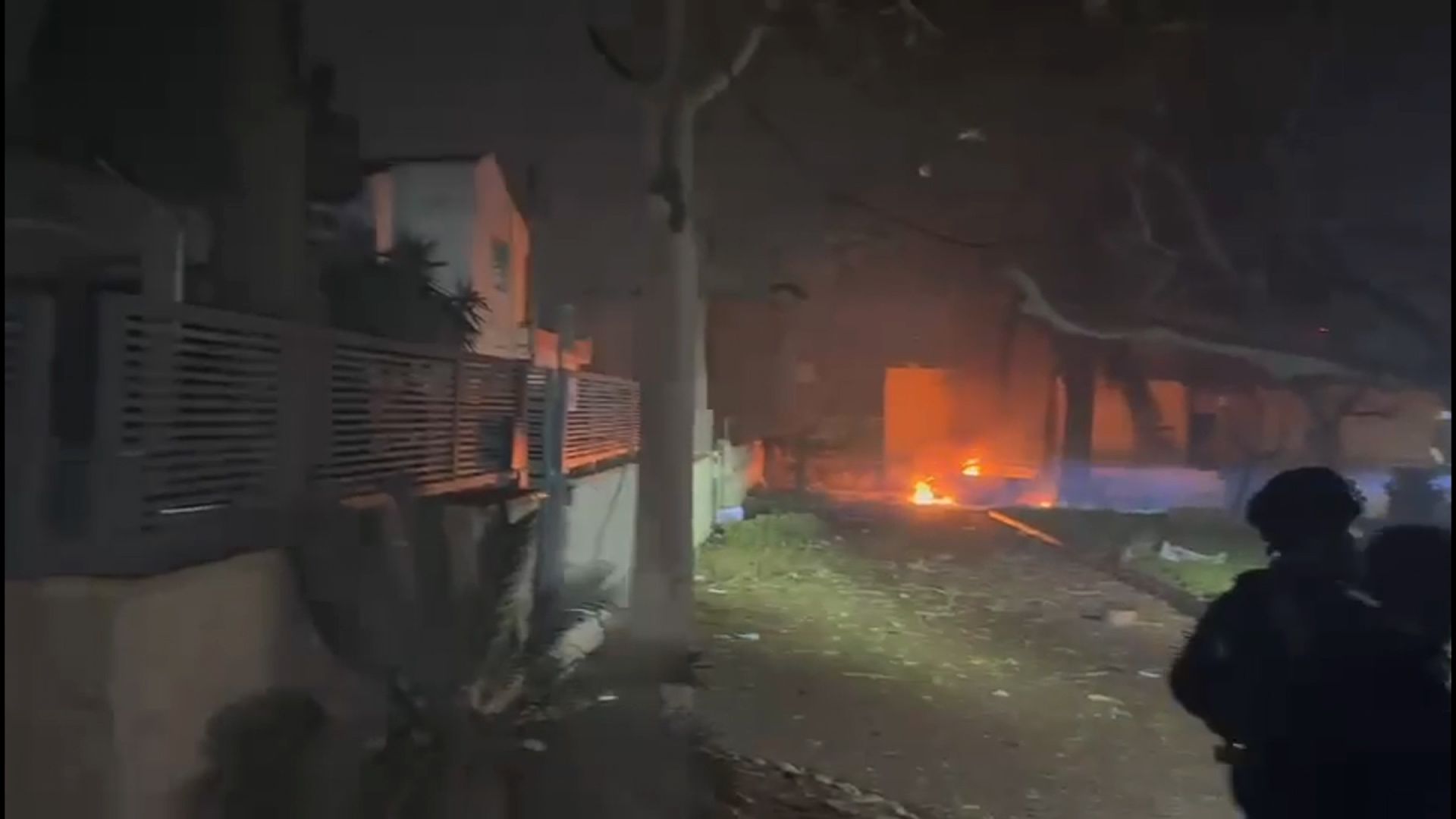
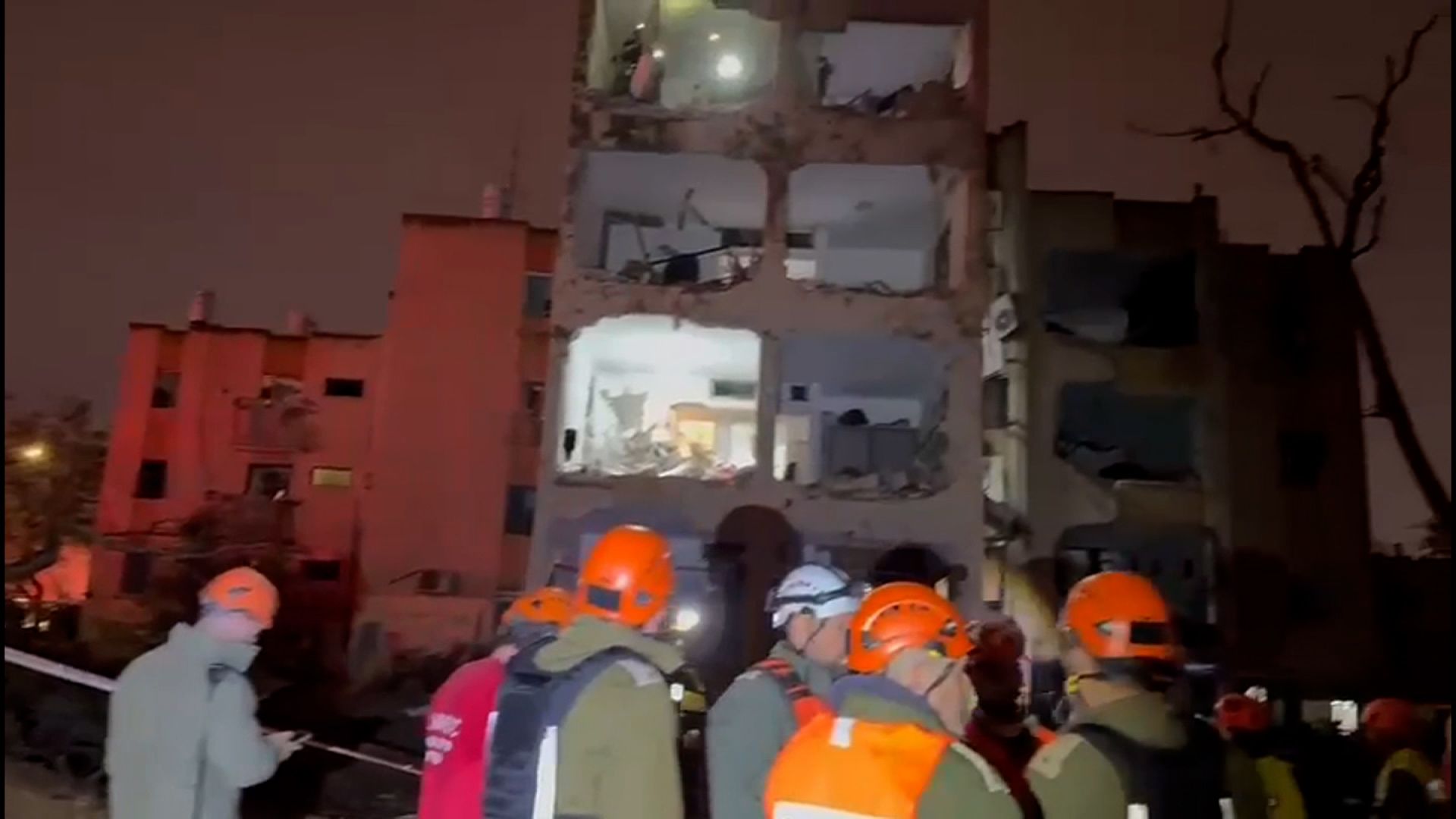
An Iranian ballistic missile slammed into a building in the city of Dimona in southern Israel on Saturday evening, according to the Fire and Rescue Services, injuring several people as firefighters battled a fire at one of several scenes after the strike. A spokesman for the Fire and Rescue Services said the missile destroyed a one-story building in Dimona.
Dramatic video from social media shared by the Fire and Rescue Services shows a missile streaking down from the sky toward the center of the city, followed by a loud explosion.
The Israeli military said it failed to intercept the missile before it struck the city. “The incident will be reviewed,” the Israel Defense Forces (IDF) said in a statement.
The city of Dimona is home to Israel’s nuclear program. Several rounds of sirens warned of incoming missiles in Dimona on Saturday evening.
Iran’s national broadcaster IRIB TV claimed the attack on Dimona targeted nuclear facilities, and that it came in response to Israel’s earlier attack on Natanz, site of an Iranian nuclear facility.
United Hatzalah, one of Israel’s emergency response services, said they were treating “several casualties at multiple scenes” in the area, most in light condition. Magen David Adom (MDA), another emergency response service, said nearly 50 people were taken to hospital, including a 10-year-old boy who suffered moderate injuries from shrapnel.
Israel says it struck over 200 targets in Iran and Lebanon so far this weekend


The Israel Defense Forces (IDF) says it has launched simultaneous “wide-scale” waves of strikes on Iran and Hezbollah in Lebanon so far this weekend, hitting over 200 targets.
In Iran, the IDF said it struck dozens of Iranian compounds storing weapons and ballistic missiles, as it claimed to have continued to have degraded Tehran’s arsenal of weapons.
Regarding Lebanon, Israel’s military said it completed two waves of strikes in Beirut and additional areas in Lebanon, in which “key Hezbollah command centers” were struck.
“The IDF will continue to further degrade the Iranian regime and the Hezbollah terrorist organization, with the aim of reducing the scope of fire directed toward the the State of Israel,” a statement from the IDF said.
Over 1,000 people have been killed in Lebanon since fighting with Israel resumed on March 2. The Israeli military has killed at least 111 children since the war began, according to Lebanese health ministry figures.
More than one million people in Lebanon have been displaced due to the current conflict.
The most recent conflict between Israel and the Iran-backed militant group Hezbollah was sparked after Hezbollah fired projectiles into Israel to avenge the death of Iranian Supreme Leader Ali Khamenei, triggering Israeli retaliation.
Inside a Hezbollah tomb in Beirut
This indoor shrine in Beirut holds the bodies of many deceased Hezbollah fighters, most of whom died in the last conflict with Israel in 2024. Many of the tombstones carry a picture of the late Iranian supreme leader, Ali Khamenei.
CNN’s Nick Paton Walsh visited the tomb and saw families gathering to pay respects:

This shrine in a Hezbollah stronghold of Beirut is filled with bodies of civilians and fighters, many of whom died in the previous conflict with Israel in late 2024. Some graves carry a picture of the late Iranian supreme leader, Ali Khamenei. CNN’s Nick Paton Walsh saw families visiting to mourn their dead.

Iran arrests 25 for "spreading rumors," state news reports
Iran has arrested 25 people for “spreading rumors, filming damages, and sending them to anti-revolutionary networks,” the state-affiliated Tasnim news agency reported yesterday.
They were arrested in West Azerbaijan province, Tasnim said, citing a statement from the provincial police command that said authorities would “deal with the perpetrators decisively, as a lesson and deterrent.”
The arrests come days after Iran executed three men in connection with nationwide anti-regime protests that took place at the start of the year.
The news agency Mizan, which is affiliated with Iran’s judiciary, said that Mehdi Qasemi, Saleh Mohammadi and Saeed Davoudi were convicted for their role in the killing of two law enforcement officers at a police station.
Human rights groups have described their trials as a sham, with Amnesty International and others saying forced confessions were used in fast-tracked proceedings that “bore no resemblance to a meaningful trial.”
CNN’s Mohammed Tawfeeq contributed to this reporting.
Israel says strikes on Iran will increase this week. Get caught up on the latest


As the war in the Middle East continues to rage on, the death toll across countries continues to rise. And according to Israel, more strikes on Iran are imminent.
Get caught up on the latest:
- More strikes ahead: Israel’s defense minister said this morning that the US and Israeli strikes on Iran will “increase significantly” this week, despite President Donald Trump saying that he is considering “winding down” the military efforts.
- US progress: The US Central Command claimed in a new video Saturday morning there is a “steady decline” of the capabilities of Iran and its Islamic Revolutionary Guard Corps (IRGC) because of strikes by the US military. Trump said the US “totally obliterated” key Iranian nuclear sites — including the Natanz facility — last summer. But on Saturday, the site was struck again, Iranian state media reported.
- Iranian oil: The US decision to allow as much as 140 million barrels of Iranian oil at sea to be sold will be of little financial benefit to Iran, according to US officials.
- Fuel price’s effect on flights: United Airlines plans to cut less popular flights — including mid-week and overnights — until the fall, in response to surging fuel prices triggered by the war in Iran, CEO Scott Kirby said Friday in a company memo.
- US-UK base targeted: The United Kingdom denounced what it calls “Iran’s reckless attacks” after ballistic missiles were fired toward a joint US-UK military base in the Indian Ocean. Iran launched two intermediate-range ballistic missiles at the base on the island of Diego Garcia on Friday morning local time, a US official told CNN. Neither struck the base, the official said.
- Safeguarding Strait of Hormuz: The United Arab Emirates and Australia are the latest countries to express their willingness to contribute to efforts to ensure safe navigation of the Strait of Hormuz, joining a statement which now has 22 participating nations.
CNN’s Eugenia Yosef, Oren Liebermann, Tim Lister, Zachary Cohen, Isobel Yeung, Kara Fox, Auzinea Bacon, Dalia Abdelwahab, Catherine Nicholls and Sophie Tanno contributed reporting to this post.
A look at Diego Garcia, the US-UK military base that Iran has targeted

Yesterday morning, Iran launched two intermediate-range ballistic missiles at a joint US-UK military base on the island of Diego Garcia, a US official told CNN.
Diego Garcia is part of the Chagos Islands, an archipelago more than 1,000 miles (1,609 kilometers) northeast of Mauritius. The UK took over the islands along with Mauritius in 1814 after the defeat of Napoleon.
In 1965, the UK detached the Chagos Islands from Mauritius, which became independent three years later. In exchange for detaching the islands, Britain gave Mauritius £3 million and “committed to return the islands when they were no longer required for defense purposes,” according to a 2025 House of Lords briefing.
In 2019, the United Nations General Assembly voted overwhelmingly to condemn the UK’s occupation of the Chagos Islands. More than five years later, London said it would give up sovereignty of the archipelago.
Under the terms of a treaty, once it gives the islands up, the UK will pay Mauritius $136 million each year for a 99-year lease on the military base at Diego Garcia, meaning the UK and US can still use the facility.
US President Donald Trump has accused the United Kingdom of “great stupidity” over its plan to hand over ownership, and earlier this month berated London for denying the US permission to use British military bases in the islands for offensive strikes against Iran.
Diego Garcia has helped to launch two invasions of Iraq, served as a vital landing spot for bombers that fly missions across Asia, including over the South China Sea, and has been linked to US rendition efforts.
CNN’s Jenni Marsh, Christian Edwards, Zachary Cohen, Laura Sharman and Isaac Yee contributed to this reporting.
Iranian missile strike hits empty kindergarten in Israel, mayor says


Israeli municipality workers were at the scene of an Iranian missile strike on the city of Rishon Lezion on Saturday, as this video shows.
Rishon Lezion mayor Raz Kinstlich told the Reuters news agency a kindergarten had been left in “total ruins.” There were no children in the building at the time of the attack, he said.