What we covered
• State trooper testimony: Massachusetts State Police Trooper Nicholas Guarino testified in the murder trial of Brian Walshe, the man accused of killing and dismembering his wife in 2023.
• The evidence: Prosecutors walked the jury through data extracted from Walshe’s laptop, including evidence of graphic Google searches, such as “best way to dispose of a body.”
• About the case: Brian Walshe, who denies killing Ana Walshe, pleaded guilty last month to misleading police and improper conveyance of a human body. Her body has not been found.
Our live coverage of the Brian Walshe trial has wrapped for the day. Please scroll through the posts below for all the details from Tuesday.
Court adjourns for the day
Judge Diane Freniere has dismissed the jury for the day. Court will resume tomorrow morning.
After the cross examination of Massachusetts State Trooper Nicholas Guarino is complete, the prosecution said it will call records custodians for Uber, Lyft and JetBlue to the stand to testify.
They’ll also call a Cohasset police K9 officer and and representative from US Customs and Border Patrol.
Defense attorney suggests Walshe’s search about disposing of body may not indicate murder plot
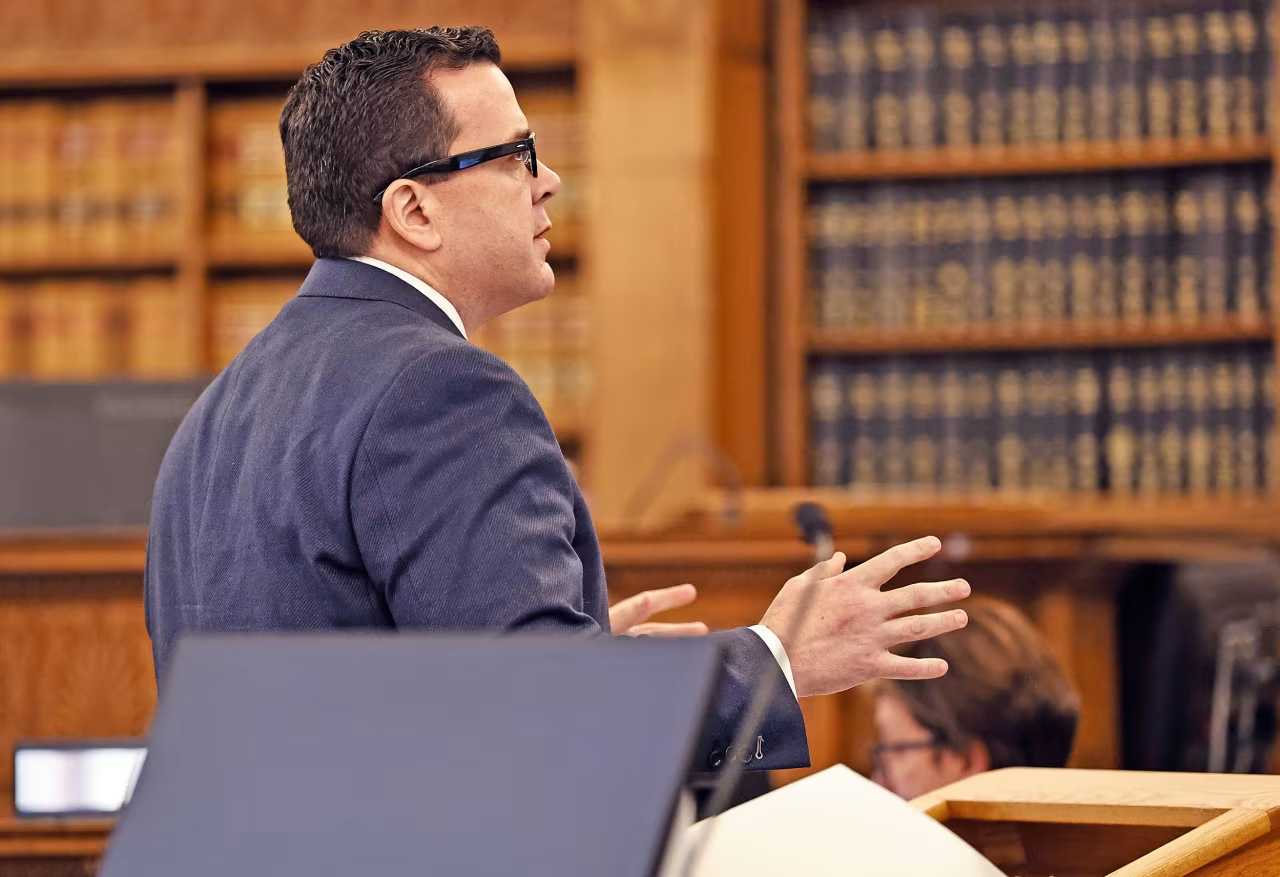
Brian Walshe’s defense attorney argued his client’s Google searches for the “best way to dispose of a body” could have been in hopes of finding information that was not nefarious.
“If someone entered specific search terms like ‘how to dispose of a body,’ the results could simply be, ‘here take the body to a cemetery,’ something like that,” defense attorney Larry Tipton said while questioning Massachusetts State Police Trooper Nicholas Guarino on cross examination.
“I would have to search it to see,” Guarino answered. “I can’t say definitively.”
Prosecutors must prove that Walshe planned to kill his wife in order to prove he’s guilty of first degree murder. Tipton told the jury in opening statements that Walshe never thought about killing his wife, but found her dead in their bed and panicked. Tipton contends his client only then started searching about how to dispose of her body.
Tipton asked Guarino to confirm that the “dark searches” about disposing of a body only started after 4:52 a.m. ET on January 1, 2023. Guarino confirmed that was the first time searches of that nature came up in the time period he examined, between December 25, 2022 through January 8, 2023.
Tipton suggested Walshe could have been making those kinds of searches before January 1, but it would not have been returned in this limited window of data. Guarino said he would need probable cause to extend the search warrant.
Defense attorney questions state trooper about porn viewed on Walshe's laptop
Defense attorney Larry Tipton has started his cross-examination of Massachusetts State Police Trooper Nicholas Guarino, who has been testifying about evidence found on devices taken from Brian Walshe’s home.
Tipton has been careful to use terms like “device user” instead of referencing Walshe directly as he questioned Guarino about web history recovered from Walshe’s laptop related to pornography viewed on the device on December 27.
Earlier, under direct questioning, Guarino testified that evidence showed the laptop had viewed a pornographic video about a “cheating wife.”
But on cross-examination, Tipton clarified with Guarino that Walshe’s laptop search records from December 27 don’t show the user specifically searched for porn about a cheating wife. Tipton suggested whoever was using the device sought out Pornhub then selected a video from the available options.
Guarino said the data doesn’t reflect what, if any, specific searches were made on the site.
Tipton suggested that based on other data from that night, whoever was using the device was actually selecting videos that included an actress they preferred.
Guarino testified he can’t say how often the device user sought out pornography on the internet beyond the date range beginning on December 25, 2022.
Guarino confirmed on cross examination that he submitted a search warrant to extract data from devices taken from Brian Walshe’s home for December 25, 2022, through January 8, 2023. He could have sought a new search warrant to expand that search earlier than December 25 if he thought there was cause to do so, the trooper confirmed.
During opening statements: Tipton acknowledged Walshe conducted internet searches the morning of January 1 related to disposing a body — but he did not tell the jury Walshe was watching pornography on his laptop on December 27.
Walshe searched online for the "trash bag killer," state trooper testifies
After the lunch break, Massachusetts State Police Trooper Nicholas Guarino said that his search of Brian Walshe’s laptop revealed that Walshe had Google searched Patrick Kearney — who is known as the “trash bag killer.”
Guarino said he went to the Wikipedia page that Walshe visited to learn more about Kearney, a serial killer who disposed of his victims in trash bags.
After the judge overruled an objection by the defense, Guarino testified he learned that “Patrick Kearney was called the ‘trash bag killer.’”
Some context: During opening statements, the prosecution alleged that Walshe threw black trash bags away in a dumpster near his mother’s home. On January 9, he said, law enforcement recovered a number of items Walshe allegedly threw away, including a Tyvek suit, a hacksaw, a hatchet and several items with Brian and Ana Walshe’s DNA on them.
Brian Walshe has pleaded guilty to improperly disposing of his wife’s body, which has never been found, though he denies that he killed her.
Court is taking a lunch break
The court is taking a break for lunch. Prosecutors will continue to question witness Massachusetts State Police Trooper Nicholas Guarino when court resumes.
For about the last hour and a half, Guarino has been going through digital evidence extracted from Brian Walshe’s laptop.
More searches about hacksaws and broken teeth found on Walshe's computer
Over the next several days, Brian Walshe continued to make graphic internet searches on his laptop, according to digital evidence.
According to Massachusetts State Police Trooper Nicholas Guarino, who extracted the digital data from Walshe’s computer where he made the searches, Walshe made dozens of queries about cleaning up and disposing of a body on January 1.
These are Walshe’s searches from January 2:
- At 12:27 p.m. ET he typed in, “how to saw a body.”
- At 12:33 p.m. ET he searched, ”hack saw the best tool for dismembering a body.”
- At 12:47 p.m. ET Walshe searched, “Can you be charge with murder without a body.” He then clicked on a wikipedia page titled “murder conviction without a body.”
- At 1:12 p.m. ET Walshe Googled, “can you identify a body with broken teeth” as well as “disposing of a body in the trash.”
- At 2:01 p.m. ET Walshe searched, “How to remove a hard drive from apple laptop.”
And from January 3:
- At 5:02 a.m. ET Walshe searched an article called, “cleaning up blood without leaving a trace - 5 tips” from the website “Aftermath Services.”
- At 1:05 p.m. ET he looked up: “body found at trash station.”
- At 1:12 p.m. ET he searched: “can a body decompose in a plastic bag.”
- Walshe then searched, “can police get your search history without your computer.”
Guarino confirmed there were no more searches made on this laptop between January 4 at 8:55 a.m. ET until January 7 at 3:58 p.m. ET.
Walshe used a laptop to search online about disposing of a dead body, digital evidence shows
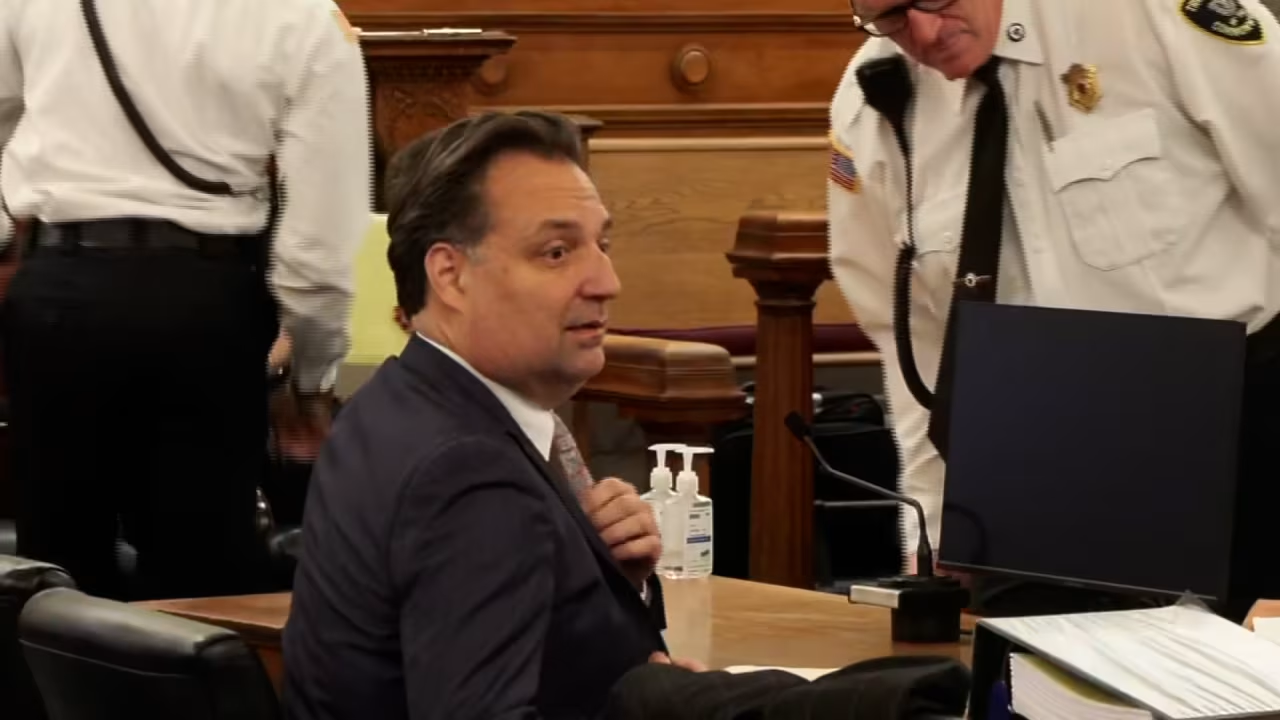
The jury is now seeing data extracted from Brian Walshe’s laptop.
Massachusetts State Police Trooper Nicholas Guarino is on the stand and has been explaining the process of extracting digital data from devices.
Here’s what he said. All of these were made on January 1, 2023:
- The Safari internet record shows a Google search time stamped at 4:52 a.m. ET on January 1, 2023, which said “best way to dispose of a body.”
- At 4:54 a.m. ET Walshe clicked on an article titled “10 ways to dispose of a dead body (if you really needed to),” Guarino testified.
- One minute later, at 4:55 a.m. ET, Walshe searched, “How long before a body starts to smell.”
- Guarino testified that by 5:48 a.m. ET, the data shows Walshe went “11-pages deep” into the article “10 ways to dispose of a dead body (if you really needed to).”
- At 9:33 a.m. ET, Walshe searched: “how long does dna last.”
- Another Google search at 9:35 a.m. ET was, “can identification be made on partial human remains.”
- More searches at 9:59 a.m. ET were “how to dispose of a cell phone” and “how to dispose of a computer.”
- At 10:29 a.m ET, Walshe Googled: “my wife is missing what should i do.” And was directed to an article on a website called “Hello Divorce” titled “Your spouse is missing and you want a divorce” at 10:30 a.m. ET.
- At 11:28 a.m. ET, Walshe viewed a blog post titled “6 ways to dispose of a body.”
- Walshe searched at 11:50 a.m. ET: “Can I used bleach to clean my wood floors from blood stains.” He also clicked on a Discover Magazine article titled, “Want to get away with murder? use a special detergent.”
- Walshe also made several searches after noon ET about using hydrogen peroxide to remove blood stains.
There was also several searches about Tishman Speyer, his wife’s employer, records show.
Guarino participated in the execution of a search warrant at Brian Walshe’s home on January 8, 2023. During that search, officials obtained three MacBook computers, two iPhones and three iPads.
This post has been updated with more details about data extracted from Walshe’s laptop.
Massachusetts State Police trooper is the next on the stand
The prosecution has called its next witness, Massachusetts State Police Trooper Nicholas Guarino.
He said he mainly works as a forensic examiner and helps with homicide investigations.
Defense attorney works to point out areas where there is lack of evidence
Brian Walshe’s defense attorney is working to point out the lack of evidence in several areas with Cohasset Police Department Sgt. Harrison Schmidt on the stand.
Schmidt was at the Walshe’s house several times in the days after Ana was reported missing.
He acknowledged that a hole in the ceiling plaster in Walshe’s bedroom is not believed to be related to the case. Schmidt also confirmed that investigators never recovered any evidence of interest after draining and searching the pool in Walshe’s backyard.
The sergeant reiterated that he didn’t open or search trash bags he saw in Walshe’s basement days before Walshe’s arrest and didn’t notice the bottom step leading to the basement was cracked.
When asked, Schmidt confirmed there’s no forensic evidence that definitively confirms Brian Walshe saw any text messages between Ana and William Fastow sent before her death. Schmidt similarly confirmed that there’s no forensic evidence Walshe saw any Facebook messages between his wife and Fastow.
The investigators had asked Walshe more than once by that point about any affairs Ana Walshe might’ve been involved in, and Schmidt acknowledged that Brian Walshe offered Fastow’s name as someone Ana knew in the Washington, DC, area without appearing angry or using pejorative language.
In his opening statement Monday, Assistant District Attorney Greg Connor told the jury that a cell phone that belonged to Brian Walshe searched Fastow’s name on December 25, 2022, after Ana missed Christmas Eve with her family in Massachusetts.
Walshe told investigators in his interviews on January 4 and 5 that Fastow was a friend of Ana’s in DC, and that he called the man while looking for Ana. He went to Ana’s townhouse to look for her, Walshe said.
Detective confirms searches found on iPad were synced with the device
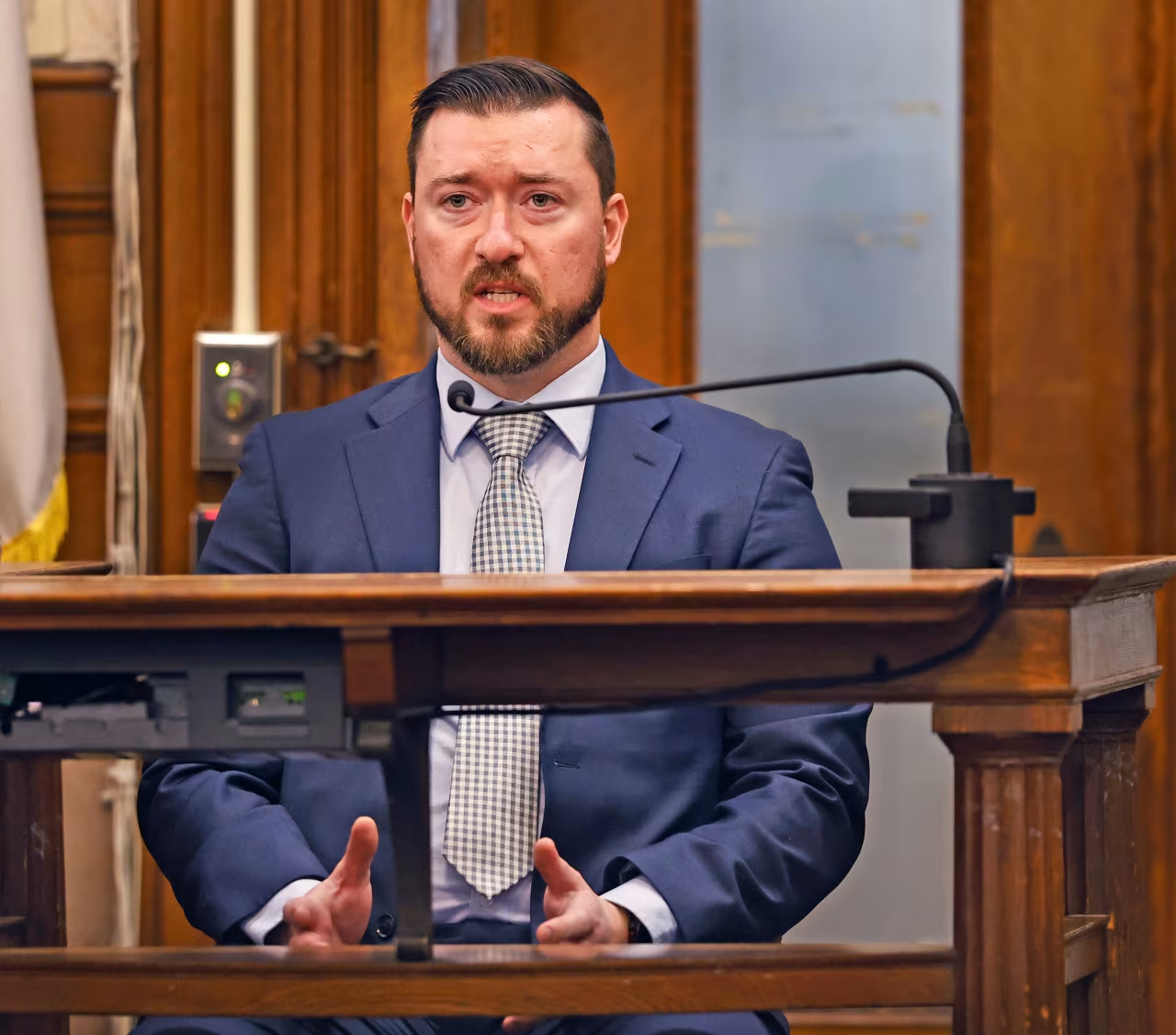
Cohasset Police Department Sgt. Harrison Schmidt said it was determined that the searches investigators found on Brian Walshe’s young son’s iPad did not originally occur on the device, but were rather synced with the account.
Schmidt is being pressed by the defense about the interview in which investigators confronted Walshe with the searches.
On cross examination, the sergeant answered “yes” when asked if Walshe’s demeanor changed during the interview when the searches were brought up. He also said agreed that Walshe seemed sad during that line of questioning.
Schmidt answered that the searches did not happen on the iPad. Earlier, the jury heard part of that interview recording in which Walshe said, “I don’t use that iPad, so that’s really weird.”
The searches included things like “how long before a body starts to smell” and “can you throw away body parts.”
Separately, Schmidt confirmed that financial records shown to the jury on direct examination did not include any withdrawals by Brian Walshe from Ana’s accounts. Schmidt also confirmed he didn’t find any evidence that Walshe had the credit card records showing his wife’s travel purchases when she went to Dublin earlier in the year.
Investigators find some of Ana Walshe’s items in dumpsters on January 9, detective says
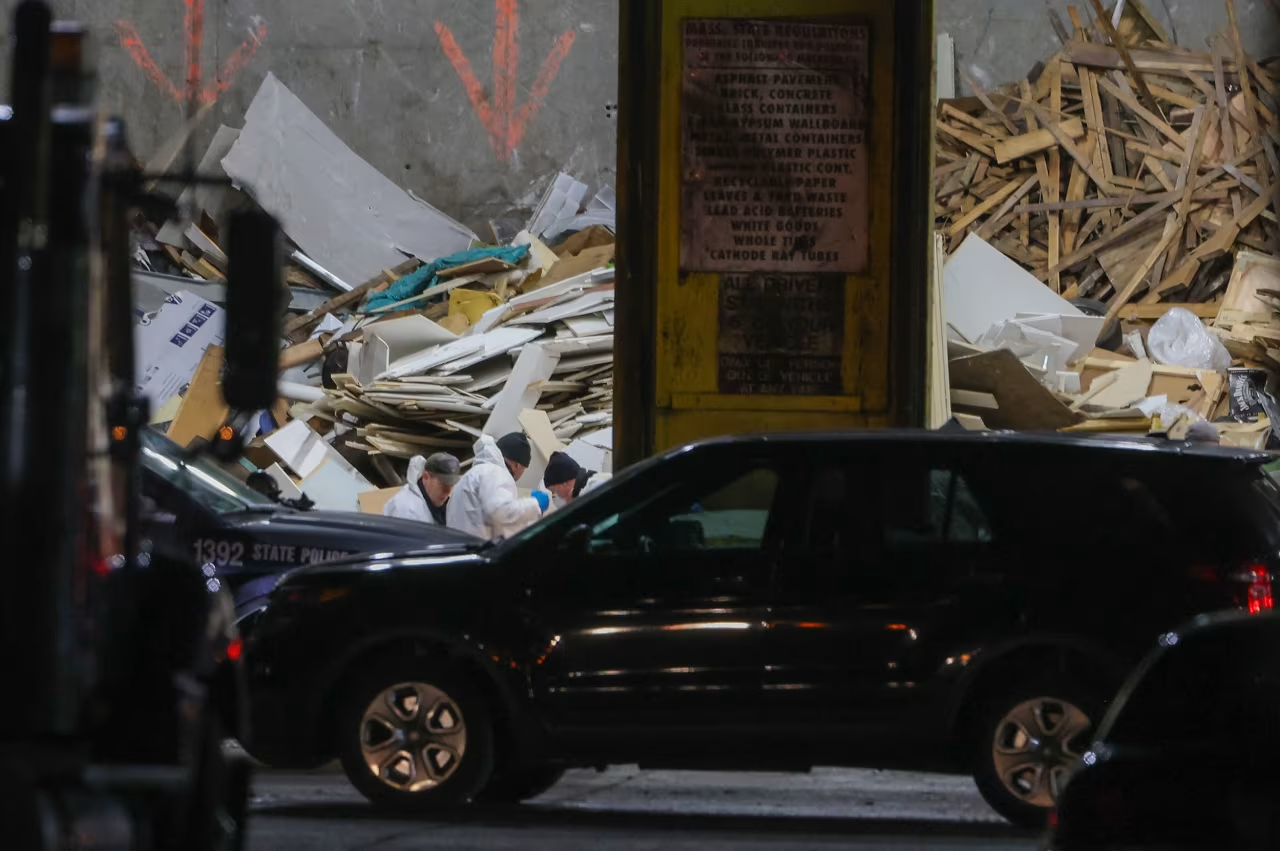
On January 9, investigators searched the contents of dumpsters where they believed Brian Walshe threw away evidence near his mother’s apartment complex days earlier, Cohasset Police Department Sgt. Harrison Schmidt said.
They conducted the search at a trash transfer station in Peabody, Massachusetts, Schmidt testified.
The jury saw a photo of a Covid-19 vaccination card with Ana Walshe’s name on it recovered from the dumpster. The jury also saw a photo of boots and a black coat found in the dumpster. The prosecutor didn’t ask Schmidt to make the connection that they were Ana Walshe’s, though previously released information indicates they were hers.
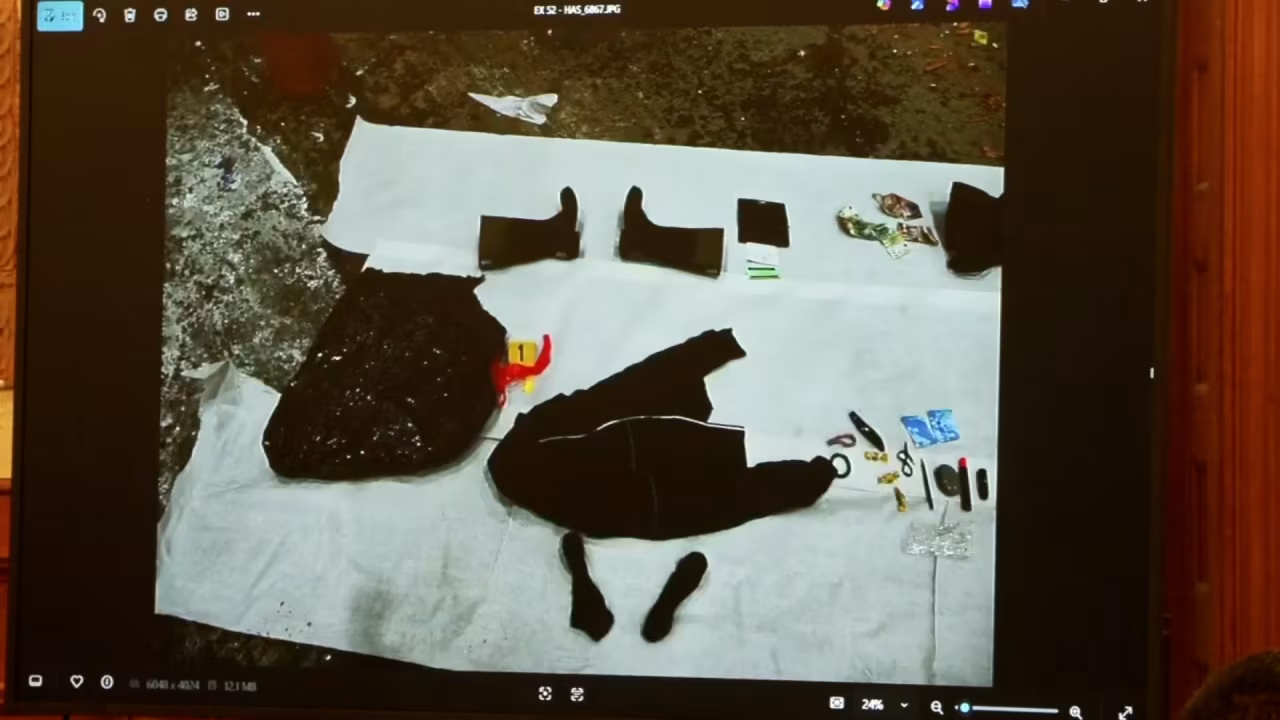
The day before, Schmidt said a search warrant was executed on the Walshe home. Brian Walshe, his mother and his three sons were in the home at the time.
Walshe said he had "no idea" how graphic searches were found on iPad
Brian Walshe was questioned by investigators about a series of internet searches they discovered on his six-year-old son’s iPad during a January 8 interview, according to a recording being played for the jury.
The investigator told Walshe they had found “dozens” of searches on the iPad, including, “how to stop a body from decomposing,” and, “does the dishwasher remove blood from a knife.”
When asked to explain the searches, Walshe said, “I have no idea.”
“I don’t use that iPad, so that’s really weird,” he said, according to the recording. The searches began January 1 at 4:54 a.m. local time investigators said.
Cohasset Police Department Sgt. Harrison Schmidt, who is on the stand, then testified that he arrested Walshe later that day.
Brian Walshe told investigators that he would "never hurt my wife"

Three days after his wife was reported missing, Brian Walshe surmised to investigators that maybe she was “at a spa.”
Though he said she was under a lot of pressure at work, Brian Walshe said, her disappearance “doesn’t really track with my wife,” because she loved her job and her family, he told investigators in a January 7 interview. The jury is listening to a recording.
Before that, an investigator asked Walshe, “Can I ask you, did you do anything to hurt your wife?”
Walshe said no, “I would never do that.” He added, “I would never hurt my wife.”
He reiterated to law enforcement that he and his wife had a good relationship. This was something he also mentioned in two previous interviews with investigators. Brian Walshe said the biggest issue in their marriage was the distance.
He said he didn’t give his wife a hard time about leaving early to return to Washington, DC, because they’d fought about it when she missed Thanksgiving and Christmas Eve with the family. “I wasn’t going to make the same mistake three times,” Walshe said in the recorded interview.
He also said that he got angry about his wife for missing Thanksgiving, but then realized that he was “just sad that we’re not spending a lot of time together.”
“And she was sad about it, too, and it was exhausting for both of us,” he said.
Jurors are listening to about 30 more minutes of the police interview with Walshe
Cohasset Police Department Sgt. Harrison Schmidt is back on the stand for the prosecution.
The jury is now continuing to listen to the January 7 law enforcement interview with Brian Walshe. They heard more than an hour of the recording yesterday afternoon. They’ll now listen to the remaining 30 minutes of the recording.
When asked, Brian Walshe said Gem Mutlu — Ana’s former boss who joined them New Year’s Eve and was among the last people to see Ana alive — didn’t know she was going to leave early New Year’s Day.
Walshe said he personally didn’t know she planned to leave while Mutlu was at the house, telling investigators he didn’t find out until later.
Walshe told also investigators that at some point in the night on New Year’s Eve, Ana sent a photo of her and her their son to Will Fastow, who prosecutors say she was having an affair with in Washington, DC.
The Brian Walshe trial is back in session
Brian Walshe is back in court and the judge is on the bench.
After being unshackled, Walshe opened a red envelope left with his lawyers by his mother, who is again seated in the front row. It appears to be a holiday card with several photos on it.
In audio recordings, we heard what Brian Walshe told investigators during initial interviews
The jury heard several audio recordings of Brian Walshe’s interviews with law enforcement in the few days after his wife was reported missing.
The prosecution’s first witness was Cohasset Police Sgt. Harrison Schmidt, who was a detective at the time and involved in the investigation. During his testimony, the prosecution played chunks of the recorded interviews. The jury also saw several photos of the inside of the Walshe home.
January 4: The day Ana Walshe is reported missing, Walshe walked the investigators through the days before he said he last saw Ana Walshe on January 1.
Multiple times, Brian Walshe talked about how his wife hadn’t been feeling well lately and often didn’t get enough rest between her demanding job and commuting to Massachusetts to see her family. When asked, Walshe said the only problem in his marriage was that they didn’t get to spend enough time together.
January 5: On this day, Brian Walshe’s tone appears different than the first interview recording. He could be heard stuttering and pausing frequently as he told investigators how he made breakfast for his kids and played with them before he left the house to run errands in the afternoon.
He said he didn’t raise the alarms about his wife’s disappearance sooner because it bothered Ana that he called friends and family looking for her a week earlier, when she missed a flight to Massachusetts for Christmas.
January 7: Walshe again told investigators he made breakfast for his kids and played with them before he ran errands. He went to see his mother and went to the grocery store and CVS while a nanny watched his kids, Walshe told them.
He reiterated why he didn’t call police sooner to report his wife missing.
CNN’s Lauren del Valle and Maureen Chowdhury contributed reporting to this post.
Prosecutors are talking a lot about the first few days after Ana Walshe's disappearance. Here's a timeline
Ana Walshe, a Massachusetts mother of three, has not been seen since January 1, 2023. Prosecutors say her husband Brian Walshe killed her, dismembered her and disposed of her remains.
Brian Walshe told police he last saw her on New Year’s Day when she left their home in Cohasset for a flight to Washington, DC, for her job.
Using information from a criminal affidavit, police, prosecutors and defense attorneys, CNN assembled a timeline:
January 1: As Brian Walshe told police, Ana Walshe usually took an Uber, Lyft or taxi to the airport and left between 6 and 7 a.m. ET, the affidavit states.
He further told police a babysitter arrived in the afternoon and he left home to get groceries at about 3 p.m. ET, the affidavit states.
He told police he then went to see his mother at about 4 p.m ET. in Swampscott, about an hour drive from Cohasset, but did not have his cell phone and got lost, making the trip longer than usual, the affidavit states. He ran errands and eventually returned home at about 8 p.m. ET, according to the affidavit.
January 2: Ana Walshe’s cell phone pinged in the area of their Cohasset home on January 1 and 2, according to prosecutor Lynn Beland.
According to surveillance footage, Brian Walshe traveled to a Home Depot in Rockland wearing a surgical mask and gloves and made a cash purchase, the affidavit states. There, Walshe bought $450 of cleaning supplies, including mops, a bucket, tarps and various types of tape, according to Beland.
January 4: Ana Walshe’s workplace, real estate company Tishman Speyer, called police to report she did not show up for her job, Beland said. According to Brian Walshe’s defense attorney, he called her workplace to ask if they knew of her whereabouts prior to the workplace’s call to police.
Jan. 5: Cohasset Police announced Ana Walshe was missing and asked the public to come forward with any information.
How Brian Walshe's guilty plea to lesser charges last month could impact his murder trial
A Massachusetts man on trial for the murder and dismemberment of his wife pleaded guilty last month to misleading police and improper conveyance of a human body last month.
On the day jury selection began in his murder trial, Brian Walshe pleaded guilty to the lesser charges without a plea deal from prosecutors. Prosecutors refused to negotiate, according to a defense filing, “unless negotiations included the indictment charging murder.”
In court, Walshe’s lawyers made it clear that while he was admitting to obstructing the investigation, he was not admitting to murdering his wife. Walshe also confirmed to the judge that he disposed of her body.
What this could mean: Ronald Sullivan, a Harvard law professor, said the guilty plea will allow the defense to focus the trial solely on the question of whether the defendant killed his wife, potentially limiting what evidence the jury will see about Walshe’s disposal of his wife’s remains.
It’s also possible Walshe’s attorneys are maneuvering for their client to face lesser homicide charges in the hopes of avoiding life without parole.
Under Massachusetts law, Walshe cannot plead guilty to first-degree murder. Before the jury begins deliberations Walshe’s attorneys can ask the judge to allow the jury to consider a lesser homicide charge like second-degree murder or voluntary manslaughter, which could allow for his eventual release.
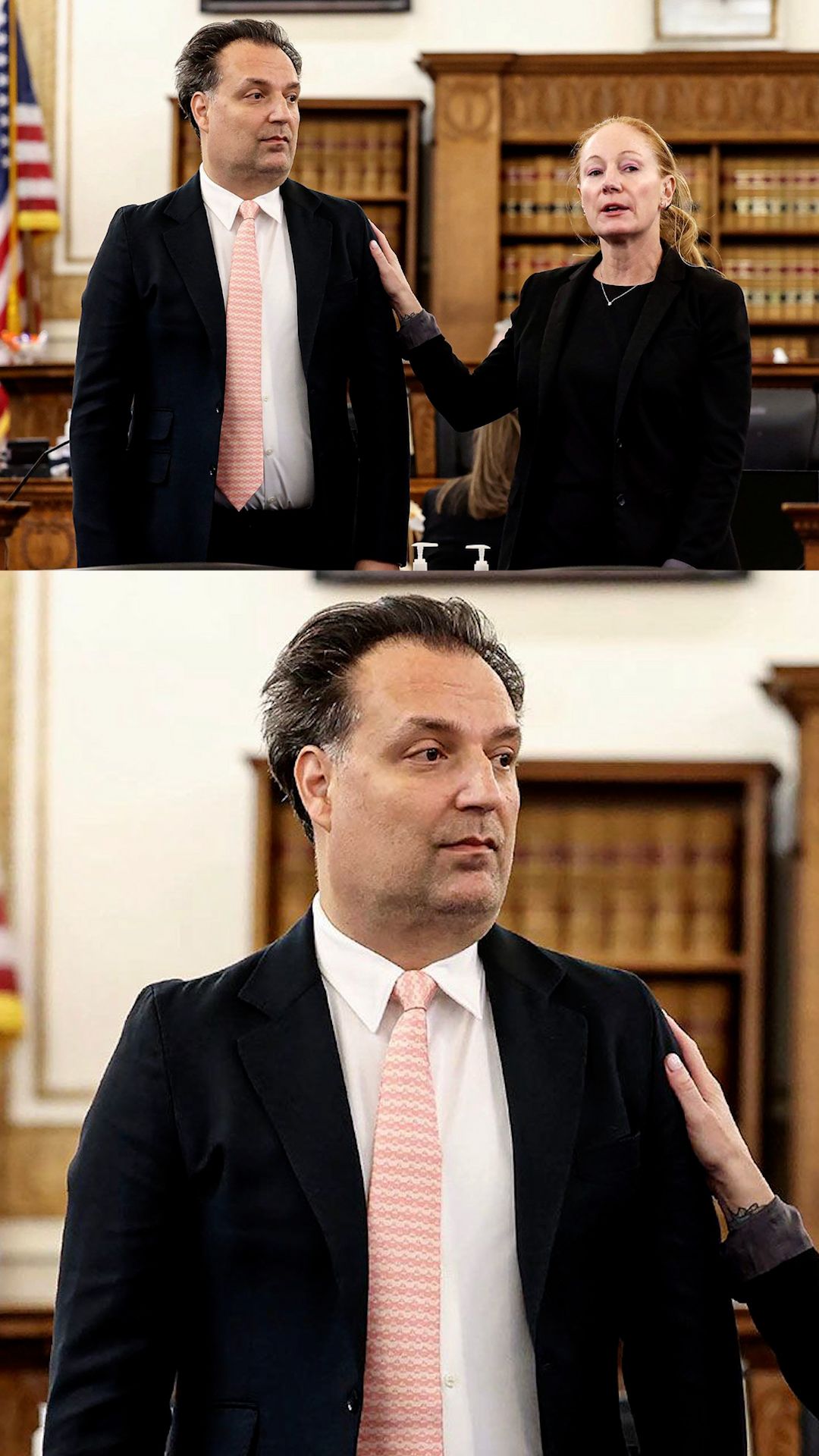
Brian Walshe, a 50-year-old Massachusetts man, pleaded guilty for disposing of a human body and misleading a police investigation related to the death of his wife, Ana Walshe. His lawyers, however, insist he is not admitting to her murder. CNN's Jean Casarez reports how Walshe's murder trial will continue.
What the jury heard yesterday during opening statements

The murder trial of Brian Walshe kicked off yesterday in Massachusetts with both sides laying out their story for the jury. Now, jurors will hear evidence over the next several weeks, which prosecutors and defense attorneys say back up their opening statements.
If you missed it, here’s what happened in court.
Prosecution:
- Assistant District Attorney Greg Connor described the day Ana Walshe was reported missing by her employer’s security team. Connor also laid out a digital trail of texts and other elements, which mapped out Brian Walshe’s activities the days before Ana disappeared.
- Included in that digital trail was a series of internet searches prosecutors say Brian Walshe made on January 1 and 2, including, “Can you throw away body parts” and “best way to dispose of a body.”
- The prosecutor ended his opening statement without offering a theory of how Ana Walshe died.
Defense:
- Defense attorney Larry Tipton said Brian Walshe found his wife unresponsive in their bed. Tipton referenced the Google searches, explaining that Walshe made them as “he wrestled with the fact that Ana Walshe was dead.”
- Addressing searches Brian Walshe made about divorce, Tipton said he was making arrangements in the event that he would have to go to prison related to another federal case.
- Tipton argued that Brian Walshe lied to law enforcement about his wife’s disappearance to protect his family.
CNN’s Lauren del Valle and Maureen Chowdhury contributed reporting to this post.