Our live coverage has moved
• Get the latest updates on the war with Iran here.
Key developments
• Drones struck: US forces shot down two Iranian drones that were threatening maritime traffic in the Strait of Hormuz, the military said, a day after Iran and the US exchanged fresh strikes and Tehran fired at Kuwait and Bahrain.
• War damage: The US plans to allow Iranian assets to be used to support repairs in Gulf states impacted by future Iranian attacks, a source said.
• Stalled peace effort: The recent strikes have placed further strain on a fragile truce between Washington and Tehran. Pakistani mediators are in Iran for negotiations this weekend, seeking a breakthrough on deadlocked peace talks.
• Conflict in Lebanon: A general was among several Lebanese soldiers killed Saturday in an Israeli strike, according to the Lebanese army. Israel says its offensive in the country is targeting Hezbollah, which has rejected a ceasefire extension reached by the Israeli and Lebanese governments.
Strikes in the Middle East test truce agreements. Here are the latest developments
A recent exchange of fire between Iran and the US is testing a truce agreement between the countries.
And in Lebanon, clashes between Israeli forces and the Hezbollah militant group have intensified despite the renewal of a US-brokered ceasefire between the governments of Israel and Lebanon.
Here are the headlines from the region:
Strait of Hormuz: The US military downed two more Iranian drones on Saturday, according to US Central Command, adding that they had been threatening international traffic in the crucial waterway. This came a day after US forces shot down four other Iranian attack drones that were launched toward the strait.
Lebanon: The Israeli and Lebanese armies both reported personnel deaths in southern Lebanon. Two Israeli soldiers were killed in separate incidents, according to their military. The Lebanese army said several of its soldiers, including a high-ranking officer, were killed in an Israeli strike. At least 3,593 people have been killed and 10,990 wounded in Lebanon since March 2, the health ministry said on Saturday.
Peace effort: Pakistani Interior Minister Mohsin Naqvi is in Tehran for a new round of negotiations on behalf of the US. The talks are deadlocked over $24 billion in frozen Iranian assets, a top official previously told CNN.
Gulf states: The US is planning to allow Iranian assets to be used to support repairs for war damage in Gulf nations, according to a source familiar with Treasury Secretary Scott Bessent’s thinking. Kuwait and Bahrain recently intercepted Tehran’s attacks after US forces struck radar surveillance sites in Iran’s coastal areas.
CNN’s Aleena Fayaz, Lauren Chadwick, Kevin Liptak, Oren Liebermann, Dalia Abdelwahab, Billy Stockwell and Eyad Kourdi contributed reporting.
US military shoots down 2 Iranian drones that threatened Strait of Hormuz


The US military downed more Iranian drones, which it said were threatening vessels in shipping chokepoint the Strait of Hormuz.
The military said it remains ready to “continue defending against Iranian aggression.”
The drones’ downing comes after the US struck down four other attack drones on Friday.
US plans to allow Iranian assets to be used for rebuilding in Gulf states, source says


The United States plans to allow Iranian assets to be used to support rebuilding in Gulf countries impacted by future Iranian attacks, according to a source familiar with Treasury Secretary Scott Bessent’s thinking.
The Treasury Department will also consider using Iranian assets to support repairs for past damage, according to the source who confirmed earlier reporting from Reuters on Saturday.
Bessent’s team will assess conditions in Gulf countries and request estimates of the cost of repairing damage inflicted by Iran since the start of the conflict.
The US plan comes as Tehran has once again targeted Gulf states, with Kuwait and Bahrain recently intercepting ballistic missiles launched from Iran. Several Gulf states have faced repeated Iranian attacks since the US and Israel first launched strikes in February.
Two Israeli soldiers killed in separate incidents in Lebanon, military says

Two Israeli soldiers were killed in separate incidents in southern Lebanon this weekend, the Israeli military said, raising to three the number of soldiers killed since the latest ceasefire between Israel and Lebanon was signed late last week.
Since the beginning of the war with Iran some three months ago, 30 Israeli soldiers have been killed in southern Lebanon and along the border, according to the Israel Defense Forces (IDF). One civilian contractor was also killed.
Captain Shahar Galma, 23, was killed on Saturday, the IDF said, and Sgt. Ohad Yaari was killed on Friday. Earlier, the IDF announced that Capt. Eitan Shmuel Lemberg, 21, was killed in southern Lebanon on Thursday.
Hezbollah rejected the latest ceasefire and has kept up a barrage of fire on Israeli forces in southern Lebanon over the weekend.
What we know about the latest US and Iranian strikes


We’ve been reporting today on the latest exchange of fire to test the fragile ceasefire between Washington and Tehran.
Here’s a breakdown if you’re just getting up to speed:
US strikes and interceptions: The US military said it struck coastal surveillance radar sites in Iran on Friday evening after shooting down four Iranian one-way attack drones that had been launched toward the Strait of Hormuz.
US Central Command said its forces also intercepted an overnight wave of Iranian fire targeting the Gulf nations of Kuwait and Bahrain. No US personnel were harmed, it said.
What Tehran is saying: Iran’s official state broadcaster IRIB said the Islamic Revolutionary Guard Corps had launched overnight attacks targeting a US air base and other US facilities, in response to what it described as the US military’s “hostile actions.”
Iran called the US strikes on its radar sites a “clear violation” of the tenuous ceasefire agreement. The Iranian Foreign Ministry said the country’s military had responded in a “vigilant, decisive and proportionate manner.”
Regional reaction: Kuwait’s Ministry of Defense said Saturday that it “detected and dealt with” seven ballistic missiles inside Kuwaiti airspace at dawn. Bahrain said it intercepted and destroyed three missiles and several drones launched from Iran. Neither country reported casualties, and each condemned the latest attacks.
Several countries in the region, including the United Arab Emirates, Egypt and Saudi Arabia, also condemned Iran’s targeting of its Gulf neighbors, saying the strikes threaten the Gulf’s security and stability.
CNN’s Billy Stockwell and Ibrahim Dahman contributed to this report.
Pakistan’s interior minister arrives in Tehran for further negotiations
Pakistani Interior Minister Mohsin Naqvi arrived in Tehran, Iran, on Saturday for a new round of negotiations on behalf of the United States.
Naqvi is set to meet with Iranian Foreign Minister Abbas Araghchi during the visit, semi-official Tasnim News agency reported. Semi-official Iranian Students’ News Agency (ISNA) separately reported that Naqvi is carrying a letter from Pakistani Army Chief Asim Munir to Iranian Supreme Leader Ayatollah Mojtaba Khamenei, who has continued to keep a low public profile since assuming his post in March.
This new round of talks comes as Pakistan has been attempting to position itself as a regional mediator in the wake of the US-Iran war.
Lebanon says death toll from Israeli strikes is rising. Here's the latest on the conflict

At least 3,593 people have been killed and 10,990 wounded in Israeli attacks in Lebanon since March 2, the Lebanese Health Ministry said in an update today.
Earlier Saturday, the Lebanese army said an Israeli strike on a military vehicle in the country’s south killed several Lebanese soldiers, including a high-ranking officer.
This comes despite the renewal of a US-brokered ceasefire between the governments of Israel and Lebanon. The Iran-backed militant group Hezbollah was not party to the agreement and has rejected the ceasefire so long as the Israeli military remains in Lebanon. Israel says it is targeting Hezbollah strongholds in the country.
Catch up on more developments from the conflict here:
- Tehran said this morning’s attack on Lebanese army personnel demonstrates that Israel “considers Lebanon and all its components fair game.” Iranian foreign ministry spokesperson Esmaeil Baqaei called the strike a “heinous crime against Lebanon, its army and its sovereignty.” And earlier, Iran’s foreign minister pushed back on Lebanese President Joseph Aoun’s remarks in a CNN interview, in which he said Tehran was using his country as a bargaining chip.
- Saudi Arabia also condemned the strike that killed Lebanese forces, adding that it rejected Israel’s targeting of Lebanon’s “sovereignty and army.” The United Nations Interim Force in Lebanon (UNIFIL) expressed condolences to the families of the army personnel. “Such attacks in Lebanese territory constitute gross violations of Lebanon’s sovereignty, territorial integrity and Security Council Resolution 1701,” UNIFIL wrote on X.
- For its part, the Israel Defense Forces said it struck the vehicle after it was spotted “moving suspiciously.” The area had been evacuated, the IDF said, amid “concrete indications” that Hezbollah was operating there.
- Meanwhile, Hezbollah said it targeted an Israeli drone in southern Lebanon with a surface-to-air missile on Saturday, forcing it to retreat. The militant group also said it targeted Israeli army vehicles and soldiers with artillery shelling on the outskirts of the southern town of at-Tiri.
- In diplomatic news: The Lebanese army says its chief, Cmdr. Gen. Rudolf Haikal, is visiting Pakistan, a key mediator in recent months amid the volatile Middle East conflicts.
This post has been updated with additional news from Lebanon.
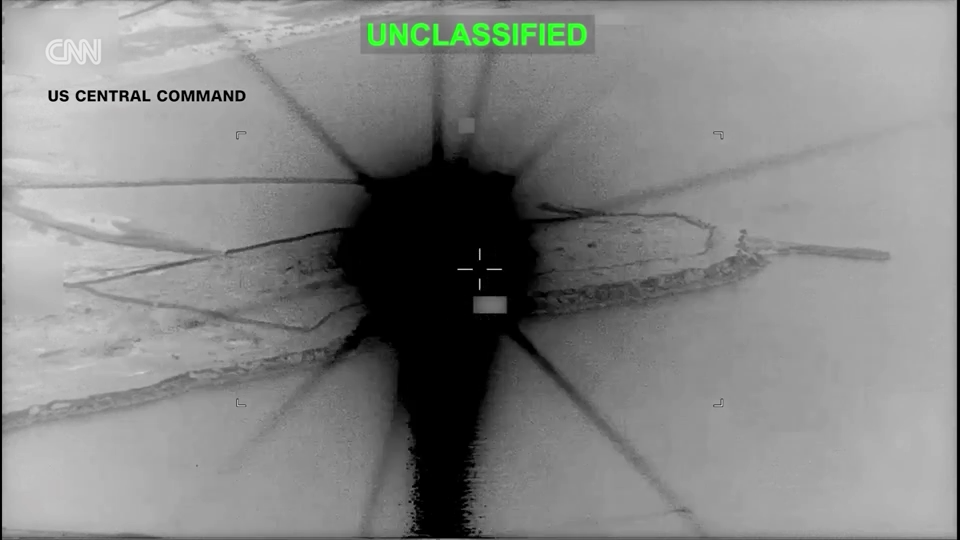
See video of the US strikes on coastal radar sites in Iran
US Central Command has released video from its strikes on Iranian coastal surveillance radar sites.
The US says it fired on the sites “to defend against further maritime attacks” after Iran launched drones toward the Strait of Hormuz. Tehran has accused the US of violating the countries’ fragile ceasefire with the strikes.
See the video released by the US military below:

Footage released by the US Central Command is said to show US strikes on Iranian coastal surveillance radar sites.

Iran says US strikes on radar sites were a "clear violation" of ceasefire

Iran strongly condemned US strikes on radar and coastal surveillance sites in southern Iran, calling the attack a “clear violation” of the fragile ceasefire between Washington and Tehran.
The strikes targeted facilities in the regions of Sirik and Qeshm Island, which are “tasked with safeguarding the country’s borders and ensuring the security of navigation in international waterways,” Iran’s Foreign Ministry said on Saturday.
US Central Command has said its forces struck surveillance radar sites in the area “to defend against further maritime attacks” after Iran launched drones toward the Strait of Hormuz.
The recent strikes indicate that Washington “lacks the will to reduce tensions” and are part of a “broader pattern of hostile and provocative behavior by the United States toward Iran,” the ministry said.
It added that Iran’s armed forces responded to the US strikes in a “vigilant, decisive and proportionate manner.”
How the region is reacting to Tehran's targeting of Gulf neighbors
Some fresh details are emerging now from Kuwaiti authorities about the overnight Iranian attack which targeted the country, as well as nearby Bahrain.
Kuwait’s Ministry of Defense said Saturday that it “detected and dealt with” seven ballistic missiles inside Kuwaiti airspace at dawn. “They were intercepted over a number of residential areas, resulting in some debris falling,” the ministry said.
The attack, which it blamed on Iran, resulted in material damage but no casualties, according to the ministry.
The announcement comes shortly after Bahrain also said it intercepted and destroyed three missiles and several drones launched from Iran.
Here’s how countries in the region are reacting to the latest developments:
- The United Arab Emirates, which has faced repeated Iranian attacks since the war broke out in February, said it condemned Tehran’s targeting of Kuwait and Bahrain “in the strongest terms.” The attacks constitute a “flagrant violation” of the sovereignty of the two countries and a threat to their security, the UAE’s Foreign Ministry said.
- Egypt called Iran’s actions a “dangerous escalation that threatens the security and stability of the Gulf region and the entire region.” The country’s Foreign Ministry reiterated its support for “all measures” undertaken by Kuwait and Bahrain to “protect their territories and vital facilities.”
- Saudi Arabia called Iran’s latest attacks “a threat to regional and international security,” and said the strikes push the region toward “tension and instability.”
- Qatar joined the flurry of condemnation, stressing the need to “spare the region the repercussions of these unjustified attacks and to work towards de-escalation in order to restore regional and international security and stability.”
- Calling Iran’s attacks “brutal,” Jordan said it affirmed its “absolute solidarity with the sisterly Kingdom of Bahrain and the sisterly State of Kuwait in the face of Iranian aggression.”
This post has been updated with additional reaction.
Pakistan's interior minister due in Tehran for talks, Iranian media says

Pakistan’s Interior Minister Mohsin Naqvi is expected to be in Tehran today to continue mediation efforts regarding US-Iran peace talks, according to Iranian semi-official Mehr news agency, citing an “informed source.”
Islamabad has emerged in recent months as a key mediator between the US and Iran during the conflict in the Middle East, playing a leading role in negotiating a temporary ceasefire in April.
As Naqvi is due in Iran, the exact status of talks between Tehran and Washington is unclear, but sticking points likely remain over key issues such as Iran’s nuclear program and its frozen assets overseas.
Mohsen Rezaei, military adviser to Supreme Leader Ayatollah Mojtaba Khamenei, told CNN in an exclusive interview on Friday that a potential peace deal between the US and Iran hinges on the Trump administration agreeing to release $24 billion in frozen Iranian assets.
Iran’s Foreign Minister Abbas Araghchi said earlier this week there had been “no significant progress” in negotiations with the US over the previous few days, despite US President Donald Trump asserting that talks are going “very well.”
Messages between the warring parties continue to be exchanged, Araghchi said in an interview with Arab media outlet Al Mayadeen, shared by Iran’s foreign ministry.
On Wednesday, Trump painted a rosier picture of negotiations to end the war, suggesting that a potential advancement could happen as soon as this weekend.
CNN’s Helen Regan contributed reporting.
Catch up: US and Iran trade fire, strikes in Gulf region, fighting in Lebanon intensifies

The US and Iran exchanged strikes early Saturday local time, days after issuing contradictory messages about the status of ceasefire discussions.
Meanwhile in Lebanon, fighting between Israeli forces and Iran-backed Hezbollah has intensified despite a ceasefire agreed by the Israeli and Lebanese governments.
What has happened in the region:
Strait of Hormuz: The US intercepted a wave of missiles and drones launched by Iran toward the Strait of Hormuz and the Gulf region. American forces also struck coastal surveillance radar sites in Iran after shooting down four attack drones, said US Central Command. Iran had fired several shots as a “warning” near the Strait of Hormuz, which “may have been related” to the repositioning of US naval vessels in the area, reported the semi-official Mehr news agency.
Gulf states: Sirens were activated early Saturday morning in Kuwait and Bahrain. Kuwait’s army said it was responding to missile and drone threats, while Bahrain told residents to take shelter. Bahrain said it successfully intercepted and destroyed three missiles and several drones launched from Iran.
Lebanon: A general was among several Lebanese soldiers killed in an Israeli strike, the Lebanese army said Saturday, the day after Lebanese state media reported more than 20 people were killed.
Other headlines:
Top diplomat hits back: Iran’s foreign minister pushed back on remarks Lebanese President Joseph Aoun made in a CNN interview that Tehran is using Lebanon as a bargaining chip in its war with the US and Israel. Abbas Araghchi said: “Save Lebanon from your real foe, Mr. President,” in an apparent reference to Israel.
War timeline: US President Donald Trump said that he’s “moving very fast” with the Iran war, despite his initial stated timeline of four to six weeks. “I’m into three months, you know. Vietnam lasted 19 years. I’m into my third month,” he told NBC News.
Nuclear lab visit: Trump’s special envoys Steve Witkoff and Jared Kushner met with a team of experts at a national laboratory in Tennessee on Thursday, a US official said, as the US works toward nuclear negotiations with Iran. Scott Roecker, the vice president for the Nuclear Threat Initiative’s Nuclear Materials Security Program, explained that the lab has a history of removing highly enriched uranium.
CNN’s Laura Sharman, Eyad Kourdi, Kareem El Damanhoury, Aleena Fayaz, Mitchell McCluskey, Kit Maher, Jennifer Hansler and Zachary Cohen contributed reporting.
Bahrain says it intercepted three Iranian missiles
Bahrain said today it successfully intercepted and destroyed three missiles and several drones launched from Iran.
The US also intercepted a wave of ballistic missiles and drones launched by Iran toward Kuwait and Bahrain in an overnight attack, according to US Central Command.
Tehran “continues its systematic aggression through its heinous missile and drone attacks targeting civilians in the Kingdom of Bahrain,” the country’s defense force said in a statement.
The statement did not say when exactly the missiles were launched, but residents in Bahrain were told to head to a safe place overnight as sirens were activated.
Meanwhile, Kuwait also said it strongly condemned the “repeated and heinous Iranian attacks,” the latest of which is said occurred this morning.
“The State of Kuwait retains its full right to take all necessary measures to preserve its security and defend its territory,” the country’s foreign ministry said in a statement.
General among several Lebanese soldiers killed in Israeli strike, army says

Several Lebanese soldiers, including a high-ranking officer, were killed in an Israeli strike in southern Lebanon on Saturday, according to an army statement.
“A number of military personnel, including an officer, were martyred in a barbaric Israeli raid targeting a military vehicle on the Khardali-Nabatiyeh road,” the army said in a statement posted to X.
The officer killed was a brigadier-general, according to Lebanon’s official National News Agency.
The Israel Defense Forces (IDF) said in a statement that it struck the vehicle after it was spotted “moving suspiciously.” The area had been evacuated, the IDF said, amid “concrete indications” that Hezbollah was operating in there. The IDF said the incident is under review and that “lessons will be learned accordingly.”
The area around Nabatiyeh has seen multiple Israeli strikes in recent days, despite the renewal of a US-brokered ceasefire between the governments of Israel and Lebanon.
Two strikes in the area earlier this week killed a Lebanese soldier and injured two others.
The Iranian-backed group Hezbollah, which has targeted Israeli troops inside Lebanon and communities in northern Israel, rejected the ceasefire so long as the Israeli military remains in Lebanon.
At least 21 people were killed in Israeli strikes on southern Lebanon on Friday, according to a CNN tally of reports by NNA.
The Israeli military issued another evacuation order to residents of several villages and towns in southern Lebanon on Saturday due to what it called “the terrorist Hezbollah party breaching the ceasefire agreement.”
It ordered civilians to move north of the Zahrani River, which is some 25 miles (40 kilometers) north of the border with Israel.
This post has been updated.
A look at Israel's offensive in Lebanon

Israel’s military offensive against Hezbollah, a heavily armed Iranian-backed proxy, in Lebanon has killed more than 3,500 Lebanese people and displaced nearly a fifth of the population. Israeli forces have occupied dozens of villages in southern Lebanon to clear Hezbollah’s forces.
Take a look at the state of the offensive in Lebanese territory:
Iran's top diplomat rejects Lebanese leader's claim Tehran is using Lebanon as a bargaining chip
Iran’s top diplomat has pushed back on remarks Lebanese President Joseph Aoun made in a CNN interview that Tehran is using Lebanon as a bargaining chip in its war with the US and Israel.
Aoun delivered a searing rebuke to Iran in an exclusive interview with CNN’s Christiane Amanpour on Friday, saying Tehran’s actions were against the wishes of the Lebanese people.


Responding to the clip of the CNN interview, Iran’s Foreign Minister Abbas Araghchi said: “Had Lebanon been a bargaining chip for Iran, we’d have a deal long ago.”
“Save Lebanon from your real foe, Mr. President,” he added, in an apparent reference to Israel –– which has been conducting an intense military operation targeting the militant group Hezbollah in Lebanon since early March.
In the CNN interview, Aoun also said that he is committed to doing “whatever it takes” to save his country from conflict, and that the Lebanese people are “fed up” with war between Israel and Hezbollah, a heavily armed Iranian-backed proxy that has built strong domestic support by portraying itself as the defender of southern Lebanon and the Palestinian people.
CNN’s Mostafa Salem contributed to this report.
CENTCOM: US intercepts Iranian missiles and drones launched toward Hormuz and Gulf region
The US intercepted a wave of ballistic missiles and drones launched by Iran toward the Strait of Hormuz and the Gulf region, according to US Central Command.
Six of the missiles were intercepted and a seventh did not reach its target, according to initial assessments. No US personnel was harmed, it said.
“Iranian claims of damaging U.S. 5th fleet headquarters in Bahrain are false,” CENTCOM added. Iran’s Islamic Revolutionary Guard Corps had said it struck “enemy bases in the region.”
CENTCOM said the Iranian attack drones had “posed an immediate threat to regional maritime traffic.”
The US forces struck Iranian surveillance radar sites in Goruk and on Qeshm Island “to defend against further maritime attacks,” it said.
Iran’s semi-official Mehr news agency reported on Saturday that Iran had fired several shots as a “warning” near the Strait of Hormuz which “may have been related” to the repositioning of US naval vessels in the area.
Top Iranian official says peace negotiations deadlocked over $24 billion


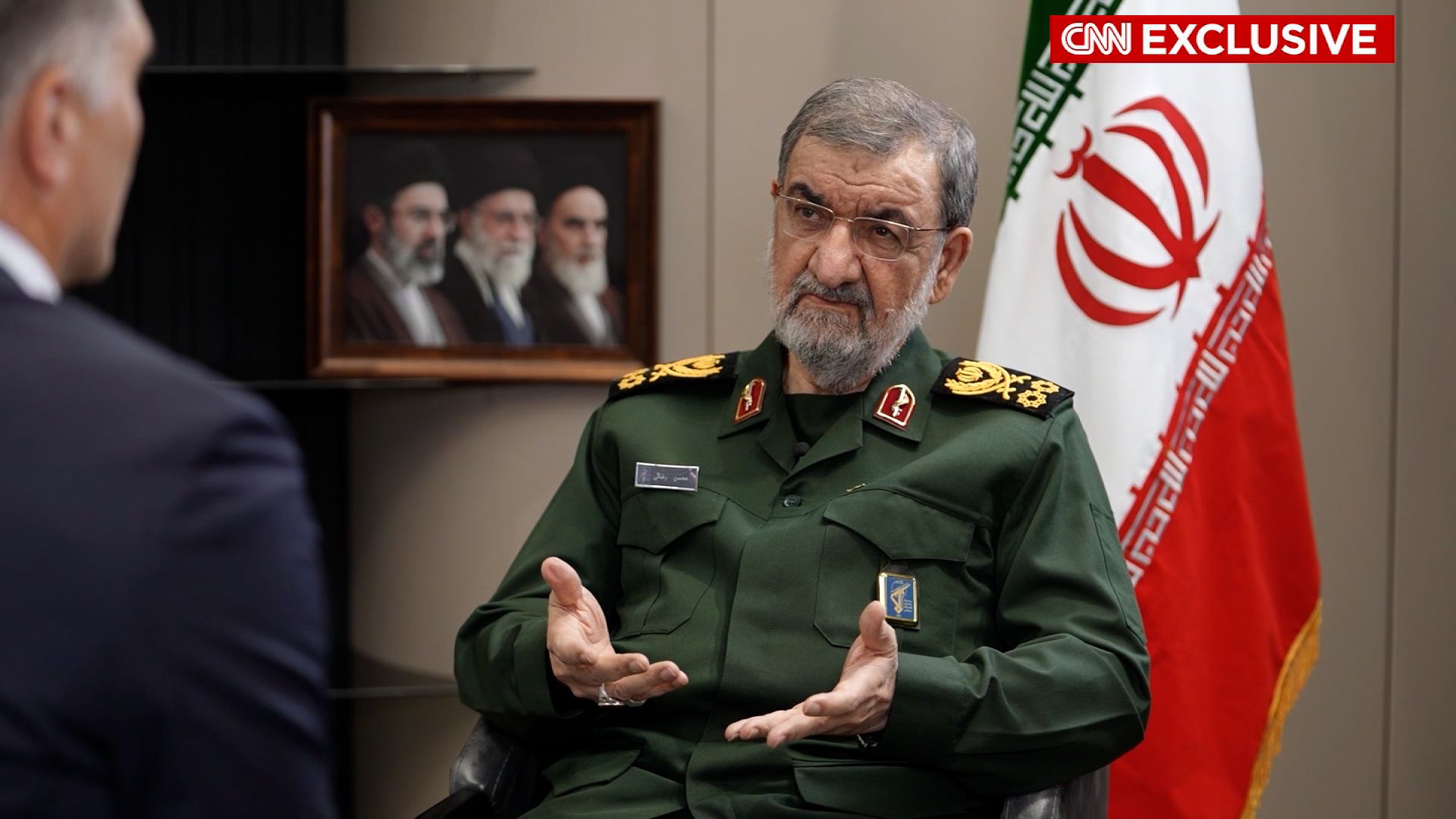
A potential peace deal between the United States and Iran hinges on the Trump administration agreeing to release $24 billion in frozen Iranian assets, a top Iranian official told CNN on Friday, warning that the US would “enter into a dark corridor” should it resume fighting.
“The negotiations are at a deadlock and (US President Donald) Trump must break this deadlock,” Mohsen Rezaei, military adviser to Supreme Leader Ayatollah Mojtaba Khamenei, told CNN in an exclusive interview in Tehran. “The ball is in Trump’s court.”
Iran has reportedly demanded the release of $12 billion in frozen funds as soon as an interim agreement is signed with the US, and another $12 billion at a later stage. US officials are concerned that any unfreezing of funds at this stage could remove a key leverage point over the regime.
In the rare interview with CNN, Rezaei shed light on the thinking inside Iran’s strategic decision-making circles about the country’s postwar vision, the fate of the Strait of Hormuz and how Iran may act if it is attacked again. Here’s what he said:
- Releasing frozen Iranian assets: He framed the demand as a trust-building measure, saying the Trump administration’s potential release of the funds would be “a new horizon for the future” of Iran and America: “If he (Trump) wants to reach an agreement with Iran, this $24 billion is a test of trust that Iran wants to have with Trump – this is a test that America must pass and the path will be opened.”
- Warning against return to war: Rezaei warned that Iran will “drag the war” beyond the Persian Gulf if the United States resumes the conflict, potentially expanding military operations from the Strait of Hormuz to the Indian Ocean, the Bab al-Mandab Strait, the Red Sea and the Mediterranean Sea. “We will give another dimension to the war by attacking these other American bases that we have been attacking so far.”
- On a potential meeting between Trump and Khamenei: He did not answer a question about Khamenei’s health and role in the country’s decision-making, but rejected prospects of him meeting Trump. “This will not happen, right now we are in the first stage of negotiations and Mr. Trump has brought the negotiations to a standstill. This will not happen.”
Editor’s note: CNN operates in Iran only with the permission of the government but maintains full editorial control of its reports.