Our live coverage has moved
• Get the latest updates on the war with Iran here.
Key developments
• Exchange of fire: US forces intercepted missiles and drones launched by Iran toward the Strait of Hormuz and the Gulf region as sirens were activated in Kuwait and Bahrain. The US military also struck coastal sites in Iran. Tehran had fired shots as a “warning measure” that “may have been related” to US naval vessels in the area, according to Iranian media.
• Conflict in Lebanon: More than 20 people were killed on Friday in Israeli strikes inside Lebanon, reported Lebanese state media, as clashes with Hezbollah intensify. Meanwhile, Iran’s foreign minister Abbas Araghchi pushed back on Lebanese President Joseph Aoun’s remarks in a CNN interview, in which he said Tehran was using his country as a bargaining chip.
• Peace talks: A top Iranian official told CNN that a potential peace deal hinges on the Trump administration agreeing to release $24 billion in frozen Iranian assets, and warned of the potential for a wider war.
US and Iran trade fire, fighting in Lebanon intensifies. Here's where things stand

The US and Iran exchanged strikes early Saturday local time, days after issuing contradictory messages about the status of ceasefire discussions.
Meanwhile in Lebanon, fighting between Israeli forces and Iran-backed Hezbollah has intensified despite a ceasefire agreed by the Israeli and Lebanese governments.
What has happened in the region:
Strait of Hormuz: The US intercepted a wave of missiles and drones launched by Iran toward the Strait of Hormuz and the Gulf region. American forces also struck coastal surveillance radar sites in Iran after shooting down four attack drones, said US Central Command. Iran had fired several shots as a “warning” near the Strait of Hormuz, which “may have been related” to the repositioning of US naval vessels in the area, reported the semi-official Mehr news agency.
Gulf states: Sirens were activated early Saturday morning in Kuwait and Bahrain. Kuwait’s army said it was responding to missile and drone threats, while Bahrain told residents to take shelter.
Lebanon: More than 20 people were killed in strikes in the south of the country on Friday, according to a CNN tally of deaths reported in the state-run National News Agency.
Other headlines:
Top diplomat hits back: Iran’s foreign minister pushed back on remarks Lebanese President Joseph Aoun made in a CNN interview that Tehran is using Lebanon as a bargaining chip in its war with the US and Israel. Abbas Araghchi said: “Save Lebanon from your real foe, Mr. President,” in an apparent reference to Israel.
War timeline: US President Donald Trump said that he’s “moving very fast” with the Iran war, despite his initial stated timeline of four to six weeks. “I’m into three months, you know. Vietnam lasted 19 years. I’m into my third month,” he told NBC News.
Nuclear lab visit: Trump’s special envoys Steve Witkoff and Jared Kushner met with a team of experts at a national laboratory in Tennessee on Thursday, a US official said, as the US works toward nuclear negotiations with Iran. Scott Roecker, the vice president for the Nuclear Threat Initiative’s Nuclear Materials Security Program, explained that the lab has a history of removing highly enriched uranium.
CNN’s Laura Sharman, Eyad Kourdi, Kareem El Damanhoury, Aleena Fayaz, Mitchell McCluskey, Kit Maher, Jennifer Hansler and Zachary Cohen contributed reporting.
Iran's top diplomat rejects Lebanese leader's claim Tehran is using Lebanon as a bargaining chip
Iran’s top diplomat has pushed back on remarks Lebanese President Joseph Aoun made in a CNN interview that Tehran is using Lebanon as a bargaining chip in its war with the US and Israel.
Aoun delivered a searing rebuke to Iran in an exclusive interview with CNN’s Christiane Amanpour on Friday, saying Tehran’s actions were against the wishes of the Lebanese people.


Responding to the clip of the CNN interview, Iran’s Foreign Minister Abbas Araghchi said: “Had Lebanon been a bargaining chip for Iran, we’d have a deal long ago.”
“Save Lebanon from your real foe, Mr. President,” he added, in an apparent reference to Israel –– which has been conducting an intense military operation targeting the militant group Hezbollah in Lebanon since early March.
In the CNN interview, Aoun also said that he is committed to doing “whatever it takes” to save his country from conflict, and that the Lebanese people are “fed up” with war between Israel and Hezbollah, a heavily armed Iranian-backed proxy that has built strong domestic support by portraying itself as the defender of southern Lebanon and the Palestinian people.
CNN’s Mostafa Salem contributed to this report.
Israeli strikes kill over 20 in south Lebanon, state media says, as clashes with Hezbollah intensify

At least 21 people were killed in Israeli strikes on southern Lebanon on Friday, according to a CNN tally of tolls from Lebanon’s state-run National News Agency.
The total includes a municipal council member in Sidon, two Syrian children who were riding a motorcycle with their father in Nabatiyeh, and a paramedic in nearby Zebdine, NNA said, adding the latter strike targeted an ambulance as it attempted to deliver bread to a “besieged” family.
“The targeting of parademics during rescue operations [is] an act that constitutes a barbaric violation of international humanitarian law,” the Lebanese health ministry said in a statement condemning the Israeli attack on Zebdine.
The Israeli military said it struck a Hezbollah weapons storage facility in the area of Al-Marwaniyah in southern Lebanon on Friday. It also said the strike “was conducted in an area for which an advance evacuation warning had been issued.”
Since March 2, Israeli attacks have killed at least 3,558 people and injured 10,870 others across Lebanon, the country’s health ministry said in a statement on Friday.
The fighting between the Israeli military and Hezbollah has intensified in southern Lebanon despite a US-mediated ceasefire agreed by Israel and Lebanon’s governments on Wednesday.
Hezbollah said it waged over 20 attacks against Israeli forces on Friday, mostly in the vicinity of the historic Beaufort Castle that Israel seized about a week ago.
Israel has expanded its military offensive against Hezbollah north of the Litani river, occupying dozens of villages in southern Lebanon.
In an exclusive interview with CNN’s Christiane Amanpour, Lebanese President Joseph Aoun said Israel’s Prime Minister Benjamin Netanyahu and Hezbollah are waging a “futile war” that will never lead to their “desired outcome.”
This post has been updated with additional information.
US intercepts Iranian attack toward Strait of Hormuz and Gulf region, CENTCOM says
The US intercepted a wave of ballistic missiles and drones launched by Iran toward the Strait of Hormuz and the Gulf region, according to US Central Command.
Six of the missiles were intercepted and a seventh did not reach its target, according to initial assessments. No US personnel was harmed, it said.
“Iranian claims of damaging U.S. 5th fleet headquarters in Bahrain are false,” CENTCOM added. Iran’s Islamic Revolutionary Guard Corps had said it struck “enemy bases in the region.”
CENTCOM said the Iranian attack drones had “posed an immediate threat to regional maritime traffic.”
The US forces struck Iranian surveillance radar sites in Goruk and on Qeshm Island “to defend against further maritime attacks,” it said.
Iran’s semi-official Mehr news agency reported on Saturday that Iran had fired several shots as a “warning” near the Strait of Hormuz which “may have been related” to the repositioning of US naval vessels in the area.
Iran says it attacked "enemy bases in the region" after US strikes on coastal sites
Iran’s Islamic Revolutionary Guard Corps said it struck “enemy bases in the region” following US “aggression” on coastal parts of the country including Sirik and Qeshm Island.
The bases were struck by Aerospace Force missiles, the IRGC said Saturday on Telegram.
Hours prior, US Central Command said it had struck “coastal surveillance radar sites” in Iran after shooting down four Iranian one-way attack drones which “posed an immediate threat to regional maritime traffic.”
Kuwait’s army said on Saturday it was responding to drone and missile threats while Bahrain activated sirens and told residents to seek shelter.
Sirens activated in Bahrain, residents told to take shelter
Residents in Bahrain were told to head to a safe place as sirens were activated early Saturday morning.
The reason for the alert was not immediately clear.
Earlier Wednesday, Bahrain said its air defenses intercepted and destroyed three missiles and “a number of drones.”
Kuwait responding to missile and drone threats, army says
The Kuwait Army said it is responding to “hostile missile and drone threats” early Saturday morning as multiple air raid sirens were activated.
Data from FlightRadar24 appeared to show several Kuwait-bound flights maintaining a holding pattern after the sirens were activated.
Earlier this week, one person was killed and 63 others injured in strikes that hit Kuwait and damaged its international airport. The attack had one of the highest injury counts among Gulf states since the war began.
This post has been updated with additional information.
US strikes coastal sites in Iran after shooting down Iranian drones

The US military today struck “coastal surveillance radar sites” in Iran after shooting down four Iranian one-way attack drones, according to US Central Command.
“The attack drones posed an immediate threat to regional maritime traffic. U.S. forces subsequently struck Iranian coastal surveillance radar sites in Goruk and on Qeshm Island to defend against further attacks,” CENTCOM said in a post on X.
The military said it will continue to respond to “unjustified Iranian aggression in self-defense.”
Iran fired "warning" shots near Strait of Hormuz, news agency reports
Iran fired several shots as a “warning” near the Strait of Hormuz, Iran’s semi-official Mehr news agency reported on Saturday.
The shots “may have been related” to the repositioning of US naval vessels in the area, Mehr reported.
The news comes amid reports by a US official that Iran launched multiple drones toward the strait.
According to Mehr, the target of the Iranian fire was at sea, beyond Larak Island – a small island off the coast of the strategic Iranian port city of Bandar Abbas.
Mehr also reported that unfounded claims of attacks occurring in Bandar Abbas had circulated on social media.
Trump says he's "moving very fast" on Iran nearly 100 days since first strikes

President Donald Trump said Friday that he’s “moving very fast” with the Iran war, nearly 100 days since the US and Israel launched strikes, and despite his initial stated timeline of four to six weeks.
“I’m moving very fast. I’m into three months, you know. Vietnam lasted 19 years. I’m into my third month,” Trump told NBC News in an interview taped Friday afternoon. The clip was released to tease the full interview, scheduled to air Sunday.
Trump has yet to reach even a tentative agreement with Iran, and Tehran launched drones toward the Strait of Hormuz Friday — prompting questions about whether Iran truly wants to make a deal.
“It’s a very hard thing for them. They’ve had great independence, they’ve dealt with very weak and ineffective leadership on behalf of the United States and other countries, frankly,” Trump said.
Trump hinted that he had gotten irritated after his interview with NBC, saying in remarks at a roundtable in Wisconsin directly after the sitdown that “because it was raining, I got a little bit angry at them.” Rain was pounding on the roof of the venue, which was audible during the event.
“I was not happy with that, but we had a good time,” he said, calling them “NBC fake news.”
Iran launches drones toward Strait of Hormuz and US forces take out some, US official says

Iran has launched multiple drones toward the Strait of Hormuz, according to a US official.
US forces have shot down at least four of them, the official said.
US officials suspect these one-way drones were targeting commercial vessels transiting regional waters or US forces operating in the vicinity, the official said.
This post has been updated with additional information.
Witkoff and Kushner met experts at US nuclear lab amid Iran negotiations


Special Envoy Steve Witkoff and Jared Kushner met with a team of technical experts at a national laboratory in Tennessee on Thursday, a US official said, as the US works toward nuclear negotiations with Iran.
The visit to Oak Ridge National Laboratory, first reported by Axios, comes amid ongoing diplomatic negotiations with Tehran aimed, in large part, at constraining Iran’s nuclear program.
Scott Roecker, the vice president for the Nuclear Threat Initiative’s Nuclear Materials Security Program, explained that the lab has a history of removing highly enriched uranium around the world.
It has both the expertise and the capabilities, in the form of a Mobile Uranium Facility, to safely handle, convert, and ship the highly enriched uranium, Roecker told CNN. However, he noted that nobody in the US has experience in retrieving buried stockpiles of uranium.
The June 2025 US strikes on Iran’s nuclear facilities, what the Pentagon termed Operation Midnight Hammer, were assessed by US intelligence to have buried much of Iran’s highly enriched uranium stockpile at the Isfahan nuclear complex, but didn’t destroy it.

Secretary of State Marco Rubio said earlier this week that negotiations on Iran’s nuclear program would be “highly technical” and could take months.
“Phase two is they have to commit to very specific negotiations on highly enriched, the disposition of the highly enriched uranium that still is buried deep in a mountain somewhere,” Rubio told the Senate Foreign Relations Committee on Tuesday. “They have to agree on negotiating severe and long-term limitations, and/or cancelation of enrichment activity in their country.”
“Obviously, these are highly technical matters, so I don’t think you could work those out in five days,” Rubio said. “That would require a team of experts to meet over a 30, 60, 90-day period and work out the details, but they have to commit to their willingness to do that.”
The top US diplomat said such a phase would be predicated on Iran re-opening the Strait of Hormuz.
Photos: Life in Lebanon amid Israeli strikes
Lebanese cities and towns have experienced a near-daily barrage of strikes since the start of Israel’s military offensive against Hezbollah.
Hezbollah, which is backed by Iran, has launched rocket and drone attacks into northern Israel and targeted Israel forces inside southern Lebanon, where they have been slowly advancing and occupying territory.
A tenuous US-facilitated ceasefire is still in place between Lebanon and Israel, but Hezbollah was not party to the deal and has rejected the pact.
Meantime, the human toll keep rising. Lebanon’s state-run National News Agency reported that four people were killed Friday in Israeli strikes that hit the towns of Nabatieh and Bint Jbeil.
Overall, around 3,500 people have been killed in Israeli attacks since March 2, the Lebanese Health Ministry said last week.


Top headlines today as Iran warns it would widen war if US resumes fighting


In an exclusive interview with CNN, a top Iranian official is warning of a wider war if the United States resumes the conflict.
Plus, Lebanese President Joseph Aoun slammed Iran and said his country’s people are “fed up” with the war between Israel and the Iran-backed Lebanese militant group Hezbollah.
Here are the top headlines today:
- A potential peace deal between the US and Iran hinges on the Trump administration agreeing to release $24 billion in frozen Iranian assets, Mohsen Rezaei, military adviser to Supreme Leader Ayatollah Mojtaba Khamenei, told CNN’s Frederik Pleitgen.
- Rezaei said the US would “enter into a dark corridor” should it resume fighting and warned that Iran will “drag the war” beyond the Persian Gulf.
- He said peace “negotiations are at a deadlock,” and that the “ball is in Trump’s court.” Rezaei did not answer a question about Khamenei’s health and role in the country’s decision-making, but rejected prospects of him meeting Trump.
- The US military denied a claim by the Iranian navy that it had fired warning shots near two US destroyers in the Gulf of Oman, saying the action would be a “gross violation of the ceasefire.”

In an exclusive interview in Tehran, CNN’s Fred Pleitgen sat down with Mohsen Rezaei, the senior military advisor to Iran’s supreme leader Mojtaba Khamenei. The supreme leader, who has not been seen in public since his appointment, is known to have a small circle of trusted aides around him. General Rezaei is in that circle. The advisor shot down the possibility of a meeting between US President Donald Trump and Ayatollah Mojtaba Khamenei. He also said that a potential US-Iran deal hinges on the Trump administration agreeing to release $24 billion dollars in frozen Iranian assets. CNN operates in Iran only with the permission of the government but maintains full editorial control of its reports.

In Lebanon:
- Four people were killed in Israeli strikes on southern Lebanon on Friday, according to the state-run National News Agency (NNA), despite a US-mediated ceasefire agreed by the Israeli and Lebanese governments earlier this week.
- Lebanese President Joseph Aoun said Israeli Prime Minister Benjamin Netanyahu and Hezbollah are waging a “futile war” and “military solutions” will never bring security and safety to Israelis living in the north of their country.
- Aoun told CNN’s Christiane Amanpour that Hezbollah leader Naim Qassem doesn’t represent the Lebanese people and delivered a searing rebuke to Iran, accusing it of exploiting his war-torn nation as a bargaining chip in its conflict with the US and Israel.
CNN’s Frederik Pleitgen, Claudia Otto, Aida Karimi, Mostafa Salem, Kareem El Damanhoury and Tim Lister contributed reporting to this post.
Here's a look at Israel's advancement into Lebanese territory

Israel’s military offensive against Hezbollah, a heavily armed Iranian-backed proxy, in Lebanon has killed more than 3,500 Lebanese people and displaced nearly a fifth of the population. Israeli forces have occupied dozens of villages in southern Lebanon to clear Hezbollah’s forces.
Take a look at the state of the offensive in Lebanese territory:
Exclusive: Iran supreme leader's adviser says talks deadlocked over $24 billion


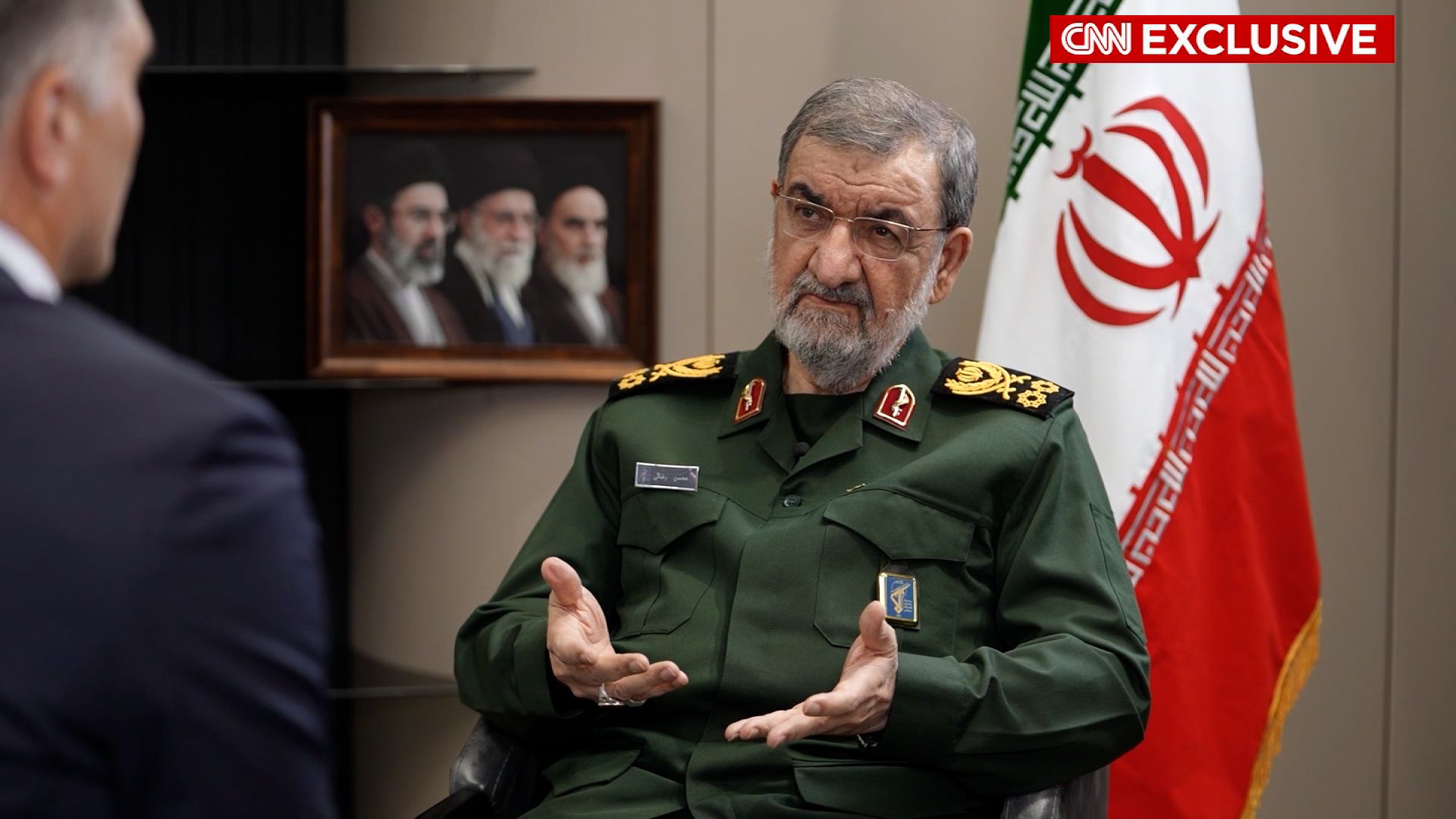
A potential peace deal between the United States and Iran hinges on the Trump administration agreeing to release $24 billion in frozen Iranian assets, a top Iranian official told CNN on Friday, warning that the US would “enter into a dark corridor” should it resume fighting.
“The negotiations are at a deadlock and (US President Donald) Trump must break this deadlock,” Mohsen Rezaei, military adviser to Supreme Leader Ayatollah Mojtaba Khamenei, told CNN in an exclusive interview in Tehran. “The ball is in Trump’s court.”
Iran has reportedly demanded the release of $12 billion in frozen funds as soon as an interim agreement is signed with the US, and another $12 billion at a later stage. US officials are concerned that any unfreezing of funds at this stage could remove a key leverage point over the regime.
In the rare interview with CNN, Rezaei shed light on the thinking inside Iran’s strategic decision-making circles about the country’s postwar vision, the fate of the Strait of Hormuz and how Iran may act if it is attacked again. Here’s what he said:
- Releasing frozen Iranian assets: He framed the demand as a trust-building measure, saying the Trump administration’s potential release of the funds would be “a new horizon for the future” of Iran and America: “If he (Trump) wants to reach an agreement with Iran, this $24 billion is a test of trust that Iran wants to have with Trump – this is a test that America must pass and the path will be opened.”
- Warning against return to war: Rezaei warned that Iran will “drag the war” beyond the Persian Gulf if the United States resumes the conflict, potentially expanding military operations from the Strait of Hormuz to the Indian Ocean, the Bab al-Mandab Strait, the Red Sea and the Mediterranean Sea. “We will give another dimension to the war by attacking these other American bases that we have been attacking so far.”
- On a potential meeting between Trump and Khamenei: He did not answer a question about Khamenei’s health and role in the country’s decision-making, but rejected prospects of him meeting Trump. “This will not happen, right now we are in the first stage of negotiations and Mr. Trump has brought the negotiations to a standstill. This will not happen.”
Editor’s note: CNN operates in Iran only with the permission of the government but maintains full editorial control of its reports.
US military disputes claim that Iranian navy fired warning shots at its warships
The US military has denied a claim by the Iranian navy that it had fired warning shots near two US destroyers in the Gulf of Oman.
“Iranian forces did NOT attack or fire at U.S. Navy warships,” US Central Command said Friday in a post on X.
“Doing so would be a gross violation of the ceasefire. U.S. forces continue to operate freely in regional waters while fully enforcing the ongoing blockade against Iran,” CENTCOM added.
Iran’s navy had said earlier Friday that it had carried out warning launches of missiles and a new attack drone against the two US vessels, after which they “left the Gulf of Oman and headed toward the Indian Ocean.”
It did not say when the alleged incidents occurred.
It added that “although enemy vessels have moved farther away and beyond the range of the missiles used, longer-range missiles would be employed if necessary.”
The US navy has a substantial presence in the Gulf of Oman as part of an operation to prevent shipping from using Iranian ports.
Military solutions will never bring peace to northern Israel, Lebanese president says


“Military solutions” will never bring security and safety to Israelis living in the north of their country, Lebanese President Joseph Aoun said, urging Israelis to solve disputes through negotiations instead.
In an interview with CNN’s Christiane Amanpour, Aoun asked Israeli people whether they “really want to live” in “perpetual war,” adding that the state of hostility between Israel and Lebanon must end “forever.”
Lebanon and Israel have technically been in a state of war since Israel’s establishment in 1948. The latest conflict – began after Hezbollah fired rockets on Israeli cities in retaliation for an assault by the US and Israel on Iran, which killed the Islamic Republic’s Supreme Leader Ayatollah Ali Khamenei and his senior military command.
In just three months, the Israeli military operation has killed more than 3,500 people, displaced a fifth of Lebanon’s population and established a buffer zone by occupying large areas of southern Lebanon, while 28 Israeli soldiers have been killed.
Aoun has not ruled out meeting Israeli Prime Minister Benjamin Netanyahu, in what would be the first meeting between leaders of the two countries. But on the potential meeting, he added. “Not before reaching an agreement (to end the war).”
The president said earlier in the interview that Netanyahu and Hezbollah are waging a “futile war” that will never lead to their “desired outcome.”
The former military commander said the Lebanese and Israeli people have a “great opportunity” to live in safety and security.
“They are both fed up with war since 1948,” he said. “This is a huge opportunity (and) they both have to choose: war…or diplomacy.”
Lebanon's parliament speaker agrees to Hezbollah withdrawal in parallel to Israeli pullback
Lebanon’s parliament speaker and Hezbollah ally Nabih Berri said Friday that he would agree to the withdrawal of the Iran-backed group from south of the Litani River if Israel also withdrew its forces from occupied areas.
In a statement from his Amal Movement party, Berri criticized the US mediated ceasefire framework, and added that he would agree to a total ceasefire “without restrictions” and which is “unconditional by land, sea and air.”
Israeli strikes continued in southern Lebanon despite a US-mediated ceasefire agreed by the Israeli and Lebanese governments on Wednesday.
The ceasefire is contingent on a “complete cessation of Hezbollah fire and the evacuation of all Hezbollah operatives” from an area of Lebanon south of the Litani River, according to a US State Department document outlining the conditions of the agreement between Israel and Lebanon.
But Hezbollah secretary-general Naim Qassem rejected the truce, demanding a comprehensive ceasefire and full Israeli withdrawal from Lebanon.
Previously, Israeli Prime Minister Benjamin Netanyahu ordered the military to deepen its incursion into its neighbor’s territory.