Where things stand
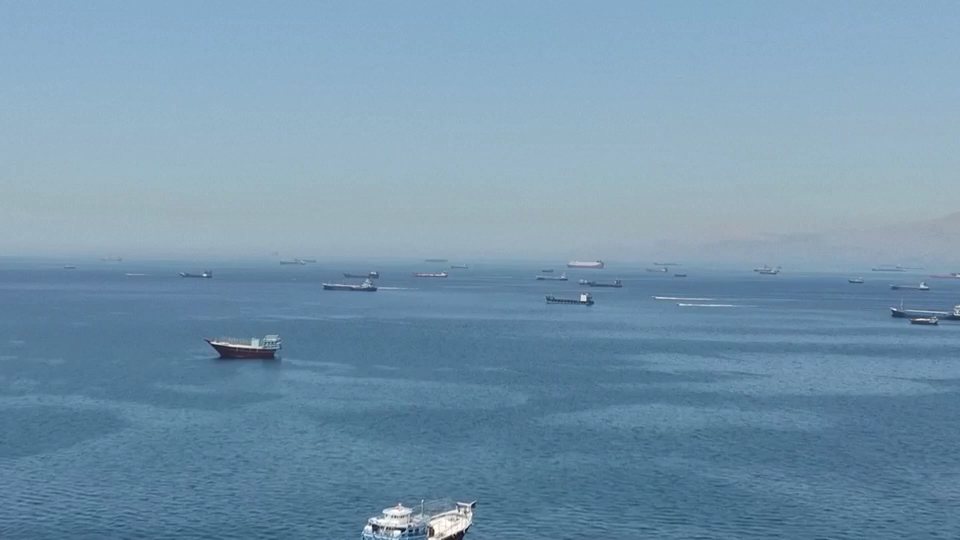
• Potential deal: US President Donald Trump met with advisers in the White House Situation Room for about two hours Friday as he considers a tentative agreement that would open the Strait of Hormuz and start nuclear talks with Iran. Trump said before the meeting he was preparing to make a “final determination,” but it wasn’t immediately clear if he has reached a decision.
• Latest from Tehran: A spokesperson for Iran’s Foreign Ministry says a memorandum of understanding between the two nations has not yet been finalized. There has been no definitive word that Iran’s Supreme Leader Mojtaba Khamenei has approved the document.
• Warning shots: Meanwhile, Iran’s Islamic Revolutionary Guard Corps navy said it fired warning shots at four vessels near the Strait of Hormuz as they were reportedly trying to pass through the waterway “without prior coordination or authorization,” according to a post on an affiliated Telegram account.
Trump's Situation Room meeting has concluded


President Donald Trump’s meeting in the Situation Room to make a “final determination” on a tentative Iran deal concluded after roughly two hours, a person familiar with the matter said.
Despite Trump’s earlier suggestion that the meeting would end with a decision, it remained unclear afterward whether he planned to sign off on the emerging agreement with Iran to open the Strait of Hormuz and start nuclear talks.
Participants in the session included Secretary of State Marco Rubio and Vice President JD Vance.
Top economic officials warn of increasing risks for fuel security if Hormuz remains blocked
The Iran war is having a disproportionate impact on the world’s most vulnerable nations due to higher fuel and fertilizer prices and risks to jobs and livelihoods, several international economic organizations have warned.
The heads of the International Energy Agency, International Monetary Fund, World Bank Group and World Trade Organization also forecast further economic damage over the summer months if the Strait of Hormuz, through which about 20% of the world’s oil supply typically passes, is not reopened.
The group met yesterday to discuss their institutions’ response to the impacts of the war, which they said was generating “substantial and highly asymmetric impacts on energy supplies, food security and economic activity.”
"I don’t have the heart to leave," Tyre resident says amid Israeli offensive

A resident in Lebanon’s ancient coastal city of Tyre has described her feelings of anguish and uncertainty amid Israel’s recent evacuation warnings and subsequent airstrikes in the city.
The coastal strikes come as Israel expands its military operations in Lebanon, with the Israeli military striking what it said was “Hezbollah infrastructure” in Tyre on Thursday after issuing what appeared to be its largest evacuation warning for the city.
Strikes were reported in southern Lebanon earlier today, with the country’s state-run National News Agency (NNA) reporting that civil defense teams recovered the bodies of four people, including children, after an airstrike hit a residential house in the town of Adloun.
The UN children’s agency (UNICEF) said today that Israel’s offensive in Lebanon has killed or injured 11 children a day on average in the past week, highlighting the toll on civilians in the country.
Another airstrike on the outskirts of Adloun resulted in the deaths of eight Syrian nationals, NNA reported. CNN has reached out to the Israeli military for comment on the reported strikes.
Iranian official says agreement with US has not been finalized

Iran’s Foreign Ministry spokesperson Esmaeil Baghaei said today that Washington and Tehran are still in contact but a memorandum of understanding between the two nations has not yet been finalized.
US President Donald Trump said earlier he was meeting with advisers in the White House Situation Room to determine whether to agree to a deal with Iran. CNN reported Thursday that the sides had reached a tentative agreement to open the Strait of Hormuz and begin a 60-day negotiation window on Tehran’s nuclear program, but that the terms still needed Trump’s sign-off.
Trump said Friday that as part of any agreement, Iran “must agree that they will never have a Nuclear Weapon or Bomb” and that the “Hormuz Strait must be immediately open” without any tolls or restrictions on traffic, among other stipulations.
Baghaei said the future of the choked Strait of Hormuz will depend on the countries of Oman and Iran, as both nations have a plan to manage passage through the waterway.
The Iranian official added that current US-Iran talks are focused on ending the war, and nuclear issues are not currently being discussed.
This post has been updated with additional quotes from Baghaei.
Rubio meets Pakistani official as Trump touts "final determination" on tentative Iran deal


Pakistan’s Foreign Minister Ishaq Dar met with his US counterpart Marco Rubio today as President Donald Trump signaled he was moving toward a “final determination” on a tentative deal with Iran.
Pakistan has emerged as a key mediator between the US and Iran in recent months during the war in the Middle East, playing a leading role in negotiating a temporary ceasefire in April.
At the meeting in Washington, Rubio acknowledged Pakistan’s “sincere diplomatic and mediatory efforts for peace and stability in the region and beyond,” according to a readout from Pakistan’s foreign ministry.
The DC side: State Department spokesperson Tommy Pigott said Rubio thanked the Pakistani minister for the “constructive role Pakistan continues to play in realizing President Trump’s vision for peace in the Middle East and its mediation efforts with Iran.”
Trump is in Situation Room making decision on Iran

President Donald Trump is meeting with advisers in the White House Situation Room to determine whether to agree to a tentative deal with Iran, he wrote on Truth Social.
“I will be meeting now, in the Situation Room, to make a final determination,” Trump wrote in a lengthy post shortly before 11 a.m. ET, spelling out the parameters of the agreement.
Trump said, among other stipulations, that Iran “must agree that they will never have a Nuclear Weapon or Bomb” and that the “Hormuz Strait must be immediately open” without any tolls or restrictions on traffic.
He said mines laid by Iran in the waterway must be “terminated.”
And he said the US blockade of the strait would be “lifted,” allowing ships that had been caught in the channel to begin sailing again.
On the thorny issue of Iran’s stockpile of highly enriched uranium, Trump said it would be “unearthed by the United States” and destroyed in coordination with Iran.
“No money will be exchanged, until further notice,” he wrote, an apparent reference to financial relief for Iran as part of the package.
Israeli attacks have killed or injured 11 children daily in Lebanon, UNICEF says


Israel’s offensive in Lebanon has killed or injured 11 children a day on average in the last week, the UN children’s agency (UNICEF) said today, highlighting the toll on civilians in the country.
Over the last seven days, 77 children have been killed or injured, UNICEF spokesperson Ricardo Pires told reporters in Geneva on Friday, citing figures from Lebanon’s Ministry of Public Health.
Most were killed or wounded by airstrikes in south Lebanon, he said. In total, at least 55 children have been killed and 121 wounded since April 17, when Washington ordered a ceasefire to come into effect between Israel and Lebanon. Hezbollah is not a party to the truce.
Israeli officials have hardened their rhetoric in recent days and on Thursday, forces struck Beirut following attacks in the south and in the Bekaa Valley.
The Israeli military said it struck “more than 135 Hezbollah targets” on Thursday. Early Friday, Hezbollah claimed responsibility for 19 attacks on Israeli army posts.
In total, Israeli strikes on Lebanon have killed 3,355 people and injured another 10,095 residents since March 2, the Lebanese health ministry reported Friday.
CNN’s Tal Shalev, Eugenia Yosef and Charbel Mallo contributed reporting.
Historic sites in biblical town under threat, Lebanon's culture minister says

Historical and archaeological sites are under threat, a Lebanese culture official warned, after Israeli strikes targeted regions in south Lebanon with biblical significance yesterday.
In a social media post, Lebanon’s Culture Minister, Ghassan Salame said the ministry had “conducted communications with counterparts around the world and international organizations to protect archaeological sites in the south.”
Israeli military had launched strikes on the southern Lebanese town of Tyre yesterday – a coastal town, which is mentioned several times in the Bible. The Israel Defense Forces (IDF) said earlier this week that they had carried out strikes against over 150 sites targeting Iran-backed Hezbollah across southern Lebanon.
Tyre was an ancient Phoenician city that founded “prosperous colonies such as Cadiz and Carthage and according to legend, was the place of the discovery of purple pigment,” according to UNESCO.
Today, the city has important archaeological remains, mostly from Roman times, the UN agency said.
CNN’s Billy Stockwell contributed to this report.
Iran secures concessions through missiles, not talks, top negotiator says
Mohammad Bagher Ghalibaf, Iran’s top negotiator and speaker of the Iranian parliament, said on Friday that the Islamic Republic secures concessions “not through talks, but through missiles.”
“We secure concessions not through talks, but through missiles; negotiations merely serve to convey them,” the Iranian official said on X, adding, that “we have no trust in guarantees or words — only actions matter.”
Iran and the US are reportedly close to an agreement to formalize a ceasefire and open the Strait of Hormuz. After the White House received word this week that Iran was comfortable with the latest draft proposal to end the war, President Donald Trump told advisers he wanted a few days to decide whether to sign the prospective agreement, officials familiar with the matter said.
It appears unlikely Trump will sign off before receiving definitive word that Iran’s Supreme Leader Mojtaba Khamenei has given his approval to the document, one official said.
Ghalibaf however said that “no step will be taken before the other side acts,” signaling that Iran is waiting for the US to move.
He added that “the winner of any agreement is the side that is better prepared for war the day after it is signed.”
The current document would extend for 60 days the current ceasefire, which has been under strain this week as the US and Iran trade fire in the Strait of Hormuz.
Trump continues to weigh deal that would reopen strait and wind down war

After the White House received word this week that Iran was comfortable with the latest draft proposal to end the war, President Donald Trump told advisers he wanted a few days to decide whether to sign the prospective agreement, officials familiar with the matter said.
It appears unlikely Trump will sign off before receiving definitive word that Iran’s Supreme Leader Mojtaba Khamenei has given his approval to the document, one official said.
The current document would extend for 60 days the current ceasefire, which has been under strain this week as the US and Iran trade fire in the Strait of Hormuz.
A US official said the plan stipulates that the strait would reopen immediately, without tolls and unrestricted to traffic, and that Iran would commit to removing mines in the waterway within 30 days.
The US blockade of Iranian ports would be lifted progressively after that as traffic is restored through the strait. Officials hope the progressive lifting of the blockade will provide an incentive to Iran to remove the mines it has laid over the course of the war.
The plan would also create a phased system by which Iran would see financial relief as long as it complies with US demands.
Trump has consistently railed against the “pallets of cash” delivered to Iran as part of the 2015 Obama-era deal. Officials are looking at ways other countries, namely Qatar, might release funds for Iran that would avoid direct US involvement, the officials said.
There have also been discussions around an investment fund for Iran that would provide billions of dollars for reconstruction once a final deal is reached. The US would not invest in the fund, and the bulk of the money would come from Gulf nations.
On the thorniest issue — Iran’s nuclear program — the deal pushes off much of the details for future negotiations.
Trump and his negotiators have been insistent any deal includes a disavowal from Iran to obtain a nuclear weapon and a commitment to dispose of their highly enriched uranium.
But how exactly that disposal would happen — whether the uranium is shipped to the US, destroyed in Iran or moved to another country — will be deferred to further talks.
Oil prices slide as Tehran and Washington edge closer to deal

Oil prices are falling today on optimism the US and Iran are inching closer to a tentative deal.
Brent crude oil, the global barometer, dropped by 1.6% to $92.21 per barrel as of 6:14 a.m. ET on Friday. West Texas Intermediate, the US benchmark, decreased by 1.53% to $87.54 per barrel.
If agreed, the tentative memorandum of understanding (MoU) between Tehran and Washington would lift parallel blockades on the Strait of Hormuz and ensure free navigation. The document would also trigger a 60-day holding period to iron out key hurdles to a definitive peace resolution – namely the fate of Iran’s nuclear stockpile.
“Those headlines helped to drive a sharp move lower for oil yesterday,” Deutsche Bank said in a note.
Overall, oil prices are down more than 18% in May, the biggest monthly decline since the start of the Covid-19 pandemic in March 2020, Deutsche Bank added.
Mohit Kumar, chief European economist at the investment banking firm Jefferies, said risks remain in executing any deal and “it is not clear if there is a united front in Iran to take decisions.”
“But we are optimistic that we would have a deal that would open the Strait and ease pressure on oil prices and the world economy,” added Kumar.
Iran does not intend to transfer its uranium abroad, top official says
Top Iranian official Ebrahim Azizi has warned that Iran does not intend to transfer its stockpile of enriched uranium abroad, according to the state-affiliated Mizan News Agency, citing Russian state media.
In an interview with Russian state news outlet RIA Novosti, Azizi, who is the head of the Iranian parliament’s National Security Commission, said on Friday that Tehran “does not intend to transfer its enriched uranium to a third country,” Mizan reported.
Iran and the US are reportedly close to an agreement to formalize a ceasefire and open the Strait of Hormuz. But the question of what happens to the uranium would remain unsettled and a key part of subsequent negotiations.
Those talks would likely focus on the nearly 1000 pounds of uranium purified to 60%.
Iran has repeatedly said it will not relinquish its stockpile of enriched uranium – which can be used to make a bomb – but has insisted it is not pursuing a nuclear weapon.
US Vice President JD Vance said it’s “TBD” whether President Donald Trump will sign a tentative memorandum of understanding with Iran, and that the two countries are still negotiating over “a couple of language points.”
While emphasizing that progress that has been made, Vance said there are a few key points on Iran’s nuclear program and enriched uranium that remain in flux.
Earlier this month Trump threatened “to go in” with force and retrieve the uranium should negotiations fail. CNN reported in March that military planners had reviewed options for such an effort at the Isfahan complex, assessing that it could require hundreds if not thousands of troops and risk a high number of casualties.
Trump later expressed openness to Tehran’s involvement in the process of recovering Iran’s enriched uranium, saying it will either be transported to the US, dealt with on-site or taken to another location.
Iran is quickly unearthing its huge missile arsenal, CNN analysis shows
Iran is regaining access to vast quantities of missiles stored in underground facilities, new satellite imagery analyzed by CNN shows, casting doubt on US President Donald Trump’s claims of having all but obliterated Tehran’s arsenal.
During the war, Israeli-US strikes put many of these complexes out of commission by blocking their entry points, trapping a large portion of Iran’s launchers and crippling its ability to fire missiles. Now, using just bulldozers and dump trucks, Iran is undoing the effects of a strategy that involved an enormous amount of Israeli-US firepower.
The Pentagon stands by the success of its campaign.
CNN’s Tamara Qiblawi reports, with analysis from Thomas Bordeaux.


Search for accountability 3 months after strike hit Iran school and killed 168 children
May 28 marks three months since 168 children and 14 teachers were killed in a missile strike that hit a girls’ school in Iran.
CNN previously reported that the US military accidentally struck the school, likely due to outdated information about a nearby naval base, according to sources briefed on preliminary findings.
Earlier on Thursday, CENTCOM said its investigation is ongoing, but coming to a close.
Former JAG officer Rachel VanLandingham joined “The Lead” to discuss the incident.


Why Trump’s threat to "blow up" Oman baffles observers

US President Donald Trump’s threat to “blow up” Oman baffled observers across the political spectrum in Washington, targeting one of America’s oldest Arab allies.
Oman is the longest continuously independent state in the Arab world and was the first Gulf Arab country to formalize relations with the United States in 1833. For the past 15 years, Muscat has negotiated prisoner releases with Iran on Washington’s behalf and hosted backchannel talks between the two adversaries. Amid Cold War tensions and in the wake of the 1979 Iranian revolution, Oman became the first Gulf state to seal a military access agreement with the US in 1980.
Dubbed the “Switzerland of the Middle East,” Muscat has long pursued a fiercely independent foreign policy shaped by its history and geography. Its strategic location on the Arabian Sea and partial control of the Strait of Hormuz helped make it a regional power in the 19th century, with one of the area’s most formidable navies. But its position also exposed it to repeated invasions and interference from regional powers, including the Persians and the Saudis, as well as foreign-backed insurgencies at home.
Muscat’s relations with Iran were historically cordial but cautious. Unlike some neighboring Gulf states that became hubs for Iranian business and migration, Oman maintained a quieter relationship with Tehran focused largely on diplomacy, helping turn the country into a trusted intermediary between the two adversaries.
But Oman’s delicate balancing act became more complicated this year. One day before the US-Israeli attack on Iran in February, Omani Foreign Minister Sayyed Badr Albusaidi – who had been mediating talks between Tehran and Washington – appeared on American television insisting that negotiations had made “substantial progress” and that a deal was “within reach.”
Since the conflict began, Oman has emerged as one of the region’s strongest critics of the war, with Albusaidi warning that Washington had “lost control of its own foreign policy”. Throughout the fighting, Muscat remained engaged with Iran, the US and regional powers in efforts to revive diplomacy, even as strikes linked to the war hit Omani territory – making Trump’s public threats against Oman all the more extraordinary.
Oil and gasoline reserves in the US are on the decline as Iran war drags on

The United States’ stockpiles of crude oil, gasoline and diesel are falling fast as the war with Iran drags on.
The monthslong closure of the Strait of Hormuz has forced the energy industry to lean heavily on oil in storage.
That leaves inventories at the lowest seasonal level since May 2003, according to Energy Information Administration data. “You can’t continue at this pace forever,” said Andy Lipow, president of Lipow Oil Associates.
The Trump administration continues to aggressively drain the Strategic Petroleum Reserve (SPR). The amount of crude in the SPR tumbled by another 9.1 million barrels last week, just shy of the record-setting decline the prior week. The emergency reserve is down by 50 million barrels over just the past two months alone.
Gasoline inventories continue to fall sharply, declining last week to the lowest May level since 2014. Diesel and other distillates are now at their lowest level since May 2003.
Catch up on what Treasury secretary said about tentative Iran deal, and other headlines

US Treasury Secretary Scott Bessent mentioned the tentative agreement reached between the US and Iran, adding that the potential deal will hinge on whether President Donald Trump decides to back it.
“Everything depends on what the president wants to do,” Bessent said during a White House press briefing Thursday. “And President Donald Trump is not going to make a bad deal for the American people.”
Here’s what else you should know:
- More from Bessent: Trump’s comments from earlier this week — that he did not care about the midterm elections as he tries to make a deal with Iran — made him a “statesman,” said Bessent. He also said he received assurances from Oman that it does not plan to toll the Strait of Hormuz. Earlier Thursday, Bessent had threatened Treasury action against Oman if it supported Iran in tolling the strait.
- On the deal: US Vice President JD Vance said it’s “TBD” on whether Trump will sign the tentative memorandum of understanding with Iran, and that the two countries are still negotiating over “a couple of language points.”
- Plunge in oil and gas reserve: The United States’ stockpiles of crude oil, gasoline and diesel are falling fast as the war drags on. The monthslong closure of the strait has forced the energy industry to lean heavily on oil in storage.
- Warning shots: Iran’s Islamic Revolutionary Guard Corps (IRGC) navy said it fired warning shots at four vessels near the Strait of Hormuz, according to a post on an IRGC-affiliated Telegram account. The vessels were reportedly trying to pass through the waterway “without prior coordination or authorization,” the post added.
CNN’s Matt Egan, Betsy Klein, Adam Cancryn, Maureen Chowdhury and Hira Humayun contributed reporting.
US and Iran still negotiating over "a couple of language points," Vance says


US Vice President JD Vance said it’s “TBD” whether President Donald Trump will sign a tentative memorandum of understanding with Iran, and that the two countries are still negotiating over “a couple of language points.”
While emphasizing that progress that has been made, Vance said there are a few key points on Iran’s nuclear program and enriched uranium that remain in flux.
“There are a couple of issues on the nuclear stuff, the highly enriched stockpile, and also the question of enrichment. So we’re going back and forth with them. We do think they’re negotiating, at least so far, in good faith,” Vance said.
“Hopefully, we’ll continue to make progress, the president will be in a position where he can endorse the agreement, but obviously that’s still TBD.”
And he said he couldn’t yet guarantee such a deal will be reached.
“We’ll get to a point where we could potentially sit down and settle these issues, but that requires us to make a little bit more progress. I can’t guarantee that we’re going to get there, but right now I feel pretty good about it,” he said.
Despite a recent exchange of attacks, Vance said the ceasefire remains in place but that the US reserves the right to launch defensive strikes.
“These ceasefires are always a little messy,” he said in response to a question from CNN’s Alejandra Jaramillo, adding that “sometimes these things have little flare-ups.”
Trump still needs to sign off tentative deal between US and Iran

A tentative agreement was reached in talks between the United States and Iran, US officials said Thursday, though President Donald Trump hasn’t signed off on it, and the situation in the region remained tense.
Trump’s approval will be key to any agreement, officials cautioned, and the president said a day earlier he wasn’t satisfied with the current state of talks. It was also unclear whether Iran’s supreme leader had given his sign-off, believed to be another necessary step toward ending the conflict.
Still, the finalization of text between the two nations was a sign that diplomacy was proceeding, despite active hostilities between the US and Iran this week.
What this tentative agreement entails:
- The memorandum of understanding would include language lifting constraints on the Strait of Hormuz, allowing unrestricted navigation by vessels and lifting a US blockade.
- It would start a 60-day negotiation period to address Iran’s nuclear program, including the fate of its stockpile of highly enriched uranium. Sources said the most difficult issues related to Iran’s nuclear program still have to be worked out as part of those talks.
- However, Iran’s semi-official Tasnim News Agency, citing unnamed sources close to the negotiating team, reported that the text of the agreement “has not yet been finalized or made definitive.” The sources added that Iran has not yet informed the Pakistani mediator that the text is finalized.
Trump has appeared optimistic previously about an agreement with Iran, only to later change course. US sources all cautioned that any advancements in the talks could be upended quickly if Trump decides to withhold his approval.
Trump has been seeking advice to ensure the deal is strong enough, one person familiar with the matter said. He has been fixated on ensuring the deal can be marketed as stronger than the 2015 Obama-era nuclear deal from which he withdrew during his first term.
Warning shots fired at vessels near Strait of Hormuz, Iran says

Iran’s Islamic Revolutionary Guard Corps (IRGC) navy said it fired warning shots at four vessels near the Strait of Hormuz, according to a post on an IRGC-affiliated Telegram account.
The vessels were reportedly trying to pass through the waterway “without prior coordination or authorization,” the post added.
The IRGC said the “exchange of fire” was the source of explosions, according to air defense reports.
Separately, Iran’s semi-official Fars News Agency reported that the country’s armed forces launched missiles from the south toward “designated targets.” Those targets have not yet been identified, the agency said. It was not immediately clear whether the IRGC post and the Fars report were about the same incident.
Earlier Thursday, Iranian Foreign Ministry spokesman Esmaeil Baghaei condemned US strikes on a ground control station in Bandar Abbas. He stressed that Iran was determined to “take all necessary measures” to defend itself, according to the ministry.
Baghaei also slammed recent statements from US officials about Oman, calling Treasury Secretary Scott Bessent’s threats to impose sanctions on the country “an absolutely illegal act,” according to state-run Press TV.
Some background: Bessent threatened Treasury action Thursday against Oman, which borders the Strait of Hormuz, if it supported Iran in tolling vessels transiting the vital waterway. And on Wednesday, President Donald Trump warned Oman not to interfere with the critical oil thoroughfare, saying, “Oman will behave just like everybody else or we’ll have to blow them up.”