Our live coverage has ended
• Follow the latest updates on the war with Iran here.
What we know so far
• Key sticking point: The deadly Israeli military offensive targeting Tehran-backed Hezbollah has emerged as a critical point of contention surrounding the tenuous US-Iran ceasefire.
• Lebanon talks: Prime Minister Benjamin Netanyahu said Israel wants direct negotiations with Lebanon on disarming Hezbollah and establishing peaceful relations, but said there is no ceasefire currently in place. Lebanese officials say Beirut has not received a formal invitation for talks, with one of them insisting there will be “no negotiations under fire.”
• Strait of Hormuz: US President Donald Trump has warned Iran against charging tolls to oil tankers in the key shipping lane. Abu Dhabi’s oil chief said the strait is “not open” as few vessels make it through the waterway.
• High-stakes meetings: A US delegation is preparing for talks in Pakistan this weekend on a potential long-term deal with Iran. A two-week pause in hostilities appears to be largely holding.
South Korea to send special envoy to Iran as its ships remain stuck in Strait of Hormuz
South Korea will send a special envoy to Iran to discuss the safe passage of its vessels through the Strait of Hormuz, following a ceasefire agreement between the US and Iran, the foreign ministry said on Friday. The country is a key US ally that plays a central role in the Indo-Pacific security strategy and it hosts about 28,000 US troops stationed against North Korean threats.
The ministry appointed Chung Byung-ha, its representative for polar cooperation and former ambassador to Kuwait, as special envoy following a phone call a day earlier between South Korean Foreign Minister Cho Hyun and his Iranian counterpart, Abbas Araghchi. The special envoy plans to travel to Tehran in the coming days, according to the ministry.
During the visit, Seoul hopes to “exchange views with Iran on the situation in the Middle East and discuss the safety of our nationals, vessels and crew, as well as issues related to the passage of all ships,” the ministry said in a statement.
South Korea currently has 26 vessels, including oil tankers, unable to travel through the Strait of Hormuz. Shipping company executives and analysts have said uncertainty surrounding the ceasefire is still making the transit too risky.
Oil and stocks climb ahead of US-Iran high-stakes talks in Pakistan

Both Asian equities and oil prices rose on Friday ahead of highly anticipated talks between the US and Iran in Islamabad , which could determine whether the Strait of Hormuz reopens to much-needed crude cargo.
As of 10:15 am local time, Hong Kong’s Hang Seng index increased 1.1% while China’s Shanghai Composite index gained 1%. Japan’s benchmark index Nikkei 225 gained 1.5% and South Korea’s Kospi rose 1.8%.
US West Texas Intermediate crude futures were up 0.7% at $98.55 a barrel, while Brent crude futures, the global benchmark, rose 0.4% to $96.30 a barrel.
On Tuesday, oil prices had plummeted and global stocks rose after Trump announced a ceasefire.
Market moves have since tapered off as investors await more details and potential movement of ships in the strait. Despite the truce, few vessels have transited through the strait, and disagreements on whether Lebanon was included in the ceasefire agreement threaten to upend the uneasy two-week pause.
“As of this moment, the ceasefire looks like it may be fleeting but the direction of travel is positive,” analysts at J.P. Morgan said in a note Thursday. However, the bank estimated that, even with a truce, it would take four months for the global oil market to fully recover, as “multiple uncertainties are likely to persist in the near to medium term.”
Strait of Hormuz access "restricted, conditioned and controlled," says Abu Dhabi's oil chief

The head of Abu Dhabi’s state-owned oil company said the Strait of Hormuz is “not open.”
Sultan Al Jaber, who runs the Abu Dhabi National Oil Company (ADNOC), said passage through the waterway is subject to “conditions and political leverage” by Iran. “The Strait was not built, engineered, financed or constructed by any state,” he continued.
Al Jaber, who is also the UAE’s minister of industry and advanced technology, said energy security and global economic stability hinge on the Strait of Hormuz being reopened “fully, unconditionally, and without restriction.”
“The weaponization of this vital waterway, in any form, cannot stand. This would set a dangerous precedent for the world – undermining the principle of freedom of navigation that underpins global trade and, ultimately, the stability of the global economy,” he added.
Iran has said that passage through the vital waterway “will be possible via coordination with Iran’s Armed Forces and with due consideration of technical limitations.”
Prior to the war, it was a free and open international waterway.
Shipping company executives and analysts have told CNN uncertainty surrounding the ceasefire is still making transit through the strait too risky right now. Shipping experts also said Iran is still in charge of the strait – and those authorities haven’t laid out a plan for safe passage yet.
Here are the latest developments on conflict in the Middle East

We have been reporting on the developments in the Middle East after Prime Minister Benjamin Netanyahu announced that Israel wants direct negotiations with Lebanon on disarming Hezbollah and establishing peaceful relations. You can read details on his announcement and Lebanon’s response here.
Here are the other latest developments:
In the United States:
• US President Donald Trump warned Iran’s leadership not to charge tankers to traverse the Strait of Hormuz. He also complained about the stalled traffic in the waterway, saying Tehran is “doing a very poor job.” Shipping executive analysts tell CNN companies are hesitant to trust a ceasefire that’s already been shaky, especially without direction on which ships can go when.

• We’re also learning that Trump, during a meeting Wednesday with NATO Secretary General Mark Rutte, pushed for urgent concrete measures from NATO members to help secure the Strait of Hormuz, two European diplomats familiar with the matter told CNN. NATO was not informed of the US an Israel’s plan to go to war and its chief Mark Rutte said allies are providing “massive amount of support” to Trump on Iran
• The president, separately, blasted right-wing pundits who’ve criticized the war with Iran in a lengthy social media post, slamming Tucker Carlson, Megyn Kelly, Alex Jones and Candace Owens as “stupid people” and “NUT JOBS.”
• Meanwhile, a US official summoned Iraq’s ambassador to the United States to condemn attacks by Iranian-backed militias against US diplomatic facilities and personnel in Iraq.
In the Middle East:
• Kamal Kharazi, a senior adviser to Iran’s supreme leader, has died after being injured in what Tehran said was a US-Israeli strike that targeted his home earlier this month.
• World Health Organization Director-General Tedros Adhanom Ghebreyesus urged Israel to rescind its evacuation notice for two hospitals in an area of Beirut, saying it was “operationally unfeasible.”
• Kuwait’s National Guard said one of its sites was targeted by “hostile drones” on Thursday, causing material damage but no injuries.
CNN’s Donald Judd, Lauren Said-Moorhouse, Jennifer Hansler, Mohammed Tawfeeq, Michael Rios contributed reporting to this post.
Talks contingent on US adhering to ceasefire in Lebanon, Iran spokesperson says
Holding talks to end the war is contingent on the United States adhering to its ceasefire commitments, Iranian Foreign Ministry spokesperson Esmaeil Baghaei said.
Those commitments, he claimed, include a ceasefire in Lebanon, which the US and Israel insist was not part of the deal.
Baghaei condemned Israel’s large-scale strikes in Lebanon, which the Lebanese Health Ministry says killed more than 300 people on Wednesday. Israel said it targeted more than 100 Hezbollah command centers and military sites.
“Halting the war in Lebanon is an inseparable part of the proposed ceasefire understanding put forward by Pakistan, and as the prime minister of that country explicitly announced, the United States has committed to stopping the war on all fronts, including Lebanon,” Baghaei said.
Iowa farmers hit hard by Iran war and tariffs
Iran’s effective closure of the Strait of Hormuz, coupled with President Donald Trump’s tariffs, is squeezing farmers as fertilizer and diesel prices rise.
CNN’s Jeff Zeleny spoke with two Iowa farmers who shared their concerns as a new planting season begins:

The war in Iran, coupled with President Donald Trump’s tariffs, is squeezing farmers as fertilizer and diesel prices rise. CNN’s Jeff Zeleny spoke with two Iowa farmers who shared their concerns as a new planting season begins.

For context: The Strait of Hormuz, one of the world’s most critical energy chokepoints, ordinarily carries about a fifth of global oil and natural gas supplies and a third of the world’s urea fertilizer exports.
The waterway may be officially reopening for business since the US-Iran ceasefire, but shipping company executives and analysts told CNN that uncertainty surrounding the agreement is still making transit too risky right now. Only a few ships have made the journey in recent days.
CNN’s Hanna Ziady, Vanessa Yurkevich, Chris Isidore and Matt Egan contributed to this report.
We’re learning more about Israel seeking talks with Lebanon. Here’s what to know this hour


After Prime Minister Benjamin Netanyahu announced Israel wants direct negotiations with Lebanon on disarming Hezbollah and establishing peaceful relations, he said there is no ceasefire in place as he pursues the talks. A Lebanese official said there would be “no negotiations under fire.”
Lebanese officials also told CNN their government has not heard about a potential meeting between Israel and Beirut in Washington, DC, next week after an Israeli official and a US official said negotiations between Israel and Lebanon were expected to begin at the US State Department.
Lebanon’s Foreign Ministry and the presidential palace had not been officially notified of Netanyahu’s invitation to open talks, a Lebanese official said.
Israel’s attacks across Lebanon have emerged as a critical point of contention surrounding the tenuous US-Iran ceasefire.
Here’s other key news to know:
- Israel said it carried out new strikes against Hezbollah launch sites in Lebanon.
- President Donald Trump told NBC News in an interview that he asked Netanyahu to be “a little more low-key” in operations in Lebanon as the US seeks to negotiate an agreement to end war with Iran.
- We also learned that Netanyahu’s decision to seek direct negotiations with Lebanon came at Trump’s request, sources told CNN.
- The death toll from Israeli airstrikes across Lebanon on Wednesday increased to at least 303 people, the Lebanese Health Ministry said.
- Iranian Supreme Leader Mojtaba Khamenei said that Iran will bring management of the Strait of Hormuz “into a new phase” and that Tehran remains determined to “take revenge” for his slain father and all those killed in the war, according to a new statement attributed to him.
- Only three tankers transited the Strait of Hormuz on Thursday (local time,) according to data from MarineTraffic. Two laden tankers exited, one coming from the UAE, one Iranian flagged tanker coming from near Kharg Island. One empty tanker entered the Persian Gulf.
- Kuwait’s National Guard said one of its sites was targeted by “hostile drones”, causing material damage but no injuries. It’s unclear where the drones originated.
CNN’s Jeremy Diamond, Kevin Liptak, Tal Shalev, Tamara Qiblawi, Mohammed Tawfeeq, Charbel Mallo, Adam Pourahmadi, Mitchell McCluskey, Michael Rios, Dana Karni, Lauren Said-Moorhouse, Jennifer Hansler and Kylie Atwood contributed to this report.
Trump pushed for commitments on Strait of Hormuz during Rutte meeting, diplomats say


President Donald Trump, during a meeting Wednesday with NATO Secretary General Mark Rutte, pushed for urgent concrete measures from NATO members to help secure the Strait of Hormuz, two European diplomats familiar with the matter told CNN.
One of the diplomats said Trump pressed for those commitments within a matter of days. The other noted that the issue is urgent not only for the US, but also for Europe.
That diplomat said it was useful to have a “friend” like Rutte explain to Trump that the NATO allies were “totally surprised” by the US-Israeli war against Iran — with some of them having to evacuate their citizens from the region — and to make clear to the president that NATO countries are working as a coalition to help support opening the strait.
“What we are seeing under the leadership of (British Prime Minister) Keir Starmer and these 34 countries working closely with the US is, of course, a shared commitment and agreement that we cannot accept the strait to be closed. It has to be opening up. And when it is opened up, we have to keep it open,” Rutte emphasized in remarks in Washington on Thursday.
Still, in social media posts after his Wednesday meeting with Rutte, Trump continued to lash out at NATO. “NATO WASN’T THERE WHEN WE NEEDED THEM, AND THEY WON’T BE THERE IF WE NEED THEM AGAIN,” he wrote that evening.
Iran supreme leader's adviser dies of injuries sustained in earlier strike



Kamal Kharazi, a senior adviser to Iran’s supreme leader, has died after being injured in what Tehran said was a US-Israeli strike that targeted his home earlier this month.
Kharazi, “who had previously been injured following an attack by the American-Zionist enemy, was martyred a few hours ago,” Iranian official media announced Thursday.
Kharazi’s wife was killed in the strike, while he was critically injured and rushed to a nearby hospital for treatment, Iranian officials said last week.
CNN’s Frederik Pleitgen interviewed Kharazi in Tehran in March in an exclusive conversation conducted with the permission of the Iranian government, as required under local regulations.
In that interview, Kharazi told CNN he believed that Iran could sustain the conflict for an extended period and said he did not see room for diplomacy. He predicted that the war would end only through the economic pain it inflicts.
Drones target Kuwait during ceasefire
Kuwait’s National Guard said one of its sites was targeted by “hostile drones” on Thursday, causing material damage but no injuries.
The country’s Foreign Ministry blamed Iran and its proxies for the attacks, which it said undermined the efforts that led to the ceasefire.
Iran’s Islamic Revolutionary Guard Corps said it has not carried out any launches toward any country during the ceasefire, according to a statement published on state media.
Kuwait’s military said earlier that it was responding to drone attacks that targeted “some vital facilities.”
“The competent authorities in the Guard immediately began taking the necessary security and field measures to deal with the incident,” National Guard spokesperson Judaan Fadel said.
The attacks occurred after the US-Iran ceasefire took effect on Wednesday. Persian Gulf Arab nations had last reported missile interceptions that afternoon.
Before the attacks, Kuwait said earlier Thursday that it had not reported any military movement in the past 24 hours and that the situation in the country was stable.
Trump warns Iran not to charge tankers tolls to traverse Strait of Hormuz

President Donald Trump issued a stern warning to Iran’s leadership today following reports the country was considering charging tankers to traverse the Strait of Hormuz.
“There are reports that Iran is charging fees to tankers going through the Hormuz Strait — They better not be and, if they are, they better stop now!” Trump wrote on his Truth Social platform.
Despite a ceasefire announcement Tuesday night that Trump said included the “COMPLETE, IMMEDIATE” reopening of the strait, oil tanker traffic through the critical waterway has still been nearly nonexistent due to a lack of clear guidance from Iran.
In a subsequent post, Trump complained about the stalled traffic in the strait, writing, “Iran is doing a very poor job, dishonorable some would say, of allowing Oil to go through the Strait of Hormuz. That is not the agreement we have!”
CNN reported earlier this week that a Tehran official included Iranian sovereignty over the strait in Iran’s list of demands to end the war, sparking concern over the continued economic fallout over a global energy crisis.
The Iranian parliament’s Security Commission approved a plan to impose tolls on ships passing through the strait and enforce “Iran’s sovereign role,” a commission member was cited as saying by the state broadcaster on Monday.
Despite ceasefire, few ships have gone through the Strait of Hormuz



The Strait of Hormuz may be officially reopening for business, but shipping executives and analysts say uncertainty surrounding the ceasefire is still making transit too risky right now. Explicit approval and safety assurances from Iran, clear guidance on how and when to transit and a long-term view of the strait’s future are all missing so far, shippers told CNN.
The strait’s future has real impacts on everyday Americans: Average gas prices are up 40%, about $1.18, per gallon since the start of the war, according to AAA. Getting gas prices back to the pre-war $3 a gallon level is still a long way off, even if oil begins to flow freely again.
Iraqi ambassador summoned by US State Department over attacks on diplomatic facilities
A top US State Department official summoned Iraq’s ambassador to the United States on Thursday “to express the U.S. government’s strong condemnation” of attacks by Iranian-backed militias against US diplomatic facilities and personnel in Iraq.
Landau denounced “the egregious terrorist attacks,” including “the April 8 ambush of U.S. diplomats in Baghdad,” according to the readout. “These attacks come after hundreds in recent weeks against U.S. citizens, diplomatic facilities, and commercial interests, as well as Iraq’s neighbors and Iraqi institutions and civilians, including in the Iraqi Kurdistan Region.”
The US Embassy in Baghdad said in a security alert Wednesday that “Iran-aligned Iraqi terrorist militias conducted several drone attacks near the Diplomatic Support Center and Baghdad International Airport” on that day. It warned US citizens against air travel “within Iraq due to the ongoing risks of missiles, drones, and mortars in Iraqi airspace.”
The State Department is offering a reward of up to $3 million for information on attacks on its diplomatic facilities in Iraq.
Iran’s Ghalibaf warns “time is running out,” says Lebanon is covered by ceasefire

Iran’s parliament speaker, Mohammad Bagher Ghalibaf, warned Thursday that “time is running out” and said Lebanon is “an inseparable part of the ceasefire.”
On Tuesday, the United States and Iran agreed to a two-week ceasefire intended to halt more than a month of intensified conflict and prevent further escalation.
However, the US, Israel and Iran could not agree on the terms on which the ceasefire was forged, after a huge Israeli assault in Lebanon prompted Tehran to claim a violation.
“Lebanon and the entire Resistance Axis, as Iran’s allies, form an inseparable part of the ceasefire,” Ghalibaf said Thursday in a post on X. He did not elaborate on his warning at the top of his post that “time is running out,” but the rest of it referred to recognizing that Lebanon is part of the deal.
Ghalibaf warned that ceasefire violations would carry “explicit costs and STRONG responses,” urging: “Extinguish the fire immediately.”
Iranian officials have repeatedly said Lebanon is covered by the ceasefire deal, and they have accused Israel of trying to sabotage it amid ongoing strikes across Lebanon. But White House press secretary Karoline Leavitt said Wednesday that “Lebanon is not part of the ceasefire.”
Trump slams conservative pundits critical of the US-Iran war in lengthy social media post

President Donald Trump blasted right-wing pundits who’ve criticized the war in Iran in a lengthy social media post today, slamming Tucker Carlson, Megyn Kelly, Alex Jones and Candace Owens as “stupid people” and “NUT JOBS.”
“I know why Tucker Carlson, Megyn Kelly, Candace Owens, and Alex Jones have all been fighting me for years, especially by the fact that they think it is wonderful for Iran, the Number One State Sponsor of Terror, to have a Nuclear Weapon — Because they have one thing in common, Low IQs,” Trump wrote in the 482-word Truth Social post. “They’re stupid people, they know it, their families know it, and everyone else knows it, too!”
The president lobbed personal insults at the individual pundits, writing Carlson — who departed Fox News in 2023 shortly after the network settled a defamation lawsuit with Dominion Voting Systems — “couldn’t even finish College, he was a broken man when he got fired from Fox, and he’s never been the same.”
He also lambasted Kelly for tough questions during a 2015 Republican primary debate and Owens for spreading conspiracy theories suggesting French first lady Brigitte Macron is secretly a man.
Carlson, Kelly, Owens and Jones have supported Trump in the past, with Kelly and Carlson even campaigning for him in 2024 — but all four have been vocally critical of the administration’s war with Iran.
“These so-called ‘pundits’ are LOSERS, and they always will be!” Trump wrote Thursday. “MAGA is about WINNING and STRENGTH in not allowing Iran to have Nuclear Weapons.”
WHO chief calls on Israel to rescind Beirut evacuation order


World Health Organization Director-General Tedros Adhanom Ghebreyesus said today it was “operationally unfeasible” to evacuate two hospitals in an area of Beirut facing an Israeli evacuation order, and he urged Israel to rescind it.
Tedros said the evacuation order for Beirut’s Jnah area includes the Rafik Hariri University Hospital and al-Zahraa Hospital.
He added that both facilities were “operating at full capacity” and were treating people injured in Israeli strikes on Wednesday.
Tedros said the evacuation zone also includes a Health Ministry complex where five shelters are accommodating more than 5,000 people.
Earlier today, the Israel Defense Forces issued a broad evacuation order for multiple neighborhoods in southern Beirut, including some areas that had not previously been targeted.
Israel launches fresh strikes against Hezbollah in Lebanon

Israel launched fresh strikes against Hezbollah launch sites in Lebanon on Thursday evening, according to the Israel Defense Forces (IDF).
Separately, Lebanon’s National News Agency reported multiple airstrikes on locations in southern Lebanon in the last hour.
Prior to the strikes, the IDF issued a warning to Israeli residents that additional areas “may come under (Hezbollah) fire in the coming hours.”
The fresh strikes come as Israeli Prime Minister Benjamin Netanyahu said he had instructed his government to “open direct negotiations” with Lebanon, but stated there would be no ceasefire with Hezbollah in the country even as he pushes for talks to commence.
Lebanese officials say they haven’t been invited to talks with Israel in Washington


Two Lebanese officials said their government has not heard about a potential meeting in Washington, DC, next week, after an Israeli official and a US official said negotiations between Israel and Lebanon were expected to begin at the US State Department.
Israeli Prime Minister Benjamin Netanyahu said Thursday that he had instructed his government to “open direct negotiations with Lebanon as soon as possible” in light of “repeated requests” from the country.
However, one of Lebanese officials said Thursday there would be “no negotiations under fire.” The officials said Lebanon’s foreign ministry and the presidential palace had not been officially notified of that invitation to open talks, nor have they heard anything about a potential meeting next week.
Later Thursday, Netanyahu stated there would be no ceasefire in Lebanon even as he pushes for talks to commence.
If the talks do take place next week, Israel would be represented by its ambassadors to the US Yechiel Leiter and the US would be represented by its ambassador to Lebanon, Michel Issa, the Israeli and US officials said.
Netanyahu said the negotiations will focus on the disarmament of Hezbollah the establishment of “peaceful relations” between the two countries.
The talks come as Israel has heavily bombarded Lebanon, including its capital of Beirut, in a deadly military assault.
Big picture: The ongoing military action has threatened to derail the tenuous US-Iran ceasefire. The US said the ceasefire did not include Lebanon, despite understandings from Iran and Pakistan that it did.
On the first day of that ceasefire, Israel conducted its biggest wave of strikes on Lebanon since the war began, killing at least 303 people and injuring 1150, Lebanon’s health ministry said Thursday.
Netanyahu rejects ceasefire in Lebanon as he orders cabinet to begin direct talks with Beirut


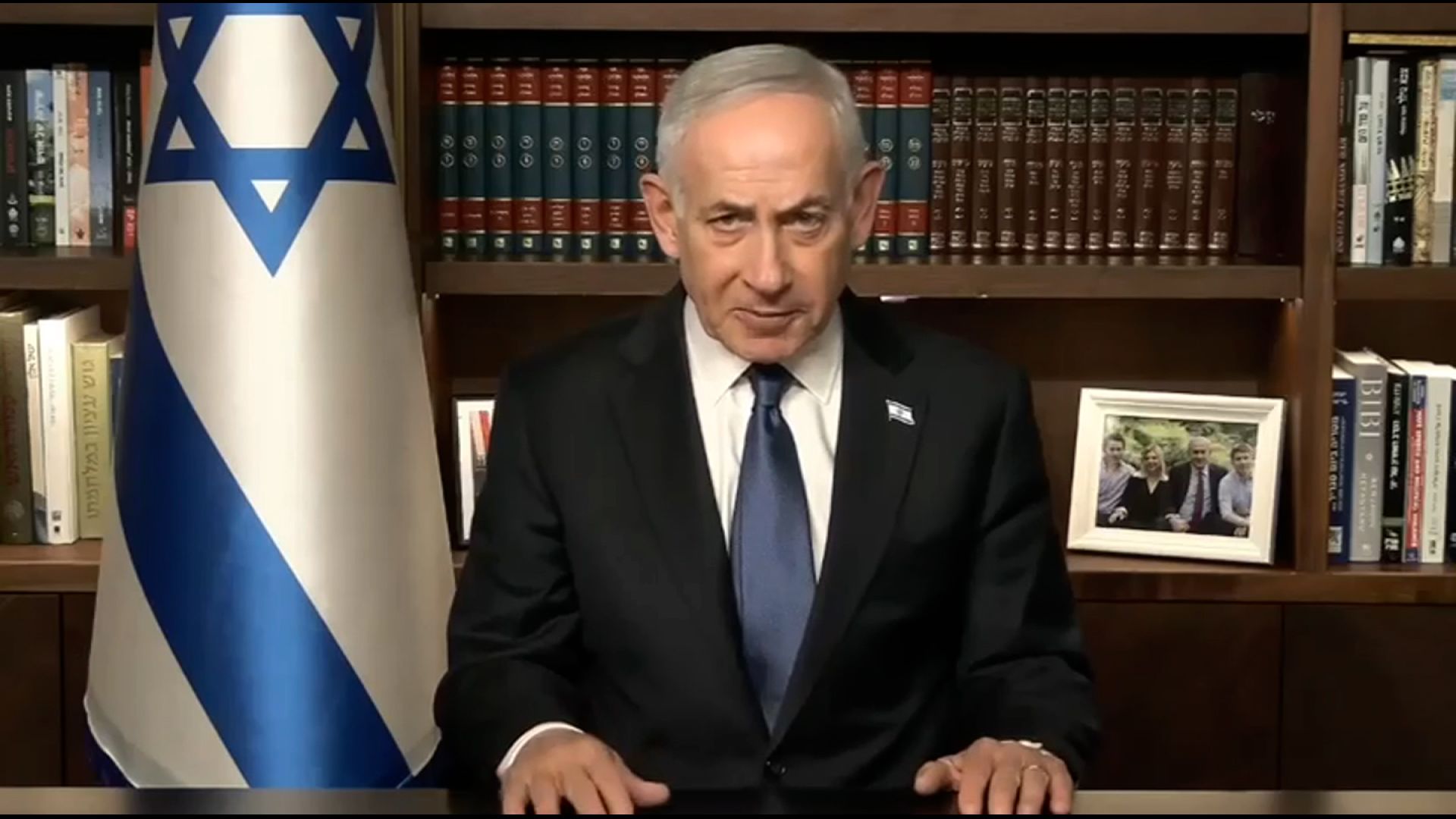
Israeli Prime Minister Benjamin Netanyahu has once again said there is no ceasefire with Hezbollah in Lebanon after he instructed his cabinet to begin direct negotiations.
The prime minster said he has asked for direct talks with the Lebanese government aimed at disarming Hezbollah and securing “a historic, sustainable peace agreement.”
Israel is planning to scale down its attacks on Lebanon as negotiations take place, two Israeli sources told CNN on Thursday. It remains to be seen what a reduction in strikes would actually look like in practice.
Earlier, a Lebanese official told CNN there would be “no negotiations under fire” in response to Israel’s plan to start direct talks.
The Israeli military on Thursday continued striking Lebanon and issued fresh evacuation orders for parts of southern Beirut.
On Wednesday, Israel launched its biggest wave of strikes in Lebanon since the war began. More than 300 people were killed and 1,150 were injured in the attacks across the country, according to the latest update from the Lebanese Health Ministry. Israel had said it was targeting 100 Hezbollah command centres and military strikes.
This post has been updated with additional information.