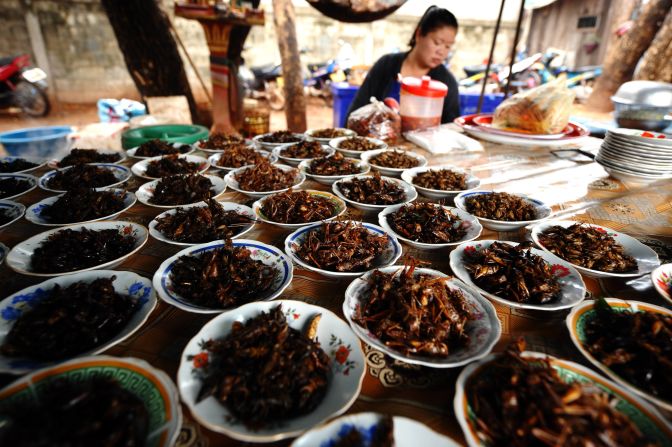
Crickets are some of the most commonly eaten insects in the world and are regarded as a solution for the malnutrition problem plaguing Laos. Fried crickets and grasshoppers are sold at markets like this one in Vientiane. According to consumer feedback in the U.N. report, farmed crickets are tastier than the ones picked in the wild.
HOANG DINH NAM/AFP/Getty Images
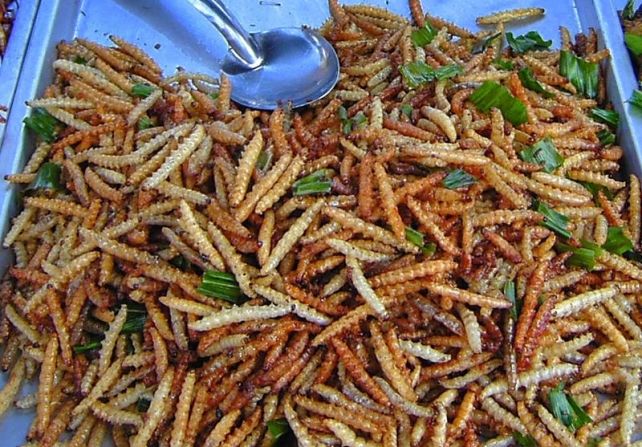
Bamboo worm, Thailand —
These long worms are considered delicacies in Thailand and many other southeast Asian countries. Called rot duan (meaning "express train") in Thai, the bamboo worm is commonly served as a deep-fried snack. They are normally found on sale via bug carts at night all over Thailand. CNN Travel's Bangkok resident Karla Cripps describes them as "delicious" and says a small bag of them costs 20 baht (around 65 cents).
courtesy Takoradee
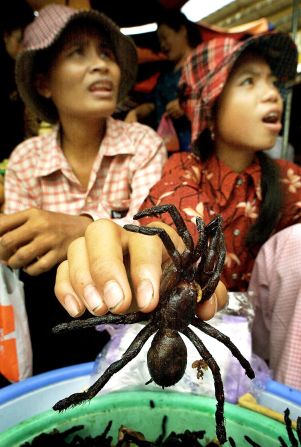
Spiders, Cambodia —
Fried or grilled spiders are a popular daytime snack in Cambodia, and are sold in markets such as Phnom Penh's central market (shown here), and in city restaurants. Spiders are chock full of zinc and iron, and provide a significant source of income for many impoverished Cambodian farmers, says the U.N. report.
philippe lopez/afp/getty images
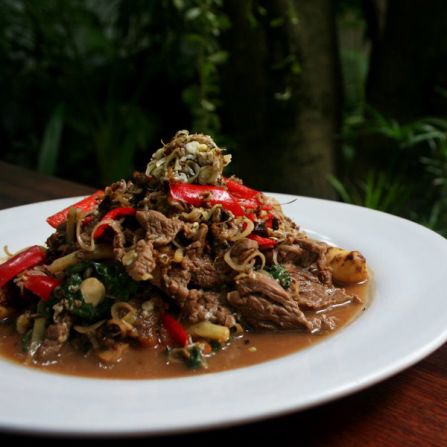
Red tree ants, Cambodia —
Tourists will find this Cambodian insect dish slightly more appealing than the giant spiders. Mixed in with beef and holy basil, the red tree ants add a sour flavor to this stir-fried dish.
linda goldberg/cnn
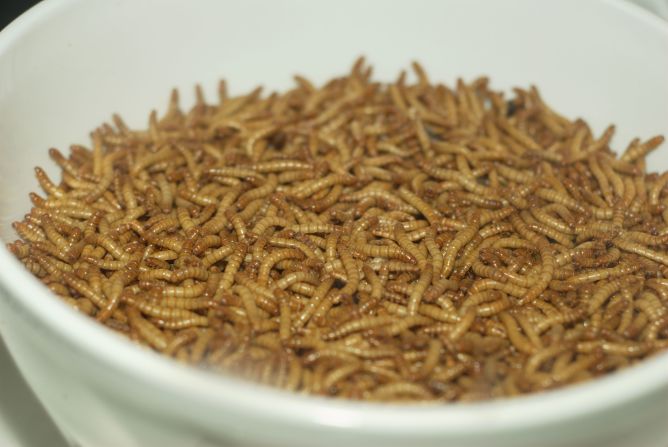
Mealworms, Netherlands (and elsewhere) —
Bug buffets hosted by the Specktakel restaurant in the Netherlands sold out last year -- the innovative restaurant served up samosas with mealworms and buffalo worms, and received rave reviews. Mealworms are also highly nutritious -- they're comparable to fish and meat in terms of protein, vitamin and mineral content, but are three times more expensive than pork and five times more expensive than chicken, says the U.N. report.
courtesy Peter Halasz
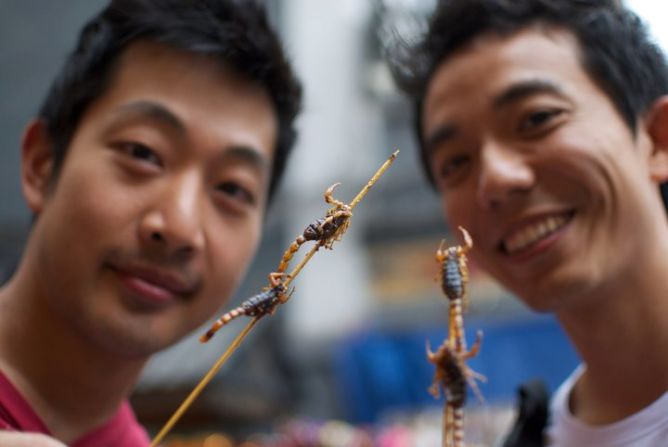
Scorpions, Beijing —
Although scorpions aren't technically 'insects,' they still made it onto the U.N. report. They're more of a tourist draw than conventional Chinese cuisine, and can be found at street stalls dotting Beijing's major shopping street of Wangfujing. "They taste like anything deep-fried -- crunchy and oily but no real flavor," says Soon Ho Lee, one of the adventurous tourists in this photo (left).
soon ho lee/cnn
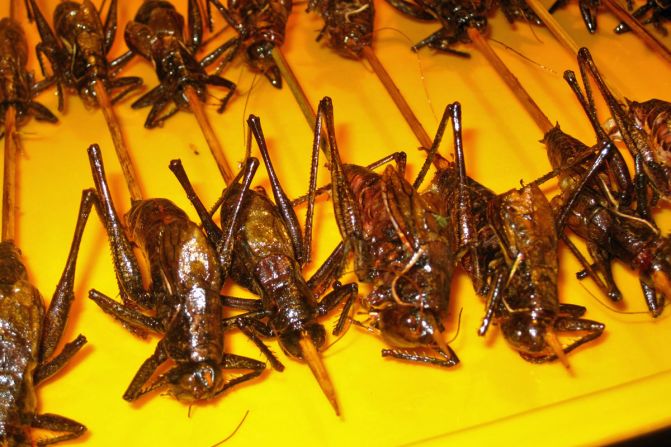
Locusts, Beijing —
Chewing on locusts is nothing new in Asia. Japanese and Thais are partial to them too. Vendors at Beijing's popular Donghuamen Night Market out these six-legged insects as an environmentally friendly alternative to meat, and also for their high fiber content. Loaded with protein, deep-fried locust tastes a bit like fried chicken.
courtesy kevin chapman
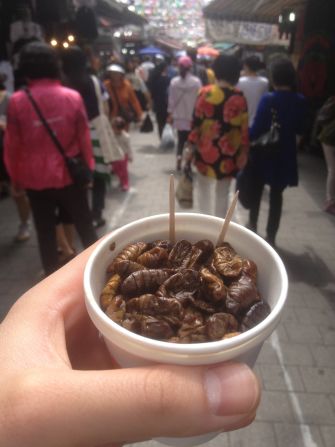
Silkworm, South Korea —
Called beondegi in Korean, boiled silkworm pupae are sold in small paper cups at street stalls in many Korean markets. Korea also uses silkworm powder as medicine for diabetes as it lowers blood glucose levels. This cup cost 2,000 won (about $2) from Seoul's Namdaemun market.
sungoh bang/cnn
Worms, Taiwan —
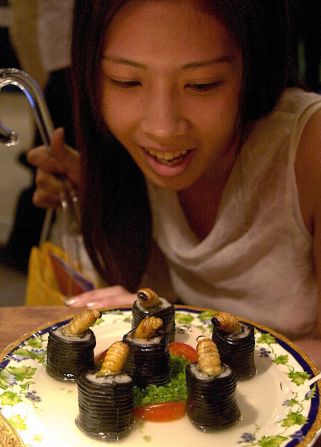
The annual Taipei Chinese Food Festival in August features all kinds of unusual dishes, including those made with different worm species. Local chefs reportedly like to use worms in their culinary endeavors for the subtle taste.
sam yeh/afp/getty images
Witchetty grub, Australia —
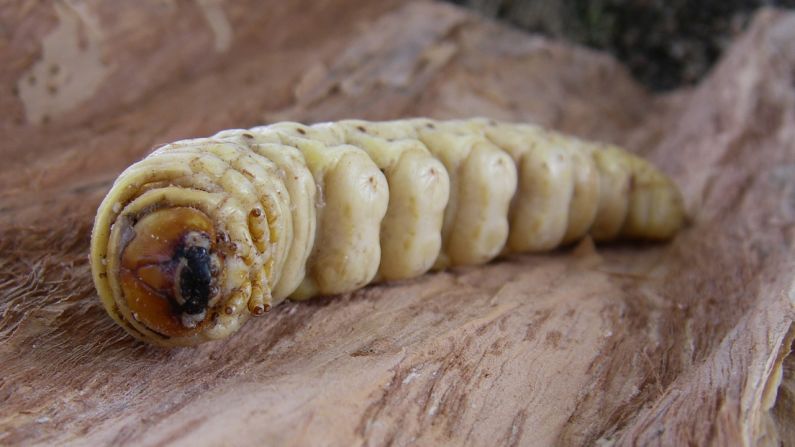
The classic Aussie bush tucker cliche -- this Australian caterpillar is a well-known staple of the indigineous Australian diet. It's highly filling -- just look at the size of that thing -- and can be eaten raw or seared/barbecued. "You will find the taste is quite pleasant, having a fried egg flavor with a hint of nuts and the skin resembles that of fried chicken," one Australian chef told us.