Biotechnology startup Koniku is developing high-tech sensors to sniff out bombs. The device, a "Konikore", is made from living biological cells -- like the ones found in your nose -- that can smell molecular compounds. In December, trials of the device at international airports will begin. Koniku is also investigating whether the device could be used to detect Covid-19. Scroll through to see more technologies designed to make airports safer.
Koniku
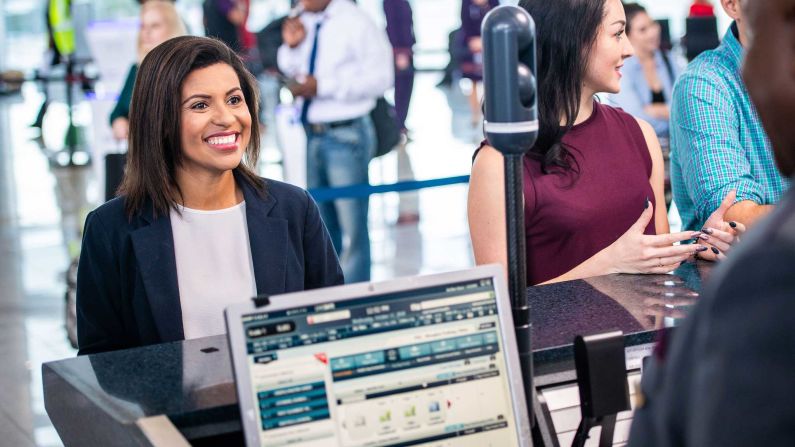
Airports around the world are increasingly testing out biometric identification, verifying a flier's identity through fingerprints or facial features. For instance, Delta Air Lines has installed facial recognition technology at the check-in kiosks, counters, checkpoints and boarding gates of a number of US airports. The company stresses that the system is optional for customers and that all biometric data is kept secure.
Courtesy Delta
The Covid-19 pandemic has accelerated the need for touchless technology. Diehl Aviation, an aircraft interiors and solutions company, has designed a touchless lavatory, using highly sensitive sensors across all toilet functions. The door lock, the toilet lid, the flush, the taps, and the waste bin flap are all controlled hands-free.
Diehl Aviation
Tests for a contactless voice-activated kiosk are underway at Abu Dhabi International Airport. Developed in a partnership between Etihad Airways and Australian company Elenium Automation, the kiosk is able to monitor a passenger's temperature, heart and respiratory rate before check-in. The system automatically suspends the self-service check-in or bag-drop process if a passenger's vital signs indicate potential symptoms of illness.
Elenium Automation
Covid-19 has also inspired high-tech disinfection methods. Hong Kong International Airport is experimenting with "CLeanTech," a full-body disinfection facility. Passengers and airport staff undergo a temperature check before entering an enclosed booth for the 40-second disinfection and sanitizing procedures. According to the airport authority, the facility contains an antimicrobial coating that can remotely kill any viruses and/or bacteria found on clothing or the body.
Airport Authority Hong Kong
Hong Kong airport is also testing autonomous cleaning robots that are deployed round-the-clock in public toilets and other key spaces in the terminal building. The robot -- equipped with ultraviolet light sterilizers -- roams about independently and can, according to the airport authority, sterilize up to 99.99% of bacteria in its vicinity in just 10 minutes.
Sunny Tong
British Airways is trialing autonomous robots at Heathrow Terminal 5. The robots, developed by technology company BotsAndUs, can interact with passengers in multiple languages and have the ability to answer thousands of questions including those related to real-time flight information. Thanks to geo-location technology, they can move around the terminal and walk customers to areas such as the Special Assistance desk.
British Airways
Technology company Analogic has developed a baggage screening solution, called ConneCT, designed to cut passenger wait times and detect security threats and illegal substances. The machine produces three-dimensional images of bags and alerts staff if a possible threat is detected. Fliers don't have to remove laptops and liquids from their bags before they go through these scanners, which keeps lines moving.