St. Petersburg: 12 best sights in the city of the czars
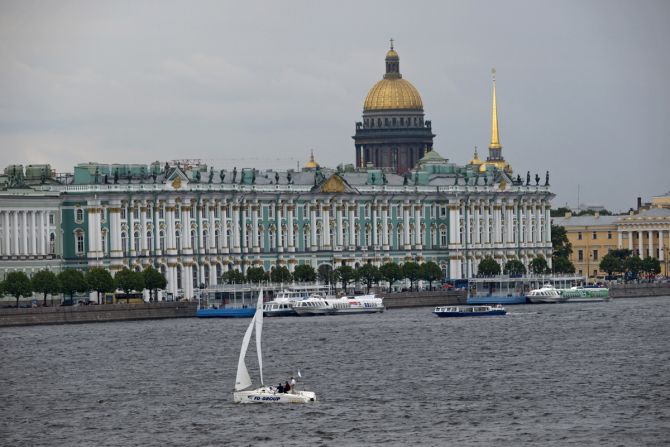
St. Isaac's Cathedral —
The massive dome of St. Isaac's Cathedral is made of 100 kilos of pure gold. Designed and built by French architect Auguste de Montferrand and completed in 1858, it can be seen far out into the Gulf of Finland. The green and white building in the foreground is the Winter Palace. Home to Russian czars from 1732 to 1917, it now houses the Hermitage Museum.
Bruce Holmes/CNN
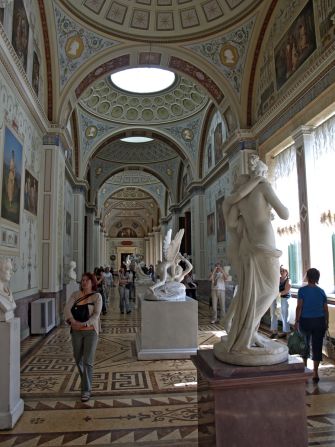
Hermitage Museum —
Founded by Catherine the Great and later opened to the public in 1852, the Hermitage Museum of art and culture contains almost 3 million items and features the largest collection of paintings in the world, among them Leonardo da Vinci's "Madonna with Child."
Bruce Holmes/CNN
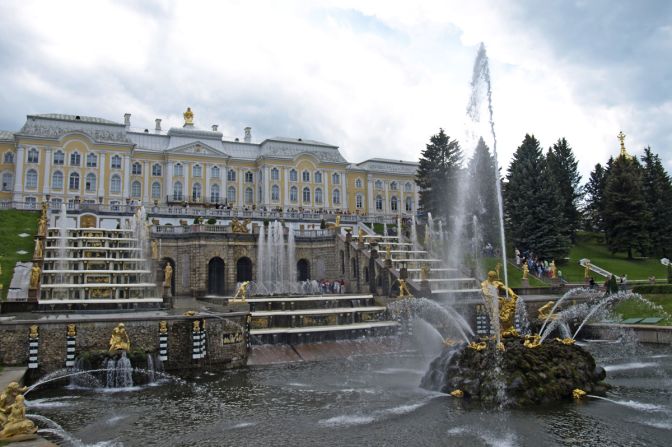
Grand Peterhof Palace and Grand Cascade —
Reached by hydrofoil boat from a pier opposite the Winter Palace, the Grand Peterhof Palace and Grand Cascade are at the center of the World Heritage-listed ensemble of gardens and palaces that is Peterhof. Laid out in accordance with Peter the Great's wishes, the complex was completed in 1725 and is in many ways reminiscent of Versailles.
Bruce Holmes/CNN
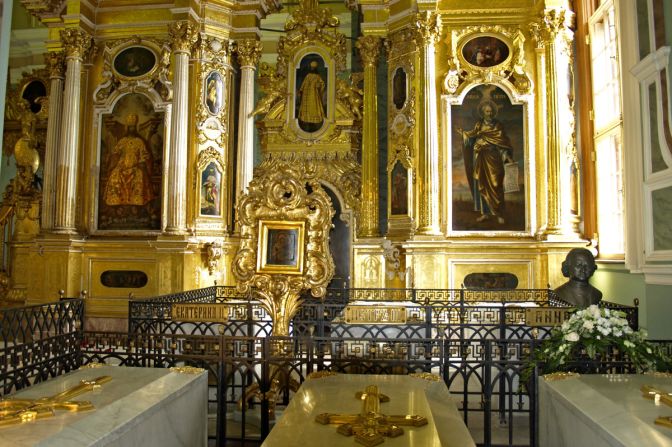
Cathedral at the Peter and Paul Fortress —
Within the cathedral at the Peter and Paul Fortress lie sarcophagi containing the remains of most of the Romanov rulers.
Bruce Holmes/CNN
The Bronze Horseman —
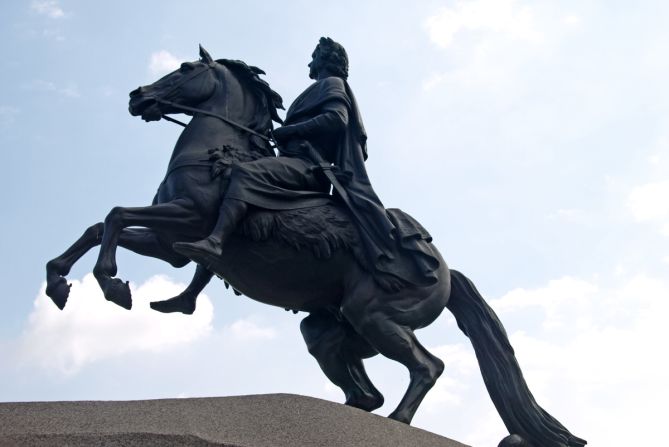
Completed in 1782, the statue known as The Bronze Horseman represents former czar Peter the Great as a Roman hero astride a rearing steed. The statue has become a symbol of St. Petersburg. Protected by sandbags and a wooden shelter, it withstood the Nazis' 900-day siege of (then) Leningrad in World War II.
Bruce Holmes/CNN
General Staff Building —
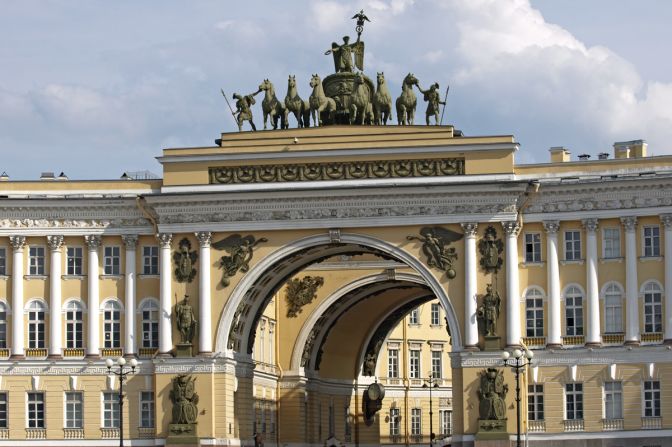
Across the square from the Winter Palace stands the neoclassical General Staff Building, with its triumphal arch adorned with a bronze sculpture of Victory in her six-horsed chariot, commemorating the Russian victory over Napoleonic France in the War of 1812.
Bruce Holmes/CNN
Rostral Column —
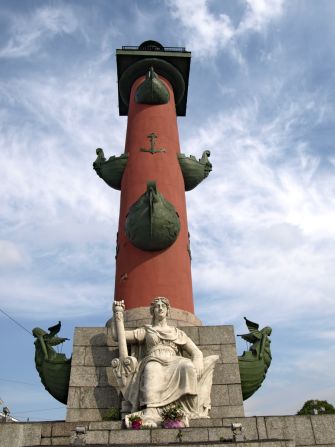
One of the two Rostral Columns near the St. Petersburg Stock Exchange. Both were intended as oil-fired lighthouses for ships navigating the Baltic Sea. Designed in the early 19th century, the columns are reminiscent of ancient Rome and feature figures of mythical gods representing four major rivers in Russia.
Bruce Holmes/CNN
Church on Spilled Blood —
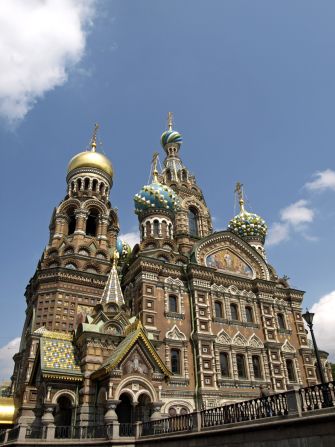
The Church on Spilled Blood, also known as the Cathedral of the Resurrection of Christ, was built on the spot where Czar Alexander II was fatally wounded in an assassination attempt in 1881. After the Bolshevik Revolution the church fell into disrepair. After more than half a century of neglect, the church was restored and re-opened in 1997.
Bruce Holmes/CNN
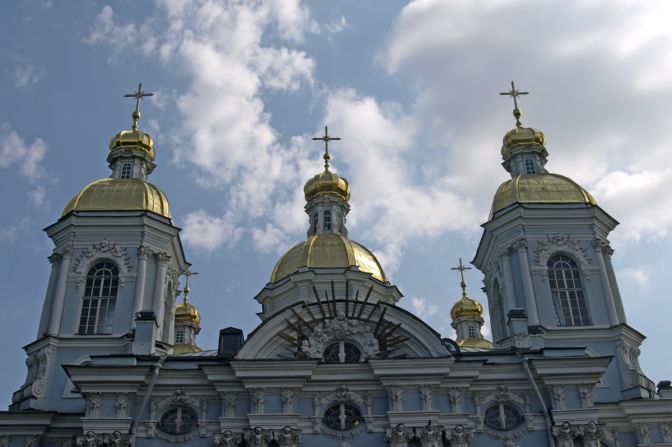
St. Nicholas Naval Cathedral —
St. Nicholas Naval Cathedral contains memorials to lost seamen and naval heroes, including those who died when the nuclear submarine Komsomolets sank in 1989. The interior portrays important episodes in Russian naval history.
Bruce Holmes/CNN
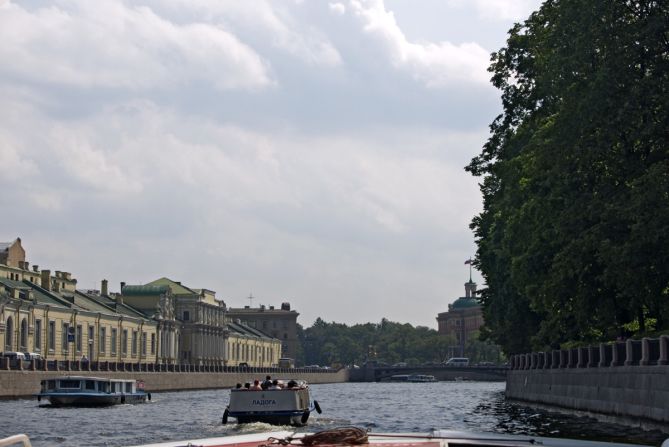
Tourist boats on River Neva —
A popular way to see St. Petersburg is on one of many tourist boats that ply the canals and the River Neva. Tours pass beneath some of the city's 365 bridges before cruising through the center of town to the starting point near Nevsky Prospekt.
Bruce Holmes/CNN
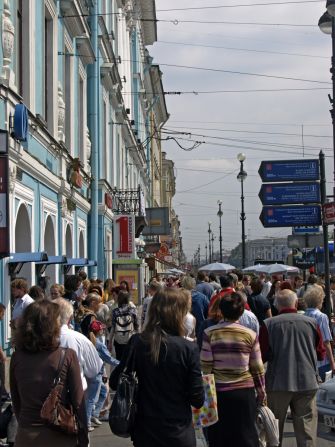
Nevsky Prospekt —
Crowds wander along the city's grand boulevard, Nevsky Prospekt. Here are found shopping and nightlife, fashionable apartments, the baroque Stroganov Palace, Kazan Cathedral, five metro stations and four bridges, the most famous being the Anichkov Bridge across the Fontanka River.
Bruce Holmes/CNN
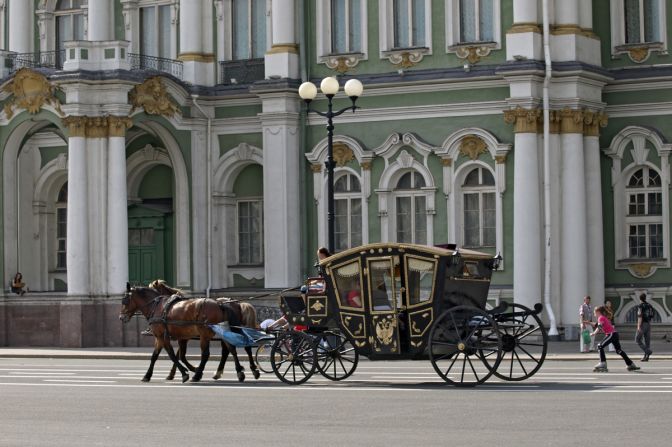
Palace Square —
In 1905, what's now called Palace Square was the scene of the Bloody Sunday massacre when demonstrators marched toward the Winter Palace. Today, tourists take horse and carriage rides here.