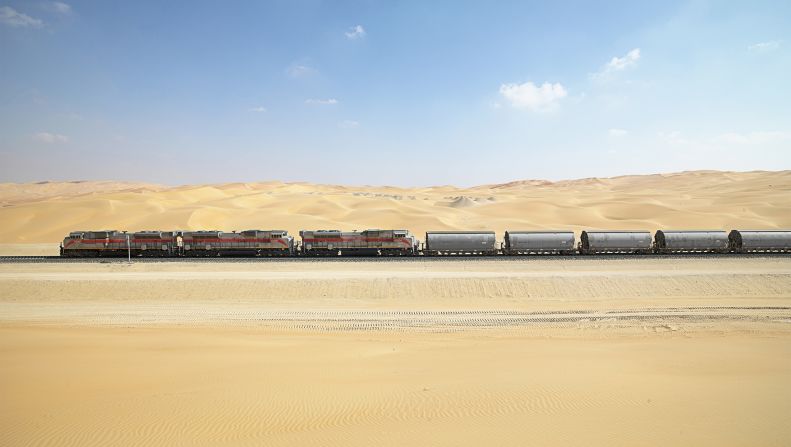
Etihad Rail network, United Arab Emirates: The United Arab Emirates' first national rail network will operate across 1,200 kilometers (746 miles), connecting the Gulf of Oman and the Persian Gulf and extending down the western coast to the border with Saudi Arabia. Currently under construction, its developer Etihad Rail says the network will take 60 million metrictons of freight from road and sea annually and save millions of tons in carbon emissions.
courtesy Etihad Rail
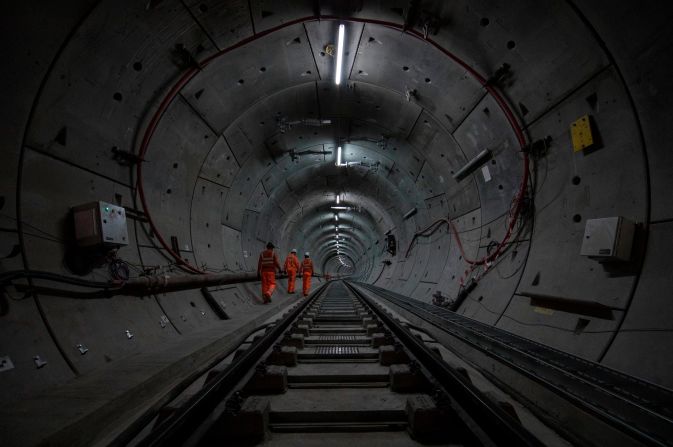
Crossrail, United Kingdom: Also known as the Elizabeth Line, Crossrail will carry passengers between Essex, east of London, and Reading or Heathrow Airport, to the west. Among Europe's most ambitious infrastructure projects, it has faced delays and rising costs (in August authorities costed the project at nearly £19 billion ($25 billion).
John Phillips/Getty Images Europe/Getty Images
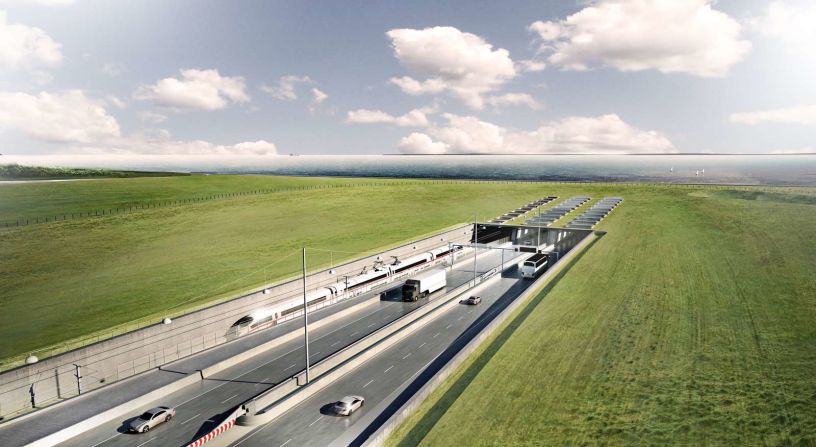
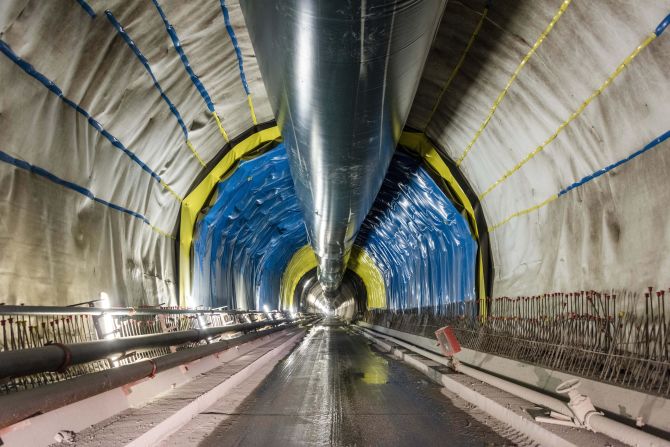
The Fehmarnbelt Fixed Link, Denmark-Germany: Built to connect Denmark and Germany, the Fehmarnbelt Tunnel (officially the Fehmarnbelt Fixed Link) will be the world's longest immersed road and rail tunnel at 18 kilometers (11.1 miles). After years of planning, work has begun on the €7 billion ($8.2 billion) project.
courtesy Femern A/S
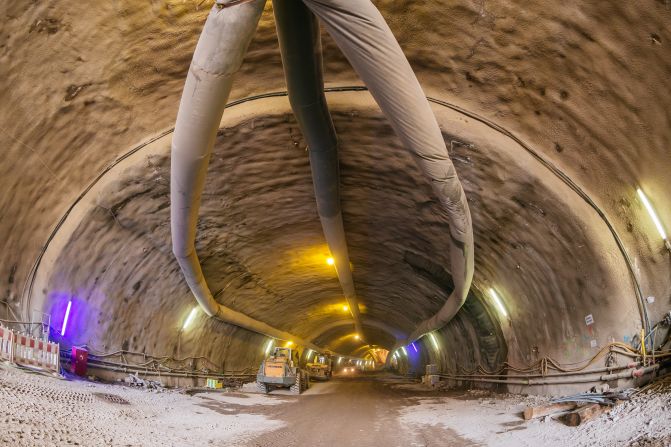
Stuttgart 21, Germany: Plans for Stuttgart's central rail station redevelopment were first announced in 1995, but the project is still under construction and not set to open until 2025. Along with 50 kilometers (31 miles) of rail tunnels, an urban development program is also being rolled out in the southern German city, but there have been concerns over costs and environmental issues.
Thomas Niedermueller/Getty Images Europe
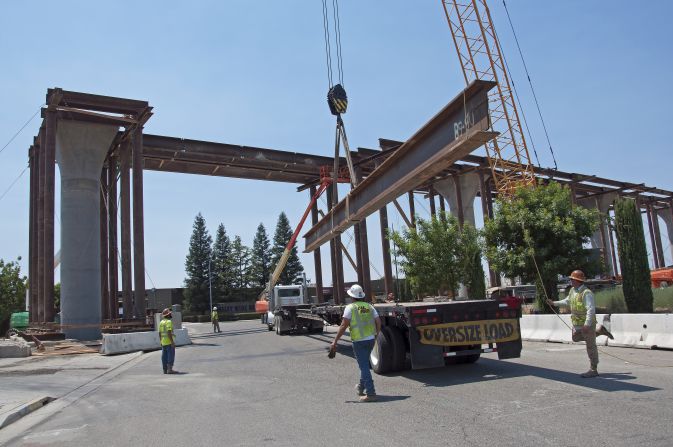
California High-Speed Rail, United States: California's planned high-speed railway will connect some of the state's largest cities at an estimated cost of over $80 billion. The line will operate on 100% renewable electricity and trains will reach speeds of 220 miles per hour. Phase one of construction, between San Francisco and Anaheim, is projected to be completed in 2033.
Handout/Getty Images North America/Getty Images
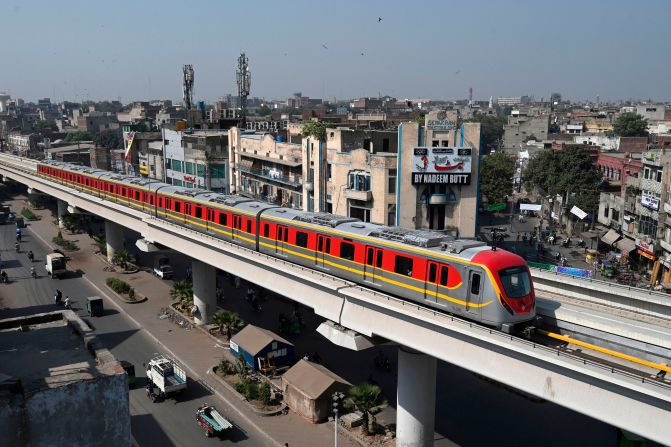
China-Pakistan Economic Corridor (CPEC): China and Pakistan are building an international economic corridor, with railways functioning as a key artery. The project is estimated to cost between $46-62 billion according to reports, and will link China's landlocked Xinjiang region with Pakistan's Arabian Sea ports, covering approximately 3,000 kilometers (1,864 miles). Pictured: The newly built Orange Line Metro Train in Lahore, Pakistan -- part of CPEC.
Arif Ali/AFP/Getty Images
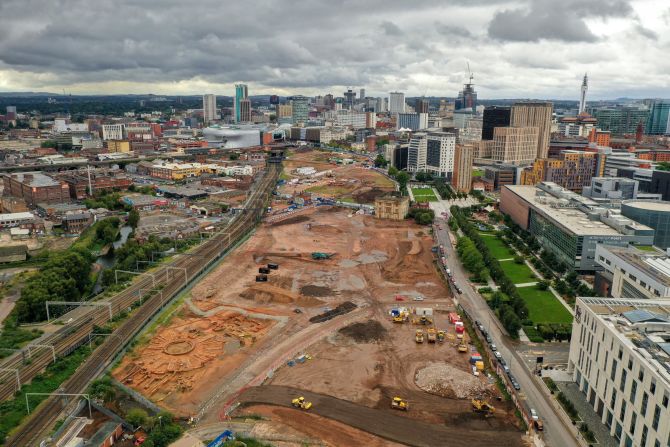
High Speed Rail 2, United Kingdom: There hasn't been a new railway north of London for over 120 years, but High-Speed Rail 2 (HS2) is under construction and will connect London, Birmingham, Manchester and Leeds across 350 miles of new track. After delays, phase one (between London and Birmingham) is now scheduled to open between 2028 and 2031.
Christopher Furlong/Getty Images Europe/Getty Images
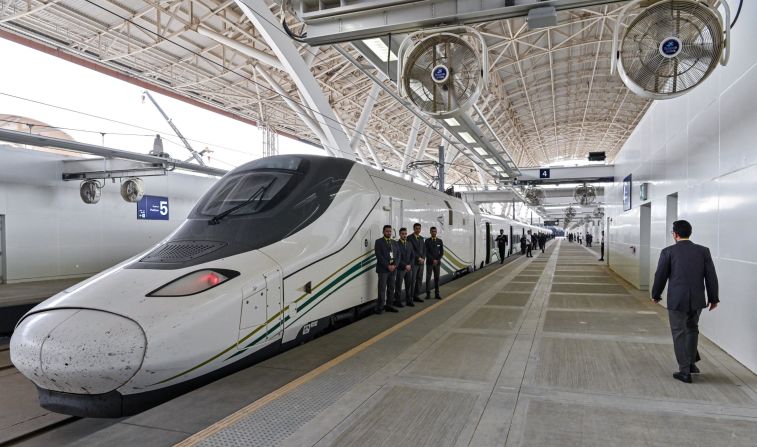
The Gulf Cooperation Council Railway: This long-mooted international project aims to link multiple nations across the Arabian Peninsula.Pictured: A Haramain High Speed train operating at an airport station, part of the Saudi network's expansion which connects the cities of Mecca and Medina. That railway runs for 280 miles and trains can reach speeds of up to 187 miles per hour.
GIUSEPPE CACACE/AFP/AFP via Getty Images
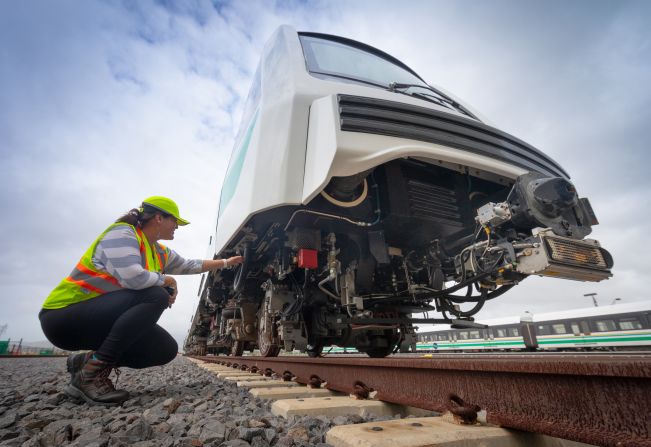
Honolulu Rail Transit, Hawaii, United States: This passenger-rail system will operate along the south shore of Hawaii's Oahu's island, between East Kapolei and Ala Moana Center. It's hoped the 20-mile network will reduce road traffic, with planners suggesting it could cut 40,000 car trips on weekdays. (Pictured: A rail employee in Pearl City, Hawaii, inspects a section of a train destined for the Honolulu Rail Transit project.)
Tim Rue/Bloomberg/Getty Images
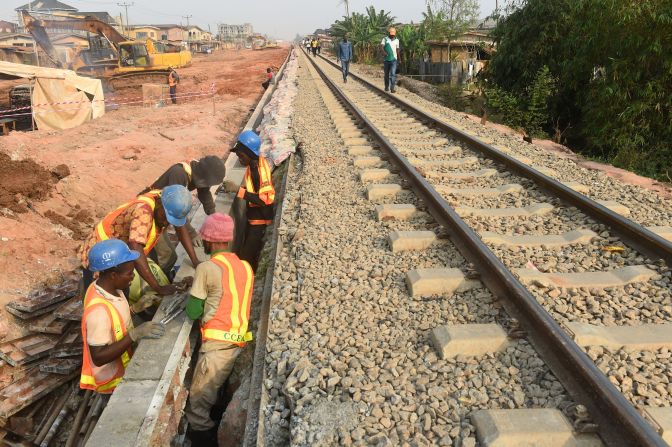
Lagos-Kano Standard Gauge Railway, Nigeria: This railway is planned to stretch from Lagos, in southern Nigeria, to Kano in the north. Designed for freight and passengers, the 2,700 kilometer (1,678 mile) line is part of a plan to boost economic activity.
PIUS UTOMI EKPEI/AFP/AFP via Getty Images
Brenner Base Tunnel, Austria-Italy: Connecting Innsbruck, Austria, with Fortezza, Italy, the 55 kilometer (34 mile) Brenner Base Tunnel will be the second-longest rail tunnel in the world. Tunneling under the Isarco River underpass started this October. (Pictured: The inauguration of tunnel construction in March 2015.)